Tag: CRUELTY FREE

  • Organic Footwear: Is the Indian consumer ready?

    Organic Footwear: Is the Indian consumer ready?

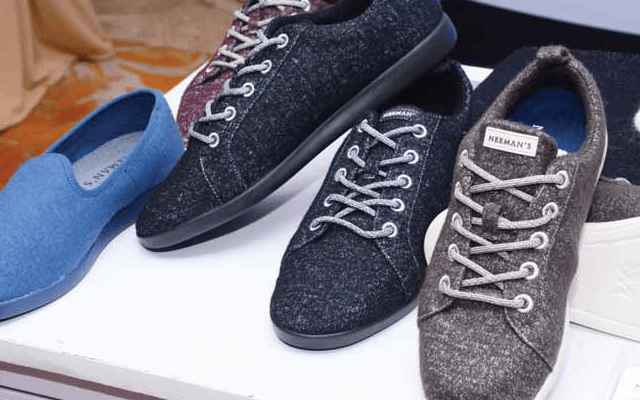
    Footwear brand Neeman’s has partnered with The Woolmark Company – the global authority on wool – to launch a range of shoes made from 100 percent Merino wool. The eco-conscious brand showcased its attractive range of men’s shoes in New Delhi.

    Neeman’s is India’s first footwear brand to use natural, renewable and biodegradable fibre in its shoes. The brand’s footwear collection comprises joggers (multi-functional, lightweight running shoes), classic sneakers with a modern twist, and simple, yet elegant, loafers in subtle colours, fit for all occasions. Its shoes are suitable to wear throughout the year with the ability to withstand every weather condition.

    Celebrating the unique organic inclusion in Indian lifestyle through their exclusive men’s shoes, Taran Chhabra, Founder, Neeman’s explains that it was his own personal struggle to find a shoe that could truly provide all-day comfort. “This led me to look beyond synthetic fibres and my search ended with the naturally versatile Merino wool fibre,” he stated.

    Ajay Pradhan, Marketing Manager, The Woolmark Company, India says, “The Woolmark Company is looking at innovative ways to showcase the versatility of the Merino wool fibre and this collaboration with Neeman’s allows us to do exactly that. Merino wool is the world’s most revolutionary natural fibre that’s trans-seasonal, breathable and has a variety of eco-credentials, making it the perfect addition to your wardrobe be it in the form of luxury apparel or innovative. We cannot wait for consumers to try them and experience the natural benefits and versatility of Merino wool.”

    The Idea Behind Neeman’s

    Neeman’s focuses on two core principles – true comfort and creating a culture of sustainability.

    “We are focused on bringing truly comfortable footwear that looks good, feels good and is good for the planet. Today, when the whole world is talking of organic and natural resources, we decided to take undervalued ‘comfort’ for wearers to the heart of the shoe industry and follow nature’s path of environmental sustainability using natural fibres along with recycled and renewable materials,” Chhabra says.

    While in the pursuit to understand footwear manufacturing, Taran Chhabra had travelled to many footwear manufacturing hubs around the world and what he saw left him perplexed. He found that footwear manufacturing units use too many synthetic materials like nylons, polyesters and leathers and consume a lot of non-renewable resources like petroleum in the manufacturing process. Apart from this, the industry is responsible for emitting a huge amount of carbon dioxide into the atmosphere.

    “According to a recent study, around 10 percent of the carbon dioxide that is emitted in the atmosphere is by footwear units alone. So these things kind of hit me,” he explains.

    As a result, while making Neeman’s, he made a conscious decision to remove everything synthetic and unnecessary, and kept only the stuff that was required to actually make shoes. He chose a natural fiber like Merino wool from Australia in-place of synthetic materials. Merino wool is a superfine and lightweight fiber with features like moisture-wicking and breathable, naturally odour resistant and keeps skin cool and dry even in extreme temperatures.

    “Merino wool comes from Merino sheep, and all it takes is water, sunshine and grass to raise them. So we are not spending any energy, we are not emitting any carbon dioxide into the atmosphere, we are not using any petroleum based oils and we are preserving our environment,” he says.

    Another important component within a shoe is the insole. Traditionally the insole is made of petroleum based foams. Neeman’s also reduced the amount of petroleum based foam with a natural plant-based castor bean oil and recycled rubber.

    A Global Brand

    The shoes—conceptualised in America and designed in London—are made from the finest Merino wool sourced from Australia. The Merino wool then travels to South Korea, where it goes through a proprietary process of combing, drawing, steaming and being made into a fabric. There, three different type of fabrics are being produced, one for the shoe upper, another for the insole and a third for lining the shoe. Then the fabric travels to China, where a highly specialised women-owned shoe manufacturing unit—which has been in operation for the past 30 years—assembles the shoes. After that the shoes finally reach India to be sold.

    Market, Consumer & Retail Strategies

    The opportunity for brands like Neeman’s in India is immense. “The Indian footwear market is very vast. India is the second largest in terms of footwear manufacturing and the third largest in terms of consumption. It is just behind China,” says Chhabra.

    Operating within the premium range, the brand’s target consumers are the one who seek comfort. Precisely, any male from 26 to 40 years is its target customer. “Just by looking at the consumption rate in India, there is a vast segment that looks at economy range but there is still a major segment that looks at premium range and we fall within the premium segment,” he says.

    At present, it is being sold through its website (www.neemans.com). Being a direct-to-consumer, the brand has excellent customer acquisition strategies to share, such as educating its consumers through content on social media. “We plan to travel and organise several demo locations, pop-ups locations within major places where people can come and experience our products,” Chhabra says.

    The brand is taking expansion slowly

    “We aren’t giving our shoes to outlets for now. The focus is to drive people to our website and help them understand what Neeman’s stands for. So right now we are keeping a very close hold on how and where our product is being represented. Right now our focus is India and then may be to spread Neeman’s to different countries within Asia in the next year,” he concludes.
  • Vegan fashion trend booming in Korea

    Vegan fashion trend booming in Korea

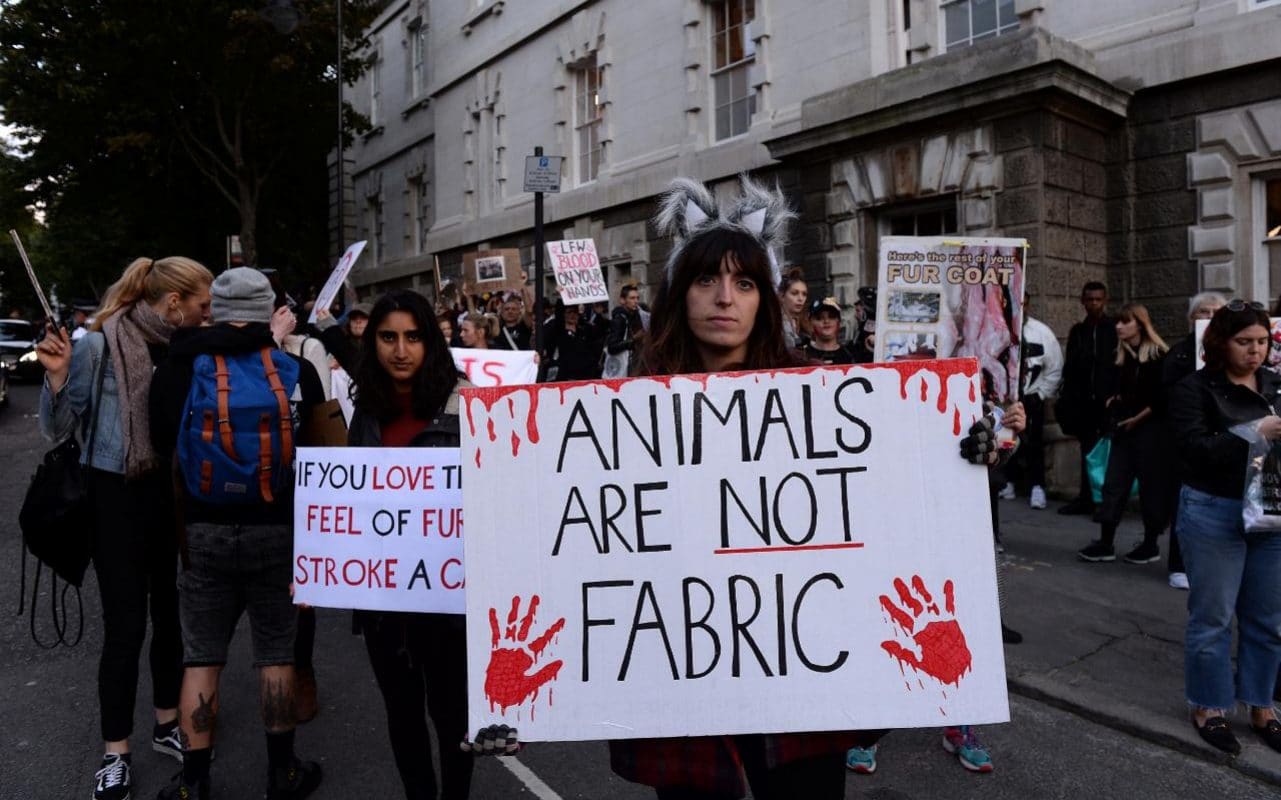
    Stroking down the plush set of colorful fibers, it is hard to tell they could be anything but fur. Hanging in the corner of an ethical fashion store in Dongdaemun, the fur-free fur coats and silk-free silk robes are soft and luxurious, but without the cost of brutality against animals. Striving to spare harm inflicted on animals for the sake of style, vegan fashion has been spreading in South Korea in recent years.

    The word “fake” does not fully describe the trend, as the garments are not purposed as second choice low-quality replacements. They are considered more of a fashionably ethical statement now, rejecting the use of animal materials or cruelty in obtaining them.

    Strictly speaking, vegan fashion is different from eco-friendly fashion, although the phrases are often used interchangeably. Something vegan may not necessarily follow best practices for the environment, or vice versa, but the two often go hand in hand.

    The international movement toward fashion going vegan began its rapid spread as many prominent luxury brands announced themselves “fur-free.” In October last year, Gucci went fur-free, followed by British fashion company Burberry in September this year. Other pricey labels, including Versace, Giorgio Armani, Tom Ford and Ralph Lauren have also declared moves to ban fur.

    Britain’s Stella McCartney — the second-generation animal rights activist daughter of Linda and the Beetles’ Paul McCartney — is believed to gotten the ball rolling in 2001, and currently stands as one of the leading eco-friendly fashion brands in the world. Now, slapping on the word “vegan” is a marketing strategy seemingly guaranteeing good sales.

    The vegan and similar fashion trends are more prevalent in the winter, as outdoor labels increasingly introduce items that either exclude animal materials or try to stick to ethical standards in using animal matters.

    A number of global outdoor companies, including The North Face, Adidas and Reebok, have launched “Responsible Down Standard” certified down coats this winter. RDS is a global standard developed in 2014 to ensure that down and feathers come from animals that have not been subjected to unnecessary harm. Local outdoor brand Black Yak also received RDS certification for all of its down coats released this year.

    Some brands have taken it a step further and developed artificial materials as replacements. The North Face introduced its own thermal filling, “V-Motion,” in 2016, and ‘”T-Ball” this year, whereas LG Fashion’s A.T.Corner presented as its 2018 winter centerpiece a mustang jacket with eco-fur lining inside.

    According to Galleria Department store, which held an eco-friendly fashion week at the end of last month, environmentally friendly garments, including animal-free ones, have increased by 20 percent compared to last year on the women’s fashion floor.

    GS Shopping, a TV shopping firm, exceeded its initial sales goals for RDS certified items, including Reebok’s heavy goose down long coat, which sold out in less than half an hour on the channel.

  • Chanel to stop using exotic skin in its collection

    Chanel to stop using exotic skin in its collection

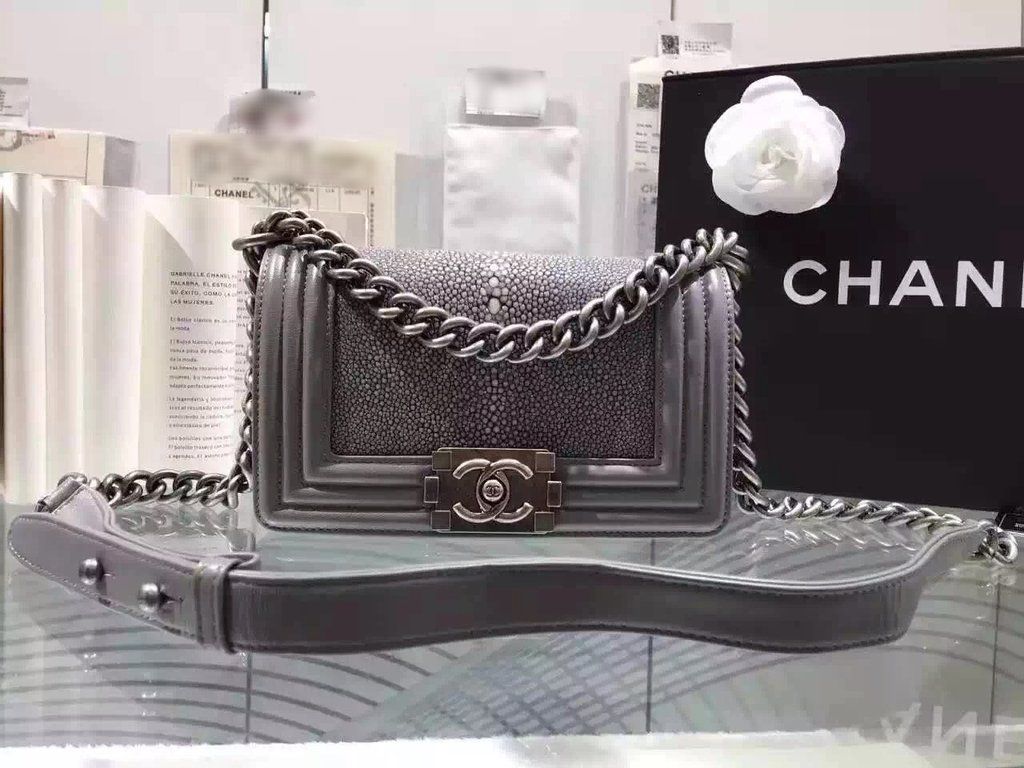
    Ahead of its pre-fall 2019 Métiers d’Art show in New York’s Metropolitan Museum of Art, Chanel has said it will “no longer use exotic skins in [its] future creations”. The exotic skins in question include crocodile, lizard, snake, stingray and fur, of which Chanel uses very little.

    The decision is down to the fact it is becoming increasingly difficult to source skins that meet the house’s quality and ethical standards. “There is a problem of supply and that was not Chanel’s business anyway,” Bruno Pavlovsky, president of Chanel fashion and president of Chanel SAS, commented. “We did it because it’s in the air, but it’s not an air people imposed to us. It’s a free choice.”

    The brand’s attention will shift to the research and development of materials and leathers generated by “agri-food” industries.

    “The future of high-end products will come from the know-how of what our atelier is able to do,” Pavlovsky continued. It will, however, take time for existing goods containing exotic skins to leave Chanel’s distribution network entirely.

    Chanel is the first luxury brand to join labels, including Asos, Nike, H&M, Puma, Arcadia Group and L Brands, which have already banned exotic skins from their product offering.

    The likes of Armani, Coach, Versace, Michael Kors, Gucci, Burberry and John Galliano have pledged to halt the use of fur, however, they have not made the leap to include skins in their entirety.

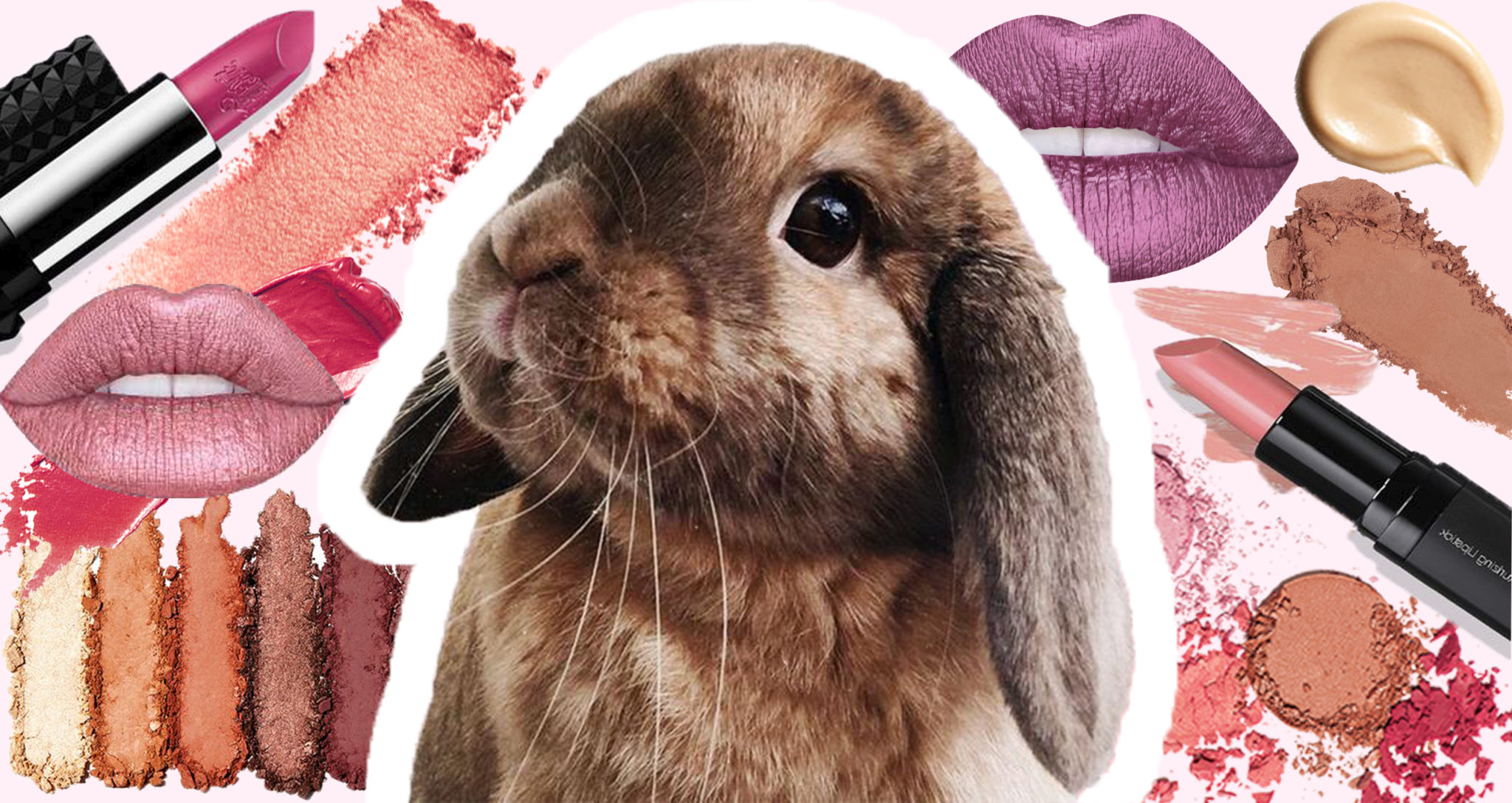
  • Is it the end of cosmetics testing on animals for China?

    Is it the end of cosmetics testing on animals for China?

    It has been little more than a year since French cosmetics firm NARS’ controversial decision to sell its make-up in China caused a major rift in the global cruelty-free beauty scene.

    Fans of the brand and animal-lovers may soon be able to make peace. China is mooting a change in its policy of testing cosmetics on animals which could pave the way for cruelty-free brands to tap into the country’s US$33 billion cosmetics market.

    China’s National Institute for Food and Drug Control (NIFDC) recently issued a statement about its commitment to overhauling testing in the cosmetics industry and exploring viable alternatives to animal tests that are commonly used in countries where the practice is banned. The NIFDC emphasised that research, development, and the standardisation of testing methods that don’t use animals are its top priorities.

    Animal-protection organisations have been working closely with Chinese stakeholders to replace animal testing – which, for cosmetics alone, requires the use of an estimated 500,000 animals per year around the world – with more modern and predictive technologies.

    Notable progress has been made in recent months.

    Troy Seidle, vice-president of research and toxicology for Humane Society International, said that the recent NIFDC statement, published on its official WeChat account last week, is particularly promising.

    “It would be the first time the authority has publicised its view towards cosmetic alternatives with a future strategy so clearly articulated,” Seidle says. “Chinese authorities and stakeholders are actively working to embrace validated alternatives to strengthen international regulatory alignment and trade in the cosmetic sector.”

    China’s cosmetics testing laws require all foreign cosmetics products to be tested on animals before they can be sold in the country. In 2014, China began to soften its stance, allowing domestic cosmetic brands to sell products not for “special use” (make-up, skincare, and fragrances) without the need to test them on animals, but only so long as they adhered to strict standards and a list of pre-approved and tested ingredients. This also applied to foreign cosmetics brand that chose to manufacture products in China for sale locally.

    However, the 2014 rule change was not enough to convince organisations campaigning for cruelty-free cosmetics that selling in China was acceptable. They objected because companies that manufacture in China still face a risk that animals could be harmed via post-market testing – under which brands can have products taken off the shelves and tested on animals.

    In 2017, Nudestix was taken off the cruelty-free brands list of animal welfare website Cruelty-Free Kitty after the UK brand announced it would be producing its products domestically and selling in China.

    “Even though Nudestix does not test on animals, and has successfully bypassed any required pre-market animal testing in China, this is not enough for a “cruelty-free” claim,” Cruelty-Free Kitty author Suzana Rose wrote in a blog post last month. “Any brand that sells cosmetics in physical stores in China can potentially have their products taken down from the shelves and tested on animals.”

    Mette Knudsen, CEO of KnudsenCRC, a Shanghai-based consultancy that helps companies seeking to sell in China, wanted to help brands understand just how serious the risk was of cosmetics companies encountering these post-market tests, as they remain the “biggest barrier” to receiving cruelty-free certification.

    Usually, the post-market tests take place in response to a consumer complaint, though research commissioned by consultants Reach24H found that some Chinese municipal governments would sometimes implement mandatory post-market testing.

    Through research and talks with Chinese officials, laboratories, and UK charity Cruelty-Free International, KnudsenCRC determined that post-market testing rarely involved animals. This is because animal testing is expensive – it costs five to 10 times more than other safety assessments – and also time-consuming, taking about three months to complete.

    “If you have a product with a safety risk on the shelves, you obviously don’t have three months to see if it poses a safety risk or not; you have to react immediately,” Knudsen said.

    SEE ALSO : Makeup brand Nudestix enters China

    KnudsenCRC is teaming up with Cruelty-Free International on a pilot project designed to help cosmetics brands ensure no animal testing has occurred throughout their supply chain, and is working closely with authorities in Shanghai to eliminate the risk of post-market tests.

    “Although we have a lot of assurance from the Shanghai authorities,” Knudsen says, “it’s important to have the pilot because we need to be able to say this is a route we can recommend.” Knudsen says that many brands have already expressed interest and sent in applications for the pilot. Five brands will take part in the first stage of the project, due for completion in early spring 2019.

    It could take years to implement a complete shift away from cosmetics testing using animals. But some milestones towards ending the practice have already been attained.

    The Institute for In Vitro Sciences, a globally recognised organisation working to advance non-animal testing methods in China, announced this year that a lab it was working with in Hangzhou had officially adopted a test on artificial skin. The NIFDC has also adopted alternative tests for skin corrosion and eye irritation, as well as phytotoxicity (testing on plants), with more alternative methods to be introduced in the near future.

    “A crucial first step toward transitioning to non-animal testing approaches for cosmetics in China is for the national authority responsible for this sector to officially recognise the validated test methods as acceptable,” Seidle says. “Until this happens, companies and labs have little incentive to invest money or time to establish the infrastructures and competency necessary to carry out these tests on a regular basis, or for the industry as a whole to commission such tests within China.”

    There is pressure to move quickly. The 28-nation European Union became the first region to ban cosmetic testing on animals in 2013, prompting other countries to follow suit; and the California State Assembly has just passed a bill that will make it illegal for make-up or personal care brands tested on animals, or including ingredients that have been tested on animals, to be sold in the state. If the California governor signs the bill, the law could go into effect as soon as 2020.

    China faces a juggling act on consumer safety. Given numerous food and drug scandals in recent years, safety clearly remains the government’s top priority.

    “To balance consumer safety at a time when the market is developing at 500 kilometres an hour is a very difficult task. Getting the industry up to cruelty-free standards is not something they do overnight,” Knudsen says. “I’d say the minute they can make absolutely sure that consumer safety is not in danger, obviously they would allow these alternative methods.”

    It’s not just the government that is showing movement on the matter. A new generation of Chinese consumers is demanding higher levels of social responsibility from brands – the same consumers who lavish cash on their pets as if they were their children.

    “This is where the speed at which China is moving is a very good illustration because in just 10 years, pets are everywhere. It’s a completely new mindset,” Knudsen says. “Pets have definitely spurred an interest in everything in regards to cruelty-free. This is where you see a deeper and sincere interest in not harming animals.”

    Animal-rights organisations and beauty brands such as Lush have taken the opportunity to educate consumers about cruelty-free practices to inspire more ethical choices. Humane Society International provided funding to the Dalian Vshine Animal Protection Association in China to carry out an extensive public awareness campaign, as part of the organisation’s global #BeCrueltyFree effort. Its initiatives included a lecture tour of 50 universities in 34 provinces, awareness videos on animal testing and alternative technologies screened at shopping centres.

    While there are no official channels for purchasing cruelty-free products in China, such brands already have a presence on direct-to-consumer commerce platforms like Taobao and WeChat.

    There’s also little doubt that there are conscious Chinese shoppers seeking out animal-friendly beauty products through travel abroad as they become more educated about their options.