Tag: cruising

  • Harley-Davidson Files For Cafe Racer

    Harley-Davidson Files For Cafe Racer

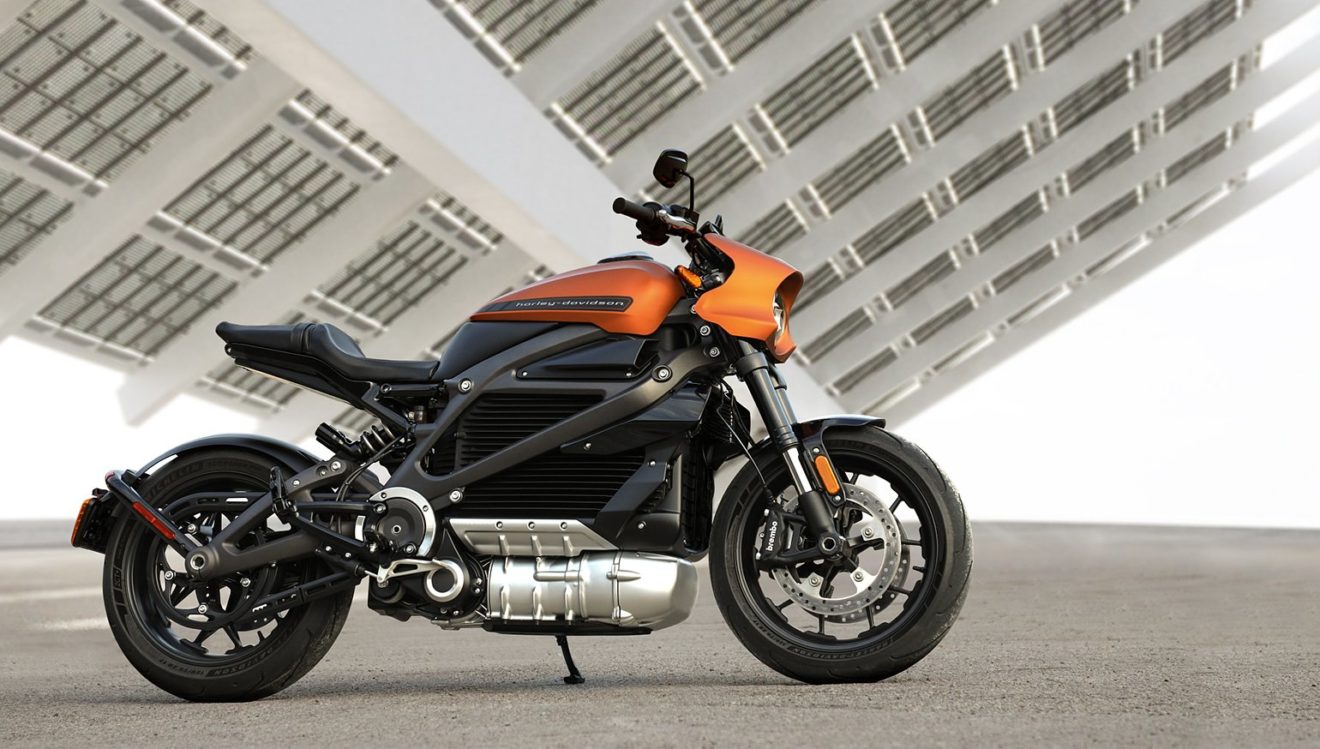
    Harley-Davidson has filed two new designs with the European Union Intellectual Property Office, using the same liquid-cooled Revolution Max engine powering the upcoming Harley-Davidson Pan America and Harley-Davidson Bronx models. The two new designs will be built on the same Revolution Max platform, and one of them will be a cafe racer styled model, and the other a flat track-inspired model. While the design drawings clearly indicate that the engine to be used on both models will be the Revolution Max v-twin, there’s still no indication of what the engine displacement will be.

    Harley-Davidson’s first adventure tourer, the Pan America uses a 1,250 cc version of the Revolution Max v-twin, while the Bronx streetfighter uses a 975 cc version. The Revolution Max v-twin is expected to get four different engine displacements, ranging from 500 cc to 1,250 cc. Prototype photos of both these new designs also surfaced, apparently from a Harley-Davidson dealer conference from September 2019.

    The photos of the prototypes look quite similar to the design drawings, but final production models may be slightly different. From earlier experience, Harley-Davidson design drawings, like the one of the Pan America and Bronx streetfighter, have gone on to be finalized for production. So, we won’t be surprised if the latest drawings also make it to the future model line-up, as Harley-Davidson looks to shake off the “heavyweight cruiser” tag and explore different segments of motorcycles.

    Designs of the flat track-inspired model show a design similar to something that could rival the Indian FTR 1200, with a similar tubular swingarm, as well as flat-track inspired high-mounted twin exhausts. The bike has a similar headlight like the Harley-Davidson Fat Bob, and like the FTR 1200, has a similar-looking rear tire-hugging number plate bracket attached to the swingarm. The bike looks like a single-seater, but Harley-Davidson could offer an aftermarket pillion-friendly seat as well once the bike gets closer to production.

    The second design is a cafe racer styled model, with a short windscreen and cafe racer-styled headlight. The exhaust is a two-into-one design, with the end can coming out on the right side of the bike, The design of the cafe racer shares the dual disc brakes and inverted fork with the flat track design, but the rear has a more traditional swingarm, and twin shock suspension set-up. The H-D Pan America, and the Bronx are yet to go into production, followed by the Custom 1250 cruiser, possibly sometime in 2021. But from these latest designs, it’s apparent that Harley-Davidson, despite the problems the brand is facing, is looking ahead to the future with several new models in the pipeline.
  • Harley-Davidson Suspends US Production Over Coronavirus Crisis

    Harley-Davidson Suspends US Production Over Coronavirus Crisis

    “We recognize the unprecedented nature of this global crisis. In order to best support our employees and following the social distancing guidance issued by public health authorities, we are temporarily suspending the majority of production at our US manufacturing facilities,” said Jochen Zeitz, acting CEO and President, Harley-Davidson. “We will continue to monitor the situation and take necessary steps to prioritize employee health and safety.

    Non-critical employees at Harley-Davidson’s headquarters and Production Development Centre in Milwaukee have also been asked to work remotely till the end of March. The company is also working with dealers to assess individual impacts and is encouraging dealers to follow the public health guidelines in their communities for the safety of its consumers.

    Harley-Davidson has become the latest motorcycle manufacturer to shut down at least some production facilities. In Europe, KTM and Ducati have also extended shutdowns at the two motorcycle brands’ manufacturing facilities, over the coronavirus pandemic. For Harley-Davidson though, the decision to shut down production comes at an already difficult time. Harley-Davidson sales are down, more so, in the US domestic market, and in late February, Harley-Davidson announced the departure of the brand’s CEO, Matt Levatich, who spent more than two decades at Harley-Davidson.

  • Indonesia raises bet on lucrative cruise industry

    Indonesia raises bet on lucrative cruise industry

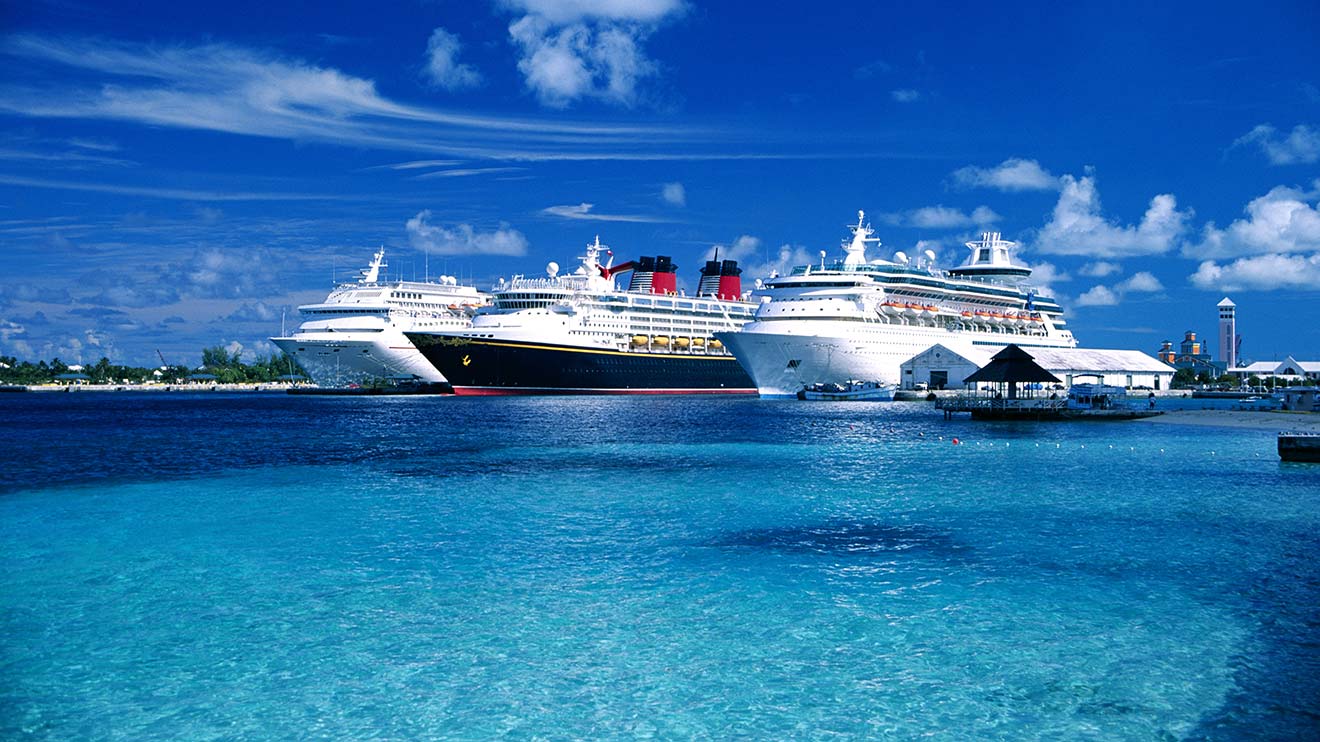
    The shimmering sound of Balinese music played by a local gamelan group welcomed the Pacific Eden cruise ship as it approached Benoa Port in Bali on Thursday Guided by a tugboat, the 219-meter-long vessel, operated by P&O Cruises Australia, needed 30 minutes to smoothly dock at the port that sunny afternoon.

    Carrying over 1,000 tourists, mostly Australians, Pacific Eden has made a breakthrough in Indonesia’s tourist industry as it became the first cruise ship ever docked at a local port.

    “This makes a huge difference in the experience of our guests,” P&O Cruises Australia president Sture Myrmell said to government officials invited onboard to celebrate the historical milestone.

    Despite its potential in coastal and maritime tourism, Indonesia has been struggling to tap into opportunities of cruise ships coming to the archipelago.

    Previously, incoming cruise ships preferred to moor off shore mainly due to technicalities, such as lack of supporting infrastructure and the absence of a reliable under-water topographic maps, known as bathymetric charts. Passengers who want to go ashore were then transported on small boats.

    In the case of Pacific Eden, the docking was made possible after the government completed the bathymetric chart for Benoa water and after state-owned port operator PT Pelabuhan Indonesia (Pelindo) III, which manages Benoa Port, upgraded the facility to a cruise terminal.

    “We sent supporting data about Benoa waters to P&O executives so their ship captains could devise strategies on how to enter the port safely. Their presence here proves that we have finally convinced them about safety,” Pelindo III general manager for Benoa Port Ardhy Wahyu Basuki said.

    Last year, Indonesia welcomed 11.5 million foreign tourists, with those from China topping the list at 1.43 million arrivals.

    President Joko “Jokowi” Widodo has set his sights on developing the tourism sector. His administration hopes for 20 million foreign tourist arrivals in 2019, with this year’s target standing at 15 million.

    The number of tourists entering the country by cruise ships has shown progress, but still only makes up a tiny fraction of the total incoming foreign tourists.

    Last year, visiting cruise ships made 350 stops in Indonesia, down from 400 stops in 2015, said Tourism Minister Arief Yahya. The number of passengers onboard, however, increased by 30 percent to 260,000 from 200,000.

    “This shows that there is a changing trend in which passengers prefer to travel on mediumsized cruises instead of small ones,” Arief told reporters, underlining the importance of port infrastructure upgrades to accommodate such a trend.

    Apart from huge, lavish vessels, the cruise business is known to attract high spenders. A family of four, for example, should pay A$7,200 (US$5,400) to stay in a Pacific Eden suite room and enjoy a 12-night journey to popular tourist destinations, such as Bali, Lombok and Komodo National Park.

    According to data from Cruise Lines International Association (CLIA), there were 23.2 million people traveling on cruise ships in 2015, with the United States accounting for the most passengers at 11.3 million, followed by Germany, Australia and China. The figure is predicted to increase to 25.3 million this year.

    Arief did not mention the government’s short-term target for incoming cruise passengers. He, however, pointed to Thursday’s inaugural docking as momentum for the government to propel the industry, including by upgrading port infrastructure on Bali, which the government expected to become a regional cruise hub, as well as by reviewing cost structures that might hamper the industry’s growth.

    Indonesian ports currently charge a cruise ship between $60,000 and $100,000 daily for docking fees, much higher than regional competitors that can charge as low as $20,000 per day, Arief said.

    “This has dragged down our competitiveness in the sector,” he said. “Thus, deregulations and infrastructure upgrades should go hand-in-hand to boost the sector.”