Tag: Cryptocurrencies

  • Data leak: 1.9 mln Vietnam crypto app users at risk

    Data leak: 1.9 mln Vietnam crypto app users at risk

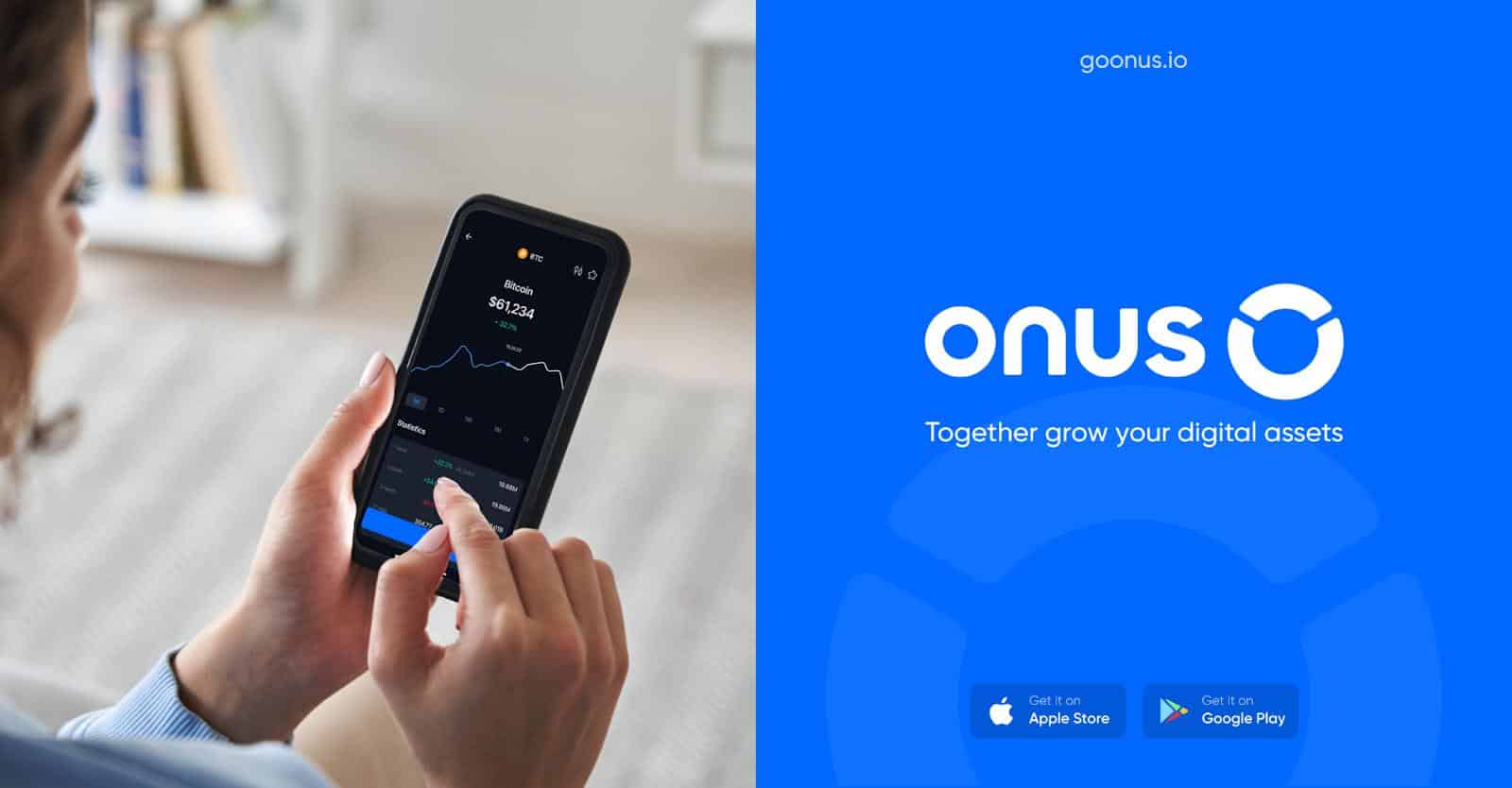
    Personal data of 1.92 million users of Vietnamese digital currency app Onus has been leaked due to a security breach.

    The Singapore-based company founded and managed by Vietnamese stated Monday its server had been attacked and personal data of a large number of users could have been leaked.

    It added user assets were not affected by the attack.

    Internet users on Dec. 25 found the data of Onus customers posted on a data trading website by an account named ‘vndcio.’

    The data includes real name, email address, phone number, username and Electronic Know Your Customer (eKYC) info, which is the digital verification of an identity without the need for face-to-face interaction.

    Of all 1.92 million Onus users, around 90 percent are Vietnamese, the hacker said.

    ‘vndcio’ claimed to have accessed the server of Onus to get the data and delete the files on the server afterward.

    He or she also uploaded screenshots of the data, including passport and ID card info of users along with videos of 10 users’ faces, which is how Onus identify its customers.

    The hacker did not reveal how much he or she charges for the data but provided an email address for contact.

    On Dec. 26, another account, ‘blackblock1234,’ uploaded the same data with a total volume of nine terabytes.

    The leaked data is enough for hackers to fake user identification or send them unwanted advertisements.

    Onus, formally VNDC, launched its app in March last year and claimed to have 1.8 million users in over 20 economies, with over 600,000 of them having identified themselves electronically.

    It allows users to trade cryptocurrencies like Bitcoin and manage their investments.

  • DBS has Strong Interest in Cryptocurrencies

    DBS has Strong Interest in Cryptocurrencies

    The bank is seeing more traction for its crypto assets business, which provides cryptocurrency trading and digital custody for accredited investors.

    Daily trading value on DBS’ digital exchange has grown tenfold since its launch to reach $30-40 million, with an investor base of 120 accredited investors and some S$80 million in digital assets under custody, DBS chief Piyush Gupta said at a media briefing last week as it announced its first-quarter results.

    I do think given the amount of interest in all the four cryptos that we trade now, that interest is quite high. And therefore, I do think it will pick up. But whether it picks up to tens of millions, or hundreds of millions of income over the next few years, it’s hard to say. So my thinking is, we should get in there, figure it out and grow and then we’ll get a better sense for how big this could be in time,» Gupta said, adding that the bank has a pipeline of hundreds of customers.

    The DBS Digital Exchange offers exchange services between SGD, USD, HKD, JPY, and four of the most established cryptocurrencies: bitcoin, ether, bitcoin cash, and XRP. Gupta said the bank would be scaling the business in subsequent quarters by issuing security tokens and extending the exchange’s trading hours, which currently works during Asian trading hours, to round-the-clock.

    Earlier this month, the bank also announced the development of Partior – an open industry platform with Temasek and J.P. Morgan that aims to reimagine and accelerate value movements for payments, trade, and foreign exchange settlement.

  • Stocks, cryptocurrencies the new darlings as other assets remain in deep slump

    Stocks, cryptocurrencies the new darlings as other assets remain in deep slump

    With most traditional asset classes taking a beating from the economic downturn caused by Covid-19, investors are flocking to the stock and cryptocurrency markets.

    At lunchtime on a regular working day, a smartly dressed young woman was sitting in a corner in a downtown HCMC cafeteria, staring at a laptop in front of her. She was going back and forth between charts and messaging apps to check what her broker was sending.

    She was a newbie on the stock market, having begun just two weeks earlier.

    Thanh Dang, 26, a full-time administrative assistant, explained her decision: “These days no one in my office does any work except text or talk to each other about stocks, forex and cryptocurrencies.

    “Most investors I know follow others’ advice and learn things on the fly. Some of them initially made profits and became even keener. So I decided to give it a try and started modestly.”

    Doan Duong, 37, a Hanoi architect, quit the forex derivatives market after making a huge loss but shows no signs of being discouraged. When the stock market surged in 2020 and everyone seemed to make a lot of profits, he decided to jump in.

    When talking about a 20 percent profit he made in four months, he smiles confidently and asks rhetorically, “If you want to get rich then you need to take risks, right?”

    Doan and Thanh are just two of the millions of people who have begun to trade stocks and cryptocurrencies in the past few months.

    According to the Vietnam Securities Depository (VSD), they opened 393,659 securities trading accounts last year, a 20-year high in a market that is less than 21 years old.

    In February, they opened another 57,000 accounts, tripling that of the same period last year.

    The vast majority of domestic accounts, 2.73 million, belongs to individual investors.

    In the last six or seven months, retail investors have been piling into the market, helping it shrug off the effects of a sell-off by foreign investors. In fact, the Vietnamese stock market was one of the five biggest gainers in the world, according to StockQ.org.

    In the first quarter of this year retail investors kept the market up while trading value was consistently at VND18-19 trillion ($778.12-821.3 million) per session.

    German data company Statista said following a recent survey of 1,000-4,000 respondents each in 74 countries that Vietnam ranks second globally in terms of ownership of Bitcoin and other cryptocurrencies.

    Nhan Trong Nguyen, a financial consultant, skims through hundreds of messages daily from stock traders, brokers and cryptocurrency sellers, almost all asking him to represent consultancies or trading platforms for cryptocurrencies, derivatives and binary options.

    His blog on finance and banking has more than 50,000 followers.

    Nhan says: “If you look closely, Vietnamese are consistently in the top three list of most frequent traders at global BitCoin exchanges such as Poloniex and Bittrex.”

    In recent conversations with his followers he learned that Vietnamese are frantically switching from Bitcoin to other newer cryptocurrencies because it has become increasingly challenging to mine.

    PI is the most popular of the alternatives, supposedly mineable on smartphones.

    There are hundreds of groups calling on people on social media and online forums to join Pi mining networks.

    Dominic Scriven, chairman of HCMC asset management company Dragon Capital, explains: “This is a logical choice to cope with the changes in monetary policy worldwide and in Vietnam to protect their money.”

    Since the onset of Covid-19 in early 2020, the State Bank of Vietnam has cut its policy rates four times to keep the economy afloat, driving banks’ deposit interest rates to all-time lows in February 2021 before they recovered slightly this month.

    The real estate and gold markets too are stagnant and are also beset with difficulties.

    A note by the HCM City Real Estate Association said the number of property transactions plummeted between March and August 2020 before making a marginal recovery since September.

    All this meant that since the start of the pandemic only a tiny portion of investments have been flowing into traditional asset classes as investors sought profitable alternatives like stocks and cryptocurrencies.

    Many stocks gained sharply, making newcomers even more impatient and afraid of missing out, further increasing the number of accounts and causing a cycle in the market.

    In the beginning Vietnamese used the likes of Bitcoin, Ethereum, Litecoin, and Ripple to receive money from abroad since it meant no more bank hassles and exorbitant fees. But it is no longer the main reason for investing in them.

    Lawyer Truong Thanh Duc says: “The State Bank of Vietnam has warned that owning, trading and using cryptocurrencies are risky and not protected by the law, but that does not seem to deter investors.”

    A large number of people are investing now in cryptocurrencies because they want to get rich fast despite a sluggish economy.

    This is also true of stock investors, many of whom seem to believe they can somehow predict market movements and make big profits from short-term trading.

    Though it might be too early to hark back to the stock market bubble of 2007-08 the relentless rise in the market is definitely cause for wariness, according to some economists.

    “It is never a good idea to try to guess the market’s movements, and investors should have a long-term view instead,” Nhan warns.

    Cryptocurrencies are not protected by law, and so all trading in them need to be done with great caution and, most preferable, expertise.

    Decisions driven by rumors and greed might see inexperienced investors burn their fingers.

    The enthusiasm retail investors have had for stocks and cryptocurrencies since 2020 continues to draw in more newbies.

    But one piece of good news for those who fear they have missed out on the action is the prediction by Finland’s PYN Elite Fund that the market will continue to grow, with the VN-Index possibly reaching 1,800 points.

    Nevertheless, new entrants need to move their goalpost from “get rich quickly” to increasing the value of their assets over the long term and hedging inflation.

    Another sensible piece of advice from experts is to diversify one’s investment portfolio.

    Nhan says: “The ideal return from shares should be around twice the bond interest rate. Any broker who promises you way more than that could be scamming you.

    “VN30 stocks and companies with an excellent reputation are always a good choice for beginners.”
  • Mastercard Backs Cryptocurrencies

    Mastercard Backs Cryptocurrencies

    Credit card and payments firm Mastercard becomes the latest crypto backer as it announces plans to offer support for select cryptocurrencies.

    Currently, Mastercard is already offering cards that allow customers to transact using their cryptocurrencies without going through its network. The latest move is expected to further expand business opportunities for merchants.

    Doing this work will create a lot more possibilities for shoppers and merchants, allowing them to transact in an entirely new form of payment,» Mastercard said, though it noted that tighter compliance measures were still needed for many of the hundreds of digital assets in circulation.

    This change may open merchants up to new customers who are already flocking to digital assets.

    Mastercard becomes the latest corporate giant to join the crypto wave just days after Tesla revealed that it had purchased $1.5 billion of bitcoin and that it would soon be accepted as a form of payment.

    Also in this week, DBS group chief executive Piyush Gupta signaled bullishness in crypto demand, revealing that its digital exchange registered 300 trades per day since launching in December last year.

    So far it’s looking good, but I think we have the opportunity to scale, given the amount of interest and energy around tokenized assets, Gupta said.

  • Indonesia Will Officially Ban Bitcoin and Other Cryptocurrencies

    Indonesia Will Officially Ban Bitcoin and Other Cryptocurrencies

    A lot of countries around the world are deliberating how they should treat Bitcoin and other cryptocurrencies. Taking action is a lot easier said than done, and such decisions need to be reached carefully. Over in Indonesia, it seems a complete ban on all cryptocurrencies is imminent. It is an unfortunate development, but it remains to be seen how effective such a ban can be.

    The past few years have been filled with adversity for any cryptocurrency trying to make a global impact. Whether it is Bitcoin or something else entirely, there is a lot of opposition from the financial sector and governments. Given the unregulated and uncontrollable nature of Bitcoin and other cryptocurrencies, it is evident there are a lot of risks associated with this new form of money. At the same time, there are a lot of new opportunities waiting to be explored by those brave enough to take the plunge.

    It doesn’t appear as if Indonesia will be among those countries giving cryptocurrencies a fighting chance. More specifically, the Bank of Indonesia plans to ban all Bitcoin-related activity in the country. It is unclear why the central bank decided to take this course of action, considering cryptocurrencies are not all that popular in the country. Many people will see this ban as reflecting the government’s fear of allowing consumers to control their own money at all times. Since no bank or government can effectively control Bitcoin, such opposition is not unexpected.

    While digital technology is of great interest to the Indonesian government, it sees cryptocurrencies in a completely different light. There is a high degree of uncertainty associated with this economic model, and investors need to be protected from financial harm. Bitcoin and altcoins represent a fundamental change in the financial sector which will have both advantages and drawbacks. Making an appropriate decision on this topic is not easy, yet introducing a full ban may not necessarily be the best course of action.

    The Indonesian Central Bank aims to preserve the sovereignty of the rupiah as legal tender in the country, which is something everyone will agree on and accept. However, Bitcoin can easily coexist with the rupiah without recognizing the former as official tender in Indonesia. Officially outlawing this new form of money will set an unfortunate precedent. The big question is whether or not such a measure will have success in the long run. People will find a way to access cryptocurrency with or without the approval of the government.

    One thing worth pointing out about this ban is that it will be as absolute as humanly possible. There will be no arbitrage opportunities, business controls, or unhealthy business practices on the part of anyone outside of the legal reach of the Indonesian government. This certainly sets the tone for cryptocurrency in the country, although it still remains an unfortunate decision. Indonesia is one of the places where Bitcoin could potentially do a lot of good if the government would just give it a chance. 

    Another question worth asking is whether or not existing Bitcoin holders in Indonesia will sell their currency or simply hold it. Converting it to the rupiah will become impossible soon, and there will be no way to spend it either. Rest assured there will be some entities that will come up with creative ways to circumvent this ban, assuming it gets implemented in the first place. For now, the country’s central bank has not stated when it will seek to impose this new directive, which creates further doubt and uncertainty.