Tag: currency exchange

  • Vietnam reduces penalties for illegal currency exchange

    Vietnam reduces penalties for illegal currency exchange

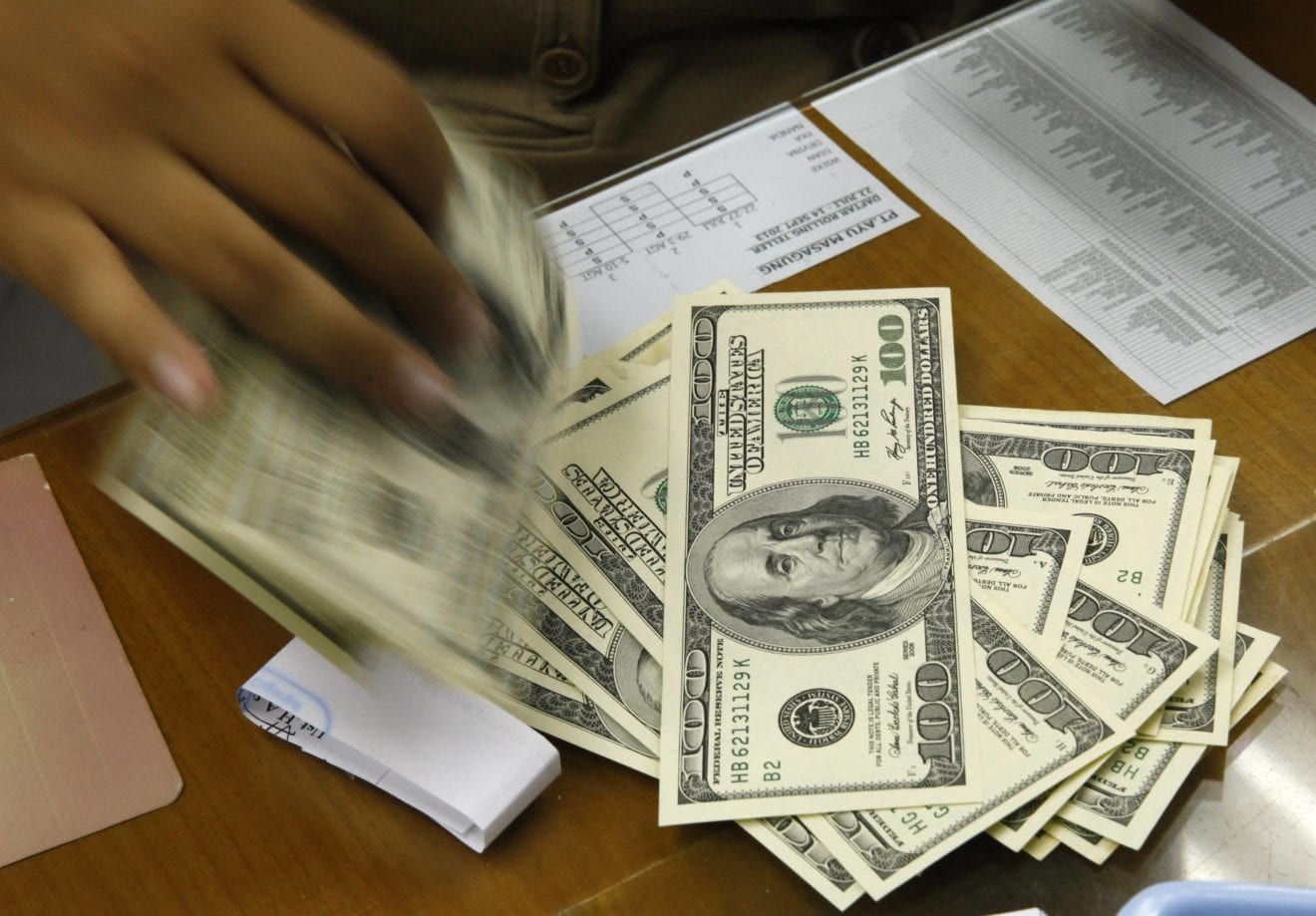
    Vietnam has significantly lowered penalties for illegal currency exchanges following outrage over a man being fined VND90 million ($3,900) for exchanging $100 last year.

    The fine was revoked after a public outcry erupted over disproportionate punishment.

    An individual or a shop illegally exchanging up to $1,000 will receive a warning instead of a fine of up to VND100 million ($4,300), according to a new government decree set to take effect December 31.

    The fine will increase progressively, with a maximum penalty of VND100 million levied for illegally exchanging more than $100,000, the decree says.

    Illegal exports and imports of currency will be fined up to VND250 million ($10,800).

    The legal amendments come after a resident of the southern city of Can Tho was fined VND90 million ($3,900) in October 2018 for exchanging a $100 note at a gold shop.

    It is a common practice for Vietnamese citizens to exchange currencies at local gold shops that offer better prices than banks, even though very few of the shops are licensed exchangers.

    Can Tho authorities revoked the punishment after Deputy Prime Minister Truong Hoa Binh said such a heavy fine should be reviewed, and lawyers and lawmakers also said it was unreasonable?

    However, the province confiscated the $100 note from the man, an electrician who makes VND4 million ($171) a month.

  • Dollar eases as focus shifts to Fed meeting

    Dollar eases as focus shifts to Fed meeting

    The dollar eased versus most of its peers on Monday as investors turned their attention to this week’s Federal Reserve policy meeting, with traders wagering policymakers will signal a pause in their tightening cycle. The Federal Open Market Committee meets between Jan 29-30, and Chairman Jerome Powell is widely expected to acknowledge growing risks to the US economy as global momentum weakens.

    The dollar fell 0.2% versus the offshore yuan to 6.7406. The rally in the yuan also fuelled a bounce in the Australian dollar, which gained 0.18% versus the dollar to $0.7195. Kiwi dollar strengthened by 0.3% to $0.6859.

    “The general direction for the dollar is still down and markets will be taking cues from the FOMC this week,” said Sim Moh Siong, currency strategist at Bank of Singapore.

    “The Fed will most likely keep rates steady this year given the state of economic growth outside the US”

    The dollar index, a gauge of its value versus six major peers was marginally lower at 95.74, after falling 0.8% on Friday.

    A deal to reopen the US government for now after a prolonged shutdown also reduced investor demand for the safety of the greenback.

    ‘The re-opening of Federal government after one-month shutdown fuelled ‘risk on’ rally in the US equities and slashed demand for safe-haven currency like USD, leading to sharp decline of the dollar index last Friday,” said Margaret Yang, markets analyst at CMC Markets.

    Over the past two months or so, Powell and several other Fed policymakers have taken a more cautious approach on further monetary tightening, leaving the dollar underpowered after it enjoyed a boost from the Fed’s four rate increases last year.

    Traders are bearish on the dollar for 2019.

    Amid a weakening global economy and US-Sino trade tensions, the US central bank is widely expected to hold rates steady this year to avoid hurting growth at home. Interest rate futures markets are pricing in no rate hikes for 2019.

    Investors are also anxiously waiting news from high-level US-China trade talks on Tuesday and Wednesday to see if the world’s largest economies can reach a compromise that will end their trade war. President Donald Trump has threatened to hike tariffs on Chinese goods if there is no significant progress in the negotiations.

    The yen added 0.2% in early Asian trade at 109.34.

    The dollar has gained around 1.2% on the yen over the last two weeks. Not helping the yen was the Bank of Japan’s downgrade of its inflation forecasts last week when it also maintained its accommodative monetary policy, as widely expected.

    Moreover, Japanese investors have been net buyers of foreign bonds over the last few weeks, stoking demand for dollars. This likely explains why the safe-haven yen has not appreciated during this period even though risks of a global economic slowdown have rattled investor sentiment.

    The euro was marginally higher at $1.1411.

    The single currency managed to cling on to a 0.4 percent gain made last week despite the European Central Bank downgrading its growth forecasts for the near term.

    Growth data out of Europe’s economic powerhouses such as Germany and France has been weaker-than-expected and analysts expect the ECB to remain dovish for an extended period.

    Traders believe Europe’s slowdown and a dovish ECB are priced into the euro, which has traded in a $1.12-$1.16 range over the last three months.

    Sterling was marginally lower, fetching $1.3193.

    Cable gained 2.5% last week after a report in the Sun newspaper that Northern Ireland’s Democratic Unionist Party had privately decided to offer conditional backing for British Prime Minister Theresa May’s Brexit deal this week.

    However, Ireland’s Deputy Prime Minister Simon Coveney said on Sunday the backstop was already a compromise drawn up to meet May’s negotiating red lines, and the EU and Ireland were united in the view it “was not going to change”.

    Analyst expect sterling to remain volatile. Britain is set to leave the European Union on March 29, but the country’s members of parliament remain far from agreeing a divorce deal.

  • Ringgit likely to trade in cautious mode this week

    Ringgit likely to trade in cautious mode this week

    The ringgit is expected to face a challenging upcoming week as the market uncertainty over trade tensions and a slowdown in the global economy encourage investors to remain risk-off. FXTM Research Global Head of Currency Strategy Jameel Ahmad said that the local unit may face the risk of falling below RM4.15 against the greenback next week.

    “The local currency has actually performed reasonably well this week during a period of heightened market uncertainty due to concerns over a global economic slowdown in 2019, and I actually would have expected the currency to fall lower due to investor reluctance to invest in emerging markets when there is significant market uncertainty,” he said.

    He said the ringgit and its emerging market peers across the globe face significant downside risks heading into the next trading week, as global financial markets continue to be gripped by market turmoil.

    “The first few days of the new trading year have not been kind to financial markets, with a number of global stocks selling off and a “flash crash” in the currency markets leading to losses in a number of currencies including the British pound, Australian dollar and Turkish lira while the Japanese yen surged across the board,” he added.

    Although the ringgit and its Asian peers got away from the flash crash in the market unscathed, he said the prolonged risk-off environment that is hurting risk appetite is encouraging expectations that emerging markets are at risk to another round of selling off.

    “I would keep a close eye on whether the ringgit falls below 4.15 next week, because this will raise market expectations that the currency of Malaysia will gradually return to the 4.20 levels over the coming weeks,” he said.

    For the week just ended, the ringgit closed mostly lower against the US dollar with market sentiment moved by global economic uncertainties and weak Purchasing Managers’ Index (PMI) data released early this week.

    On a Friday-to-Friday basis, the local note strengthened to 4.1340/1370 from 4.1500/1550 against the greenback.

    It went down against the Singapore dollar to 3.0357/0395 from 3.0336/0384 but improved against the British pound to 5.2378/2432 versus 5.2468/2548.

    Against the euro, the ringgit jumped to 4.7144/7199 from 4.7488/7550, but eased versus the Japanese yen to 3.8260/8298 from 3.7597/7653.

  • Higher Fed interest rate could weaken Vietnamese currency

    Higher Fed interest rate could weaken Vietnamese currency

    The U.S. recent interest hike might result in a high demand for U.S. dollars in Vietnam, weakening the local currency further, experts say. The U.S. Federal Reserve Wednesday raised its interest rates for the fourth time this year to 2.25-2.5 percent. The Fed has projected two more hikes next year.

    Every time the Fed raises its interest rate, the interest rate for the greenback will increase at international banks, economist Nguyen Tri Hieu said.

    He said that with the interest rate on dollar accounts at Vietnamese banks at zero percent currently, investors might look to deposit their money in international banks for at least 2 percent.

    “This could result in a bleeding of dollars which could lead to a lower supply of the greenback in Vietnam.”

    Hieu added that the smaller supply of dollars will increase its exchange rate against the dong.

    The Fed interest rate increase will pressure the USD-VND exchange rate, as the dollar strengthens further over the dong.

    Local banks will push their interest rates up to prevent their customers from exchanging local currency to the U.S. dollar, he said.

    According to Ngo Dang Khoa, HSBC country head of global markets, another risk is that the U.S. dollar is forecast to be stronger next year, making a weaker dong a high possibility.

    Economist Hieu said that a strong dollar will also increase its exchange rate against the Chinese yuan, which will create even greater pressure on the dong.

    If the dong value remains unchanged, it will become stronger against the yuan, and Chinese exports to Vietnam could increase, resulting in a higher trade deficit than Vietnam has already has with the country, he said.

    However, other observers have said that as the fourth hike has been predicted, the Vietnamese market has prepared itself for the new interest rate and short-term impacts could be mitigated.

    Khoa with HSBC also said that there won’t be major responses from the Vietnam market following this hike, especially the forex market, as investors have already expected the interest rate to be raised.

    The local finance market won’t have to bear major impacts because of the raise, as the State Bank of Vietnam has recently taken measures to control the exchange rate and interest rate to stabilize the market, he said.

    The dong has fallen by some 1.57 percent, against the greenback since the beginning of the year. The dong hit 23,419 to the dollar on Friday.

    Prime Minister Nguyen Xuan Phuc had said in August that the devaluation of the dong needs to be kept within a 2-percent band this year compared with the end of last year.

  • Vietnamese currency falls to new low, could go lower

    Vietnamese currency falls to new low, could go lower

    The official exchange rate between Vietnamese dong and U.S. dollar reached its highest this year Wednesday, and  experts said the dong could depreciate further. The State Bank of Vietnam set a central exchange rate of VND22,757 on Wednesday, the sixth time the rate has gone up in the last two weeks.

    The dong has fallen by VND352, or 1.57 percent, against the greenback since the beginning of the year.

    The dollar’s value increased at commercial banks. At 3p.m. Wednesday, Vietcombank sold the dollar for VND23,350, VND15 higher than Tuesday.

    Vietinbank also sold its dollar for VND23,350, VND17 higher than Tuesday, while BIDV sold it at VND23,355, VND25 higher.

    The dollar also inched up on the free market. At 11.30 a.m. Wednesday, it was selling for VND23,360-23,410, VND10-20 higher than on Tuesday.

    Economist Nguyen Tri Hieu said that the reason for the hike was high demand for dollars toward the end of the year as businesses often import large amounts of materials needed for manufacturing.

    The ongoing U.S.-China trade war continues to exert exchange rate pressures, despite the U.S. announcing a 90-day halt on additional tariffs on Chinese goods starting next year, as there is no certainty that tensions will decline, he said.

    “There is a high possibility that the dong’s value will continue to fall this year,” Hieu said.

    Hieu said that the government should also devaluate the dong against the Chinese yuan so that the trade deficit between Vietnam and China can be reduced.

    Vietnam relies heavily on China for materials and equipment for its labor-intensive manufacturing sector.

    As the yuan’s value has fallen by 9 percent to the dollar since the beginning of this year, some experts have said that the dong should be devaluated even more to avoid impacts a cheaper yuan. Cheap made-in-China goods could be imported in large quantities to Vietnam and compete with domestic products, they said.

    But economist Tran Dinh Thien said that the dong should be kept at a balanced rate between the U.S. dollar and the Chinese yuan. A 2-3 percent band a year is acceptable, he added.

    A stronger dollar will benefit exporters, but will also create stronger pressure on inflation and interest rates which will increase business costs in a country with high imports and public debt, Thien said at a recent conference.

    He added that the fluctuation of the dong should be controlled to help local companies conduct their business with greater certainty.

    The government doesn’t want businesses to suffer shocks, he said.

    Prime Minister Nguyen Xuan Phuc had said in August that the devaluation of the dong needs to be kept within a 2-percent band this year compared with the end of last year.

  • Rising dollar, market glut cut Vietnam’s shrimp export value

    Rising dollar, market glut cut Vietnam’s shrimp export value

    Vietnam’s shrimp export value plunged almost 15 percent year-on-year in September, hit by the rising dollar and other factors. The Vietnam Association of Seafood Exporters and Producers (VASEP) said shrimp export value dropped by 14.8 percent year-on-year in September.

    Total shrimp export value for the first nine months of the year went down four percent year-on-year to $2.6 billion, the association added.

    The slip in export value began in the second quarter, because of several factors including excessive shrimp supply across the globe and overseas markets taking safeguard action to protect domestic enterprises, the association said.

    Global shrimp supply is expected to rise some 5.5 percent from 2017 to 2018, Undercurrent News, a global seafood news publication, quoted James Anderson, a University of Florida seafood economist, as saying.

    The situation has been worsened by the rising dollar, causing importers to buy less.

    The DXY index of the U.S. dollar versus six developed market currencies is up 4.82 percent this year, now topping the rise of the dollar against emerging market currencies.

    This saw the shrimp export value to the U.S. decrease continuously from April to July this year. In the first nine months of the year, it fell three percent year-on-year to $472.4 million.

    A similar trend can be seen in shrimp exports to the E.U., despite an impressive increase in value in the first six months of the year, the association said.

    VASEP expressed hope that if world prices improve in the coming months, Vietnam’s shrimp export output will increase in the fourth quarter and boost total value for the year to $3.85 billion, last year’s figure.

    However last year’s shrimp export value marked a year-on-year increase of 22 percent.

    Vietnam is world’s third-largest shrimp supplier, according to the agriculture ministry.

  • US-China trade spat will exert exchange rate pressure on Vietnam

    US-China trade spat will exert exchange rate pressure on Vietnam

    If US-China trade tensions drag on, Vietnam will still see good growth but face strong exchange rate pressures exerted by two major currencies. After GDP growth reached 6.98 percent in the first 9 months of 2018, the highest in the past 8 years, it is relatively clear that the Government will reach its 6.7 percent growth target by the end of the year. Only a 6.11 percent growth in the fourth quarter to meet this objective.

    Usually, the fourth quarter will have the highest quarterly GDP of the year, thanks to the rise in exports, production and consumption. Consequently, some experts are optimistic that this quarter’s growth is likely to exceed the third quarter (6.88 percent) to bring GDP in 2018 to 6.9 – 7 percent as predicted by major international financial institutions.

    In its forecast, HSBC Vietnam made a rather safe prediction that GDP growth in 2019 would stand at 6.7 percent, equivalent to the bank’s forecast of growth for this year.

    In line with this, GDP per capita is expected to improve from $2,321 in 2017 to $2,734 next year. However, inflation will rise to 4.2 percent, the bank said.

    “The US economy is seeing strong growth, but the global economy is in decline and stagnating. However, while other countries in the region are showing signs of decline, Vietnam remains an exception,” said Pham Hong Hai, CEO of HSBC Vietnam at the ‘Infrastructure Outlook 2018’ conference last week.

    The International Monetary Fund (IMF) has lowered its forecast for global economic growth in 2018 and 2019 due to the escalating trade war. In a recent development, President Donald Trump has reiterated his threat to impose tariffs on another $267 billion in Chinese goods, which comes on top of the $200 billion in goods he has already targeted earlier this year.

    “Vietnamese companies, with the exception of the rubber industry, are increasing their capacity to export to the U.S. while the capacity of Chinese companies is decreasing,” said Hai on prospects for 2018.

    “Moreover, FDI will remain the main driver of growth as investors are likely to prioritise targeting Vietnam as opposed to other economies in the region.

    “Investors have traditionally preferred China, but now they are paying more attention to Vietnam because of its free trade agreements (FTAs),” he said.

    Although the outlook for 2019 is positive, the U.S.-China trade war still creates an unstable global economic environment. Vietnam has been trapped between the two major currencies, which both have extensive trade ties, economists said.

    At the end of September, the U.S. Federal Open Market Committee (FOMC) raised the refinancing rate by 0.25 percent to 2.25 percent. This is the third interest rate hike this year, and another is scheduled to happen before the end of 2018.

    This has led to an appreciation in the dollar, higher prices on imports into Vietnam, higher input costs and more pressure on exchange and interest rates.

    Meanwhile, the yuan is likely to continue to depreciate if tensions drag out, aimed at limiting the damage done from the effect U.S. tariffs have on the price of Chinese goods. With export turnover to China reaching $35.5 billion, accounting for 17 percent of Vietnam’s export turnover last year, exports in general will likely suffer.

    Vietnam also lies in the top 5 countries in the crosshairs of the U.S.’ protectionist policies given Vietnam’s high trade surplus with the U.S.

    However, experts believe it is highly unlikely for Trump to launch a trade war against the country as Vietnam is willing to be flexible. Recent announcements from Prime Minister Nguyen Xuan Phuc also indicated that Vietnam is very willing to welcome investors as well as consume more goods from the U.S.

    “We are also excited to know how you plan to do business or expand in Vietnam,” the Prime Minister declared in front of 40 leading U.S. firms in New York last September.

    As the fourth quarter has just commenced, there are still many variables yet to be ascertained to make predictions for next year. Even the U.S.-China trade war with its global economic implications, is unpredictable, not to mention other risks not associated with the trade war itself.

    “Vietnam has a great outlook, but the risk lies mainly in public debt. However, public debt has been falling. In addition, CPI at 4 percent or higher is also a risk for 2019,” Hai of HSBC noted.

    In the medium and long term, the future of Vietnam’s economy, according to specialists, remains a big question. HSBC offers two scenarios by 2030. The first is optimistic, predicting growth of over 8 percent while the other sees GDP growth deceleration to a level below 4 percent.

    According to Hai, the final outcome will depend on Vietnam’s ability to solve challenges in such issues as policy, productivity and infrastructure.

    “We are looking forward to Government reforms because we are in the Industry 4.0 era,” he added.
  • Asian stocks ‘unstable’, yuan struggles

    Asian stocks ‘unstable’, yuan struggles

    Asian markets were mixed today with early gains pared by continuing concerns about the brewing China-US trade war, while the yuan struggled to maintain momentum after the Chinese central bank moved to support the unit.

    Traders started the day on an upbeat note, tracking their New York and European counterparts following recent painful losses.

    The gains came as data on Friday showed that while the US economy saw a slowdown in jobs creation in July, the pace of hiring remained strong over the past three months.

    The report also showed wage growth remained tepid, helping ease worries about an overheating economy.

    The result provided some much-needed cheer to markets, which brushed off a warning from Beijing that it would impose new tariffs on US$60 billion (RM244.7 billion) worth of US goods if Washington pushes ahead with levies on US$200 billion of Chinese imports.

    However, while reports said unofficial talks have been held between Beijing and Washington, trade tensions continue to rise, with a top White House adviser calling China a bad bet and saying its economy – the world’s second biggest – was struggling.

    By the end of trade today Tokyo was 0.1% lower, reversing a morning rally, while Shanghai tumbled 1.3%. Seoul dipped 0.1%.

    Hong Kong closed up 0.5% but well off the gains of more than 1% seen soon after the open.

    Sydney added 0.6%, Singapore gained 0.8% and Taipei was 0.1% higher. Manila and Bangkok were flat while Jakarta jumped more than 1% despite an earthquake that rattled the island of Lombok and killed dozens of people.

    “Caution about further escalation in US-China trade frictions is still strong,” Yoshihiro Ito, chief strategist at Okasan Online Securities, said in a commentary.

    The yuan’s early gains petered out, having made small gains Friday after the People’s Bank of China (PBoC) unveiled measures making it harder to bet against the currency, which has suffered steep losses in the past two months.

    The unit, which is wallowing around lows not seen for more than a year, bounced back soon after the announcement. It extended the gains this morning before going into reverse.

    The bank’s measure was similar to a move when the currency went into freefall following a devaluation three years ago that rattled global markets.

    However, analysts were lukewarm on the move. Some said it indicated Chinese leaders were growing increasingly worried about the unit’s depreciation.

    “The yuan kept falling when China did this last time in 2015, so I don’t think the PBoC’s move will significantly change the market tone,” Hao Hong, chief strategist at Bocom International Holdings said.

    “No matter what happened over the weekend, the weakness in Chinese stocks may continue. The trade war is nowhere near its end and China’s economy is slowing down, so why would the trend reverse?”

    In other forex trading, the pound was fighting to recover from Friday’s sell-off after Bank of England boss Mark Carney warned that the chance of leaving the EU without a proper deal was “uncomfortably high” and “highly undesirable”.

    While he said such a situation was still unlikely compared with other outcomes, the comments come as leaders on both sides are struggling to reach a compromise with just months to go before Britain is due to formally exit.

    The remarks sent sterling tumbling, with an interest rate rise last week unable to provide any support.

  • Bank of Indonesia Hikes Key Interest Rate to Boost Fragile Rupiah

    Bank of Indonesia Hikes Key Interest Rate to Boost Fragile Rupiah

    Indonesia’s central bank on Thursday (17/05) hiked its benchmark interest rate for the first time since November 2014, as expected, in a bid to bolster the fragile rupiah.

    Bank of Indonesia (BI) raised the 7-day reverse repurchase rate by 25 basis points to 4.50 percent. In 2016 and 2017 combined, BI cut the key by 200 bps to try to spur lending and faster economic growth.

    In a Reuters poll, 13 of 21 economists had predicted a rate at Thursday’s meeting, the last for Governor Agus Martowardojo.

    The governor, who will be succeeded by Perry Warjiyo later this month, said the hike was in response to rising global financial uncertainty amid tighter US dollar liquidity.

    “BI will continue to monitor economic developments and is ready to take firmer actions to ensure macroeconomic stability,” Agus said.

    In the month since BI last met on April 19 and said it would be an “overkill or counterproductive” to be raising rates, consensus expectations swiftly turned to see a rate rise as needed to put a floor under the falling rupiah.

    Southeast Asia’s largest economy is one of the region’s worst affected by the combination of rising US yields and higher oil prices, and has seen about $4 billion leave its markets over the past month as foreign investors review their exposure to higher-yielding emerging markets.

    The rupiah has fallen more than 5 percent to past 14,000 per dollar in four months as Indonesian 10-year bond yields jumped more than a percentage point over that period, and the stock market is down 8 percent this year.

    On Thursday, BI maintained its 2018 economic growth outlook at 5.1-5.5 percent and said that annual inflation would remain within its target range of 2.5-4.5 percent.

  • Fintech firms can soon offer currency-exchange services

    Fintech firms can soon offer currency-exchange services

    Non-bank institutions will be allowed to directly engage in currency exchange business starting next month as part of a broader deregulation drive to promote the local financial technology sector, the finance ministry said Tuesday.

    Under revised regulations on currency exchange, a qualified fintech firm will be able to offer a currency exchange service of up to $2,000 per person through their online platforms.

    Such fintech firms are required to make a reserve against potential claims from customers and set up a technical safety system, the ministry said.

    In 2016, a total of $5.26 billion was traded in currency exchanges.

    The government has been lifting regulations on foreign currency trading as part of a general effort to reduce the administrative regulations that have been cited for holding up market growth.