Tag: customer experience

  • Australian Shoppers Trust AI Recommendations over In-Store Retail Staff

    Australian Shoppers Trust AI Recommendations over In-Store Retail Staff

    Australian consumers now place more trust in artificial intelligence for shopping recommendations than in human retail staff, according to new industry research tracking store-floor buyer habits.

    The findings point to a decisive shift in how shoppers research products, compare prices, and finalize purchasing decisions across Australian retail channels.

    The shift away from floor staff

    Shoppers increasingly turn to automated search assistants, chatbot tools, and algorithm-driven recommendation engines before speaking to floor employees. Fast access to product specifications, unvarnished peer reviews, and real-time inventory checks gives digital tools an edge over human staff who may lack deep product knowledge.

    Retail workers face higher shopper expectations as a result. Store visitors often arrive having already researched technical details online, using physical visits primarily to confirm choices rather than seek basic sales guidance.

    What the preference change means for store networks

    Across the Asia-Pacific region, merchants in mature retail markets like Australia, Japan, and Singapore are reallocating technology budgets to support instant customer queries at the shelf edge. Retailers that integrate generative assistants into loyalty apps and in-store digital kiosks capture buyer intent earlier in the shopping cycle.

    Store operators must now decide how to retrain frontline staff to handle complex customer service issues rather than standard product lookup tasks.

  • Humii Report Finds Flawed E-Commerce Signals Hurt Shopper Trust

    Humii Report Finds Flawed E-Commerce Signals Hurt Shopper Trust

    Almost 30 per cent of online retail refunds take more than three days to reach Australian shoppers, contradicting timeline promises made by 90 per cent of merchants. The finding comes from the 2026 Online CX Report by digital benchmark platform Humii, which tracked interface friction and post-purchase communication breakdowns across major consumer brands.

    Technical systems often report success while customer journeys falter. While automated triggers update internal order statuses instantly, shoppers face unexplained gaps between warehouse label generation, banking settlement cycles and actual parcel movement.

    Interface Habits and Misplaced Features

    Customer expectations increasingly penalise unconventional website layouts. Humii found that 91 per cent of digital shoppers expect live support chat widgets in the bottom-right corner of a desktop screen. When grocer Coles positioned its chat icon on the bottom left, users experienced higher friction locating assistance compared to rival Woolworths, which positioned its tool on the standard bottom right.

    Apparel giant Zara presents a similar design friction by requiring users to scroll product photos vertically instead of swiping horizontally. While the code operates without technical defects, the layout runs against standard touchscreen reflexes established across modern mobile operating systems.

    The Gap Between Fulfilment and Delivery

    Post-purchase messaging creates a wider credibility divide. Mystery shopping assessments revealed that apparel brands, including Ralph Lauren, generated automated dispatch notifications when carriers had merely received initial electronic documentation. Parcels remained uncollected in warehouses while buyers checked empty tracking links.

    Financial processing shows identical friction points. Retail systems mark refunds complete once an internal instruction issues to a merchant payment gateway. Because Australian interbank settlements frequently take up to five days to credit personal accounts, buyers are left contacting support desks to trace missing funds.

    Across regional e-commerce markets, engineering teams continue to optimise for system completion rather than customer receipt. Digital platforms that align notification triggers with physical carrier scans and realistic banking windows reduce inbound customer service volumes without redesigning their underlying tech stack.

  • Human Connection Remains Key Driver for Purchases in Southeast Asia Retail, Despite AI Growth

    Human Connection Remains Key Driver for Purchases in Southeast Asia Retail, Despite AI Growth

    Personal trust remains the most significant driver for consumer purchases across Southeast Asia’s US$219 billion market, even as artificial intelligence technologies become more prevalent. This human element is proving more influential than advanced technology in motivating buying decisions.

    Retailers and brands operating in the region are observing that customers prioritise relationships and reliable advice. This trend highlights the need for businesses to balance technological integration with strategies that foster genuine human connection and build consumer confidence.

    Trusting Human Connections

    Consumers in Southeast Asia are more likely to make a purchase when they have confidence in the people or businesses they interact with. This human-centric approach to commerce means that recommendations from trusted individuals, word-of-mouth, and established brand loyalty, often built through personal experiences, hold substantial weight. Businesses cannot solely rely on algorithmic recommendations or automated services to secure sales.

    RetailNews Asia regularly tracks how consumer behaviour in this diverse region is shaped by cultural nuances and evolving market dynamics. This focus on human trust mirrors similar findings in other Asian markets, where authentic engagement often translates into stronger customer retention and higher transaction values.

    Balancing AI With Personal Touch

    For retailers, the challenge lies in effectively integrating AI and other digital tools without eroding the trust built through human interaction. While AI can enhance efficiency, personalise experiences, and streamline operations, it should complement, rather than replace, the personal touch. Strategies might include using AI to free up staff for more meaningful customer engagements or to provide data-driven insights that help build better human relationships.

    The US$219 billion market in Southeast Asia is dynamic, with consumers increasingly sophisticated in their choices. Companies that successfully combine the convenience and intelligence of AI with the irreplaceable value of human connection are better positioned for sustained growth in this competitive landscape.

  • Over a third of APAC Consumers Use AI to Shop, with adoption across generational groups, Adyen’s Research shows

    Over a third of APAC Consumers Use AI to Shop, with adoption across generational groups, Adyen’s Research shows

    Adyen, the global financial technology platform of choice for leading businesses, today published its 2025 Annual Retail Report which highlights a rising momentum in AI adoption across APAC’s retail landscape. 

    A poll of 41,000 consumers across 28 markets including Singapore, Australia, Hong Kong, India, Japan, and Malaysia reveals that over a third (38%) of APAC consumers now use AI to help them get their shopping done. This is a 39% surge from 2024, with more than one in ten APAC consumers (11%) having used AI for shopping for the first time over the past 12 months.

    The experience for APAC consumers has been positive. 63% say that AI inspires their purchase decisions from outfits to meals, faster than anyone else can. AI also serves as a search tool, with 62% of APAC consumers wanting to find unique brands and shopping experiences using AI, a development that highlights the chance for brands to combine partnerships and cross-selling to drive customer sales. 59% of APAC consumers are now open to making purchases using AI in the future.

    AI Adoption Prevalent Across Generations 

    Generations across APAC are increasingly exploring shopping with AI. It is most popular among Generation Z (ages 16 to 27), especially in places like Malaysia and Hong Kong, where 74% and 64% of Gen Z shoppers use AI, respectively. Older generations are also catching on; in Singapore, Generation X (44 to 59 years) and Millennials (28 to 43 years) recorded the biggest increases1 in their use of AI in shopping over the past 12 months, at 45% and 28% respectively. 30% of those aged 60 and over say they currently use AI to support them in making purchases. 

    “The introduction of AI in shopping has created new shopper journeys that are more exciting than ever. From it, we see an emergence of new consumer behaviors — one characterized by personalization and convenience,” said Warren Hayashi, President, Asia Pacific, Adyen. “For retailers, embracing AI isn’t just about staying current; it’s about meeting evolving consumer expectations and staying competitive in a fast-changing retail landscape.”

    Retailers Look to AI for Growth

    When asked how they plan to boost revenues in 2025, many APAC retailers pointed to AI and emerging technologies as key strategies. More than a third (34%) said they would invest in AI to support business activities across areas like sales and marketing, product innovation, and security and fraud prevention. 

    “Retailers generate vast amounts of payments data through their daily operations, presenting a substantial untapped opportunity,” said Hayashi. “Where AI comes into play is to drive conversions at scale. Building on this potential, we recently launched an AI-powered payment optimization solution called Adyen Uplift. By training AI on all of the transactions Adyen processes, we help retailers identify genuine shoppers at scale, and fly them through checkout securely and with minimal friction.” 

    Enabling Safer Payments Amid the AI boom 

    While AI sparks excitement, 26% of APAC consumers now feel more worried about the possibility of fraud and scams. One in five don’t enable their devices to remember their payment details in anticipation of fraud. 

    “Besides optimizing revenue, AI could aid in the fraud-fighting efforts of retailers,” said Hayashi. “By training AI on the thousands of transaction data retailers process each day, it can spot anomalies, identify patterns, and predict fraud attempts – ultimately ensuring consumer trust and protecting retailers’ hard-earned revenue.”

    Currently, 40% of retailers in APAC use AI to help prevent fraudulent transactions in their stores.

    Beyond AI, Unified Commerce Offering Still Key 

    While investment in new technologies is welcome, less than half (46%) of APAC retailers currently enable customers to shop easily across online and offline channels. Understanding the importance of an omnichannel strategy, a further 19% of business leaders plan to enable this over the next 12 months. 

    Having an online presence creates new channels for brands to connect with customers. In today’s digital world, 46% of APAC consumers expect to be able to easily shop with a business across multiple touch points including social media, apps, and the online store, with the rise of social commerce seeing more than 36% of APAC consumers using social media to shop.

    Despite this, APAC shoppers still have a strong preference for physical stores. 42% of shoppers like both equally, while the remaining shoppers choose brick-and-mortar (35%) over online platforms (22%). Consumers still prefer to see and feel the product (48%) and try on items (41%) before purchasing, and appreciate the immediacy of having their items on hand upon purchase (35%).

  • Reimagining the Customer Experience for New Breed of Shoppers

    Reimagining the Customer Experience for New Breed of Shoppers

    Retailers across the APAC region have had to quickly adapt to changing operating conditions over the previous two years, leading to many adopting new technologies and solutions to better serve customers across whichever touchpoints or platforms they prefer.

    As learned pandemic behaviours become the default setting for millions of consumers across the region, brands will continue to serve customers via click & collect and kerbside pickup, while simultaneously processing online returns in-store too.

    For many retailers, this agile, innovation-heavy fusion of online and physical demand is becoming more commonplace, placing the role of modern, dynamic Point-of-Sale (POS) technology squarely at the centre of a redefined connected commerce era.

    For brands today, a reimagined customer experience can be broken down into three key stages, with modern POS playing an important linchpin function at each of the three phases:

    • Pre-purchase: Retailers need to have full visibility of not just customer data such as purchase history, but also their own inventory too.
    • Purchase: Out-of-stock is no longer an option for retailers today. With modern POS, endless aisle capabilities mean shoppers can purchase goods from across an entire network, rather than being restricted by the availability of inventory at a single location.
    • Post-purchase: Stores have a critical role to play in the returns process, but without smart, joined-up store systems, returned goods can often fall into an inventory ‘black hole’.

    From retail industry’s first conception of a Point-of-Sale system, invented back in 1879, the retail landscape has come a very long way, and for those who want to meet the needs of the 21st century shopper, they need to be across all aspects of the omnichannel.

    But, as we observe an acceleration towards a true convergence point between physical and digital retail (fuelled by the effects of the pandemic), it’s important for retailers to continue to innovate and remove any remaining points of friction from this reimagined shopping experience.

    For example, if we go back to the perennial problem of out-of-stock predicaments, it’s hard to believe that even in this day and age, only a small minority of retailers are capable of offering in-store purchasing from another store’s inventory, or indeed from the warehouse.  From a customer experience perspective, this tends to feel like an outdated process, causing not only the risk of losing a sale but also brand loyalty.

    To truly reimagine the customer experience journey at a deeper level in 2022, we must recognise that the role of the store is no longer limited to selling, rather brick-and-mortar retail must be repositioned as a hub for fulfilment too.

    The benefits of this approach have been played out over the last two years and continue to do so today – with retailers with store fulfilment options seeing higher revenue growth – a 114% increase when click and collect is implemented and a 60% increase when ship from store is implemented.

    The future of the customer experience journey is closely linked to eCommerce, and the future of eCommerce is intrinsically linked to the evolving capabilities offered by stores.

    In order to meet supercharged customer expectations, retailers need to adopt a ‘sell/fulfil/engage’ mentality. However, when it comes to future-ready POS implementation, brands often make three common mistakes: adopting a store-only plan which could limit future agility, underinvestment in change management leading to uncertainty or failure to thrive, and selecting a “proven” vendor with old technology without consideration for new innovations.

    All too often, brands are still thinking in silos. Instead, they need to develop a unified commerce roadmap – encompassing a POS + clientele management + store fulfilment + customer engagement strategy. Likewise, retailers need to make a clear plan for organisational change and select the right vendor capable of delivering against long-term, aspirational, and often moving targets.

    As the evolution of POS continues amidst the backdrop of a pandemic-effected economy, one thing that has become increasingly clear is that customers are in the driving seat when it comes to how, when and where they want to shop.

    Today, it’s now up to retailers to take the reins of this new customer experience journey and drive the narrative forward, but they can only do this by having sophisticated, modern POS and order management systems in place that support their customers varied shopping journeys. Whether customers are shopping in-store, online, or via a smartphone or on social media, retailers need to ensure that they are capable of delivering a seamless customer experience journey across all the places their brand is represented, both online and physically.

    For more information on how your retailer business can enhance the customer experience in 2022, please visit: www.manh.com/en-sg


  • B. by BANILA opens a concept store in Seoul

    B. by BANILA opens a concept store in Seoul

    B. by BANILA has opened a flagship store at COEX Mall in Starfield, Seoul, Korea.

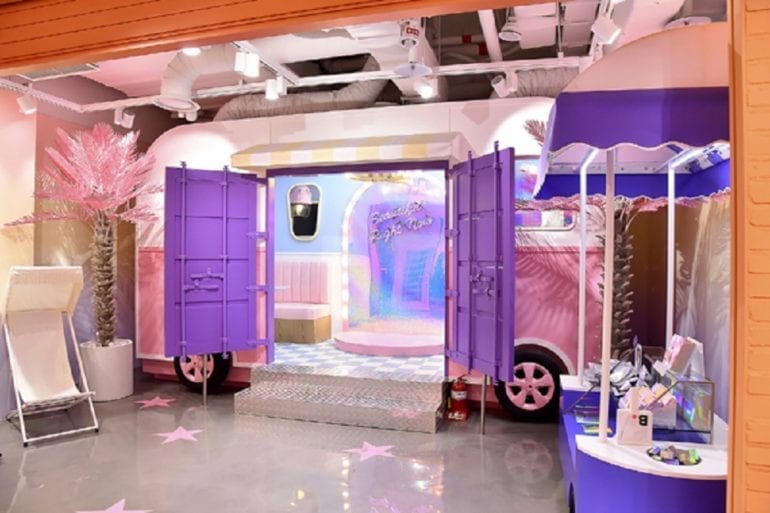
    B. by BANILA flagship store, located on the first floor of the COEX Mall in Starfield, is the first concept store for Banilaco’s new make-up brand ‘B. by BANILA’.

    B. by BANILA flagship store is designed as a space for conceptual beauty festivals where visitors can experience makeup products beautifully made with ‘FFFUN, EASY & QUICK’ and take pictures.

    The entire space of the flagship store is created for selfie from the trailer to the photo wall of the pink neon. Both sides of the store have a studio space with pink photo wall and pink neon sign, and a lip-like lip-slip test zone and a self-catering space to create a festival atmosphere including mirror balls and shiny curtains.

    Additionally, there is space to complete the make-up look by looking at the makeup tutorial video.

    In the middle of the store, there is a truss-like stage and a camping trailer and a movable pink mini stall that are moved around to give a feeling of being in an actual outdoor festival.

    Moreover, objects such as telephone boxes, and trees are decorated to provide a special and enjoyable experience.

    The center stage, the stalls and the camping troller are all designed to allow the customers to experience their own make-up items. In the café-style concept space, customers can also find vanilla cosmetic products.

    “The new store is a sensible and trendy space where customers want to enjoy themselves and their photographs,” said B. by BANILA marketing manager. “I hope customers will find pleasure here, not just for shopping, but also for fun.”

    B. by BANILA will open a second flagship store in Daegu Dongsungro in February 2018.

  • DFS opens new experiential wine & spirits store

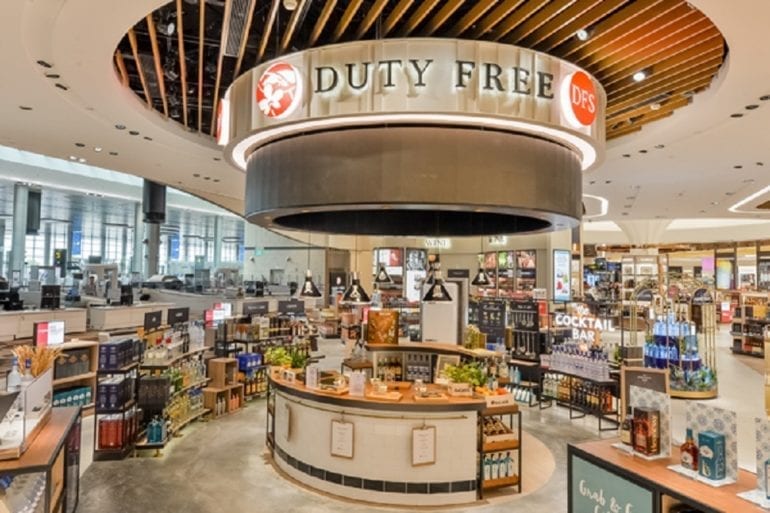
    DFS Group has opened its 167sq m wine and spirits duty free store at Singapore Changi Airport’s new Terminal 4.

    Featuring over 300 brands, Terminal 4 is the first terminal at Changi to offer a ‘walk-through’ retail concept, allowing DFS to introduce new features for a seamless shopping experience.

    This includes integrated shopping spaces covering liquor & tobacco and perfumes & cosmetics.

    In addition, travellers can for the first time make their purchases in a single transaction at common cash counters manned by team members cross-trained on all products.

    Brooke Supernaw, DFS Group’s Senior Vice President Spirits, Wines and Tobacco, Food and Gifts said: “We have been eagerly awaiting the opening of Terminal 4 and are thrilled to officially unveil DFS’ latest store here at Changi Airport.

    “We are excited to introduce two new concepts to provide our customers with more ways to engage with and discover new brands.”

    Travellers are encouraged to engage in the basics of cocktail making at The Cocktail Bar.The new store features ‘The Cocktail Bar’ and ‘The Craft Collection’ section, allowing passengers to discover and engage with new brands.

    Aimed at making cocktails accessible for connoisseurs and novices alike, a selection of brands will be invited to take over the space and showcase their spirits throughout the year.

    The Craft Collection section showcases a selection of craft and small-batch beers and spirits from around the world, ‘curated for travelling customers looking for something unique and artisanal’, states DFS.

    The travel retailer says it aims to invoke the stories and passion of a new generation of brewers and distillers who put ‘innovation, authenticity and local culture’ into everything they do.

    Three craft beers are available on tap for tasting, as well as a rotating selection of spirits.

    According to DFS, gin is a category that embodies today’s craft movement within spirits, so new brands will be introduced to the collection on rotation.

    Terminal 4 also features The Whiskey House, which marks a welcome return following its success at DFS’s Terminal 2 Duplex store.

    From timeless classics and special releases to exclusive bottlings and single casks, The Whiskey House offers complimentary tastings of over 100 different whiskeys.

    Meanwhile, Master Distillers and Brand Ambassadors will stop by regularly to introduce their new release exclusives, with guided tastings and food pairings.

    The new Terminal 4 store also boasts an impressive selection of ‘prestige wines’, with special collections from Lafite, Mouton and Latour among others.

    Passengers will also be able to sample a curated selection of wine, ‘presented in enomatic tasting machines’ instore before they buy.

    To celebrate the launch of the store, DFS has collaborated with local award-winning bartender Peter Chua of Crackerjack to create three cocktails inspired by Singapore’s favourite sweet treats.

    Every Friday and Saturday until the end of December, travellers will be able to enjoy complimentary samplings of the three cocktail serves at the Terminal 4 Activation Pad.

    In addition, customers who spend over S$120 ($88.6) on wines and spirits will receive a local snack ‘plushie coin pouch’ with their purchase.

    Commenting on the opening, Teo Chew Hoon, Group Senior Vice President of Airside Concessions Division at Changi Airport Group, said: “Our vision for Terminal 4 is to continually delight travellers with new retail experiences. CAG is happy to work with DFS to create a first-in-Changi seamless duty-free zone.

    “With the addition of Terminal 4, we look forward to welcoming many more travellers to enjoy Changi Airport’s exciting offerings.”

  • 6 key components to effective customer experience

    6 key components to effective customer experience

    Today’s highly competitive retail environment requires that retailers create compelling and unique customer experience (CX) allowing them to have a frictionless shopping experience across all the channels. The customer experience is not confined to a single department or a job role but a holistic organizational effort that requires participation from all the stakeholders within the retail organization. Customer experience is a strategic goal led by the CEO driving the omni-experience transformation within the organization. Consistency across the customer-facing touchpoints is essential to ensure a perfect and consistent customer experience.

    According to IDC experience survey, “consistent experience across different channels of interactions” cited as the number 1 factor by the respondents. Retailers must also orchestrate their channels with business process and support those processes with integrated software systems.

    IDC sees the customer experience as a business strategy that is part of a customer-centric business strategy. Customer experience is one of the four experiences defined by IDC (the other are employee, partner, and supplier). While an organization may have the result of a customer experience in mind, it may choose to pursue an employee experience or partner experience strategy as its means to ultimately deliver a differentiating customer experience. IDC defines customer experience as follows: Customer experience is the entire process over the lifetime of a relationship between customers and an organization with which they engage. In this context, customer experiences can range from a single transaction to an ongoing relationship over a period of many years.

    Key Components of Customer Experience

    • Culture, strategy, and processes. The organization’s culture is central to making a CX strategy work. Leadership must show support for CX initiatives because the ripple effect through the organization is profound. The concrete evidence of this cultural directive should be found in the strategy and processes that support it.

    • Products and services. The product or service that the retailer offers should inherent to the satisfaction of the customer, and it must fulfill a need or demand. The quality of the product or service should also reflect the value for money.

    • People. Customers are obviously at the center of CX. But the company’s employees are just as important, if not more so, as they are in the direct flow of delivering the customer experience. Employees are the advocates and evangelists for the company. In addition, suppliers and partners enable the production, sales, and implementation of the product or service, requiring them to understand the organization’s strategy in order to represent its brand.

    • Information. Information includes all of the content, data, and analysis that are distributed among key stakeholders: the customer and the organization, by employees to other employees, and from partners to customers through the delivery and support of products.

    • Access. Access includes all the touch points through which a customer experiences a retail brand. The consistency of these touchpoints is the powerhouse factor in driving customer experience.

    • Technology. Technology, including both hardware and software, supports and automates the CX environment. Technology should streamline and reduce friction for customers when using digital channels.

  • Nokia unveils machine learning-powered customer experience solutions

    Nokia unveils machine learning-powered customer experience solutions

    Nokia has powered major updates to its Motive Customer eXperience Solutions (CXS) software portfolio, promising communications service providers with advanced machine learning capabilities to reduce costs and improve customer experiences.

    Nokia Motive Service Management Platform (SMP) 7.0 and Motive Care Analytics (CAL) 2.0 use machine-learning algorithms developed by Nokia Bell labs — advanced capabilities that give computers the ability to learn without being explicitly programmed.

    With support for machine learning in its CXS portfolio, Nokia aims to set a new standard for proactive care in the industry, dramatically improving the detection, troubleshooting and resolution of subscriber issues.

    Nokia Motive SMP 7.0 features Dynamic Intelligent Workflows, a new self-optimizing system that determines the ideal sequence of tasks that deliver the highest probability of resolving billing, subscription and network service issues in the shortest amount of time.

    By analyzing data from previous workflow executions, the network, customer premises equipment, and trouble tickets, this capability enables service providers to quickly find the optimal remediation to issues when subscribers contact help desk agents or use self-care.

    Nokia Motive CAL 2.0 is the first solution of its kind that automatically correlates customer help desk calls and self-care actions with network, service and third-party application topologies to identify call anomalies, such as unusual patterns in help desk calls that indicate the location of customer-impacting network and service issues.

    Together, Motive SMP 7.0 and Motive CAL 2.0 help service providers lower costs by reducing average help desk handling times 5% to15% and eliminating inappropriate truck rolls (dispatching a service technician to a customer location) related to network outages by as much as 90%.