Tag: customer

  • Indonesian mall integrates tech in the shopping experience

    Indonesian mall integrates tech in the shopping experience

    Supermal Karawaci, one of the largest mall entertainment center in Western Jakarta, has launched an interactive mobile application that would allow retailers to offer personalized content and engage with customers better.

    The 125,000-square-meter retail destination in Banten Province, West of Jakarta has over 1,000 retail stores and outlets, three cinemas and the largest Timezone arcade in Southeast Asia.

    The app, which was built on the shopper engagement platform of Singaporean technology firm Sprooki, is integrated with Supermal Karawaci’s touchpoints and mobile apps. Using location and contextual data, retailers would be able to offer individualized content such as vouchers, special offers, event alerts and store information.

    The system allows social sign-in and content sharing on platforms, including Facebook, which has more than 76 million users in Indonesia as of end 2016 and projected to grow to 86.4 million by end of 2017, according to eMarketer. The service will also be available in both English and Bahasa.

    Pipih Tjandra, Supermal Karawaci Marketing and Leasing General Manager, said the Sprooki platform would help keep the shopping hub at the cutting edge of technology, which customers had come to expect.

    “Supermal Karawaci works every day to be in tune with what today’s consumers want and expect through innovative marketing strategies. By implementing the Sprooki platform, our mall will be one of the first shopping precincts in Indonesia to incorporate a data-driven mobile platform to improve shopper experience, helping our tenants to increase in-store traffic and sales,” he said in a news release.

    Pablo Amante, Sprooki’s Head of Marketing, said in an email interview that the Indonesian market is ready to start adopting location-based and engagement technologies to help retailers and business to engage their shoppers, making the Indonesian retail industry much more competitive.

    The latest report from eMarketer shows that the number of smartphone users in Indonesia will rise from 55 million in 2015 to 92 million in 2019 and would be the third largest smartphone market in the Asia-Pacific.

    According to Lee Kang, the Vice Chairman of the Indonesian Cellular Phone Association (APSI), number of smartphone users in Indonesia has been growing between 30 and 50 percent each year and this growth momentum will remain intact due to the availability of affordable 4G smartphones on the Indonesian market and further development of Indonesia’s 4G network.

    “Based on these figures, retailers, shopping malls, and all companies focused on engaging their customers through mobile will see in our software a powerful tool to optimize their sales and marketing strategies, based on real data about their customers’ behavior,” Amante said.

    Cloud-based platform

    The Sprooki software is a cloud-based platform that analyzes physical and digital shopper behavior detected inside and outside stores. The platform is an analytics and contextual engine that algorithmically analyzes digital and physical data and predicts what shoppers are most likely to respond to, offering shoppers most relevant products at the best moments and locations.

    “Mall’s retailers benefit most from Sprooki platform, which gives them the possibility of engaging mobile shoppers in context and personalized ways; driving footfall to their stores; rewarding their top customers; making data and insights actionable through integrated reporting and predictive recommendations, and all these by using only one platform, saving time and efforts, so retailers and malls can focus on their marketing and sales strategies,” Amante explained.

    The software can be integrated either in mobile apps or websites. In these environments, consumers are always able to opt out or not sign in. The challenge, however, is to provide highly targeted and relevant content in a way that shoppers appreciate the added value of having access to these offers, campaigns or rewards.

    “When our customers provide to its shoppers with contextual and personalized offers, general response by consumers is very positive, as the shopping experience is different for each one and it’s relevant according to their likes and what they are looking for,” Amante added.

    While this is the first implementation of Sprooki technology in Indonesia, its customers are already spread across Southeast Asia.

    Amante said some of its customers include the 313@somerset iconic mall at Orchard Road in Singapore where the company implemented Sprooki Campaigns module, which allows shoppers to access to exclusive offers and coupons through vouchers. At Far East Organization /Shop Far East Asia (Singapore), it has also implemented Sprooki Rewards, a module that allows the mall to offer a card-less loyalty program to its shoppers.  In Vietnam, the technology allows location-based features and beacon technology to work both outside and inside the Crescent Mall to collect strategic data, providing a unique experience to shoppers.

    At this stage, Supermal Karawaci shoppers are exploring this new way of access to exclusive offers, and the response has been more than positive, with a high rate of voucher downloads since its launch last December 15.

    “Sprooki is delighted to enable Supermal Karawaci with the most advanced technology for engaging with customers and understanding their behavior. Our mobile platform will give the precinct’s retail tenants an effective way to drive frequency of visits and increase sales conversions,” said Sprooki CEO and Co-founder Michael Gethen in a media statement during the launch.

    Retail challenges ahead

    Sprooki is confident that location-based, data-driven mobile services are the present and the future for the retail industry.

    “After the struggles that retailers have suffered in the last years due to the e-commerce and online shops, the game is again on for big retailers and shopping malls that want to bring shoppers back to the physical stores. And the only way to make this happen is by providing a new shopping experience, based on offering what the digital world already offers (personalization, analytics, related purchases, recommendations, rewards, etc.),” Amante said.

    Shoppers nowadays also expect more from their brands in terms of product offerings, customer services, efficiency, and engagement. That is the reason why features such as ‘click and collect’, digital voucher redemption, scan receipts, faster and easier payment methods are raising, in order to meet consumers’ expectations.

    Taking a look at the region and the challenges that retailers are facing in Southeast Asia, Sprooki sees a lot of opportunities.

    “Retailers nowadays have a big gap in terms of what they know about their shoppers, and how they behave in their shopping journey. Even the most advanced retailers that work already with big data haven’t found an effective and sustainable way to manage all these data without the need of investing a lot of money and time,” Amante said.

    Sprooki today is currently based in Singapore, and has offices in Hong Kong and Australia, with local contacts in Indonesia, Malaysia, Philippines, and Vietnam.


  • As Vietnamese banks digitise, customer service key

    As Vietnamese banks digitise, customer service key

    Customers must be at the centre of banks’ attention as they make a move towards digital transformation in an effort to adapt to a changing landscape of financial innovation and disruptive technologies.

    This was said by head of Retail Banking at VP Bank, Sandeep Deobhakta, at a conference held in Hà Nội on Thursday, titled, ‘The Future of Finance in Việt Nam 2017.’

    Deobhakta, who has been holding this position since May 2015, said customers in Việt Nam are very open to new technologies and the nascent retail banking industry in Việt Nam can also adopt these technologies faster than other markets if they put customers first.

    In the future, traditional banks might lose business to companies that employ disruptive innovations if they failed to deliver better, simpler and faster solutions to customers, Deobhakta cautioned.

    VP Bank has been working with Timo, Việt Nam’s first mobile-only bank, giving customers better solutions to manage their money, bills and the ability to top up their mobile cards through the Timo app. At Timo Hangouts, one can forget about a typical bank branch and instead enjoy a coffee as one opens an account and uses bank services.

    Timo has about 4,000 customers in the HCM City and opened a Timo Hangout in Hà Nội last October, looking to attract more than 100,000 users by next year.

    Việt Nam has a huge untapped market for financial innovation, with only 20 per cent of the population having bank accounts and 3 per cent owning credit cards, Foo Boon Ping, managing editor of The Asian Banker, said at the conference.

    “The stable GDP growth of around 6 to 7 per cent, low wages, a large population with a high savings and strong innovative approach are crucial factors that will accelerate the financial and industrial development in the Vietnamese market,” he said.

    “Digital transformation is driven by real business needs to transform to become more cost efficient and to serve your customers as their behavior and preferences change,” he added.

    There are only about 36 fin-tech companies in Việt Nam, with most focusing on providing consumers and merchants with online and digital payment solutions.

  • E-retailers must offer personalized services to win customer trust

    E-retailers must offer personalized services to win customer trust

    With its uniquely young population, the lack of big-box retail and unmatched digital adoption rates, Southeast Asia’s e-commerce market is growing much faster than the global rate.

    A report by Google and Singapore investment company Temasek forecasts that the e-commerce market in Southeast Asia will grow from $5.5 billion in 2015 (0.8 percent of the total retail market) to US$87.8 billion in 2025 (6.4 percent of the total).

    According to the report, Singapore’s e-commerce market was valued at $1 billion in 2015, with online shopping making up 2.1 percent of retail sales. By 2025, Singapore’s e-commerce market is expected to make up 6.7 percent of all retail sales, at a value of $87.8 billion.

    Unique characteristics, unique challenges

    While digital adoption in Southeast Asia is exceptionally high, the industry has some unique characteristics and faces some unique challenges.

    Southeast Asia’s later uptake of digital technology means that e-commerce ventures in the region have the luxury to learn from others’ mistakes made in mature e-commerce markets like the US and China.

    What we are seeing is a compressed timeframe of e-commerce business model development, with the established evolution from classified sites like Craigslist through C2C (eBay, Taobao), B2C (Amazon, JD.com), B2B2C (Amazon, Tmall, Lazada) to Brand.com (Estee Lauder, Nike) happening faster and in many cases, simultaneously.

    This pattern is very much influenced by consumer preferences and online behavior. The region is a unique e-commerce market. Consumers here are leapfrogging technologies. Outside of tier-one cities, many have bypassed PCs, accessing digital platforms primarily through mobile phones.

    In Thailand for example, 85 percent of consumers not living in major metropolitan hubs use mobile devices for their online purchases.

    While in mature e-commerce markets desktop C2C still plays a pivotal role, Southeast Asia’s leapfrogging towards mobile is disrupting traditional, desktop-first marketplaces. Mobile-only C2C marketplaces like Carousell and Garena-backed Shopee are making aggressive moves against their older desktop counterparts like Tarad in Thailand and Tokopedia in Indonesia.

    Kicking the tyres on social media

    As a result of this fragmentation, shoppers are more likely to head first to search engines when looking for products as opposed to checking company websites. They show little loyalty to retailers and shop via social media. More than 80 percent of Southeast Asia’s digital consumers use social media such as Instagram to research and review products.

    Since sales via social media comprise up to 30 percent of all transactions, companies are rapidly expanding their services to attract consumers. The message to retailers is that the game changer will be the use of data to build real relationships with customers.

    Capture the data – then interpret it

    Beyond ease of purchase and the ability to consult the opinion of other consumers, e-commerce has revolutionized the way information about a retail customer’s journey to purchase is captured.

    Today, such information is captured on a more individual basis. E-commerce enables retailers to know what particular customers looked for, how they reached the site, what they bought, and even associated and abandoned purchases.

    Reconstructing the customer’s journey was difficult when the sole purchasing channel was the physical store and the only traceable element the purchase. At best, the customer was only identified at the checkout, which militated against personalized recommendations.

    Thanks to a better understanding of the journey to purchase, e-commerce has made it possible to better understand customer behaviour and react in real time. Distributors have considered applying these concepts across all sales channels – stores, call centers, etc. So, retailers today are challenged with fully understanding the customer journey across each one, while benefitting from greater accuracy.

    This is not easy. Depending on the channel chosen by the customer, the knowledge obtained by the seller is not the same: as we know, while at the checkout, the customer will only be recognized if they own a loyalty card or have already visited the store. But, in the latter case, it will be extremely complex to make the link with past purchases.

    Similarly, a website may enable the collection of data on the intention to buy but it is extremely difficult to correlate these events with the purchasing transactions if they are not made online and in the same session. The stakes are high, given that 78 percent of consumers now do their research online prior to making a purchase .

    Talend suggests that one solution is to integrate sensors into the elements that constitute a customer’s purchasing journey, then analyze and cross-reference this data to extract information from it.

    Some of our customers are already engaged in this process. It all usually begins with a detailed analysis of the customer’s online journey, to collect information on intent, cross-reference it at an aggregated level with actual purchases, at the catchment area level, for example, to determine correlations and refine segmentations.

    Then, this information is cross-referenced for a second time with transactional data from the physical stores and the website, which enables us to map the customer’s journey from intention to buy to the purchase or beyond. Thirdly, it’s a matter of developing a recommendation system in real time throughout the customer’s journey to drive increased sales and greater loyalty.

    Value-added services

    The main future challenge facing distributors lies in the value-added services that they may be able to provide to customers, to accompany their products or service offering. Consumers have learned to be wary of digital technology. More than ever, they will only be inclined to share information on their intentions and their profiles if their trust has been gained and they can perceive the benefit in it.

    How do you create this trust? Via value-added services: when consumers see that their interests are being considered, they do not feel constrained or trapped by a commercial logic that is beyond them.

    Amazon, with its “1-Click” ordering, has shown the way. In other sectors, such as the taxi industry, newcomers have gone even further, revolutionizing the customer’s journey by utilizing digital technology, from searching for a service to payment through a range of innovative services that make the customer’s life easier, such as the automated capture of expense forms.

    In a world in which advertising and tracking are increasingly present, data analysis carried out with the sole aim of commercial transformation is doomed to failure, as it is based on an imbalance between the benefits offered to the customer and those gained by the supplier. Until now, personalization in retail has tended to limit itself to marketing and measure itself in conversion rates, except for distributors, who have increasingly relied on customer loyalty.

    Multichannel is not the invention of the distributors but a reaction to consumers’ wishes. Think about it, even Amazon is going to start opening physical stores. Why? Because it has fully understood that a key element was missing in its bid to become better acquainted with its customers’ journey, while responding more effectively to their wishes.

  • Verint acquires OpinionLab to push digital customer engagement

    Verint acquires OpinionLab to push digital customer engagement

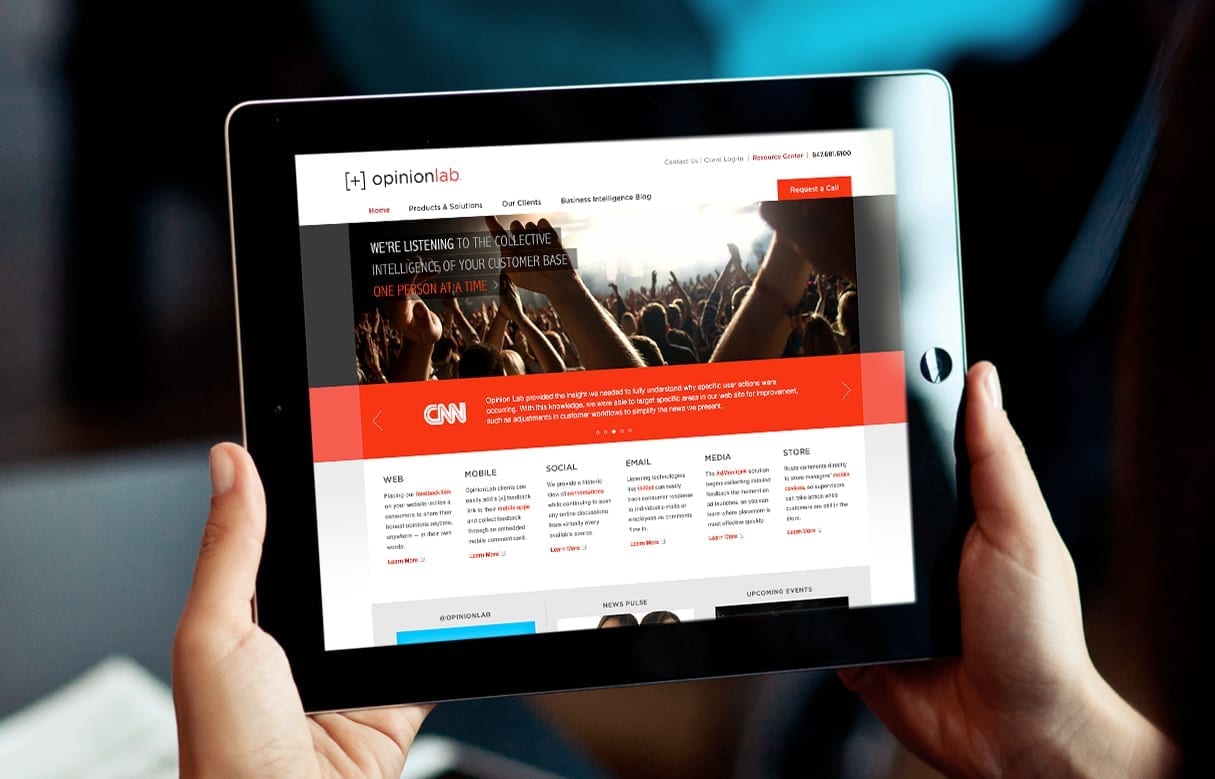
    Verint Systems has extended its Customer Engagement Optimization portfolio through its acquisition of OpinionLab, a provider of continuous voice of the customer listening solutions that drive smarter, real-time digital engagement.

    OpinionLab solutions are used by global brands to optimize web and mobile customer experiences and engagement.

    Voice of the Customer (VoC) solutions are becoming a strategic imperative, helping organizations measure and enhance experiences, satisfaction and loyalty.

    As more customer engagements follow a “digital-first” approach for conducting research and performing transactions, as well as solving problems, companies need to measure their customers’ digital experiences and quickly act on those insights to enhance both the customer experience and business performance.

    Through its acquisition of OpinionLab, Verint has extended its Customer Engagement Optimization portfolio to now include the ability to measure and act on digital customer experiences in-the-moment.

    With this addition, Verint has broadened its capabilities for listening, analyzing and acting on the VoC across all channels—digital, voice, text and social.

    “Capturing, analyzing and acting on the voice of the customer are critical for any organization in any industry,” says Elan Moriah, Verint’s president, for customer engagement solutions. “With the OpinionLab combination, we’re taking voice of the customer to a new level by giving organizations a complete solution for improving the customer experience across engagement channels.”

  • Nokia unveils machine learning-powered customer experience solutions

    Nokia unveils machine learning-powered customer experience solutions

    Nokia has powered major updates to its Motive Customer eXperience Solutions (CXS) software portfolio, promising communications service providers with advanced machine learning capabilities to reduce costs and improve customer experiences.

    Nokia Motive Service Management Platform (SMP) 7.0 and Motive Care Analytics (CAL) 2.0 use machine-learning algorithms developed by Nokia Bell labs — advanced capabilities that give computers the ability to learn without being explicitly programmed.

    With support for machine learning in its CXS portfolio, Nokia aims to set a new standard for proactive care in the industry, dramatically improving the detection, troubleshooting and resolution of subscriber issues.

    Nokia Motive SMP 7.0 features Dynamic Intelligent Workflows, a new self-optimizing system that determines the ideal sequence of tasks that deliver the highest probability of resolving billing, subscription and network service issues in the shortest amount of time.

    By analyzing data from previous workflow executions, the network, customer premises equipment, and trouble tickets, this capability enables service providers to quickly find the optimal remediation to issues when subscribers contact help desk agents or use self-care.

    Nokia Motive CAL 2.0 is the first solution of its kind that automatically correlates customer help desk calls and self-care actions with network, service and third-party application topologies to identify call anomalies, such as unusual patterns in help desk calls that indicate the location of customer-impacting network and service issues.

    Together, Motive SMP 7.0 and Motive CAL 2.0 help service providers lower costs by reducing average help desk handling times 5% to15% and eliminating inappropriate truck rolls (dispatching a service technician to a customer location) related to network outages by as much as 90%.

  • QVC Japan taps Verint to enhance quality assurance, customer experience

    QVC Japan taps Verint to enhance quality assurance, customer experience

    TV shopping firm QVC Japan is leveraging Verint Workforce Optimization in its in-country contact centers to drive operational improvements, as well as enhance the quality of calls and productivity of its customer service agents.

    QVC is also using and benefitting from Verint Speech Analytics, which continues to play an important role in its focus on customer engagement.

    Having used the Verint Workforce Optimization and Customer Analytics solutions for three years, QVC Japan is capturing, analyzing and acting on feedback from its customers to help ensure consistency in its service approach and deliver positive experiences.

    “QVC Japan was the first operation in the QVC global network to implement Verint’s workforce optimization and analytics solutions, and based on our positive results, we have gained a lot of attention,” said Masukawa, customer experience manager at QVC Japan.

    In particular, the combination of quality management and speech analytics helps us determine how best to maximize customer and other business insights coming into our operations and then apply them to new measures.”

    The QVC quality team was the first to introduce workforce optimization and speech analytics to the organization. In doing so, the business has increased quality scores, while enhancing productivity across its teams. Upon experiencing these results, QVC Japan’s customer experience division implemented the Verint Speech Analytics solution.

    By leveraging the data and valuable insights from the voices of its customers, the company says it is better able serve them, meet their expectations, and develop and launch compelling marketing initiatives and campaigns.

  • Dnata has inaugurated its customer service centre for cargo at Dubai Airport

    Dnata has inaugurated its customer service centre for cargo at Dubai Airport

    According to dnata, the new 5,000m2 facility is located at Freight Gate 5 at the Dubai Airport Free Zone and is expected to handle 25,000 tonnes of export cargo every month.

    “What we see today is the result of meticulous planning, creative thinking and most of all, listening to our customers,” said Gary Chapman, president of dnata and group services. “We are looking to bring about further efficiency, cost-saving and surpass our customers’ expectations.  We take pride in being a leader in cargo handling, and it’s important to constantly raise the bar when it comes to innovation and customer service. I believe this new centre really demonstrates our commitment to providing a secure and efficient environment for our customers’ cargo needs.”

    According to dnata, the service centre features new export counters, government agencies, a special cargo acceptance area, a new office space for airline and freight forwarders, as well as dnata’s new Cargo Integrated Control Centre, which operates 24/7 and simplifies information flow between all stakeholders. The CICC also monitors, troubleshoots and enables quick decision-making to improve efficiency.

    “While we have accomplished a great deal, we are always looking to innovate and offer better service to our customers,” said Chapman. “They have come to expect that of us, and we are constantly looking at ways to improve. We have exciting plans ahead. The evolution of this facility will see the opening of an import customer service centre, as well as additional storage and handling capacity for our export customers.”

  • Teradata boosts customer experience with behavioral insights

    Teradata boosts customer experience with behavioral insights

    Teradata now offers the Teradata Customer Journey Analytic Solution, a complete set of capabilities for discerning the behavioral paths of each individual customer.

    The solution determines the next best interaction and delivering a consistent, personalized brand experience through every channel and touch point. It also uses Teradata’s consulting services, as well as technologies that enable real-time customer data integration, advanced behavioral analytics and multi-channel marketing automation.

    Further, the solution enables CMOs who want to truly understand each individual customer experience to move beyond old school one-to-one marketing tactics that rely on purchases and traditional customer profiling.

    The insights resulting from Teradata’s Customer Journey Analytic Solution enable marketers to optimize objectives such as response and conversion rates, service delivery, churn, and customer satisfaction – leading directly to high-impact business outcomes such as increased revenue and customer retention.

    Customers today require every interaction with a brand to be consistent, but also personalized and relevant. This is despite the ever-expanding range of channels that make building a complete picture of each individual customer extremely challenging.

    “Managing every customer as an individual, based on their interactions with your company, requires not only the integration of different types of data but understanding it through the application of complex multi-genre analytics,” said Dan Harrington, EVP for consulting and support services of Teradata. “Even the best-known companies feel this is a ‘boil the ocean’ project – making sense of billions of events for millions of customers, in real time.”

  • Sunway Malls Adopt New Strategy in Elevating Customer Service

    Sunway Malls Adopt New Strategy in Elevating Customer Service

    Malaysia’s mall industry, already faced with stiff competition is expected to intensify as another 27.28 mil sq ft of new retail space will be entering the market according to National Property Information Centre (Napic) data.

    Of the 27.28 mil sq ft supply, 16.2 mil sq ft is at various stages of construction while the remaining 11.08 mil sq ft is are being planned. This will add on to the 148.85 mil sq ft of existing retail space in the market and brings Malaysia’s total retail space supply to 178.13 mil sq ft.  

    The increase in retail space comes at a time when retailers are already hard pressed with slower retail sale growth and lower margin amid weak consumer sentiments.

    In the latest quarter results by Retail Group Malaysia (RGM), Q2 2016 registered a growth rate of 7.5% against the forecast of 9.9% – 24% lower than expected. RGM termed the results as ‘below market expectation’. In contrast, retail sales fell 4.4% in Q1 2016.

    In a bid to increase, sustain and retain footfall and sales, Sunway Malls re-strategise their human capital enhancement by recruiting ex-flight attendants into the customer service division to better serve its shoppers.

    While known for delivering quality service, the hiring of ex-flight attendants also allows Sunway Malls to leverage on the crew’s training and experience in safety and emergency handling which serves as an added advantage for group’s front-line service.

    The initiative has so far seen the recruitment of nine ex-flight attendants from a local carrier in both Sunway Pyramid and soon- to-be-opened Sunway Velocity Mall. Recruitment effort is also underway to place more ex-attendants in Sunway Putra Mall in Kuala Lumpur and Sunway Carnival Mall in Penang.

    “With increasing competition, it is imperative that the creation of good customer service experience in malls takes precedence as both a strategic differentiator and a loyalty tool in a saturated market,” says Kevin Tan, Chief Operating Officer of Sunway Malls.

    “From the moment a customer steps into the mall, we strive to provide world class service through our touching hearts philosophy to create a warm, welcoming and wholesome lifestyle experience. We value the different needs of each and every customer in spite of background, gender and age hence we are creating diversity in the Concierge so they can engage with the various shopper profiles we have and extend assistance every time it’s necessary,” he continues.

    The group’s effort in delivering good customer service was also acknowledged by Professor Philip Kotler, the Father of Modern Marketing when he awarded Sunway Pyarmid with My Branded Service Award in recognition of its outstanding customer service back in 2009.

    Its earlier customer service initiatives among others included carpark guiding system, powered wheelchairs, child distance monitors and auxiliary police force were known as the mall industry’s firsts.

    Although Sunway Malls is hiring ex-flight attendants as part of their new retail strategy, the brand still welcomes all who have interest in the service line.

    “Some of our best customer service employees are not from the airline industry but they have the passion and the willingness in serving customers and that’s the most important criteria of all,” says Kevin.

  • AIS introduces self-service at contact centers

    AIS introduces self-service at contact centers

    Thailand’s AIS has upgraded its customer contact center system in a bid to provide a consistent, enhanced and personalized customer experience for its growing subscriber base.

    The new system now routes up to 70% of all customer calls to a self-service system.

    The self-service capacity allows subscribers to gain access to services such as activating their SIM card, subscribing to roaming services or selecting rewards, without dealing with long queues.

    Leveraging Avaya’s Self-Service solution, AIS’ Advanced Contact Centers (ACC) have streamlined customer care and enhanced personalized live agent support at its contact centers located in Bangkok and Korat.

    The centers currently employ 3,300 customer service employees, serving 40 million subscribers nationwide.

    Smartphone users in Thailand are expected to reach 20 million in 2016 and this is expected to soar further with the introduction of 4G commercial services this year. Demand for more sophisticated, seamless and highly reliable broadband connectivity from business is also expected to escalate as Thailand’s digital economy accelerates.

    ACC saw the digital transformation of its contact center as a critical enabler in the new economy. The new self service system will ensure a consistent customer experience for AIS’s 11 million calls it receives through its contact centers every month.

    In the past, each customer call routed to a live agent can cost between 50 to 100 baht ($1.42 to $2.84), depending on the competency level of the agent. In contrast, the new system means that each call costs only 1 baht for ACC.

    The new system also provides capabilities for ACC to identify and categorize AIS’s customer calls and the services they require before matching them with the right agents trained to help specific service requests or customer types.

  • How UK Retailers Can Embrace The Chinese Ecommerce Opportunity

    How UK Retailers Can Embrace The Chinese Ecommerce Opportunity

    Within the next two years, China’s e-commerce market will top $1 trillion, making it bigger than the e-commerce markets of the US, UK, Japan, Germany, and France combined. Fuelled by greater internet and smartphone penetration, an expanding middle class with higher disposable income, and greater consumer confidence, over half of Chinese internet users having now made a purchase on the web.

    Surely then, UK retailers should be fighting tooth and nail for the loyalty and spend of these Chinese shoppers?

    Surprisingly, this is not the case. While over half of UK retailers (55%) ship to China, our research – into the international shopping experience offered by the UK’s top 150 online retailers – shows a massive variation in the quality of shopping experiences offered to Chinese shoppers.

    UK e-tailers are failing to accommodate a great number of Chinese shopping preferences and reducing the likelihood of conversions. For example, just over a quarter (26%) of retailers that ship to China offer shoppers the ability to pay in Yuan and present prices in local currency.

    The remainder are leaving shoppers in China to estimate for themselves how much products will cost to buy, which means shoppers could be hit by sudden currency exchange fluctuations or fees from their bank.

    Similarly, only 22% of retailers that ship to China offer shoppers the ability to pay using local payment methods, such as e-wallets and bank transfers like Alipay or Tenpay, which account for more than 80% of ecommerce payments, or Chinese payments cards such as UnionPay.

    Of retailers that do accept Chinese payment methods, 42% offer a single option, barring some prospective customers from making a purchase.

    Added to this, just one in ten (10%) retailers that ship to China offer shoppers a Mandarin-language shopping experience. Since the majority of people living in China don’t speak English fluently, shoppers are likely to feel unconfident about making a purchase if they are expected to use an English-language checkout.

    It’s clear from these customer experience shortcomings that the majority of UK retailers are failing to exploit the burgeoning Chinese ecommerce market fully. This puts them on the back foot when it comes to winning long term loyalty and purchasing preference.

    Retailers simply can’t afford to offer shoppers a second rate experience, especially when failing to localise the online store can make shoppers nervous and can quickly sour a great online experience.

    So, how can retailers rectify this and improve the customer experience to grow sales in China?

    Here are our top tips-

    •       Improve the experience for Chinese shoppers. The first rule of international trade is that, in order to be successful, customers must enjoy the same experience regardless of where they are in the world. Retailers should offer shoppers in China the same, high quality experience that shoppers in the UK and elsewhere expect to receive.

    •       Offer multiple shipping options at reasonable rates. To give Chinese shoppers the confidence to buy, retailers must offer greater choice as well as competitive prices. This is especially critical in China where clearance processes can be very lengthy for non-experienced carriers. Moreover, it’s important to have a simple and transparent returns process in place, so if something goes wrong, shoppers will be confident that it will be resolved quickly and easily.

    •       Display prices in Chinese Yuan. There are few things more off-putting than exchange rate uncertainty when buying from a retailer in another country, and this is particularly disconcerting at times of high currency fluctuation. Retailers should present shoppers in China with prices in the local currency, so that shoppers can feel confident about how much they are paying.

    •       Try to put the customer’s mind at ease. Most shoppers in China expect and prefer to pre-pay customs charges or handling fees when shopping online, so retailers should avoid any potential for nasty surprises, by being upfront about these charges and offering pre-payment.

    With e-commerce sales in China set to exceed $1 trillion next year, retailers must pay more attention to China in the years ahead. However, delivering a localised shopping experience doesn’t have to require a dedicated Chinese website or months spent negotiating with the local supply chain.


  • Affluent Asians spending on status

    Affluent Asians spending on status

    Goods and experiences which provide “a sense of status, exclusivity and uniqueness” are key considerations when shopping for luxury items for Asia Pacific’s elite, according to the Visa Affluent Study 2015.

    In other words, affluent Asians are prepared to spend on status.

    According to the study, a significant percentage of Asia Pacific affluents describe themselves as “status seekers”, with more than one third of the affluent in China (38 per cent), Hong Kong (36 per cent) and Korea and Japan (31 per cent each) are motivated to purchase luxury goods to display their social standing. Affluent in India (29 per cent) and in Singapore (27 per cent) also report taking pleasure in the attention that luxury goods attract.

    “What drives Asia Pacific’s affluent in making luxury purchase decisions varies across the region, but the common factor is the search for unique products and services that give a sense of status and exclusivity,” said Ruben Salazar, VP, products with Visa Asia Pacific.

    “While quality remains important for most consumers, Asia Pacific’s affluent are continuously looking to go beyond quality guarantee to find that special product or experience that stands out from the crowd and that gives a sense of self-satisfaction.”

    Only the affluent from Indonesia and Australia described themselves as being more driven by other considerations, with almost a quarter of Indonesian affluent (23 per cent) surveyed also valuing quality alongside social status (24 per cent) and exclusivity (28 per cent).

    Some 500 respondents from each of Australia, China, Hong Kong, India, Indonesia, Japan, Singapore and South Korea were interviewed online and in face-to-face surveys for the study. Respondents have an average household income of US$73,000 per annum and are aged between 18 and 55 years old.

  • Gap narrows for Chinese brands

    Gap narrows for Chinese brands

    Chinese brands are closing the gap with international brands as consumers become more concerned about product quality rather than the origin of the brands, according to a latest study.

    As high as 67 percent of consumers said they favor domestic brands, consumer research firm Mintel said in a research report yesterday.

    The study covered 3,000 consumers aged between 20 and 49 in 10 cities.

    The domestic food and beverage brands have a strong following, with 42 percent of the respondents favoring them over foreign products compared with 25 percent that prefer imported snacks.

    For domestic ready-to-drink beverage brands, 44 percent of consumers prefer them against 27 percent that favor foreign products.

    Baby food is an exception with 45 percent of respondents saying they would choose international brands against only 31 percent who favor domestic products.

    “We’ve seen Chinese consumers becoming more value-driven, as they’re more likely to judge a product by its content and quality instead of checking whether it’s an international or domestic brand,” said Laural Gu, Mintel China’s senior lifestyle analyst.

    The study also found that 47 percent of the consumers were more willing to indulge themselves by paying for services instead of products.