Tag: cut

  • Job cuts continue in embattled property sector

    Job cuts continue in embattled property sector

    The mass layoffs that began last year amid a market decline continue in the struggling property sector, with major developers and brokerages downsizing their sales teams to survive.

    Property developer Dat Xanh Group laid off 1,384 people in the first quarter after letting go 3,191 in the previous one.

    Its brokerage subsidiary, Dat Xanh Services, sacked 1,245 employees last quarter after letting go 3,000 in the final quarter of 2022.

    The company expects more cuts in the remaining months of this year amid the continuing market slump.

    Giant developer Novaland has been downsizing since last year and only had 1,362 employees on its payrolls at the end of March, a stark contrast to 2021 when it sought to hire 2,000 new workers.

    It posted its first quarterly loss — of VND410 billion (US$17.45 million) — since listing its shares on the stock market in 2016, while revenues fell by 70% year-on-year.

    Many brokerages partnering with Novaland have either cut 70-80% of their payroll or closed down as of May.

    Other developers such as Danh Khoi, Hung Thinh, An Gia, Thu Duc House, Hoang Quan, Phat Dat, and LDG have also been laying off staff.

    The marketing head of a Ho Chi Minh City brokerage said since March he has been doing multiple jobs, including as a secretary and customer service officer, after 80% of the staff were sacked.

    The company has been owing salaries since the beginning of this year, which means people are likely quit in the coming months, he said.

    “I have been working in the industry for 18 years, but never seen a layoff wave this big.”

    Data from the Vietnam Association of Realtors shows that 40-50% of property transaction platforms shut down in the first quarter, and the number of brokers was 70% down since the beginning of 2022.

    What property firms are struggling with most are the drying up of cash flows due to plunging sales and inability to repay debts.

    Companies in the construction, architecture and design segments are also struggling, according to the association.

    The number of companies in the property sector registering in the first quarter fell by 63% year-on-year, according to the General Statistics Office.

    The number shutting down temporarily was up 60.7% at 1,816, while 341 closed for good, a 30.2% increase.

    Tran Xuan Ngoc, CEO of developer Nam Long Group, said 2023 would be a challenging year for the sector with the difficulties being even more severe than during the 2013 crisis.

    They would persist in 2024, he said.

    “This is a severe and inevitable crisis. Property companies must restructure completely to survive.”

    Nguyen Mac Hoai Nam, CEO of property consultancy Nam Phat, said the 2016-20 boom caused prices go out of control, and the challenges mushrooming now are a result of that.

  • India Considers Sharp Import Tax Cuts On EVs After Tesla Lobbying

    India Considers Sharp Import Tax Cuts On EVs After Tesla Lobbying

    India is considering slashing import duties on electric cars to as low as 40%, two senior government officials told Reuters, days after Tesla Inc’s appeals for a cut polarised the country’s auto industry. For imported electric vehicles (EVs) with a value of less than $40,000 – including the car’s cost, insurance and freight – the government is discussing slashing the tax rate to 40% from 60% presently, the officials told Reuters. For EVs valued at more than $40,000, it is looking at cutting the rate to 60% from 100%, they said.

    “We haven’t firmed up the reduction in duties yet, but there are discussions that are ongoing,” one of the officials said. India is the world’s fifth-largest car market with annual sales of about 3 million vehicles but the majority of cars sold are priced below $20,000. EVs make up a fraction of the total and luxury EV sales are negligible, according to industry estimates.

    Tesla, in its pitch to the government – first reported by Reuters in July, argued that lowering import duties on EVs to 40% would make them more affordable and boost sales. This triggered a rare public debate among automakers over whether such a move would contradict India’s push to increase domestic manufacturing. Even so, the government is in favour of a cut if it can see companies such as Tesla providing some benefit to the domestic economy – manufacture locally, for example, or give a firm timeline on when it would be able to, one of the officials said. “Reducing import duties is not a problem as not many EVs are imported in the country. But we need some economic gain out of that. We also have to balance the concerns of the domestic players,” the official said.

    Tesla CEO Elon Musk said on Twitter last month that a local factory in India was “quite likely” if the company was successful with vehicle imports but taxes on them are high. The second official said that since the duty cut is being considered only for EVs and not other categories of imported cars, it should not be a concern for domestic automakers – that mainly manufacture affordable gasoline-powered cars.

    India’s finance and commerce ministries, as well as its federal think tank Niti Aayog, chaired by Prime Minister Narendra Modi, are discussing the proposal and all stakeholders will be consulted, the person added. Both sources did not want to be identified as the discussions are still private. India’s commerce and finance ministries as well as Niti Aayog did not immediately provide comment.

    Automakers including Daimler’s Mercedes-Benz and Audi have for years lobbied for lower import duties on luxury cars but faced strong resistance mainly from domestic companies. As a result, India’s luxury car market has remained small with average sales of around 35,000 vehicles a year.

    Tesla’s demands have found support from Mercedes as well as South Korean automaker Hyundai Motor, which has around an 18% share of India’s car market.

    Tesla’s cars would fall into the high-end EV category, which are mainly imported into India and account for a much smaller percentage of sales. Mercedes, Jaguar Land Rover and Audi sell imported luxury EVs in the country.

    This time Tesla’s demands have found support from Mercedes as well as South Korean automaker Hyundai Motor, which has around an 18% share of India’s car market.

    Opposing the proposed cut are Tata Motors, which produces affordable electric cars in the country, and Softbank Group-backed Ola, which is making electric scooters in India.

    A third source familiar with the government’s thinking said there was awareness that a brand such as Tesla can make electric cars more penetrable in India, which is lagging other major auto markets in EV sales.

    The government is thinking about the best way to approach this and they want to see some benefit even if that only means Tesla pledges to source parts domestically, the person said.

  • Ford Says To Cut 12,000 Jobs In All Across Europe

    Ford Says To Cut 12,000 Jobs In All Across Europe

    US carmaker Ford said Thursday that it plans to slash a total of 12,000 jobs across Europe as part of a previously-announced restructuring, as it closes or sells six plants in Britain, France, Russia and Slovakia in 2019 and 2020.

    “Ford’s manufacturing footprint in Europe will be reduced to a proposed 17 facilities by the end of 2020, from 24 at the beginning of 2019,” the group said, adding that the job cuts — including 5,400 already announced in Germany and 1,700 in Wales — would come “primarily through voluntarily separation programmes”.

  • Amazon cutting prices on thousands of online items

    Amazon cutting prices on thousands of online items

    Amazon Australia is holding its second mid-year sale, slashing prices on tens of thousands of products from Friday, May 31, through the month of June. The deals include up to 50 percent off select clothing, shoes and accessories from brands such as Calvin Klein, Berlei and Bonds; discounts on select TVs, video games and books; and 15 percent off household and pantry essentials when you spend $50 or more.

    Savings are advertised across all of Amazon’s 29 product categories, including kitchen, baby and pets.

    “With tens of thousands of products available at discounted prices and new deals going live every day throughout June, we hope our Mid-Year Sale provides something for everyone,” Rocco Braeuniger, country manager of Amazon Australia, said in a statement about the sale.

    Since launching in December 2017, Amazon Australia now claims to offer over 125 million products.

    This is the second time Amazon Australia has held a mid-year sale, joining many retailers in marking down stock for End of Financial Year (EOFY) sales during the month of June.

    Recent research from PayPal shows that EOFY sales are the most popular times for Aussies to pick up a bargain online, alongside Boxing Day.

    That same report also revealed that while some retailers are starting to move away from markdowns, most shoppers are still driven to purchase by discounts.

    PayPal found that 68 percent of Australian consumers are always on the lookout for an online sale or discount, and half of the consumers have waited for an item to go on sale before buying it online. Among Gen Z and Gen Y shoppers, that figure increases to 73 percent and 65 percent, respectively.

    But this doesn’t have to be bad news for retailers. According to PayPal, online sales present an opportunity for brands to build awareness and reach new customers: 39 percent of consumers have bought a brand online they wouldn’t usually buy because it was on sale, and 39 percent of retailers said online sales increase revenue.

    But it’s necessary to take a strategic approach. For instance, Amazon’s biggest sales – including its Mid-Year Sale, Prime Day sale, and Black Friday and Cyber Monday sales – are all about driving app downloads and Prime subscriptions. In turn, this drives more frequent purchasing on the platform.

    According to Retail Dive, Amazon saw more than 1 million consumers use its app for the first time on Prime Day 2018.

  • Daimler Plans To Cut Administration Costs By 20%

    Daimler Plans To Cut Administration Costs By 20%

    Incoming Daimler boss Ola Kaellenius is working on a cost cut program to reach profit margin targets which are threatened by global trade woes and ramp up issues at factories, Handelsblatt reported, citing company sources.

    Kaellenius, who will take over from Dieter Zetsche after the company’s annual general meeting on May 22, has been working for months on a cost cut initiative, dubbed “Move”, which is expected to be ready in the summer, the paper said.

    Central administration costs are to be cut by about 20%, the paper said, adding billions of euros in efficiency potential would be targeted.

    Daimler declined to comment.

    Kaellenius said earlier this month that Daimler will cut development costs of new Mercedes-Benz cars by a significant amount by 2025 and will intensify alliances with rivals as a way to improve margins.

  • Massive iPhone XR price cut in India

    Massive iPhone XR price cut in India

    While Apple continues to dominate the paramount US smartphone market in terms of both sales numbers and profits, the company’s trouble across two other key regions seems to be intensifying rather than ameliorating. Of course, the Cupertino-based tech giant is not sitting idly by as the likes of Huawei, Xiaomi, and even OnePlus are rendering its brand irrelevant in China and India, fighting back with long overdue price cuts.

    Following an unprecedented such move in the world’s largest smartphone market a few months back, Apple is reportedly discounting the iPhone XR in India right now by the equivalent of several hundred US dollars. Namely, a whopping $250 or so (17,000 rupees), which actually doesn’t make the company’s entry-level 2018 iPhone model quite as affordable as you might imagine.

    That’s because the iPhone XR was released in the region at a starting price of Rs. 76,900, equating to more than $1,100, which sounds ridiculous even by Apple’s standards. After the new discount is applied, the LCD-sporting 6.1-incher will cost Rs. 59,900 at authorized retail partners, which converts to $870 or so. That’s still more than what US buyers are typically charged, although the comparison is obviously not entirely fair.

    At the same time, it’s definitely worth pointing out that the Samsung Galaxy S10e starts at a lower recommended price of around 56,000 rupees ($810), no deals needed. As for the OnePlus 6T, which is one of the most popular “premium” handsets in India, it’s pretty obvious Apple has no intention to go as low as 38,000 rupees ($550) anytime soon.

    Still, this regional iPhone XR price cut could be the beginning of a beautiful global comeback for a company that must find ways to stop its recent sales decline. More iPhone discounts are likely to come to India in the near future as Apple ramps up local production of both lower-end and ultra-high-end models like the XS and XS Max. Speaking of, the iPhone XS Max continues to go for a preposterous $1,600 or so (Rs. 109,900) in a 64GB configuration. No wonder a measly 1.7 million iPhones were shipped in total in India last year.

  • Nike to cut 1,400 jobs in reorganization

    Nike to cut 1,400 jobs in reorganization

    Sports apparel and footwear giant Nike will cut about 1,400 jobs, part of a plan to expand direct selling to consumers as e-commerce roils the retail sector, the company announced Thursday.

    Nike said it would cut about two percent of its global workforce as it implements the “Consumer Direct offense,” a reorganization initiative that targets customers in 12 key cities.

    “In the new alignment, the company will drive growth by deeply serving consumers in 12 key cities,” the company said in a news release. “Nike is moving closer to the consumer — creating a local business, on a global scale.”

    The focus cities — New York, London, Shanghai, Beijing, Los Angeles, Tokyo, Paris, Berlin, Mexico City, Barcelona, Seoul and Milan — are expected to account for more than 80 percent of the Nike’s growth through 2020.

    The company restructured its global business, cutting the number of geographies from six to four and creating new employee teams so that digital and merchandising will be more responsive to key markets.

    Other changes include the goal of cutting product cycle times in half and new investments in categories seen as offering the greatest growth potential, including running, basketball, global football and young athletes.

    The changes come as department stores and other retailers close hundreds of stores due to the growth of e-commerce and mobile technology.

    “Today we serve our athletes in a changing world: one that’s faster and more personal,” said Trevor Edwards, president of the Nike Brand.

    “This new structure aligns all of our teams toward our ultimate goal — to deliver innovation, at speed, through more direct connections.”

  • Indonesia holds rate steady after six cuts

    Indonesia holds rate steady after six cuts

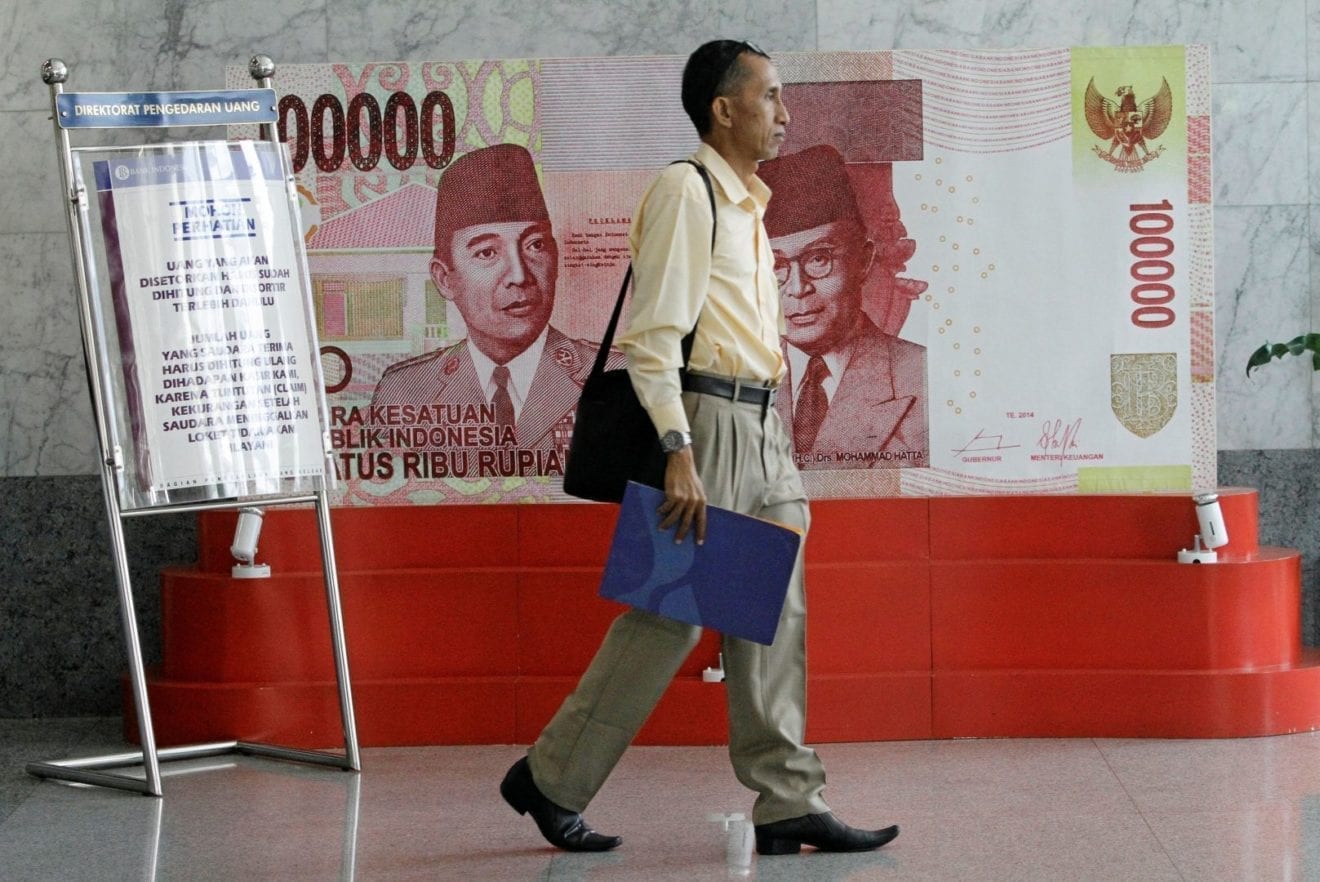
    Indonesia’s central bank kept its benchmark interest rate unchanged after six cuts this year, seeking to calm financial markets in the wake of the United States presidential election results.

    Governor Agus Martowardojo and his board held the seven-day reverse repurchase rate at 4.75 per cent yesterday. Analysts had said market volatility following Mr Donald Trump’s victory meant Bank Indonesia (BI) could not cut its benchmark rate for a seventh time this year.

    The rate hold “is in line with BI’s cautiousness in responding to the escalating uncertainty in the global financial market after the US election”, the central bank said in a statement.

    The central bank had reason to pause after taking aggressive action this year to boost growth amid a benign inflation environment.

    Expectations of more US interest rate increases caused the rupiah to plunge as much as 3.7 per cent against the US dollar last week, prompting BI to intervene to stabilise the Indonesian currency.

    “While BI is chasing for faster growth, one cannot be too complacent of the risks involved and how the rupiah traded post-US elections is a timely reminder of this,” DBS Group Holdings economist Gundy Cahyadi said before the rate decision.

    BI has cut its main policy rate this year by a total of 150 basis points. Despite the rate cuts, loan growth has continued to weaken.

    As of September, annual expansion of outstanding loans was at 6.47 per cent, its weakest in nearly seven years, as commercial banks grappled with increased levels of bad loans.

    The government is forecasting growth of about 5 per cent for this year, well below the 7 per cent targeted by President Joko Widodo when he came to office two years ago.

    Inflation remained subdued at 3.3 per cent in October, close to the lower end of the bank’s 3 per cent to 5 per cent target.

    “BI faces a difficult balancing act,” Capital Economics said. “Despite having cut interest rates six times this year, the domestic economy could clearly do with some additional support… But the threat of further falls in the rupiah means that BI is likely to act with caution.”

  • Deutsche Bank woes may lead to job cuts in Singapore

    Deutsche Bank woes may lead to job cuts in Singapore

    The problems at Germany’s largest lender, Deutsche Bank, which has seen its share price tumble to record lows on concerns of a looming US$14 billion (S$19 billion) fine by US authorities, could raise questions over the fate of some of its 2,100-strong workforce in Singapore, analysts said on Monday (Oct 3).

    “For the German bank, the impact of negative interest rates and slower growth have affected profitability. As for the impact here in Singapore… we might find a possibility of the bank reducing headcount,” said CIMB Private Banking economist Song Seng Wun.

    “The knock-on impact on Singapore would be pressure on the labour market in the finance sector. The tough labour market within finance may get tougher,” he added.

    Singapore has been Deutsche Bank’s Asia-Pacific head office since 1988, after the lender first established a presence in the city-state in 1971, its corporate website showed. It has a wholesale banking licence here and its business lines including corporate & investment banking, global markets, asset management, and wealth management.

    When asked about possible job cuts at the Singapore office, a spokesperson for Deutsche bank said: “Singapore is and will continue to be a key hub for Deutsche Bank in Asia-Pacific, a region which delivered 14 per cent year-on-year revenue growth last year and remains a core part of our global network.”

    Deutsche Bank shares plummeted to a record low of 9.90 euros last week and were trading at 11.45 euros mid-afternoon in Frankfurt on Monday. The bank has been battling rumours that the German government may have to come up with a rescue plan in case it cannot pay the staggering fine imposed by US regulators for mis-selling mortgage-backed securities before the global financial crisis. The fine is more than twice the provision it had set aside for litigation.

    Deutsche Bank last October unveiled a sweeping plan to restore its finances, including eliminating 9,000 jobs or about 9 per cent of the global workforce, including 4,000 positions in Germany. However, unlike Australia and New Zealand Banking Group, a qualifying full bank which has slashed about 400 jobs in Singapore over the past year, any headcount reduction at Deutsche Bank here won’t likely to be as drastic, analysts said.

    “Deutsche Bank’s business in Singapore has… little retail exposure; it does more private and investment banking. The bank is still geographically strong in Singapore. It is a significant player here and would be more distant from the issues faced at the German headquarters,” said KGI Securities (Singapore) trading strategist Nicholas Teo.

    UOB economist Francis Tan said: “There will be some impact, maybe small cuts but not likely to be big for the bank. Asia is still rising, so even if there are cuts it would be more on the European side. Looking at the relative growth rates this area has compared to the Western world, it would not be a good move to cut a lot of jobs. You don’t want to kill the golden goose.”

    Global banks have been slashing headcount in the Republic against the backdrop of weak economic outlook and stricter capital rules. Besides ANZ, banks such as Barclays and Standard Chartered have let go some of their employees in Singapore over the past year.

    The crisis faced by Deutsche Bank is unlikely to be a ‘Lehman moment’, experts said, referring to the collapse of the storied US investment bank Lehman Brothers eight years ago that played a major role in the global financial crisis.

    “A lot of people who are looking at a bank like Deutsche, and easily they are comparing this to Lehman but it is not the same. If you look at the liquidity conditions of banks now, it is very different from 2008-09,” said Mr Tan.

    “Balance sheets are not as weak as eight years ago and banks are not as vulnerable as they were,” Mr Song said.

  • Toyota plans to cut 800 jobs in Thailand

    Toyota plans to cut 800 jobs in Thailand

    Toyota Motor Corp’s Thai unit has launched a voluntary redundancy program aimed at cutting around 800 subcontractors in Thailand due to economic problems in the southeast Asian country and abroad.

    Thailand’s economic slowdown, along with uncertainty over the global economy, have affected both the domestic automotive industry and exports since the beginning of the year, it said in a statement.

    That has caused a reduction in production volume, overtime hours and monthly income offered to employees, it said.

    The company has offered the redundancy package to around 800 subcontractors but more workers have applied for the scheme, Phuphal Samata, the president of Toyota Thailand Worker’s Union, told Reuters.

    “There isn’t overtime payment anymore, so many subcontractors may want to find other work and take this compensation package,” he said.

    Toyota commands about a third of the local auto market and has 18,000 workers in Thailand, 40 percent of whom are subcontractors, he said.

    Thailand is a regional production and export hub for the world’s top carmakers. The sector accounts for around 10 percent of the country’s gross domestic product.

    Domestic auto sales have declined almost every month on a yearly basis since May 2013 following the ending of a government car subsidy scheme in 2012.

    In January, Toyota forecast Thailand’s total domestic car sales would fall 10 percent in 2016 from a year ago to 720,000 units. It sees its own annual auto sales falling 9.8 percent from last year.

    Job cuts at Toyota are unlikely to spread to other automakers as the firm has hired many workers since the car subsidy scheme, said Surapong Paisitpattanapong, spokesman for the Federation of Thai Industries’ Auto Industry.

    “I don’t think others will immediately follow suit because May’s auto production, exports and domestic auto sales are growing. There’s still hope,” he said.

  • Nokia could cut up to 15,000 jobs

    Nokia could cut up to 15,000 jobs

    Nokia could cut as many as 15,000 jobs worldwide as part of the cost-cutting program associated with its merger with Alcatel-Lucent, union officials estimate.

    A Nokia union steward as stating that based on the information received so far, the union estimates that the job cuts are likely to be around 10,000 to 15,000 jobs.

    This would represent as much as 14% of Nokia’s current global workforce of 104,000.

    So far Nokia has revealed plans to cut around 1,000 jobs in its home market of Finland, 1,400 positions in Germany and 400 in France. But Nokia has also agreed to create 500 R&D jobs in France as part of its compromise to win French government support for the Alcatel-Lucent takeover.

    A Nokia spokesperson declined to confirm or deny the figure to Reuters or give any updates on its negotiations with employee representatives. The company is conducting these negotiations in around 30 countries.

    The cost cutting program has the aim of cutting operating costs by around €900 million ($1 billion) by 2018 by reducing the overlaps between Nokia and the former Alcatel-Lucent.

    The program is also aimed at responding to the ongoing slowdown in the network infrastructure market. Nokia is forecasting a decline in network sales for the current financial year.

  • Nokia starts cutting jobs after ALU merger

    Nokia starts cutting jobs after ALU merger

    Nokia has commenced a program to cut thousands of jobs worldwide as part of the cost-cutting and transformation program associated with the takeover of Alcatel-Lucent.

    The company plans to cut 1,300 jobs in Finland, 1,400 in Germany and 400 in France as part of the headcount reduction program, which will take place between now and the end of 2018.

    But Nokia also agreed to create 500 new R&D jobs in France as a condition of receiving approval from the French government to acquire Alcatel-Lucent.

    Nokia has not yet revealed how many jobs will be eliminated worldwide. The company has around 104,000 employees.

    The job cuts form part of a program aimed at achieving €900 million ($1.02 billion) in annual operating cost synergies by 2018. Nokia said the program is also aimed at adapting to challenging market conditions and shifting resources to important new and upcoming technologies including 5G, the cloud and the IoT.

    “These actions are designed to ensure that Nokia remains a strong industry leader,” commented Nokia president and CEO Rajeev Suri.

    “When we announced the acquisition of Alcatel-Lucent we made a commitment to deliver €900 million in synergies – and that commitment has not changed. We also know that our actions will have real human consequences and, given this, we will proceed in a way that that is consistent with our company values and provide transition and other support to the impacted employees.”

  • CIMB: No more job cuts in Malaysia, Indonesia this year

    CIMB: No more job cuts in Malaysia, Indonesia this year

    CIMB Group will not undertake any more job cuts in Malaysia and Indonesia in 2016 after last year’s mutual separation scheme exercise.

    CIMB Group chief executive Tengku Zafrul Aziz said the bank was now focused on improving productivity and meeting its business agenda.

    “We have done the mutual separation scheme and we are not planning to do it any more here or in Indonesia,” he told reporters after presenting prizes to winners of the CIMB Asean Stock Challenge 2015 in Kuala Lumpur today.

    On Friday, CIMB cut 32 jobs in its Hong Kong investment banking and equities business due to worsening capital market conditions.

    Zafrul said for the first six months of 2016, the bank expected the outlook to be challenging based on the current economic environment.

    “But having said that, I think the bank has started to appreciate because if we look at the capital and equity ratio of all banks in Malaysia, we more than meet the requirement by the central bank.

    “We are also looking at a compatible growth economic growth of between 4.5 and 4.8 percent for the banking industry this year,” he added.

  • Alibaba aims to slash wine prices

    Alibaba aims to slash wine prices

    Online retailer Alibaba believes it has found a way to cut the retail prices of wine in China.

    Using its business to business website 1688.com Alibaba has commenced selling wine direct to retailers, short-circuiting a raft of middlemen currently adding margins yet no value to the supply chain.

    Buyers from 1688.com are negotiating to buy wine in bulk direct from Spanish exporters which it then sells online to retailers.

    According to China news service Xinhua, in an article published on Alibaba’s own news website, a bottle of wine sold for 10 euros (68.54 yuan) in Spain can cost more than 240 yuan in China. That’s because the wine is often sold and on sold exporters to general agents, regional agencies and wholesalers before it finally reaches the retail shelf for consumers to buy. Each time the wine changes hands some 15 per cent margin is added to the price, along with additional freight charges and duties.

    Alibaba estimates that using 1688.com to link exporter and retailer, the same 10 euro bottle of wine in Spain could be retailed in China at just 116 yuan – that’s less than a half of the price traded through traditional channels, according to Liu Fei, a department manager at 1688.com.