Tag: CX

  • Reimagining the Customer Experience for New Breed of Shoppers

    Reimagining the Customer Experience for New Breed of Shoppers

    Retailers across the APAC region have had to quickly adapt to changing operating conditions over the previous two years, leading to many adopting new technologies and solutions to better serve customers across whichever touchpoints or platforms they prefer.

    As learned pandemic behaviours become the default setting for millions of consumers across the region, brands will continue to serve customers via click & collect and kerbside pickup, while simultaneously processing online returns in-store too.

    For many retailers, this agile, innovation-heavy fusion of online and physical demand is becoming more commonplace, placing the role of modern, dynamic Point-of-Sale (POS) technology squarely at the centre of a redefined connected commerce era.

    For brands today, a reimagined customer experience can be broken down into three key stages, with modern POS playing an important linchpin function at each of the three phases:

    • Pre-purchase: Retailers need to have full visibility of not just customer data such as purchase history, but also their own inventory too.
    • Purchase: Out-of-stock is no longer an option for retailers today. With modern POS, endless aisle capabilities mean shoppers can purchase goods from across an entire network, rather than being restricted by the availability of inventory at a single location.
    • Post-purchase: Stores have a critical role to play in the returns process, but without smart, joined-up store systems, returned goods can often fall into an inventory ‘black hole’.

    From retail industry’s first conception of a Point-of-Sale system, invented back in 1879, the retail landscape has come a very long way, and for those who want to meet the needs of the 21st century shopper, they need to be across all aspects of the omnichannel.

    But, as we observe an acceleration towards a true convergence point between physical and digital retail (fuelled by the effects of the pandemic), it’s important for retailers to continue to innovate and remove any remaining points of friction from this reimagined shopping experience.

    For example, if we go back to the perennial problem of out-of-stock predicaments, it’s hard to believe that even in this day and age, only a small minority of retailers are capable of offering in-store purchasing from another store’s inventory, or indeed from the warehouse.  From a customer experience perspective, this tends to feel like an outdated process, causing not only the risk of losing a sale but also brand loyalty.

    To truly reimagine the customer experience journey at a deeper level in 2022, we must recognise that the role of the store is no longer limited to selling, rather brick-and-mortar retail must be repositioned as a hub for fulfilment too.

    The benefits of this approach have been played out over the last two years and continue to do so today – with retailers with store fulfilment options seeing higher revenue growth – a 114% increase when click and collect is implemented and a 60% increase when ship from store is implemented.

    The future of the customer experience journey is closely linked to eCommerce, and the future of eCommerce is intrinsically linked to the evolving capabilities offered by stores.

    In order to meet supercharged customer expectations, retailers need to adopt a ‘sell/fulfil/engage’ mentality. However, when it comes to future-ready POS implementation, brands often make three common mistakes: adopting a store-only plan which could limit future agility, underinvestment in change management leading to uncertainty or failure to thrive, and selecting a “proven” vendor with old technology without consideration for new innovations.

    All too often, brands are still thinking in silos. Instead, they need to develop a unified commerce roadmap – encompassing a POS + clientele management + store fulfilment + customer engagement strategy. Likewise, retailers need to make a clear plan for organisational change and select the right vendor capable of delivering against long-term, aspirational, and often moving targets.

    As the evolution of POS continues amidst the backdrop of a pandemic-effected economy, one thing that has become increasingly clear is that customers are in the driving seat when it comes to how, when and where they want to shop.

    Today, it’s now up to retailers to take the reins of this new customer experience journey and drive the narrative forward, but they can only do this by having sophisticated, modern POS and order management systems in place that support their customers varied shopping journeys. Whether customers are shopping in-store, online, or via a smartphone or on social media, retailers need to ensure that they are capable of delivering a seamless customer experience journey across all the places their brand is represented, both online and physically.

    For more information on how your retailer business can enhance the customer experience in 2022, please visit: www.manh.com/en-sg
  • Topshop future in stretch as crucial vote delayed

    Topshop future in stretch as crucial vote delayed

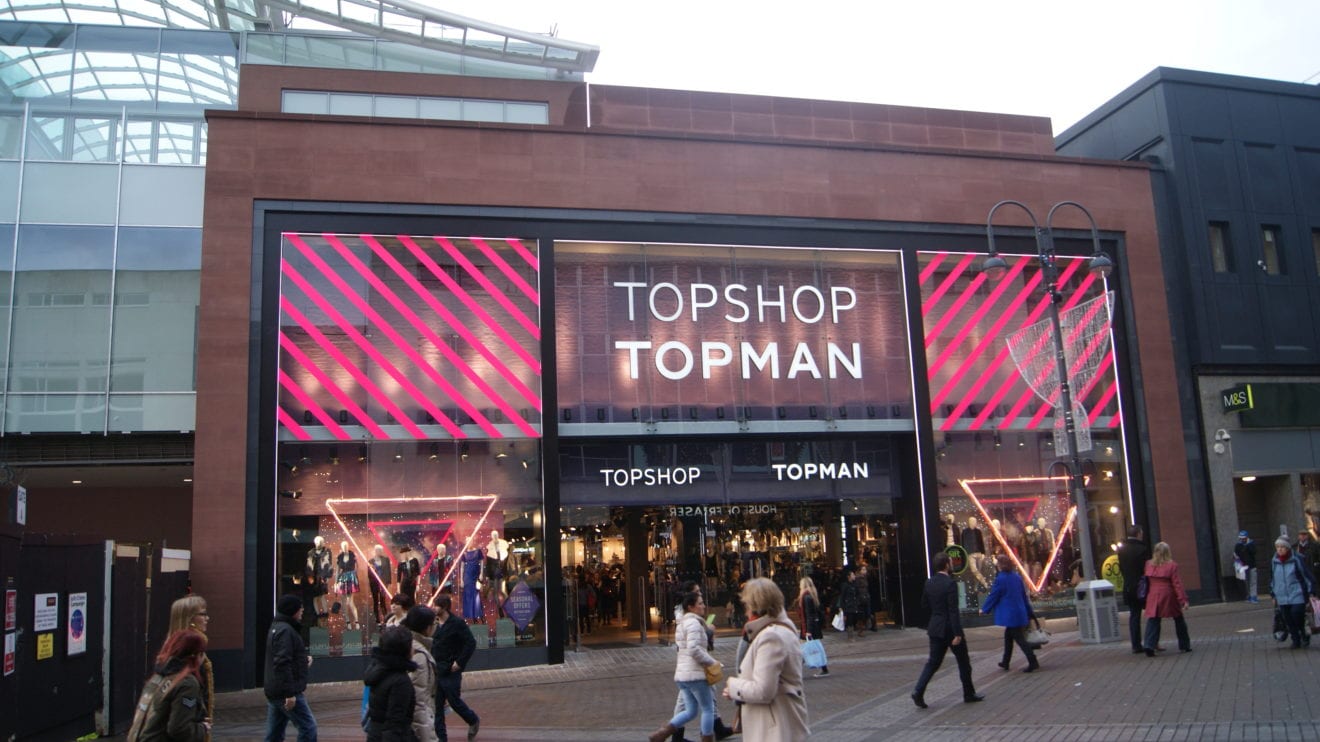
    The future of fashion label Topshop is in limbo after a crucial vote on a Company Voluntary Arrangement for parent Arcadia Group was delayed last week.

    Arcadia’s chairman Sir Philip Green is trying to gather approval from creditors for a scheme which would see them convert debt to future equity and rents reduced on UK stores in return for sa further investment by Green’s family of £50 million (US$63.8 million). The scheme would also see 23 stores shuttered in the UK and the closure or sale of all 11 of Topshop’s US stores – on top of 25 UK store closures already planned.

    “Against a backdrop of challenging retail headwinds, changing consumer habits and ever-increasing online competition, we have seriously considered all possible strategic options to return the group to a stable financial platform,” Arcadia CEO Ian Grabiner said when unveiling the CVA last month.

    “This has been a tough but necessary decision for the business.”

    But a meeting of creditors – who include suppliers landlords and pension funds – was postponed last week when it became clear support would fall short of the 75 per cent required for it to be approved. That vote will now likely be held this week. However if it fails, creditors may call in administrators opening the possibility of a sale of Arcadia’s brands, which also include Miss Selfridge, Dorothy Perkins, Evans and Topman.

    UK retail industry sources say landlords are especially cynical to the CVA, casting doubts on whether Green can revive the troubled business in an era of dwindling high-street retail sales and growing e-commerce.

    One major retail landlord told The Business of Fashion that cutting rents to Arcadia to help its survival would be “quite a tough message to communicate to other tenants paying full rent”.

    Arcadia’s like-for-like sales reportedly fell 7.5 per cent in the year to August 2018, with total sales down 10.5 per cent to £1.7 billion. That decline was largely due to a 20 per cent slump in Topshop sales.

    The chances of Green’s plan did receive a boost last week after The Pensions Regulator and Pensions Protection Fund indicated their support. That followed a commitment by Sir Philip’s wife Lady Tina Green to invest a further £100 million in the fund to protect staff.

    Lady Green has also promised landlords who accept the deal a 20 per cent share of the proceeds should Arcadia be sold.

  • Long wait times driving bad CX experiences

    Long wait times driving bad CX experiences

    Nine out of 10 customers say a bad experience with a company impacts their future buying decisions, with 42 percent saying it stops them buying from a brand altogether, according to new research by customer service software company Zendesk.

    The firm’s Quantifying the Business Impact of Customer Service in Australia Report found that companies that fail to deliver quality customer service experiences may be losing loyal customers, as well as sales.

    “Businesses are always competing to offer the latest and greatest products or services,” said Zendesk ANZ managing director Amy Foo. “But what is often overlooked is how quality customer service remains to be a cornerstone of business success.”

    “What this data suggests is that businesses can no longer afford to overlook the importance of delivering consistent excellence in customer service.”

    The research also found that customers are four times as likely to remember an unfavorable experience compared to a positive one for as long as two years, dramatically impacting a customer’s desire to return to a store.

    Some customer service lowlights include being expected to wait too long or failing to have an issue resolved at all. Highlights, on the other hand, include fast service and not having to explain an issue multiple times.

    “Providing positive experiences can mean the difference between poor, short-term and positive, long-standing customer relationships,” Foo said.

    “This inevitably has a significant impact on sales and revenue in the long-term.”

  • Brands say customers are to blame for bad CX

    Brands say customers are to blame for bad CX

    There is a significant disconnect between the way brands and customers perceive trends in the customer experience, according to a recent survey by InMoment.

    While 36 per cent of brands believe their customer experience is definitely improving, only 13 per cent of customers felt the same way.

    The survey also found that brands are failing to take responsibility for their CX shortcomings, with 40 per cent of brands saying customers are “very” responsible for creating better experiences in-store, and 11 per cent saying customers are “completely” responsible.

    On the other hand, customers believe a good CX is a shared endeavour.

    “It’s evident that there’s a significant divide in Australia between how brands and customers rate the experience they are delivering and receiving, respectfully,” InMoment vice president of APAC Claire Fastier said.

    “This gulf in perception should be ringing alarm bells for brands who need to better understand customer expectation and deliver strong CX.”

    According to the report, the simplest way to solve this disconnect is to ask customers what they want directly – nearly 78 per cent of customers said this was the most important method of improving customer experience, while only 43 per cent of brands agreed.

    “Open channels for direct feedback between you and your customers,” the report reads.

    “Make it as easy as possible for them to tell you how they feel about your brand. Don’t shy away from asking them the important questions, and be sure to weigh both asking and listening wisely.”

    Additionally, retaining a human element is incredibly important, with half of customers stating that better service from staff was the most important thing brands can do to improve the customer experience. This is at odds with the brand perception, with only 29 per cent ranking this first in importance.

    Personalising service with purpose, neglecting customers without an intent to purchase, and taking constructive criticism as a positive metric are all further ways that brands can improve customer experience moving forward according to the report.

  • Indian mall supply industry booming

    Indian mall supply industry booming

    A three-fold jump in Indian mall supply from 3.2 million sqft last year to nearly 10 million sqft this year has been reported in India, following supply rollover from the previous year.

    The figures were outlined in the research report Customer Experience (CX) – The Epicentre of Retailing by property consultant firm Anarock, released at the Retail Leadership Summit 2019 in Mumbai this week. The report finds that customer experience and ‘built environment’ are completely metamorphosing the retail business in the country, and that these trends have already started influencing and impacting both the online and the offline retail segments.

    “With the new e-commerce policy in effect from early this month, online retail giants are realigning their business strategies and focussing to expand their offline presence,” said Anarock chairman Anuj Puri.

    “Brick-and-mortar retailers who were earlier under threat from e-commerce can now look forward to a more level playing field and tap into the rapidly growing Indian consumer market with renewed confidence and business prospects. The new e-commerce policy will bring parity between the online and offline retailers and address the concern of data colonisation as well. Even as online players may lose many of their competitive advantages – such as high price discounts on their private labels – brick-and-mortar stores will focus on offering superior customer experience to enhance customer loyalty.

    “The new e-commerce policy will cause online retail entities to invest seriously in offline stores,” he continued. “They will consider tie-ups with offline retailers or buy stakes in them. However, as competition stiffens, customer experience will be the key differentiator to the success and sustenance of any new retail venture.”

    Kumar Rajagopalan, Retailers Association of India CEO, added: “A combination of essential and value-added services, along with sound marketing strategy, is now the key to customer attraction and therefore successful mall performance. F&B and entertainment are critical ingredients for attracting footfalls into retail developments. Simultaneously, style, variety, and overall quality of malls also play crucial roles in ensuring customer satisfaction.”

    Historically dominated by unorganised mom-and-pop stores, the Indian retail sector’s dynamics are rapidly changing post liberalisation and subsequent e-commerce boom across the country. The rise in internet subscribers and active social media users, changing lifestyles and increasing disposable incomes have transformed the rural and urban consumer bases alike. This dynamic resulted in the increasing prominence of e-commerce across the country, leading to India’s emergence as a key global retail market.

    Nearly $1.42 billion FDI has already been infused in the Indian markets between April 2000 to June 2018 – and global investments into Indian retail are all set to increase further, states the report. The Indian retail sector is expected to reach $1.750 trillion by 2026, due to changing demographics and increasing consumer expenditure, which is expected to rise to $3.6 trillion by 2020.

  • Mazda launches all-new CX-5 in Thailand

    Mazda launches all-new CX-5 in Thailand

    Mazda Sales Thailand has launched the all-new CX-5 with prices mostly competing with those of the Honda CR-V, one of the most popular SUVs in the Thai market.

    The second-generation CX-5 comes with a completely redesigned exterior and interior, although it still uses the same platform, engines and transmission from its predecessor.

    The CX-5 comes with the same 175hp 2.2-litre diesel-turbo and 165hp 2.0-litre petrol motors, both equipped with a carried-over six-speed automatic driving either the front wheels or all four.

    The entry-level model is the petrol-powered C trim priced at 1.29 million baht, some 100k cheaper than the cheapest CR-V powered by 175hp 2.4-litre petrol engine.

    The higher S spec of the CX-5 goes for 1.33 million baht which, like the C, is 70k more expensive than before. A new grade is the 1.53 million baht SP that comes with the brand’s latest driver-assist technologies. All petrol models are purely front-wheel drive.

    As usual, the diesel-powered is available in just two versions: XD asking for 1.56 million baht and XDL 1.77 million baht, the latter getting those driver-assist tech and four-wheel drive. They are 30k and 80k dearer accordingly than the previous models.

    The CR-V, with 160hp 1.6-litre diesel-turbo, is priced at 1.549 million baht in basic E trim and 1.699 million baht in EL guise.

  • Mazda Unveils the All-New CX-5

    Mazda Unveils the All-New CX-5

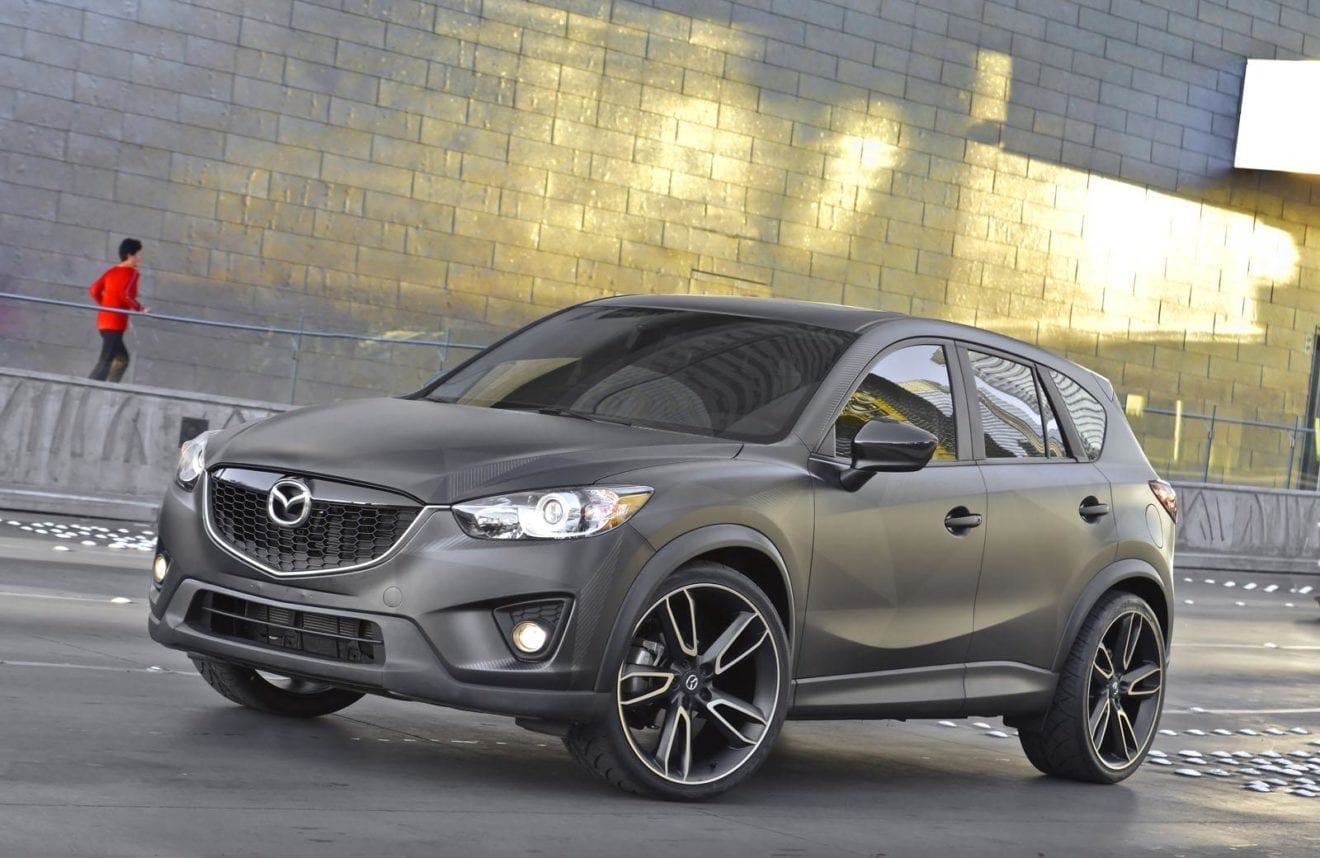
    Mazda Motor Corporation today unveiled the all-new Mazda CX-5 crossover SUV. The fully redesigned model, which refines every element of Mazda’s design and technology to offer new dimensions of driving pleasure, will be launched in Japan in February before being rolled out to global markets.

    The slogan for development of the all-new CX-5 was “an SUV all customers will enjoy,” and Mazda aimed to add a new dimension by offering driving pleasure that everyone on board can enjoy—not just the driver. The model is engineered in line with human sensibilities to deliver responsive performance that conforms to the driver’s expectations. It also prioritizes passenger comfort, with a quiet cabin and pleasant ride feel, and adopts G-Vectoring Control, the first of the SKYACTIV-VEHICLE DYNAMICS vehicle motion control technologies. Designed under the KODO—Soul of Motion design theme, the exterior is both bold and sensual, and the interior has been crafted to give occupants a pleasant feeling. The body color lineup includes the newly developed Soul Red Crystal, which highlights the beauty and quality of Mazda’s KODO designs.

    The powertrain lineup comprises the SKYACTIV-G 2.0 and 2.5 gasoline, and SKYACTIV-D 2.2 diesel engines. All three options offer powerful, linear driving performance and outstanding environmental performance.

    The all-new CX-5 will be on display at the Los Angeles Auto Show, open to the public Nov. 18-27.

    Launched in 2012, the CX-5 was the first new-generation model featuring SKYACTIV technology2 and KODO design. It has since grown into a core model that is sold in over 120 countries and accounts for approximately one quarter of Mazda’s global sales volume.3 It has won around 90 awards worldwide, including 2012-2013 Japan Car of the Year.4

    By providing driving pleasure to everybody who drives or rides in one of its vehicles, Mazda aims to enrich people’s lives and become a brand with which customers feel an emotional connection.