
Retail News CRM

Tag: cyberattacks

  • AI-Empowered Cyberattacks Prompt Businesses to Revamp Cybersecurity Tactics: Insights from Kaspersky

    AI-Empowered Cyberattacks Prompt Businesses to Revamp Cybersecurity Tactics: Insights from Kaspersky

    The integration of artificial intelligence (AI) technologies is necessitating a significant shift in business cybersecurity protocols. The evolving landscape of cyber threats is becoming increasingly complex due to the swift adoption of AI. Previously, successful cyberattacks required substantial planning and advanced technical proficiency, but AI has streamlined the process, decreasing the entry-level threshold for novice cyber threats.

    The Impact of AI on Cyber Threats

    AI has revolutionized the modus operandi of experienced cyber attackers, offering them speed and efficiency. Furthermore, it has also armed less skilled individuals with new capabilities. Vladislav Tushkanov, group manager at an AI technology research center, explains that AI technology allows both skilled and unskilled individuals to expedite their operations. Novice cyber attackers, who were previously required to spend extensive amounts of time learning programming, can now efficiently execute cyber threats.

    AI is being employed to create sophisticated phishing emails, imitated voices, images, and videos that are convincing and challenging to identify. Deepfakes have become an emerging hazard in the corporate world. An engineering firm in the UK reportedly suffered a loss of approximately US$25 million in 2024 when an employee was tricked into transferring funds due to a deepfake video call.

    AI’s capabilities extend beyond deepfakes and can support various stages of cyberattacks, such as reconnaissance, message customization, and evading detection by security systems.

    AI: A Double-edged Sword

    According to recent research, 72% of businesses express grave concerns regarding cyber attackers’ utilization of AI. Traditional defensive measures struggle to counter rapidly evolving and unpredictable threats. Simultaneously, AI proves to be an essential asset for bolstering cybersecurity. It allows organizations to detect threats with greater speed, mechanize aspects of the response procedure, and improve predictive abilities, thereby shifting from a reactive to a proactive security strategy.

    “To effectively manage the increasing number of alerts and to prevent analysts from becoming overwhelmed, machine learning is essential. It copes efficiently with these tasks and allows professionals to focus on complex or business-critical tasks,” Tushkanov said.

    However, the successful incorporation of AI in cybersecurity involves more than just technology. Businesses also require skilled personnel, practical implementation experience, and a solid data foundation.

    The Role of AI in Incident Investigation and Decision Making

    According to sources, AI is currently used to analyze and classify around 460,000 malware samples daily. This, combined with proprietary data, processing methods, and model training infrastructure, forms the foundation of increasingly complex cybersecurity strategies.

    Despite the significant advances of AI, it is not yet equipped to replace human expertise in incident investigation and decision-making processes. Risk assessments and response strategies still heavily depend on professional judgment. “At this point, the human role remains essential,” Tushkanov said, implying that while AI systems might support decision-making in the future, they cannot replace the need for human expertise.

    Questions & Answers

    Q: How has AI impacted cyber threats?
    A: AI has streamlined the process of executing cyber threats, reducing the need for substantial planning and advanced technical skills. It has made it easier for less experienced individuals to launch successful cyberattacks.

    Q: What is the role of AI in cybersecurity?
    A: AI plays a crucial role in enhancing cybersecurity. It allows organizations to detect threats quickly, automate parts of the response process, and enhance predictive capabilities.

    Q: Can AI replace human expertise in incident investigation and decision-making?
    A: Currently, AI cannot replace the need for human judgment in risk assessment and response strategy formulation. Despite the significant advances in AI, human expertise remains essential in incident investigation and decision-making processes.
  • ASEAN companies face US$750b risk from cyberattacks

    ASEAN companies face US$750b risk from cyberattacks

    Companies across the ASEAN bloc face a growing risk of cyberattacks, which can expose the region’s top-listed firms to a US$750 billion erosion in current market capitalisation.

    This was revealed on Tuesday in a new research commissioned by Cisco.

    Conducted by global management consulting firm A.T. Kearney, the research underlines that ASEAN’s growing strategic relevance, driven by economic expansion and ongoing digital adoption, make it a prime target for cyberattacks.

    A combination of nascent policy preparedness, absence of a unifying regional governance framework, shortage of skilled talent, underestimation of risk and lack of adequate investment are among the factors contributing to the heightened risk.

    The research report, titled “Cybersecurity in ASEAN: An Urgent Call to Action”, emphasises that cyber-security risk across the bloc will continue to escalate as the bloc gets more digitally interconnected.

    ASEAN countries underspend on cyber security. The region currently spends an average of 0.07 per cent of its collective gross domestic product (GDP) on cyber security annually. It will need to increase the spending to 0.35-0.61 per cent of GDP between 2017 and 2025 to be in line with the best benchmark (based on spending levels as percentage of GDP for Israel).

    The research estimates that this translates to $171 billion in collective spending needed across ASEAN countries during the period. Limited sharing of threat intelligence, often because of mistrust and a lack of transparency, will lead to even more porous cyber-defence mechanisms.

    Naveen Menon, ASEAN President at Cisco, said: “Digital innovation and adoption are central pillars of economic growth for ASEAN. Its success hinges in large part on the bloc’s ability to combat cyber threats. Cyber security needs to be an integral part of policy discussions at the semi-annual ASEAN Summit, with the aim of developing a unified policy framework for the region. The corporate sector also needs to start treating cyber security as a business wide issue that can only be tackled by adopting a risk-centric approach to building resilience, rather than just an IT problem.”

    Lương Thị Lệ Thuỷ, general director of Cisco Việt Nam, said: “Việt Nam has fallen to rank 101 among 195 countries in the Global Security Index 2017 compiled by the UN International Telecommunication Union, down 25 places from 2016.”

    “The National Assembly (NA) has been discussing the need to formulate a law on cyber security. It has been put under consideration at the fourth session of the 14th NA. However, all stakeholders need to work together to help build cyber-security capabilities in Việt Nam to ensure that we are able to combat these threats,” Thủy said.


  • SmarTone launches cyber security suite

    SmarTone launches cyber security suite

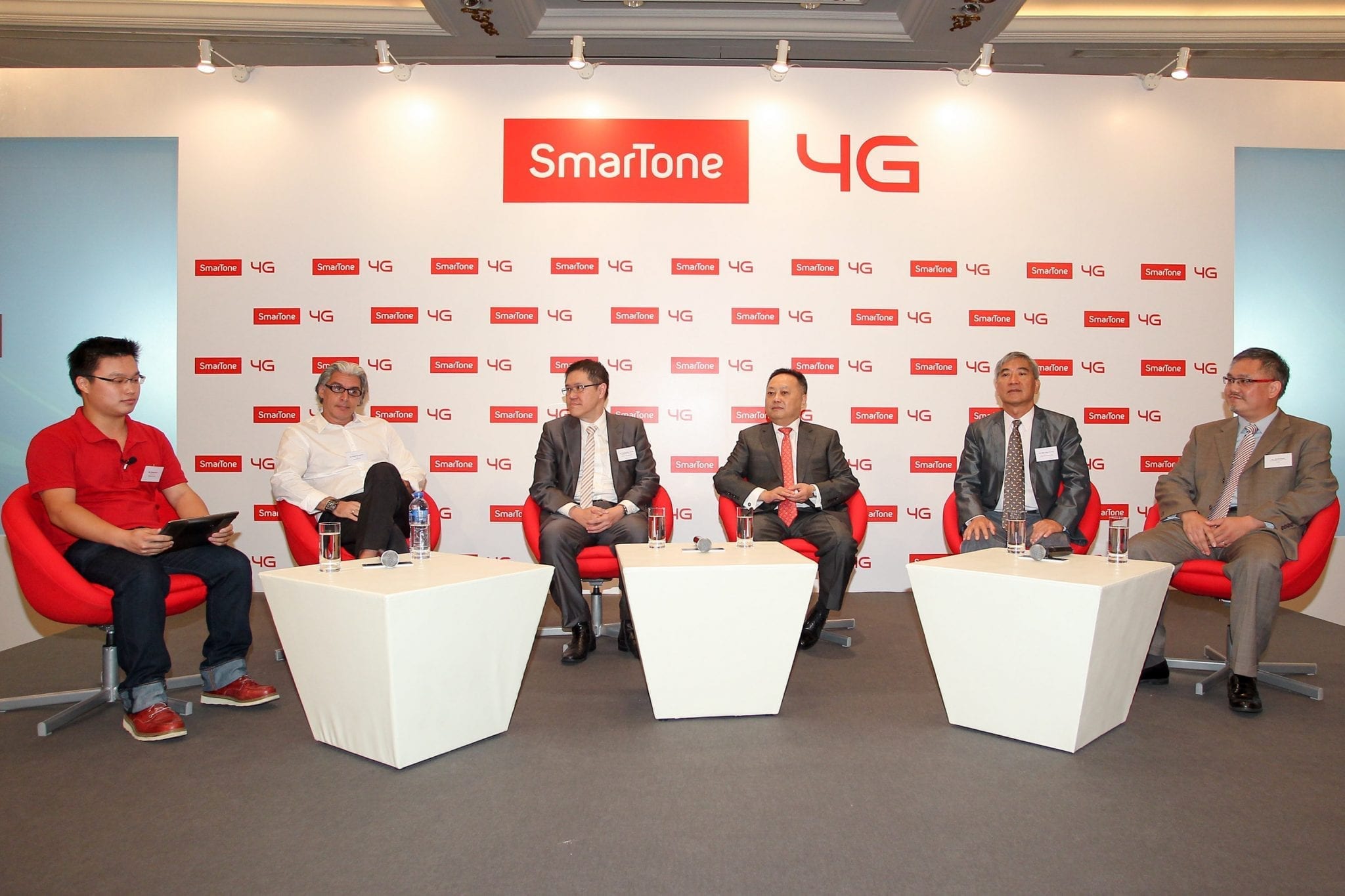
    Hong Kong operator SmarTone has launched ST Protect, an anti-cyberattack software with on-device AI and a Machine Learning behavioral engine designed to protect smartphones from known and even unknown threats.

    Cyberattacks have rocketed in recent years. In Hong Kong, there was an 86% increase in the number of security issues related to mobile devices in 2015 compared to the previous year. Globally, more than 87% of the top mobile apps have been hacked.

    Stephen Chau, SmarTone’s interim CEO, said the new product is design to help their customers to “actively combat” mobile security threats.

    “Recently we have observed the increasing trend of mobile threats and cyberattacks around the world as well as in Hong Kong, with WiFi attacks, viruses and malware continuing to become more prevalent,” he noted. “In many cases, these mobile security issues could lead to severe consequences for smartphone users – from financial loss to the exposure of their private data or personal communications to the public, and even ID theft. There is a pressing need for smartphone users to protect their phones.”

    ST Protect is powered by Zimperium, a US-based security and technology company that has invented the world’s first mobile AI intrusion prevention system. It provides continuous and real-time protection to smartphones against the following mobile threats.

    WiFi attacks and hacking, especially Man-in-the-middle (MITM) attacks, no matter whether users are in Hong Kong or overseas: ST Protect alerts users to immediately terminate unsafe WiFi connections if threats are found.

    ST Protect detects and stops abnormal app activities with patented behavioral analytics, and ensures apps only access permitted information. It also offers protection for known and unknown threats and even zero-day attacks. It also alerts users when their smartphone is under attack.