Tag: Daesang

  • Daesang Expands US Kimchi Output as Brand Captures 56% of South Korea Exports

    Daesang Expands US Kimchi Output as Brand Captures 56% of South Korea Exports

    South Korea’s Daesang Corporation captured 56 per cent of the country’s total kimchi exports in the first half of 2026, generating 48 million dollars in overseas shipments.

    Total South Korean kimchi exports reached 86 million dollars during the six-month period, cementing the United States as the group’s largest foreign market.

    California Plant and Supply Sourcing

    The Seoul-listed food group expanded output across North America through its 10,000-square-metre facility in the City of Industry, California, and its 2023 purchase of food maker Lucky Foods. The California factory provides 2,000 metric tons of annual processing capacity, holding dedicated cold-storage rooms and running lines for regular, vegan, white, cucumber and extra-spicy Silbi recipes.

    Daesang buys napa cabbage, radishes and green onions directly from growers in the United States. Sourcing produce locally allows the manufacturer to bypass trans-Pacific shipping schedules and preserve crispness across its mainstream supermarket accounts in western and central states.

    Mainstream Retail and Product Tweaks

    Asian packaged food producers face flat domestic populations and high ocean freight expenses, pushing operators to build manufacturing inside export destinations. By establishing factory lines in California, Daesang avoids refrigeration surcharges and port congestion that erode margins on perishable shipments sent from South Korea.

    Building local production networks introduces new supply-chain liabilities. Processing regional crops exposes the company to North American harvest price swings, while reformulating recipes for western supermarket chains risks alienating traditional Asian diaspora shoppers who built the brand’s initial market share. Daesang is calculating that volume from mainstream retail shelves will easily offset higher US factory overheads.

    Portfolio Shift Beyond Korean Grocers

    Jongga began expanding out of Asian supermarket channels into broadline American grocery stores in 2019. The company completed its California plant in early 2022, becoming the first Korean food maker to operate a commercial-scale kimchi facility on American soil, before buying Lucky Foods a year later to add the Seoul Kimchi brand to its stable.

    Global export sales for the brand tripled from 32 million dollars in 2017 to 90 million dollars in 2025. The United States overtook Japan in 2023 as the label’s highest-volume international destination, supported by distribution agreements that put jars into mainstream grocery aisles.

    Global Scale and Product Formats

    To match western consumer eating habits, Daesang widened its catalog beyond whole fermented cabbage. The lineup includes shredded carrot and green cabbage blends, mild white varieties, apple-beet-carrot mixtures, spreadable kimchi pastes for bread and crackers, and portioned Crunchy Bites containers.

    Commercial collaborations have also entered the schedule. In 2024, Daesang partnered with San Francisco chef Corey Lee to sell San Ho Won Kimchi lines under its Gourmet Edition badge.

    The United States has emerged as Jongga’s largest export market and is a key market for our global kimchi business.

    Retail analysts will track Daesang’s full-year 2026 sales reports to see whether overseas kimchi revenue tops the 90 million dollar total booked in 2025.
  • Daesang Launches Tailored O’Food Sauces for US Supermarkets

    Daesang Launches Tailored O’Food Sauces for US Supermarkets

    South Korean food manufacturer Daesang has launched a revamped lineup of O’Food sauces for mainstream US grocery shelves this week.

    The export line modifies traditional Korean fermented recipes for American palates. Formulations feature lower heat levels and familiar condiment textures.

    Adapting Fermented Flavours for Export

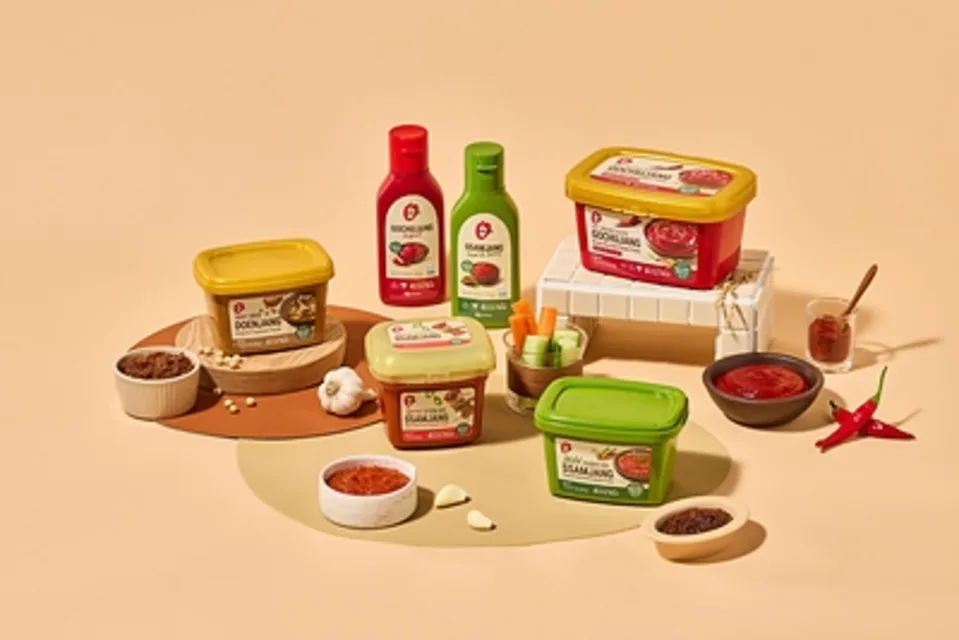
    Core adjustments cover two key lines, gochujang and barbecue marinades. Daesang cut pungency and tweaked sweetness ratios to appeal to mainstream chains, where traditional Korean pastes often struggle to win repeat buyers.

    Retail distribution in North America runs through subsidiary Daesang America. The company is targeting broadline supermarkets rather than relying solely on ethnic grocery channels.

    The Mainstream Distribution Hurdle

    Breaking past specialty aisles into center-store condiment bays offers Asian food makers their best margin opportunity. CJ CheilJedang took that route by acquiring Schwan’s for deep US cold-chain access. Daesang chose an asset-light, recipe-first strategy instead.

    Customer retention is the primary operational hurdle. Tweaking authentic profiles risks alienating diaspora shoppers, while established Western brands are rolling out their own Korean-style sauces.

    Earlier Footprint Across North America

    Daesang already produces kimchi at facilities in California to bypass shipping bottlenecks and trim freight overhead. The sauce lineup uses these existing supply chains to build shelf space across major accounts.

    US supermarket buyers will review early velocity data from regional pilots over the coming quarters before committing to national shelf resets.

  • Daesang to sell Ministop stake to partner Aeon

    Daesang to sell Ministop stake to partner Aeon

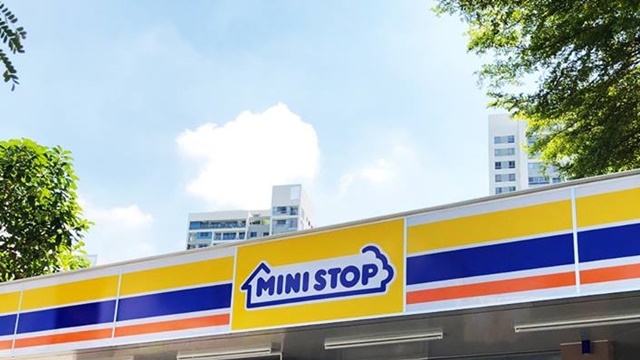
    South Korean food manufacturer Daesang is reportedly exiting the convenience store business, selling its stake in the Ministop chain.

    A cut-throat industry in the territory, competition between players has become so intense that legislation is now in effect to forbid the opening of new convenience stores within 50 metres of existing outlets.

    Daesang’s withdrawal will likely result in the sale of its 20 per cent shareholding in the Ministop Korea brand to its Japanese partner Aeon, which attempted unsuccessfully to sell its own shares in the business last year.

    Insiders familiar with the transaction have revealed that talks between the partners are well-progressed and that the shares are likely to be transferred for KRW80–90 billion (US$70.8–$79.6 million).

    Daesang established Ministop with Aeon in 1997, but courted Aeon to purchase a majority stakeholding plus management rights to the business in 2003. The current transaction would remove Daesang from the business entirely, leaving Aeon with a 96.06 per cent stake of the country’s weakest contestant in the nationwide convenience-store playing field.

    Ministop achieved KRW2.6 billion ($2.3 million) in profits in 2017, compared with KRW13.3 billion ($11.76 million) in 2015.

  • Ministop South Korea is for sale, rivals compete

    Ministop South Korea is for sale, rivals compete

    South Korean retail operators Lotte and Shinsegae are competing to buy the 21-year-old local subsidiary of Japanese convenience-store operator Ministop.

    Shinsegae and Lotte respectively own rival chains Emart24 and 7-Eleven and are both reportedly seeking to take full ownership of Ministop South Korea. Both companies see the deal as a means to grow their respective businesses in a market where convenience-store penetration has reached saturation point, limiting opportunities for organic network growth.

    7-Eleven currently operates 9535 stores across South Korea and Emart24 3413. The Ministop network numbers just 2535.

    Japan’s Aeon, which owns the Ministop brand, owns a majority 76 per cent of the South Korean business.

    Daesang group owns 20 per cent and Mitsubishi the balance. Aeon has appointed Nomura Securities to find a buyer for the business as it sees little future for the convenience store brand in South Korea, a highly competitive market. Instead, Aeon is looking to Southeast Asian markets for growth, including Vietnam, Thailand and Cambodia.

    Last year, Ministop South Korea sales totalled 1.18 trillion won (US$1 billion), ranking it fourth in revenue terms behind GS25, CU and 7-Eleven.