Retail News CRM

Tag: daily

  • Aussies Embrace Daily Luxury: Surge in Everyday Premium Ice Cream Indulgence Revealed

    Aussies Embrace Daily Luxury: Surge in Everyday Premium Ice Cream Indulgence Revealed

    Australia is witnessing a shift in the perception of premium ice cream, from being an occasional luxury to an everyday delight, according to recent research conducted by Haagen-Dazs.

    Ice Cream as an Everyday Indulgence

    The research found that nearly three out of every ten Australians, approximately 28 percent, now view premium ice cream as a regular indulgence. This trend is particularly noticeable in Victoria and New South Wales. Millennials and men are spearheading this increase, with 40 percent of Millennials and 33 percent of male respondents admitting to indulging in premium ice cream on a daily basis.

    Sacrificing Other Delights for Ice Cream

    Interestingly, the study reveals that four out of every ten Australians would rather forgo sweet beverages than give up ice cream, while three in ten would skip pastries and baked goods in favor of ice cream.

    Ice Cream and the Convenience Channel

    The study also emphasizes the growing importance of convenience stores as the preferred destination for consumers desiring quality, speed, and satisfaction from a single scoop of ice cream. Approximately 42 percent of respondents, predominantly those belonging to the Gen Z, Gen X, and Baby Boomers demographics, prefer to enjoy their ice cream in solitude.

    Changing Perceptions of Luxury

    Cavan Brady, the head of ice cream at Haagen-Dazs Australia, suggests that these findings denote a significant cultural shift in Australians’ understanding of luxury. He notes that consumers aren’t giving up on indulgence, but rather, they are reshaping it. He implies that the conventional ‘little treat’ has transformed into a pocket-sized form of self-care that people prioritize even in the face of tight budgets.

    Brady further explains that for retailers, this indicates that premium ice cream has evolved beyond being an optional treat. The rise of portion-controlled, single-serve, and impulse formats reflects the new pattern of daily indulgence, presenting an enticing growth opportunity for petrol and convenience stores.

    Questions & Answers

    What is the new perception of premium ice cream in Australia?
    Premium ice cream is being seen as an everyday delight rather than an occasional luxury in Australia.

    Who are mainly driving this increase in daily indulgence of premium ice cream?
    Millennials and men are primarily driving the daily indulgence in premium ice cream.

    What has the classic ‘little treat’ evolved into, according to Cavan Brady?
    According to Cavan Brady, the classic ‘little treat’ has evolved into a pocket-sized form of self-care that people prioritize, even when budgets are tight.


  • United Airlines Reconnects US and HCMC: Daily Flights Resume After Eight-Year Break

    United Airlines Reconnects US and HCMC: Daily Flights Resume After Eight-Year Break

    After an eight-year pause, United Airlines, one of the top three largest American carriers, has restarted its flight operations between two U.S. cities and Ho Chi Minh City (HCMC). As of this week, the airline has begun operating daily flights from HCMC to Hong Kong, which will then connect passengers to Los Angeles or San Francisco, both located in the state of California. For each of these flights, the airline will utilize its wide-body Boeing 787-9 Dreamliner aircraft, which has a seating capacity of 257.

    Historical Precedent

    United Airlines has a distinctive history of being the first U.S. airline to conduct direct flights to Vietnam, following the bilateral air transport agreement in 2003. It maintained its operations between 2007 and 2012, flying to HCMC’s Tan Son Nhat International Airport.

    Fleet and Competition

    Boasting a fleet of over 1,000 aircraft, United Airlines remains a significant player in the American aviation sector, sitting alongside Delta Air Lines and American Airlines in competition for the top spot.

    Up until recently, Vietnam Airlines was the sole carrier providing commercial services between the U.S. and Vietnam. It operated three weekly round-trip flights between HCMC and San Francisco.

    Strategy and Expansion

    In discussing the airline’s decision to resume flights to HCMC, Patrick Quayle, the senior vice president of global network and alliances at United Airlines, stated that this move is a part of the carrier’s expansion strategy in the Pacific region.

    The airline has ambitious plans for growth. By the end of this year, United Airlines expects to serve 32 destinations in the Pacific region. On a worldwide scale, it aims to operate more than 850 daily flights to over 150 international destinations by next year.

    Questions & Answers

    What are United Airlines’ plans for expansion in the Pacific region?
    United Airlines aims to serve 32 destinations in the Pacific region by the end of this year.

    What is the seating capacity of United Airlines’ Boeing 787-9 Dreamliner aircraft used for these flights?
    The Boeing 787-9 Dreamliner aircraft used by United Airlines for these flights has a seating capacity of 257.

    When did United Airlines first operate direct flights to Vietnam?
    United Airlines first operated direct flights to Vietnam following the bilateral air transport agreement in 2003, and continued these operations from 2007 to 2012.

  • Gold Prices Plunge In Record Daily Drop: Market Volatility And Increased Dollar Index To Blame

    Gold Prices Plunge In Record Daily Drop: Market Volatility And Increased Dollar Index To Blame

    In a shocking turn of events, gold prices experienced their most significant daily drop in five years, resulting from investors cashing in their gains after the precious metal reached an unrivaled high in the preceding trading session. On Tuesday, spot gold fell by 5.5% to a one-week low of US$4,115.26 per ounce, marking its steepest decline since August 2020. Meanwhile, U.S. gold futures for December saw a slightly steeper dip, settling 5.7% lower at $4,109.10 per ounce.

    A Year of Substantial Gains

    After reaching a record-breaking peak of $4,381.21 on Monday, gold prices have seen an approximate 60% increase over the year. This impressive surge is primarily attributed to factors such as geopolitical instability, economic uncertainty, predictions of interest rate cuts, and continued purchasing by central banks.

    Independent metals trader, Tai Wong, remarked on the recent fluctuations in gold prices. “As recently as yesterday, gold dips were being purchased,” he said. “But the sharp increase in volatility at the highs over the past week is a warning sign that may prompt some short-term profit-taking.”

    A rise of 0.4% in the dollar index also played a role in this situation, as it made gold a more expensive investment for individuals holding other currencies.

    Other Factors at Play

    Senior analyst at Kitco Metals, Jim Wyckoff, highlighted the impact of improved risk appetite in the marketplace on precious metals. He noted, “The better risk appetite observed in the general marketplace earlier this week is bearish for safe-haven metals.”

    Further, Citi analysts projected that the resolution of the ongoing U.S. government shutdown and upcoming announcements regarding the U.S.-China trade deal could lead to the stabilization of gold prices in the coming two to three weeks.

    In the same vein as gold, spot silver also experienced a significant dip, falling by 7.6% to $48.49 per ounce. Wong provided his insights on the matter, stating, “Silver is stumbling badly today and has dragged the entire complex lower. It seems we have a short-term peak at $54, and while sentiment wobbles under $50, silver is likely to trade sideways with substantial volatility as long as gold remains relatively firm.”

    Other precious metals such as platinum and palladium also showed a decrease in value, shedding 5.9% and 5.3% respectively.

    Looking Forward

    As we approach the end of the week, traders eagerly anticipate the release of the U.S. consumer price index report for September, previously delayed due to the U.S. government shutdown. Predictions suggest a year-on-year rise of 3.1%.

    Furthermore, market expectations lean towards a 25 basis point cut in interest rates by the Federal Reserve at its policy meeting next week. As a non-yielding asset, gold typically profits in a low-interest-rate environment.

    Questions & Answers

    What was the recent record high for gold prices?
    The record high for gold prices was $4,381.21 per ounce, reached on Monday.

    What are the main factors contributing to the surge in gold prices this year?
    The surge in gold prices this year can be attributed to geopolitical and economic uncertainty, rate-cut predictions, and sustained central bank buying.

    How does the dollar index affect gold prices?
    An increase in the dollar index makes gold more expensive for holders of other currencies, potentially impacting demand and therefore gold prices.

  • Retailer Temu’s daily US users halve following end of ‘de minimis’ loophole

    Retailer Temu’s daily US users halve following end of ‘de minimis’ loophole

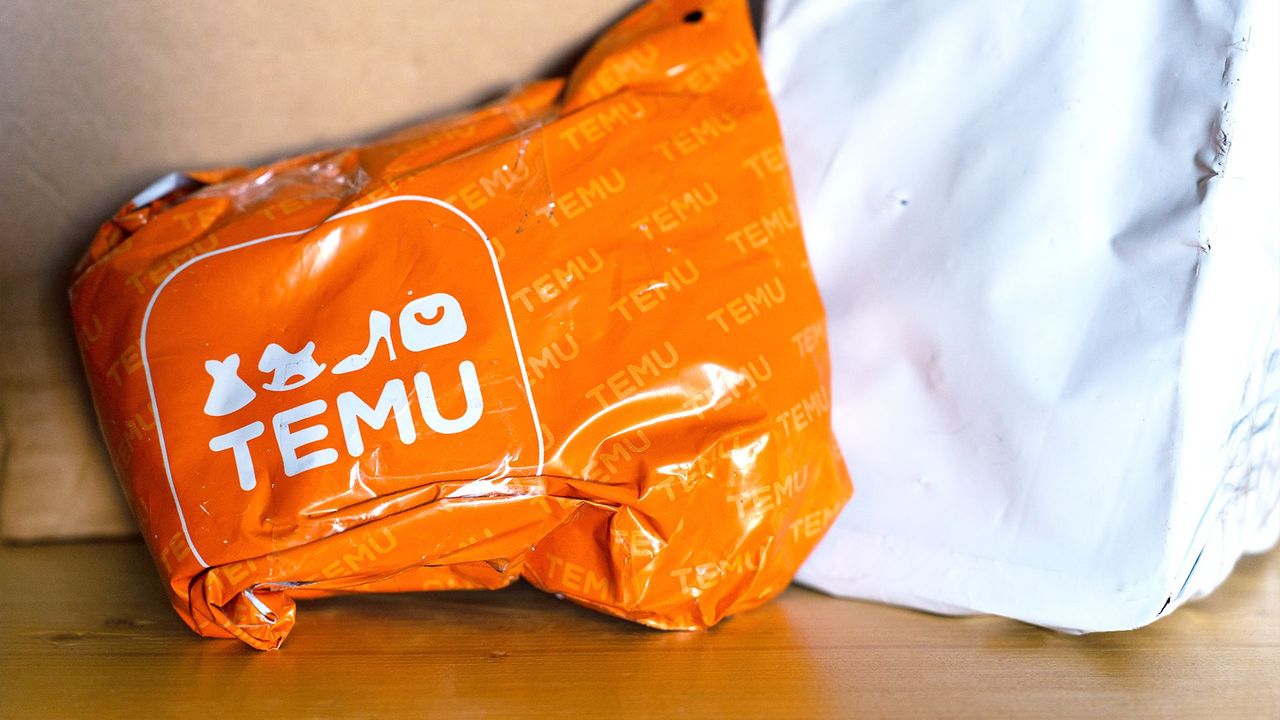
    PDD Holdings’ international discount e-commerce platform, Temu, reported a 58 per cent decrease in daily US users in May. This downturn is just one of the challenges the online retailer is grappling with in the face of the US-China trade war.

    Temu made the strategic decision to cut advertising expenses in the US and alter its order fulfillment approach after the cessation of the “de minimis” practice by the White House on May 2. This regulation had previously granted Chinese companies the ability to ship low-value packages to the United States without incurring tariffs.

    For years, Temu and the large fast-fashion company, Shein, had availed themselves of this provision. This allowed them to deliver items directly from suppliers in China to consumers in the US, thereby maintaining low prices.

    Since the announcement of sweeping trade tariffs by US President Donald Trump, both Temu and Shein have noted a marked decline in sales growth and customer acquisition rates. However, according to data gathered by consultancy firm, Bain & Company, Temu’s downward trends surpass those of its competitor.

    Both platforms were forced to increase prices due to tariffs, yet Shein has managed to raise the amount of money spent per customer in comparison to the previous year, data indicated. Conversely, Temu has grappled with this challenge.

    Temu declined to comment on the drop in daily US users or the challenges it is encountering in the US market.

    According to a May note from Morgan Stanley equity analyst Simeon Gutman, engagement on Temu has significantly decreased following the termination of the de minimis exemption.

    Gutman expressed his belief that, if the current tariff conditions remain unchanged for an extended period, Temu’s competitive position is likely to continue to weaken.

    PDD’s first quarter earnings were recently reported and failed to meet growth expectations. In a post-earnings call, executives stated that tariffs had imposed significant pressure on its merchants.

    They reaffirmed Temu’s prior commitment to maintain stable prices and collaborate with merchants across regions, highlighting a move towards a local fulfilment model announced at the start of May.

    Previously, Temu’s business model held merchants accountable for ordering and supplying their products, while the China-based company managed the majority of logistics, pricing, and marketing.

    Under the new model, Temu’s merchants “can ship individual orders from China to Temu-partnered US warehouses, but they would need to address tariffs and customs charges and paperwork”. Temu continues to handle order fulfillment close to consumers, pricing, and online operations.

    Despite these difficulties, HSBC analysts reported last week that Temu’s growth in non-US markets has increased, with non-US users constituting 90 per cent of its 405 million global monthly active users in the second quarter.

    Questions & Answers

    What factors contributed to the decrease in daily US users of PDD Holdings’ platform, Temu?
    The US-China trade war and the cessation of the “de minimis” practice, which allowed tariff-free shipping of low-value packages to the US, contributed to this decline.

    How have changes in global trade conditions affected Temu?
    The company has been forced to alter its order fulfillment strategy and increase prices. Additionally, it has experienced a decrease in sales growth and customer acquisition rates.

    What adaptations has Temu made in light of these challenges?
    Temu has shifted to a local fulfillment model in the US and is working collaboratively with its merchants. It continues to manage logistics, pricing, and online operations, despite the changes in market conditions.

  • Apple introduces Apple Card: Daily Cash, no fees

    Apple introduces Apple Card: Daily Cash, no fees

    Apple has announced a brand new service: Apple Card. Starting this summer in the US, users will be able to sign up for a real Apple credit card that’s going to reside within the Wallet app. Requesting a virtual Apple Card living in your iPhone will be very easy, as you’ll be able to do it straight from your device. Issuing a new Apple Card shouldn’t take more than a few minutes. Once issued, your Apple Card should be right there in your Wallet app.
    What’s even cooler is that users will also be able to request a physical credit card, which will be made of titanium and have the user’s name laser-etched. No card numbers, CVV, or expiration dates will be printed on the card, making it that much more secure.
    Apple is creating Apple Card in partnership with Goldman Sachs. As it’ll be using the Mastercard payment network, the card will be accepted worldwide. Card support is going to be handled by Apple directly in a delightful new way: through Apple Messages. Just text Apple with your questions or requests, and the company will respond right there, in Messages. Apple Card will be available this summer in the US. Unfortunately, the company isn’t revealing any details regarding a future international rollout of the service.

    Daily Cash

    With Card, Apple is introducing a welcome new take on the cash back program. It’s called Daily Cash for a reason: you’ll be receiving your cash back amount daily, and you’ll be free to spend it again through Apple Pay, put it towards your Apple Card balance, or send it to family or friends through Apple Messages.
    Customers will be receiving Daily Cash to the tune of 2% on all of their Apple Card payments outside of Apple’s ecosystem. When it comes to Apple’s own stores, like Apple Stores, iTunes or the App Store, the Daily Cash amount will be 3%. And for purchases made using the physical Apple Card, the Daily Cash amount will be 1% of the purchase value.

    Apple helping you have a better financial culture

    Apple is building a number of new features around Apple Card, designed to help you have a better understanding of your spending. For starters, it’ll help you track your purchases more easily by using machine learning and Apple Maps in order to ‘translate’ the names of merchants in your purchases log. You are probably familiar with how merchant names often appear fairly cryptic when you view then through your bank’s web portal or mobile app; with Apple Card, Apple will make sure to have them all clearly labeled so that you’ll immediately know which transaction was made with whom.
    Color coding will also help with the organization of your transactions: products from distinct categories such as Food and Drinks or Shopping and Entertainment will be assigned a different color so that you can immediately find the ones you’re looking for. This, in tandem with the new weekly and monthly spending summaries, Apple hopes will give you a better vantage point over your overall expenditures.
    What’s more, Apple Card will include a tool to help users pay less interest by making their options more transparent. It’ll be suggesting a range of payment options and a handy calculator that estimates the interest cost on different amounts, so that each users can pick the option that suits their budget the best.

    Physical Apple credit card made of titanium

    Apple knows that for customers to fully embrace its payment service, it needs to be universally accepted. So, to let you deal with those merchants that don’t support Apple Pay yet, the company is creating a real, physical credit card with the signature Apple minimalist design. The company hasn’t released some of the technicalities, such as if it’s going to charge you for issuing such a card, but at least we know how it’s going to look like.
    No card numbers, expiration dates, or CVV numbers will be present on the card, making for an extremely clean look, with only the Apple logo and the holder’s name laser-etched onto the titanium piece. Your card’s numbers are, of course, still available: you’ll just have to look them up in the Wallet app on your iPhone.
    Thy physical Apple Card seems like a very appropriate product for international users, where Apple Pay support is still widely lacking, but the company seemingly has no immediate plans to launch Apple Card in markets other than the US at this time.
  • Food firms hope to feast on snack sales in Vietnam

    Food firms hope to feast on snack sales in Vietnam

    Vietnamese companies are hoping to make big bucks selling popular foods like fried chicken and crispy pork skin. Nguyen Ngoc An, general director of Vietnam Livestock Industry Company (Vissan), sees great potential in the snacks market. He is not referring to potato chips, but to fresh food made with chicken and pork.

    “Deep-fried pork skin, seaweed dried chicken and pha lau (pork meat and offal braised in a spiced stock) are favorite dishes among young people,” he said.

    “Such snacks will be a good source of revenue for the company in the near future.”

    Already in the market, Saigon Food JSC has released more than 10 fresh snack products, including rice paper pancakes, corn fried shrimps, and tamarind fried balut eggs, which are selling very well.

    Le Thi Thanh Lam, deputy general director of Saigon Food, said that the company’s products are sold at 7-Eleven convenience stores in Ho Chi Minh City.

    “In the near future, we will be exploring new product lines that fit the tastes of consumers to expand the snacks segment,” she said.

    A leading producer of poultry eggs, Ba Huan JSC has also latched on to this trend, launching a group of snack products including spicy chicken legs, skewers, sausages, and omega 3 flan.

    Pham Thanh Hung, deputy general director of the company, said these snacks are new to the market, but sales are quite high. Most of the products are sold in supermarkets or convenience stores. Spicy chicken legs are most liked, he said.

    Vinh Dat Food JSC, which introduced fresh snacks into the market before any of the above companies, said that initially, processed egg products such as balut egg stew, preserved black eggs and braised eggs saw slow consumption.

    But by 2017, explosive growth of this segment forced the company to invest in more production facilities to meet demand. In the coming months, the company will develop more soft-boiled egg products and wholesale various types of braised eggs to restaurants.

    The latest survey carried out by market research firm Decision La shows that on average Vietnamese youth spends VND13 trillion ($556.53 million) on snacks every month.

    And according to statistics by London-based market research firm Euromonitor, by the end of 2016, Vietnam had about 149,000 food kiosks on the streets, including mobile vans or fixed in front of houses, which earn about VND46.9 trillion ($2.01 billion) per year.