Tag: data centers

  • Shinsegae Chairman Joins US-Led AI Supply Chain Push

    Shinsegae Chairman Joins US-Led AI Supply Chain Push

    Shinsegae Group Chairman Chung Yong-jin met senior United States officials in Washington on Thursday, expanding the Korean retail group’s role in a US-led artificial intelligence supply chain initiative.

    The Korean retail giant partnered with US startup Reflection AI in March, and the two companies are currently working to establish a joint venture and select a site for a large-scale AI data center in Korea.

    Washington Backing for Korean Infrastructure

    Chung attended the launch of Foundry School at the Donald J. Trump Institute of Peace after an invitation from US Vice President JD Vance and the US Department of State. Run jointly by the State Department and Stanford University, the program trains technical talent and entrepreneurs for strategic industrial sectors.

    US Under Secretary of State for Economic Affairs Jacob Helberg called the Shinsegae alliance with Reflection AI a template for allied economic security under Washington’s Pax Silica framework. The initiative aligns supply chains across semiconductors, artificial intelligence, advanced manufacturing and power generation among allied nations.

    Attendees included US Secretary of State Marco Rubio and House Republican Majority Leader Steve Scalise. Corporate leaders present included Meta President Dina Powell McCormick, Micron Technology CEO Sanjay Mehrotra and Applied Materials CEO Gary Dickerson.

    “Successfully leading an advanced-industry supply chain alliance centered on the US is the task of our time,” Chung said during discussions in Washington.

    From Department Stores to Server Racks

    Shinsegae is pivoting from traditional store networks into digital infrastructure. Department store operators across Asia face margin pressure in physical formats. That pressure is driving conglomerates to seek revenue from digital services, logistics networks and cloud infrastructure.

    Securing backing from Washington gives Shinsegae diplomatic standing and potential hardware access that purely domestic competitors lack. Execution carries risk. Developing and powering high-density data centers requires heavy capital expenditure and massive grid capacity in an already constrained Korean energy market.

    Next Steps for Joint Venture

    Talks in Washington build on an initial agreement signed in March, when Shinsegae and Reflection AI agreed to pursue a dedicated data center project in South Korea. That deal was the first project designated under the State Department framework promoting allied AI expansion.

    Both companies are now finalizing terms for the joint venture entity. They are reviewing prospective sites across South Korea ahead of formal construction filings.

  • Southeast Asia Targets USD 11 Billion Subsea Cable Expansion for Route Redundancy

    Southeast Asia Targets USD 11 Billion Subsea Cable Expansion for Route Redundancy

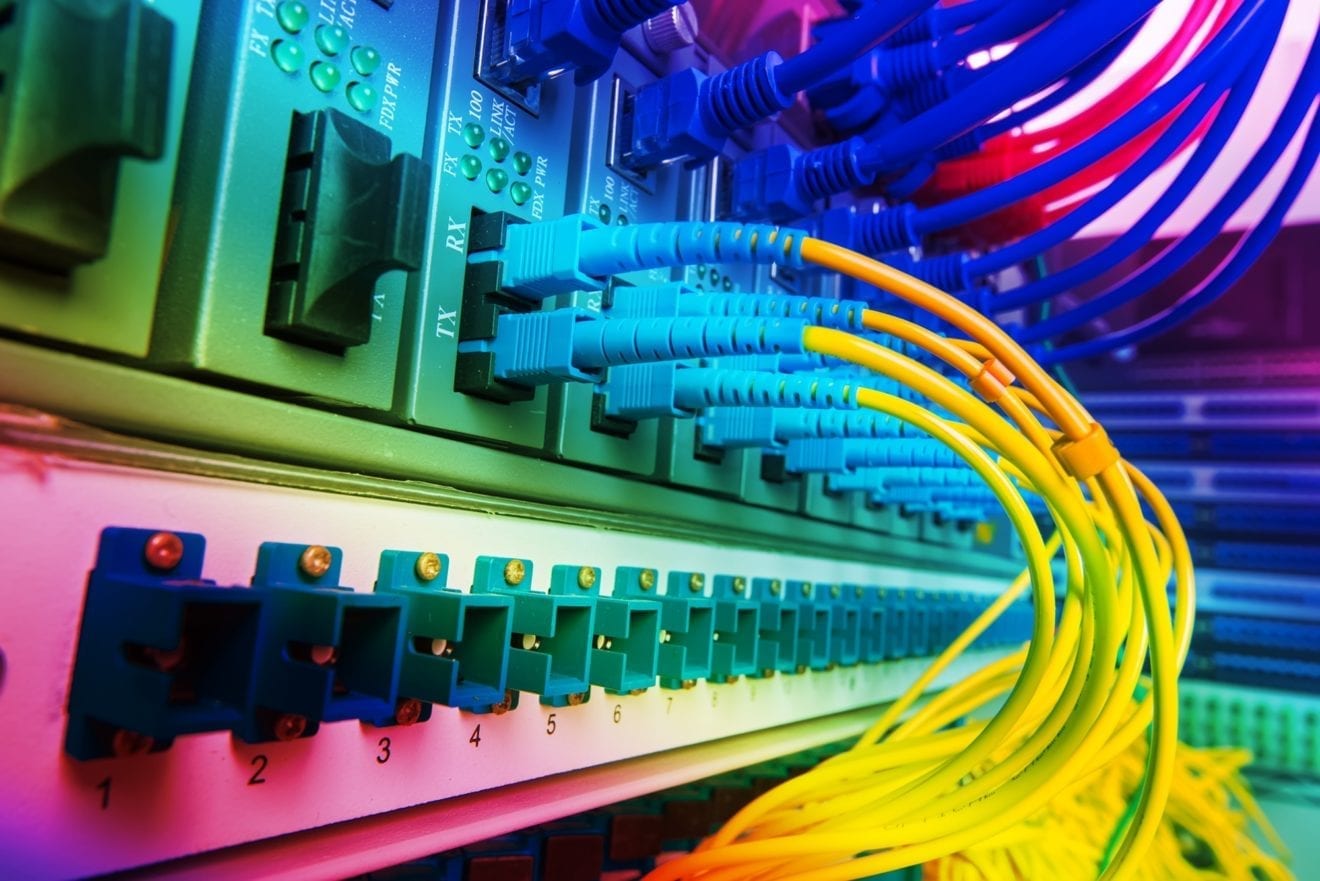
    Telecommunications operators and infrastructure investors are committing USD 11 billion between 2026 and 2035 to build new subsea cable systems across Southeast Asia. The spending will expand the number of active intra-Asian cable lines from 14 in 2025 to 19 by 2035, securing international data bandwidth for regional digital economies and hyperscale cloud providers.

    Submarine cables handle more than 99 per cent of international communications traffic in hubs such as Singapore. Under the city-state’s Digital Connectivity Blueprint, authorities plan to double the volume of subsea cable landings over the next decade, backed by an estimated SGD 10 billion (USD 7.4 billion) in predominantly private sector capital.

    Rerouting Around Maritime Chokepoints

    Engineering plans for newly announced trans-Pacific and regional cables increasingly avoid traditional, direct passages through the South China Sea. Systems including Apricot, Echo, and Bifrost run alternative paths through Indonesian and Philippine territorial waters to connect Southeast Asia directly with North America, Japan, and South Korea. Taking longer perimeter paths increases capital costs and latency, but operators accept the trade-off to shield data links from geopolitical exposure and congested straits.

    For enterprise users and cloud operators across Asia-Pacific, these southern corridors remove single-point failure risks that have historically disrupted regional supply chains. Financial platforms, retail marketplaces, and cloud providers gain lower downtime risks during localized outages, while secondary telecom operators in Jakarta and Manila secure direct wholesale access without routing entirely through Singapore.

    Equipment Supply and Infrastructure Competition

    The supply chain for physical infrastructure remains divided among a handful of global manufacturers. Japan’s NEC and France’s ASN maintain strong market positions in island networks across Indonesia and the wider archipelago, while Chinese suppliers have expanded cable contracts in Cambodia and selected Indonesian domestic systems.

    This supplier spread gives regional governments room to balance national security requirements against procurement costs. At the same time, physical reliability remains a constant operational bottleneck. International Telecommunication Union data indicates that human activity, mainly commercial fishing and vessel anchoring, causes 86 per cent of all subsea cable faults, requiring more than 200 offshore repair operations worldwide each year.

    Coordinated Regional Master Plans

    The push for network redundancy builds on policy commitments laid out in the ASEAN Digital Master Plan 2030, which directs member countries to coordinate subsea repair approvals and landing permits. Previous repair timelines often stretched for months due to overlapping maritime jurisdictions and strict cabotage restrictions in archipelagic waters.

    Attention now turns to the planned commissioning of major multi-terabit links, including the Apricot and Bifrost systems, which are scheduled to land initial capacity phases before 2027.

  • AWS Plans 420 Tbps Sta’O’Nuk Subsea Cable Linking the US and Japan by 2029

    AWS Plans 420 Tbps Sta’O’Nuk Subsea Cable Linking the US and Japan by 2029

    Amazon Web Services will build a 420 Tbps subsea cable connecting the United States and Japan, scheduled to begin commercial operations in 2029.

    The system, named Sta’O’Nuk, will run 20 fiber pairs across the Pacific Ocean, linking a new landing station in Washington state to an undisclosed site in Japan. It represents the first international subsea cable to land in Washington state in nearly three decades.

    Landing station and tribal partnership

    AWS partnered with Toptana Technologies to develop the American cable landing station and backhaul network in Ocean Shores, Washington. Founded in 2022 by the Quinault Indian Nation, Toptana is the only Indigenous-owned cable landing station operator on the US West Coast.

    Construction has begun on the Ocean Shores facility, designed to support up to four subsea cable systems. Assured Communications serves as program manager and operational service provider for the station, while the Quinault Indian Nation granted AWS permission to use the name Sta’O’Nuk, which translates to “lightning serpent” in the Quinault language.

    Washington state last saw international subsea arrivals in 1999, when Pacific Crossing-1 landed at Harbour Pointe and Alaska United East connected in Lynnwood. Toptana previously outlined a 17,700-square-foot, 1 MW station footprint when it first announced site plans in 2022.

    Transpacific cloud capacity

    Hyperscale cloud providers have shifted from purchasing capacity on shared consortium routes to financing and constructing dedicated private pipes across Asia-Pacific corridors. Direct cable ownership provides AWS with lower latency, predictable operating costs, and dedicated bandwidth between its data center regions in North America and East Asia without reliance on third-party commercial carriers.

    The Japanese landing location and local terminal partners remain unannounced as construction advances toward the 2029 target.

  • Japan AI Data Center Capacity to Quadruple by 2033 with $60 Billion Push

    Japan AI Data Center Capacity to Quadruple by 2033 with $60 Billion Push

    Japan will more than quadruple its artificial intelligence data center capacity over the next eight years through planned investments totaling $60 billion. The buildout aims to place the country directly behind the United States and China in compute scale while securing domestic data processing independence.

    Telecommunications giant NTT is driving a major share of that expansion, targeting 2 gigawatts of operational data center capacity by fiscal 2033. Trading houses and commercial operators are also stepping into the sector, including Itochu, which is preparing 10 facilities across Japan to capture surging commercial enterprise demand.

    Power Targets and Commercial Scale

    Data center developers across Tokyo and regional prefectures are racing to secure land and high-voltage grid connections required for high-density processing racks. Artificial intelligence workloads require substantially more electricity than legacy cloud hosting, forcing operators to structure long-term power purchase agreements before breaking ground.

    Japanese enterprises have accelerated their adoption of generative computing tools in supply chain planning, automated retail operations and customer service systems. Domestic infrastructure provides local businesses with lower latency and ensures sensitive corporate records stay within national borders under local privacy frameworks.

    Regional Competition and Sovereign Tech

    Across the wider Asia-Pacific region, rapid infrastructure development has sparked competing bids for power and municipal resources in key hubs such as Singapore, Malaysia and South Korea. Japan offers investors established grid stability and transparent property regulations, countering higher real estate and construction overheads.

    The investment pipeline gives enterprise software vendors and consumer brands access to dedicated domestic processing capacity that avoids overseas routing bottlenecks. What remains to be watched is how rapidly regional utility providers can deliver grid upgrades to NTT and competing operators as initial project phases break ground toward the 2033 capacity deadline.

  • Taiwan Pledges NT$40 Billion to Train 500,000 AI Specialists by 2040

    Taiwan Pledges NT$40 Billion to Train 500,000 AI Specialists by 2040

    Taiwan will allocate more than NT$40 billion (US$1.26 billion) next year across 10 major artificial intelligence projects to train 500,000 technical specialists by 2040.

    President William Lai confirmed the funding commitment in Taipei, tying the long-term headcount target to the government’s newly established AI Talent Ark Project. The program combines basic technical schooling, professional upskilling, and data-driven instruction to supply engineering talent to domestic hardware and software sectors.

    Building Domestic GPU Capacity

    Alongside the training quota, the Ministry of Digital Affairs is targeting the installation of at least 10,000 graphics processing units across local data centers within 12 months. The compute capacity will be developed through private investment under a build-own-operate framework.

    Minister of Digital Affairs Lin Yi-ching designated domestic AI computing facilities as public infrastructure eligible for private capital. The policy requires data centers to operate under Taiwanese legal jurisdiction so that commercial models remain compliant with local data governance standards.

    The ministry is also assembling a sovereign AI training corpus by opening state datasets to domestic and foreign developers. The goal is to build base models capable of handling Taiwanese language variants and local commercial contexts without relying entirely on offshore platforms.

    Sovereignty and Network Resilience

    Taiwan’s push mirrors parallel infrastructure plays across East Asia, where governments in Tokyo and Seoul are funding domestic compute clusters and localized foundation models to avoid complete reliance on US cloud hyperscalers. For technology hardware makers and enterprise software vendors operating in the region, the plan secures subsidized access to local high-performance compute capacity and a steady supply of specialized engineers.

    Network resilience forms the secondary layer of the digital sovereignty push. Lin noted that low-Earth-orbit satellite systems remain an active priority to safeguard data traffic against potential disruptions to undersea telecommunications cables.

    The digital ministry will roll out the private investment terms for the build-own-operate compute centers later this fiscal year, with the first 10,000 GPU deployments expected on line before late 2027.

  • Indosat and Arsari Group Launch 86,000-Kilometer RAIA Grid in Indonesia

    Indosat and Arsari Group Launch 86,000-Kilometer RAIA Grid in Indonesia

    Indosat Ooredoo Hutchison and Arsari Group have launched an 86,000-kilometer digital network across Indonesia through their joint venture PT Infra Fiber Teknologi. The open-access platform, named RAIA Grid, links data centers, 5G sites, and home broadband lines to handle computational workloads and cloud traffic.

    The network operates on an open-access model, allowing third-party telecom operators, hyperscalers, data center operators, and cloud service providers to lease capacity. Built-in machine learning models manage route optimization, demand forecasting, automated deployment, and predictive maintenance across the nationwide fiber footprint.

    Connecting Data Centers and Fiber

    Former Telkomsel chief executive Hendri Mulya Syam leads the venture as president director of RAIA Grid. The platform handles data center-to-data center connections alongside fiber-to-the-home and cellular backhaul, aiming to lower data transfer latency across the Indonesian archipelago.

    Indosat president director Vikram Sinha noted that the system integrates with Indosat and technology partner Zankore to provide a foundation for full-stack artificial intelligence services. By linking wholesale transport infrastructure directly to server hubs, the operators plan to capture enterprise data processing demand that traditional carrier networks struggle to route efficiently.

    Ambitions for Computing Power

    Indonesian telecommunications groups are shifting capital expenditure away from pure consumer mobile coverage toward wholesale fiber, enterprise cloud links, and data center interconnects. With international cloud providers building facilities in Greater Jakarta and Batam, carrier revenue growth now hinges on carrying high-density computational traffic between these server campuses.

    Arsari Group deputy chief executive Aryo Djojohadikusumo indicated the partnership intends to expand beyond basic transmission into high-performance computing, including exploratory plans for domestic supercomputer assembly. The joint venture now faces the operational rollout of its route links as data center operators bring new capacity online in West Java and secondary island hubs.

  • Southeast Asia Data Centers Secure 11.5 Billion Dollars in Equity as AI Surges

    Southeast Asia Data Centers Secure 11.5 Billion Dollars in Equity as AI Surges

    Southeast Asian data center operators raised 11.5 billion dollars in disclosed equity across 19 deals, with 85 percent of the total arriving since early 2024.

    Five Singapore-headquartered platforms secured roughly 98 percent of that capital, backed by sovereign funds, pension investors, and global private equity firms building capacity for regional artificial intelligence demand.

    Sector funding expanded sharply after years of modest activity. Between 2020 and 2023, regional data center operators raised a combined 1.68 billion dollars. Annual totals climbed to 3.2 billion dollars in 2024, 1.9 billion dollars in 2025, and 4.7 billion dollars in 2026 to date, driven by mega-rounds such as DayOne’s 4.5 billion dollar Series C.

    Capital concentrates in Singapore

    All five top-funded platforms, DayOne with 6.4 billion dollars, Princeton Digital Group with 2.2 billion dollars, ST Telemedia GDC with 1.3 billion dollars, Nxera with 806 million dollars, and Digital Edge with 640 million dollars, hold their corporate headquarters in Singapore.

    While holding companies domicile in the city-state, physical construction spreads across neighboring growth corridors. DayOne committed over 28 billion ringgit (7 billion dollars) to Malaysia through 2026 and partners with the Indonesia Investment Authority on a 72-megawatt campus in Batam. Princeton Digital Group operates a 1.1-gigawatt portfolio across six Asian markets, while Digital Edge runs sites in Japan, South Korea, India, Malaysia, Indonesia, and the Philippines.

    Mergers and acquisitions accelerated alongside greenfield development. Deal intervals compressed from over four years down to nine months. In the sector’s landmark transaction, buyers followed a June 2024 purchase of an 18.3 percent stake in ST Telemedia GDC by acquiring the remaining 82 percent 20 months later at an enterprise valuation of 13.8 billion Singapore dollars (10.86 billion dollars).

    Debt builds beside equity

    Hyperscale tenant contracts with predictable cash flows have allowed operators to layer large debt packages onto their balance sheets. Digital Edge paired its 640 million dollar equity round with 1 billion dollars in debt. Princeton Digital Group split its 2025 capital raise between 1.3 billion dollars of equity and 1.2 billion dollars of debt, following that with plans outlined in March 2026 to raise up to 5 billion dollars in additional debt facilities.

    Public market debuts remain rare, with Indonesia colocation provider Elitery’s 16 million dollar listing in January 2023 standing as the lone regional listing so far. DayOne filed confidentially for a US initial public offering in August 2026 to raise roughly 5 billion dollars at a 20 billion dollar valuation, while simultaneously seeking to expand an existing 3.4 billion dollar credit line to 7 billion dollars.

  • Bitcoin Tests $80,000 Level as IREN Beats Sales Targets

    Bitcoin Tests $80,000 Level as IREN Beats Sales Targets

    Bitcoin traded near $80,000 on Thursday as institutional demand and momentum buying pushed the cryptocurrency to fresh highs.

    The rally lifted digital asset equities across global markets, led by data center operator IREN, which topped consensus revenue projections in its latest financial reporting.

    Mining revenue and market momentum

    Data center operator IREN reported sales above analyst estimates, driven by expanded power capacity and improved fleet efficiency across its facilities. Higher realized prices per coin lifted margins across commercial mining operations, offsetting rising global network difficulty.

    Trading desks across Singapore and Hong Kong reported steady buy orders from institutional funds throughout the session. Liquidations of short positions accelerated the advance once the asset broke past key resistance levels.

    Institutional demand in Asian trading hours

    Regional crypto exchanges recorded elevated turnover during Asian morning hours, tracking sustained inflows into exchange-traded spot products. The upward momentum created strong tailwinds for hardware suppliers, hosting providers, and infrastructure businesses linked to digital asset networks.

    Trading volume across major regional venues remains concentrated on spot books, with institutional desks watching whether capital sustains above the $80,000 mark through the weekly close.

  • Korea Eximbank Backs LS Cable Virginia Plant with 300 Billion Won

    Korea Eximbank Backs LS Cable Virginia Plant with 300 Billion Won

    The Export-Import Bank of Korea will provide 300 billion won ($217.7 million) in financing for LS Cable & System’s subsea cable factory in the United States.

    State backing covers nearly a third of the South Korean manufacturer’s total 1 trillion won ($725.6 million) investment to build the production site in Chesapeake, Virginia. The lender arranged the debt package to secure a foothold for Korean industrial suppliers in the North American energy transmission supply chain.

    Targeting AI Grids and Offshore Wind

    Construction in Chesapeake is scheduled for completion in the second half of 2027. Once fully operational, the plant will produce 500 kilometres of high-voltage direct-current (HVDC) subsea cables each year to link regional power grids across long distances with minimal transmission loss.

    The output will serve power grid operators in North America as well as offshore wind developers in Europe. Rising electricity consumption from hyperscale artificial intelligence data centers is accelerating utility spending on heavy-duty transmission lines that can carry bulk power across borders and coastal waters.

    South Korean Cable Makers Push Abroad

    South Korean manufacturers are building manufacturing capacity closer to Western grid projects as local transmission networks face backlogs. Rivals such as Taihan Cable are also expanding their subsea and offshore installation capabilities to capture orders outside East Asia.

    State lenders plan to issue additional credit lines to domestic cable producers competing for long-term supply contracts across North America and Europe. The Chesapeake plant remains on track to start commercial deliveries by late 2027.

  • Transforming Old Smartphones into Micro Data Centers: A Smart Solution for Cities and Oceans

    Transforming Old Smartphones into Micro Data Centers: A Smart Solution for Cities and Oceans

    In a groundbreaking initiative, researchers from the University of Tartu Institute of Computer Science have developed an innovative and sustainable approach to tackling electronic waste by transforming outdated smartphones into miniature data centers. This method not only provides an eco-friendly alternative but also reimagines the potential use of these often-discarded devices.

    A Surprising Data Solution to E-Waste

    With over 1.2 billion smartphones produced each year—most of which are tossed aside within just a few years—this new solution offers a cost-effective and practical alternative to both landfills and the energy-intensive processes of traditional recycling. By removing the original batteries and utilizing external power sources, the researchers have significantly reduced environmental risks while ensuring that the devices can operate continuously.

    Innovative Prototyping and Testing

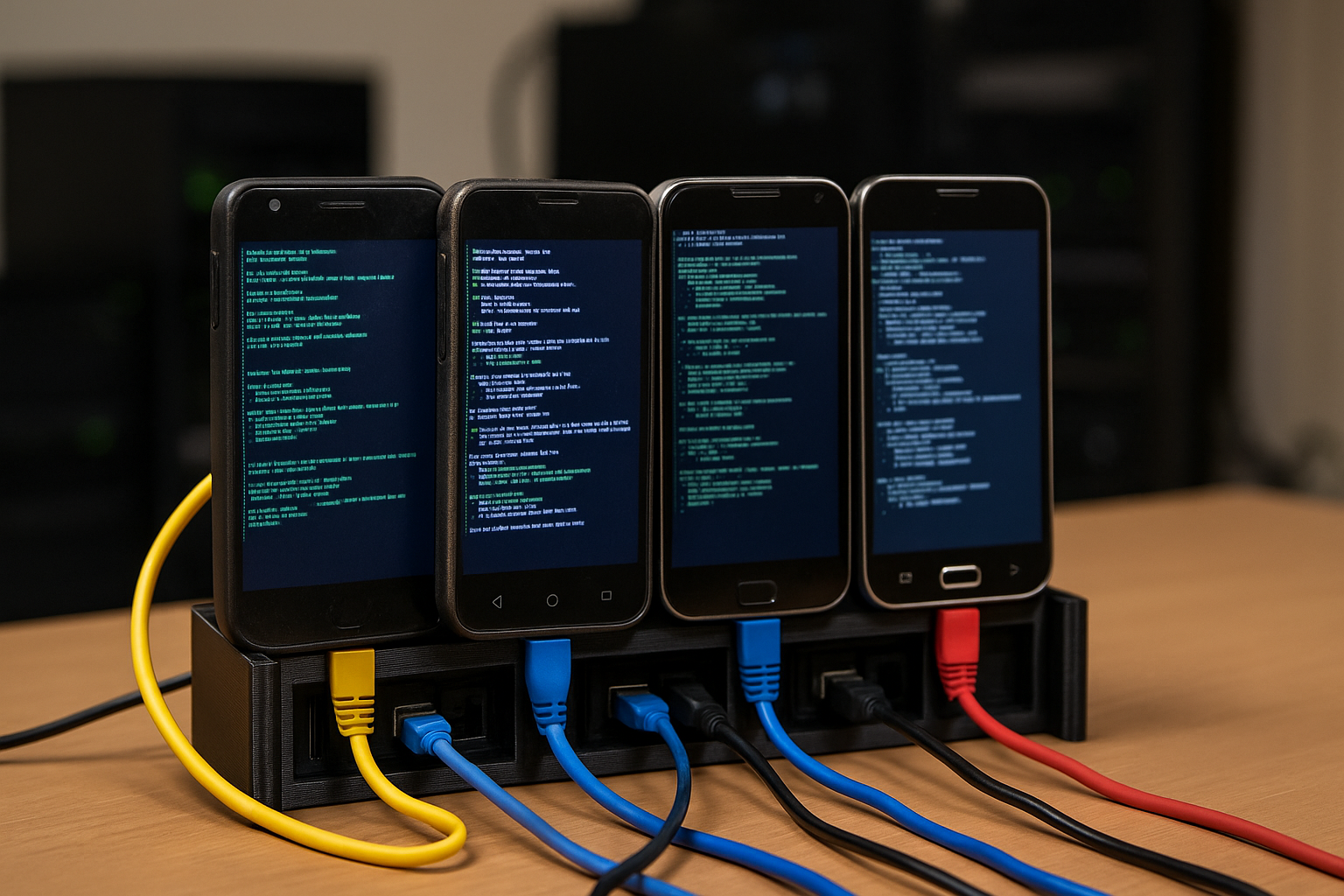
    The project features a prototype composed of four interconnected smartphones encased in 3D-printed housings. Remarkably, these devices have been tested in a variety of challenging conditions, including underwater scenarios, where they autonomously gathered and processed data on marine life. It’s a testament to the surprising resilience and adaptability of technology that many might consider obsolete.

    Affordable and Scalable for Future Cities

    Each repurposed smartphone comes at a modest cost of approximately EUR 8, presenting an affordable option for smart city infrastructures and environmental monitoring systems. This initiative not only facilitates a significant reduction in electronic waste but also emphasizes the immense potential of older devices in fostering sustainable, decentralized networks for data processing. Imagine a future where your old smartphone could help monitor river pollution or track wildlife in real-time—what a twist on the planned obsolescence narrative!

    Questions & Answers

    How does repurposing smartphones contribute to reducing electronic waste?
    Repurposing smartphones minimizes the volume of discarded electronics that typically end up in landfills, while also providing an eco-friendly alternative to energy-intensive recycling.

    What are the costs associated with transforming smartphones into data centers?
    The conversion of each smartphone into a miniature data center costs about EUR 8, making it an accessible option for various applications in smart city projects.

    What are some practical applications for these repurposed devices?
    These converted smartphones can be used for environmental monitoring, such as tracking marine life data or monitoring air quality, integrating seamlessly into modern smart city infrastructures.

  • Singapore to lead the way in tropical data centers

    Singapore to lead the way in tropical data centers

    Launching the Infocomm Media Business Exchange’s Ministerial Forum on ICT on Monday ahead of the official kickoff of CommunicAsia2016, Singapore Minister for Communications and Information Dr Yaacob Ibrahim (pictured) spoke of the progress that the country had made in becoming the world’s first Smart Nation – to include the world’s first data centers designed specifically for tropical climates.

    Dr Ibrahim explained how he has partnered with industry and academia to launch testbeds for green data centers and is now looking at whether it is possible to design and operate data centers at temperature and humidity levels that are double the current norm.

    The tests for these so-called Tropical Data Centers (TDCs) will target an ambient temperature of 38 degrees Celsius and humidity exceeding 90%. The trial will test how data servers react under various “live” situations, such as peak surges or transferring of data, and in diverse conditions, such as with no temperature or humidity controls. TDCs could reduce energy consumption by data centers by up to 40%.

    This would not only expand the geographical limitations of locating data centers, but also cut back on existing energy requirements of the running of such centers – all of which is part of the Singapore Smart Nation Vision.

    Data centers accounted for 7% of Singapore’s total energy demand in 2012 and is projected to reach 12% by 2030.

    On the cyber security front, Dr. Ibrahim said that Singapore has signed a number of bilateral agreements with France, the UK and India in the area of cyber security. It is also supporting the annual ASEAN computer emergency response team incident drill exercises.

    Earlier, the Cyber Security Agency of Singapore successfully completed a multi-sector exercise a few months ago to strengthen the ability of agencies to cooperate in handling cyber attacks. In October, Singapore will hold its inaugural International Cyber Week, which will also see the unveiling of the country’s national cybersecurity strategy document by the Prime Minister.

    Dr Ibrahim also stated that Singapore will complete its switchover to digital TV by the end of 2017, freeing up spectrum for mobile and mobile broadband services, and will be one of the first countries in the world to impose minimum standards for 4G QoS.