“My friends even told me that these fintech firms were defaming and harassing them, sending my friends’ personal photos to their bosses and some of the people in their contact lists, calling my friends imposters,” she added.
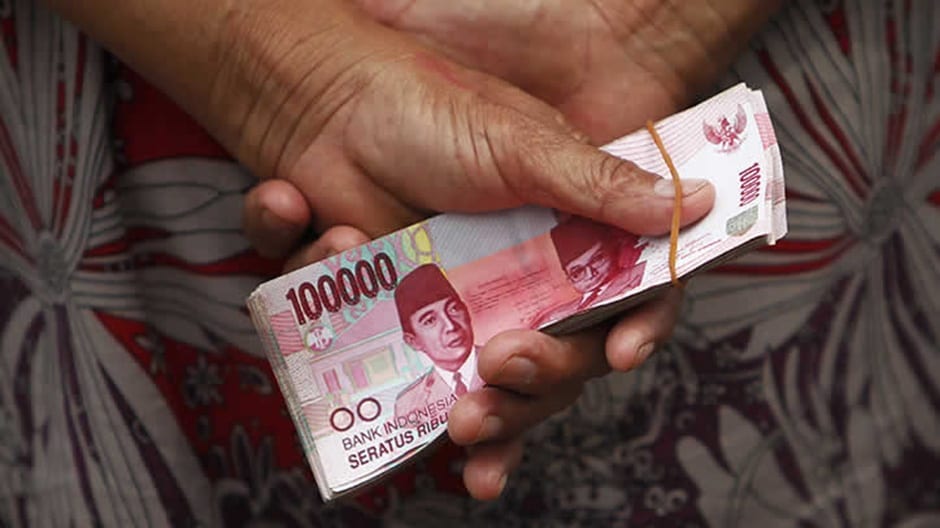
The trouble started a few months ago after she borrowed Rp 1 million each from Uang Kita, Kantong Darurat and Perdana (previously known as Rupiah Plus).
Risks Associated With Collateral-Free Loans
Each fintech firm has a different set of requirements borrowers must meet, but most of them do not ask for any collateral, which comes with one major drawback: high interest rates.Despite customers only needing an identity card and a cellphone number to borrow emergency cash, these loans carry interest rates of 1 percent per day for a maximum tenor of 14 days. This exceeds by far the already steep interest rates of 29.9 percent per year that credit card companies charge their customers.
Customers must also be prepared for some unpleasant treatment from these fintech firms if they fall behind on their repayments.
“At first, I started borrowing money just for fun but I ended up with these debts and I’m making one debt to pay another debt. I want to pay it off in installments, but they refuse to accept it. They want me to settle the loans in full,” Cintia said.
Misna Wati, who works for an undisclosed company in Jakarta, has owed money to 25 fintech firms since May last year. She said she regularly receives harassing phone calls and WhatsApp messages from debt collectors and representatives of the firms.
“We are worried all the time. We did not expect them to be able to access our contacts, call logs, even messages,” said Misna, who declined to state her age and occupation.
Misna and Cintia are now both seeking assistance from the Jakarta Legal Aid Institute (LBH).
Need for Strong Data Protection
With numerous reports about breaches of data privacy by the financial industry, the House of Representatives must accelerate the process involved in passing the data protection bill.The bill, which was supposed to be enacted last year, has now been included in the 2019 priority list of the National Legislation Program, which means that the House might deliberate it sometime this year.
While Ministerial Regulation No. 20 of 2016 is intended to protects users’ personal data on the electronic system, it is deemed insufficient in preventing large-scale data breaches.
The regulation only stipulates administrative penalties for violations or the settling of disputes between offenders and system providers or data owners, but does not allow for the recovery of damages related to customer data breaches.
The bill, if it is passed into law, would apply both in Indonesia and abroad, but only to Indonesian citizens and Indonesia-based business entities.
The regulation is very important as Indonesia has more than 143 million internet users, which is more than half of the country’s population, according to data compiled by the Internet Service Providers Association (APJII) in 2017.
Fintech’s Popularity
Fintech services have gained popularity in Indonesia over the past few years due to their seamless technology systems, innovation, customer-focused approach and simplicity. Fintech companies also offer payment systems, financial assistance and fundraising options.According to a joint study by global technology giant Google and Singaporean wealth fund Temasek, Indonesia’s internet economy – the financial value of all digital services – could exceed $100 billion by 2025, compared with $27 billion last year.
But despite numerous benefits, the microcredit industry is still poorly regulated in Indonesia and the government is currently dealing with a rising number of illegal or unlicensed fintech firms operating in the country.
The government banned 738 illegal financial technology websites and applications last year in a bid to protect consumers.
As Indonesia is now one of the centers of the digital financial industry in the region, it attracts numerous companies from neighboring countries that establish a presence in the country, but which often choose not to obtain licenses from industry regulator, the Financial Services Authority (OJK).
Most of the unlicensed fintech apps and websites are from China, Malaysia and Thailand. These fintech firms do not have registered offices, either in Indonesia or in their home countries.
“The OJK has instructed us to ban unlicensed fintech websites and apps,” Ferdinandus Setu, acting head of public relations and communication at the Ministry of Communication and Information Technology, said in a statement last week.
He said the ban so far applies to 211 websites and 527 smartphone apps, which seemed to have been increasing since August last year.
There were 171 illegal fintech apps available for download on Google Play in November last year, compared with 144 in August. The ministry also recorded 77 illegal fintech websites in September.
The ministry said no illegal fintech websites and apps were recorded between January and July last year.
Ferdinandus said besides the OJK’s instruction, the communication ministry’s actions were also carried out after collecting public reports through a web crawler known as AIS, which filters out content deemed illegal under Indonesian law, such as pornography, the spreading of false news and the promotion of terrorism and radicalism.
The ministry encouraged members of the public to report websites offering financial services that may be deemed illegal, or fintech companies that are not registered with the OJK.
Reports can be submitted to aduankonten.id, or @aduankonten on Twitter. A task force comprising more than 13 ministries and agencies will investigate the reports.