Tag: David Jones

  • David Jones Food review leads to end of BP partnership

    David Jones Food review leads to end of BP partnership

    Following a review of David Jones’ food business, which was signaled by chief executive Scott Fyfe in March, the department store’s partnership with convenience chain BP is ending.

    The 35 dual-branded sites built over the past year will be transitioned in the coming months as DJs continues to streamline its Food business.

    “Our organizations have collectively agreed to work through a managed transition that will see our relationship end in the coming months,” a BP spokesperson said.

    “We know the needs of consumers are changing and we are excited by the growth opportunity this presents for BP in Australia.

    “A differentiated offer which is delivered well clearly resonates with our consumers, who lead busy lives and want easy access to healthy and delicious food.”

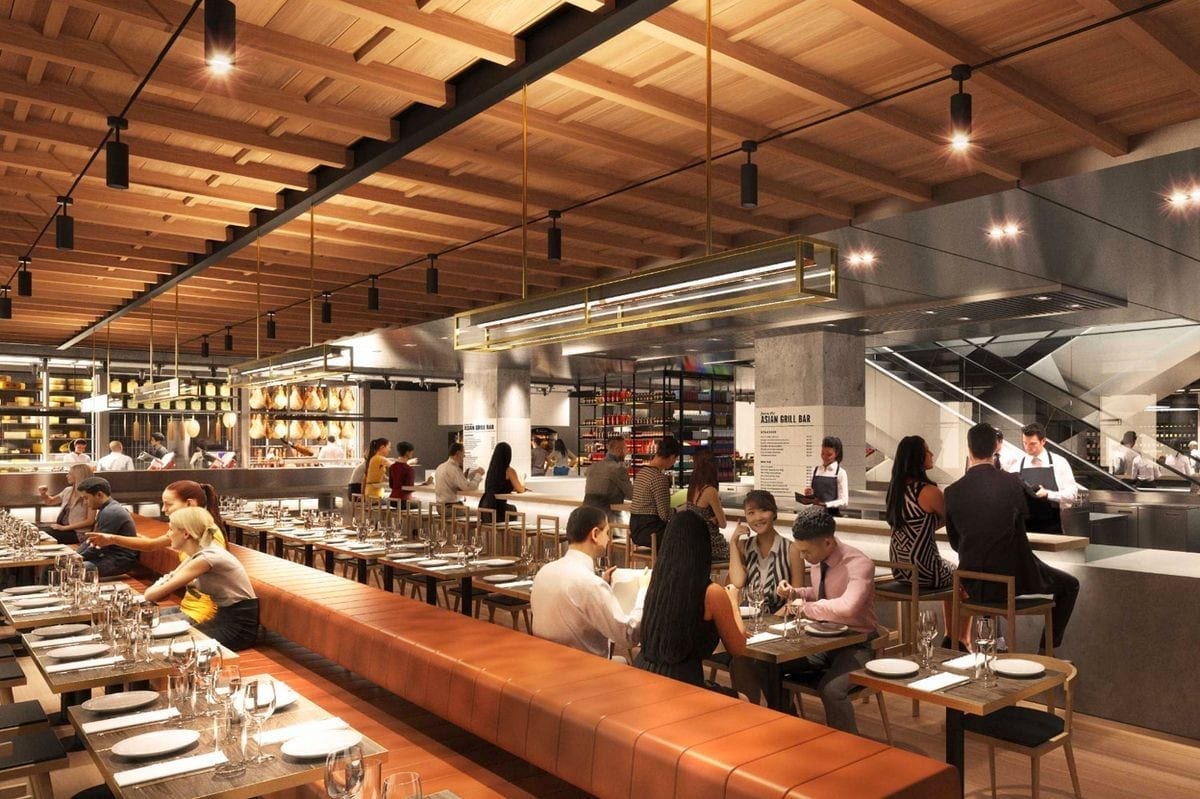
    David Jones, on the other hand, will refocus its food efforts toward bespoke Food Halls in its Elizabeth Street and Bondi Junction locations, as well as its pantry and seasonal ranges.

    “We thank BP for its strong collaboration throughout the partnership and wish the business all the best in the next phase of its development,” a David Jones spokesperson said.

    “David Jones remains committed to delivering an exceptional food range reflective of our customers’ needs and preferences while reducing cost and enhancing overall business performance.”

    The issue seems to have stemmed from David Jones’ failure to make a profit from its Food ventures, with parent company Woolworths Holdings group chief executive Roy Bagattini stating the business has “not transitioned fast enough“ during an analyst call last September.

    And, that while the David Jones Food convenience locations were progressing well, the larger format David Jones Food business trades at a loss.

    At a minimum, Bagattini said he hoped a review would get the food business to a break-even position by the 2022 financial year.
  • Sephora launches first WA pop-up inside David Jones

    Sephora launches first WA pop-up inside David Jones

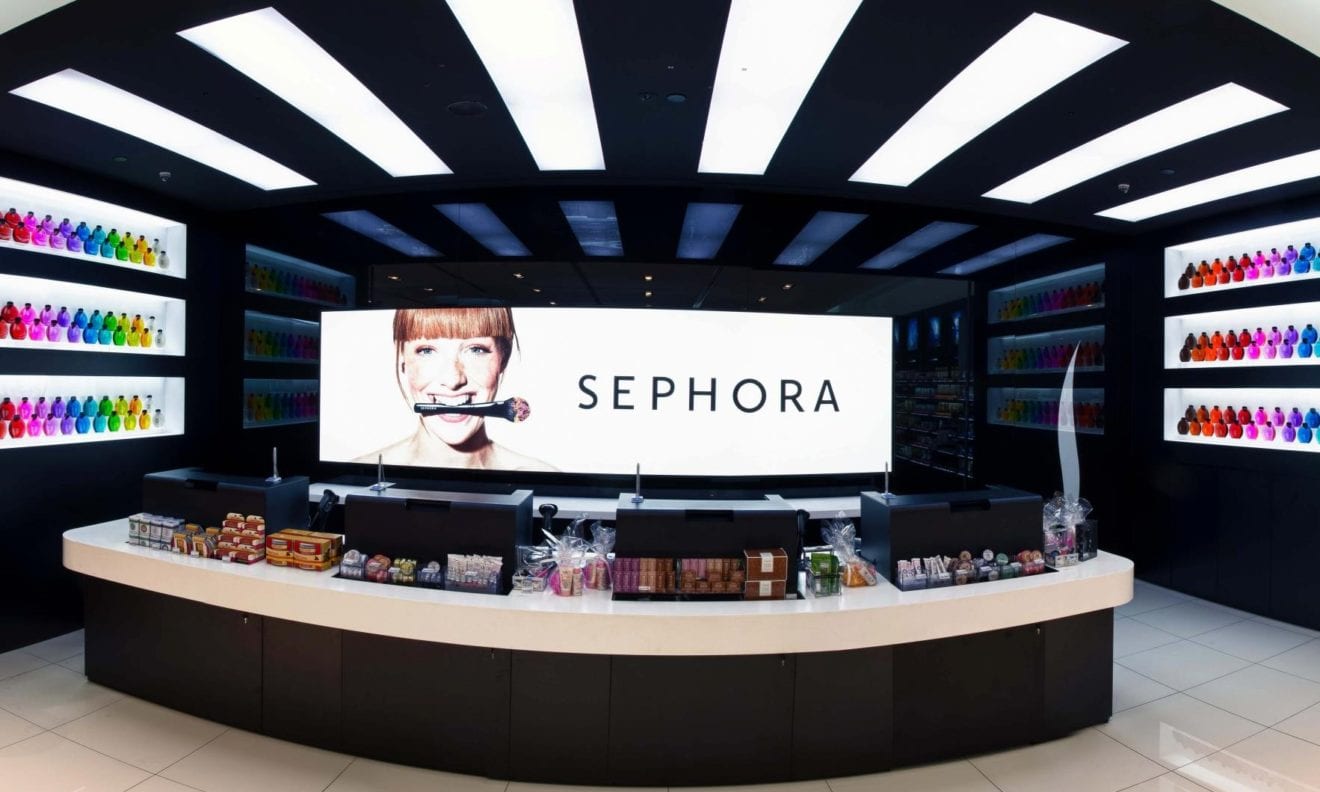
    Beauty brand Sephora has launched its first location in Western Australia, housed within the David Jones in Claremont Quarter Shopping Centre, Perth.

    The pop-up will run until January, or until stock runs out, and will offer Christmas Gift collections that feature products from Huda Beauty, Becca Cosmetics and Fenty Beauty.

    Perth property group Hawaiian general manager of shopping centers Scott Greenwood said the pop-up will give Perth beauty fans the chance to get their hands on international cosmetic brands in time for Christmas.

    “We are proud we can assist our retailers offering international brands to Claremont Quarter shoppers,” Greenwood said.

    “The pop-up Sephora has arrived in David Jones just in time for people to start their Christmas Shopping.

    “It will also be warmly welcomed by those who love the Sephora brand but until now have only been able to access products online or interstate.”

    Sephora signed a strategic partnership with David Jones in 2018, which at the time resulted in the opening of a concept store in David Jones’ Bourke Street, Melbourne flagship.

    The launch of the pop-up continues this partnership, as well as Sephora’s expansion into new locations in Australia, has launched its first store in Rundle Mall, South Australia in October.

    Parent company LVMH recently revealed a solid third-quarter result, with all business groups and regions contributing to an 11 percent increase in revenue.

    Sephora itself continued to see strong organic growth, especially in Asia and the Middle East, and enjoyed rapid online revenue growth.

  • David Jones profit almost halves this year

    David Jones profit almost halves this year

    David Jones’ operating profit fell 42 percent to $37 million in the 2019 financial year, hampered by tough trading conditions and little economic growth in the Australian market.

    Parent company Woolworths Holdings chief executive Ian Moir said the performance was fair considering the conditions, and that the management team has adapted their strategy to the changing retail landscape.

    “Our businesses are well-positioned to see through the significant economic and structural challenges retailers are facing,” Moir said in a statement to investors.

    “We are focused on building future-fit, customer-focused businesses with strong portfolios of brands that deliver long term value.”

    The South African retail group said it didn’t expect conditions to improve significantly in the short-term, with the retail market continuing to be tough due to heavy discounting and promotional material.

    As such, Woolworths Holdings said the previously announced plans to reduce store count is underway across the David Jones portfolio to improve stock productivity as online sales grow. David Jones didn’t specify which stores are being closed.

    The 2019 financial year also saw turnover and concession sales fall 0.8 percent for the department store, and comparable sales fall 0.1 percent. However, online sales grew 46.8 percent and now makeup 7.7 percent of total sales.

    Moir said he believes “the worst is over” for the struggling department store chain.

    “We’ve had many bad years at David Jones and learned many lessons,” Moir said.

    “We know more about the Australian customer through fixing the David Jones business because we have collected data and research about what they want. We believe the worst is over.

    “The year 2021 will be a much stronger year for David Jones.”

    Moir will relocate to Sydney to oversee the turnaround more closely, as he understands the Australian market from his time running Country Road Group.

    Country Road

    Country Road also saw its operating profit fall over the year – a 2.9 percent drop to $100 million.

    Sales at the clothing retailer grew 0.5 percent, while comparable sales fell 0.6 percent. Online sales now represent 20.3 percent of total sales, having grown 12.9 percent over the period.

    Net retail space reduced 2.9 percent over the period, with further space reductions a priority.

  • David Jones plans board expansion

    David Jones plans board expansion

    David Jones’ South African parent company Woolworths Holdings has appointed two independent non-executive directors, David Kneale and Thembisa Skweyiya, effective March 11 2019.

    The business said it plans to add further non-executive directors moving forward.

    Skweyiya has previously held positions at Citigroup and Nedbank Capital, has been a non-executive director of Rothschild, and has risk, audit, social and ethics and sustainability committee experience at both public and private companies.

    Currently, Skweyiya serves as a non-executive director on the boards of Imperial Logistics Limited, Liberty Holdings Limited, Sumitomo Rubber South Africa Limited and Jonsson Workwear Limited.

    Kneale has over 40 years of local and international retail experience in senior leadership and executive roles, according the Woolworths Holdings, having previously been the chief executive of Clicks Group between 2006 and 2019.

    Kneale held senior retail positions at Boots plc, and served as the chief commercial officer and managing director of International Retail Development, as well as managing director at Waterstone’s Booksellers for approximately two years.

    The appointments are made as the group chief executive Ian Moir is stepping in to fill the shoes of departed David Jones boss David Thomas while the search for a replacement continues.

    Thomas had been in the position for almost 18 months, and resigned abruptly, citing personal reasons. He had been the target of an internal discrimination complaint last year, but was cleared of any wrongdoing in November 2018.

  • David Jones to open European luxury concessions on $200 million redevelopment

    David Jones to open European luxury concessions on $200 million redevelopment

    Upscale Australian department store David Jones is set to become even more luxurious, with the addition of several major European fashion houses at its Sydney flagship store, as part of a $200 million redevelopment.

    The 180-year-old department store chain said that French labels Louis Vuitton and Chanel, as well as Italy’s Gucci, are set to open as in-store boutiques at David Jones’ flagship Elizabeth Street store in Sydney.

    Other major labels include Givenchy, Loewe, J.W. Anderson and Mansur Gavriel, coming in the form of store concessions and exclusive collections.

    After Sydney, the luxury upgrade will also be rolled out to David Jones’ Melbourne stores.

    Funded by the $360 million sale of the company’s Market Street store in 2016, the redevelopment of the Elizabeth Street store will see it grow to 12 floors from 8, with products categorised into six “worlds”.

    Floors 7 and 8 will feature an Australia-first champagne and dining room, while below, a luxury shoe department featuring Louis Vuitton, Chanel and Gucci, will bow.

    The move is likened to the retail model at London’s Harrods or Sak’s Fifth Avenue in the U.S., and looks to up the ante at DJs, who has suffered sluggish sales of late, along with rival Myer, as consumers flock to online shopping, as well as boutiques, instead of mass stores.

    David Jones chief executive David Thomas said that department stores could still be relevant to consumers, but had to play to their strength of being a “mall without the shopfronts” by offering a wide range of the best products, and customer service to match.

    “So you come in for a black boot, we should be able to show you the 10 best black boots on the market, as opposed to going into one brand in a mall, where you can only see their offering,” he said.

    It’s far less intimidating than walking into a specialty store and far more convenient. That’s how we fight back, that’s the role of the department store.”

    David Jones said comparable sales fell 3.3 percent in the last half, while profits fell by more than 30%. At the time of reporting, the company attributed poor consumer sentiment and its poor private label clothing designed in South Africa, for the demise.

    The Elizabeth Street store renovation, planned as a floor-by-floor revamp, should be completed around late 2019.

  • David Jones’ profit drop amid slowing sales

    David Jones’ profit drop amid slowing sales

    Department store giant David Jones’ sales growth has weakened markedly amid a decline in consumer spending and a poorly received private label clothing range.

    DJs recorded a 25 per cent drop in operating profit while total sales edged up one per cent in the year to June 25 compared to the prior year, which enjoyed sales growth of 8.4 per cent.

    South African parent company Woolworths Holdings – not related to the Australian supermarket chain – said the collapse of electronics retailer Dick Smith last year, which had concession stores inside David Jones stores, impacted growth by one per cent.

    The high-end retailer’s crucial comparable store sales, which excludes Dick Smith, declined 0.7 per cent – sharply lower than the prior year’s seven per cent growth in comparable sales.

    “Sales growth slowed in the second half as consumer sentiment worsened, although our share of the department store and specialty market grew marginally,” the company said in a statement on Thursday.

    Woolworths Holdings chief executive Ian Moir said David Jones suffered a disappointing private label performance but lessons had been learnt and remedial action was being taken.

    The group’s other Australian business, the Country Road Group – which includes the Country road and Witchery apparel brands – had a 5.1 per cent lift in sales and showed a marked improvement in the second half, with newly acquired Politix adding 3.7 per cent to growth.

    Sales in comparable stores however declined by 0.4 per cent.

    Moir said Country Road’s “above-market performance” reflected changes made to the business over the past 18 months and ongoing improvements to ranges during the year.

    Woolworths stated it’s in the process of rolling out its new beauty offering across its clothing and general merchandise division, which will include international brands Chanel and Estee Lauder for the first time.

    “Sales growth slowed in the second half, as consumer sentiment worsened, although our share of the department store and specialty market grew marginally,” said Moir.

    Looking ahead, Woolworths expects market conditions in the year ahead “to be constrained by the same economic and political conditions that impacted our performance during the year under review”.

    “We will continue to invest in various transformational initiatives, most notably in David Jones, and remain  confident that our strategies will deliver future – fit businesses capable of long-term profitable growth. We expect our food and clothing businesses in both South Africa and Australia to continue to outperform their respective markets.”

  • David Jones unveils $100m food strategy

    David Jones unveils $100m food strategy

    Department store chain, David Jones, has unveiled its $100m food strategy, aiming to build a retail food business that draws on design elements from the world’s top food sellers and gets younger generations back in-store.

    David Jones’ new gourmet food offering will kick off at Bondi Junction in Sydney’s east within seven weeks time and will showcase the retailer’s attempt to tap into the $100 billion food sector.

    Taking cues from Switzerland’s Globus, Eataly in New York, and La Grande Epicerie under Bon Marche in Paris, the revamped food offering will incorporate integrated dining developed with well-known chef and restaurateur Neil Perry, as well as cafes, butcher shops, bakeries and seafood counters plus prepared meals and packaged groceries.

    Westfield Bondi Junction will be followed by a food market in GPT Group’s Wollongong Central shopping centre, then Melbourne’s Bourke Street store in November.

    When Woolworths Holdings acquired Australia’s oldest department store retailer, food  “was never part of the rationale of the acquisition” according to Pieter de Wet, group food executive, David Jones. But the South African based retail group – which is now predominantly a food business with over 400 food stores generating over 60 per cent of its turnover today – quickly recognised a gap in the market.

    Pointing to a survey undertaken with a sample of its customers, de Wet said customers felt limited in their food options and gravitated towards big supermarket players only because they had no choice and it’s a case of “whichever one is closest on the way home.”

    “So there’s no emotional connection that exists with specialists, so their local barista, baker, that they have the connection they love their experience from.”

    De Wet said when asked about DJs food offering, its customers were unanimous. “They basically said that from a food point of view, we had fallen off the map completely”

    “If you speak to the 35 years old and under generation, there’s no reason for them to come to David Jones today because it’s not kept up with the times…they basically said to us if you’re going to do food, make sure it’s not just a small evolution, make sure it’s a massive step forward otherwise it’s not going to really interest us.”

    When asked by assembled media about Amazon’s $13.7b acquisition of WholeFoods in the US, John Dixon, David Jones CEO said it showed the US giant is changing its strategy after understanding the importance of stores. “They initially started selling books online…the acquisition of WholeFoods shows that they understand that its important in this day and age to have both an online and store operation.”

    “Certainly when you think about the opportunity and strength of David jones, we already have a great store network, nationwide coverage and we’ve got an online business which is going very nicely that we are about to re-platform in September.

    “We’ve brought over an expert from the UK to spearhead our online growth and what we know is when customers actually shop across what we call both channels, they are the most important and valuable customers to us. So I think we are very well placed because we have what we call a connected retail strategy.”

  • David Jones poaches Self-Portrait from rival Myer as fashion war continues

    David Jones poaches Self-Portrait from rival Myer as fashion war continues

    Australia’s department store giants David Jones and Myer are at it again. In the latest war of the women’s ready-to-wear brands, high-end retailer David Jones has poached Britain’s Self-Portrait label from competitor Myer.

    David Jones group executive of merchandise David Collins told the Sydney Morning Herald the London-based Self-Portrait was picked up to bolster the department store’s current bridal offering in its Sydney flagship, as well as its regular women’s fashion fold.

    “Self Portrait has become a fast favourite within our bridal category and a brand that we believe will strongly perform in the womenswear ready-to-wear space,” Collins told SMH.

    Founded by Malaysia-born, London-based Han Chong in 2013, Self-Portrait is fashion favourite of the Duchess of Cambridge. Known for its modern lace designs, the brand looks set to be better positioned with a David Jones listing, considering the department store’s brand position as more high-end, compared to Myer.

    “David Jones’ vision to amalgamate the most innovative designers from around the world under their roof is inspiring and we look forward to partnering with them in Australia,” said Chong, in a statement.David Jones said Self-Portrait would be available in store from June 11. Myer started stocking Self-Portrait in 2015.

    In recent months, Australian labels Aje, Karen Walker and By Johnny have also changed sides, heading from Myer to David Jones. As the fashion war roars on, Myer took another blow late last month in its youth fashion segment, following the collapse of Topshop Australia, of which it owns one fifth.

    However, the department store chain said had begun investing in its own Maticevski label and Misha Collection, and was growing its network of shop-in-shops, including Morrison and Skin & Threads. It has also opened concessions for French brand The Kooples and Zadig & Voltaire, and most recently announced a one-year distribution deal with up-and-coming women’s brand We Are Kindred.

    The Australian retail market is facing one of its most frenzied phases. While fast-fashion moguls H&M and Zara continue to steam roll homegrown fashion retailers — including David Lawrence and Marcs, which were recently rescued by Myer after entering administration — the impending arrival of American e-commerce Amazon in Australia is adding to local business blues.

    And consumer fashion spending is bleak. While Australian retailers enjoyed their best monthly sales in nearly three years in April, up 1%, sales growth in clothing and footwear was an anaemic 0.3%.


  • David Jones says retail spending up significantly, more boutiques planned

    David Jones says retail spending up significantly, more boutiques planned

    David Jones has brushed off suggestions it will head downmarket under its new owners, and says it aims to build more boutique stores amid continued economic uncertainty.

    Chief executive Iain Nairn, who was appointed in August after the AUD2.1 billion takeover of David Jones by South African retailer Woolworths Holdings, said its tracking of about AUD30 billion in retail spending showed “significant” growth in year-on-year spending.

    “The customer is spending and we’re making good market share gains, particularly in the department store sector,” Nairn said.