Tag: DBS Bank

  • MAS Opens 500-Tonne Gold Vault to Foreign Central Banks

    MAS Opens 500-Tonne Gold Vault to Foreign Central Banks

    The Monetary Authority of Singapore launched a gold vaulting service on Nov 10, opening its national currency vault to foreign central banks, international financial institutions and sovereign entities.

    The state facility offers 500 tonnes of storage capacity with scope for expansion as demand grows, adding institutional sovereign space to the Republic’s financial infrastructure.

    This public capacity will complement more than 2,000 tonnes of private commercial vaulting currently operating across Singapore for bullion banks, institutional investors and high-net-worth clients.

    Custody for Sovereign Holders

    Foreign central banks, international financial institutions and sovereign entities can now store official gold reserves inside the national currency vault. MAS will offer gold custody accounts to selected Singapore-based bullion banks that provide liquidity and precious metals services to sovereign customers. The storage site has room to add capacity beyond its initial 500-tonne limit as deposits increase.

    Deputy Prime Minister and MAS chairman Gan Kim Yong confirmed that several foreign central banks have opened confidential discussions to use the facility. Official vaulting infrastructure has remained concentrated in Western Europe and North America, leaving sovereign managers with few state-backed choices in Asian trading hours.

    Exchange Clearing and Bank Participants

    Physical custody is only half the framework. MAS completed industry testing for an over-the-counter gold clearing system operated by the Singapore Exchange, with final operating rules scheduled for release shortly.

    Six commercial lenders will serve as clearing members: DBS Bank, Deutsche Bank, ICBC Standard Bank, JPMorgan, OCBC Bank and UOB. Live settlement operations across the six banks will begin in the first quarter of 2027, clearing wholesale trades for both 400-ounce institutional bars and 1-kilogram bars favored in Asian retail and wealth channels.

    SGX plans to introduce a physically deliverable Gold Kilobar Futures contract in the second quarter of 2027 to anchor pricing between Asian daylight hours and Western paper markets.

    Tax Exemptions for Wholesale Processing

    Commercial viability for physical trading hinges on transaction costs. MAS and the Ministry of Finance plan an enhanced goods and services tax exemption scheduled to take effect in April 2027.

    The reform removes GST charges on business-to-business services between institutional participants, covering vaulting, refining, assaying, recasting and broking for gold not destined for domestic retail consumption. Specific statutory language for the tax relief will appear in the 2027 national budget.

    Building Asian Settlement Liquidity

    Singapore is tackling the structural problem that has capped Asian bullion volumes for decades: regional buyers purchase physical bars locally but clear, hedge and finance them against London and New York balance sheets. By combining sovereign-grade custody with central counterparty clearing through SGX, the city-state aims to keep metal and risk in the same time zone.

    Regional rivalry with Hong Kong, Shanghai and Dubai is intensifying as non-Western central banks reallocate reserve assets away from dollar holdings. Hong Kong continues to push its own physical warehouse and market links with mainland China, yet Gan argued that growing reserve diversification gives room for parallel hubs. The operational test rests on whether global bullion desks commit primary trading capital to Singapore rather than treating it merely as secondary overflow storage.

    The Timeline to Full Trading

    The state-backed facility follows an industry consultation started in March, when MAS convened a working group that brought together global banks, SGX, the World Gold Council, trading houses StoneX APAC and YLG Bullion Singapore, and refiner Metalor Technologies Singapore. Gan first flagged the vault plan publicly in June.

    System integration across the six clearing banks runs through the end of 2026, ahead of the live launch of SGX over-the-counter clearing in the first quarter of 2027.

  • DBS Survey Finds 88% of Businesses Use or Pilot Tokenised Money

    DBS Survey Finds 88% of Businesses Use or Pilot Tokenised Money

    Corporate adoption of tokenised money reached 88 per cent among large enterprises deploying or piloting digital asset tools across 11 key markets, according to findings released on October 28 by Singapore lender DBS Bank.

    The study surveyed 422 senior business and treasury leaders from companies generating more than US$500 million in annual revenue across Australia, China, Germany, the UK, and the US.

    Roughly two-thirds of surveyed companies have already put tokenised money to work at scale or introduced it across selected regional operations. Businesses are relying on digital assets to manage cross-border corporate liquidity and open settlement corridors into new geographic markets without relying on traditional correspondent banking rails.

    Stablecoins take the lead in corporate liquidity

    Stablecoins emerged as the single most adopted tokenised instrument in the survey, with 63 per cent of corporate leaders reporting active use. Tokenised commercial bank deposits followed at 53 per cent, while tokenised money market funds accounted for 52 per cent.

    Treasury teams prefer stablecoins because they settle instantly across fragmented networks without waiting for clearing house cut-offs. Lim Soon Chong, group head of global transaction services at DBS Bank, pointed to friction in legacy payment processing as a prime driver.

    “Stablecoins, as you know, offer better fungibility across payment intermediaries, not just across banks. They are less cumbersome from a permissioning standpoint,” he said.

    The speed of liquidity rebalancing gives commercial operators direct control over working capital. Cross-border wholesalers and supply chain aggregators save days of trapped cash during supplier invoicing and customs clearance runs.

    Southeast Asia leads target markets for business expansion

    Corporate expansion strategies remain centred on Asia-Pacific corridors, with Southeast Asia ranking as the top destination for cross-border capital deployment. Australia and New Zealand took the second position for corporate entry, followed closely by India in third place.

    Consumer goods distributors, e-commerce platforms, and logistics operators moving capital across these growth corridors face sharp exchange costs and clearing delays under bilateral banking rails. Tokenised rails allow international firms to bypass batch clearing, running continuous payouts directly to supplier balance sheets across Association of Southeast Asian Nations economies.

    The operational shift changes how multinational retailers fund local inventory. Instead of pre-funding merchant accounts days ahead through intermediary banks, corporate treasurers can keep capital centralised until invoices come due at the point of fulfillment.

    Trade settlement tilts toward the Chinese yuan

    Bilateral payment preferences are shifting alongside tokenisation infrastructure. More than half of corporate executives surveyed in both Australia and the UK stated they are considering settling cross-border trade in Chinese yuan over the next one to two years.

    Recent appreciation in the currency has prompted Chinese exporters to offer improved commercial pricing and credit terms for contracts denominated directly in renminbi rather than US dollars. Exporters in China are actively shifting counterparty terms to avoid foreign exchange volatility on their own domestic books.

    The commercial incentives align with Beijing’s ongoing campaign to widen international adoption of its sovereign currency across key trade routes. Western and regional importers buying goods manufactured in China gain direct supplier discounts by settling directly in yuan, reducing exposure to dollar conversion fees.

    Earlier pilots set the stage for commercial rollouts

    The survey data shows those experiments have moved out of development labs and directly into commercial treasury departments. Multinationals with annual turnover exceeding half a billion dollars are no longer waiting for universal public central bank digital currencies, turning instead to commercially available stablecoins and deposit tokens to fix immediate cash drags.

    Corporate treasurers now face clear execution milestones as Australia and UK companies finalize contract reviews for yuan-denominated billing cycles scheduled across the coming 12 to 24 months.

  • Philippine Credit Card Bad Debts Jump to P68 Billion as Inflation Bites

    Philippine Credit Card Bad Debts Jump to P68 Billion as Inflation Bites

    Philippine commercial banks saw non-performing credit card receivables surge 11.8 per cent to P68.28 billion in June as living costs strained consumer budgets across the country.

    Bad loans outpaced overall card lending, which expanded 5.3 per cent over the same period to reach P1.294 trillion.

    Data from the Bangko Sentral ng Pilipinas, presented by First Metro Securities head of institutional research Estella Dhel Villamiel at a forum in Manila, showed non-performing card balances climbed from P61.07 billion in March. The share of distressed balances rose from 4.97 per cent to 5.28 per cent of total card receivables in three months.

    Accelerating Bad Debts Across Bank Books

    The expansion in card debt reflects both broader financial inclusion and growing household reliance on credit to manage monthly overheads. While higher transaction volumes naturally lift gross receivables, bad balances are expanding at more than twice the speed of new lending.

    A typical rollover balance of P20,000 incurs roughly P600 in monthly interest at standard 3 per cent card rates before penalties. When wages fail to keep pace with basic expenses, compounding finance charges absorb disposable income that would otherwise flow directly into retail cash registers.

    Mounting Pressure on Retail Margins

    For supermarket chains, department stores and consumer electronics retailers, deteriorating consumer debt signals a clear shift in shopper behavior. High-ticket discretionary purchases slow first as cardholders exhaust their credit lines on groceries, transport and utilities.

    Retail operators facing elevated freight and import bills cannot rely indefinitely on debt-financed foot traffic to protect their sales volumes. If banks tighten revolving credit limits to contain default ratios, store operators will face immediate downward pressure on average basket sizes across metropolitan malls.

    Slowing Investment and Sticky Price Rises

    Macroeconomic indicators highlight why household balance sheets are cracking under everyday pressure. Philippine inflation climbed to 7.2 per cent in September from 6.1 per cent in August, driven by fuel costs and a weaker peso.

    DBS Bank projects Philippine inflation to average 6.5 per cent in 2026 and 5.5 per cent in 2027, with the currency forecast to slide toward P64 per US dollar by late 2027. Labor market softness compounds the strain: August unemployment rose to 5.3 per cent from 3.9 per cent a year earlier, while underemployment climbed from 10.7 per cent to 11.9 per cent.

    Capital Formation Drops as Consumption Stalls

    Second-quarter national accounts revealed household consumption grew 2.8 per cent and gross domestic product expanded 2.3 per cent, but gross capital formation dropped 9.2 per cent. A sharp contraction in capital formation points to weaker future job creation, limiting the wage growth required to service existing card balances.

    Commercial lenders and retailers will look to fourth-quarter holiday spending figures to measure real demand, before credit statements arriving in January reveal whether repayment delinquency breaches the 5.5 per cent mark.

  • DBS Expands Avaloq Wealth Tech Alliance to Target SGD 1 Trillion Assets

    DBS Expands Avaloq Wealth Tech Alliance to Target SGD 1 Trillion Assets

    DBS Bank signed a memorandum of understanding with wealthtech vendor Avaloq to expand platform deployment across Asia. The lender is targeting SGD 1 trillion in retail and wealth assets.

    The agreement extends an 18-year technology alliance. It supports the Singapore-based bank’s goal of reaching S$1 trillion (USD 781 billion) in assets under management by 2030.

    Scaling Assets to One Trillion Dollars

    Under the memorandum, DBS and Avaloq will evaluate broader deployment of the Avaloq core platform across the bank’s international markets and retail lines. The work includes adapting software architecture to local regulatory requirements across the region.

    Both companies plan to jointly build digital tools, execution workflows, and operating models for advisers. DBS will also run capability exchanges and training programmes with Avaloq to teach front-line and back-office staff to use automated and artificial-intelligence-enabled tools.

    “Avaloq has been a critical enabler for our wealth management operations for the past 18 years,” said Shee Tse Koon, group executive and head of consumer banking and wealth management at DBS. “By deepening capabilities across the wealth continuum, we can give our advisers greater capacity for the judgment that matters and help more customers put their money to work.”

    Software to Bridge Adviser Shortages

    Wealth managers across Asia face a persistent shortage of licensed human advisers as private capital expands in financial hubs. Industry figures indicate that seven in 10 regional investors currently use a dedicated wealth adviser. Meanwhile, more than 40 per cent of self-directed investors want one assigned to them.

    Automating portfolio construction, compliance checks, and back-office trade processing allows relationship managers to handle larger client books without inflating headcount. DBS is betting software scalability bridges that advisory shortfall faster than direct hiring. Rival institutions continue to bid up compensation packages for experienced bankers in Singapore and Hong Kong.

    Cross-Border Wealth Infrastructure

    The Avaloq deal builds on recent distribution partnerships designed to capture wealth flows across East Asia. In July, DBS established a wealth management alliance with South Korea’s Samsung Securities. That tie-up linked domestic capital markets access in Seoul with the bank’s regional advisory infrastructure.

    Integrating third-party platforms with proprietary banking engines creates operational complexity, especially when synchronising risk rules and multi-currency product suites across jurisdictions. Avaloq is widely deployed among European and Asian private banks. It provides the core transactional layer DBS relies on to process high-net-worth and mass-affluent accounts.

    Operational Execution Targets

    Technical collaboration will focus on three areas: enterprise growth, co-innovation of advisory products, and talent development across technology teams.

    DBS has set 2030 as the firm deadline to reach its SGD 1 trillion asset target. The initial rollout of platform enhancements under the agreement will launch across key Asian franchises over the coming financial year.

  • Southeast Asian Buyers Lead Hong Kong Commercial Property Inflows with HK$3.37 Billion

    Southeast Asian Buyers Lead Hong Kong Commercial Property Inflows with HK$3.37 Billion

    Southeast Asian investors spent HK$3.37 billion on Hong Kong commercial property this year, overtaking mainland Chinese buyers as the city’s largest source of non-local capital.

    The capital injection represents over 11 per cent of the HK$30.36 billion recorded across commercial transactions above HK$50 million so far in 2026, according to transaction data compiled by Savills. Local Hong Kong capital generated HK$25.25 billion, or 83.2 per cent of the total, while mainland Chinese buyers accounted for HK$1.75 billion, representing 5.8 per cent.

    Singaporean groups drove the bulk of the cross-border activity across three distinct profiles: corporate occupiers, private family capital, and specialized accommodation operators. DBS Bank Hong Kong completed the largest corporate transaction, paying HK$2.62 billion for 152,000 square feet across several floors at The Center. In Tai Kok Tsui, Wee Hur Holdings acquired One Bedford Place, an office property measuring 184,041 square feet, for HK$748.8 million.

    Repurposing Commercial Assets for Living Sectors

    Operator capital is targeting conversion opportunities rather than traditional office leasing. Centurion Holdings provisionally agreed to purchase Yan Wo Building in North Point for HK$364 million under a deal registered on August 25. Outside commercial zoning, private vehicle The Style Limited, backed by Singapore directors Luk Kwok Wing and Wee Teng Yuan, paid nearly HK$1.17 billion for the 30-unit luxury residential enclave Jadebeach Villa in Chung Hom Kok.

    Both Wee Hur and Centurion run purpose-built student accommodation platforms across Singapore, Australia, and the UK. Their entry into Hong Kong relies on the government’s Hostels in the City policy, which permits landlords to convert commercial properties into student housing without individual planning approval while retaining existing gross floor area.

    Displacement of Mainland and Western Funds

    This pattern marks an outright reversal of the regional capital hierarchy. Mainland Chinese and Western institutions previously dominated large-ticket transactions in the city, but their deployment has ground to a halt as balance-sheet distress and high debt costs keep them on the sidelines.

    For retailers, hospitality operators, and institutional landlords, Singaporean capital brings operational expertise in managing high-density living spaces rather than speculative office plays. The primary risk sits in execution: commercial conversions carry structural limitations, and returns hinge on sustained non-local student arrivals rather than corporate tenant expansion.

    Resetting Asset Valuations

    Last year, mainland Chinese buyers topped all non-local investors with HK$16.06 billion, or 34 per cent of the HK$47.32 billion total transaction volume. Investors from the United States and Canada deployed HK$7.58 billion, or 16 per cent, while European buyers spent HK$940 million. Southeast Asian capital ranked third in that period at HK$1.74 billion.

    “Pricing has reset far enough for buyers without legacy Hong Kong exposure to underwrite assets that local owners are having to release,” said Nicholas To, senior associate director for investment at Savills Hong Kong.

    The next metric to monitor is the conversion velocity of Yan Wo Building and One Bedford Place as developers test final yields against the government’s expanded 50 per cent quota for non-local university admissions.

  • DBS Makes History as First Singapore Bank to Secure RMB Clearing Role: Revolutionizing Regional Capital Flows and Currency Exposure Diversification

    DBS Makes History as First Singapore Bank to Secure RMB Clearing Role: Revolutionizing Regional Capital Flows and Currency Exposure Diversification

    DBS Bank has become the first Singaporean financial institution to be appointed by the People’s Bank of China as an RMB clearing bank. This significant development bolsters Singapore’s role in offshore renminbi infrastructure and heightens DBS’ strategic position in regional capital flows. The announcement came during the Singapore-China Joint Council for Bilateral Cooperation meeting held in Chongqing.

    A Leap in Currency Diversification

    This appointment comes at a time when corporations and investors are increasingly diversifying their currency exposure to build resilience amid geopolitical uncertainties and rate fluctuations. DBS’ new status as a clearing bank provides it with direct access to onshore RMB liquidity, facilitating more efficient settlements and expanding the cross-border usage of the currency in trade, investment, and treasury activities.

    Enhanced Onshore-Offshore RMB Provision

    Now that DBS has direct access to China’s onshore RMB pools, the bank can provide a more comprehensive RMB package that includes payments, liquidity management, and access to RMB-denominated instruments across both onshore and offshore markets. Leveraging Singapore’s standing as a global foreign exchange hub, the bank plans to improve liquidity access, increase settlement options, and provide better capital and risk management flexibility for its clients.

    OTC Bond Market Approval Expands Investor Reach

    Simultaneously, DBS has been authorized to operate in China’s onshore over-the-counter bond market – a move that allows the bank to streamline access for foreign investors while enhancing trading efficiency within China’s domestic bond market. These recent approvals have further cemented DBS’ active participation in China’s cross-border financial infrastructure.

    From Panda Bonds to International Investor Channels

    DBS has an established presence in China’s Panda Bond market as a leading foreign underwriter, aiding international issuers in their quest for RMB funding. The bank also enables offshore participation in onshore RMB assets via channels such as Bond Connect, interbank bond market settlement agency services, and QFII-RQFII programs, thereby contributing to the gradual integration of China’s capital markets into the global financial system.

    Implications for Issuers and Investors

    Lim Soon Chong, the Group Head of Global Transaction Services at DBS, stated that the appointment allows DBS to offer deeper liquidity and enhanced settlement capabilities to a variety of clients, including corporations, investors, and respondent banks. Andrew Ng, Group Head of Global Financial Markets at DBS, echoed these sentiments, stating that this development will create a more seamless connection between on- and offshore RMB markets, facilitating greater market access for issuers and investors and enabling them to exploit RMB opportunities with increased confidence and agility.

    Questions & Answers

    What significance does DBS’ appointment as an RMB clearing bank hold?
    This appointment enhances Singapore’s role in offshore Renminbi infrastructure and strengthens DBS’ strategic position within regional capital flows.

    How does DBS’ new status as a clearing bank benefit its clients?
    Being a clearing bank gives DBS direct access to onshore RMB liquidity, enabling more efficient settlements and broadening the cross-border use of the currency in trade, investment, and treasury activities.

    What does DBS’ approval to operate in China’s onshore OTC bond market imply?
    This approval allows DBS to facilitate onshore bond trading while offering custody services offshore, streamlining foreign investor access and improving trading efficiency within China’s domestic bond market.

  • Wealth Management Drives DBS to Record-Breaking Q3 Income Despite Global Tax Reform Impact

    Wealth Management Drives DBS to Record-Breaking Q3 Income Despite Global Tax Reform Impact

    DBS bank reported a record-breaking income for the third quarter of 2025, largely due to strong fee income from wealth management. However, the bank’s net profit experienced a slight dip of 2 percent year-on-year, almost S$3 billion ($2.3 billion). This was a result of the newly enforced global minimum tax reform. Notwithstanding this, the profit before tax rose by 1 percent, reaching an all-time high of S$3.5 billion.

    Revenue and Expenses

    The bank’s total income also saw a significant surge, increasing by 3 percent to S$5.9 billion, setting another record. Net interest income remained relatively stable, while fee income and treasury customer sales witnessed new peaks, primarily driven by the wealth management sector. Market trading income improved due to lower funding costs and a more favorable trading environment. Simultaneously, expenses escalated by 6 percent to hit S$2.4 billion. The increase was primarily fueled by enhanced staff costs as bonus accruals rose in sync with the improved performance.

    For the first nine months of the year, DBS’s profit amounted to S$8.7 billion, representing a marginal decline of 1 percent.

    Looking Ahead

    DBS’s CEO, Tan Su Shan, provided some insight into the bank’s future strategy. He stated that the bank would continue to adapt to the challenges of decreasing interest rates through agile balance sheet management. He also emphasized the bank’s ability to seize structural opportunities across wealth management and institutional banking, ensuring continued growth and success.

    Questions & Answers

    What factors contributed to DBS’s record-breaking income in the third quarter of 2025?
    The record-breaking income was largely due to strong fee income from wealth management. Additionally, the bank saw new highs in fee income and treasury customer sales.

    What was the impact of the newly enforced global minimum tax reform on DBS?
    The new global minimum tax reform led to a slight dip in DBS’s net profit by 2 percent year-on-year in the third quarter of 2025.

    How does DBS plan to navigate the pressures of declining interest rates?
    DBS plans to navigate the pressures of declining interest rates through agile balance sheet management. The bank also aims to seize structural opportunities across wealth management and institutional banking.

  • DBS CEO Outlines Singapore’s Success Strategy Amid Economic Uncertainty

    DBS CEO Outlines Singapore’s Success Strategy Amid Economic Uncertainty

    In a recent speech, DBS CEO Tan Su Shan discussed Singapore’s approach to the current unpredictable macroeconomic climate, emphasizing the role of trust as a crucial factor for ongoing success.

    Trust as the Foundation of Singapore’s Success

    Tan Su Shan highlighted how Singapore has positioned itself as a reliable center for entrepreneurs to safeguard data and intellectual property, enable interoperability, and create experimental environments in sectors including healthtech, biotech, and software.

    She noted that Singapore has cultivated a valuable asset over time – trust. Recalling a meeting with Jack Ma around a decade ago, she shared his insight on the significant trust that Singapore has earned globally.

    Tan Su Shan stated that Singapore has played a critical role in various fields, ranging from private banking, wealth management, pharmaceuticals, health supplements to food, serving as a bridge between East and West. She emphasized the city-state’s continued significance as a trusted hub in today’s globalized world.

    The Four D’s Framework

    Regarding Singapore’s reaction to the ongoing global uncertainty, Tan proposed a framework called the “four D’s”. It comprises:

    1. Defending the nation’s existing strengths
    2. Disrupting the environment to prevent complacency
    3. Embracing the digital age
    4. Diversifying supply chains and consumer demand sources

    She concluded her speech by introducing a bonus “D”, reflecting on the improbable success of Singapore as a nation, and the boldness and ambition it represents.

    The Last D: Dependable DBS

    Tan Su Shan called on partners to consider the last “D” – DBS Bank. She emphasized how DBS serves as a dependable partner, sharing the global dreams of its clients, and fostering their success and growth to new heights.

    Questions & Answers

    What are the “four D’s” proposed by DBS CEO Tan Su Shan?
    The “four D’s” are Defending existing strengths, Disrupting to avoid complacency, embracing the Digital age, and Diversifying supply chains and sources of demand.

    What does the last “D” in Tan Su Shan’s speech refer to?
    The last “D” refers to DBS, emphasizing the bank’s role as a dependable partner that shares the global ambitions of its clients and supports their success.

    How has Singapore established trust globally, according to Tan Su Shan?
    Tan Su Shan highlighted that Singapore has earned trust globally by serving as a reliable hub for a multitude of sectors, maintaining data and intellectual property security, and fostering innovation in industries like healthtech, biotech, and software.

  • DBS makes foray into chat commerce with “Foodster”

    DBS makes foray into chat commerce with “Foodster”

    DBS Bank has launched Southeast Asia’s first bank-led retail chatbot, Foodster.

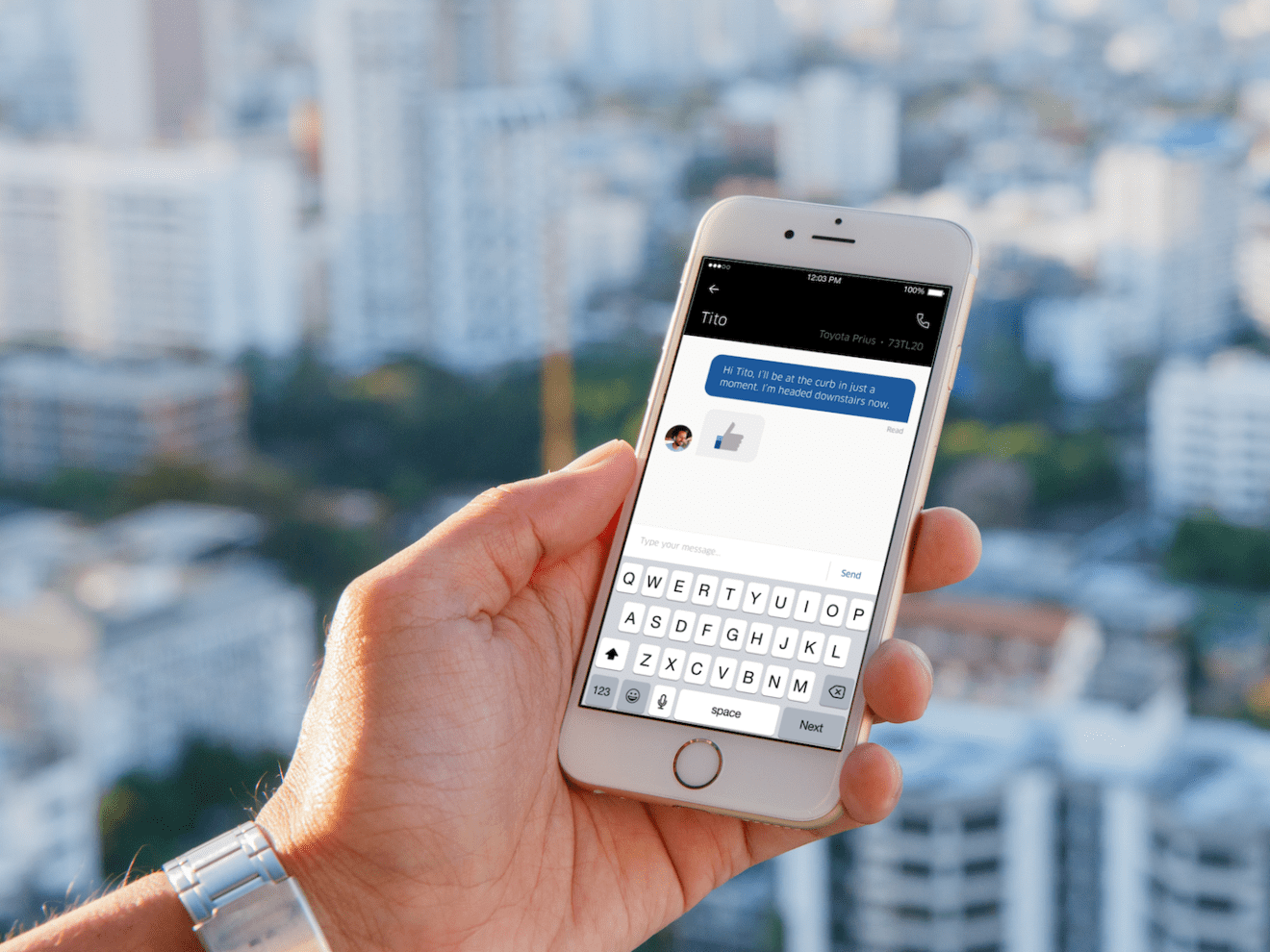
    The chat-commerce service allows customers to order and pay for their meals via Facebook Messenger and DBS payment channels, including DBS PayLah! and DBS/POSB cards. It has been test-bedded with seven food and beverage merchants around DBS’ Marina Bay headquarters with positive results.

    Kopi Ong, which sells quick-serve beverages, was the first merchant to test the Foodster solution. Since then, the business has seen daily sales grow by 20 per cent without additional manpower or space required.

    Chat commerce – e-commerce using chat or messaging platforms – allows businesses to transact within platforms that already have a large pool of captive users. With 77 per cent of Singapore’s population on mobile messaging platforms, chat commerce solutions such as Foodster allow businesses to literally become a part of the conversation by embedding DBS’ payments capabilities within chat platforms.

    The Foodster solution was developed with Artificial Intelligence/Machine Learning algorithms which allow it to become ‘smarter’ with every transaction. In addition, it allows merchants to implement targeted and personalised customer loyalty programmes on the platform with its rich data tools and analytics.


    DBS head of consumer banking group Jeremy Soo said: “If instant messaging is the way forward for people to communicate, then we need to help businesses find a way to engage their customers on such platforms simply, seamlessly and invisibly. We are aware that consumers today are more likely to have ‘app fatigue’ and have become resistant to downloading new mobile apps. And so as Singapore’s leader in payments with more than 4 million cards in circulation and the nation’s most popular mobile wallet – DBS PayLah! with more than 1 million users – we saw an opportunity to combine our strengths with Singapore’s most widely used social media platform.”

    In Asia Pacific, the chatbot market is forecast to generate revenues of around US$350 million by 2024, more than eight times last year’s figures.

  • DBS to offer digibank service in Indonesia

    DBS to offer digibank service in Indonesia

    DBS Bank plans to launch a mobile-only banking service in Indonesia by the end of the year.

    DBS Group chief executive Piyush Gupta told the Sweden-Southeast Asia Business Summit on Wednesday that the bank is targeting Indonesia to capitalise on the young, tech-savvy consumers among its 260 million population.

    “Indonesia is an important market with its size and scale, and the economic reforms taking place in the country,” he said. “There is great potential for business as we see a pickup in the country’s economy under the leadership of President Joko Widodo.”

    DBS’s digibank offering, which includes an e-wallet and a savings account, will be available to customers in addition to its consumer and corporate banking services at its 34 branches in 13 Indonesian cities. DBS opened its first branch in Indonesia – an outlet in Jakarta – in 1989.

    DBS hopes to replicate the success it is seeing in India since it started its digibank service there in April – the first mobile-only banking facility in the sub-continent, said a DBS spokesman.

    The service has attracted more than 250,000 new clients in the first four months of its operation.

    A digibank account can be opened in India with just a 12-digit Aadhaar number, which provides a unique biometric identification for all resident Indian citizens.

    More than a billion Indians have been issued with Aadhaar cards by the government. With over 200 million smartphone users in the country, the market for digibank is huge.

    The service’s e-wallet can be used for making payments, including telephone and electricity bills. Customers can also use a Visa virtual debit card to shop at over 100,000 online merchants.

    “While we continue to invest in growing our existing network in India, we also believe that with the digital revolution, the future of banking will be very different,” said the spokesman.

    “Increasingly, many customers want to be able to do their banking digitally and on the go. A successful digital banking strategy will meet changing customer needs, while enabling us to accelerate our reach in large geographies without the need for a large brick-and-mortar footprint.”

    Indonesian clients will be able to use their biometric national identity card to open digibank accounts.

    DBS said it intends to launch digibank in other markets after its introduction in Indonesia.

  • Samsung Pay e-wallet to launch in Singapore on June 16

    Samsung Pay e-wallet to launch in Singapore on June 16

    Samsung Pay, the Korean electronics giant’s e-wallet system, will launch in Singapore on June 16.

    At launch, those holding Visa and MasterCard credit or debit cards issued by POSB Bank, DBS Bank, OCBC Bank, Standard Chartered Bank and Citibank will be able to use a compatible Samsung phone to pay at almost all retail outlets that accept credit cards.

    Singapore will be only the fifth country to have Samsung Pay. It was launched in South Korea last August, followed by the United States in September. In March this year, Samsung Pay made its debut in China, while it was launched in Spain just earlier this month.

    “We are excited to bring this service to Singapore consumers and we hope to introduce value-added services to drive and lead innovation in mobile commerce,” said Mr Thomas Ko, vice-president and global general manager of Samsung Pay.

    Samsung Pay allows users to register their credit card details on selected Samsung smartphones with Near-Field Communication (NFC) wireless technology. Once registered, users can tap the phones for payment on almost all credit card payment terminals here.

    This is because Samsung Pay uses a proprietary Magnetic Secure Transmission (MST) technology that works with both traditional magnetic-stripe credit-card terminals and NFC contactless payment terminals.

    Unlike other contactless payment methods that are limited to transactions of $100 or less, Samsung Pay does not have this limit due to its MST technology.

    Four Samsung Galaxy smartphones – the S6 edge+, Note 5, S7 and S7 edge – are compatible with Samsung Pay at launch. Fingerprint authentication is required for each transaction.

    As of February this year, Samsung Pay has over five million registered users and recorded more than US$500 million (S$672 million) worth of transactions globally.

    Rival mobile payment service Apple Pay was launched in April with support for American Express-issued cards only. But as of last month, Apple Pay also accepts Visa and MasterCard credit and debit cards issued in Singapore from five major banks – POSB, DBS Bank, OCBC Bank, UOB Bank and Standard Chartered Bank.

    Apple Pay only works with contactless NFC payment terminals. This limits Apple Pay to only around 30,000 payment terminals in Singapore.

    It also has a $100 cap for most transactions. But UOB has lifted this limit for some merchants, such as Singapore Petroleum Company, Caltex, Metro and The Coffee Bean & Tea Leaf.

  • DBS, POSB customers can withdraw more cash at more retail outlets

    DBS, POSB customers can withdraw more cash at more retail outlets

    DBS Bank and POSB customers will be able to withdraw up to S$200 with any purchase at all Cold Storage, Market Place, Jasons and Giant stores in Singapore, the local bank announced on Thursday (Nov 5).

    Customers can use the complimentary service with a DBS or POSB debit or credit card linked to a savings account. With the latest expansion, there are now around 800 Cash-Point locations islandwide, making it close to 2,000 places to withdraw money for DBS and POSB customers across the country.

    Thursday’s announcement follows last year’s expansion, where customers were able to withdraw S$100 with any purchase at all Guardian Health and Beauty and Sheng Siong stores. The S$100 limit remains for these stores.

    The service was introduced in partnership with 7-Eleven in July 2013, where there is also a S$100 withdrawal limit. The bank said that the average number of Cash-Point transactions every month has risen by 115 per cent since 2014, with the average customer withdrawing S$50 per transaction.

    “As we ramp up our digital banking capabilities, we also recognise that our customers value having a ready withdrawal touchpoint nearby when they need cash,” said Mr Jeremy Soo, Managing Director and Head of Consumer Banking Group Singapore.

    “We have chosen to partner with places frequently visited by our customers so the act of withdrawing cash is integrated with part of their daily journey.”

  • Singapore-based DBS mulls expanding retail banking in India

    Singapore-based DBS mulls expanding retail banking in India

    Global turmoil may have forced many foreign banks to exit non-profit making India businesses but Singapore-headquartered DBS Bank has a different story to sell: retail banking.

    The lender is now planning to expand its retail footprints through remittance business between Singapore and India, and domestic secured and unsecured loans business.

    DBS is the only bank to have applied to RBI to convert its branches into a wholly-owned subsidiary.

    “The online remittance volumes from Singapore to India through our platform, DBS India Remit, have doubled over the past one year,” said Rahul Johri, managing director, head – consumer banking. “This not only generates fee income for DBS but also creates a platform to attract customers to other banking services of DBS.”

    “We are also planning to introduce personal loans, credit cards and multiple-currency foreign exchange cards in the next nine to 18 months,” he told ET.

    DBS India Remit, the online platform for inward foreign exchange remittances to India for DBS Singapore non-resident Indian clients, has brought down funds transfer time to just four hours for DBS India account holders. This service is now available in five metros.

    But it takes 48 hours to transfer funds in far-flung cities and towns in India. DBS will soon extend the service to smaller cities and towns as well.

    DBS now sees 60,000 transactions involving $150-160 million per month. The size and scale were half a year ago.

    “The service will become a differentiator for us to attract Singapore-based NRIs to bank with us as we grow our distribution reach,” Johri said. About 2.5 lakh NRIs bank with DBS in Singapore.

    DBS India offers home loans and loan against properties, launched last December. The lender expects to attain a book size of Rs 3,000 crore in the next three years from Rs 100 crore now. So far, it is selling such products primarily to affluent customers in five cities, including Pune, Mumbai, Delhi, Kolkata and Bengaluru.

    “As we garner more business and the processes become robust, we will enter new markets,” said Johri.

    “We would define a road map for branch expansion once we start operating under the subsidiary route subject to central bank approvals.”

    During 2014-15, the bank incurred a loss of Rs 275 crore as it wrote off loans in the construction and infrastructure sectors, which had gone bad. In the previous year, it had posted a profit of Rs 2 crore. Its overall loan book grew 4.55 per cent to Rs 15,845 crore. The bank did not grow its construction and infrastructure portfolio during the year.

    Asset quality improved due to write-offs and increased provisioning. Net non-performing asset ratio reduced to 4.15 per cent during the year, from 10.19 per cent in the previous year.

  • Retailers remain pessimistic about industry prospects

    Retailers remain pessimistic about industry prospects

    Hong Kong’s retailers remain pessimistic about their industry prospects, with a survey from the Hong Kong Productivity Council suggesting that the sector’s business confidence is at three-year low.

    The Standard Chartered Hong Kong SME Leading Business Index showed the retail industry sub-index sliding to 43.1 for the third quarter from 49.9 in the preceding three months, marking the weakest level in three years.

    Meanwhile, the overall gauge of the SME Business Index stood at 49.6, up 0.6 point from the previous months but remaining below the 50 mark that separates positive and negative outlooks, the Hong Kong Economic Journal reported.

    The sub-index that reflects interest in hiring dropped below 50 to reach 48.5 for the first time, according to the survey which was conducted by the Hong Kong Productivity Council in association with Standard Chartered Bank Hong Kong.

    Kelvin Lau, senior economist for Asia at Standard Chartered, said slower growth in the number of mainland tourists and structural change in their consumption behavior have brought prolonged adverse impact on the city’s retail environment.

    He noted a 1.3 percent fall in mainland visitors as of the end of May this year, the largest decline since August 2009.

    However, DBS Bank Hong Kong economist Lily Lo said the actual impact is not so bad because 70 percent of retail sales in the city come from local consumers.

    Lo expects Hong Kong’s economy to expand at 2.5 percent rate this year, with retail sales likely to recover.