Tag: DC

  • Asia Pacific outlook: Surge in data centers

    Asia Pacific outlook: Surge in data centers

    According to Cushman & Wakefield, the Asia Pacific data center market is poised to become the world’s largest data center region over the next decade. In a 2022 report, Singapore takes the top data center spot in the Asia Pacific, and the second place globally – tying with Silicon Valley after Virginia. In the region, Hong Kong claims the second spot, Sydney comes in third place, while Shanghai maintains the fourth place.

    The surge in data center activities is led by colocation providers including AWS, Microsoft, Tencent, and Alibaba. Research firm Report Linker revealed that investments into the region’s data center market amounted to US$63.15 billion last year, with investments predicted to reach US$94 billion by 2027.

    The largest data center market in the region, Singapore lifted a moratorium on new data center construction in January 2022. The moratorium was first implemented in 2019 to allow new server facilities that meet energy efficiency criteria to be constructed. As of last year, Singapore had more than 70 data centers operating with a total power capacity of 1,000 megawatts.

    For telecom operators, where data centers are becoming a strategic asset, many are deliberating data center partnerships or sell-offs to cash in. Last November, Globe Telecom was in advanced talks with ST Telemedia Global Data Centres (STT GDC) to establish a data center business in the Philippines.

    To optimize and grow the value of its large and unique portfolio of quality infrastructure assets, Singtel outlined plans to create a regional data center business last year. Through a partnership with Thailand’s Gulf Energy and AIS, Singtel’s regional data center strategy aims to offer customers a differentiated value proposition.

    The global pandemic sparked work-from-home arrangements and a spike in digital infrastructure and cloud demand. Hyperscalers are amongst those pressured to increase data centers. Compounded by the acceleration of 5G deployments and resulting technologies, strategic investments into data centers have been on the rise. New sources of funding from private equity funds also contribute to the growing data center market to capitalize on future growth opportunities.

    Datacenterpricing, a data centre research specialist, estimated over 1.5 million square meters of space under development for data centers in the Asia Pacific.

    A recent high-profile investment is the Asian Infrastructure Investment Bank (AIIB)’s US$150 million into data centers serving emerging countries in the Asia Pacific. Of which US$100 million would be channeled through Keppel’s Keppel Data Centre Fund II (KDC Fund II), which closed with US$1.1 billion in funding commitments.

    After the US, China has the second-largest hyperscaler data center capacity, accounting for 15% of the world’s total. According to Datacenterpricing, China will expand its data center market by 239,000 square meters to represent a 14% growth. Without overloading its power grids, China’s National Development and Reform Commission (NDRC) announced the set-up of four mega data center clusters outside the main population epicenters.

    South Korea is also a hotspot for data centers. In January, Equinix and Singapore’s sovereign wealth fund, GIC will jointly develop and operate two xScale data centers in Seoul, South Korea. Digital Realty will also be launching its first carrier-neutral data center in the capital to scale large enterprise applications.

    With many countries in the region still underserved, Asia Pacific will continue to witness unprecedented growth in the data centers, fuelled by increased digitalization and e-commerce.

    Indonesia, for instance, offers immense opportunities with a digital economy projected to be worth US$124 billion by 2025. The country houses more than 200 million internet users and an e-commerce market expected to reach US$100 billion by 2025. Last May, Singapore-headquartered STT GDC entered into a partnership with Indonesian Triputra Group to develop a new data center operating platform in Jakarta. Tencent Cloud built two data center facilities in the country.

    Alibaba Cloud also built its third data center in Indonesia last year. In the Philippines, Alibaba Cloud built its first data center last year to support businesses’ digitalization. This year, Alibaba has plans to debut centers in Thailand to expand its foothold in the region – a key profit driver which accounts for about 8% of the company’s total revenue, and amid greater competition by Tencent in China.

    In one of the latest, SpaceDC partners with JLL to build the largest data center in the Philippines. India, being the second most populous country in the world, is another country with very high population, but with a very low data center capacity. The current data traffic boom in India makes it another high-growth market for data centers. According to reports, Bharti Airtel plans to triple its data center capacity to 400 megawatt by 2025.

    Data centers demand is here to stay. As some telecom operators rethink their strategy for non-core operations, others view the data center business as a worthwhile investment. With the emergence of 5G and accompanying technology, telecom operators are well-positioned to seize opportunities working with, rather than against hyperscale providers to extend their capabilities to the network edge

  • Automate data center network to simplify, modernize operations

    Automate data center network to simplify, modernize operations

    Cloud-Ready Data Center solutions from Juniper Networks enable businesses to simplify operations and experience with a modern, automated data center.

    Vietnam is one of 10 emerging markets in the global data center sector, with an impressive growth rate of $858 million in 2020, and is predicted to have a compound growth rate of nearly 15 percent annually by 2026.

    Amid the Covid-19 pandemic, Vietnamese businesses in the fields of finance, health, retail and consulting are tending to shift data to cloud computing solutions for its data management platform to keep pace with global technology. As a result, there is an unprecedented wave of data center investment.

    To meet the increasing demand for data center solutions, Juniper Networks has made significant investments to its Cloud-Ready Data Center portfolio providing reliable and secure products, including Juniper Apstra System, QFX Series Switches, PTX Series Routers, MX Series Universal Routing Platforms, SRX Series Services Gateways and Contrail Networking to help organizations save time and reduce costs for the deployment of complex data center networks.

    New era of automated data center operations with Juniper Apstra

    Juniper Apstra System offers a new way of thinking about data center network operations. The software enables users to automate the entire network lifecycle in a single system, easing their adoption of network automation.

    A key principle of the Juniper Apstra System is that optimum operations start with the best design. The system ties the architect’s design to everyday operations with a single source of truth, continuous validation, and powerful analytics and root cause identification. By automating Day 2 operations, the software raises efficiency and results by providing visibility and insights, incident management, change management, compliance and audit, and maintenance and updates.

    For fabric management of EVPN-VXLAN and IP fabrics, the system’s Apstra Fabric Conductor toolset automates each aspect of design, deployment, and operation. The toolset reduces the time from design to deployment from months or weeks to days or even hours, with validated templates and ZTP that sets up the network for you. When problems occur, the same toolset averts outages with predictive insights, shortens time to resolution, and diminishes human error with change control and fast, all-network rollback.

    Juniper’s switching, routing, and security platforms stand apart in their robust capabilities and scale, including complete EVPN-VXLAN, IP fabric, and threat-prevention capabilities. In particular, Juniper’s QFX, PTX, and ACX Series continue to lead the industry with best-in-class throughput and scalability, including 400G interfaces, renowned routing, the open programmability of the Junos OS, and comprehensive EVPN-VXLAN and IP fabric capabilities.

    In terms of network policy and control, Juniper Contrail Networking provides dynamic end-to-end networking policy and control for any cloud, any workload, and any deployment, from a single user interface. It translates abstract workflows into specific policies, simplifying the orchestration of virtual overlay connectivity across all environments.

    With Juniper Connected Security, users can safeguard their applications, data, and infrastructure across all network connection points. Also, users can use contrail networking to consistently define, manage, enforce, and view policies across the entire application-oriented overlay network from a central location.

    One of the most impressive cases is three-time NBA champion, Miami Heat. Since 2010, Miami Heat has been using and consistently investing in Juniper’s latest innovations including QFX5100, MX960, EX4300, SRX5400 and JSA Virtual Appliance to modernize the arena and build a network for media-hungry fans. Miami Heat was the first NBA team to offer ticketless entry for fans, and the digital innovation team is constantly adding to that success.

    The Heat also tapped into Juniper SRX5400 Services Gateway to protect the data center and enterprise edge with next-generation firewall services and Juniper Secure Analytics to monitor security events in real-time. Working together, the team of advanced Juniper solutions let Miami Heat innovate with new experiences without worrying about what the technology can handle.

    Additionally, Net One Systems, a leading independent Japanese integrator, also relies on Juniper Networks Contrail Enterprise Multicloud to orchestrate its multi-cloud environment. As hundreds of customers rely on Net One to operate and manage their cloud environments and when the number of customers have grown, their diverse needs have put a strain on network operations.

    Net One finds managing multiple cloud services more difficult with each new customer and growing complexity created challenges in building, establishing, and efficiently operating cloud services. However, with the assistance of Contrail Enterprise Multicloud, Net One can create seamless end-to-end multitenant environments by separating from physical networks using overlay models and managing tenants from a centralized controller.

    To further reaffirm Juniper’s strength in providing businesses with secure, automated, and AI-driven solutions, last year, Juniper Networks was named as the leader in “Magic Quadrant for Data Center and Cloud Networking”. This is Gartner’s latest report evaluating data center and cloud networking hardware and software for enterprises that procure and manage their own data center networking infrastructures for installation on-premises or in colocation facilities.

    The report mentioned Juniper Networks has a strong portfolio of hardware and software, with feature depth and excellent automation capabilities, which can meet the technical needs of nearly all cases in the market. Furthermore, Juniper’s roadmap to apply AI to improve data center networking efficiency also aligns with the emerging needs of customers.

    “We believe our recognition as a leader for the third year in a row comes from Juniper’s proven attributes, including automated fabrics, AI-driven insight, best-in-class security and scalable 400G designs. As technology leaders are driving the digital transformation of their businesses and rethinking how they measure the advancement of their data center and cloud infrastructure, I take great pride in how Juniper has continued to empower our customers in innovative new ways,” Manoj Leelanivas, Chief Product Officer at Juniper Networks said.

  • Digital Reality opens third and largest data centre in Singapore

    Digital Reality opens third and largest data centre in Singapore

    Digital Reality, a leading global provider of carrier- and cloud-neutral data centre, colocation and interconnection solutions, announced the official opening of its third data centre in Singapore. The multi-story, 50-megawatt facility, known as Digital Loyang II or SIN12, is Digital Realty’s largest data centre in the country and will bring the company’s total committed investment to date in Singapore to over US$1 billion. This significant expansion will enable local and multinational enterprises to deploy critical infrastructure and scale their digital business at the heart of a connected data community on PlatformDIGITAL.

    SIN12 is substantially pre-leased to a thriving community of leading global cloud service providers, local as well as global financial services providers and leading Southeast Asian enterprises. In addition, the new facility will introduce next-generation colocation services for regional customers in Singapore and will further expand PlatformDIGITAL, the company’s global data centre platform. It will offer customers in APAC new avenues to connect, extend their reach and uncover new business opportunities. SIN12 will offer enterprises the full spectrum of colocation services and will enable them to scale their critical infrastructure on-demand within a connected data community with optimal proximity to carriers, networks and cloud service providers. Productized solutions for network, control and data hub footprints offered on PlatformDIGITAL will help accelerate customers’ ability to rapidly scale their digital business.

    SIN12 builds upon Digital Realty’s track record of delivering sustainable data centre developments across the globe and has already achieved a Platinum certification under Singapore’s BCA Green Mark building assessment system. The Green Mark certification scheme is designed to evaluate a building’s overall environmental impact and performance and provides a comprehensive framework for assessing new and existing buildings to promote sustainable design and best practices in construction and operations.

    “Singapore is a well-established financial and business hub, and consistently ranks among the top data centre markets globally,” said Digital Realty Chief Executive Officer A. William Stein. “The opening of our third data centre is a major milestone on our PlatformDIGITAL roadmap and underscores our long-term commitment to support the country’s digital economy. The transition to the digital economy has impacted the way companies across all industries create and deliver value. There’s a growing need for a combination of open interconnection and next-generation colocation that will reduce the complexity of digital transformation. Expanding our footprint in Singapore will enable us to better help our customers enhance their digital transformation efforts and scale their digital business models regionally as well as globally.”

    Singapore is ranked fifth among the top 10 data centre markets globally, according to Cushman & Wakefield. These findings coincide with Digital Realty’s Data Gravity Index™, a recently published study that measured, quantified, and determined the implications of the explosion of enterprise data. Data gravity is expected to more than double annually from 2020-2024, with Asia Pacific expected to generate the fastest growth across all regions. Singapore is expected to be the second-fastest-growing market across the 53 global metros analyzed, driven by growth in the intensity of data within the banking, financial services and high-tech manufacturing industries.

    “Digital Realty’s continued investment in Singapore builds upon the strong existing business and investment ties between the United States and Singapore. Both countries rank highly in terms of digital competitiveness and are committed to building a robust digital economy at a global level,” said Christian Koschil, Digital Attaché, Embassy of the United States of America. “We believe Digital Realty’s expansion in Singapore will further strengthen the Republic’s standing as a global connectivity gateway. We also applaud Digital Realty’s commitment to sustainability in their operations, as tackling climate change requires a collective response from all stakeholders – in government and the private sector.”

    Sustainability was a guiding principle for the design and construction of SIN12. It will be among the most sustainable data centres in the region, with a power usage effectiveness (PUE) of 1.25. The facility will feature efficient cooling system design and controls to help minimize evaporation losses and improve water-use efficiency. It will be equipped with turbine generators rather than diesel engines and a combination of uninterruptible power supply (UPS) and lithium-ion batteries will facilitate sustainable management. The building management system (BMS) will monitor thousands of data points to ensure the data centre is running efficiently and providing optimal energy performance for customers.

    “Balancing digital growth with sustainability remains a key priority for the industry,” said Mark Smith, Managing Director, Asia Pacific for Digital Realty. “We’re proud that our new facility will help customers meet their digital and sustainability goals, with energy-efficient design and operational features. We’re encouraged by the recently unveiled Singapore Green Plan 2030 and the new edition of the Green Building Masterplan. Sustainable growth will be critical for the country to remain competitive as a leading global data centre hub.”

  • Infinera to interconnect Yahoo Japan’s Osaka DCs

    Infinera to interconnect Yahoo Japan’s Osaka DCs

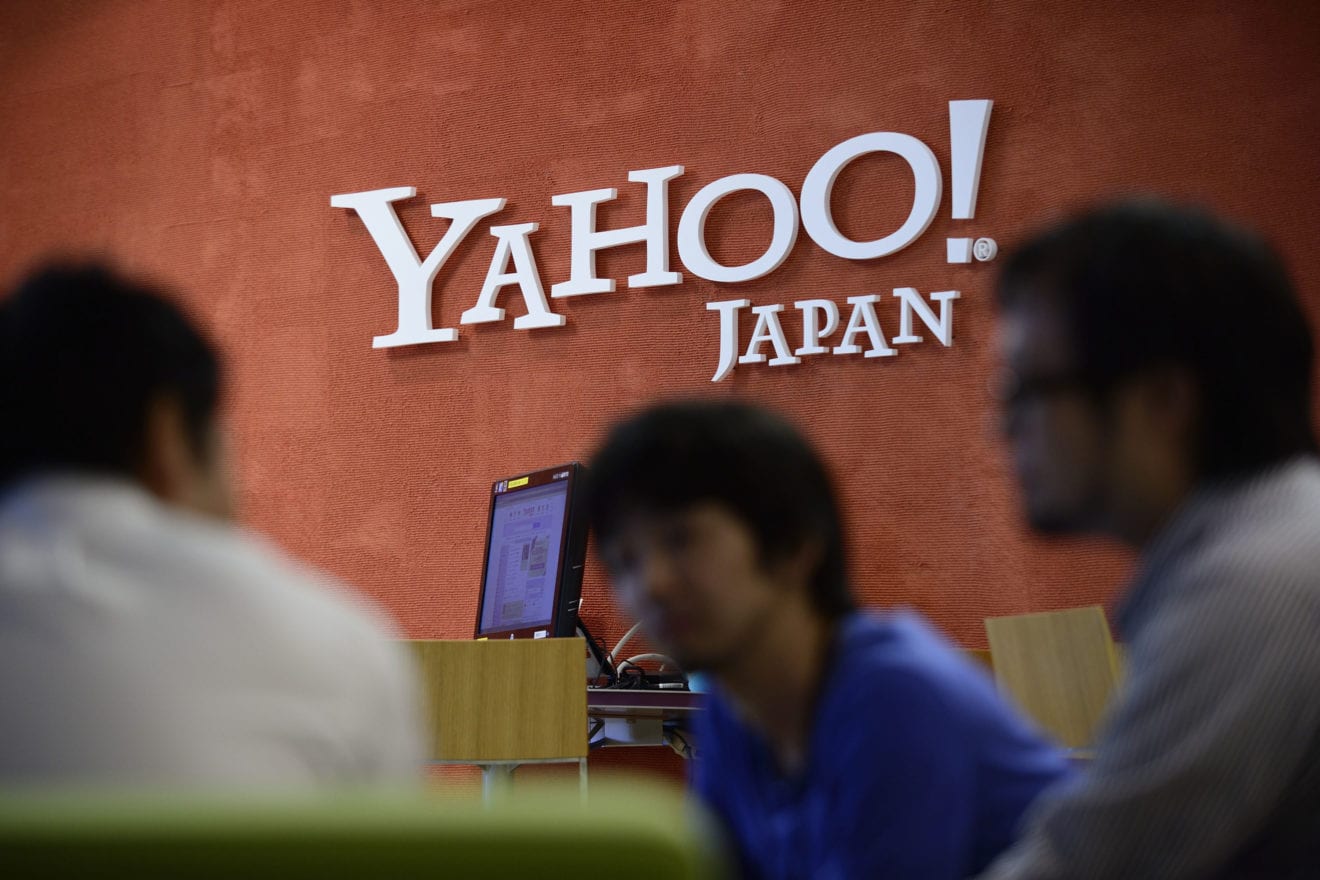
    Yahoo Japan has selected Infinera Cloud Xpress to interconnect its data centers in Osaka. The Cloud Xpress enables Yahoo Japan to interconnect data centers with hyper-scale density, operational simplicity and low power consumption.

    Working closely with Infinera partner Itochu Techno-Solutions, Yahoo Japan deployed the Infinera Cloud Xpress to address the need for more capacity. Itochu Techno-Solutions provides Yahoo Japan with IT and data center maintenance services. Yahoo Japan has now deployed the Cloud Xpress and Infinera XTM Series in its metro networks.

    With the Cloud Xpress, Yahoo Japan benefits from Infinera’s photonic integrated circuit technology which delivers a 500 Gbps super-channel over 150 kilometers without additional multiplexers and amplifiers.

    The Cloud Xpress incorporates Infinera’s Instant Bandwidth technology to allow customers to software-activate line-side bandwidth in 100 Gbps increments as and when needed.

    In addition, the Cloud Xpress is designed for plug-and-play installation with simplified provisioning and support for data center automation using open SDN APIs.

    “The compact design, ease of use and scalability of Cloud Xpress and the XTM Series stand out in metro data center interconnect applications where data center operators need to grow capacity rapidly while minimizing the cost of space and power,” Infinera VP of regional sales for APAC Andrew Bond-Webster said.

    The Infinera Cloud Xpress Family is designed to deliver cloud-optimized wavelength division multiplexing solutions to cloud service providers, internet content providers, Internet Exchange service providers, enterprises and other large-scale data center operators.

    The Cloud Xpress Family offers customers the choice of 10 GbE, 40 GbE and 100 GbE client interfaces to meet their specific requirements. Infinera recently introduced the Cloud Xpress 2 based on the Infinite Capacity Engine, scheduled to be available in the first quarter of 2017.

  • 1-Net, Burst plan Singapore-Myanmar DC corridor

    1-Net, Burst plan Singapore-Myanmar DC corridor

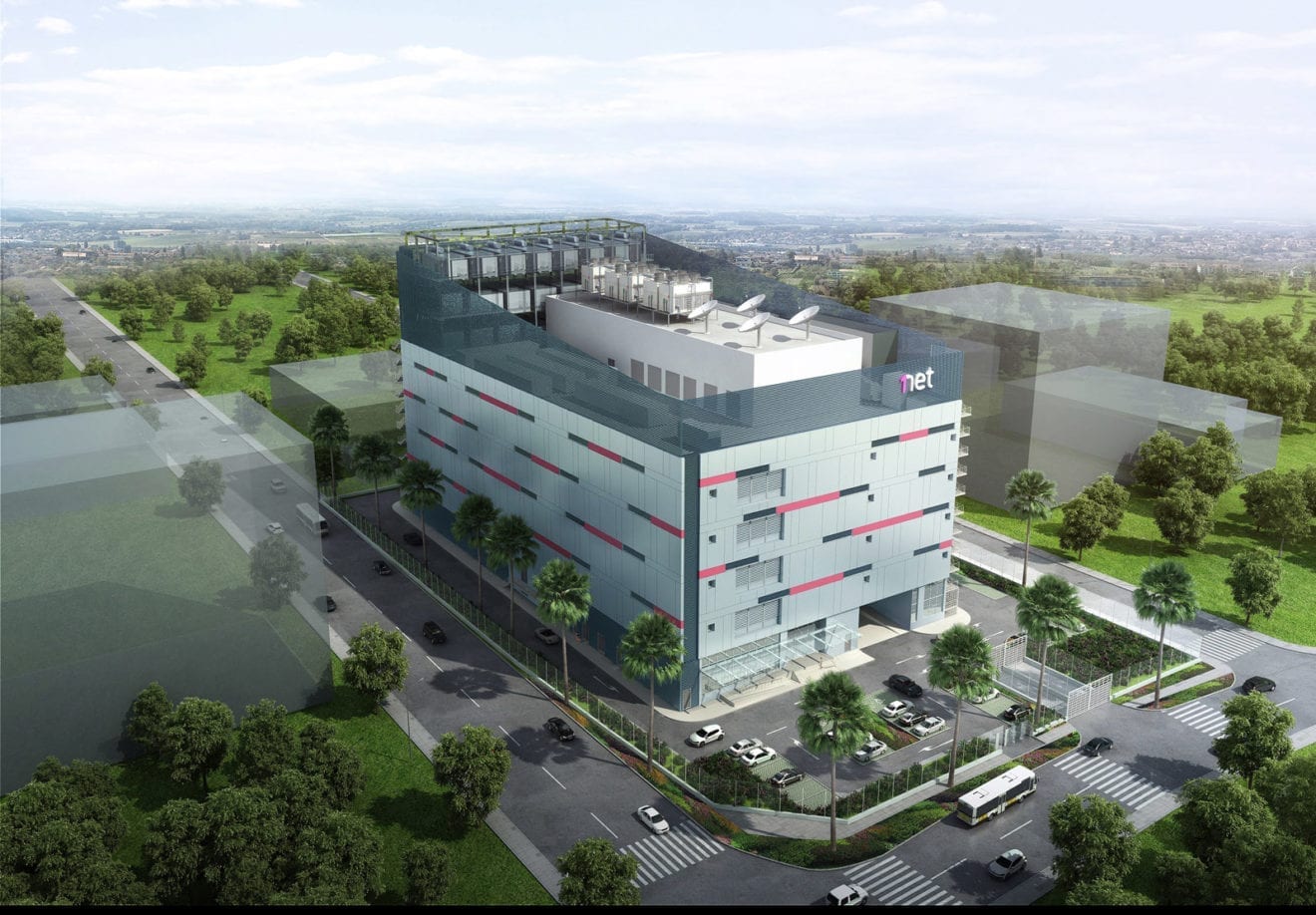
    1-Net and Burst Networks are collaborating to develop network connectivity between 1-Net’s data center in Singapore and Burst’s data center in Myanmar.

    The two data centers will be connected by a network operated by Campana Group consisting of two subsea and terrestrial routes.

    “This high-speed data center corridor is unprecedented and will support many value-added services on this platform. With this seamless connection and one network model both Burst and 1-Net are able to achieve the lowest latency and highest quality link for their customers,” Campana Group CEO Dr Myo Ohn said.

    Burst will also serve as Myanmar’s first Internet Exchange, connecting international networks to local operators and ISPs.  This exchange known as “Burst Connectivity Hub” will also support a Transmission Facility designed to host satellite and cable termination facilities and fully redundant systems as well as C-Band and Ka-Band satellite facilities.

    The projects form part of a wider agreement for 1-Net to provide operational support for Burst Networks’ Uptime Institute certified Tier IV data center at Thilawa Special Economic Zone (SEZ) on the outskirts of Yangon, the largest city in Myanmar.

    The aim is to support Burst Networks by providing the highest level of data center security, network best practices and reliability when they deliver their services to their clients’ mission-critical operations.

    “We are glad to work with Burst Networks to support their data center operations in Myanmar. It is 1-Net’s inaugural collaboration in Myanmar and we see the immense potential for data center business in this emerging market,” 1-Net Singapore managing director Wong Ka Vin said.