Tag: De Beers

  • De Beers to focus on smaller cities in India for expansion

    De Beers to focus on smaller cities in India for expansion

    Global diamond producer De Beers is looking to partner local retailers in smaller cities to boost sales which it claims grew at 100 percent last year.

    According to a PTI report: The company sells its diamond jewellery through 250 partnered retail stores in the country under the brand ‘Forevermark’.

    “There is a strong appetite for diamonds in smaller cities. We plan to increase stores gradually in those cities by partnering local retailers,” Stephen Lussier, Forevermark CEO and Executive VP De Beers Group of Companies told PTI.

    Sales during January-June, 2018 remained robust and the overall sales volumes may double as compared to the last year, he said.

    “We are doing much better with our brand. We had 100 percent growth in 2017. In 2018, we will double again,” he told PTI adding that the Forevermark brand has 30 per cent market share in India.

    The company is not only investing in marketing of its brand but also organising special events to equip partners with the new retail innovations, latest technology and consumer insights to help them leverage their business better and stay ahead of the consumer curve, he added.

    Stating that the fundamentals of diamond are strong worldwide, Lussier said the sale of Forevermark brand jewellery grew on a monthly basis notwithstanding the banking fraud by diamantaire Nirav Modi.

    Diamond prices are stable globally though prices of polished ones are on the rise when compared with rough diamonds, he added.

    De Beers sources diamonds from its seven mines in South Africa and Canada.

  • De Beers Diamonds expands into Kowloon

    De Beers Diamonds expands into Kowloon

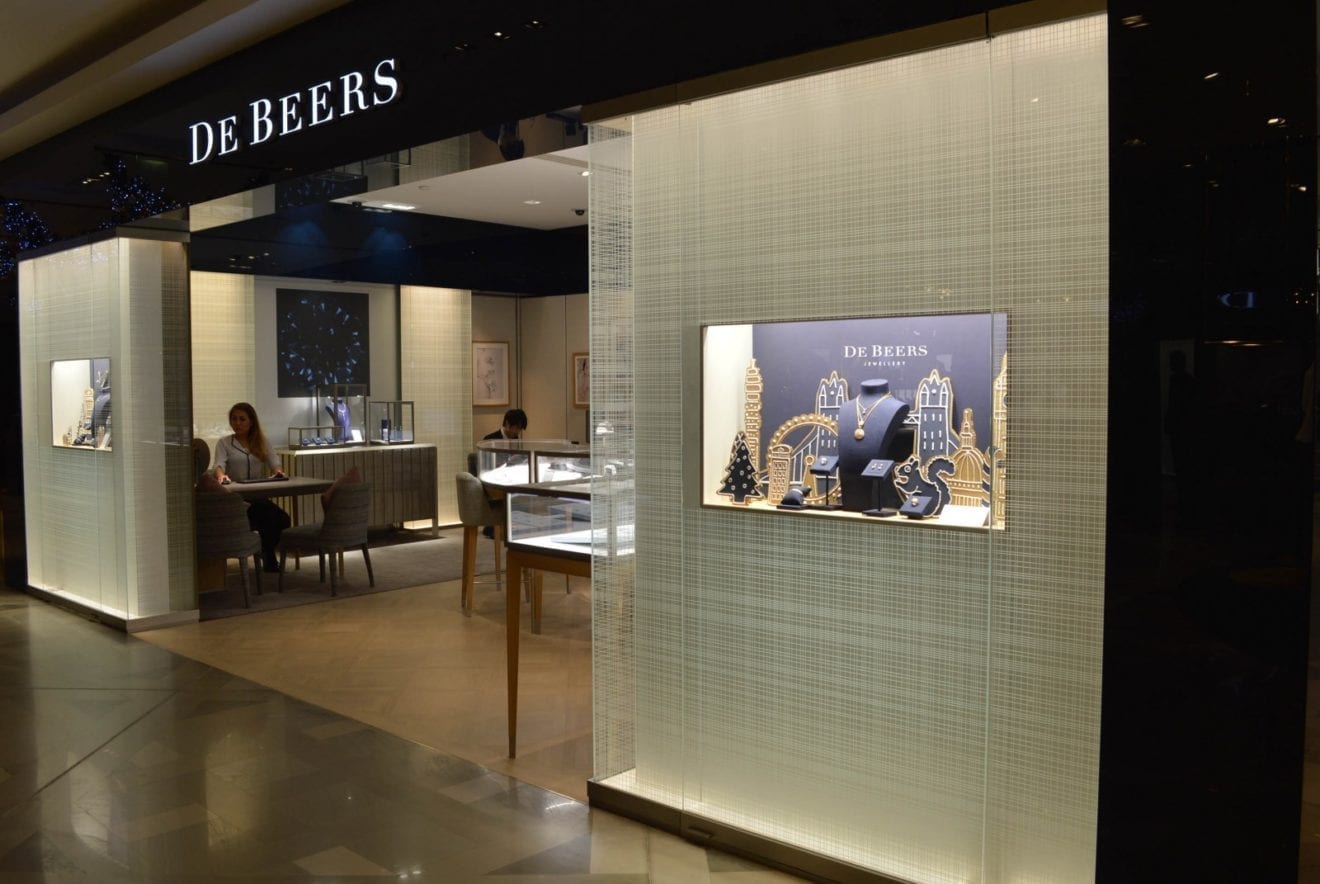
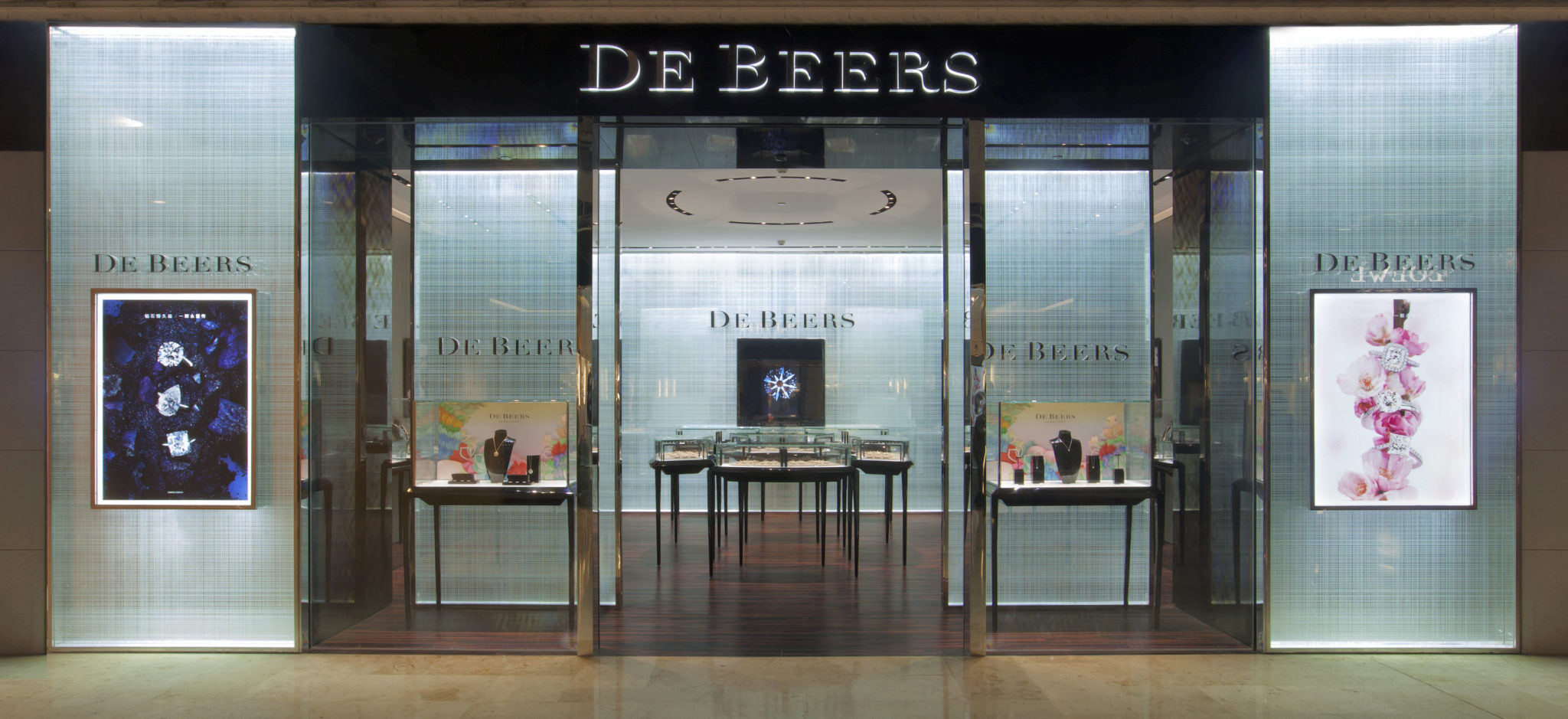
    De Beers Diamond Jewellers Hong Kong has launched a retail location, its fourth, in Kowloon.

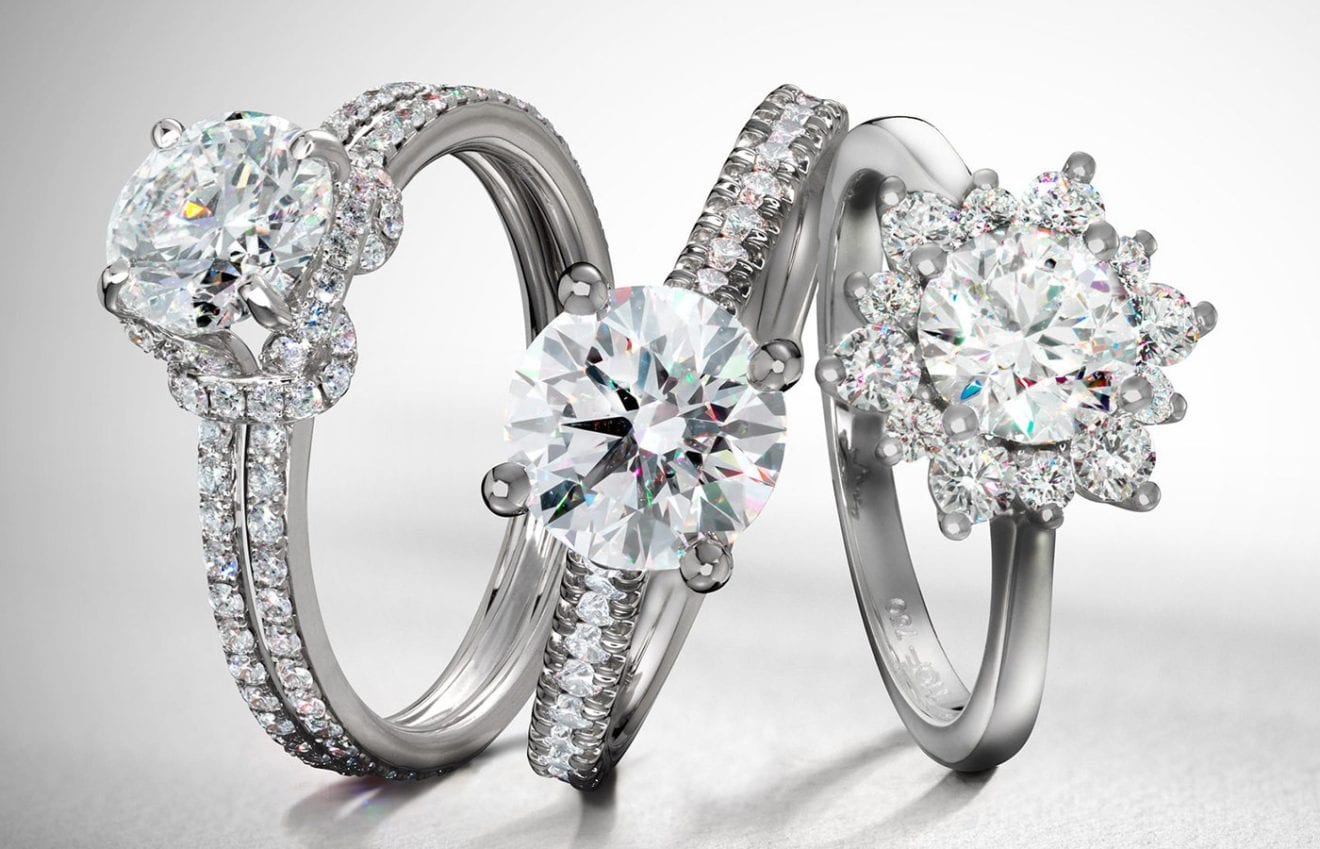
    The 1000sqft store features bridal diamond jewellery including engagement rings and wedding bands, as well as high jewellery and iconic collections such as Talisman.

    The opening brings the chain’s global store count to 34. De Beers launched its retail chain in 2001 in partnership with LVMH. The miner last year bought out the luxury jeweller’s 50 per cent stake.

  • De Beers Sees The Light, Launches Lab-Grown Diamond Line

    De Beers Sees The Light, Launches Lab-Grown Diamond Line

    After years of disavowing the authenticity of man-made diamonds grown in a laboratory, De Beers has suddenly seen the light and responded to consumer demand by offering a lab-grown diamond alternative under the Lightbox Jewelry name.

    That is what the company would have you believe in its announcement yesterday that advancements in technology have now made it possible for De Beers to offer a more affordable alternative to mined diamonds.

    “Lightbox will transform the lab-grown diamond sector by offering consumers a lab-grown product they have told us they want but aren’t getting: affordable fashion jewelry that may not be forever, but is perfect for right now,” Bruce Cleaver, CEO of De Beers Group said in a statement. “Our extensive research tells us this is how consumer regard lab-grown diamonds – as a fun, pretty product that shouldn’t cost that much – so we see an opportunity that’s been missed by lab-grown diamond producers.”

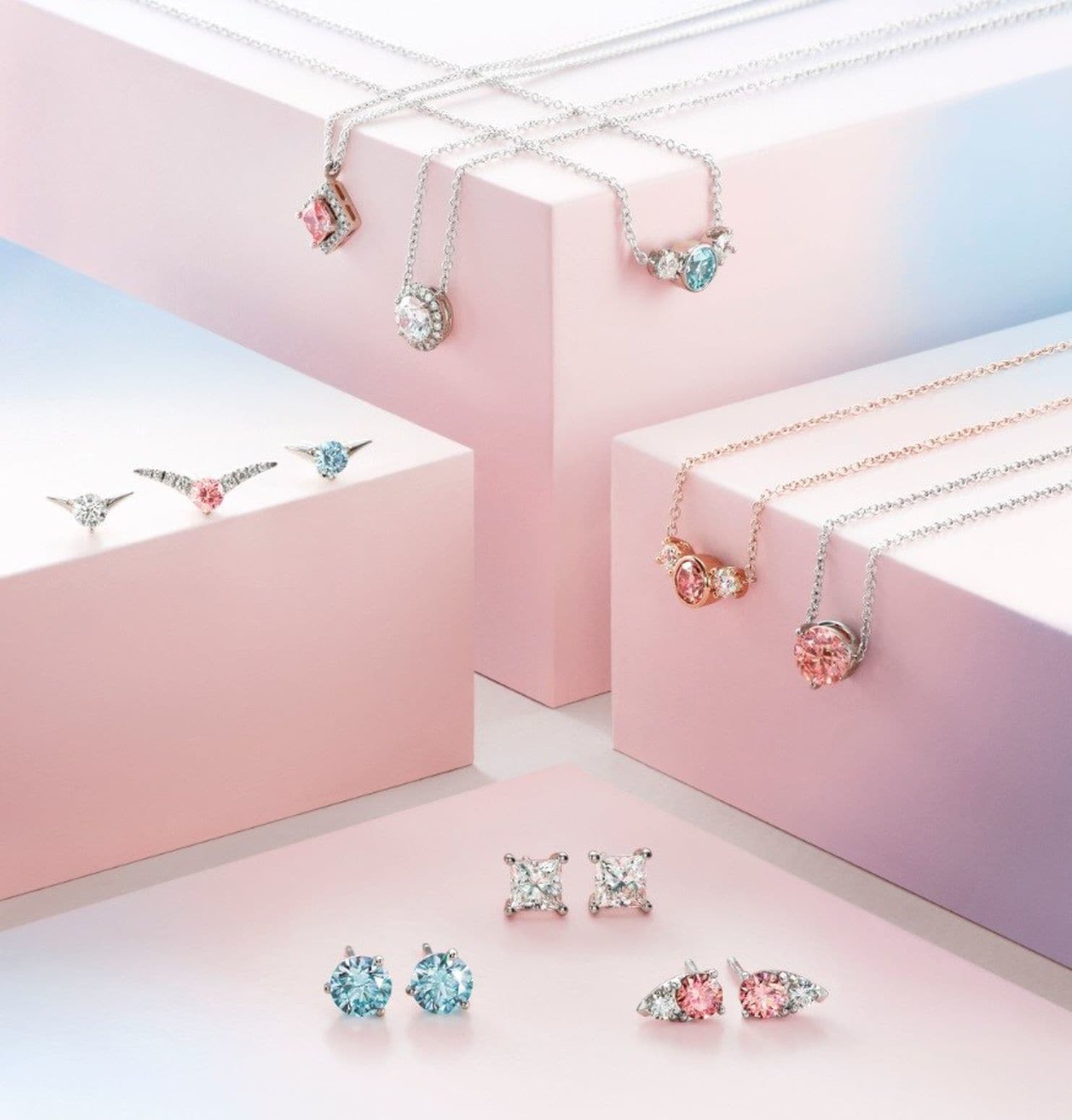
    Adding to the fun element in the Lightbox Jewelry line will be an emphasis on colored pink and blue stones to compliment the traditional clear-white diamonds. Prices will start at $200 for a quarter-carat stone to $800 for one-carat. These prices, however, don’t include the cost of the jewelry setting, which will initially include earrings and necklace designs, not rings.

    Lightbox Jewelry will be available starting in September on the Lightbox website, with retail partnerships “to be announced in due course,” the company said.

    To jump start its entry into the lab-grown market, De Beers will invest $94 million over the next four years in a new Element Six production facility near Portland, Oregon, which will join Element Six’s existing U.K.-based operation. Element Six has been the production of arm of De Beers Group producing lab-grown industrial diamonds for over 50 years.

    Disrupt yourself

    In opening its doors to lab-grown diamonds, De Beers is giving credibility to a product that it has for years claimed is not the real thing. “De Beer’s focus is on natural diamonds,” Simon Lawson, its head of research and development, said to Bloomberg in 2015. “We would not do anything that would cannibalize the industry.”

    This is a classic “disrupt yourself before you are disrupted” move. While the jewelry-quality lab-grown diamond industry is small today, estimated by Morgan Stanley to represent less than 1% of the global market for rough diamonds, with sales between $75 to $200 million, it predicts lab-grown diamonds could account for 15% of the gem-quality melee diamond market by 2020, (defined as less than a half carat in rough form that can be ready for jewelry mounting by using industrial drill bits, saws and sanding equipment), and 7.5% of the larger diamond market.

    In its mined-diamond business, De Beers has a lot to lose as laboratory-diamond sales grow. The Economist reports that De Beers accounts for about one-third of global mined-diamond sales, down from 45% in 2007.

    Among the many factors disrupting De Beers mined-diamond business, which declined from $6.1 billion in 2016 to $5.8 billion in 2017, are millennials’ concern about the environmental and human toll associated with extracting diamonds out of the ground. Laboratory-grown diamonds answer this objection.

    “Millennials are even more concerned with the human factor impacted by mining industry than their environmental concerns, which are great as well,” Marty Hurwitz, CEO of MVI Marketing, told me. His company recently conducted a study that found nearly 70% of millennials would consider a lab-grown stone for an engagement ring.

    Disrupt the disrupters

    By embracing lab-grown diamonds and calling it their own, De Beers is disrupting the industry’s stance against the numerous startup disruptors eating away at their market dominance. These brands include Ada Diamonds, ALTR, Diamond Nexus, Diamond Foundry, New Dawn Diamonds and Pure Grown among others, though no market-share leader has emerged as yet.

    The diamond industry has been arguing for years that laboratory-produced diamonds are not “real.” In a new study from the Diamond Producers Association conducted by Harris Poll, it reports, “A clear majority of American consumers recognize that diamonds created in a factory (also known as ‘synthetic’ or ‘laboratory-grown’) are not ‘real’ diamonds.”

    Pushing back on the lab-grown industry’s narrative that the stones it produces are chemically and structurally the same as a mined diamond, DPA CEO Jean-Marc Lieberherr said, “At a time when everything ‘artificial’ aims to compete with, and replace, ‘natural’ and ‘real’, these results show consumers care about inherent value, authenticity and symbolism that a diamond carries.”

    While the De Beer’s Lightbox Jewelry announcement doesn’t address the “real” versus “fake” controversy, it does distinguish between its mined-diamond offering as “forever,” as in “A Diamond Is Forever,” to its Lightbox alternative as for “right now.”

    It also is notable that it calls Lightbox “fashion jewelry,” positioning it as the lesser, more affordable alternative to “fine jewelry” quality defined by a natural, mined-diamond selection.

    The official industry distinction between fine and fashion jewelry is that fashion doesn’t have precious gemstones or precious metals (other than plating) while fine jewelry is made with precious metals and precious gemstones. In other words, lab-grown diamonds are not “precious” whereas mined diamonds are.

    This suggests the direction that De Beers will take as it moves Lightbox Jewelry into the market: “If you want fashion jewelry, Lightbox is your choice. If you want precious fine jewelry, then Forevermark and De Beers Jewellers is for you.”

    Go big or go home

    Rather than fight the rising tide against laboratory-grown diamonds which has found a consumer market ready, willing and able to embrace it, De Beers is getting in early to take a leadership position in an emerging category with no clear-cut leader.

    Now it will have one, with De Beers’ mighty marketing muscle moving in to define the category and establish its positioning against the lab-grown upstarts, as well as elevating its mined-diamond precious jewelry offering.

    De Beers single-handedly made diamonds what they are today. Next De Beers is going to make laboratory-diamonds what they will be tomorrow: a fun fashion pretender to the real, rare, precious, natural, “forever” diamond.

    And as it did with diamonds throughout its 130-year history, De Beers is going to use its power to establish prices for both the mined and laboratory-diamond markets. Its Lightbox Jewelry prices are way below current levels in the industry today, and given advances in technology and production processes, the costs to produce man-made stones will only fall.

    Likewise, by establishing a low-price alternative to the real thing, De Beers will be able to drive up the prices for its natural stones. It’s a very smart and bold move that would make Cecil Rhodes proud.
  • Forevermark diamonds opens Shanghai flagship

    Forevermark diamonds opens Shanghai flagship

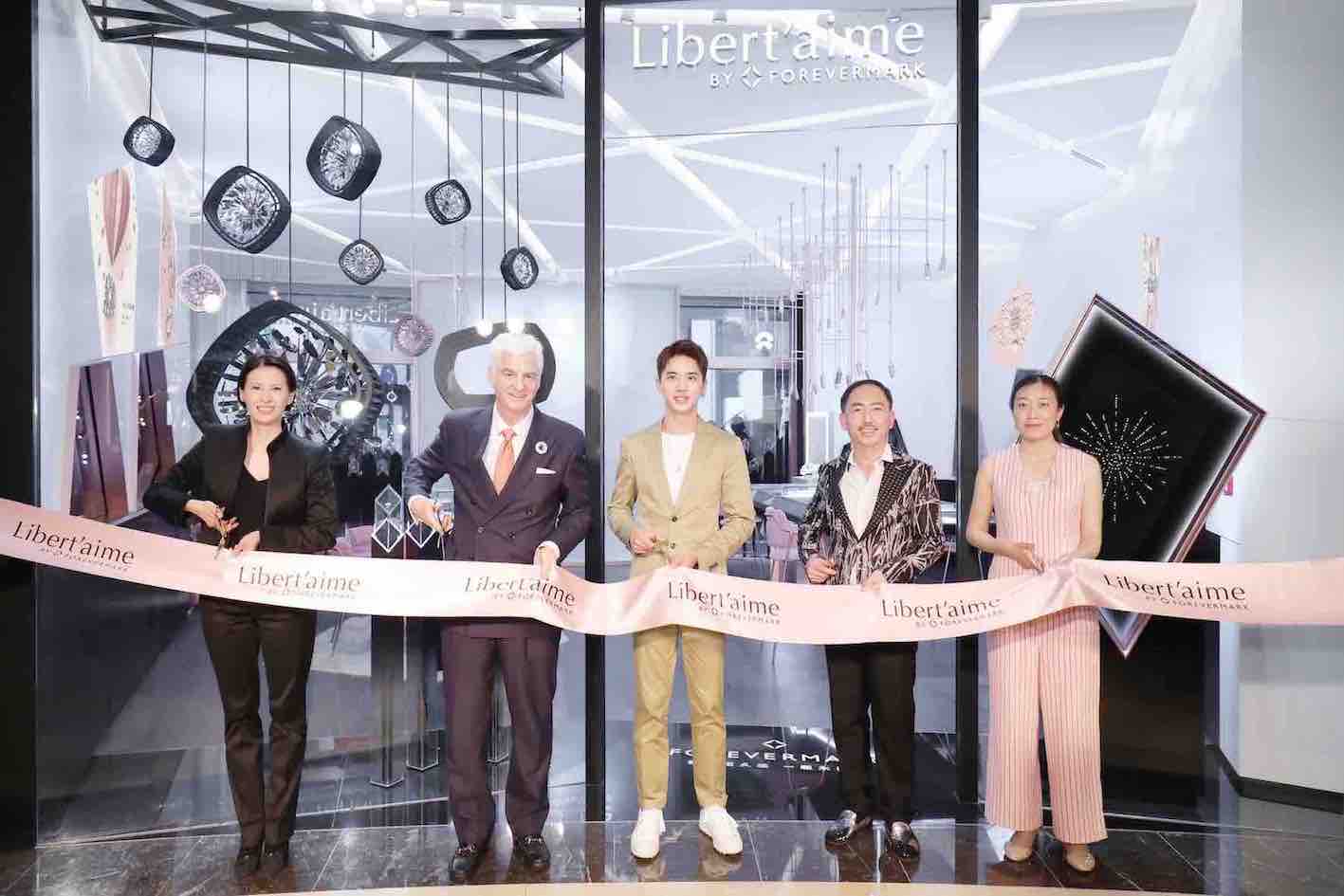
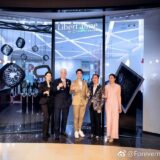
    Forevermark, a luxury retail brand of jeweller De Beers Group, has unveiled a flagship store concept, Libert’aime by Forevermark, in Shanghai.

    At HKRI Taikoo Hui, the store marks the 1000th Forevermark location in China. The Libert’aime concept focuses on 420 million millennials in China through an omnichannel model, offering an assortment of diamond jewellery.

    The omnichannel experience combines the Libert’aime concept market with online platforms and a WeChat store. Digital experiences in the store include a 3D diamond wall, a magic mirror, a Diamond Bar (daily offerings) and a Spectacular Diamonds area (fancy-cut and multi-diamond pieces).

    “Forevermark will continue to focus on its classic bridal and non-bridal collections with our valued Forevermark retail partners, while Libert’aime by Forevermark will concentrate on providing a complementary offer to excite millennials,” says Forevermark CEO Stephen Lussier.

    The concept store also features Le Light collection designed by Chinese actor/musician Timmy Xu Weizhou.

    Established in 1888, De Beers Group specialises in diamond exploration, mining and marketing. It has mines in Botswana, Canada, Namibia and South Africa, and employs more than 20,000 people across the diamond pipeline.

    The pictures from the opening ceremony and the gallery can be viewed below :

  • De Beers Inks Japan Retail Grading Deal

    De Beers Inks Japan Retail Grading Deal

    The International Institute of Diamond Grading & Research (IIDGR) has partnered with Japanese bridal-jewelry retailer I-PRIMO to provide it with polished grading reports.

    The De Beers-owned laboratory will grade diamonds showcased at all 68 I-PRIMO stores in Japan, with the aim of boosting consumer confidence, IIDGR said last week. The reports will use De Beers’ “Ideal Optical Symmetry” technology, which provides a magnified image of a stone’s light performance. The companies plan to extend the program eventually to I-PRIMO’s stores in Taiwan, Hong Kong and Shanghai.

    IIDGR has previously entered partnerships with Singapore’s Soo Keep Group, as well as Hong Kong-based retailer Luk Fook, with which it issues co-branded grading reports.

    “Our ability to tailor bespoke solutions for our customers, backed by our innovative proprietary technologies, has been well-received and is supporting our growth in the region,” said IIDGR president Jonathan Kendall.

  • Diamond group De Beers buys out retail partner LVMH

    Diamond group De Beers buys out retail partner LVMH

    Anglo American’s diamond specialist De Beers has bought the 50 percent stake held by French luxury goods group LVM in De Beers Diamond Jewellers for an undisclosed sum, taking full ownership of the retail operation.

    Analysts said the joint venture no longer fitted LVMH’s strategy, while Anglo American, which has long dominated global rough diamond sales, has been developing its presence on the high-margin diamond retail market.

    LVMH had no comment. De Beers said in a statement that fully integrating De Beers Diamond Jewellers would enable the group to enhance value.

    Anglo American, which along with other mining companies has largely recovered from a deep commodities downturn in 2015, has put diamonds, along with copper and platinum, at the heart of its portfolio.

    One of the advantages of diamonds is that they are a counter-cyclical luxury product that can generate profits even when bulk industrial commodities are in a downturn.

    De Beers Diamond Jewellers’ retail network comprises 32 stores in 17 countries. This includes a growing business in greater China, an established presence in London and Paris, and a new flagship location in New York.

    In addition, De Beers’ Forevermark high-end diamond brand has expanded into 2,000 outlets globally and it says it expects the growth to continue this year.

    Analysts said LVMH had finally ended a joint venture that dated back to when the group did not have any branded jewelry of its own.

    “The situation is very different today, as they own one of the megabrands in this space: Bulgari,” Luca Solca, analyst at Exane BNP Paribas, said.

    “It seems appropriate therefore to turn the page on this and relegate it to the ‘experiments that didn’t work’ pile.”

  • Diamonds are China millennials’ best friend

    Diamonds are China millennials’ best friend

    Diamonds may be a girl’s best friend, and that’s especially true of female millennials in China.

    According to diamond-producing giant De Beers SA, 68 percent of diamond jewellery sales in China ($6.78 billion in 2015) are driven by millennial women, many of whom are college-educated, not married and quickly cultivating a collection of the gems.

    Bloomberg spoke with one 27-year-old Chinese woman who, like many of her peers, has a 15-plus-piece diamond collection including a 2.5-carat solitaire given to her by her parents.

    The fact that she’s not married is part of the trend to — as she said — not wait passively for a diamond gift from a man. For Chinese millennial women, independence is the top trait they aspire to: More than 40 percent of them say financial independence is more important than marriage, with 32 percent saying that independence is what personal success looks like to them.

    That’s according to research by J. Walter Thompson surveying 4,300 women across nine countries in 2015. Some jewellery companies have made a conscious decision to not even show any couples at all in their advertisements.

    A sparkling opportunity

    In the top four diamond markets in the world, there are more than 220 million millennial women who spent $26 billion on diamond jewellery last year. Behind China is India but after a significant drop, followed by the U.S and then Japan. Within this four-country demographic, more diamonds have been acquired than any other generation, and yet the demographic hasn’t even come into their most affluent years.

    Compared to their Chinese mothers who historically bought jade and gold, these millennial women are struck by the western lifestyle that includes the glamour of Harry Winston and Tiffany gems. Having those diamonds is a status signal of wealth and accomplishment, rather than love. As a result, more jewellery companies have popped up in China trying to get their share of the desire. Boston-based Hearts on Fire was usurped in 2014 by Hong Kong’s Chow Tai Fook, grabbing nearly 6 percent market share.

    But it’s not just about status, as the gems are seen as assets that will not depreciate in the way that other high-end items like bags and shoes can due to wear and seasonality.

    Gold x diamonds

    Chow Tai Fook has noticed this by rolling out lines of jewellery that mix gold with diamonds to make sure their female millennials — half the business — stay engaged, and it has also pulled in celebrities like hunky actor Li Min-ho and rapper G-Dragon — both millennials — to appeal to these women.

    But even with diamond jewellery being a sign of independence, the divorce rate in China is more than triple what it was back in 2002 — currently 2.8 per 1,000 people, back just 14 years ago it was 0.9 per that same thousand. More than 3.84 couples went their separate ways in 2015, which is 5.6 percent more than 2014.

    But those diamonds are still forever, even if marriage isn’t or has never even happened yet. And diamond companies know this. De Beers research cites the American trend of couples spending more on their second marriage than on their first. Experts say those Chinese millennials may follow suit as well.

  • How to grow for Luxury brands

    How to grow for Luxury brands

    Luxury brands need to use new technologies and offer experiences for their customers, the second Luxury Society keynote event in Shanghai has been told.

    UCO Cosmetics CEO Arthur Zhang told the event that the early-stage eCommerce model of simply providing a platform for selling products online is dead.

    He said key technologies being experimented and improved upon in China include augmented reality, virtual reality and live-streaming.

    “The millennial generation in China, which already numbers about 300 million people, seeks experiences and emotional connection – they are not just bystanders,” DLG China partner/MD Pablo Mauron told the audience of more than 150 luxury-industry brand executives. “As a result, live-streaming has become a medium for them to express themselves.”

    He told how brands such as Maybelline, Montblanc and Swarovski are taking advantage of these new opportunities.

    Underlining the key message of the event that eCommerce is changing, CEO Thibault Villet of luxury fashion eCommerce platform Mei.com told how a live-streamed show in collaboration with TMall resulted in 65 per cent of the products featured quickly selling out.

    Meaningful data

    Social customer-relationship management (CRM) makes highly targeted messaging and engagement possible, the event was told by Four Seasons Hotels Asia Pacific director of marketing communications John Hamilton. He said the luxury hotel chain has been gaining meaningful data about its customers, which in turn has driven growth. In the past year, through trial-and-error and optimisation, the group has defined a CRM-led content strategy on WeChat.

    Celebrity and key-opinion-leader partnerships can make a big impact in China, said East Entertainment commercial director Qing Dai, who spoke of her experience of partnering luxury brands with appropriate celebrities. One of Easy Entertainment’s most successful was in linking up Cartier with singer/actor Lu Han.

    Baidu GM for East China Wan (Grace) Zhang said Cartier was the most-searched luxury watch brand among the generation born between 1990 and 2000, linked to Cartier’s collaboration with Lu Han.

    Other speakers at the event included Four Seasons Hotel Pudong (Shanghai) GM Arthur Ho, writer Casey Hall of Women’s Wear Daily, Digital Luxury Group founder/CEO David Sadigh and MD for China Pablo Mauron, Baidu senior project manager Di Fu and Sephora China digital manager Vanessa Qian.

    Attendees included representatives of Alexandre de Paris, Baume & Mercier, Bottega Veneta, Bulgari, Cartier, Chanel, Chaumet, Conde Nast, De Beers, Dior, Hublot, Loewe, LVMH, Marc Jacobs, Massimo Dutti, Michael Kors, Montblanc, Nars, Net-a-Porter, Nike, Sephora, Shiseido, Swarovski, TAG Heuer, Tiffany & Co and Vacheron Constantin.

    Luxury Society, published by Digital Luxury Group, is an online destination for luxury-brand executives covering digital and technology matters and with more than 40,000 members across 150 countries.

  • Forevermark Asia launches in Korea, Thailand

    Forevermark Asia launches in Korea, Thailand

    De Beers Group of Companies has launched its diamond brand Forevermark in Asia – with new partners in South Korea and Thailand.

    It is now available in more than 1700 outlets in 38 consumer markets.

    In South Korea, Forevermark Asia launched with licensee partner Golden Dew, which has started selling the brand in 11 of its stores. Golden Dew was founded in 1989 as Korea’s first jewellery brand, says De Beers, and has a presence in more than 70 department stores.
    In Thailand, the brand launched at the opening of an exhibition at Siam Paragon, one of Bangkok’s largest department stores. With its new licensee partner, diamond retail chain Jubilee Diamond, Forevermark will be available in stores across the country, says De Beers.
    Forevermark CEO Stephen Lussier says the brand has had remarkable growth since being established eight years ago.