Retail News CRM

Tag: dealers

  • Singapore’s Top Used-Car Hub Faces Uncertainty: Dealers Scramble to Raise $53M for Lease Extension

    Singapore’s Top Used-Car Hub Faces Uncertainty: Dealers Scramble to Raise $53M for Lease Extension

    Owners of the 76 units at Automobile Megamart, the largest used-car hub in Singapore, are faced with a SGD68 million (US$53 million) bill, due by May 15, to extend the complex’s lease until 2040. However, unanimous agreement between all owners is required, and it remains uncertain whether this will be reached.

    Automobile Megamart: A Prime Location

    Located within the Ubi industrial estate, close to the Paya Lebar Air Base, Automobile Megamart is the country’s largest dedicated used-car center. Spanning eight stories, the complex features 121 showrooms and offices.

    Tenants of the hub include car dealerships offering both new and used vehicles, as well as businesses offering related services such as car financing and leasing.

    The Lease Extension Dilemma

    The land lease for the complex was initially acquired by a consortium of car dealers in 1996 for a 30-year term. The lease is set to expire this year, and if a unanimous decision to extend it is not made by the tenants, they will be required to vacate by July 18.

    This looming deadline comes after a final four-week extension was granted by the Singapore Land Authority (SLA), following several previous extensions.

    During the renewal negotiations, a unanimous decision could not be reached, causing the initial renewal offer to lapse. The SLA then revised the terms and issued a second offer.

    The renewal premium will be divided among unit owners based on variables such as the size and location of their respective units.

    Stakeholder Sentiments

    Lease renewal committee chairman Raymond Tang expressed gratitude to the SLA for the lease extension and extra time for payment, but highlighted the uncertainty of the situation, cautioning that the renewal could fall through if even a single owner fails to make their full payment.

    Neo Tiam Ting, director of Think One Group, which owns four units in the complex, revealed that some older owners have chosen to sell their units, as they do not plan to continue in the trade for the long term.

    Henry Heng of Prime Car Traders praised Automobile Megamart as being the only “proper” used-car center in Singapore, pointing to its tenant mix, convenient parking, and display facilities. Despite acknowledging the uncertainty, he expressed confidence that the lease renewal would go through, stating that he has no backup plan if it doesn’t.

    Future Possibilities

    The SLA indicated that it is open to considering extending the tenancy for the locations 7 Ubi Close, current home to Alpine Group and a BYD showroom operated by Harmony Auto, both of which have been rented since 2025.

    Questions & Answers

    Why does the lease renewal at Automobile Megamart require unanimous agreement from all tenants?
    The requirement for unanimous agreement is likely due to the terms of the initial leasing contract, which can vary based on multiple factors such as the nature of the property and the lease duration.

    What will happen to the tenants of Automobile Megamart if the lease renewal does not go through?
    If the lease is not renewed, all tenants will have to vacate the premises by July 18, which could potentially disrupt their business operations.

    What factors determine how the renewal premium is divided among the unit owners?
    The division of the renewal premium among unit owners is typically based on factors such as the size and location of each unit within the complex.
  • Motorbike dealerships offer steep discounts in post-Tet sales

    Motorbike dealerships offer steep discounts in post-Tet sales

    Dealerships are slashing the prices of numerous motorbike models to stimulate demand in the quiet post-Tet (Lunar New Year) season.

    Standard Honda Vision models are on sale for VND30 million (US$1,218.2) at some dealerships, down VND1-2 million from before the Tet holiday, which ran from February 8 to 14.

    Notably, all versions of the Honda Winner X have had their prices cut by VND3-5 million to VND31-36 million, nearly 35% lower than their suggested retail price of VND46-50 million.

    The 2023 Yamaha Exciter 155 VVA is currently subject to a VND5 million discount, while the Suzuki Raider and Satria have had their prices reduced by VND3-5 million at some showrooms.

    Dealerships are eager to offer more discount to boost sales and get rid of remaining inventory.

    The steep price cuts are necessary to spur demand as the motorbike market is usually inactive in the first quarter, especially after the Tet holiday.

    The market has also slowed in general as sales of motorbike decreased by 16.21% from 2022 to 2.51 million units last year, according to the Vietnam Association of Motorbike Manufacturers.

    The downtrend continued in January, with Honda Vietnam reporting motorbike sales of 227.560 units, down 0.8% from the previous month.

    Despite the slumping sales, Vietnam is still the second largest motorbike consumer in Southeast Asia, according to data recently published by market intelligence firm MotorCycles Data.

  • Mercedes distributor profits down

    Mercedes distributor profits down

    Mercedes distributor Hang Xanh Motors Service Joint Stock Company saw net profits for the third quarter plummet by 87% year-on-year to VND8 billion (US$333,000).

    It attributed the fall to plunging sales and increasing costs.

    Administrative costs jumped 54% to VND29 billion, according to its audited financial statements.

    Its revenues fell by 44% to VND2.9 trillion, its lowest in the last seven years.

    For the first nine months of the year its net profit was 93% down at VND14.5 billion, the lowest in eight years.

    Prospective buyers are waiting for more positive signals from the economy before buying luxury cars, leading to lower sales and profits, according to the company.


  • Harley-Davidson Decides To Discontinue India Operations

    Harley-Davidson Decides To Discontinue India Operations

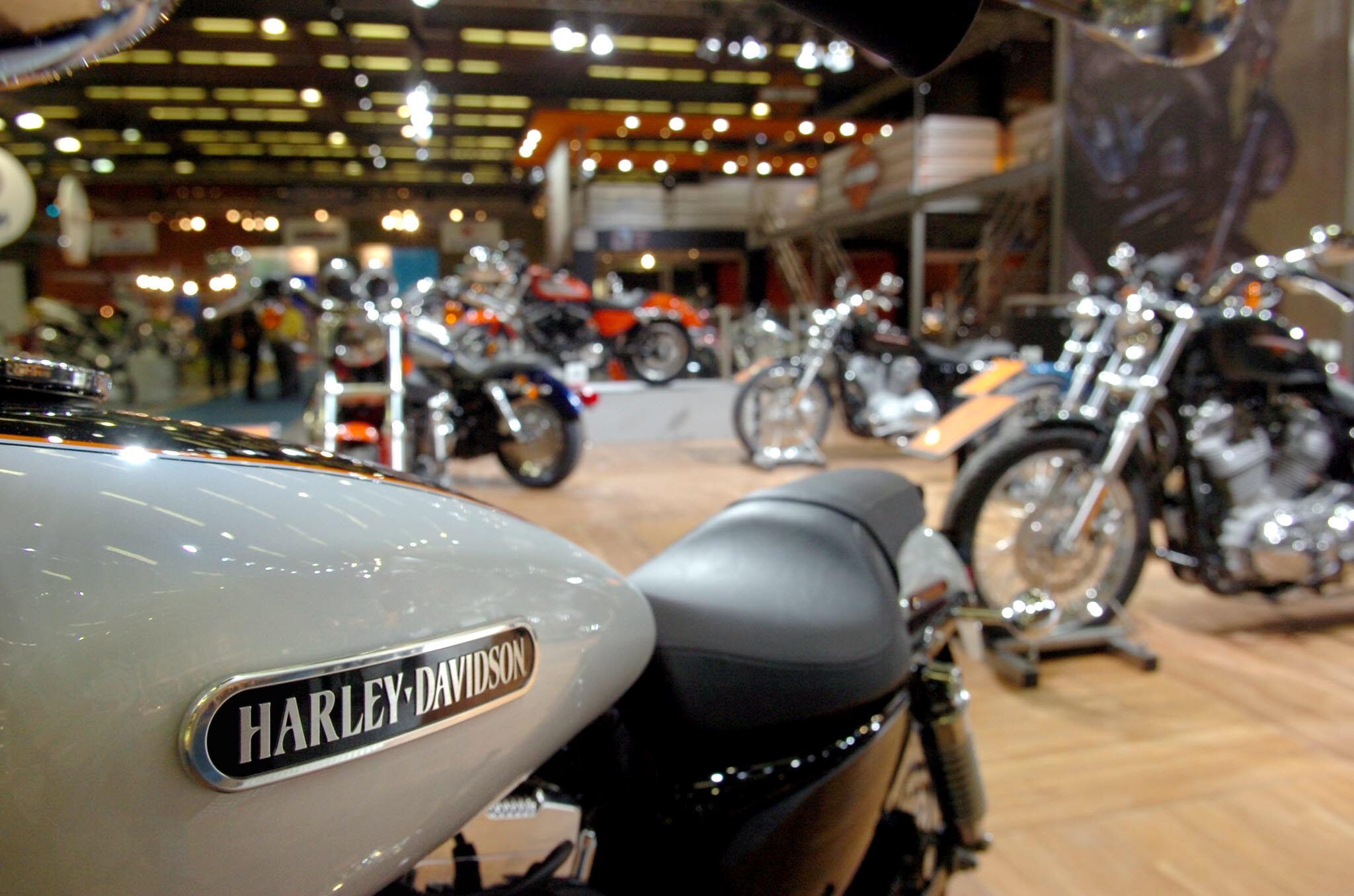
    Harley-Davidson has decided to discontinue its sales and manufacturing operations in India, as part of restructuring actions that the company refers to as ‘The Rewire’ strategy. On Thursday, Harley-Davidson informed its employees of additional restructuring costs amounting to $75 million in 2020, which includes discontinuing the iconic American brand’s operations in India. Total costs associated with ‘The Rewire’ strategy outlined by Jochen Zeitz, President, Chairman and CEO of Harley-Davidson amount to $169 million this year. The motorcycle brand expects to complete the restructuring actions from August to be completed within the next 12 months, which will include optimizing its global dealer network, exiting certain international markets and discontinuing its sales and manufacturing operations in India. In India, Harley-Davidson will reduce the workforce by approximately 70 employees.

    In a statement to the United States Securities and Exchange Commission, Harley-Davidson outlined the development, adding some details about the restructuring costs.

    “As a result of the actions approved from August 6, 2020 through September 23, 2020, the Company expects to incur restructuring expenses of approximately $75 million in 2020, of which approximately 80% are expected to be cash expenditures, including one-time termination benefits of approximately $3 million, non-current asset adjustments of approximately $5 million, and contract termination and other costs of approximately $67 million. Full implementation of these Rewire actions may require the Company to commit additional funds for additional contract termination and other costs. Including previously disclosed restructuring charges, the Company expects total restructuring expenses associated with Rewire restructuring actions approved through September 23, 2020 of approximately $169 million in 2020. The Company expects to complete the restructuring activities approved through September 23, 2020 within the next 12 months. Announcements associated with additional actions under The Rewire are expected to occur, some of which will likely result in additional restructuring charges,” Harley-Davidson said.

    Harley-Davidson India has responded with a press statement saying that the company is “evaluating options” to continue to serve its customers. While H-D India has said that the manufacturing facility in Bawal will be closed down, and the sales office in Gurugram will be significantly reduced in size, there is still no concrete announcement on how the brand will support its existing customer base in India. All Harley-Davidson India has said is that the dealer network will continue to serve customers through the contract term. Harley-Davidson has 33 dealerships across India, and each dealership will have a different contract term, but how existing customers will be served in terms of spares and service in the future is still not clear. In fact, with the closure of the manufacturing facility in India, the Harley-Davidson Street 750 range will likely be discontinued, as will be assembly operations. But there’s still some hope that the brand will continue to have some presence, importing models from its facility in Thailand, and with India’s Free Trade Agreement, that may work out to be cost-effective as well.

    Harley-Davidson has been under pressure in recent years, with sales of the American motorcycle brand slowing down in several markets around the world. And India seems to be one such market, where Harley-Davidson has been present since 2009, and where the first Harley dealership came up in July 2010. Harley-Davidson still led premium motorcycle sales in India over the last few years, led by the made-in-India Street 750 models. Harley-Davidson also had assembly operations in India at its plant in Haryana, assembling several models from completely knocked down (CKD) kits. In the last financial year, Harley-Davidson sold fewer than 2,500 units in India, and between April-June 2020, only about 100 Harleys were sold in India, making it one of the worst-performing international markets. And just about 10 years since the iconic brand set up shop in the world’s largest motorcycle market, it’s now time to wind up manufacturing and sales.

    Earlier this year, Jochen Zeitz replaced former CEO Matt Levatich as President, Chairman and CEO of Harley-Davidson. Levatich was in Harley-Davidson for 26 years, and with increasingly slowing sales in recent years, his exit was seen as a move to give new strategic vision to revive the brand internationally. ‘The Rewire’ plan outlined by Zeitz intends to re-look Harley-Davidson’s product strategy, as well as focus on about 50 markets, mainly in North America, Europe and parts of Asia Pacific, that represent the “majority of the company’s volume and growth potential.” And India, the world’s largest motorcycle market, seems to have been given the miss from those important markets where Harley-Davidson sees potential growth.

  • Skoda To Add 100 New Dealers In India By The End Of 2020

    Skoda To Add 100 New Dealers In India By The End Of 2020

    Skoda Auto India is currently focusing on expanding its footprint across the country. Apart from adding new outlets, the company will also be replacing the existing ones, who do not have enough financial resources to expand with the brand. The Czech automaker is working on the dealer expansion network throughout the country alongside its digital sales growth. The automaker intends to double its dealership network by 2022 as a part of project India 2.0.

    As per the original plan, the company aimed to strengthen its network by opening 124 new dealers by the end of this year. However, the plans were disrupted by the COVID-19 pandemic and the brand has revised its target to 100 new outlets by the end of this year.

    Speaking on the sidelines of the launch of the Rapid automatic, Zac Hollis, Brand Director, Skoda Auto India, said, “We have reduced our target to 100 by this year-end and 130 by the middle of next year. This year we will open new outlets in Bhopal, Mysore, and Guwahati, and new service centers with completely new dealers in Navi Mumbai and other places. This year we will add 27 new outlets.”

    The company also confirmed that it will not be introducing the Kodiaq RS in the Indian market. But, the BS6 Kodiaq TSI model will hit the market by early next year. The recently launched the Skoda Rapid TSI automatic in India with a starting price of ₹ 7.49 lakh and goes up to ₹ 13.29 lakh (all prices ex-showroom).

  • Coronavirus Drags Car Dealers Into Digital Commerce

    Coronavirus Drags Car Dealers Into Digital Commerce

    Auto retailers have been slow to embrace e-commerce, but the coronavirus pandemic is changing that. Online traffic has risen even as in-person showroom traffic has disappeared. Auto dealers are embracing digital tools to close deals without a handshake and arranging for vehicles to be picked up or delivered without requiring customers to come to their stores.

    U.S. new vehicle sales will be hit hard by the pandemic. Demand dropped 13% in the first 19 days of March, according to research firm J.D. Power. In especially hard-hit markets like Seattle, San Francisco, Los Angeles and Chicago, where the virus has spread quickly, demand slumped as much as 22%.

    Moody’s Analytics said on Friday the new and used vehicle markets could slump by as much as 20% from 2019 levels and stay depressed into 2021.

    New and used vehicle markets could slump by as much as 20% from 2019 levels and stay depressed into 2021.

    Based on a survey of some 40 dealers, analysts at Evercore ISI on Monday estimated the March U.S. seasonally adjusted annual selling rate could be 11 million to 12 million vehicles, on par with levels seen during the 2008/2009 financial crisis.

    However, online traffic for the 1,000 U.S. and Canadian dealers served by Roadster, which provides a digital sales platform for everything from financing paperwork to vehicle delivery, was up about 6%.

    “Many dealerships are going to get caught with their pants down,” said Brian Benstock, a dealer in the New York City borough of Queens. “This will be a watershed moment for the dealership industry.”

    Dealers have been doing business online for years, but it has never been a major focus. Only 15% of all transactions are online, according to a November survey of 540 dealers commissioned by the National Automobile Dealers Association. However, they expect online car sales to double by 2025.

    Benstock, who began moving most of his sales online in 2015, said companies like Tesla Inc and retailer Carvana Co, which does all its business online, have begun to change consumer expectations.

    Tesla has always relied on internet orders for its vehicles. It is implementing “touchless deliveries” in many locations, allowing consumers to unlock cars using the Tesla App, sign any relevant paperwork and return it to a drop-off location.

    Carvana, which sells used vehicles, expanded the number of cars it sold to retail customers by 89% in 2019 from 2018.

    Despite a sharp decline in its shares, Carvana has a market capitalization twice that of AutoNation Inc, the largest bricks and mortar U.S. retail vehicle chain. AutoNation started boosting investment in its online selling capability well before the virus shock.

    David Smith, chief executive of dealership chain Sonic Automotive Inc, said most customers still want to visit a showroom to see the cars they are buying.

    “There’s only a small percentage of the market who want to buy their car entirely online and have it delivered,” he said.

    “It’s what people wanted going into this,” she said, citing a Cox January survey that found consumers cited vehicle pick-up and delivery as their top desire.

    Matthew Zappone, general manager of a Chrysler Jeep Dodge Ram dealer outside of Albany, New York, is encouraging his sales staff to use FaceTime to show customers the vehicle features they want to see without visiting the store.

    “If you haven’t been doing it to this point, you’re under-prepared,” Zappone said.

  • Mercedes-Benz India Dealerships To Cross The 100 Mark In 2020

    Mercedes-Benz India Dealerships To Cross The 100 Mark In 2020

    Mercedes-Benz India has started 2020 with a bang announcing the launch of the EQ electric sub-brand in India, but there’s a lot more coming and on January 28, 2020, the company will launch the GLE SUV in the country. There are of course more launches scheduled this year and that’s one reason why even the dealers are looking forward to a great year. Martin Schwenk, MD and CEO, Mercedes-Benz India said, “Last year, the markets were down and it didn’t make sense pushing new cars then, but the fourth quarter of last year has been promising as it showed a growth. Our dealers have had a sneak preview of many of the cars that are coming to the market and it wasn’t difficult to convince them that this year’s sales numbers cannot be the same as last year.”

    Mercedes-Benz stuck to its growth in a very volatile market sentiment in 2019 and still is in the No.1 position in India in the luxury car segment. The company will be growing its dealership network too and it will cross the three digit mark in 2020. The company currently has 95 dealers in the country and crossing the 100 mark will certainly be a milestone. Schwenk said, “We are still working on expanding our dealer network. We are roughly at 95 right now in India and we will be getting into the three digit mark this year. It is not essentially because we’re bringing the EQ brand but rather covering the whole of India, so that we are close to our customers.”

    The company’s AMG arm continued to remain the most dominating performance brand in India and registered a robust 54 per cent in the calendar year 2019 in comparison to the same period last year and of course with more cars coming into the country, Mercedes-Benz sure looks forward to a positive response from the market in 2020.

  • Toyota’s War With Dealer Over Recalls Cost It $16 Million

    Toyota’s War With Dealer Over Recalls Cost It $16 Million

    Toyota Motor Corp. must pay $15.8 million to a California dealer who accused it of retaliating against him because he had developed safety-recall software that was costing the automaker millions of dollars in car repairs.

    A state court jury in Santa Ana on Monday found Toyota liable for unfair interference in a contract Roger Hogan’s two dealerships had with the automaker. But the jury found Toyota didn’t intend to deceive the dealerships by hiding material facts, and as a result didn’t have to pay punitive damages.

    “Other dealerships should be aware that Toyota cannot mishandle safety issues and cannot retaliate against dealerships for their commitment to safety without consequences,” said Amnon Siegel, Hogan’s lawyer. “This jury has put its foot down and said there will be consequences.”

    The owner of Capistrano Toyota and Claremont Toyota accused the Japanese carmaker of concealing that it was planning to oust him from its franchise system as far back as January 2011 while he was investing millions of dollars to expand and renovate his dealerships.

    Hogan claimed that his Autovation program, which he started in 2011 after a massive recall related to complaints about sudden acceleration, was much more efficient than Toyota’s own system in identifying and contacting customers whose vehicles hadn’t had repairs done.

    According to Hogan, Toyota wanted to kill his program, which was also used by other Toyota dealers, and oust him because it was costing the carmaker too much money to fix all the cars Autovation identified.

    “I still have these hundred cars sitting in my lot that I can’t sell,” Hogan said after the verdict. “Even though we prevailed, I still have a hundred vehicles and I will not sell these cars. They’re still unsafe. The jury saw that we did the right thing by stop selling those cars. They understood that they’re still dangerous.”

    Toyota noted the jury discounted $2.3 million from its judgment because it found the dealerships weren’t blameless either and engaged in misconduct.

    “While we respect the jury’s decision, we remain confident the evidence and testimony clearly demonstrated that Toyota abided by its contractual obligations to the Hogan dealerships and has been transparent with its dealers, regulators and customers regarding the vehicle issues raised at trial,” the company said in an emailed statement. “We will consider our options moving forward.”

    At the trial, Toyota denied the allegations and argued that Hogan brought the lawsuit because the carmaker didn’t want to go along with the succession plan for his dealerships. The Autovation program was a for-profit side business Hogan was running in violation of his agreements with Toyota, the automaker’s lawyer said.

  • Honda Motorcycle And Scooter India Inaugurates Its 1,000th Dealership

    Honda Motorcycle And Scooter India Inaugurates Its 1,000th Dealership

    Honda Motorcycle and Scooter India recently inaugurated its 1,000th dealership in India at Zirakpur in Punjab. The 1,000th Honda Exclusive Authorised Dealer is a 4S facility. With an aggressive expansion plan, Honda has added 3,300 touch-points in the last five years across the country. At present, HMSI has a total of 6,000 touch-points in India, one of the highest for a two-wheeler manufacturer. Recently, Honda also achieved another milestone, with customers in north India crossing the 60 lakh sales mark in the company’s 18th year of operations. The 60,00,000 sales milestone has been driven by demand for Honda two-wheelers in the states of Jammu and Kashmir, Rajasthan, Punjab, Haryana, Himachal Pradesh and in Delhi and Chandigarh. For Honda, the first 10 lakh customers were added in the initial 9 years (from 2001 to 2010), but the next 50 lakh Honda customers took the same duration (2010-2019). The most recent 10 lakh Honda customers were added in a little over a year.

    Minoru Kato – President & CEO, Honda Motorcycle & Scooter India Pvt. Ltd. said, “I am delighted to be present here on milestone 1000th Honda dealer inauguration. Honda also fulfilled its commitment of providing 6000 network touchpoints to our valuable customers by the end of current financial year. This landmark achievement brings Honda closer to the hearts of its customers, who have reposed their trust in the brand.”

    Honda’s increasing customer base in India is attributed to the growing acceptance of scooters in the region. And the growing sale of scooters in the past decade has also led to a huge spurt in automatic scooters contribution to overall two-wheeler sales. In the last 10 years, automatic scooter sales have nearly doubled from 10 per cent to 19 per cent. This trend is attributed to more women joining the workforce, faster expanding road network in rural areas, and increasing demand for unisex two-wheelers which fulfil the needs of every family member. HMSI currently is the largest seller of scooters in India, and the Honda Activa is one of the highest selling two-wheelers in India.