Retail News CRM

Tag: deals

  • Singapore Durian Devotees Dive into Decade-Low Deals on Musang King: Act Fast or Miss Out!

    Singapore Durian Devotees Dive into Decade-Low Deals on Musang King: Act Fast or Miss Out!

    In Singapore, enthusiasts of the durian fruit, particularly the Musang King variety, are taking full advantage of a decade-record low in prices out of Malaysia. However, sellers predict that this economic boon will likely only persist for another fortnight.

    The recent plummet in prices can be attributed to an oversupply in Malaysia, Singapore’s neighboring country. This has allowed sellers in the city-state to price the durian, also locally known as Mao Shan Wang, as low as S$8 (US$6.25) per kilogram.

    Economic Impact of the Durian Price Drop

    Anthony Gan, proprietor of the renowned Famous Durian stall in Yishun, commented on the significant drop in prices. “Compared to the previous season, it’s about S$8 cheaper per kilogram,” Gan said. He also noted that these are the lowest prices he has seen during his decade-long career in the durian trade.

    Similarly, Durian Empire in Punggol Plaza is selling the fruit for S$8-18 per kg, a stark contrast to the previous average rate of S$15-24.

    The rapid decrease in prices is linked to an unusually large harvest in Malaysia, Singapore’s primary source for durians. It was reported earlier that the Musang King variety, typically considered a premium type of durian, had dropped down to RM10 (US$2.4) per kg at farms across Malaysia. Some areas even saw even lower prices due to the supply glut. Other popular varieties, such as the Black Thorn, D24, and IOI, have also become more affordable.

    Singaporean Durian Demand and Consumption

    Durians, known for their pungent aroma, are beloved by Singaporeans. The Musang King variety is especially favored due to its creamy texture and bittersweet taste.

    Approximately 85% of the durians in Singapore come from its northern neighbour, with imports estimated to be around 100,000kg per day during the peak season. Therefore, the decreased prices have resulted in a surge in demand.

    Derrick Ooi, who owns the 211 House of Durian in Lorong 8 Toa Payoh, reported a 30-40% increase in his December sales compared to previous months. Zen Ho, proprietor of Durian Empire, reported a 20% sales increase from previous years.

    Meanwhile, Famous Durian’s Gan noted that daily orders have climbed to over 100 since last November, compared to 60-70 orders before that.

    A Temporary Relief

    While the price drop has been a boon for durian lovers and sellers alike, this respite is expected to be fleeting. As the durian season draws to a close later this month and into February, supplies are anticipated to shrink.

    Alvin Teo, who operates Durian 36 in Geylang, predicts that the price relief could “last for another two weeks’ time,” and that a 20-30% price increase might be on the horizon.

    However, despite potential price fluctuations, durian fruit will remain available through the Lunar New Year, according to 211 House of Durian’s Ooi.

    Questions & Answers

    Why have durian prices dropped so significantly?
    The price drop is due to an oversupply of durians in Malaysia, Singapore’s primary durian supplier.

    How long is the durian price drop expected to last?
    According to sellers, the price drop may only persist for another two weeks before prices are expected to increase again.

    Will durians still be available after the price increase?
    Yes, despite the potential price increase, durians, specifically the Musang King variety, are expected to remain available through the Lunar New Year.

  • South Korean Retailers Combat Rising Food Prices With Ultra-affordable Products

    South Korean Retailers Combat Rising Food Prices With Ultra-affordable Products

    In South Korea, the rise in food prices has led to an increase in demand for ultra-low-cost products, specifically those priced under 1000 won. This surge in demand has prompted convenience stores to grow their range of super-value items.

    7-Eleven’s Affordable Coffee Selection

    On the 30th of July, the famous convenience store chain, 7-Eleven, introduced two new coffee products to its line: “Seven Select Black Coffee” and “Seven Select Cafe Latte.” Retailing at only 900 won each, these offerings are approximately 36% cheaper than the average market price of 1400 won for similar items. The black coffee offers a clean, Americano-style flavor, while the cafe latte provides a lightly sweet taste and aroma that appeals to a wide range of customers.

    This addition to 7-Eleven’s product line follows the mid-July release of “Seven Select Venti Coffee” in 600ml PET bottles. Available in black and hazelnut varieties, these beverages retail at 1800 won, making them 33% less expensive than typical 500ml bottled coffees. These products experienced a 70% increase in sales from July 18 to 25, compared to the preceding month, indicating robust consumer interest in large volume, low-cost options.

    According to 7-Eleven, reflecting the wider economic pressures, sales of all differentiated products priced under 1000 won increased by 30% from July 1 to 25 compared to the same period the previous month.

    CU Embraces the Ultra-Value Trend

    CU, another popular convenience store chain, has also responded to the ultra-value trend. In preparation for Korea’s traditional midsummer days, CU introduced two affordable traditional chicken dishes to its private-label “Duktem” series. These are the “Samgyetang Chicken Breast,” priced at 1900 won, and the “Samgyetang Whole Chicken Leg,” available for 3500 won.

    Easily prepared in a microwave in under two minutes, these dishes offer a cost-effective alternative to Samgyetang. This traditional Korean chicken soup, generally considered a restorative dish, has become increasingly expensive. Data from Korea Price Information shows the cost of making Samgyetang at home has risen to 9000 won per serving, while dining out costs an average of 17,654 won, a 4.6% increase from the previous year.

    Other Retailers Join the Trend

    Large retailers, such as Emart, Homeplus, and Lotte Mart, have also recognized this trend and begun offering aggressive promotions on fresh poultry and ready-to-eat health foods. For instance, Emart offered two antibiotic-free young chickens for 3580 won with a member card, while Homeplus sold first-grade whole chickens for 3650 won each with bulk purchases.

    As consumer spending power declines and economic uncertainty persists, ultra-affordable, high-value products are fast becoming a key strategy for retailers. The aim is to attract cost-conscious shoppers looking for reasonably priced alternatives to expensive meals and beverages.

    Questions & Answers

    What effect is the rise in food prices having in South Korea?
    South Koreans are increasingly seeking ultra-low-cost products. This demand has prompted convenience stores to expand their range of super-value items.

    How have 7-Eleven and CU responded to this demand?
    7-Eleven has introduced affordable coffee products, while CU has released cost-effective traditional chicken dishes to cater to this growing demand.

    What is the overall retail strategy in response to these economic pressures?
    Retailers, recognizing the need for affordable options amid declining consumer spending power and economic uncertainty, are focusing on providing ultra-affordable, high-value products to attract cost-conscious shoppers.

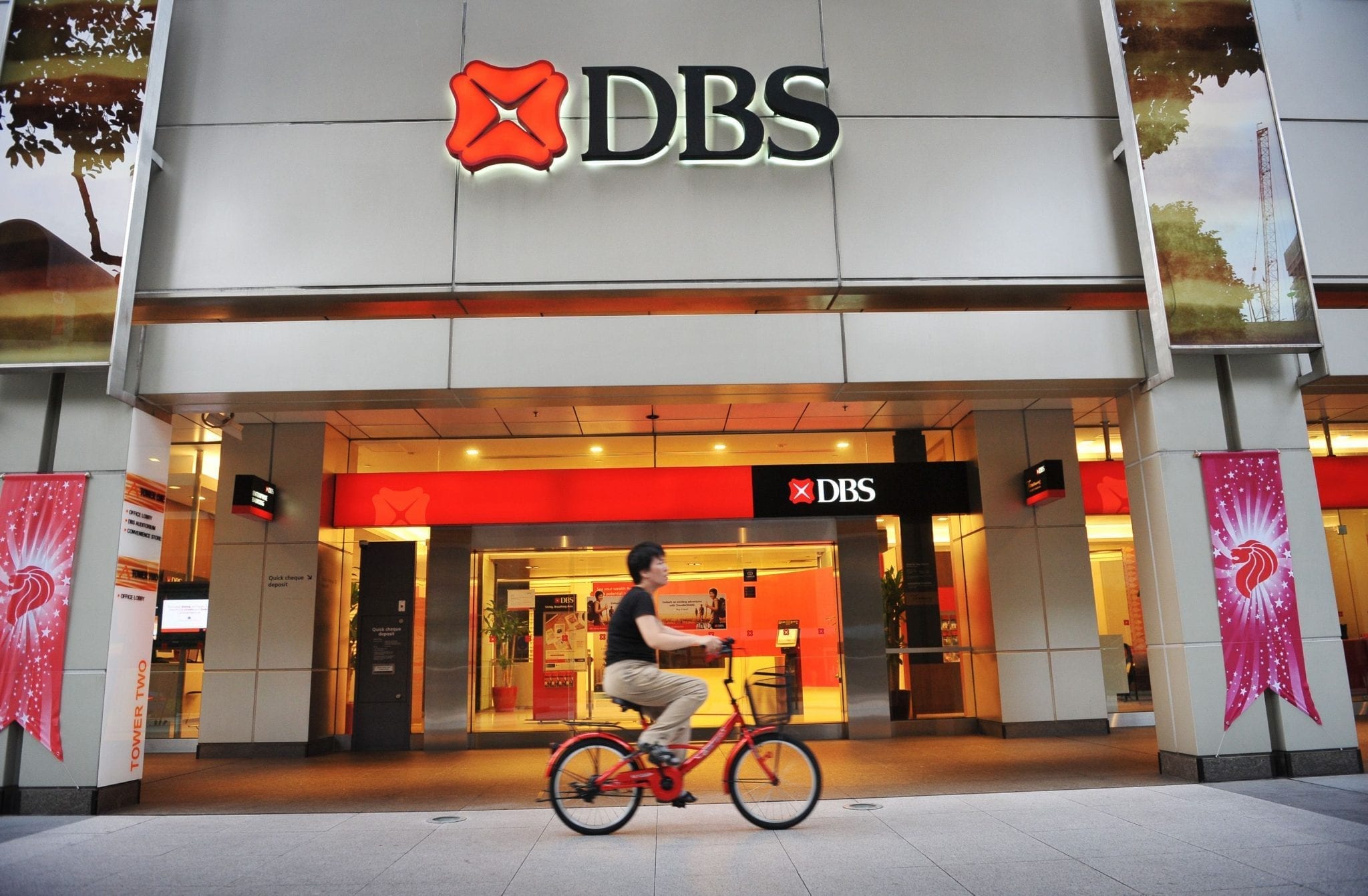
  • DBS Unveils Exclusive Deals and Rebates for Cardholders at 680+ Retail Outlets!

    DBS Unveils Exclusive Deals and Rebates for Cardholders at 680+ Retail Outlets!

    DBS Bank is stepping up its game in the competitive retail landscape of Asia by teaming up with prominent players like Cold Storage, CS Fresh, Giant, Guardian, and 7-Eleven, among others. This collaborative effort aims to deliver enticing spending privileges to its cardholders at over 680 retail outlets across the region.

    Exclusive Deals for DBS/POSB Cardholders

    As announced in a press release on July 1, 2025, DBS and POSB cardholders can look forward to a year-round array of exclusive deals and savings with these well-known brands. Holders of the DBS yuu card can benefit from cash rebates of up to 18%, while PAssion POSB debit cardholders will enjoy up to 9% in cash rebates, alongside enticing one-for-one deals.

    Delicious Discounts in July to September

    From July through September 2025, all DBS and POSB cardholders will enjoy a slew of special grocery promotions, including a chance to save up to S$12 at Cold Storage and S$6 at Giant, provided they meet the minimum spend requirement. Fridays just got a bit sweeter, too, with cardholders receiving S$6 off Guardian vouchers for return visits and an attractive 10% discount at 7-Eleven outlets. It’s almost like grocery shopping is becoming a sport—who doesn’t love a good discount sprint?

    Unique Weekly Promotions Await

    DBS has promised that cardholders will encounter unique weekly promotions across all participating outlets during this two-month period, adding an element of surprise to the shopping experience. Chan Sow Han, head of payments and platforms at DBS Singapore, emphasized that the bank’s extensive retail partnerships enable it to provide unmatched value. “This collaboration demonstrates our deep understanding of customer priorities and our commitment to addressing cost-of-living concerns through meaningful partnerships,” Chan stated, highlighting the bank’s proactive approach in these challenging economic times.

    Questions & Answers

    What types of benefits do DBS and POSB cardholders receive through this collaboration?
    Cardholders can enjoy exclusive savings, cash rebates of up to 18% for DBS yuu cardholders, and up to 9% for PAssion POSB debit cardholders, along with various promotional deals throughout the year.

    What are some specific promotions available to cardholders from July to September 2025?
    During this period, cardholders can save up to S$12 at Cold Storage, S$6 at Giant, as well as receive S$6 off Guardian vouchers and 10% discounts at 7-Eleven on Fridays.

    How does DBS Bank demonstrate its understanding of customer needs?
    By leveraging its partnerships with major retailers, DBS Bank aims to alleviate cost-of-living concerns for its customers, showcasing a commitment to deliver value through thoughtful promotional programs.

  • UK carrier Vodafone launches new refurbished phone range

    UK carrier Vodafone launches new refurbished phone range

    As many of us know, premium smartphones are powerful and, at least in theory, last longer. But one huge downside is that they also come with a premium price tag, which not everyone can afford. So, if you want an expensive phone but don’t want to spend a lot of money on a handset, and you live in the UK, you can now buy a phone from Vodafone’s latest refurbished range, which the carrier just recently launched. As the mobile operator stated in its announcement, its new offerings can help “price-conscious customers get the phone they want for less.”

    For example, clients can get a refurbished iPhone SE (2022) 64GB for £261 on a 36-month payment contract. The regular price of the phone is £451, so by buying a refurbished model, you are saving £190.

    As for the other phones that Vodafone is currently offering, you can buy a refurbished model of the iPhone 13, the iPhone 12, the iPhone XR, the iPhone 11, the Samsung Galaxy S21, and the Samsung Galaxy S20 FE. Furthermore, the carrier is offering a two-year warranty on every Pay Monthly refurbished phone. According to the announcement, Vodafone is the only major UK mobile operator to offer such a warranty.

    If you hesitate whether to buy a renewed phone or not, Vodafone assures that its refurbished handsets are in “Great” or “Pristine” condition. Also, every phone has passed a visual and diagnostic check, which ensures that all devices work without issue. Vodafone also stated that these phones have been deep cleaned and securely data wiped, and if there is any problem, you can take advantage of Vodafone’s 14-day no-quibble money-back guarantee.

    However, if you want to get a brand new phone with a great discount, you should check out our best Vodafone phone deals. Or, if you are rolling with another carrier, you can visit our top Virgin Media phone deals, best O2 phone deals, three phone deals, and EE phone deals.

  • MyDeal pivots to home wares deals

    MyDeal pivots to home wares deals

    As the online marketplace space becomes more crowded, Melbourne-based startup MyDeal plans to shrink to greatness – when it comes to product categories, that is.

    Like many marketplaces, the e-commerce company founded in 2012 by Australian entrepreneur Sean Senvirtne was initially focused on growing its customer database, supplier numbers and range. In 2017, with 1000 sellers and 25,000 products on the site, it expanded into new categories – fashion and travel – and diversified its offering with the launch of a fintech product.

    But now, MyDeal is paring back its business to focus on the furniture and homewares space, an area where the company has always had a natural strength, according to head of marketing, John Barkle.

    “Prior to the massive expansion of products, those were our strongest categories. I think it’s because we have the best price and range, and we’re very good at moving products that are big and bulky,” Barkle told.

    Today, MyDeal claims to have more than 500,000 products on its site. It aims to surpass one million within the next six months by bringing on board new sellers in the furniture and homewares space, a goal that should be made easier by its recent integration with ChannelAdvisor, a US-based e-commerce company that helps businesses list their products on marketplaces such as eBay, Amazon and now MyDeal.

    “This is a significant milestone in the business that signifies 12 to 18 months’ worth of work to get the technology right on our marketplace platform,” Barkle said.

    MyDeal’s marketplace technology is bespoke, and Barkle acknowledged that, in the past, this may have presented a barrier to sellers wanting to join the platform. Listing products on a marketplace can be a time-consuming and labour-intensive process, depending on the marketplace’s information requirements, the number of products the seller wants to offer and the availability of software to automate the process.

    Since solving its technical issues and narrowing its focus, Barkle said MyDeal is now positioned for rapid growth. But the e-commerce company may face new obstacles in its pivot to furniture and homewares, which puts it in direct competition with some much larger and more established players in the niche, such as Temple & Webster. The listed retailer recently reported $49.3 million in revenue in the six months to December 31, a 40 per cent increase on the previous year.

    Barkle declined to share any earnings figures for MyDeal, which is a private company, but said the retailer recently became profitable.

    “We run a very low-cost model, meaning we can pass on those savings directly to the customer,” Barkle said. “Where we intend to compete is on providing a unique experience that improves discovery and satisfaction.”

    MyDeal recently launched a “shop and earn” program that Barkle said is unique among Australian marketplaces. It allows customers to earn credits that they can then put towards later purchases every time they buy something on MyDeal. The amount of credits they earn depends on the seller they buy from, which is designed to encourage healthy competition among sellers to drive sales. Barkle said the site has seen a substantial increase in customer retention since launching the program three months ago.

    Barkle also spoke obliquely about using technology to bring customers as close to touching and feeling the product as is possible online, something that other online retailers, including Temple & Webster, have flagged as being possible with augmented and virtual reality. But like its competitors, MyDeal mostly seems content to let demographics play to its advantage.

    “We believe the penetration of online sales into furniture and homewares will substantially increase over the next five to 10 years, driven by millennial consumption,” Barkle said.

    Housing slump weighs on homewares

    Whether this will be enough of an insulating factor for MyDeal and other online furniture retailers to weather the current housing slump is up for debate. In its monthly trading figures for January 2019, the ABS reported a 0.2 per cent drop in household goods retailing, the only industry sub-group to fall in the month.

    At the same time, MyDeal’s strategic move away from the general marketplace arena, where online “department store” retailers like Catch and now Kogan.com are competing with the likes of eBay and Amazon across a wide range of categories, may prove to be less effective in the long run, as competition among niche marketplaces increases.

    Jason Wyatt, co-founder and managing director of Marketplacer, a software company that provides marketplace technology to businesses, said retailers, brands and manufacturers are beginning to adopt a marketplace mentality to extend their ranges without the burden of owning inventory.

    “That previously hasn’t existed,” he told.  “I don’t think there’s room for 20 mega marketplaces in Australia, but I think we’ll see more niche marketplaces that aim to be ‘something’ for ‘somebody’.”

  • Don’t Miss These 12.12 Online Sales Happening All Over Asia!

    Don’t Miss These 12.12 Online Sales Happening All Over Asia!

    During the year-end, it’s always the busy season for retailers and brands across the world and among them Southeast Asia is no Exception. The mega sale season typically experiences offline sales during Black Friday in December has moved online now because of the web stores opening up in the market including –  Lazada, Farfetch, SSENSE, Zalora, AliExpress, and Jumia.

    These campaigns now occur in a row on 9.9, 11.11, and 12.12 (September 9th, November 11th, and December 12th) and creating a big-time problem for all the new e-commerce brands.

    All the businesses and e-commerce stores must plan ahead in advance with multiple partners to strike their annual online revenue targets and increase the last month’s target.

    To help small as well as big brands, the shopping sale season is the best time to do shopping and enjoy making up strategies based on e-marketplace shopping trends. E-Commerce allows users to make some of the biggest brands popular all over Southeast Asia.

    This guide is here to bring to your notice about the most applicable and enhancing performance during the upcoming “mega online sales campaigns” held by top players like AliExpress, Lazada, Zalora, Farfetch, and Jumia in Southeast Asia. Further on the brands are participating in maximizing the increasing chances to maximize sales and reduce expensive mistakes with the findings.

    Let’s jump right in.

    Zalora is winning big with the 12.12 Sale

    Zalora is Asia’s one of the biggest online fashion store which is fully enjoyed by many regions across eight countries – Singapore, Malaysia, Indonesia, Philippines, Taiwan and Hong Kong .

    By initiating it with the 12.12 online fever, it aims to drive in more consumers and some best deals that encourage consumers to shop online. This has also led to an increase in the customer list by converting the traditional customers into e-consumers. This year too, it is expected to a growth of 32% of 12.12 Online Fever shoppers from last year.

    There are some great opportunities at Zalora for both male and female to find unique apparel, footwear and accessories. Also, you could find your favourite brand name among this list includes Rubi, Mango, Dorothy Perkins and Something Borrowed while Sperry, Herschel, Onitsuka Tiger and TOPMAN these are all popular among men.

    The 12.12 fever is definitely bringing down obstacles by making it more available for citizens in this region where they can enjoy some great option for shopping in the budget.

    Farfetch captivating deals on 12.12 Sale

    The online luxury brand name Farfetch has grossed merchandise up to value $310 million resulting in revenues for the British company to total $132.32 million. The London-based online store updated its approach for future where it expects higher merchandise sales than the previous estimates.

    Farfetch offers designer clothing and accessories are for men and women of all sizes and ages. During the 12.12 sale, all these items are available at best rates from the designer clothing and accessories to big brands name like Alexander McQueen, Dolce & Gabbana, Gucci, Prada, Thom Browne, and Versace among others.

    Farfetch has its presence in Indonesia, Malaysia, Philippines, Singapore, Thailand and Vietnam. Currently, it’s marketplace offers luxury products of more than 1,000 vendors across 48 different countries.

    Lazada 12.12 Online Revolution Sale shines out

    The Lazada Group’s Online Revolution is quite popular across many regions including in Indonesia, Malaysia, Philippines, Singapore, Thailand and Vietnam. The famous 12.12 Sale has made its presence yet again and proved to be the biggest online shopping event in Southeast Asia. It has yet again proven to be the biggest online shopping event in Southeast Asia, buzzing sales up from US$40.5 million.

    About 60 per cent of the gross merchandise came from December 12 event on mobile with the shoppers spending an average of 12 minutes on Lazada apps for browsing deals from international and local brands sellers.

    The Lazada store carries the slogan “Brands for All”, on 12.12 sale features more than 500,000 offers and flash deals on more than 1000 brands and 55,000 sellers.  The best-sellers are from shower gels and mascaras, tote bags and bracelets, virtual-reality headsets and speakers, and vacuum cleaners and tableware.

    The CEO Maximilian Bittner of Lazada says the sale has become highly anticipated among more consumers in Southeast Asia, both from small cities and rural areas.

    This year too, the difference on everyday products will be on products like diapers and groceries, as well as advanced-value things from good brands.”

    AliExpress 12.12 Sale estimates to break last year’s record

    In China, December 12 is supposed to be a day when the country’s biggest e-retailer, The Alibaba Group, plans to throws a mega sale event on its flagship event – 12.12 shopping festival. This year, there will be great offers online more than 7 million vendors and around 800 million products.

    There are many brands participating in the event to celebrate the official launch of the festival featuring top categories including fashion, beauty, accessories, gadgets, home and living, electronics, sports and equipment, and much more.

    SSENSE big heavy deals on 12.12 Sale

    Ssense, an international shopping platform offers a wide selection of independent, luxury, and streetwear designers.  All the collection and apparels are its individual original produce.

    The 12.12 sale is happening in all Ssense stores, also the sale is expected to break all its previous record on revenue and will likely to benefit both retailers and customers.

    Ssense has its presence in countries like Singapore, HongKong, Thailand, Philippines, Indonesia, United Kingdom, Australia, United Aram Emirates, and few more.

    Jumia unbreakable discount and offers on 12.12 Sale

    Jumia is an online store in Africa that offers electronics, and fashion items. It has united with over 50,000 local African corporations and individuals and is a straight opponent to Kilimall in Kenya and Konga in Nigeria. It has started out in 2012 and now it has a presence across 14 African countries.

    12.12 Sale in Jumia is starting from 8 am at every hour with lots of juices and spices during the sale. Every hour for 12 hours here will be humongous of deals available featuring online stores.

    Watch out for your favourite fashion items now including mobile phones, laptops, home appliances, perfumes, game console and many more. It is going to be a great time when you can enjoy discount up to 99%.


  • Concerted action needed for M&A breakthrough

    Concerted action needed for M&A breakthrough

    It is forecasted that the value of mergers and acquisitions (M&A) deals in 2017 will not exceed those of 2015 and 2016, thus, the market needs a boost from enterprises and the government to leverage the opportunities from foreign capital to make a breakthrough.

    In 2016, the total value of all M&A deals over the world was $3.5 trillion, a reduction of 27 per cent on-year, but a high value nevertheless. However, this could be considered an ending of the global M&A’s growth period. Due to Brexit and Donald Trump’s new policies, global M&A activities are becoming harder to predict and there may be some shifts in the flow of investment capital in the world.

    According to the statistics of the Institute for Mergers, Acquisitions and Alliances (IMAA), Vietnam hit a 10-year record hike of $5.2 billion in M&A activities in 2015. In 2016, the value of M&A deals was $5.1 billion, even though experts said that in the second half of 2016, the growth was slowed down because not many big M&A deals were publicised at the time.

    It is forecasted that in 2017 without a breakthrough, the total value of M&A deals in Vietnam may not overtake 2015 and 2016 figures. For a breakthrough, the Vietnamese M&A market really requires a boost.

    The most vibrant industries with the highest number of M&A deals in 2016 were the retail sector, consumer goods production, and real estate. The finance and banking industry did not have many outstanding activities last year. Some other fields, such as education and technology, also attracted M&A investment in 2016.

    Foreign capital has been playing an important role in M&A activities in Vietnam with numerous sizeable deals. For example, Japanese enterprises are now strategic partners to many state-owned enterprises, such as Vietnam Airlines and Petrolimex. Similarly, a number of South Korean enterprises joined the Vietnamese market by investing in agriculture, and investors from Singapore have been paying close attention to some real estate projects.

    According to some assessments made by the government and investors, the progress of equitisation and the state divestment from big enterprises is slow. A wide range of Vietnamese enterprises are luring in investors after being equitised or divested by the state, such as Saigon Beer-Alcohol-Beverage Joint Stock Corporation (Sabeco), Hanoi Beer Alcohol and Beverage Joint Stock Corporation (Habeco), Vietnam Mobile Telecom Services Company (MobiFone), and Vietnam Dairy Products Joint Stock Company (Vinamilk).

    Currently, Sabeco and Habeco’s stocks have been listed on the stock exchange. However, most investors said that this step was implemented more slowly than they had expected.

    There are numerous challenges for the growth of M&A in Vietnam, including changes in the US policies, the withdrawal of the US from the Trans Pacific Partnership or the various obstacles to equitisatisation, the problems of enterprises’ quality, and the scale of the Vietnamese economy.

    To achieve at least 2016’s $5.1 billion in deal value, the state divestment in some Vietnamese enterprises should be implemented more quickly and thoroughly.

  • Vietjet signs deals worth USD 4.7 billion

    Vietjet signs deals worth USD 4.7 billion

    Vietjet Aviation Joint Stock Company yesterday signed an agreement with CFM International – a joint venture of GE and Safran, in Washington on supporting 215 engines to power the airline’s fleet under the witnesses of Vietnam’s Prime Minister Nguyen Xuan Phuc and U.S. Secretary of Commerce Wilbur L. Ross, Jr. The 12 year-long agreement which is valued at USD 3.58 billion includes other technical services, engines and components maintenance.

    Speaking at the signing ceremony, Vietjet’s President and CEO Nguyen Thi Phuong Thao said: “We are orienting our fleet to aircraft families and engines which are of efficient fuel consumption and environment friendly. The engines under today agreement will help us to save up to 15 percent of fuel consumption as well as to obtain other comprehensive services in technical support, maintenance and training. It is our great honor to be a partner of GE and CFM International. Thanks to this agreement, Vietjet’s fleet can enjoy new technical and technological advances which enhance our flight quality and operation reliability and reduce costs. We strongly believe that this agreement will promote economic and trade exchange between the two countries and create million jobs for the two peoples.”

    “We appreciate the high level of confidence this agreement shows in CFM and in our ability to support Vietjet over the long term,” said Gaël Méheust, President and CEO of CFM International.  “It has been an honor to be a part of the very dynamic and exciting team for the last six years.  It is a privilege to know that this very special relationship will continue for many more years to come.”

    On this occasion, Vietjet and GECAS under GE signed a Memorandum of Understanding in aircraft financing worth USD 1 billion. Accordingly, GECAS will support Vietjet to finance and/or purchase and enter into leaseback arrangement of 10 aircraft ordered by Vietjet.

    Vietjet and Honeywell Aviation also inked an agreement on auxiliary power unit supply and technical maintenance to power the airline’s 98 airplanes. The agreement which is worth USD 180 million, is aimed to help Vietjet’s fleet be maintained under world leading standards.

  • Singapore Airlines celebrates 70 years with biggest travel fair, affordable deals

    Singapore Airlines celebrates 70 years with biggest travel fair, affordable deals

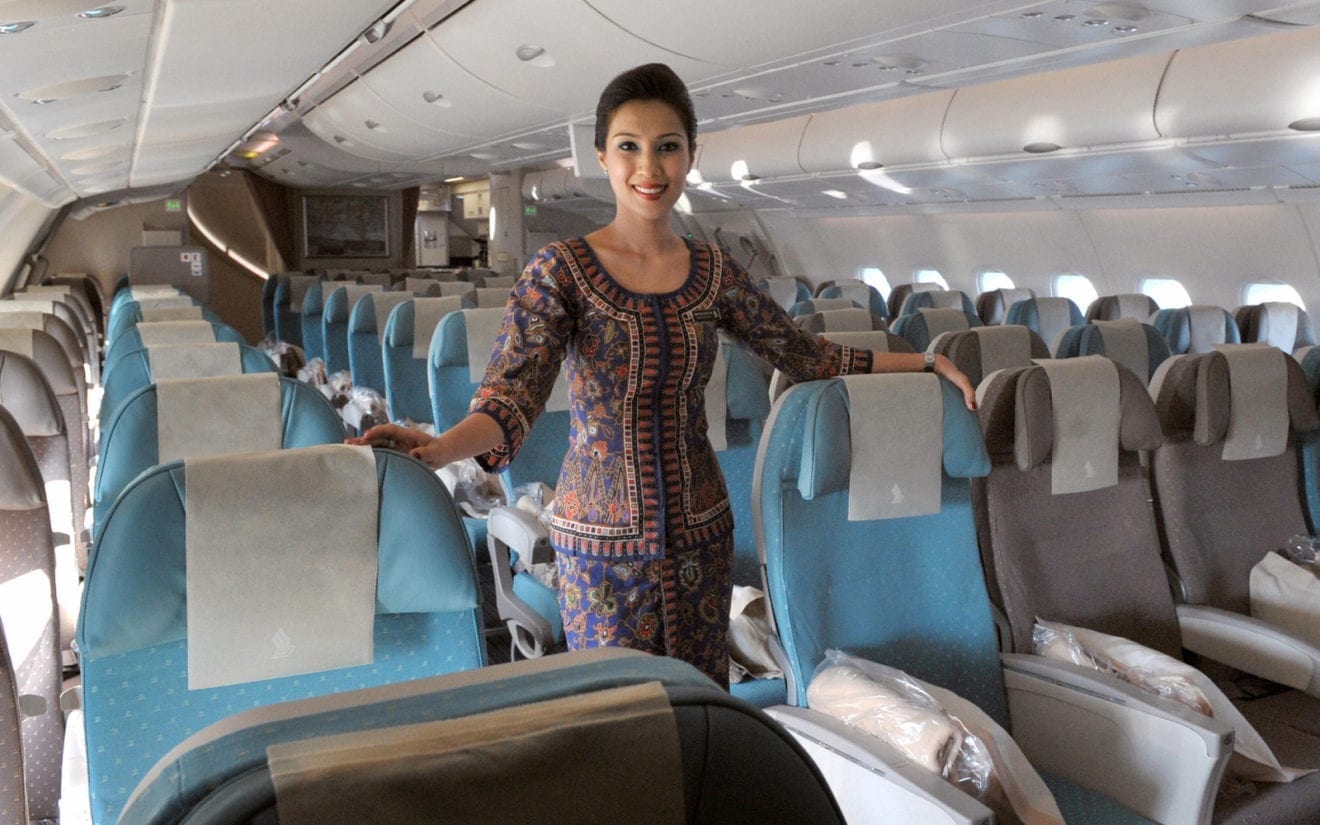
    Singapore Airlines (SIA) marks another milestone as they celebrate their 70th anniversary across the globe with exciting deals, service expansion, and the largest showcase and travel fair for its Filipino patrons.

    According to Carol Ong, SIA general manager in the Philippines, “Innovation has always been at the core of SIA’s operations. For our 70th year, we continue to push our boundaries by expanding our network and pioneering services guaranteed to give the best experience to our customers.

    “We want to continue doing our best to exceed our customers’ expectations—whether it be more travel destinations, more frequent flights, or more great value deals.”

    Premium Economy class. Photo courtesy of SIA.

    Travel for less
    All-inclusive round-trip Economy Class fares to Singapore and other Asian destinations are available from US$160. Fares to Australia are offered from US$570 while traveling to key destinations in Europe starts at just US$670. Customers can also travel to South Africa at fares starting from just US$770 and to the United States starting from US$970.

    As parts of its 70th anniversary celebration, Singapore Airlines' airfares to Cape Town start at USD770. Photo courtesy of SIA.

    Passengers can experience SIA’s newest cabin offering, the Premium Economy Class, with the most attractive all-in round-trip rates. All-in fares on Premium Economy Class to Asian destinations are available from US$1,000, to Australia from US$1,350, to Europe from USD1500, and to South Africa from US$1,700. A trip to New Zealand is offered from USD1800, and to the United States for just US$1,850.

    Customers can choose to travel in luxury and style with SIA’s all-in Business Class fares. Travelling to various Southeast Asian destinations is offered from US$850 all-in, and to Australia from US$2,000. Discounted rates to Europe and New Zealand are also available from just US$2,500. Starting at US$3,000, passengers can already fly Business Class to the United States or South Africa.

    Travel to Austria and visit the Vienna Opera House.  As part of its 70th anniversary celebration, Singapore Airlines is offering special airfare to Europe for as low as US$670.

    Travel to Austria and visit the Vienna Opera House. As part of its 70th anniversary celebration, Singapore Airlines is offering special airfare to Europe for as low as US$670.

    For this year’s Singapore Airlines Showcase and Travel Fair, customers will also have access to SIA’s network of subsidiaries and partners and enjoy exclusive promotional rates. Customers will be able to travel from the Philippines to SIA’s online gateways in Europe and connect to additional destinations such as Brussels, Madrid, Hamburg, Oslo, Vienna, Venice, Lisbon, Prague and its newest destination, Sweden.

    With 85 destinations to choose from at exceptional rates, SIA provides its customers the perfect opportunity to achieve their travel goals this year for less.

    This sale is still valid for purchase at the Singapore Airlines Showcase and Travel Fair 2017 at the TriNoma Activity Center on February 26 to 28, 2017. The sale is also available online and at SIA and SilkAir ticket offices until 20 February 2017. Travel period is from February 1 until December 31, 2017. Promotional fares are available for travel from Manila, Cebu, Davao and Kalibo.

    The promotional fares are exclusive to Singapore Airlines KrisFlyer members, BPI credit cardholders, Globe Platinum customers as well as TriNoma and Ayala Center Cebu shoppers.

    Travel to Athens and visit Cape Sounion and the Temple of Poseidon for only USD570 via Singapore Airlines. Photo courtesy of SIA.

    Travel to Athens and visit Cape Sounion and the Temple of Poseidon for only USD570 via Singapore Airlines. Photo courtesy of SIA.

    Exclusive rewards
    Loyal patrons will also enjoy perks and rewards such as the Real 0% Installment Plan of up to 6 months for BPI credit cardholders and upfront US$50 Cash Back, an exclusive introductory offer of SG$25 Singapore exPass that gives access to two of Singapore’s world-class attractions, and a SG$20 Changi Dollar Voucher that passengers can redeem at Singapore Changi Airport, valid for use at participating shops and restaurants at the airport. Terms and conditions apply.

    All these exclusive deals are in cooperation with SIA’s network of partner companies like BPI, Ayala Malls, Globe Platinum, Changi Airport Group and Singapore Tourism Board.

    Visit singaporeair.com and Singapore Airlines’ Facebook page for the complete set of mechanics and guidelines, and for other announcements.

    For bookings and inquiries, visit Singapore Airlines and SilkAir ticket offices, or call SIA Manila Reservations at (+632) 756-8888, SilkAir Cebu at (+6332) 505-7871, SilkAir Davao at (+6382) 227-5301, SilkAir Kalibo at (+6336) 500-7226, or contact any participating travel agent from 20 January to 20 February 2017. For details, visit singaporeair.com/FLYSQ70.

    To enjoy up to 6 months Real 0% interest Special Installment Plan on your BPI credit card, book through SIA or SilkAir ticket offices.

    Singapore Airlines flies from Manila to Singapore four times daily, which conveniently connects to onward flights to the rest of the world. Passengers traveling from Cebu, Davao and Kalibo can fly to Singapore via SilkAir, which flies 12 times weekly from Cebu, nine times weekly from Davao, and three times weekly from Kalibo.

  • Singapore shoppers look to online shopping for good deals

    Singapore shoppers look to online shopping for good deals

    The extended season will lead to an eleven percent ($9.1 billion) increase in online sales to a total of $91.6 billion, according to Adobe’s 2016 Digital Insights Shopping Predictions report. Large retailers expected to account for the bulk of the growth, with an average growth rate of 16.6% compared to smaller retailers at 7%.

    “We expect to see a five percent spike in online shopping in early November and a record 24 percent increase in the last two weeks of December,” said Mickey Mericle, the vice president of marketing and customer insights at Adobe.

    “‘Click and collect,’ faster shipping and retail promotions starting earlier than ever are all contributing to the extended shopping season. Despite the uptick in sales we expect to see slower growth in total online sales this year,” he says.

    Singapore shoppers

    Closer to home, findings specific to the Singapore market show that consumer budgets are tight and the savvy shopper prefers online shopping due to the higher likelihood of finding good deals and bargains this way.

    Marketers can also expect fewer last-minute shopping rushes as respondents are now shopping slightly earlier in November. This suggests that marketers should make the effort to reach out to these early birds accordingly.

    Notably, consumers report visiting an average of 3-5 sites before making a purchase, which offers marketers a critical chance to target these potential customers once more and bringing them back on-site via remarketing

    Almost half of Singaporean millennials (49%) surveyed value experiences more than material goods, with a sizeable 41% echoing this sentiment when all local consumers who are surveyed are factored into the picture.

    Finally, the study shows that mobile shopping is king as consumers praise retailers for better optimizing their sites for mobile browsing, allowing them to shop on the go with their hectic schedules.

  • Trade Expo Indonesia buying mission generates deals worth US$186.69 million

    Trade Expo Indonesia buying mission generates deals worth US$186.69 million

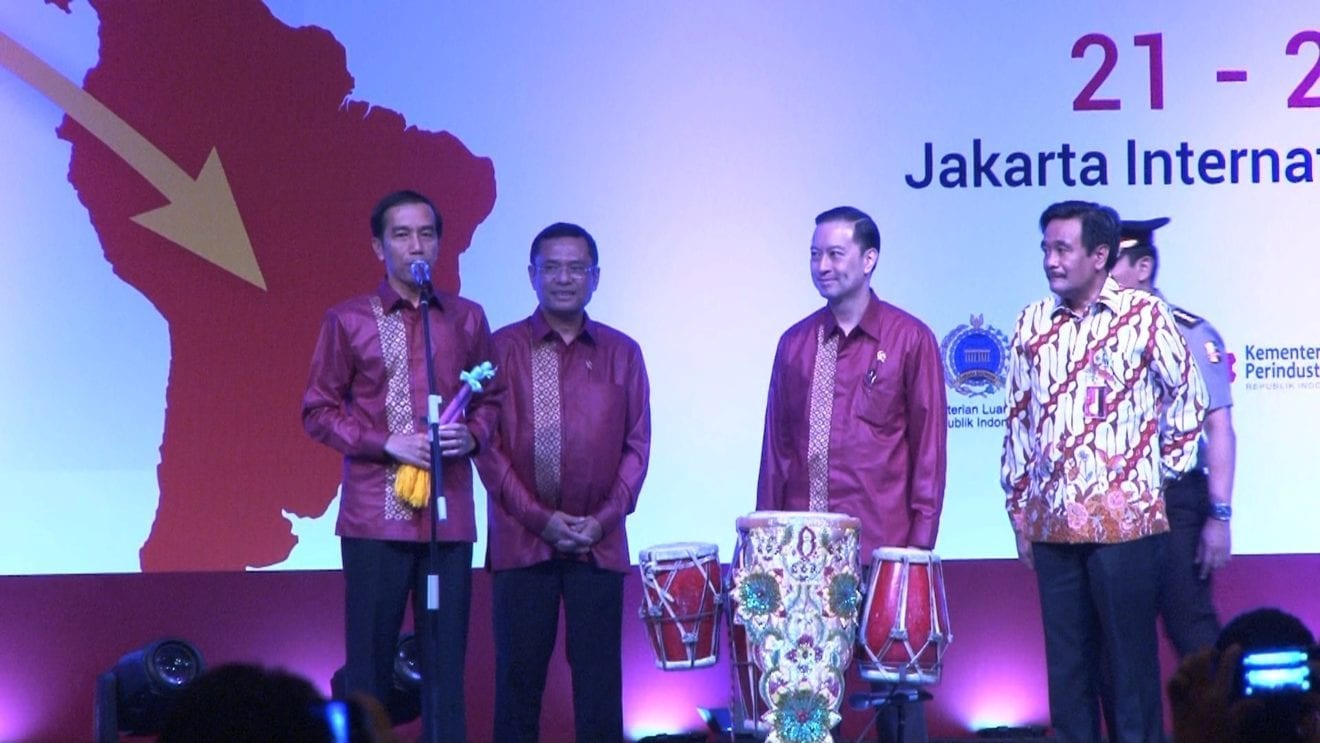
    Now into its second day, the Trade Expo Indonesia event has generated a total of US$186.69 million worth of transactions in the form of trade contracts.

    “Transactions worth US$178.7 million were signed on the first day while US$7.99 million worth of deals were signed on the second day,” informed the Trade Ministrys Head of National Export Development Arlinda in Jakarta, on Thursday.

    On the second day of the Expo, the buying mission contract signing was dominated by importers of food and beverage products from Australia.

    The signings were witnessed by Suprapto Martosetomo, Indonesias Ambassador to South Africa as well as the Kingdom of Lesotho, the Kingdom of Swaziland and the Republic of Botswana. The deals were signed by six importers from three countries, including Nigeria, Australia and South Africa, and eight local export businesses.

    In the pharmaceutical sector, Nigerias Jeijosh Pharma signed a deal with PT. Phapros, while Sony Trading Pty. Ltd signed a deal with PT. Mayora Indah.

    In the food and beverage products sector, PT. Pondan Pangan Makmur and PT. Sarimunik Mandiri signed a deal with Eastern Cross Trading Pty. Ltd and CV. Intrafood, while Hean Corporation and PT. Dua Kelinci signed a partnership in the same sector.

    Grein Australia Pty Ltd and PT. Sayap Mas Utama signed a deal for food and beverage products as well as consumer goods.

    Lastly, Wemco Investment & Trading Ltd and PT. KMI Wire and cable Tbk. signed a contract for wire products.

    A total of 37 trade contract signings were carried out between 30 importers from 16 countries and 34 local exporter companies based on the buying mission on the Expos second day.

    Essential oils and coconut milk were among the most sought after products and generated the most transactions, along with skilled workforce contracts from the services field.

    Other commodities that were also coveted by foreign importers included coffee, tea, cement, furniture, wires, food and beverage products, seafood, anti-fatigue mats, floor mats, cutting boards and modular tiles.

    Arlinda believes that this event has broadened Indonesias export opportunities in a number of markets, especially non-traditional ones.

    “We continue to work so that the Indonesian trade representatives contribute more overseas, while at the same time encouraging business makers to enhance the quality of their products because export opportunities are now very vast,” Arlinda remarked.

    The Trade Ministry aims for the goods trade transactions to reach US$800 million by the end of this Trade Expo, excluding the investment opportunities and services related transactions.

    It is hoped that overall, the total transactions signed can reach US$1 billion, exceeding the previous year’s figure of US$909 million of deals.

  • “11street’s Shocking Deals Come to Life”

    “11street’s Shocking Deals Come to Life”

    With intentions to localise and grow the business, 11street (www.11street.my), one of the largest online marketplaces in Malaysia, will be forming strategic alliances with Celcom as part of the company’s business expansion plans this 2016 with key focus on its revamped shocking deals section and enhanced online shopping mobile app .

    As 11street marks its first full year of business operation this April, the e-commerce giant would like to announce its latest synergy with Celcom at the media conference, tackling the following topics:

    • What is Celcom’s prepaid expansion strategy? How would 11street fit into the plan and vice versa?
    • How could Celcom grow its prepaid subscriber base through an e-commerce strategy?
    • How could the collaboration with Celcom benefit and impact 11street’s business?
    • What are the other 11street’s business expansion plans to Malaysianise the brand?

    Present at the conference is Mr Hoseok Kim, CEO of 11street who will be accompanied by the Chief Marketing & Sales Officer of Celcom Axiata, Zalman Aefendy Zainal Abidin. With this, we would like to cordially invite you to 11street’s Shocking Deals Come to life media conference as the leader in Malaysia’s e-commerce and telco industry discloses their strategies to localise and grow its business in 2016.

    Apart from that, 11street will be officially unveiling their new brand ambassador Zizan Razak, prominent actor-cum-entertainer and Elizabeth Tan, Youtube sweetheart-turned-singer, with irresistible deals through 11street’s 11 Days of Shocking Giveaway.