Retail News CRM

Tag: decathlon

  • Decathlon opened first Korean store

    Decathlon opened first Korean store

    The first Decathlon South Korea store has opened.

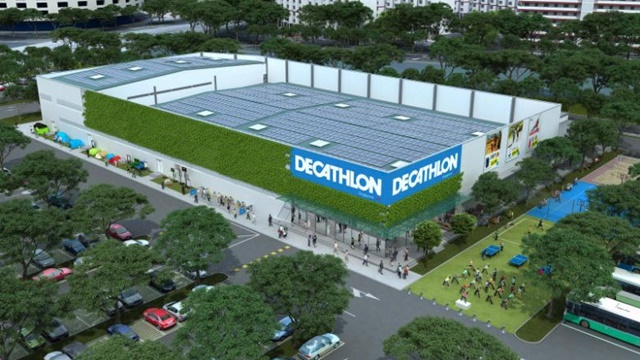
    The French-headquartered sports goods retailer is rapidly expanding its Asian footprint, last year opening its first store in Indonesia and in January planning its fourth Singapore store, a 5000sqm flagship.

    The new Decathlon South Korea store is takes up 7800sqm in Songdo, near Seoul. Its opening early this month coincides with the launch of its South Korean e-commerce platform. Four more outlets are in the works to be opened within two years.

    Stephane Guy, CEO of Decathlon South Korea, said: “Songdo is a sports city. There are many parks where we can run, walk and we have many families living here too. It‘s exactly what we wanted.”

    Decathlon operates 1415 stores in 47 countries.

  • Decathlon moves ahead with its US market return, plans first ‘full-scale’ store

    Decathlon moves ahead with its US market return, plans first ‘full-scale’ store

    Sports retailer Decathlon will open its first full-scale store in the US in the second quarter of next year, located in a former Toys R Us space.

    The 47,000sqft store will be located in Emeryville, in the San Francisco Bay area, California.

    In April, Decathlon opened a ‘lab store’ in Market Street, downtown San Francisco as a test platform. That store was just one-sixth the size of the new superstore and features 50 sports.

    “We strategically chose to open a smaller-scale store in the city before expanding to this larger retail center in order to better understand the needs of local sports enthusiasts and develop our interconnected retail and online experience,” said Decathlon US CEO Michel d’Humieres.

    “Our future store in Emeryville will feature more than 100 different sports and allow our customers to find everything they need to ‘get in the game’ in one stop, with plenty of opportunities to discover and try out new sports,” said d’Humieres. “Through this fun, interactive retail center, we are working to build a community around Decathlon in the Bay Area similar to what we’ve accomplished abroad.

    “Since our launch, we’ve had an enthusiastic response to our store and have developed a thriving relationship with the community, and we’ve decided it’s time to introduce the US to our first full-service Decathlon store environment.”

    In August, Decathlon launched an e-commerce platform for US customers and reportedly plans to open more full-range stores in other states.

    French-headquartered Decathlon operates more than 1400 stores in 42 international markets.

  • Decathlon announces first store in Victoria

    Decathlon announces first store in Victoria

    International sporting brand Decathlon has announced the launch of its first store in Victoria, Box Hill South, today confirming the store will open in late November 2018.

    The brand is one of the world’s largest sporting retailers, often likened to the Ikea of sporting goods, and originates from France.

    With 1200 stores across the globe in 30 countries and 80,000 staff worldwide, the sports giant said it’s focused on expansion in Australia.

    “We are extremely pleased to be expanding our presence across Australia,” CEO of Decathlon Australia, Olivier Robinet said today.

    “Building on the success of our website and our first store in Tempe, Sydney, we want to maintain the momentum by opening further stores across Australia.  The people of Australia have embraced our brand and we are excited about this.

    “Today, I am announcing that we will be opening up to five stores in Victoria over the next two years.”

    Arriving in Australia in 2017, Decathlon opened its first store in Tempe, New South Wales late last year. Since opening, the store has sold over 60,000 items on average per month, attracting 500,000 visitors per month and selling over 600,000 items to date in total including online sales.

    The first Victorian store will open in Box Hill South, 249 Middleborough Road, in late November 2018.

    “At the same time, we will also open our second store in New South Wales, 300 Parramatta Road, Auburn,” said Robinet.

    “In keeping with our generous warehouse design, the stores will be over 3800 square metres in size, represent over 70 sports and carry more than 7,000 different products, with walls and aisles lined with an endless array of unique and innovative items.

    “Australians are some of the most active people in the world, the whole country is like a playground. Prior to our arrival, many Australians had to spend hundreds of dollars to get a quality product. Decathlon has now changed this.

    “We offer high quality products at affordable prices with great service and interactive experiences in store.   Customers can try and test out our wonderful products in our ‘active zones’ and even take products home to try them for up to a week.

    “We employ many local staff and our whole team is focused on assisting customers to fall in love with sport and benefit from our great products, affordable prices and wonderful service.

    “Sport is a key ingredient for good health, good relationships and community engagement and we are excited to be opening stores in Victoria.”

  • SportSG partners Decathlon to house their Singapore Lab

    SportSG partners Decathlon to house their Singapore Lab

    In a collaboration with national sports agency Sport Singapore (SportSG), sporting goods retailer Decathlon Singapore is preparing to open its biggest store yet.

    In Stadium Boulevard in Kallang, the Decathlon Singapore Lab will pioneer the use of technology like virtual simulations and augmented reality in Asian retail. The brand’s fourth outlet will cover about 5000sqm when it opens in January.

    A memorandum of understanding has been signed by Decathlon Asia chief executive Yves Claude and his SportSG counterpart Lim Teck Yin.

    “Traditional retail is in trouble … customer expectations are changing very quickly,” says Claude. “They will not come just for the store’s layout.”

    For example, customers trying out shoes at Decathlon Singapore Lab will be able to have foot scans.

    “We want to do something different here, and that’s why we need the space. The experience will not be perfect immediately, but that’s why we are calling it a lab,” says Claude.

    The store has a 15-year lease from SportSG, which owns the land, and as part of the agreement to promote participation in sport the store will also feature events and clinics for customers in its free-to-play areas, as well as an Active Health Lab. These SportSG labs provide free health screenings.

    Decathlon will also continue to provide equipment and apparel to the 10 ActiveSG academies and centres throughout SIngapore. ActiveSG has more than 1.4 million members.

    The French company launched into Singapore with a store at Bedok in January 2016. It now has outlets at City Square Mall and the Fairprice Hub in Joo Koon, with the three stores attracting foot traffic of two million annually.

    Worldwide, the company has more than 1300 stores in more than 40 countries, up from around 1000 in 30 countries two years ago.

  • Decathlon lands in Australia

    Decathlon lands in Australia

    Following its announcement in October 2017 of its intentions to open 100 Australian stores, French sporting goods retailer Decathlon have officially opened its first, which is also its flagship, store in Sydney’s Tempe.

    This marks the arrival of a disruptive force within the sporting goods retail sector, with the company attracting substantial consumer demand, generating about $100,000 in sales each month, according to IBISWorld.

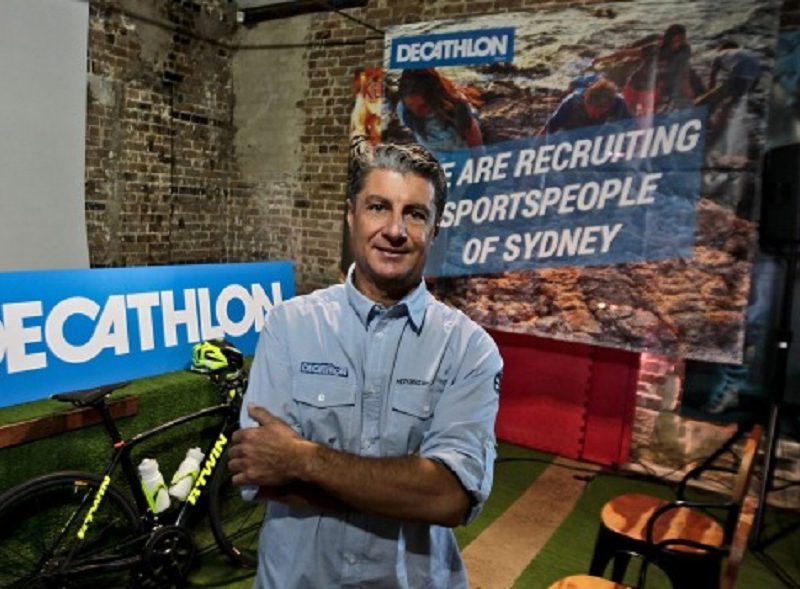
    Olivier Robinet,  the chief executive of the Australian arm of French sporting goods retailer Decathlon, promises a market disruption.

    Decathlon lands in Australia

    Decathlon has plans to open up to 100 stores in Australia, at a rate of about two to five stores per year. The price-savvy sports equipment retailer is expected to take market share from existing major players in the industry, including Rebel, Amart Sports, Kathmandu, BCF and Rays Outdoors, making it a major competitive force in years ahead.

    Decathlon primarily focuses on selling private label products at prices that are typically 50 to 70% cheaper than comparable branded goods, a model that has proven successful worldwide, with the company achieving annual sales of $15 billion across its e-commerce platforms and 1,200 physical stores in 30 countries, including the UK, Europe and Asia – and now Australia.

    Headquartered in France, Decathlon employs 80,000 staff globally and creates over 2,800 new sporting goods products and 40 patents every year.

    The Tempe store is over 3,800 square meters, with over 70 staff on hand, offering a range of more than 7,000 sharply-priced products across 70 sports and leisure categories, which is expected to attract strong demand from value-conscious consumers that enjoy activities such as camping, hiking, cycling and snorkelling.

    Camping and participation in outdoor and fitness activities have become more popular over the past five years, driving industry demand. However, demand has been somewhat constrained by negative consumer sentiment and sluggish discretionary income growth.

    Revenue for the sport and camping equipment industry is set to rise by almost 2% per annum over the next five years.

  • Decathlon Indonesia opens nation’s largest sports store

    Decathlon Indonesia opens nation’s largest sports store

    French sports equipment retailer Decathlon Indonesia has opened its first store, along Alam Sutera Boulevard in Tangerang City.

    Offering 2000sqm of retail space and 500sqm of community playground, it is the nation’s largest sports store. Before setting up the store, Decathlon Indonesia opened an e-commerce site.

    “In the next 10 years the local content in the store is planned to reach 50 per cent,” says Decathlon Indonesia CEO Jeremie Ruppert. “We believe the advancement of Indonesian industry can help us to localise Decathlon products with good quality.”

    He says the country’s landscapes, mountains and ocean access plus a love of sports activities ensure a potential market for the French brand.

    Founded in 1976, Decathlon has more than 1200 stores in more than 35 countries.

  • Decathlon opens first store In Hong Kong

    Decathlon opens first store In Hong Kong

    French sports supplies retailer Decathlon has opened its first physical store in Hong Kong.

    Located in Grand Plaza, Mong Kok, the new Decathlon store will provide over 10,000 kinds of products for over 70 sports, including climbing, fitness, running, golf, diving, and skiing.

    Prior to this, Decathlon already operated businesses in Hong Kong as a manufacturer., but not as retailer, to the chagrin of Hong Kong shoppers.

    Google Maps often displayed Decathlon’s office in Kowloon as a retail outlet, and this caused confusion for shoppers who hoped to visit a Decathlon retail outlet.

    The best method for Hong Kong shoppers to purchase Decathlon goods was to either visit the nearby Chinese city of Shenzhen or order goods online via Decathlon’s Taobao.com e-commerce shop.

    In 2015, Chinese media reports that the French company officially launched its e-commerce store in Hong Kong by establishing a dedicated website and online sales platform, but the company appeared to provide poor communication to consumers about this store because many were unaware of its existence and had to instead purchase from Taobao.com.

    With the opening of this new physical store, Decathlon expects to offer its complete sports ideas and unique shopping experience to residents in Hong Kong.

    According to Decathlon’s report published in February 2017, the company realized global operating revenue of over EUR10 billion in 2016, representing a year-on-year increase of 4.4%. By the end of 2016, Decathlon had 1,176 physical stores in 28 countries and regions around the world.

    In the Asia Pacific region, Decathlon values the Chinese market the most. The company has a full industrial chain layout in China, covering product design, research and development, production, logistics, brand, and retail.

    Based on its experience in China, Decathlon also opened physical stores in Thailand, Malaysia, and the Philippines. The company plans to enter Australia in October 2017.

  • Decathlon Opens First Store in the Philippines

    Decathlon Opens First Store in the Philippines

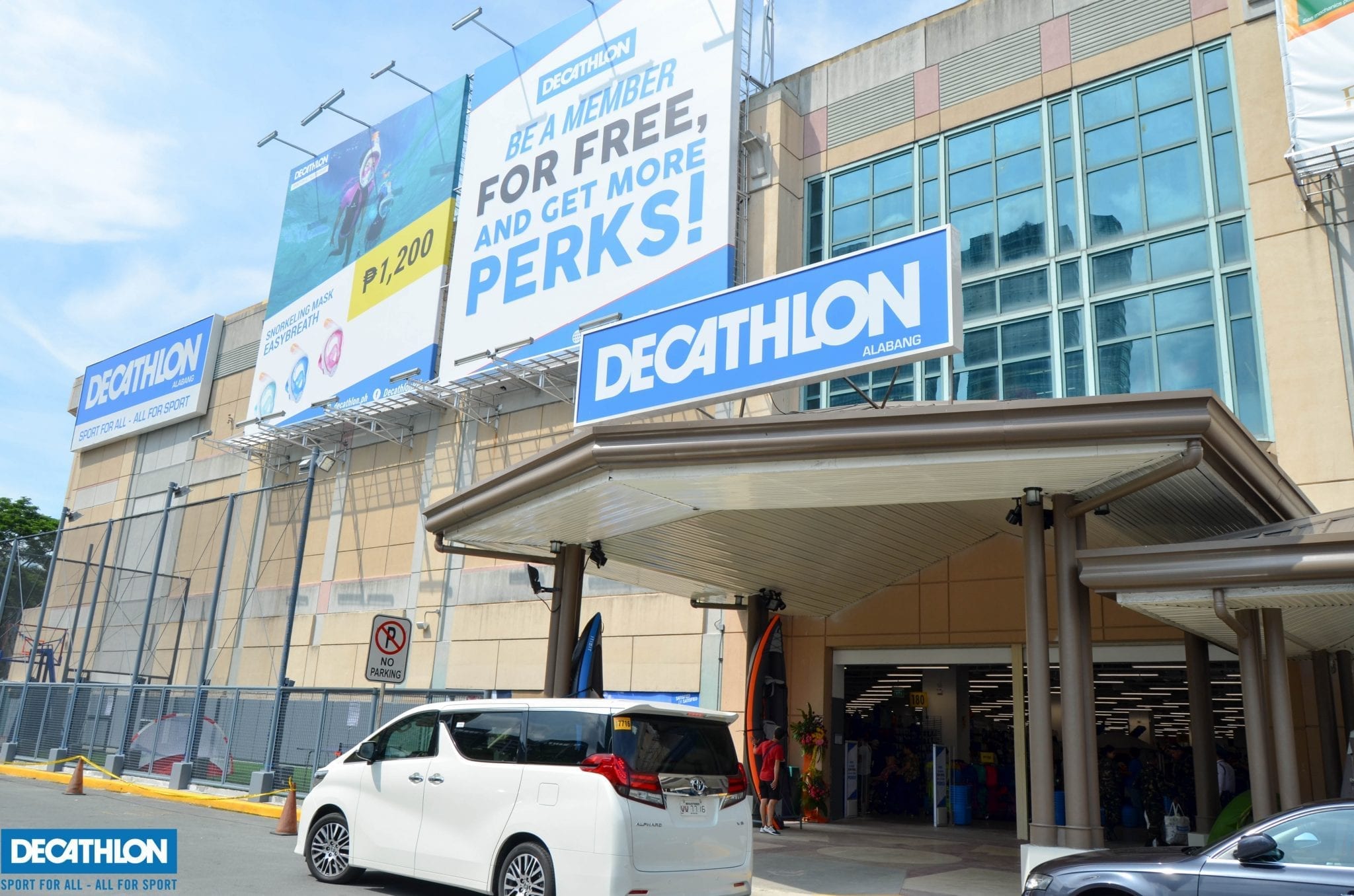
    Decathlon, one of the world’s largest sporting goods retailers, is taking another step to realizing its tagline—”Making Sports Accessible to the Many”—when it will officially open its first Philippine store in Manila on June 30.

    Founded in France in 1976, the retail giant currently has more than 1,200 stores and operates in over 30 countries. Decathlon’s Alabang branch in Muntinlupa City Metro Manila marks the company’s 16th store in Southeast Asia, and the first of many more stores the company plans to roll out in the Philippines.

    Over the next 10 years, Decathlon plans to expand to other key cities, such as Cebu, Davao, Iloilo, and Legazpi.

    “We have been interested in the Philippines for quite some time now,” says Hans Iff, CEO of Decathlon Philippines. “As the country’s economy has gotten more robust and consumers are becoming more wellness-conscious, it is the right time to invest.”

    According to a McKinsey report, the sports industry in the Philippines is projected to multiply four times over the next twenty years, reaching €1 billion by 2026. With a growing younger population, an emerging middle class, and increased infrastructure spending, the World Bank Group expects the country’s real GDP to grow at a rate of 6.9 percent in 2017 and 2018.

    A core part of Decathlon’s operations is an investment in in-house, consumer-focused products, called Passion Brands. Each of the company’s 40 Passion Brands represents a different sport or group of sports, with a dedicated team that is responsible for the research, design, development, and testing of their product.

    “We want Decathlon to become one of the most loved brands in the Philippines. Thanks to the innovation and unbeatable value of our passion brands, we will continue to deliver the best quality and safety to guarantee customer satisfaction,” says Iff.

    The company places particular emphasis on recruiting people that share our company values: passionate about sports, service-minded, and autonomous. Managers at Decathlon work closely with their staff, encouraging them to make decisions and take on more responsibilities. “We believe satisfied customers start with satisfied employees,” says Iff. “Our employees are given the room to make mistakes and grow in their roles.”

    Decathlon Philippines is also investing in the local ecommerce market, allowing customers to purchase goods from their website. “Our physical stores are part of our omni-channel strategy to help us interact and serve our customers better. As consumer shopping behaviours and expectations are changing, we want to offer a seamless user experience, both in-store and online.”

    Through all of its platforms and brands, Decathlon is committed to creating value for its end users, employees, partners, and citizens wherever the company is present.

    The company is also looking to manufacture some of its products in the Philippines. “We aim to setup factories in the near future for the production of goods sold locally,” says Iff. “The Philippines already has the infrastructure in place for certain processes, such as heavy stitching and injection moulding for shoes.  And we have already made plans to locally produce a Bluetooth communication kit for Easybreath —our innovative snorkelling mask that lets you breath through your nose.”

    Decathlon Philippines actively supports the local community by investing in community development programs and partnering with NGOs and non-profit organizations. The company also recruits local underprivileged youth who have the opportunity to become Decathlon employees after undergoing a series of training. As part of their long-term vision, the company is seeking to collaborate with such youth for the design and development of certain new goods tailored for the Philippine market.

    “In a country where natural resources are limited, we want our stores to be as eco-friendly as possible,” says Iff. “The objective in the middle term is to build our stand-alone concept store with a minimal impact on the environment, through the reduction of energy consumption, the optimization of waste treatments and other strategies.”

    Aside from the brand’s corporate responsibility initiatives, their stores are famous for the sheer variety. The 3,000-square-meter store occupies the ground floor of Festival Mall in Alabang and stocks goods for 70 different types of sports. Aside from popular sports like basketball, running, diving, hiking, and cycling, Decathlon will also provide products that support the Philippines’ national and traditional sports like Arnis and Sipa.

    Customers can even try out products before buying. All Decathlon stores in the Philippines will contain a large playground spanning more than 400 square meters, which will be free and accessible to all customers. Sports activities will also be organised onsite to promote healthy living and fitness for store visitors.

    “Ultimately, the store was designed to enhance customers’ brand experience, inviting them in to touch, feel and see the quality of our products, the latest innovations, while discovering new sports.”
  • Decathlon to open first Hong Kong stores in August

    Decathlon to open first Hong Kong stores in August

    Decathlon will open its first Hong Kong store this year, with plans for two locations – one in Mong Kok and the other in Causeway Bay.

    The French multibrand sports retailer will bow its first Hong Kong stores in Mong Kok Grand Plaza Basement and Causeway Bay Park Lane, according to a post on Decathlon Hong Kong’s Facebook account.

    While store specifics or dates have not been given, Decathlon Hong Kong said the openings would take place in August.

    “Finally, your new sports stores open in August,” said a post on Facebook.

    Decathlon first entered Hong Kong in 2015 with the launch of country-dedicated website and e-commerce platform.

    In February 2017, the French group reported a 12% lift in revenues during 2016 (+4.4% on a like-for-like basis), reaching 10 billion euros, excluding taxes.

    Earlier in the year, it launched sub-brands Itiwit — a paddle-board line, and Subea — an underwater sports brand, to bolster its current sporting goods offering

    A recent report published by corporate finance advisory firm Capitalmind pinned the global sporting goods market at $388 billion in 2015, up 5%. The report said Intersport, Decathlon and Foot Locker currently dominate the sporting goods distribution market worldwide.

  • Decathlon opened its biggest Singapore store

    Decathlon opened its biggest Singapore store

    Sporting goods retailer Decathlon‘s biggest store yet in Singapore has opened its doors on Saturday (May 13) morning.

    Already boasting two mega stores here in the Republic – one at City Square Mall and another at Bedok, its third and largest outlet is located at the FairPrice Hub, Joo Koon.

    Spanning 4,000 square metres of sporting retail space, the outlet will also be the site of Decathlon’s new e-commerce hub which will provide a multi-channel sales experience.

    Shoppers can order items online through its new website which will be launched in June. Sports advisers on site will pick the items directly in the store and package them for delivery within the same day. It is aiming for delivery within six hours.

    Shoppers can also opt for the “Click and Collect” option and pick items up from any of Decathlon’s three stores.

    Additionally, the store has 10 experience zones and Singapore’s first slack line, golf-putting green, mini-football arena and a running track with two different surfaces. Customers will be able to test equipment before purchasing them, and can return equipment if unhappy with the product.

    “Since we launched our first e-commerce and retail store in Singapore, we have seen a remarkable response from Singaporeans,” said Bastien Grandgeorge, Decathlon Singapore’s country leader.

    “Here we have 62 sports, and all under the same roof. We want the best experience for our customers and accessible sport for all.

    “Even if you’re not wealthy, anyone should be able to access sport.”

  • Decathlon will open first Australia store in October, plans 100 stores

    Decathlon will open first Australia store in October, plans 100 stores

    Decathlon will open its first Australian store this October in Sydney, with plans to have 100 operating stores downunder in the next five to ten years.

    The sporting goods and apparel retailer will open its first Australian flagship store in Sydney. Located in the suburb of Tempe, the 3,800 square-metre space will be sat next to furniture giant Ikea. The lot is currently under construction, with plans to open this October, Decathlon executives told local media this week.

    According to an article published by Australian Financial Review on Tuesday, Decathlon Australia‘s chief executive Olivier Robinet confirmed that the French firm hopes to open between two and five stores a year for the next few years.

    Decathlon first entered the Australian market back in February 2016, with the launch of an Australia-dedicated website and e-commerce platform.

    The Australian sporting goods market is currently fed by locals Rebel Sport, Athletes Foot, and New Zealand outdoorwear firm Kathmandu, a market Decathlon wants to crack.

    In February 2017, Decathlon reported a 12% lift in revenues during 2016 (+4.4% on a like-for-like basis), reaching 10 billion euros, excluding taxes.

    Earlier in the year, it launched sub-brands Itiwit — a paddle-board line, and Subea — an underwater sports brand, to bolster its current sporting goods offering.

    A recent report published by corporate finance advisory firm Capitalmind pinned the global sporting goods market at $388 billion in 2015, up 5%. The report said Intersport, Decathlon and Foot Locker currently dominate the sporting goods distribution market worldwide.

  • Decathlon China building biggest flagship yet

    Decathlon China building biggest flagship yet

    French sports goods retailer Decathlon will open its first two-story flagship in Luoyang as it expands its Greater China footprint.

    When complete, it will be the sports retailer’s second store in the city, located in the province of Henan – and its largest store yet in China.

    The new Decathlon China store will be located at the intersection of Huashan Road and Hangong Road in Xigong district. It boasts 13,000 sqm of retail floor space and include a playground for children.

    Decathlon, which opened its first two stores in Singapore this year as part of a new Asia-wide focus, is a full-line sports supplies retailer which also designs, manufactures and wholesales products. It has more than 1300 stores in 32 countries and plans to have 220 stores trading in 100 Chinese cities by the end of this year.

  • French sports equipment store Decathlon making big foray in Malaysia

    French sports equipment store Decathlon making big foray in Malaysia

    French sports equipment chain store, Decathlon, is embarking on an aggressive expansion in Malaysia by targeting to open up to 60 stores within the next decade. Decathlon Malaysia chief executive officer Tom Meng said the expansion was in line with the company’s global strategy to triple its stores worldwide to 3,000 in the next 10 years from 1,000 currently.

    “For the first three years in Malaysia, we will open 10 stores with at least five in the Klang Valley,” he told Bernama at the launch of the company’s maiden Malaysian store in Kuala Lumpur recently. He, however, declined to reveal the investment commitment for the expansion.

    Meng said the company would also expand to other locations nationwide with Penang and Johor among the targeted destinations. He said the company’s strategy in the country was to open large stand-alone stores with retail areas of up to 6,000 sq m and offering only in-house brands. “Currently, we have over 20 such in-house brands,” he added.

    On its first store, Meng said the outlet, classified as a “retailer flagship store”, covered an area of over 2,500 sq m and offers more than 95,000 apparel, equipment and footwear products at competitive prices.

    Established in 1976, Decathlon currently has a presence in over 30 countries and has a staff of 70,000 globally. Malaysia is the third country in Asean to house a Decathlon store after Singapore and Thailand.

  • Why Singapore is deemed as the failure market for Decathlon

    Why Singapore is deemed as the failure market for Decathlon

    French sporting house Decathlon is a relatively young player in the local retail scene, opening up its store earlier this year. The brand entered the retail scene at a point many established players were pulling out.

    The launch came after it had already established an e-commerce practice for nearly two and a half years to “painstakingly” understand and collect consumer data from the market. It is safe to say when Decathlon started up in Southeast Asia, the public did not really know it was a sports retailer.

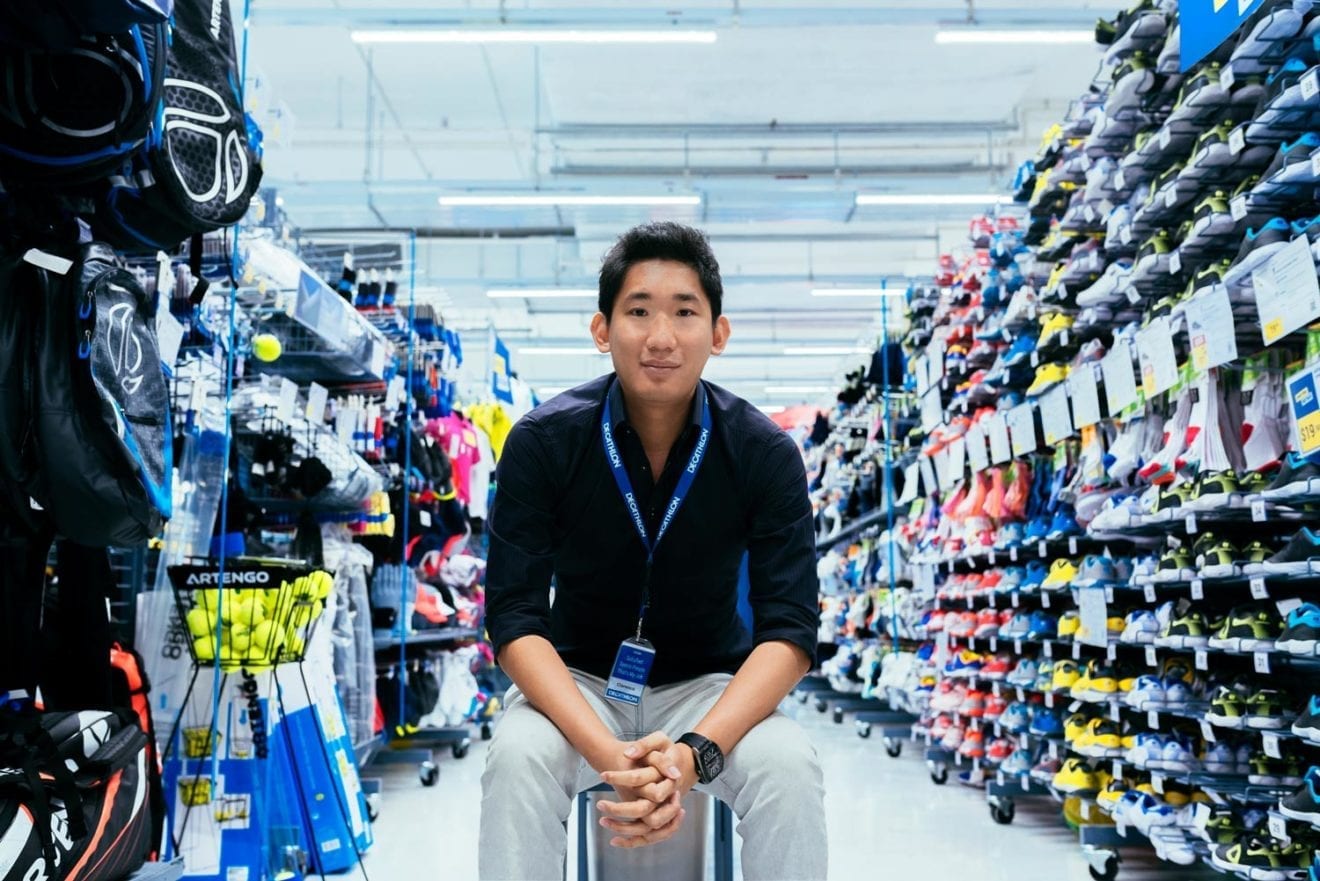
    This, admits Clarence Chew (pictured) , head of marketing and communications at Decathlon, was one of the biggest problems.

    “E-commerce is not easy and was a struggle when you are selling products that people don’t actually need. People didn’t care about us. If they saw online that the product was too cheap, they would think it isn’t of quality; too expensive, and they wouldn’t want to spend. So our problem was how do we tell customers we are here?” he said, at a recent event hosted by OgilvyOne called “Delivering consumer value in an era of Disruption”.

    The brand decided to be part of the discovery process using a multi-channel approach. It was wherever consumers were looking and ensured it was part of the consumer journey.

    What also helped Chew in this process was the senior management was able to see e-commerce as part of the customer journey and not as a separate entity from the retail function. As such the goal was more synergistic.

    He added, “It wasn’t a push but rather a pull factor for us that drew customers.”

    Another big sigh of relief for Chew was when he was able to successfully convince the senior management to make Singapore a “failure market” for the brand and  use it as a test bed for all things new and shiny in the digital landscape. After all, failure is vital to any great discovery and innovation. He said:

    “In Singapore, I can do whatever I want with any budget I want. And I will not be blamed if it fails.”

    Chew explained the country was chosen for its dense and diverse population. The city-state structure worked to the brands’ benefit and there was a healthy mix of old and young and locals and expatriates. This helped the brand see the contrast between old school marketing tactics and new shiny toys and figure out what really works.

    “Singapore  is a nice drawing board. Chances are if it works here, all the other countries like Malaysia and Indonesia will all eventually embrace it,” he added. But for every other country, clarified Chew, he would still need to meet the regular KPIs and carry out customised marketing.

    Bringing change internally

    Another challenge Chew faces, is getting people on board to try new ideas. He said:

    “Even if you have a CEO willing to adopt stuff, you have many other people in the organisation who don’t know and don’t care or won’t agree.”

    Agreeing with him was panelist Tony Menezes, VP of Cognitive Solutions at IBM, who also added that the country’s safe nature helped companies come up with creative solutions and ideas without as high a fear of intellectual theft. Ultimately even if technology is available, companies need to be willing to embrace it.

    “Companies need to recognise the disruptive idea will come from day to day interaction with customers and employees. Figure out how to tap into that source,” Menez said.

    For IBM, even today, the company is holding a new contest cognitive bill where employees came up with ideas to make the company a cognitive company across industries. IBM has 50 ideas from it which will come down to 10 to potentially explore.

    Ultimately if the culture of innovation has to be embraced across all levels from top to front-line in a company. When asked by the audience if building relationship is tough in a disruptive world, he said:

    “Brands that have an affiliation with consumers and communicate clearly how they plan to protect personal data, will earn the trust of consumers.”

    He explained that the commonalities amongst the many brand hacks and online breaches in recent years show that leading companies address the problems head on and share a direct strategy  with consumers rather than sit idle.

    “If consumers know that when they opt in they will get something in return from the brand and the brand is clear about it, they will get more trust.”

    And sometimes the best way to do this is to ask. As Todd Kurie, VP of marketing at RedMart, who was also on the panel said:

    “Even relatively old-school tactics like surveys can go a long way to show you are listening”

    He added the brand is a huge believer in simply asking consumers what they want.

  • Is French Company Decathlon Looking to Invest $500M in Indonesia?

    Is French Company Decathlon Looking to Invest $500M in Indonesia?

    Indonesia’s struggling textile and garment sector could get a badly needed dose of investment. A French company specializing in sports apparel has plans to pump $500 million into the archipelago.

    Franky Sibarani, chairman of the Investment Coordinating Board (BKPM), did not disclose the name of the company, but revealed that it’s based in Lille in northern France.

    “Not only will the company market its products domestically, it will also export to other department stores overseas,” Sibarani said, noting that the unnamed company had reached out to BKPM’s representative in London and the organization intended to communicate directly with the potential investors.

    Nurul Ichwan, BKPM’s investment promotion rep in London, told Jakarta Post that the company expects to operate its first department stores in Malaysia and Indonesia this year.

    All signs point to Decathlon, a 40-year-old sporting goods and apparel retailer that sells several of its own brands and has more than 1,000 stores worldwide. It has its head office in Villeneuve-d’Ascq, close to Lille, and the company raked in 9.1 billion euro (or $10.1 billion) in 2015. It’s also opening its first Malaysian location in April and is currently hiring retail staff in Indonesia.

    A half-million dollar investment is money the country’s textile industry could do with. According to government data, garment shipments dropped by almost 11 percent last year, as Indonesia fell to fourth place as a source of U.S. apparel imports (behind China, Vietnam and Bangladesh) in the first 11 months of 2015 with just 5.8% of the year-to-date total.

    That could fall further if the 12-nation Trans-Pacific Partnership (TPP), which Indonesia is not part of, comes into force. To that end, BKPM is urgently pursuing European investors, targeting the U.K., Germany, Netherlands, France, Spain and Switzerland.