Tag: deepseek

  • China Tech Stock Slide Wipes Out 3 Trillion Dollars in Household Wealth

    China Tech Stock Slide Wipes Out 3 Trillion Dollars in Household Wealth

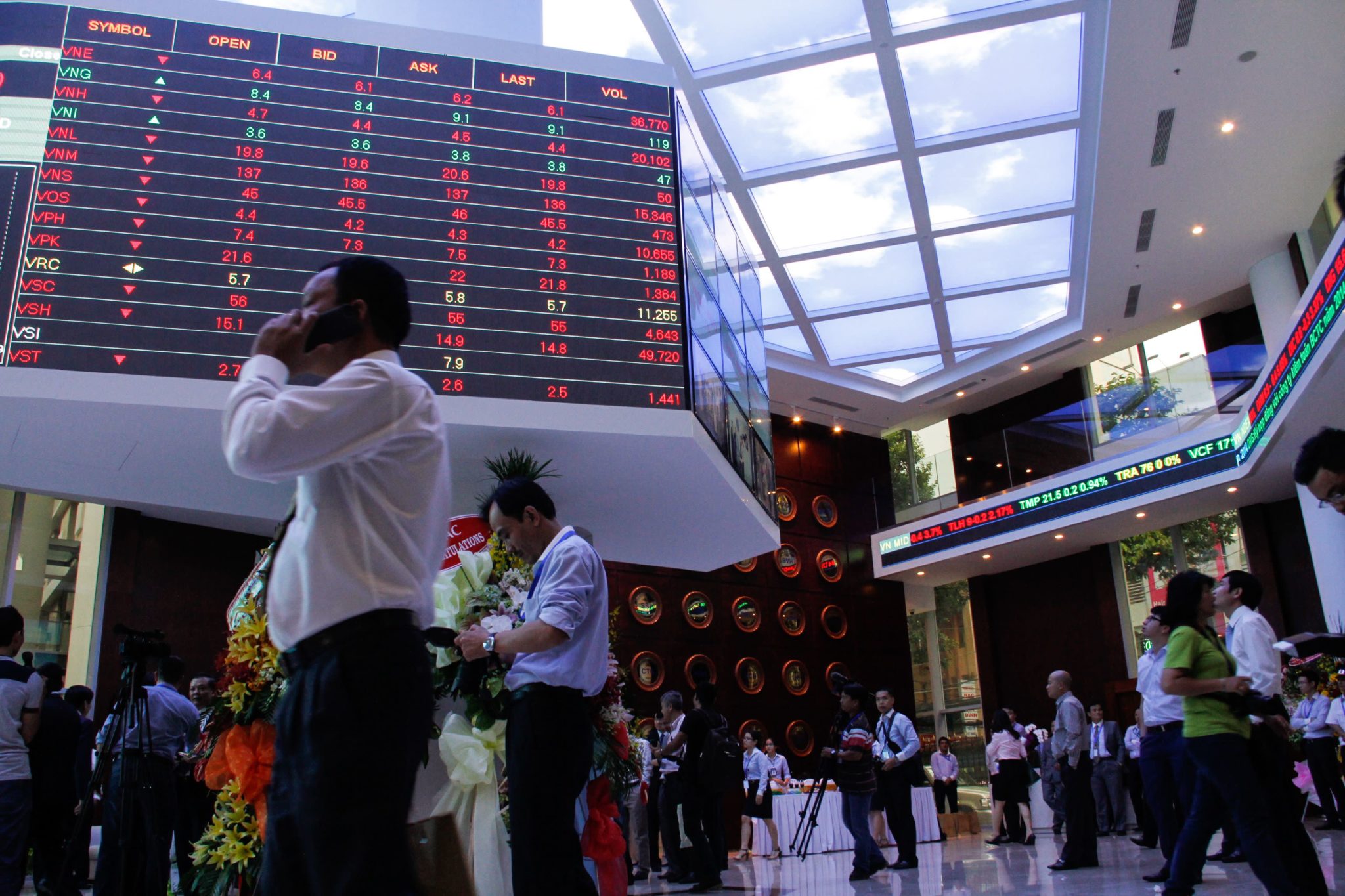
    Chinese equities entered a bear market after shedding more than $3 trillion in market value, wiping out a year of tech-driven gains for approximately 250 million domestic retail traders.

    Trading volumes dried up across mainland exchanges following the longest unbroken selling streak on record, pulling major benchmark indices back toward levels recorded before Beijing introduced stimulus support in 2024.

    Individual accounts hold roughly 30 percent of Chinese equities by value but generate approximately 70 percent of total market turnover. That structural imbalance magnified swings throughout 2026, when millions of day traders rushed into initial public offerings tied to artificial intelligence, robotics, and semiconductors. Many of those listings were oversubscribed thousands of times over during the initial surge, before aggressive institutional selling quickly cut valuations.

    The Industrial Policy Trap

    State priorities continue to trigger aggressive capital allocation into targeted technology fields, but that factory floor expansion rarely safeguards margins for public shareholders. Local administrations across China race to fund identical supply chains, creating rapid manufacturing capacity that strips operating companies of basic pricing power.

    For consumer brands and retail operators, the equity retreat removes a vital support for household balance sheets already pressured by a multi-year property contraction. Domestic consumers who turned to equity trading to recoup residential real estate losses now face dual balance-sheet erosion, restricting discretionary spending across major metropolitan centres.

    Returns Lag Global Peers

    Over the past decade, the benchmark CSI 300 Index generated an average annual return of 4.2 percent, compared to 15.6 percent for the US S&P 500 Index. That performance trailed despite China expanding its nominal gross domestic product by roughly 7 percent annually over the same ten-year window and producing global manufacturing leaders like BYD and DeepSeek.

    “Policy support can build capacity without giving companies the pricing power to protect margins. It began as an earnings problem and has become a confidence problem.”

    Individual traders burned by volatile momentum trades have cut exposure dramatically. Allen Sun, a cross-border trade professional, reduced his domestic stock portfolio from a peak of 1 million yuan down to 100,000 yuan ($14,990), citing structural distrust in primary fundraising practices that favour early founders over secondary market participants.

    State Intervention Stalls

    State-backed funds known as the national team resumed direct equity purchases this week to halt the decline, while financial regulators deployed cheaper funding channels to encourage share buybacks. The response proved tepid, lifting the CSI 300 by less than 3 percent over the week as institutional managers continued unwinding positions.

    Professional domestic funds operate under tight quarterly performance cycles, prompting portfolio managers to dump speculative tech holdings at the first break in momentum rather than holding through extended drawdowns. Short-selling restrictions leave few hedging tools available, reinforcing sharp one-way selloffs across onshore bourses.

    The benchmark CSI 300 remains pinned near multi-month lows as market participants assess whether state capital purchases will expand beyond current intervention levels before the end of the final trading quarter.
  • Huawei Cloud Retires 2 openPangu Models from Model-as-a-Service Platform

    Huawei Cloud Retires 2 openPangu Models from Model-as-a-Service Platform

    Huawei Cloud will shut down commercial access to its openPangu-2.0-Flash and openPangu-2.0-Pro AI models on its Model-as-a-Service platform, ending sales on November 6 and terminating all hosted calls on November 30.

    The cut comes four months after Huawei open-sourced the 505-billion-parameter Pro version, forcing enterprise customers running consumer analytics and internal search workloads in its Southwest Guiyang cloud region to switch tools before December.

    New customers cannot buy or activate either model service after midnight on November 6, while existing accounts retain operational access only through the end of the month. Huawei Cloud directs accounts using openPangu-2.0-Flash to DeepSeek-V4.1-Flash-1017 as their replacement, while routing openPangu-2.0-Pro users to Zhipu AI’s GLM-5.3.

    Migration Demands and Technical Friction

    Engineering teams face immediate rewrite costs. Huawei Cloud noted that the replacement models carry different API parameters, cost structures and output profiles, requiring developers to retest task pipelines rather than swap endpoints blindly.

    Software setups built on the company’s early MaaS standard API V1 must be rewritten to work with an OpenAI-compatible endpoint. Teams already on API V2 or an OpenAI-style interface need to alter model identifier calls.

    Retail commerce platforms relying on openPangu for live inventory categorisation or chatbot assistance now have less than a month to validate replacement models. Changing baseline models often alters latency profiles and customer response formats across live digital storefronts.

    Rival Platforms and Vendor Strategy

    The decision to retire homegrown models while recommending independent rivals highlights the fierce pace of platform rationalisation across China’s cloud ecosystem. Rather than carrying the operational cost of maintaining earlier foundation models, cloud providers now drop their own releases rapidly in favour of top-performing external open weights.

    DeepSeek and Zhipu AI gain immediate enterprise volume from the shift. Huawei Cloud’s public embrace of DeepSeek-V4.1-Flash and GLM-5.3 confirms that third-party open architectures are setting operational benchmarks on Chinese sovereign server hardware, even inside Huawei’s proprietary Ascend computing clusters.

    Platform developers bear the stability risk. By cycling through model versions within single-digit months, platform operators transfer the cost of code maintenance, integration testing and deployment downtime onto enterprise software clients.

    Rapid Model Turnover on Ascend Hardware

    Huawei made openPangu-2.0-Flash public on June 30 with 92 billion parameters, followed by the 505-billion-parameter openPangu-2.0-Pro sparse model on July 31. Both variants were tailored for Ascend neural processing units, accompanied in late September by the release of complete pretraining, supervised fine-tuning and reinforcement learning source code.

    The company’s hosted platform has cleared out earlier systems at a comparable pace throughout the autumn. Huawei Cloud scheduled GLM-5.1 for removal on November 16, switched DeepSeek-V4-Flash accounts to version 4.1, set Kimi-K2.6 for retirement on November 8, and pulled DeepSeek-V4-Pro from hosting in September alongside older Qwen and Wan models.

    The retirement schedule applies strictly to managed API services hosted out of the Guiyang data centre, leaving the underlying open-source weights and training code available in public repositories for teams running their own compute stacks.

    Software teams on Huawei Cloud must finish transitioning their active workloads to the DeepSeek and GLM services before the Guiyang cluster unplugs both openPangu endpoints at midnight on November 30, while Huawei prepares a successor generation of Pangu models without a public release date.

  • Zhang Yiming Tops China Wealth List with Nearly $100 Billion Fortune

    Zhang Yiming Tops China Wealth List with Nearly $100 Billion Fortune

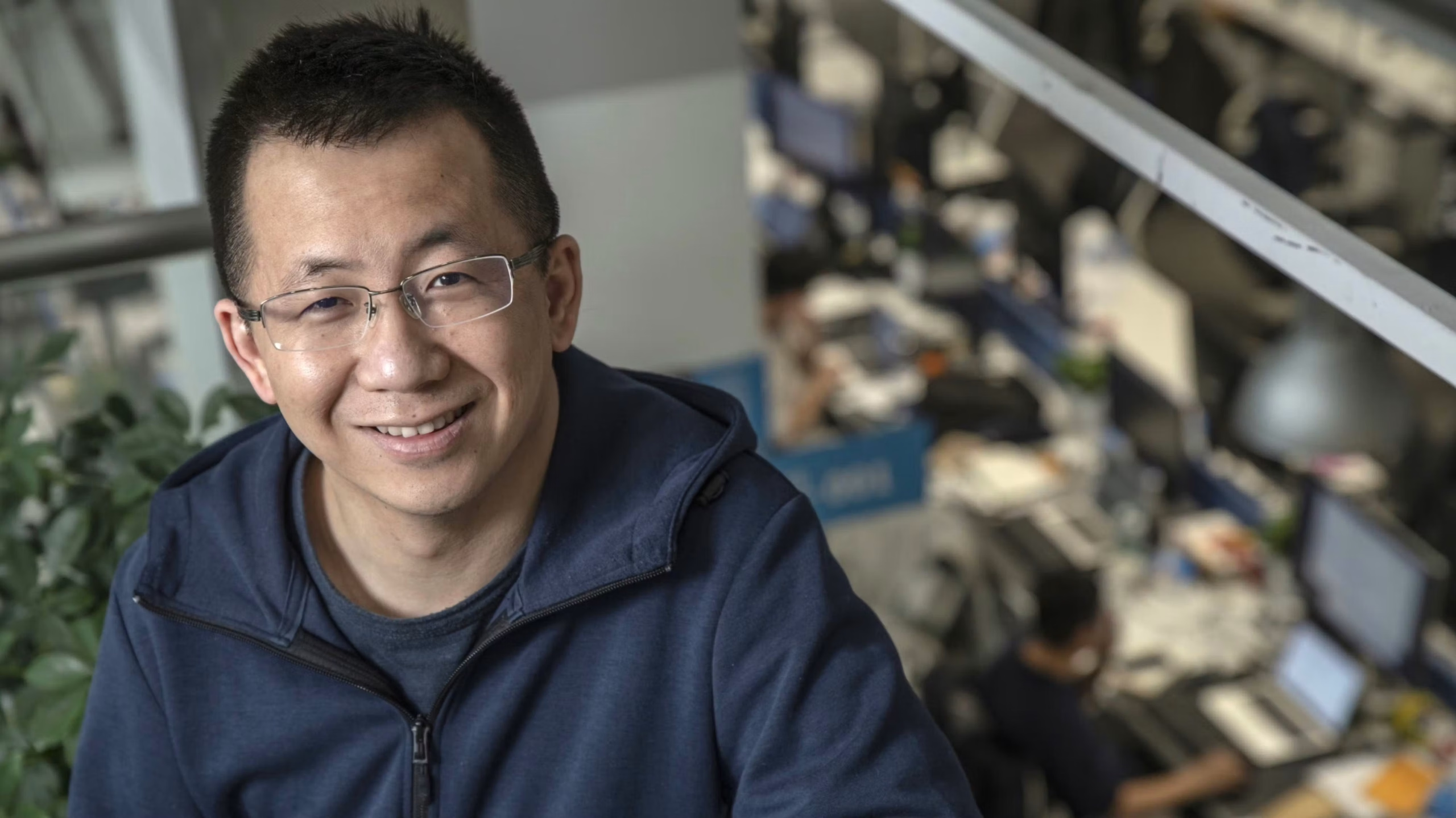
    ByteDance founder Zhang Yiming has regained the top spot on China’s wealth ranking with a fortune of nearly US$100 billion, driven by artificial intelligence deployment across his consumer technology empire.

    His net worth surged 43 percent over the past year, displacing bottled water magnate Zhong Shanshan after consumer goods company Nongfu Spring saw its founder’s valuation drop 23 percent to $61 billion.

    The annual Hurun China Rich List, published Tuesday by the Shanghai-based Hurun Research Institute, tracked 1,529 individuals holding fortunes above 5 billion yuan ($750 million) as of Sept. 1. Mainland real estate operators dropped entirely out of the top 100 ranks, completing a decadelong transformation in the engines driving Chinese capital.

    Artificial Intelligence Reshapes Top Ranks

    About 160 individuals on the roster, roughly 10 percent of the total cohort, generated their primary wealth through artificial intelligence applications and foundational hardware. ByteDance accelerated that momentum through consumer-facing tools, deploying the Doubao chatbot into China’s most active automated assistant alongside video-generation software Seedance.

    Newer entrants took immediate command of the top ten. DeepSeek founder Liang Wenfeng, 41, entered the ranking at seventh position with $41.7 billion. Chen Tianshi of semiconductor designer Cambricon Technologies broke into the top 10 for the first time with $30.5 billion, climbing 14 percent.

    Both men now share the distinction of being the youngest self-made entrepreneurs inside the top tier. Zhang, 43, previously held that position.

    Consumer Tech and Hardware Displace Real Estate

    Traditional manufacturing and tech heavyweights shuffled positions behind the top two. Contemporary Amperex Technology founder Robin Zeng Yuqun took third place at $57.3 billion, advancing 17 percent as energy storage demand expanded. Tencent founder Pony Ma Huateng slipped to fourth after his holdings dropped 26 percent to $51.5 billion.

    Appliance manufacturer Midea lifted co-founder He Xiangjian into fifth place. He displaced Xiaomi founder Lei Jun, whose personal valuation dropped by roughly half following market volatility across consumer device lines.

    Hurun Report chairman and chief researcher Rupert Hoogewerf documented the disappearance of residential real estate developers, who accounted for one-third of the top 100 a decade ago. Mainland property names vacated the elite threshold, leaving traditional landlord representation almost solely to established Hong Kong dynasties.

    Today, for the first time ever, not a single mainland property developer remains in the Top 100, the only property names left at the top are the Hong Kong landlord families

    Shifting Capital for Retail and Commercial Operators

    For Asian retail brands and commercial operators, the complete exit of mainland developers marks an irreversible shift in balance-sheet power. Shopping mall construction and commercial master leases across top-tier Chinese cities no longer lean on aggressive land-banking syndicates. Capital flows instead follow software ecosystems, high-efficiency appliances, and hardware components.

    Retail brands across Asia-Pacific face direct exposure to this realigned influence. ByteDance, Tencent, and hardware players dictate consumer acquisition costs and social commerce funnels, leaving commercial landlords with diminishing use over brand tenants. Commercial real estate in Greater China now answers to digital platform power rather than physical site scarcity.

    Hong Kong real estate magnate Li Ka Shing, 98, alongside his son Victor Li Tzar-kuoi, retained a presence in the upper tier with $37.6 billion, up 8 percent. Their persistence reflects mature, diversified infrastructure holding models that survived the residential developer debt unraveling on the mainland.

    The Long Unwind of Property Fortunes

    The transition began after regulatory tightening dismantled debt-fueled expansion strategies among mainland developers. Wealth figures tumbled over multiple assessment cycles, dragging property founders off the boards as credit channels dried up and homebuyer transactions slumped.

    Zhang last held the top position in 2024 before brief market contractions reordered the roster. ByteDance expanded its global digital commerce revenue alongside domestic video and messaging traffic throughout the intervening period, shielding its equity value from regional property fallout.

    Commercial landlords and retail chains will watch ByteDance’s commercial monetization pacing across Doubao and enterprise AI tools in the coming quarters, alongside Nongfu Spring’s ability to protect core beverage shelf pricing against domestic discounters.

  • DeepSeek Releases Model V4.1 Flash Update and Opens Serving Framework

    DeepSeek Releases Model V4.1 Flash Update and Opens Serving Framework

    DeepSeek announced an updated V4.1 Flash artificial intelligence model alongside an open-source inference framework, pricing enterprise tasks down to roughly $0.20 each.

    The developer posted a 77 per cent Pass@1 score on the DeepSWE v1.1 coding benchmark, cutting compute demands through shorter operational outputs.

    Its release of V4.1-Flash-1017 on October 17 raised the system’s Terminal-Bench 4.0 score from 31.2 to 42.3, while DeepSWE v1.1 gained almost three points to 77.0. Benchmark evaluations show the system completing tasks for $0.11 to $0.14 when running lower-cost operational settings, scoring between 72 and 73 per cent. Independent tracking on Arena’s Agent Arena leaderboard placed the updated model first among open-weight competitors and 11th overall across 7,498 real-use sessions, with median execution costs between $0.18 and $0.19 per task.

    Open Source Engine for Enterprise Chips

    Three days after the model release, DeepSeek published DeepInfer, the inference engine running its production services, alongside a request-handling library named deepseek-recipe. The framework manages hardware allocation, latency schedules and computing kernels to serve queries at scale. It runs directly on Nvidia SM100 graphics processing units and Huawei Ascend 950 neural processing units, targeting V4.1 Flash deployments.

    The open-source code does not provide an end-to-end service stack out of the box. Production teams still need to supply their own key-value cache infrastructure, load balancing across parallel replicas, and complete disaggregation systems. Developers gain internal scheduling kernels, but enterprise engineering teams will absorb the integration overhead.

    Shifting the Cost of Business Automation

    For online marketplaces, customer support platforms and software houses across Asia, the release attacks the cost ceiling that keeps autonomous agents out of routine commercial workflows. Running thousands of real-time inventory adjustments, code fixes and customer transactions through commercial western models remains too expensive for thin-margin Asian e-commerce. If an open-weight system matches proprietary grade accuracy at 20 cents a task, mid-sized digital retailers will self-host rather than pipe data through expensive closed APIs.

    Hardware exclusivity remains the primary roadblock for regional operators seeking to replicate these results. While support for Huawei’s Ascend 950 gives Chinese domestic firms an alternative to export-controlled American silicon, Southeast Asian developers operating standard cloud setups will face hardware configuration bottlenecks. Running pruned agent frameworks demands deep systems engineering that many consumer brand operators do not maintain in-house.

    Building Out the Infrastructure Layer

    DeepSeek spent the previous quarter trimming resource requirements across its stack. The company cut key-value cache memory to a quarter and solid-state drive storage to an eighth of previous requirements during the September rollout of V4.1 Flash. It introduced off-peak API access at a 50 per cent discount to balance round-the-clock server loads.

    Commercial access expanded in October with Search and Fetch APIs billed at 5 yuan per 1,000 successful queries. The firm is maintaining free API connections for developer platforms including Claude Code and Codex until per-request billing starts on November 1.

  • Nvidia Explores Buyout or Expanded Stake in Reflection AI

    Nvidia Explores Buyout or Expanded Stake in Reflection AI

    Nvidia has entered early talks to buy software automation startup Reflection AI or increase its existing 800 million dollar stake in the company.

    An agreement would give the chipmaker direct control over an open-weight developer platform that was seeking new funding at a 25 billion dollar pre-money valuation in April.

    Discussions remain fluid and could collapse before any binding terms are signed. Negotiators are evaluating several transaction models, including an acqui-hire structure where Nvidia would absorb engineering talent and license Reflection AI’s core intellectual property rather than execute an outright merger. That mechanism is designed to reduce antitrust review across major regulatory jurisdictions.

    Targeting Chinese open models

    Former DeepMind researchers Misha Laskin and Ioannis Antonoglou founded Reflection AI in 2024 to build automated software engineering systems. The startup released its first open-weight model, Beam, aiming to match code generation capabilities with lower operating costs.

    The push directly targets low-cost Chinese architectures such as DeepSeek and Moonshot AI’s Kimi. Both Chinese platforms gained rapid adoption among developers and enterprises across the Asia-Pacific region by offering competitive inference performance at a fraction of Western proprietary pricing.

    Enterprise software shifts across Asia

    For enterprise developers and technology teams in Asia, Nvidia absorbing Reflection AI alters the economics of internal software development. Retailers and consumer platforms across Singapore, Japan and South Korea have tested open-weight code generation models to replace expensive commercial coding copilots.

    A direct Nvidia backing gives Reflection AI distribution scale, yet it ties open-source tooling closer to Nvidia’s hardware stack. Asian engineering teams balancing budget constraints against compute sovereignty will face a sharper choice between Western hardware-integrated models and cheaper Chinese open-source options.

    Funding and strategic steps

    Nvidia already established a position inside Reflection AI through its earlier 800 million dollar capital commitment. Reflection AI chief executive Misha Laskin disclosed the startup’s 25 billion dollar valuation target during an interview with CNBC in April.

    The current negotiations follow a broader effort by US technology groups to assemble open-source alternatives capable of preventing Chinese model architectures from dominating global developer standards.

    What comes next

    A final structure between Nvidia and Reflection AI is expected to take shape in the coming weeks. Whether the transaction proceeds as an equity expansion, a full purchase or a licensing arrangement will determine how quickly Beam’s coding tools integrate into Nvidia’s enterprise software suite.

  • DeepSeek Secures 80 Billion Yuan in Funding Ahead of 2027 IPO

    DeepSeek Secures 80 Billion Yuan in Funding Ahead of 2027 IPO

    Chinese artificial intelligence developer DeepSeek is close to securing at least 80 billion yuan in a new funding round backed by Tencent Holdings and battery maker CATL.

    Strong investor demand for the round pushed commitments past the initial 50-billion-yuan target, with signed term sheets indicating the final total could reach 100 billion yuan ahead of a planned public listing in early 2027.

    Proceeds will fund computing infrastructure and model training. The company had initially sought an equity valuation of roughly 500 billion yuan during negotiations.

    Capital Beyond Initial Targets

    Investor interest accelerated after DeepSeek introduced its V4 Flash large language model, which cut operating expenses relative to proprietary models from US developers OpenAI and Anthropic. Tencent, which previously contributed 10 billion yuan in an earlier funding round, joined Contemporary Amperex Technology Ltd. In providing the largest commitments for the current transaction.

    Founder Liang Wenfeng told investors during 2026 meetings that the company intends to develop open-source systems and pursue artificial general intelligence without prioritising immediate product monetisation. The lab traces its roots to Liang’s quantitative hedge fund High-Flyer, which provided the original seed capital before outside institutions entered.

    Hardware Push in Inner Mongolia

    DeepSeek is allocating a substantial share of the fresh capital to build an artificial intelligence computing facility in Inner Mongolia. The site will house at least 160,000 high-end accelerators supplied by Huawei Technologies, establishing one of the largest single clusters of domestic Chinese silicon.

    To support that infrastructure, DeepSeek released joint software tools developed with Huawei to optimise workload programming on non-Nvidia processors. The project reduces reliance on imported hardware while addressing bandwidth and efficiency constraints across large server arrays.

    Rivalries and Valuation Milestones

    Domestic competition across China’s foundation model sector is accelerating as capital concentrates around a handful of scaled developers. Moonshot AI is similarly working toward an early 2027 initial public offering after completing a private round that valued the startup at 50 billion dollars.

    For enterprise software operators and cloud providers, DeepSeek’s low-cost architecture creates direct pricing pressure on proprietary application programming interfaces. For hardware suppliers like CATL, the funding provides an opening to supply high-density power storage systems and electrical components to hyperscale data centres.

    Restructuring for 2027 Listing

    The transaction experienced brief delays earlier this year after remarks attributed to Liang regarding China’s technological distance from US chipmakers circulated on social media. Negotiations resumed once terms were clarified, following a prior 50-billion-yuan round that valued the business at approximately 350 billion yuan and lifted Liang’s estimated wealth to 36 billion dollars.

    DeepSeek plans to initiate corporate restructuring immediately after the current funding round closes. That formal process will establish the legal shareholding framework required for regulatory filings before the company proceeds to an early 2027 stock market debut.

  • Nvidia-Backed Reflection AI Launches Beam to Challenge Chinese Open Models

    Nvidia-Backed Reflection AI Launches Beam to Challenge Chinese Open Models

    Nvidia-backed artificial intelligence startup Reflection AI launched its first open-weight model named Beam on Monday, targeting lower-cost Chinese architectures in automated coding and software agent tasks. The system features 501 billion total parameters while activating 23 billion per query to reduce computing costs and latency.

    The architecture is designed to compete directly against Chinese open-weight releases that have undercut proprietary Western systems on enterprise pricing across Asia and global developer markets.

    Targeting Chinese Coding Benchmarks

    Reflection claims Beam matches the performance of Chinese startup Z.ai’s GLM-5.2 and is closing the capability gap with Alibaba’s Qwen3.8-Max on programming workloads. Z.ai’s GLM-5.2 operates with 744 billion total parameters and activates 40 billion during live inference.

    By routing queries through only a fraction of its total network, Beam aims to deliver enterprise coding automation at lower operational costs. Software development automation has become one of the primary commercial deployment categories for open-weight foundation models, particularly among engineering teams seeking customizable alternatives to hosted proprietary programming assistants.

    The Enterprise Battle for Open Weights

    American model developers face stiff competition from Chinese open-source ecosystems. Platforms built by DeepSeek, Moonshot AI’s Kimi, Z.ai, and Alibaba provide enterprise developers with low-cost, fine-tunable code generation that rivals proprietary outputs from OpenAI and Anthropic.

    For enterprise software operators and technology buyers in Asia, the rapid release cycle of competitive open-weight models lowers the barrier to hosting dedicated internal coding agents. Companies avoid vendor lock-in with closed application programming interfaces, shifting their expenditure from fixed per-token fees toward private cloud or on-premise compute capacity. The main risk for enterprise adopters rests on long-term maintainability and software patch reliability when deploying lighter active-parameter networks across complex legacy codebases.

    Infrastructure and Technical Roots

    Former DeepMind researchers Misha Laskin and Ioannis Antonoglou founded Reflection in 2024 to build specialized software development automation systems. The startup secured high-profile backing from Nvidia to support its distributed training workflows.

    Reflection expanded its hardware footprint earlier this year by signing an agreement with SpaceX to secure additional compute capacity hosted at the Colossus 2 data center facility. That infrastructure pipeline supported the training runs required to bring the 501-billion-parameter model to market.

    Next Steps for Enterprise Adoption

    Developer adoption across independent coding benchmarks will determine whether Beam can divert engineering workflows away from entrenched Chinese open-source options. Attention now turns to third-party benchmark evaluations against Qwen3.8-Max and the rollout of fine-tuned enterprise toolkits scheduled across commercial repositories in the coming quarters.

  • Dongfeng Nissan Updates N7 Electric Sedan After China Sales Slump

    Dongfeng Nissan Updates N7 Electric Sedan After China Sales Slump

    Dongfeng Nissan will launch an updated version of its N7 electric sedan on September 22 in China. The refresh follows a steep drop in monthly deliveries.

    Retail volume for the battery-electric model slumped to 928 units in August 2026 from an all-time high of 10,148 units in August 2025. The figures come from China Passenger Car Association data compiled by industry monitors.

    Configuration Revisions Follow Sales Drop

    The joint venture between Nissan Motor and Dongfeng Motor plans to adjust equipment specifications across the lineup to regain showroom traction. Dealers aggressively cleared stock over the summer. Wholesale shipments dropped to 619 units in August 2026.

    Priced between 119,900 yuan ($17,760) and 158,900 yuan across nine variants, the original N7 debuted in late April 2025. That entry price matched Xpeng’s Mona M03 sedan. It was one of the sharpest pricing counteroffensives by a foreign joint venture brand in China.

    Local Software And Hardware Engineering

    Developed entirely by a domestic engineering team, the sedan is the first Dongfeng Nissan model to use the group’s proprietary Tianyan vehicle architecture. Its smart cockpit integrates artificial intelligence models including DeepSeek-R1. Driver assistance software comes from Chinese autonomous driving startup Momenta.

    Buyers can choose between two single-motor electric powertrains producing 160 kW or 200 kW. Driving range spans 510 kilometers to 635 kilometers under the China Light-Duty Vehicle Test Cycle standard.

    Pressure Mounts On Legacy Joint Ventures

    Joint venture automakers in China face shortening product life cycles and unforgiving price competition from domestic EV builders. Market shifts happen fast. A model that led its category twelve months ago can lose over ninety per cent of its volume once rivals offer faster chips and larger battery packs at the same price.

    For dealership networks and component suppliers, the collapse of N7 deliveries exposes the risk of relying on single-motor sedans in a crowded market. Automakers now refresh vehicle trims within 18 months to protect showroom footfall. That replaces the traditional four-year mid-cycle schedule.

    Broader N Series Rollout

    Dongfeng Nissan has built an entire sub-brand around the badge since the initial N7 release. The automaker rolled out the N6 plug-in hybrid sedan in December 2025 at an introductory price of 91,900 yuan to compete against BYD’s Qin L DM-i. It followed with the NX8 extended-range electric vehicle in April 2026, which collected 8,423 orders in its first 30 minutes on sale.

    Total production across the N series crossed 100,000 units in June 2026, roughly 14 months after the initial model hit the market.

    Regulatory filings in August cleared the NX7 plug-in hybrid SUV for market entry. The approval leaves Dongfeng Nissan with two new utility models scheduled to reach dealerships before year-end.

  • DeepSeek removed from South Korea app stores pending privacy review

    DeepSeek removed from South Korea app stores pending privacy review

    Chinese AI app DeepSeek will not be available to download in South Korea pending a review of its handling of user data, Seoul authorities said Monday.

    DeepSeek’s R1 chatbot stunned investors and industry insiders with its ability to match the functions of its Western competitors at a fraction of the cost.

    But a number of countries have questioned DeepSeek’s storage of user data, which the firm says is collected in “secure servers located in the People’s Republic of China”.

    On Monday, Seoul’s Personal Information Protection Commission said DeepSeek would no longer be available for download until a review of its personal data collection practices was carried out.

    The Chinese AI firm has “acknowledged that considerations for domestic privacy laws were somewhat lacking”, the data protection agency said.

    It assessed that bringing the app into line with local privacy laws “would inevitably take a significant amount of time”, the agency added.

    “To prevent further concerns from spreading, the commission recommended that DeepSeek temporarily suspend its service while making the necessary improvements,” it said.

    DeepSeek has “accepted” that proposal.

    The app was removed from local app stores on Saturday at 6:00 p.m. (0900 GMT) and remains unavailable.

    The AI chatbot is still in use for those who have already downloaded the app.

    Seoul’s data protection agency said it “strongly advised” people to “use the service with caution until the final results are announced”.

    That included “refraining from entering personal information into the DeepSeek input field”, it said.

    Analyst Youm Heung-youl told AFP that the firm was yet to lay out a privacy policy “specifically tailored” for users in South Korea.

    “It has on the other hand disclosed a privacy policy for the EU and certain other countries, stating that it complies with the domestic laws of those nations,” Youm, a data security professor at Soonchunhyang University, said.

    “Deepseek needs to establish a privacy policy specific to Korea,” he said.

    This month, a slew of South Korean government ministries and police said they blocked access to DeepSeek on their computers.

    Italy has also launched an investigation into DeepSeek’s R1 model and blocked it from processing Italian users’ data.

    Australia has banned DeepSeek from all government devices on the advice of security agencies.

    U.S. lawmakers have also proposed a bill to ban DeepSeek from being used on government devices over concerns about user data security.

    In response to the bans, the Chinese government has said it opposes the “politicisation of economic, trade and technological issues”.

    It also insists it “has never and will never require enterprises or individuals to illegally collect or store data”.

  • Australia Restricts DeepSeek AI on Government Devices

    Australia Restricts DeepSeek AI on Government Devices

    Australia has prohibited the use of DeepSeek on all government devices due to concerns about security risks posed by the Chinese artificial intelligence (AI) startup. The Secretary of the Department of Home Affairs has directed all government entities to stop using DeepSeek products, applications, and web services, and to remove any existing instances from Australian government systems and devices.

    Home Affairs Minister Tony Burke stated that DeepSeek presents an unnecessary risk to government technology, and the ban is necessary to safeguard Australia’s national security and interests. This ban does not apply to devices owned by private citizens. After DeepSeek released its latest AI model last month, which is cheaper and requires less sophisticated chips compared to other models, technology stocks worldwide plummeted.

    Australia’s decision to ban DeepSeek follows similar actions taken in Italy, with other countries in Europe and beyond also investigating the AI firm. Similarly, Taiwan recently prohibited government departments from using DeepSeek’s AI service.