Tag: deliveries

  • RedMart Now: Shaking Up Singapore’s Grocery Scene with 30-Minute Deliveries

    RedMart Now: Shaking Up Singapore’s Grocery Scene with 30-Minute Deliveries

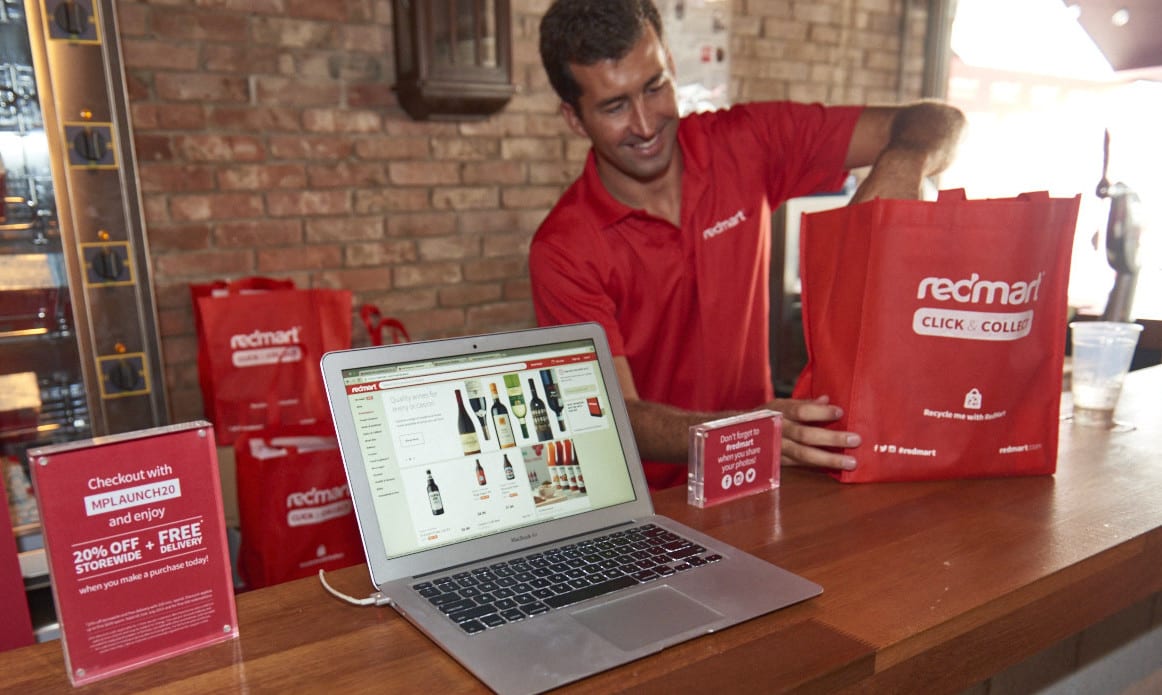
    Lazada’s RedMart has recently announced the launch of a new on-demand grocery delivery service in Singapore, RedMart Now, which guarantees to deliver orders within 30 minutes.

    Expanded Delivery Options

    The latest service supplements RedMart’s pre-existing same-day delivery offerings, including two-hour and six-hour delivery windows. RedMart Now will initially operate across selected southern and central neighborhoods such as Sentosa, Telok Blangah, Alexandra, Pasir Panjang, Clementi, Queenstown, Orchard, River Valley, Tanglin, and Bukit Timah. Plans are in place for a phased rollout across the rest of the island.

    Curated Product Range

    RedMart Now will feature a tailored selection of frequently used essentials such as fresh produce, snacks, beverages, festive goods, and household items. The delivery fee is set at S$3.99 for orders exceeding S$30.

    Martin Daney, SVP, Head of RedMart at Lazada, explained the rationale behind launching RedMart Now. He articulated that the aim of the service is to cater to urgent and unexpected shopping needs. He emphasized how the service was designed to allow customers to receive their needed items in as little as 30 minutes. The overall goal is to become the leading platform for both regular grocery shopping and urgent needs, thus allowing consumers to dedicate less time to running errands and more time to activities they enjoy.

    Entering the Quick Commerce Market

    The introduction of RedMart Now places the company in direct competition with other fast-delivery providers in Singapore’s dense and high-value grocery market. It also signifies a deeper penetration into the nation’s rapidly expanding quick commerce sector.

    Quick commerce presently constitutes about one-third of Singapore’s online grocery delivery revenue. Last year, according to Statista, the segment was projected to hit approximately US$371.75 million within a broader online grocery market estimated at US$1.04 billion.

    Questions & Answers

    What is RedMart Now?
    RedMart Now is a new on-demand grocery delivery service launched by Lazada-owned RedMart in Singapore, promising delivery within 30 minutes.

    Where will RedMart Now initially operate?
    RedMart Now will initially operate across selected southern and central neighborhoods in Singapore, with a phased rollout planned for the rest of the island.

    What does the launch of RedMart Now signify?
    The launch of RedMart Now signifies a deeper penetration into Singapore’s rapidly expanding quick commerce sector and places the company in direct competition with other fast-delivery providers in the country’s high-value grocery market.
  • J&T Express Shatters Records with 30 Billion Parcel Deliveries in 2025: A Year of Robust Growth and Innovation

    J&T Express Shatters Records with 30 Billion Parcel Deliveries in 2025: A Year of Robust Growth and Innovation

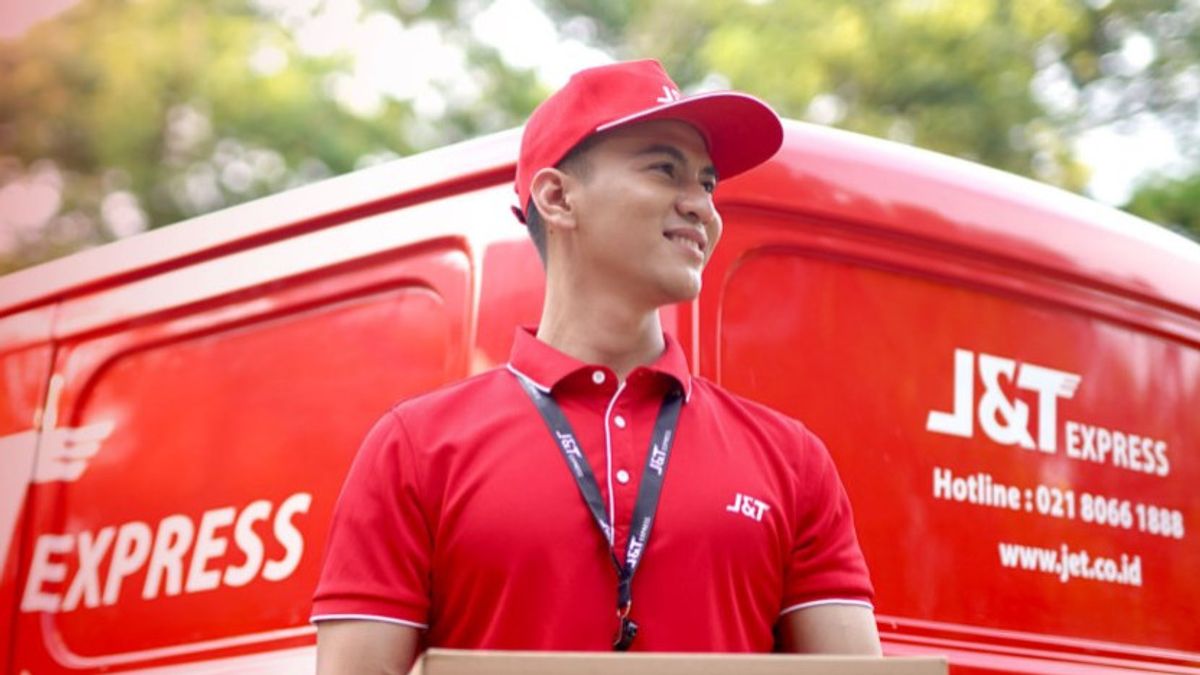
    J&T Global Express Limited (J&T Express), an international integrated logistics service provider, has reported its operational statistics for both the fourth quarter and the entire year of 2025. In the last quarter, the company saw a total parcel volume of 8.46 billion, marking a 14.5% year-on-year increase with an average daily parcel figure of 92 million. For the year 2025, J&T Express surpassed the 30 billion mark in total parcel volume for the first time ever by reaching 30.13 billion; this was a 22.2% increase from the previous year. The average daily parcel volume also rose by 22.6% to 82.5 million. The company credits this steady overall growth to a strong business performance, particularly in Southeast Asia and new markets, and a consistent input from the China market.

    Performance in Different Regions

    Throughout the fourth quarter, J&T Express experienced significant growth in both Southeast Asia and new markets. This was largely due to the peak e-commerce season and the company’s strong business strategies. In Southeast Asia, the company delivered 2.44 billion parcels in Q4, marking a 73.6% year-on-year increase, and delivered 7.66 billion parcels for the year, which was a 67.8% increase. The company also maintained its growth in new markets such as Saudi Arabia, UAE, Mexico, Brazil, and Egypt. Quarter 4 saw these markets surpassing 100 million parcel volume to reach 130 million, a 79.7% year-on-year increase; for the entire year, the parcel volume reached 400 million, increasing 43.6% from the previous year. The China market also enjoyed good quality growth, with a parcel volume of 5.89 billion for the quarter and 22.07 billion for the whole year, marking an increase of 11.4%.

    Investment in Infrastructure

    In 2025, the company made significant investments in infrastructure and resource allocation. It strategically optimized its network partners and outlets across different markets and upgraded its sorting centers to enhance operational efficiency. The company pushed outlet automation and cloud warehouse expansion initiatives in China, supporting the investment in automated equipment in outlets and the deployment of unmanned vehicles. This led to a 26% increase in automated equipment in outlets by the end of the year, and the deployment of 1,000 unmanned vehicles to greatly improve last-mile efficiency.

    Cloud Warehouses & Automated Sorting Equipment

    Simultaneously, J&T Express established 173 cloud warehouses, providing value-added services to address a variety of customer needs, solidify customer retention, and improve the overall customer experience. J&T Express also introduced Southeast Asia’s first industrial-grade automated sorting equipment at last-mile outlets in Thailand, planning a nationwide automation upgrade by 2026. This technology has been implemented across similar outlets in Vietnam, Indonesia, Malaysia, and the Philippines. At the end of 2025, the company operated 19,300 outlets and 246 sorting centres, with the number of automated sorting machines increasing by 134 year-on-year, bringing the total to 413.

    Charles Junyi Hou, Group Vice President of J&T Express, commented on the company’s performance, stating that the rapid development of e-commerce and a diversified customer base contributed to the robust growth in Southeast Asia and new markets. He noted that in China, the company is actively seeking higher-quality growth and that the delivery of more than 30 billion parcels globally by 2025 will serve as a new starting point for the company. Looking forward, he said they will continue to fortify their global network, stimulate growth through innovation, and consistently meet market demands.

    Questions & Answers

    What led to the year-on-year increase in parcel volume for J&T Express in 2025?
    The increase was a result of robust growth in Southeast Asia and new markets, coupled with the steady contribution from the China market.

    What is J&T Express’s strategy for increasing operational efficiency?
    J&T Express is investing in infrastructure, optimising its network partners and outlets across various markets, upgrading its sorting centres, and deploying automated equipment and unmanned vehicles.

    What are the company’s future plans?
    The company plans to continue strengthening its global network, driving growth through innovation, and consistently meeting market demands. It also aims to complete a nationwide automation upgrade in Thailand by 2026.

  • Uber, Carrefour Expand Partnership To Speed Up Deliveries In Paris

    Uber, Carrefour Expand Partnership To Speed Up Deliveries In Paris

    U.S.-based ride-hailing app owner Uber Technologies and Europe’s largest retailer Carrefour are to launch a new rapid grocery delivery service in Paris, extending their 18-month partnership, the two companies said on Tuesday.

    Carrefour Sprint will offer a 15-minute grocery delivery service to Parisians exclusively via the Uber Eats mobile app from nine “dark stores” – shops closed to customers where workers prepare orders for delivery – operated by Carrefour’s partner Cajoo.

    Earlier this year, the French retailer agreed to take a minority stake in the newly founded start-up Cajoo, which operates “dark stores” across the country.

    Established retailers and food deliverers face intense competition from a crop of newer, well-funded start-ups running networks of “dark stores” that can dispatch groceries ordered on a smartphone app to the doorstep within minutes.

    “Over the past 18 months people have increasingly come to expect quick and reliable delivery … in Europe alone we’ve seen a triple-digit increase in demand for grocery delivery,” Eve Henrikson, Regional General Manager, Uber Delivery EMEA, said in a statement.

    Uber and Carrefour are already offering 30-minute deliveries in France from Carrefour’s almost 2,000 shops available on Uber’s app under a deal agreed last year.

    Both companies have also separately struck deals to speed up delivery with other market players like Britain’s Deliveroo and France’s supermarket chain Casino.

    Uber and Carrefour plan to expand the 15-minute service to other major French cities such as Lyon, Bordeaux, Toulouse, Lille and Montpellier in coming weeks, they said.

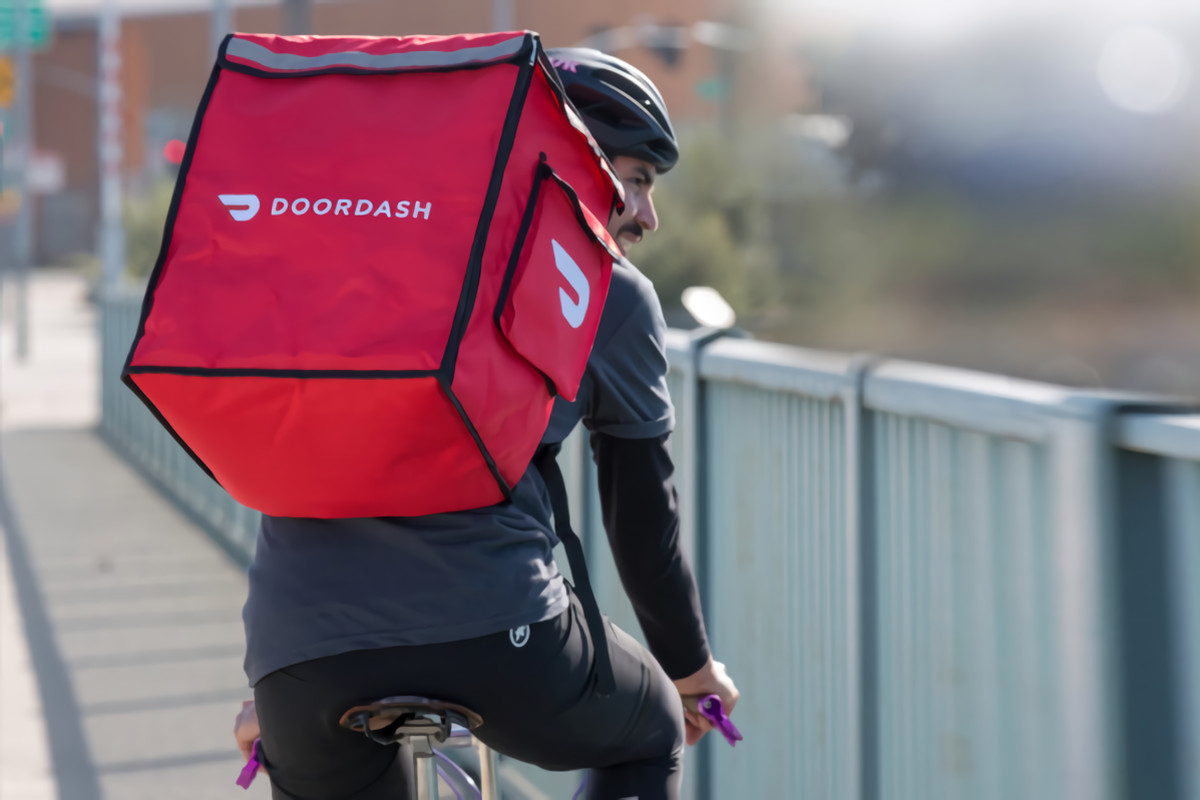
  • DoorDash bets big on liquor deliveries

    DoorDash bets big on liquor deliveries

    DoorDash will offer beer, wine, and spirits through the DoorDash Marketplace in 20 U.S. states and Washington, D.C., as well as Canada and Australia, the company announced on Monday. Customers will be able to order alcohol offerings from grocery stores, restaurants and other local merchants through a new “Alcohol” tab in the DoorDash app.

    Alcohol delivery exploded during the pandemic as COVID-19 restrictions shifted happy hour from bars and restaurants to people’s homes. Lawmakers in many states temporarily relaxed regulations to make alcohol available for home delivery and pickup. E-commerce made up just 1% of U.S. alcohol sales by retailers in 2019 by volume but is expected to grow to 7% by 2024, according the Wine & Spirits Wholesalers of America, an industry trade group.

    The boom has created an opportunity for delivery giants like DoorDash and Uber Eats to capitalize on the higher-margin category. It’s also a boom for restaurants as adding alcohol could increase average order values by as much as 30%, according to DoorDash Chief Operating Officer Christopher Payne. “It’s a win-win for everyone. Customers have a wider selection, restaurants can achieve greater sales and Dashers can earn more,” he said.

    The San Francisco-based company commanded 57% of the food-delivery market as of August and has seen sustained growth across segments even as indoor dining has resumed. The dedicated alcohol operation, which counts more than 10,000 retailers, will also benefit from DoubleDash, a feature that lets customers shop from multiple stores and bundle them into a single order. DoorDash’s move heats up the competition with Uber, which purchased on-demand alcohol delivery app Drizly for $1.1 billion in February.

    Because regulations around alcohol delivery differ city-to-city, the new offering will be available only in select markets. DoorDash has ramped up its lobbying efforts alongside the restaurant industry and have seen “great traction” as legislators have been keen to help businesses that were battered when the pandemic shuttered eateries, Payne said.

    DoorDash will employ ID verification prior to checkout and by couriers before delivery to ensure customers are 21 years old or older, the company said in a statement.

    The company has been delivering alcohol from restaurants and through its Drive service, which handles orders from a merchant’s website rather than through the regular DoorDash Marketplace app.

  • Online fashion retailers Starting to Limit Free Deliveries

    Online fashion retailers Starting to Limit Free Deliveries

    Zalando, Europe’s largest online-only fashion retailer, has said it will begin to charge delivery for smaller orders across more markets in response to shrinking order size.

    The e-commerce business initially enjoyed rapid growth due to its free delivery and returns, but the rise of mobile commerce has changed customer behaviour, with the size of orders getting smaller, driving up logistics costs.

    Zalando has already introduced a minimum order value to qualify for free delivery in Italy, Spain, Britain and Ireland, which has had no effect on customer satisfaction, according to the company’s finance chief David Schroeder.

    The initiative now will be extended to Denmark, Sweden, Finland and Norway at the end of May.

    The move echoes H&M’s announcement last month that it would reintroduce delivery fees for its loyalty club members to cut down on similar logistics costs and restore profitability.

    “We have a lot of logistics around the customers that shop online,” H&M head of customer loyalty Samuel Holst told.

    “For the plus level, deliveries will remain free for all purchases, but for the base level there will be a cap. You will need to shop for a certain amount to get free delivery.”

    While many retailers have invested significant sums in designing their websites and ad campaigns for mobile, these changes suggest that more work is needed to adapt retail businesses to the smartphone era.

  • 7-Eleven delivers in 2 hours in Japan

    7-Eleven delivers in 2 hours in Japan

    A two-hour delivery service for smartphone orders is about to be launched by 7-Eleven Japan, the country’s biggest convenience-store chain.

    “Net Konbini” (using the commonly shortened form of “convenience store” in Japanese) plans to cover 7-Eleven’s entire Japanese network of around 20,000 stores, following a soft launch at 25 stores in Hokkaido in October. It plans to expand the network to 1000 stores in Hokkaido by August next year.

    Users will be able to place orders 24 hours a day, nominating a delivery address and store. A range of 2800 products will be available including Japanese convenience-store staples such as rice balls and bento lunch boxes.

    “Using 20,000 stores to immediately deliver any of 2800 products is a service only 7-Eleven can provide,” says company president Kazuki Furuya.

    Delivery trucks en route through 7-Eleven outlet areas will pick up orders and drop off purchases to customers, in a tie-up between 7-Eleven and a subsidiary of logistics company Seino Holdings finalised last year.

  • VW’s Skoda Auto says October deliveries grew 10.6 percent

    VW’s Skoda Auto says October deliveries grew 10.6 percent

    Global deliveries of Skoda Auto, the Czech unit of Volkswagen, grew by 10.6 percent to 97,900 vehicles in October, boosted by growing sales in China and Europe, the company said on Thursday.

    In the January-October period, Skoda said sales had grown by 6.7 percent to 938,800 units.

    The company, the biggest Czech exporter, sold 1.06 million cars in 2015, the second year in a row it topped the 1 million mark.