Tag: delivery hero

  • Delivery Hero CEO Niklas Ostberg Announces Planned Departure amid Strategic Shift

    Delivery Hero CEO Niklas Ostberg Announces Planned Departure amid Strategic Shift

    Niklas Ostberg, the founder and CEO of Delivery Hero, has announced that he will be stepping down from his executive role after 15 years steering the global food delivery enterprise. The company has initiated a hunt for Ostberg’s successor, aiming to fill the position by March 31 of the coming year. The complete transition is expected to be finalized by the end of the year.

    Ostberg believes that this is the optimum time to initiate the transition as Delivery Hero is entering a new phase of strategic development and operational emphasis. “This is the appropriate moment to commence the process of transitioning the company into its future stage,” stated Ostberg. He also added that the long-term course was set during the Strategic Review, which was announced in December. The focus of this review was to deepen the market penetration, enhance the customer experience, and improve the consumer offering under the Everyday App strategy.

    Started in 2011, Delivery Hero has broadened its reach to more than 60 markets via brands like Foodpanda, Glovo, and Talabat. In a significant move, earlier this year, the Singapore-based multi-service platform, Grab, acquired Delivery Hero’s Foodpanda delivery business in Taiwan. The cash deal, which amounted to US$600 million, marked Grab’s first expansion beyond Southeast Asia.

    Questions & Answers

    Why is Niklas Ostberg stepping down from his role as CEO of Delivery Hero?
    Ostberg believes the timing is right as Delivery Hero is poised to enter a new phase of strategic development and operational focus. He wishes to allow the company to transition smoothly into its future stage under new leadership.

    What is Delivery Hero’s future strategy post-Ostberg’s departure?
    The company’s long-term strategy is to deepen its market penetration, enhance customer touchpoints and improve consumer offerings under the Everyday App strategy.

    How has Delivery Hero expanded its operations?
    Delivery Hero operates in more than 60 markets via brands like Foodpanda, Glovo, and Talabat. Additionally, its Foodpanda delivery business in Taiwan was recently acquired by Grab, marking the latter’s first expansion beyond Southeast Asia.

  • Delivery Hero Initiates CEO Successor Hunt as Niklas Ostberg Announces Resignation

    Delivery Hero Initiates CEO Successor Hunt as Niklas Ostberg Announces Resignation

    Niklas Ostberg, the founder and CEO of Delivery Hero, is set to step down from his leadership role after a notable 15-year tenure at the helm of the global food delivery enterprise. As a result, the company has launched a search to find a suitable successor to fill Ostberg’s shoes.

    Ostberg will continue to manage the operations and lead the team until his successor is officially appointed, with the deadline for this set for March 31st of next year. The transition is likely to be finalized by the end of the year, ensuring a smooth transfer of responsibilities.

    Delivery Hero: Entering a New Era

    According to the company, this succession plan comes just as Delivery Hero is on the brink of stepping into a new phase that’s characterized by strategic development and a renewed focus on operations.

    Ostberg feels confident that this transition comes at an appropriate time. He stated, “This is the right moment to begin handing the company over to its next chapter.” He elaborated on the company’s future direction, pointing out the strategic review announced in December, which has paved the way for deeper market penetration, increased customer engagement, and enhancements to the consumer offering under the Everyday App strategy.

    Founded in 2011, Delivery Hero has grown to operate in over 60 markets worldwide, with multiple brands, including Foodpanda, Glovo, and Talabat under its umbrella.

    In a significant development earlier this year, Grab agreed to purchase Delivery Hero’s Foodpanda delivery business in Taiwan for a whopping US$600 million in cash. This marks the first major expansion of the Singapore-based super app beyond the boundaries of Southeast Asia.

    Questions & Answers

    Who is expected to replace Niklas Ostberg as CEO of Delivery Hero?
    A replacement for Niklas Ostberg has not been announced as yet. The company is currently in the process of finding a suitable successor.

    What is the future strategy of Delivery Hero as announced in their December review?
    The future strategy of Delivery Hero includes penetrating deeper into their markets, increasing customer touchpoints, and improving the consumer offering under the Everyday App strategy.

    What is the significance of Grab’s acquisition of Delivery Hero’s Foodpanda in Taiwan?
    Grab’s acquisition of Foodpanda in Taiwan marks the first major expansion of the Singapore-based super app beyond Southeast Asia. This could potentially lead to further expansion and growth for Grab in the future.

  • Delivery Hero could sell part of Asian business for $1 billion

    Delivery Hero is in advanced talks on a partial sale of its Asia business, the Wirtschaftswoche business magazine reported, saying Singapore’s Grab could pay a little more than US$1.07 billion.

    The Berlin-based company could sell its activities under the Foodpanda brand in Singapore, Cambodia, Malaysia, Myanmar, the Philippines and Thailand, according to Wirtschaftswoche, which cited sources familiar with the matter.

    Investors in the online takeaway food company welcomed the report, lifting its shares as much as 13.5 per cent.

    Delivery Hero and Grab did not immediately reply to emailed requests for comment.

    Delivery Hero has been focusing on reaching profitability while maintaining growth as investor confidence in the company started to wane after a pandemic-driven boost.

    The group has said that it reached an adjusted profit before interest, tax, depreciation and amortisation (EBITDA) in the first six months of the year, although it did not quantify it, after a loss of US$343.6 million in the same period a year earlier.

    Last month, CEO Niklas Oestberg said that Asia was the segment where the company saw the most opportunity to invest.

    Singapore internet firm Grab posted $567 million in revenue in the quarter that ended June 30 and expects to break even on an adjusted core earnings basis in the current quarter. Grab makes most of its sales from its food delivery business and has recently seen strong growth in its ride-share business.

  • Electric motorbike startup raises another $8 mln

    Electric motorbike startup raises another $8 mln

    Vietnamese electric motorbike startup Dat Bike has secured $8 million in a funding round, bringing the total since its establishment to $16.5 million.

    The round was led by returning investor, Singapore-based Jungle Ventures, with participation from GSR Ventures, Innoven Capital, Wavemaker Partners, and Delivery Hero Ventures – the investment arm of Foodpanda’s parent firm.

    The startup will use the new round of funding to invest in technology, scale production, product development and hiring talent, said Nguyen Ba Son, founder and CEO of Dat Bike.

    Founded in 2019, Dat Bike says its revenue grew 10 times over the past 12 months.

    The launch of its latest model, Weaver 200, has solved the problems of performance and range as it has a maximum capacity of 6,000W, covering 200 km with a 3-hour charge, Son said.

    The startup has also launched Dat Charge – an ultra-fast charging station for its electric bikes, which allows charge for a 100km trip in 20 minutes and 150km in 30 minutes. This is the highest electric bike charging speed in the country at present, according to the company.

    After four years of operations, Dat Bike has three stores in Ho Chi Minh City, Hanoi and Danang. It plans to enter other Tier 1 cities, including Quang Ninh, Hai Phong, Nha Trang, Binh Duong and Can Tho, soon.

  • UberEats Korea launch imminent

    UberEats Korea launch imminent

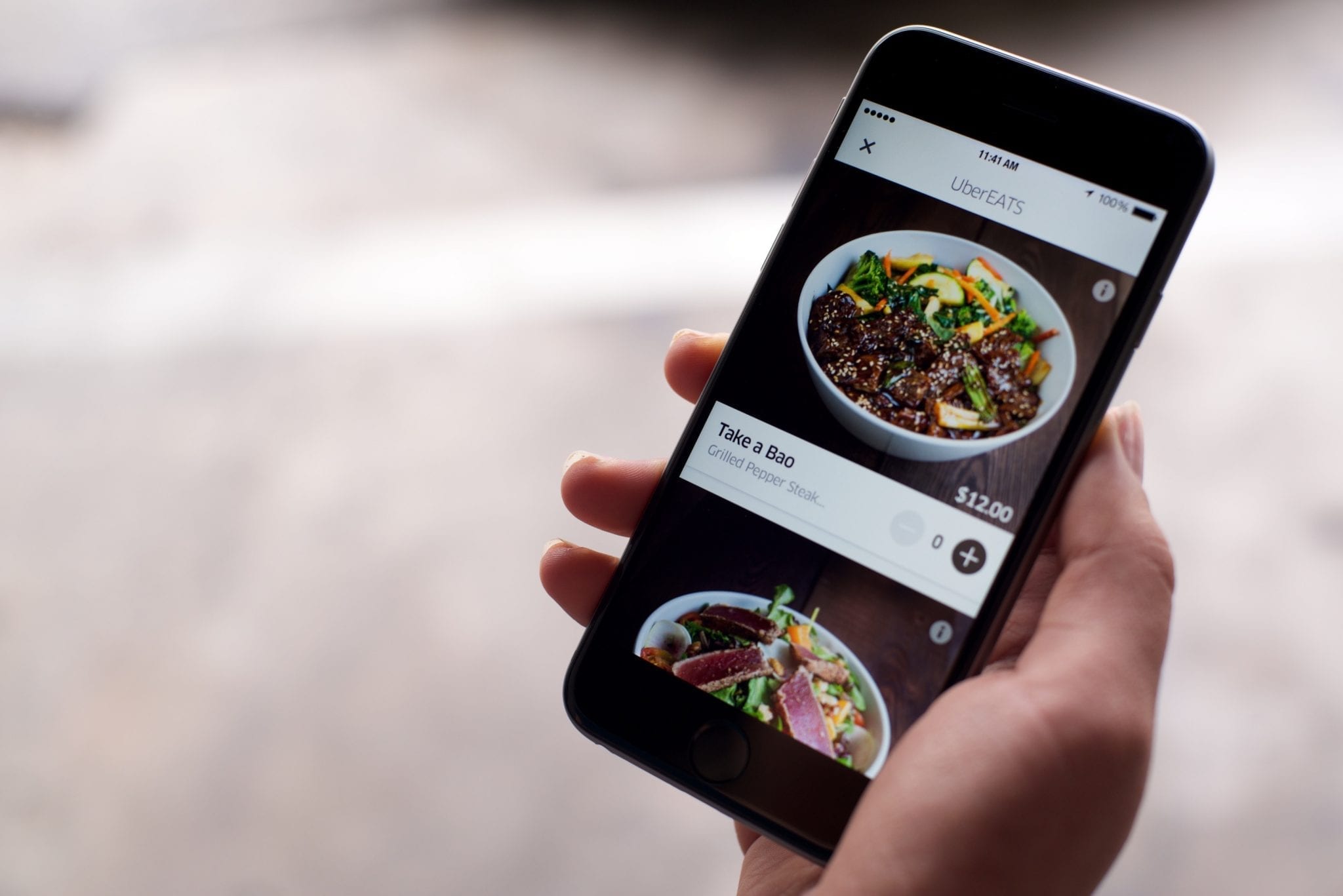
    App-based ride service provider Uber Technologies says it is planning to launch its on-demand restaurant delivery service UberEats in South Korea.

    UberEats Korea will partner with restaurants, with ordering conducted on the company’s web site or with a smartphone app.

    “The company is preparing the local launch of UberEats,” said a spokesman for Uber Korea, the local unit of Uber, on the condition of anonymity. “But at the moment, we have not decided on the exact launch date.”

    Industry sources expect the UberEats Korea delivery service to be introduced within the year.

    UberEats Korea is expected to join other local delivery apps such as Yogiyo, FoodFly and Baedal Minjok. Baedal Minjok is the market leader with more than 50 per cent market share, followed by Yogiyo and Baedaltong, which are both owned by Germany-based Delivery Hero.

    Ordering food by phone is commonplace in South Korea. However, delivery apps have become increasingly popular and now take up nearly 15 per cent of the total food delivery market which is estimated at around 12 trillion won (US$10.5 billion) annually.

    UberEats was launched as a delivery pilot in Los Angeles in 2014. Since then, it has expanded to 58 cities. The service also exists in other major Asian cities including Bangkok, Tokyo and Taipei.

  • Delivery Hero takes control of Foodpanda

    Delivery Hero takes control of Foodpanda

    Control of the Foodpanda business has been sold by parent Rocket Internet, including the remaining Asian operations.

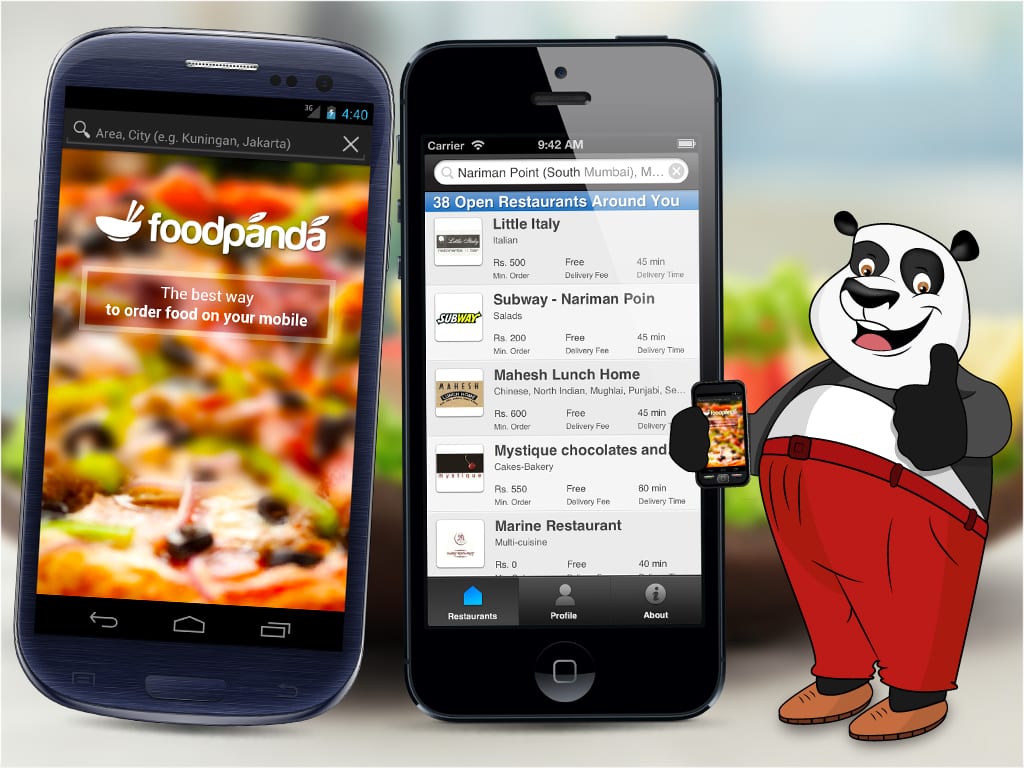
    German-based online food-ordering service Delivery Hero Holding, which is active in 33 countries, has acquired Rocket Internet-backed Emerging Markets Online Food Delivery Holding, parent of the shrinking Foodpanda business.

    Foodpanda, 49 per cent owned by Rocket Internet, has a presence in 22 countries, but shut its Indonesia business in October in the face of growing competition from app-based ride-hailing services that also offer food delivery, such as Go-Jek and Grab Bike. It has also exited Vietnam but remains operational in Singapore, Hong Kong, Thailand, Malaysia, the Philippines and Taiwan.

    In a partial share swap, the deal will see Rocket Internet’s stake in Delivery Hero increase from 30 per cent to 37.7 per cent. The sale will strengthen Delivery Hero’s global leadership position in online food ordering and delivery, with the combined group processing more than 20 million orders a month across 47 countries, says Rocket Internet.

    Bloomberg data shows that both companies together have raised more than $1.5 billion across several funding rounds with investors including Goldman Sachs and Insight Venture Partners.

    “The combination of Foodpanda and Delivery Hero, one of our most important companies, further consolidates key markets,” says Rocket Internet CEO Oliver Samwer. “Delivery Hero is also acquiring new markets.”

  • Rocket Internet sells Foodpanda business

    Rocket Internet sells Foodpanda business

    Rocket Internet has sold its mobile and online food ordering portal foodpanda to rival Delivery Hero for an undisclosed sum.

    Berlin-based Delivery Hero was founded in 2011 by Niklas Östberg. The company said in its announcement that the purchase would increase its stake in the global online food ordering and delivery business. With the acquisition, the combined group will now be processing over 20 million orders per month across 47 countries.

    Delivery Hero will also be able consolidate its market leadership position in the Middle East and will be adding 20 new countries in Eastern Europe, MENA, and Asia to its platform. Before the acquisition, foodpanda operated in 22 countries with market leading positions in 17 of them, according to Rocket.

    In exchange for all its shares in foodpanda, Rocket Internet received newly issued shares in Delivery Hero, which effectively increases its stake in the company to 37.7% (on a fully diluted basis).

    “The combination of foodpanda and Delivery Hero, one of our most important companies, further consolidates key markets resulting in significantly improved market positions. Delivery Hero is also acquiring new markets with leading market positions further broadening its geographic footprint,” said Oliver Samwer, Rocket Internet’s CEO, in a media statement.

    The transaction is subject to customary closing conditions and is expected to close prior to December 31.

    “We look forward to working with the team to continue creating unparalleled take away experiences for our customers around the world,” Östberg said.

    In the first half of the year, Delivery Hero reported more than 83 million processed orders globally, which is up 45% compared to the same period the previous year. It said revenues during the first half of 2016 also grew by 53%.