
Tag: demographics

  • Malaysia Faces Calls to Raise Retirement Age to 65 as Pension Deficits Grow

    Malaysia Faces Calls to Raise Retirement Age to 65 as Pension Deficits Grow

    Pension advisers and economists in Kuala Lumpur are pushing the government to raise Malaysia’s mandatory retirement age from 60 to 65 through phased adjustments. The current statutory threshold leaves millions of workers exiting the formal labor force with inadequate savings to cover longer lifespans.

    Official data from the Department of Statistics Malaysia released on September 30 shows life expectancy for a newborn in 2026 reached 75.5 years, while residents reaching age 60 are projected to live an additional 20.2 years to 80.2. A retirement age set at 60 requires workers to fund more than two decades of living expenses on savings accumulated over short careers.

    The Proposed Timeline for Phased Retirement

    William Price, chief executive of consultancy D3P Global Pension Consulting, presented a transition framework at the Employees Provident Fund International Social Wellbeing Conference 2026 in Kuala Lumpur. Under his proposal, authorities would add three months of working life for every calendar year, reaching a statutory retirement age of 65 by 2040 without forcing abrupt extensions on staff near departure.

    A worker aged 40 today would retire at 65 under the schedule, while a 50-year-old would work until 62 and a half. Employees aged 59 would take on an additional three months, retiring at 60 years and three months. Price suggested exemptions for manual laborers and low-income staff who entered the formal workforce at age 16, allowing early exit after completing 40 to 45 contribution years.

    Rajen Devadason, a licensed financial planner speaking at the same conference, proposed an accelerated track to lift the threshold by one year every two years. His plan targets a retirement age of 65 by 2035 and 70 by 2050 to keep pace with demographic shifts.

    Depleted Balances at the State Pension Fund

    The push to extend working careers coincides with severe savings shortfalls inside the Employees Provident Fund, which covers more than 18 million members. Figures submitted to parliament reveal that as of May 31, only 38.3 percent of active formal-sector members aged 18 to 60 had accumulated the basic savings benchmark of RM390,000. That baseline is designed to yield a monthly drawdown of RM1,625 over a 20-year retirement.

    Former EPF chief executive Shahril Ridza Ridzuan noted at the conference that low baseline wages prevent households from building assets even when statutory contribution rates remain elevated. Beyond the basic benchmark, the EPF defines adequate savings at RM650,000 and enhanced savings at RM1.3 million, levels out of reach for the vast majority of private sector staff.

    Retaining older staff alters payroll dynamics across retail and service chains that rely on entry-level wages. Companies facing persistent labor shortages in store operations, logistics, and customer support stand to gain experienced personnel, provided contracts offer flexible scheduling such as three-day work weeks.

    Operating Adjustments for Employers and Retailers

    Consumer spending patterns will shift as older cohorts continue earning regular paychecks into their mid-sixties rather than cutting household budgets at 60. Keeping older workers economically active protects discretionary demand across urban retail centers, dining, and healthcare services that depend on steady domestic consumption.

    The structural risk sits in commercial staffing models and medical insurance costs. Retailers and hospitality groups must restructure compensation from seniority-based pay scales to productivity metrics, ensuring higher minimum ages do not compress hiring budgets for younger entry-level workers.

    Previous statutory changes in Malaysia established the Minimum Retirement Age Act in 2012, which lifted the private-sector retirement baseline from 55 to 60 when it took effect in 2013. The public sector matched that 60-year ceiling, but demographic pressures have intensified as Malaysia transitions toward an aged society status projected by the World Bank.

    Policymakers must now weigh draft amendments to employment statutes against public resistance to delayed access to pension funds. The primary metric to track is whether the human resources ministry tables formal legislation to decouple EPF withdrawal windows from mandatory retirement milestones ahead of the next parliamentary sitting.

  • AI Could Offset Asia’s 25% Workforce Loss by 2050, IMF Says

    AI Could Offset Asia’s 25% Workforce Loss by 2050, IMF Says

    Artificial intelligence could help offset Asia’s shrinking workforce as populations age if adoption is scaled evenly across the region, the International Monetary Fund said on Monday.

    IMF Managing Director Kristalina Georgieva said at a book launch during meetings at the Queen Sirikit National Convention Center that AI is projected to lift growth in advanced Asia by 0.5 to 1 percentage point, more than offsetting demographic pressure if productivity is captured.

    The demographic drop in North Asia

    Countries including China, Japan and South Korea could lose nearly 25 percent of their working population between now and 2050, according to findings in the IMF book, though productivity gains from AI could offset that loss.

    IMF Managing Director Kristalina Georgieva presented the findings during the IMF and World Bank annual meetings at the Queen Sirikit National Convention Center. She identified demographics, regional trade integration and artificial intelligence as the three central shifts deciding Asia’s economic trajectory.

    AI is projected to lift up growth in advanced Asia, where the ageing populations are, somewhere between half a percentage and one percentage point… And what is amazing is that if the countries capture productivity and this growth, they will more than offset the demographic pressure

    Divergence between rich and emerging markets

    The gap between mature industrial economies and developing Southeast Asian nations creates an uneven playing field for artificial intelligence rollout. Wealthier hubs possess the computing infrastructure and capital required to automate white-collar tasks and industrial workflows quickly.

    Developing markets face different exposure levels. Krishna Srinivasan, director of the IMF Asia and Pacific department, warned that emerging economies have fewer automated jobs today but also lack the capital to capture software-driven productivity gains without targeted policy support.

    Supply chains and operational exposure

    For consumer goods manufacturers, retailers and logistics operators across Asia, the findings point to immediate operational choices. Supply chain networks that depend on cheap labour in aging hubs must substitute headcount with automated fulfilment, inventory forecasting and automated sorting.

    Retailers in Japan and South Korea already operate with automated store checkouts and robotic warehouse pickers to handle persistent staffing shortages. Expanding those systems into Chinese manufacturing corridors will determine whether factory gate prices stay stable as industrial payrolls shrink.

    Trade barriers and reform timelines

    Technology alone will not solve structural regional slowdowns without cross-border commerce reforms. Lowering non-tariff barriers and deepening trade pacts across Asia would expand regional gross domestic product by approximately 1.8 percent over the long term.

    Srinivasan noted that national workforce training programmes and regulatory reforms can accelerate enterprise adoption of artificial intelligence tools by a decade or more. Asian policymakers now face the task of drafting common digital standards and labour retraining budgets before the projected 2050 workforce contraction reaches its steepest curve.

  • China Migrant Worker Reforms Could Unlock US$95 Billion in Spending

    China Migrant Worker Reforms Could Unlock US$95 Billion in Spending

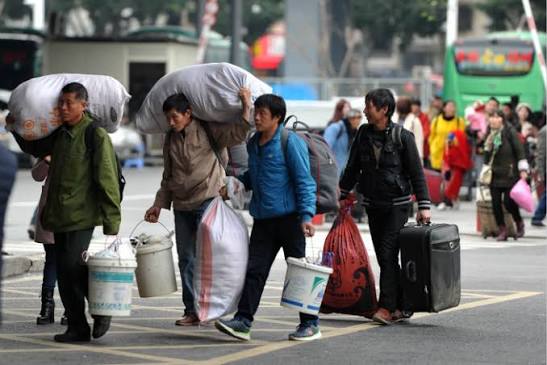
    Improving living conditions for China’s 131 million urban migrant workers could release US$95 billion annually in consumer spending, according to research released on Thursday by HSBC. That spending lift equals roughly 0.5 per cent of China’s gross domestic product.

    The bank found that the country’s broader consumption revival rests far less on high-income earners and more on easing the financial strain on urban migrant families. Mainland cities housed 130.9 million migrant workers last year, a number that expands to roughly 170 million when including dependents.

    The Savings Gap

    Precautionary financial habits keep those households from spending. Migrant workers in Chinese cities save an average of 54 per cent of their income, compared with a 36 per cent savings rate among registered urban residents. High healthcare costs, housing instability, and limited access to public services drive that defensive cash accumulation.

    Similar patterns constrain younger demographics. New workforce entrants, including recent university graduates, display elevated savings rates that restrict discretionary retail sales and leisure outlays across metropolitan centers.

    Asia Drives Consumer Expansion

    The demographic rebalancing forms part of a wider regional transformation. HSBC projects the global economy will add 1.2 billion middle- and high-income consumers by 2050. Asia will generate 77 per cent of that expansion.

    India will deliver almost half of the total regional increase. China and neighboring Asian markets will account for the remainder, cementing Asia’s position as the primary driver of worldwide consumer demand over the next two decades.

    The Shift for Retailers

    For brands and retail operators across mainland China, the findings point toward a necessary realignment. Growth will depend on mass-market volume and entry-level household goods rather than premium luxury lines that cater to top-tier wealth.

    Previous policy measures focused on subsidies and targeted tax relief for established urban households, which produced modest gains in discretionary spending. Broadening social safety nets and residency access would direct liquidity straight to essential retail categories, daily groceries, and consumer durables.

    Mainland provincial governments are now setting updated targets for municipal residency access and basic medical coverage transfers through the end of the year.

  • Tokyo Inner Ward Population Hits 9.8 Million as Density Reaches 15,600

    Tokyo Inner Ward Population Hits 9.8 Million as Density Reaches 15,600

    Tokyo’s 23 central wards added 1.2 million residents over the past two decades, pushing urban density to 15,600 people per square kilometre, as reported by Paul de Vries for The Japan Times in September 2026. The population in the inner wards now stands at 9.8 million.

    Construction firms and property developers have absorbed this influx primarily through two methods. Builders are erecting high-rise residential towers containing hundreds of units while buying standalone houses with private yards, razing the greenery, and replacing them with multiple narrow homes.

    Subdividing Plots for Housing

    Landed housing subdivisions now supply a steady stream of compact urban properties across residential wards. Replacing a single detached home with two or three townhouses increases plot yield for homebuilders. It also removes private gardens that previously provided urban tree cover and communal wildlife corridors.

    Tower developments concentrate hundreds of households onto single commercial footprints. These buildings offer high floor-area ratios but leave standard rooftops largely bare of functional green infrastructure.

    Pressure on Urban Greenery

    For residential property developers in Japan, plot subdivision remains the fastest way to bring infill housing to market without assembly delays. However, municipal planning offices face mounting heat-island effects in wards where open ground cover has vanished. Residential developers across Seoul and Singapore face similar constraints, but Japanese zoning codes give private landowners wider leeway to maximise structural footprints up to boundary lines.

    Institutional real estate investors holding multifamily residential assets in Tokyo face shifting tenant preferences. Renters and buyers in high-density districts increasingly seek access to private or communal outdoor spaces, creating a pricing gap between conventional concrete blocks and properties that integrate rooftop greenery.

    Rooftop Space Under Scrutiny

    Tokyo’s urban growth runs counter to Japan’s broader demographic decline, which has hollowed out regional prefectures while concentrating capital and labour in the Kanto region. Previous redevelopment cycles focused on expanding transport nodes and commercial office floors around central railway hubs.

    Attention is shifting to residential rooftop retrofits across the 23 wards as developers balance land costs against municipal open-space guidelines.