Tag: department of energy

  • Semirara Slashes Coal Target to 12 Million Tons as Pit Floods

    Semirara Slashes Coal Target to 12 Million Tons as Pit Floods

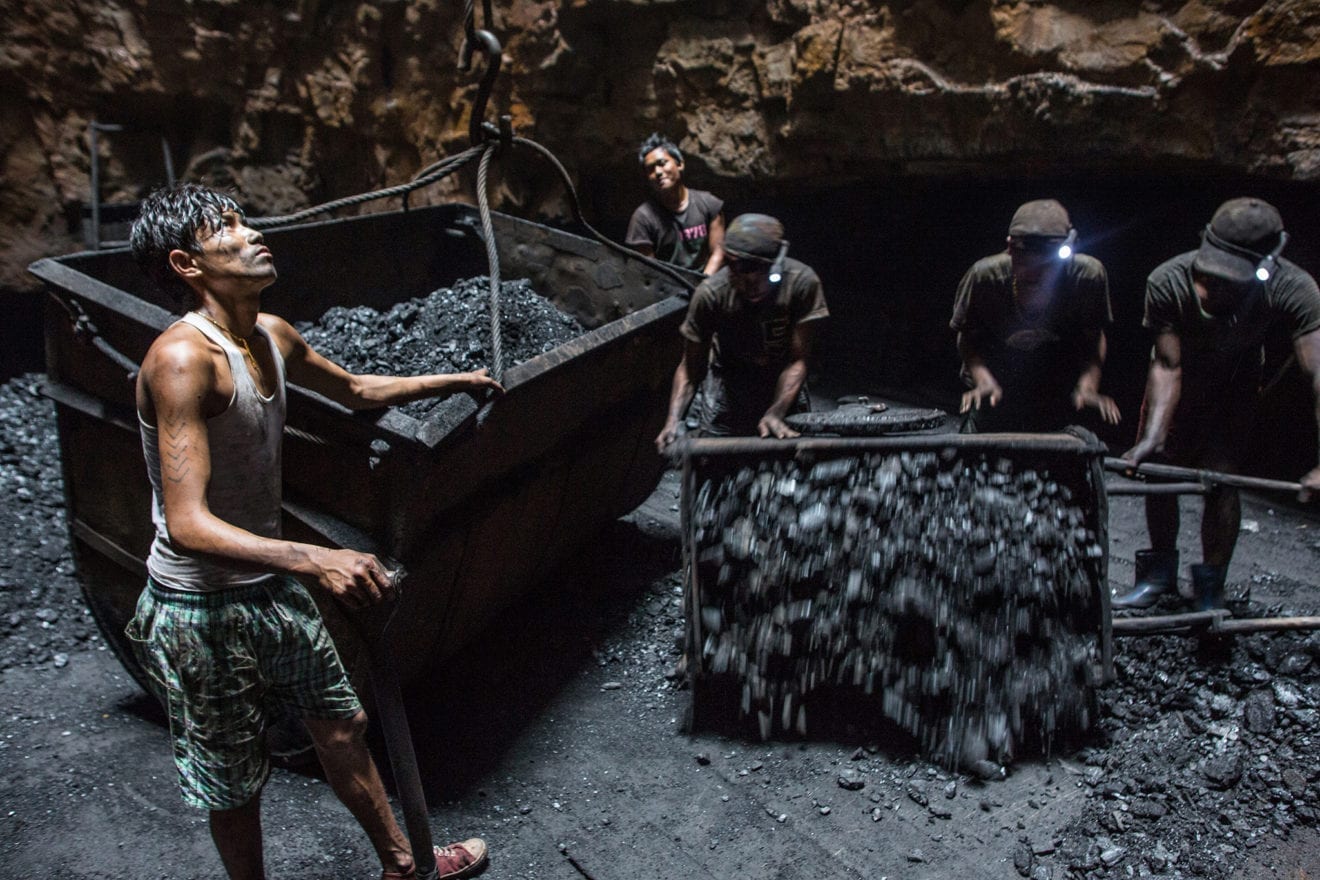
    Semirara Mining and Power Corp. Slashed its 2026 coal output target to 12 million metric tons after uncontrollable seawater flooded its core Acacia pit in the Philippines. Stripping operations are halted indefinitely. The revised target is a drop of nearly 40 percent from the record 19.9 million tons produced in 2025.

    Seawater is surging into the active pit at roughly 30,000 cubic meters an hour. That far exceeds on-site pumping capacity. The structural failure accelerated on September 20 when material from North Block 1 Dam 2 collapsed, sending surface runoff straight into the mining area.

    Crews are attempting to erect another cut-off wall. Meanwhile, the operational breakdown forced SMPC to lay off 1,458 mine-site workers. The company cut an initial tranche of 462 staff before letting go an additional 996 personnel.

    Contract Expiry and Asset Disputes

    Timing could not be worse for the operator or the power grid. Coal Operating Contract No. 5 expires on July 14, 2027. That leaves the Department of Energy scrambling to auction operating rights to the highest financial bidder.

    Energy officials terminated a previous bidding round in September following legal disputes, engineering problems, and operator objections. They now plan to restart the auction between November and December. That gives the winning contractor barely seven months to take over before the current license lapses.

    A legal fight is also playing out in court over more than 55 billion pesos in infrastructure and machinery on Semirara Island. SMPC filed a petition for declaratory relief after the energy department demanded a full inventory of the operator’s property and plant to share with rival bidders.

    State Revenue Versus Engineering Capacity

    Regulators argue that equipment with costs recovered under the operating contract can vest in state hands and pass to the next operator. SMPC counters that cost recovery serves only as reimbursement under Presidential Decree 972. Title and removal rights remain strictly with the company.

    Higher revenue shares and consumer concessions remain the government’s priority, grounded in the state’s ultimate ownership of mineral resources. SMPC notes it contributed 43.4 billion pesos in government share alongside 3.7 billion pesos in taxes between 2021 and the middle of 2026.

    Commercial power users and industrial operators face the threat of electricity cost inflation. Acacia was projected to deliver the bulk of domestic coal supply in 2027. Any prolonged disruption will force power producers to import expensive replacement thermal coal from Indonesia and Australia.

    Spillover to the Local Island Economy

    Fallout has already spread across Semirara Island as payroll cuts hit retail and service trade. Small island businesses report falling daily revenue and customer defaults as families lose their primary income.

    Island social programs face immediate risk as well. SMPC has historically funded about 90 million pesos annually for free tuition at the Divine Word School of Semirara Island. More than 1,500 students depend on that mine-supported schooling.

    The Department of Energy has not issued bid bulletins, prequalification screens, or a model contract clarifying minimum technical requirements for the flooded pit. Restarting the bidding process in late 2026 will test whether the state can secure an operator capable of draining the Acacia pit before the July 2027 handover deadline.
  • Philippines Plans 3,840 Megawatt Gas Auction Amid Grid Cost Debate

    Philippines Plans 3,840 Megawatt Gas Auction Amid Grid Cost Debate

    The Philippine Department of Energy is launching a centralized auction to procure 3,840 megawatts of mid-merit natural gas capacity across the Luzon and Visayas grids.

    Department Circular DC2026-06-0013 establishes a binding framework for the purchases. Distribution utilities and electric cooperatives must now source designated flexible capacity exclusively from natural gas facilities.

    Staggered Capacity Timetable

    Auction schedules divide the 3,840-megawatt target into immediate supply and greenfield construction across the two island grids. Existing plants in Luzon must deliver 1,400 megawatts of capacity in 2026, followed by 500 megawatts in 2027.

    New construction begins commercial operations in 2028. That phase starts with 440 megawatts of liquefied natural gas mid-merit plants across Cebu and Panay in the Visayas. By 2031, newly built facilities must supply an additional 1,000 megawatts to Luzon and 500 megawatts to Cebu.

    Auction Rules and Fuel Pass-Through

    Power generation companies will bid solely on their capital and operating charges under the Gas Auction Price system. Fuel costs remain an uncapped pass-through expense. The underlying price of imported liquefied natural gas will be calculated through an Energy Regulatory Commission benchmarking formula.

    Consumers must cover revenue shortfalls whenever spot power prices drop below the auction guarantee. If a contracted plant runs while the Wholesale Electricity Spot Market clears at lower rates from coal or renewables, the grid operator recovers the difference through retail power bills. Distributors cannot withdraw their contracted capacity shares once awarded.

    Regional Supply Disparities

    Grid conditions differ sharply between the two regions. Luzon expanded its supply margin by 632 megawatts during the August 2026 billing period, according to Independent Electricity Market Operator of the Philippines data. Spot prices there fell from 7.30 pesos to 4.80 pesos per kilowatt-hour.

    Generation deficits hit the Visayas grid during the same month. The region recorded 86 hours of Yellow Alerts and 53 hours of Red Alerts. Regional spot prices reached 18.59 pesos per kilowatt-hour before the regulator imposed a secondary price cap. Transmission lines between Luzon and Visayas stayed congested for 86 percent of the billing cycle.

    Fuel Price and Currency Exposure

    Imported gas dependencies present direct cost risks for commercial operators and industrial manufacturers. Energy Regulatory Commission figures show landed liquefied natural gas prices climbed from 14.90 dollars per million British thermal units in early 2024 to 17.30 dollars in early 2025.

    Asian spot LNG prices spiked to 26.00 dollars per million British thermal units in September 2026 following Middle Eastern supply disruptions. Paired with a foreign exchange rate of 62.67 pesos per US dollar, fuel costs alone reach 11.40 to 13.00 pesos per kilowatt-hour for a standard combined-cycle generator. Capital recovery and operating fees are not included in that calculation.

    Fuel pass-through terms shift international commodity price swings directly onto Philippine commercial power bills. Past price shocks showed the danger. In March 2026, emergency interventions took place when spot prices jumped from below 5.00 pesos to more than 9.00 pesos per kilowatt-hour across the central grid.

    Next, the Department of Energy will finalize bidder eligibility rules and auction dates for the initial 1,400-megawatt Luzon delivery tranche.

  • Philippines to Drop VAT on Power System Loss Charges by November

    Philippines to Drop VAT on Power System Loss Charges by November

    Philippine authorities plan to eliminate the 12 percent value-added tax on electricity system loss charges from consumer and commercial utility bills as early as November 2026.

    The Energy Regulatory Commission issued Resolution No. 26, which reclassifies transmission and distribution losses as pass-through costs rather than taxable revenue for power generators, grid operators and distribution utilities.

    Energy Regulatory Commission Chairperson Francis Saturnino Juan confirmed during a Department of Energy budget hearing that the Bureau of Internal Revenue is drafting the required revenue memorandum circular. The tax agency plans to release the circular following a mandatory 15-day publication window, clearing distributors to update their billing systems.

    Bureau of Internal Revenue Commissioner Charlito Martin Mendoza stated that the adjustment ensures consumers no longer pay taxes on electricity that never reaches homes or businesses.

    The Seven Billion Peso Cleanup

    Lifting the tax does not remove the underlying system loss charges, which continue to appear on Philippine power bills. Energy Secretary Sharon Garin told lawmakers that eliminating the actual loss charges requires a phased program and significant capital expenditure across regional grids.

    System losses divide into technical and non-technical categories. Non-technical losses cover meter tampering, power theft, defective metering equipment and administrative billing errors. Department of Energy estimates indicate that eliminating non-technical loss allowances will require approximately 7 billion pesos in enforcement, meter replacements, database cleanups and cooperative management overhauls.

    Technical losses occur naturally across cables and transformers during transmission. Fixing them requires electric cooperatives and private utilities to replace ageing lines, upgrade substations and redesign local grid architecture.

    Legislative Limits and Network Audits

    Philippine commercial operators face some of the highest electricity tariffs in Southeast Asia, where utility line items consistently eat into store operating margins and household discretionary spending. While cutting the 12 percent tax offers immediate margin relief, dismantling the base charge faces statutory limits under the Electric Power Industry Reform Act, which permits distribution utilities to recover system losses up to regulatory caps.

    Electric cooperatives will take roughly six months to complete physical grid assessments before regulators can adjust allowable technical loss caps. Garin said the government expects to deliver its formal progress report on technical losses in the first half of 2027.

  • Philippine Fuel Retailers Raise Diesel by P2.31 per Liter

    Philippine Fuel Retailers Raise Diesel by P2.31 per Liter

    Philippine fuel retailers will raise pump prices on August 25, adding P2.31 per liter to diesel and P1.08 per liter to gasoline.

    The adjustment extends a second consecutive week of increases across Metro Manila and provincial networks, following a sharp rise on August 18 when diesel jumped P3.84 and gasoline gained P2.49. Kerosene will also climb by P0.95 per liter for the week of August 25 to 31, according to Department of Energy pricing data.

    What Drives the Regional Surge

    Dubai crude climbed roughly $8.90 per barrel during trading between August 10 and 14, driving refined product benchmarks higher across Asia. International diesel prices climbed $11.40 per barrel over the same period, while international gasoline rose $6.50 per barrel.

    Shipping constraints through the Strait of Hormuz contributed to the tighter supply outlook. Tanker transits through the passage dropped from 17 vessels on August 10 to 16 on August 11, reflecting persistent friction between Iranian and US-Israeli forces.

    Transport Costs and Supply Chains

    Rising pump prices squeeze operating margins for regional delivery fleets and retail logistics networks across the archipelago. The Philippines imports almost all of its fuel requirements, making freight and retail transport immediately sensitive to movements in global oil benchmarks and foreign exchange rates.

    Current retail levels sit well above baseline figures recorded in February. Prior to the escalation in Middle East maritime disputes, common retail prices in Metro Manila stood at P55.00 per liter for diesel and P56.00 per liter for RON95 gasoline.

    Russia also maintained its export ban on diesel during the August trading cycle, limiting replacement cargoes for Asian buyers and keeping regional diesel prices firm.

    Energy authorities will monitor crude throughput and tanker traffic through the Persian Gulf during the next trading window to assess adjustments for the first week of September.