Tag: derivatives

  • SGX Starts Succession Planning Ahead of CEO Loh Boon Chye Contract End in 2027

    SGX Starts Succession Planning Ahead of CEO Loh Boon Chye Contract End in 2027

    Singapore Exchange began planning for a chief executive transition on Friday (Oct 23), after CEO Loh Boon Chye informed the chairman that preparations for an eventual handover should get underway.

    The announcement followed record financial results for the financial year ended June 2026, when adjusted net profit climbed 24.6 per cent to S$759.5 million on net revenue of S$1.48 billion.

    Speaking at SGX’s annual general meeting, Loh, 62, noted that no departure date has been set, and his contract runs through mid-July 2027 while he continues serving as an executive and non-independent director.

    A Decade Leading the Bourse

    Loh took charge of SGX in July 2015 after serving on its board from 2003 to 2012. His financial career started at the Monetary Authority of Singapore in 1989 as an investment officer, following an engineering degree from the National University of Singapore.

    He spent 17 years at Deutsche Bank, rising to head corporate and investment banking for Asia-Pacific. From 2012 to 2015, he ran Asia-Pacific global markets at Bank of America Merrill Lynch as deputy president.

    Beyond the exchange floor, Loh chairs the World Federation of Exchanges and holds a board seat at sovereign wealth fund GIC. That network anchored his tenure as SGX shifted emphasis toward foreign exchange and multi-asset derivatives.

    Capital Market Headwinds in Equities

    The transition arrives while Singapore works to lift liquidity across its stock market and draw corporate listings. While derivatives and fixed income expanded, primary stock offerings faced persistent regional competition from private capital and alternative exchanges.

    Regional equity platforms have struggled with sluggish initial public offering volumes over recent years. Southeast Asian growth companies frequently deferred public debuts or explored dual listings abroad rather than depending solely on local trading desks.

    Retail and consumer issuers in particular watch the bourse closely for valuation depth. A thin domestic trading float raises the cost of capital for regional operators seeking public funds to build out logistics networks or physical store footprints.

    Regulatory Steps and Listing Frameworks

    Last year, Singapore introduced a 20 per cent tax rebate for primary listings to revive interest among regional enterprises. Officials also instituted a dual-listing mechanism with Nasdaq to keep fast-growing tech and consumer firms tethered to the local exchange.

    Net revenue climbed 13.9 per cent in the 2026 financial year, showing that fee income from foreign exchange desks and multi-asset clearing insulated the exchange against softer stock-trading volumes.

    The outgoing chief’s mandate until mid-July 2027 leaves SGX time to identify a successor, test candidates, and hand over control without disrupting trading infrastructure operations.

  • Tokyo Financial Exchange Launches BOJ Overnight Rate Futures After Benchmark Hits 1.25%

    Tokyo Financial Exchange Launches BOJ Overnight Rate Futures After Benchmark Hits 1.25%

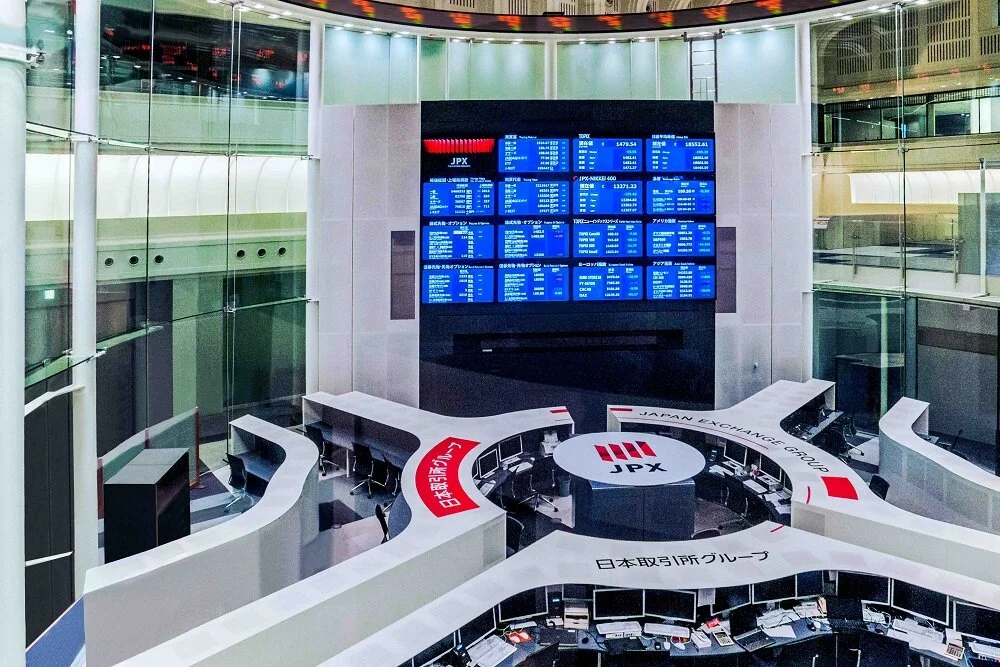
    Tokyo Financial Exchange will introduce a futures contract tied to the Bank of Japan’s overnight call rate this month. The contract targets traders hedging volatility between policy meetings. Last month, the central bank lifted its benchmark rate to a 31-year high of 1.25 percent. That was its second increase this year.

    Faster rate adjustments broke the central bank’s previous pattern of six-month pauses between increases. The new contract allows financial institutions and corporate treasuries to hedge specific policy meeting outcomes. They no longer have to rely on wider quarterly averages.

    Plunging Activity in Three-Month TONA

    Trading in the exchange’s existing three-month Tokyo Overnight Average Rate (TONA) futures failed to match market needs during recent policy shifts. Volume in that contract fell nearly 50 percent in September compared to the same month a year earlier, the exchange reported.

    Market participants faced mismatch risks under the three-month design when pricing rate hikes scheduled weeks apart. “Interest rate moves have become more active lately, and there is an increase in demand for derivatives trading,” said Ryosuke Seo, a director in the wholesale business department at the Tokyo Financial Exchange.

    Exchange Competition Against Swaps Desk

    Both Tokyo Financial Exchange and Osaka Exchange, a unit of Japan Exchange Group, launched three-month TONA contracts in 2023 ahead of the central bank’s exit from negative interest rates. Neither venue took decisive liquidity away from private dealer networks.

    Over-the-counter overnight index swaps remain the primary competition because they allow customized maturities matched directly to meeting dates. Notional volume in yen overnight index swaps extending out past 30 years reached a record high last month, according to Japan Securities Clearing Corp data.

    Implications for Commercial Borrowers

    For Japanese businesses and regional corporate treasuries, listed meeting-date futures provide a transparent pricing mechanism for short-term borrowing costs. Commercial real estate borrowers, consumer lenders, and retail supply chain financiers in Tokyo have seen debt servicing expenses climb as rates advanced from negative territory to 1.25 percent.

    An active exchange-traded contract reduces reliance on bespoke bank swaps. Those private swaps often carry higher bid-ask spreads for smaller institutional participants. Tokyo Financial Exchange must now build adequate clearing volume before the next central bank tightening cycle takes hold.

    Context of the Policy Tightening Cycle

    This launch follows monetary tightening steps across 2024 and 2026 that dismantled over a decade of ultra-loose policy. The Bank of Japan exited negative interest rates in 2024. That shift altered domestic yield curves and prompted financial institutions to seek shorter-duration hedging tools.

    Traders and money-market desks now look to the central bank’s December meeting. Consensus estimates point to a third rate hike that would push Japan’s benchmark lending rate above 1.25 percent before year-end.

  • Ethereum Holds Near $2,700 as Futures Open Interest Hits $33.69 Billion

    Ethereum Holds Near $2,700 as Futures Open Interest Hits $33.69 Billion

    Ethereum held near $2,702 on Oct. 4 as cryptocurrency derivatives open interest reached $33.69 billion across global exchanges.

    The asset gained less than 1 percent over 24 hours, maintaining a narrow range after closing at $2,687 on Oct. 3 and $2,668 on Oct. 2.

    Trading volume in Ethereum futures hit roughly $25.04 billion in a 24-hour window. Market data tracked by CoinGlass showed elevated use across derivatives venues, leaving positioning exposed to sharp liquidation cascades if spot prices break key support or resistance thresholds.

    use Expands While Bearish Bets Surface

    Large proprietary trading desks and individual accounts took opposing positions as volatility compressed. Market trackers recorded a single short position worth approximately $61 million opened against the token, carrying an estimated liquidation price near $3,010.

    Spot pricing gained 7.1 percent over the trailing 30-day period. That month-long recovery established a higher base following late-September turbulence, yet price action stalled below broader technical breakout targets.

    Retail and institutional market participants face conflicting technical indicators. Some chart analysts point to a rising wedge pattern that risks a pullback toward $2,400 if lower support fails, while bullish desks target an initial push toward $3,000 before challenging higher boundaries.

    Exchange Inventories Show Mixed Capital Flows

    On-chain exchange reserves reflect conflicting behavior rather than sustained accumulation. CryptoQuant recorded a daily netflow of 17,492 ETH moving into centralized exchange wallets, adding to available liquid supply.

    Tracked exchange balances stood at roughly 14.66 million ETH across global platforms. That aggregate total follows a volatile September where single-day spikes altered balance totals, including an inflow of 709,400 ETH to Binance on Sept. 17 alongside isolated whale withdrawals exceeding 5,000 ETH from major venues.

    These opposing movements indicate portfolio repositioning and collateral management across venues rather than outright long-term treasury accumulation by Asian institutions.

    Testnet Roadmap Sets Immediate Technical Catalyst

    Protocol developers are shifting focus to core network upgrades rather than short-term market fluctuations. The Ethereum Foundation confirmed that the Glamsterdam upgrade will activate on the Sepolia testnet on Oct. 6 at 13:53:36 UTC.

    The software update integrates enshrined proposer-builder separation, block-level access lists, and revised gas accounting mechanisms. Mainnet deployment dates remain unconfirmed pending the results of the Sepolia trial run.

    For crypto treasury desks and digital asset funds across the Asia-Pacific region, operational stability across testnets takes precedence before allocating fresh spot capital to the ecosystem.

    Support Thresholds Define Immediate Trading Ranges

    Price action over recent weeks shows spot markets consolidating within a tighter band after absorbing initial September selling. Ethereum cleared its late-September lows, yet overall market dominance remained steady near 11 percent while Bitcoin held 57.39 percent of aggregate digital asset market capitalization.

    Traders are watching the $2,400 support level to gauge whether the current recovery holds or unwinds into used liquidations. A sustained break above the $3,000 mark remains necessary to force short liquidations and confirm a broader trend reversal.

  • S&P Dow Jones Indices Tests New Strategies in South Korea Ahead of Global Markets

    S&P Dow Jones Indices Tests New Strategies in South Korea Ahead of Global Markets

    S&P Dow Jones Indices is introducing its newest investment strategies in South Korea before other markets, using the country as a launchpad for global innovation.

    The index provider is testing products ranging from multi-asset and covered call strategies to thematic indices and blockchain-based versions of core benchmarks such as the S&P 500.

    Cameron Drinkwater, chief product and operations officer at S&P DJI, outlined the expansion in Seoul this week during Korea Premium Weeks. Drinkwater, who joined the firm in 2019 and previously served as chief financial officer, said local investor acumen and inventive financial firms make the country a prime testing ground.

    Tokenised Benchmarks and Retail Crypto Demand

    Digital asset infrastructure anchors the push into Seoul. South Korea maintains one of the highest retail cryptocurrency participation rates in Asia. That creates a consumer base accustomed to 24-hour trading, direct custody inside unified digital wallets and fractional share purchases. S&P DJI plans to match these trading habits by putting traditional benchmark exposures onto distributed ledger networks.

    On-chain indices allow asset managers to offer fractionated index units without the clearing overhead of traditional depository receipts. Tokenised index units reduce settlement friction for institutional distributors in Seoul. They also permit instant rebalancing across multi-asset portfolios. Local brokerages that run separate desks for domestic equities, offshore derivatives and digital tokens can merge those channels into unified mobile platforms.

    “It is a very important market for us not only because it is growing so quickly but also because of the amount of innovation that has been originating here,” Drinkwater said.

    Institutional Infrastructure and Product Design

    South Korean asset managers have become prolific issuers of complex exchange-traded products, particularly covered call strategies linked to major US equity indices. These yield-focused instruments sell call options against underlying index holdings to generate cash distributions for local retail accounts. Local firms frequently modify standard option-writing schedules to maximise monthly payouts. That push forces index providers to supply custom calculation algorithms and dynamic strike selection models.

    Execution plumbing carries the operational risk. Retail appetite for high-distribution strategies is strong, but covered call structures cap upside capital gains during market rallies. If domestic issuers flood the Seoul exchange with overlapping derivative-income products, secondary market liquidity could fragment. That would widen bid-ask spreads during periods of elevated equity volatility.

    Derivatives Expansion and Regulatory Timelines

    Expansion in Korea aligns with a broader buildout of S&P DJI’s global derivatives ecosystem. S&P DJI signed a 25-year extension of its exclusive licensing agreement with Cboe Global Markets through 2051. The agreement preserves Cboe’s exclusive rights to trade S&P 500 Index options while establishing joint work on tokenised option contracts. SPX options trading hit an annual record of 970.6 million contracts in 2025. Average daily volume reached 3.9 million contracts, up 25 per cent from 2024.

    Rollouts for on-chain indices in Seoul depend on final policy guidelines from domestic financial authorities. South Korean regulators are drafting frameworks for digital asset classification and tokenised securities through 2026. Technical operating standards are scheduled for completion in early 2027.

  • Ethereum Falls to $2,694 as BlackRock Outflows Snap Seven-Day ETF Inflow Streak

    Ethereum Falls to $2,694 as BlackRock Outflows Snap Seven-Day ETF Inflow Streak

    Ethereum dropped 1.26 per cent to $2,694.64 in 24 hours as institutional buyers paused after a seven-session run of net inflows into spot exchange-traded funds.

    United States spot Ethereum funds logged $2.81 million in net outflows on September 29, abruptly ending a week of sustained capital allocation.

    Institutional Outflows Snap Buying Streak

    BlackRock’s ETHA led the reversal, recording $8.94 million in net withdrawals in a single session. That outflow broke the momentum that had carried the token through its recent recovery, stripping away the primary source of spot market absorption. Without steady fund buying to soak up sell orders, the market turned defensive as short-term traders took profits.

    Institutional flows dictate price floors in this cycle far more than retail volume. When spot ETF allocations stall, spot books thin out rapidly, exposing used positions across major derivatives exchanges.

    use Flush Triggers Liquidation Cascade

    Derivative markets amplified the downturn within hours of the ETF flow reversal. Forced closures erased $11.88 million in used long positions in a single one-hour window on September 29.

    Total liquidations across all Ethereum trading pairs reached $56.64 million over the 24-hour period. That cascade pushed prices down through intraday bids, creating automatic selling pressure as brokerages closed under-margined accounts. Funding rates and open interest contracted as over-used traders were cleared out of the order books.

    Technical Support Levels Under Pressure

    Ether is now trading below overhead resistance at $2,786. The immediate support zone sits between $2,612 and $2,626, matching the token’s 20-day exponential moving average.

    A failure to hold the $2,612 floor opens a direct path toward secondary support at $2,544. Conversely, buyers must clear the $2,786 level on a daily closing basis to create momentum toward the next resistance target at $2,894.

    Macro Inflation Data Dictates Next Range

    Trading desks have shifted focus to broader macroeconomic indicators to gauge whether institutional allocators will resume spot buying. Risk appetite across digital asset markets remains tied to monetary policy expectations and interest rate differentials.

    Market participants are watching the United States Personal Consumption Expenditures price index release on September 30, with trading desks tracking whether the 20-day average near $2,612 holds through the macro print.

  • S. Korea opens mini-sized derivatives market

    S. Korea opens mini-sized derivatives market

    South Korea opened a mini-sized futures and options market on Monday to offer investors wider choices for hedging and trading, hoping to revitalize the once-vibrant derivatives market with robust liquidity.

    The Korea Exchange currently operates futures and options trading based on the KOSPI 200 index, a flagship index composed of the top 200 stocks by market capitalization. The new system offers contracts for as little as 25 million won ($21,900) and 5 million won for KOSPI 200 futures and KOSPI 200 options, respectively, one-fifth of the minimum price for the current contracts. On the first day of trading, 3,132 contracts of mini KOSPI 200 futures were traded. Retail investors and institutions each held 43.2 percent and 38.9 percent, while foreigners held 17.9 percent, the KRX said.

    Mini KOSPI 200 options registered 6,814 contracts, with half of them traded by foreigners. Institutions and retail investors accounted for 26.8 percent and 22.7 percent of the turnover, respectively. The bourse operator expected the low-cost entry will attract more investors to the derivatives market to boost liquidity and improve the pricing mechanism.

    The latest measure comes as the nation’s derivatives market has suffered a sharp downfall in its trading volume since stricter regulations were adopted in 2011 to limit small speculators in response to calls to cool the highly speculative market.  South Korea was the world’s leading derivatives market in 2011, but it fell to 12th place last year as tight access rules have driven investors to other markets, including the United States and Japan, according to the KRX.