Tag: developer

  • Android 12 Developer Preview hints that a 5G Pixel 6 XL is coming

    Android 12 Developer Preview hints that a 5G Pixel 6 XL is coming

    The first Android 12 Developer Preview was released last week, it carries a hidden UI that is similar to Samsung’s One UI. For those unfamiliar with One UI, the software is designed to bring interface elements like buttons, toggles, checkboxes, icons, sliders, progress bars, and more closer to the bottom of the screen. This way, users won’t have to perform calisthenics with their fingers in order to tap one of these elements in the upper reaches of the display.

    By enabling a hidden “Silky home” feature flag, new system settings UI surfaces with elements placed near the bottom of the display. Go to adb shell settings put global settings_silky_home true. The version of the UI with the flag enabled has the content moved lower toward the bottom of the display in order to make one-handed use possible.

    There is no guarantee that the “Silky home” mode will be part of the stable version of Android 12. More exciting though is the possibility that catering to a larger-sized Android screen like this feature does, is a sign that Google is going to be offering a Pixel 6 XL model this year. So far there is no indication that this is in the cards, and there are other large-screened Android phones that could use a UI with more reachable elements. But many of these are Samsung models already served by Samsung’s One UI. Eliminate Samsung from the equation and the odds improve in favor of a Pixel 6 XL.

  • Facebook’s Opens Lawsuit against an app developer

    Facebook’s Opens Lawsuit against an app developer

    Kettle, meet pot. Or perhaps we should say, man bites dog. Either way, it symbolizes news announced on Friday by Facebook. The company, which faces an FTC fine of $3 billion to $5 billion for allegedly using members’ personal data without consent, filed a lawsuit against a company for doing the same thing. The suit was filed this past Friday in California Superior Court for the County of San Mateo against a South Korean company called Rankware.

    Rankware is an app developer; the company and its apps have been suspended from Facebook. Despite the suspension, it appears that the company still has in its possession some Facebook user data. In the suit, Facebook asks the court to demand that Rankware delete the user data it obtained and hints that the defendant might have sold this information to other firms. The social networking company says that Rankware refuses to say who it turned over the user data to, and would not “[p]rovide a full accounting of Facebook user data in its possession.”  The filing adds that while Rankware had agreed contractually to follow Facebook’s rules, it “failed to comply with Facebook’s requests for proof of Rankwave’s compliance with Facebook policies, including an audit.”

    The filing goes on to note that since 2014, Rankware has been “us[ing] Facebook Pages data associated with its apps for its own business purposes, which include providing consulting services to advertisers and marketing companies.” The filing claims that the defendant has generated $9.8 million by selling Facebook members’ user data to advertisers. The social networking firm sent a cease and desist letter to Rankware earlier this year, and while the developer said it did not violate Facebook’s terms of service and policies, it would not provide any proof of this.

    “By filing the lawsuit, we are sending a message to developers that Facebook is serious about enforcing our policies, including requiring developers to cooperate with us during an investigation.”

    The suit says that Rankware’s actions harmed the reputation, public trust and goodwill of Facebook. It seeks an injunction that would prevent Rankware from accessing Facebook’s platform, force the South Korean developer to show proof of its compliance, and delete any user data that it obtained in violation of Facebook’s rules. Despite asking the court to award it financial damages and any money that Rankware received “unjustly,” Facebook says that money isn’t enough to make up for the harm caused by Rankware’s actions.

  • Google removes apps from the Play Store for Ad fraud

    Google removes apps from the Play Store for Ad fraud

    A successful Android app developer with over half a billion installs to its credit is having its apps removed by Google from the Play Store. DO Global, based in China, has had 46 apps erased from Google’s Android app storefront after an investigation conducted by BuzzFeed found serious issues with the apps. Before Google started taking action against the developer, DO Global had approximately 100 apps in the Google Play Store making this one of the biggest actions ever taken against an app developer by Google. The remaining apps will be removed shortly. DO Global had been a wholly owned subsidiary of well know Chinese internet firm Baidu. But last year, the unit was spun off and Baidu kept a 34% stake.

    The initial report from BuzzFeed said that at least six of the apps from DO Global would click on ads even if the app was not being used. Online security firm Checkpoint, in partnership with BuzzFeed, found the apps loaded with malware that it dubbed PreAMo.That’s because the apps fraudulently clicked on banner ads served up by mobile ad networks Presage, Admob, and Mopub. Checkpoint states that the malware was installed from these six apps a total of 90 million times.

    Some of the apps involved were credited to developers like “Pic Tools Group” and “Photo Artist Studio,” and their true ownership was hidden by DO Global. That’s another violation of Play Store rules. The developer contact information was also different on several of the apps, obfuscating their true owners. The actual titles include apps like RAM Master-Memory Optimizer; Photo Editor-Makeup Camera & Photo Effects and Crashy Cops. DO Global claims that its apps have 250 million monthly active users, and said that its mobile ad platform reaches 800 million people.

    “We fully understand the seriousness of the allegations. Therefore, after reading the reports about our apps, we immediately conducted an internal investigation on this matter. We regret to find irregularities in some of our products’ use of AdMob advertisements. Given this, we fully understand and accept Google’s decision. Moreover, we have actively cooperated with them by doing a thorough examination of every app involved…moving forward, we will strictly follow relevant regulations and continue conducting a comprehensive review of our products. Lastly, during this process, we have caused misunderstandings and great concern due to our being unable to communicate in a timely manner and provide complete information. We offer our sincere apologies.”-DO Global

    In a statement, Google said that it will always investigate malicious behavior by apps. When it finds violations, it will prevent a developer from monetizing an app through AdMob and/or remove an app from the Play Store.

  • Hong Kong developer takes aim at Trump rhetoric

    Hong Kong developer takes aim at Trump rhetoric

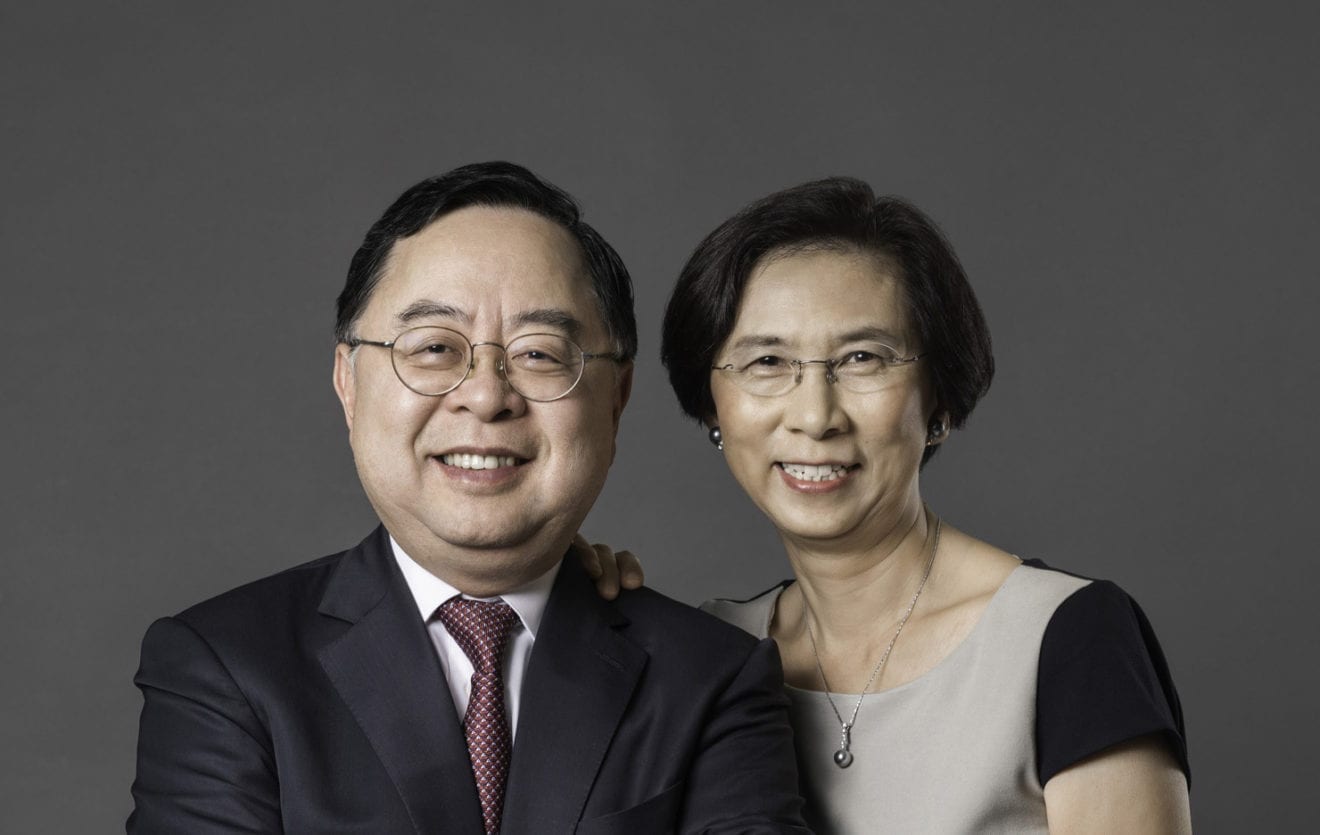
    Hong Kong property tycoon Ronnie Chan Chi-chung came to China’s defense on Thursday, saying U.S. President Donald Trump would eventually become realistic and “shut up,” amid concerns over a looming Sino-U.S. trade war.

    “China is not the same as before. If the U.S. can create troubles for China, it can do the same to the U.S.,” said Chan, chairman of Hang Lung Properties, referring to Trump’s plans to slap punitive tariffs on Chinese imports. “Don’t bother too much about a dog barking.”

    Chan’s remarks came as Hang Lung, one of the first Hong Kong developers to announce annual results, saw its Chinese business outstripped by a stronger Hong Kong market.

    The group reported a full-year net profit of 6.2 billion Hong Kong dollars ($800 million) in 2016, up 22% from a year ago. Underlying profit that excludes the impact of property revaluation jumped 45% on the year to reach HK$6.3 billion.

    Turnover was up 46% to HK$13.1 billion, driven by higher property sales in Hong Kong that grew more than four-fold to HK$5.3 billion. The developer increased sales after a rebound in home prices last April amid an influx of mainland capital, selling some 430 units, including two semi-detached houses in Happy Valley and the upscale Long Beach project.

    Rental revenue was flat. In Hong Kong, the group countered a downtrend in the retail sector with a 5% increase in rental income following mall upgrades to bring in popular sportswear tenants.

    A sluggish economy and retail environment hurt income on the mainland. Rental income from the company’s portfolio of prime offices and eight shopping malls in cities such as Shanghai, Shenyang and Tianjin fell 5% on the year to HK$4 billion. The group blamed renovations that affected occupancy, adding it would continue to develop projects on acquired sites in cities including Wuhan, Wuxi and Kunming.

    “We have 24 million square feet of buildable space in China — it’s a lot of work to follow up on,” said Executive Director Adriel Chan Wenbwo, Chan’s son, who was promoted to the position in November. Asked how he felt about chairing his first earnings briefing, he said: “It’s okay.” He described Managing Director Philip Chen Nan-lok as a “role model.”

    Mainland competition

    Hong Kong developers are facing intense competition as their mainland counterparts accelerate their shopping spree in the territory. On Wednesday, Chinese tourism conglomerate HNA Group outbid 18 developers for its third residential site in Kai Tak, bringing its total investment in the former airport site to HK$20 billion in three months. The latest deal, totaling HK$5.5 billion, is equivalent to HK$13,000 per square foot, about 10% above market valuations.

    Data from the Lands Department showed that Chinese developers splashed out HK$28.1 billion to buy land for building homes in Hong Kong last year, accounting for 41% of the territory’s residential land sales.

    Beijing’s recent capital controls may do little to reverse this trend. Patrick Wong, a property analyst at Bloomberg Intelligence, expects mainland developers to maintain a similar share of land sales in 2017, as active companies are listed in Hong Kong with funding channels abroad. “Despite the cooling measures in Hong Kong, regulatory risks here are mild relative to that on the mainland,” he said, referring to restrictions imposed on homebuyers in more than 20 major Chinese cities.

    Hong Kong developers will face a “tough time” in the land market, Wong said, although they are less aggressive in placing bids due to abundant land reserves. Local developer Hopewell stressed its priority was for existing projects rather than land acquisition. “It’s not very meaningful to look at a particular deal that has deviated from the market,” said Hopewell Managing Director Thomas Wu Man-sun on Tuesday.

    Hang Lung’s elder Chan has a similar view. “It’s a market of short-term irrationality and long-term rationality,” he said, adding that it was a “natural development” for Chinese companies to diversify their investments abroad.

    After a year of aggressive property sales, Hang Lung was left with about 100 units on its inventory list, including 16 luxury houses. Asked whether the group would replenish its land bank, he said: “When ‘black swan’ events such as the 1997 Asian financial crisis happen, that’s our chance to buy land.”
  • Apple CEO Tim Cook in China hails Chinese app developers

    Apple CEO Tim Cook in China hails Chinese app developers

    Apple CEO Tim Cook has hailed Chinese app developers and their contribution to world’s second biggest economy, as he began his visit here days after the tech-giant invested $1 billion in local ride hailing app Didi Chuxing.

    “The momentum is absolutely incredible,” Cook said in a meeting with developers, government officials and journalists.

    He said developers in China have earned over $7 billion, more than half of it in last one year.

    Their apps are popular around the world, with many of them having been downloaded in hundreds of countries, Cook said.

    “We are in the early phases of a tremendous growth,” the 55-year-old CEO said.

    “Government policies like Internet Plus act as the foundation of why I think the growth can be so incredible from here. They foster innovation and entrepreneurship throughout the Chinese economy,” state-run Xinhua news agency quoted him as saying.

    Cook is on his eighth China visit since becoming Apple CEO in 2011.

    He took a Didi taxi with Jean Liu Qing, president of Didi, to meet the developers.
    The Apple chief regularly meets entrepreneurs when in China, and he said he continues to be impressed by them.

    “[China] is one of the most vibrant places in the world. There are so many entrepreneurs now that they’ll drive the next generation of innovation in China,” he said.

    Apple Inc chief executive Tim Cook visited Beijing last Monday, days after announcing a $1 billion deal with ride-hailing app Didi Chuxing, and as the US firm tries to reinvigorate sales in China, its second-largest market after the United States.

    Cook explained that Apple had chosen to invest in Didi as it has been “an incredibly great success story on the App Store,” aside from being a leading ride sharing service both in and outside China.

    He said the investment reflected Apple’s excitement about Didi’s fast-growing business and Apple’s “continued confidence” in China’s economy in the long term.
    Cook did not give a direct answer when asked about rumours that the Didi investment has some connection with Apple’s own plans for an electric car.

    Currently, he said, Apple’s focus when it comes to the car market is on CarPlay, it’s device for connecting Apple smartphones to in-car entertainment systems.

    “We’ll see where that takes us,” he said.
    But Cook became far more direct when asked whether the investment was a sign of Apple losing its innovative edge.

    “No, no, there is no truth behind that at all,” he said, arguing that it was a sign of Apple placing greater focus on China.

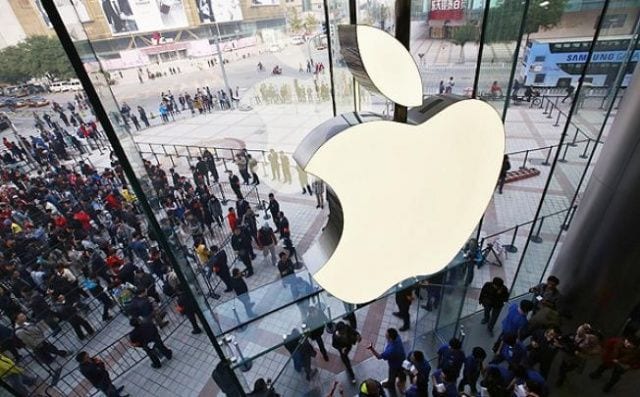
    Apple has already put a lot of money into opening retail stores in China, which is Apple’s second biggest market after the US.

    It is expecting the 37th Apple Store to open this Saturday, approaching Cook’s goal of having 40 before the end of 2016.