Tag: developper

  • Google unveils the developer preview of Android 12L

    Google unveils the developer preview of Android 12L

    The last time there was a dedicated tablet version of Android, it was 2011 and Android 3.0 Honeycomb was running tablets such as the Motorola XOOM. But once Android 4.0 Ice Cream Sandwich was released in October 2011, the days of having a dedicated operating system for Android slates were over. That is, until now.

    You might recall that there was talk about Google releasing Android 12.1 later this year for foldable phones that open to show off large tablet-sized screens. But today, Google introduced the first developer preview of Android 12L (“L” for larger screens) and what was at first thought to be Android 12.1 turns out to actually be Android 12L; the first developer preview of the operating system has been released.

    This build of Android is designed for tablet-sized glass. As Google points out in its release today, “There are over a quarter billion large screen devices running Android across tablets, foldables, and ChromeOS devices. In just the last 12 months we’ve seen nearly 100 million new Android tablet activations—a 20% YoY growth, while ChromeOS, now the fastest growing desktop platform, grew by 92%.”

    Google adds, “We’ve also seen Foldable devices on the rise, with year on year growth of over 265%! All told, there are over 250 million active large screen devices running Android. With all of the momentum, we’re continuing to invest in making Android an even better OS on these devices, for users and developers.”

    One of the hot new features for Android L is a taskbar at the bottom of the screen that can automatically switch to ‘favorite apps.’ And to enter split-screen mode, all you need to do is drag an icon from the taskbar onto either the left or right half of the display. In split-screen mode, the two sides of the display are separated by a divider that can be resized. While the icons on the dock are square, the corners of the app windows are rounded.

    What killed Honeycomb? Some believe that a lack of Android apps created specifically for tablets was the problem; Google failed to inspire third-party developers by creating apps for Android tablets. But if Google can create its own apps for Android 12L, it might inspire third-party developers to spend the time and money on the creation of third-party tablet apps for Android.

    Google says that it expects to release Android 12L “early next year, in time for the next wave of Android 12 tablets and foldable. We’re also offering the features to our OEM partners to bring to their existing large screen devices,” Google says.

    So what’s in Android 12L? Google writes “In 12L we’ve refined the UI to make Android more beautiful and easier to use on screens larger than 600sp — across notifications, quick settings, lock screen, overview, home screen, and more.” According to Google’s Android 12L Timeline, four beta releases of Android 12L will take place in December, January, and February followed by a final release of the operating system in March 2022.

    While Google has talked about eventually releasing Android 12L for regular-sized handsets, right now it’s a no-go because “most of the new features won’t be visible on smaller screens.” The Alphabet subsidiary adds, “Today we’re bringing you a developer preview of 12L, our upcoming feature drop that makes Android 12 even better on large screens. With the preview, you can try the new large screen features, optimize your apps, and let us know your feedback.”

    “In 12L we’ve refined the UI on large screens across notifications, quick settings, lock screen, overview, home screen, and more.” Google continues, “For example, on screens above 600dp, the notification shade, lock screen, and other system surfaces use a new two-column layout to take advantage of the screen area. System apps are also optimized.

  • More Warning Signs at Another Chinese Developer

    More Warning Signs at Another Chinese Developer

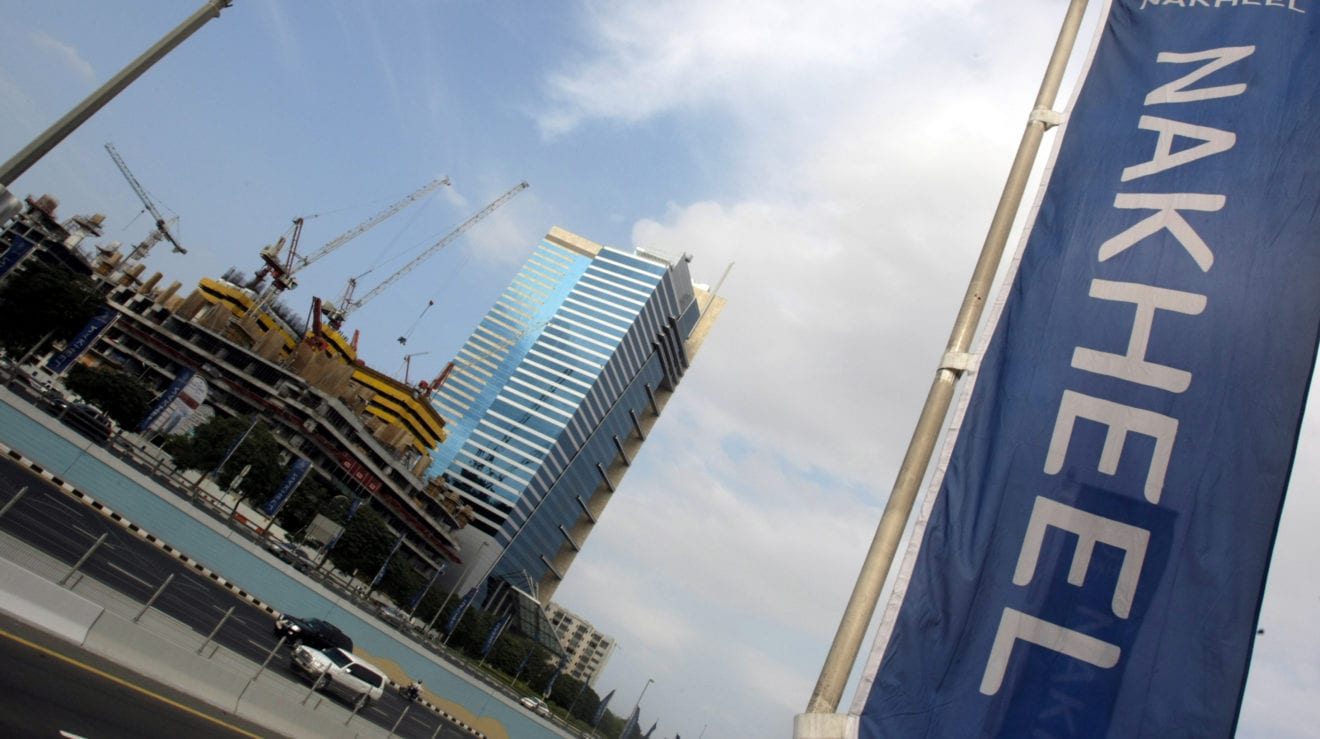
    Tianjin-headquartered Sunac is the latest major property developer to reportedly face troubles, with a letter to Chinese authorities asking for policy assistance.

    Sunac China Holdings Ltd. asked authorities in Shaoxing – a city in the eastern coastal province of Zheijiang – to offer policy assistance due to operational difficulties, according to a report citing a letter from a subsidiary.

    The letter did not elaborate on the type of assistance requested but said that it had never experienced such a radical change in the external environment, underlining a 60 percent year-on-year drop in home sales in Sunaac’s Shaoxing office.

    The market is almost frozen, the letter said. The radical change in policy and environment has seriously disrupted our business and made it very difficult to maintain normal operations.

    Year-to-date, Sunac’s Hong Kong-listed share price has more than halved to HK$13.44, as of publishing.

    On Friday, Sunac’s dollar bonds slumped after the letter circulated in the market with its 5.95 percent bond due 2024 dropping 4.6 cents on the dollar to 85 cents – a record-low closing level.

  • McDonald’s China partners with property developer

    McDonald’s China partners with property developer

    McDonald’s China has formed a partnership with property developer Evergrande Group with the aim of speeding up expansion throughout the mainland.

    This has been announced just a fortnight after the US fast-food giant sold a controlling stake in its Chinese and Hong Kong divisions to China’s state-owned Citic Group. The newly formed McDonald’s China unveiled a plan to add 2000 more restaurants to its 2500 outlets on the mainland China over the next five years.

    Citic chairman Chang Zhenming says the strategic co-operation with Evergrande will help McDonald’s restaurants quickly expand its footprint, especially in third- and fourth-tier cities.

    Evergrande will give McDonald’s “priority” in site selection for its residential property developments nationwide, Citic says.

    The restaurant chain is now aiming to have 45 per cent of its China stores in third- and fourth-tier cities, with more than 75 per cent of them offering delivery.

    Evergrande Group has about 700 property projects in 240 mainly lower-tier mainland cities.

  • Indonesian game developers wake a sleeping giant

    Indonesian game developers wake a sleeping giant

    Avid gamer Alwin Daniel, 24, likes to drift off into his cell phone during his tight daily schedule.

    The Jakarta-based business analyst is intrigued, for example, by the meme-worthy Tahu Bulat, a locally made mobile game.

    “What got me hooked on the game is the fact that the more you play it, the more you can get upgrades and the more money you can collect. It’s an addictive cycle,” Alwin told.

    Tahu Bulat, literally “round tofu”, is the invention of Bandungbased game developer Own Games. Soon after its launch, it leaped onto Google Play Store’s “hit games” list in May last year, even beating Android’s top game Clash of Clans with more than 1 million downloads.

    Without Tahu Bulat’s popularity, not many people would realize what is going on in the local gaming industry, something that could be described as a sleeping giant.

    With little policy support or infrastructure, a number of skillful developers have so far managed to drive up the industry’s impact on the domestic economy through continuous creation and surging credibility.

    Indonesia has about 400 developers who have produced over 1,000 games, according to research by game engine company Unity3D.

    The country had the world’s fastest growing number of mobile game players as of August 2015.

    Indonesia is also the country with the largest amount of mobile game downloads in the world. Some 96 percent of mobile internet users play these games.

    Revenues from the local gaming industry jumped significantly by 77 percent to US$321 million in 2016.

    The skill and the potential of Indonesian game developers has transcended borders as more collaborations with foreign developers are now taking place.

    One such example is the collaboration between Indonesian developer True Digital Plus Indonesia (TDPI), a local unit of Bangkok-based PC and mobile games developer True Digital Plus (TDP) and South Korean developer Supreme Games, which created a mobile strategy game called Triumph Over Pain.

    “Through this game, TDP and Supreme Games will continue to be active in developing the local creative industry by providing the proper benchmark for how local mobile games should be and how skilled our local developers are,” said TDPI’s country director Sofian Martineau, claiming that Triumph Over Pain was the first Action-Based Role Playing Game (RPG) to be released on a mobile platform in Indonesia.

    Several globally well-known action RPG titles include The Elder Scrolls series, the Diablo series and the Dark Souls series, but these titles have yet to make the crossover to the mobile platform.

    Despite its tremendous potential, the gaming industry, which is a subsector of Indonesia’s creative economy, is still largely ignored by the government, a reality acknowledged by the Communications and Information Ministry’s informatics application director general Semuel Abrijani Pangerapan.

    “Right now, local game developers only control 10 percent of the local market share. This could even shrink to 3 percent if the government doesn’t realize the industry’s potential to contribute to economic growth,” he recently said.

    With help from the government, local developers might be able to control 50 percent of the local market by 2020, Semuel said.

    Being a country with the fifth largest number of smartphone users in the world, Indonesia has an immense cell phone user base, and therefore the potential for developing a prominent mobile games industry was significant, he added.

    At present, regulations affecting the gaming industry are minimal and among the few is a decree from the communications and information minister on the Indonesian game rating system (IGRS), which divides games into five different age categories, namely all ages, 3 years and above, 7 years and above, 13 years and above and 18 years and above.