Retail News CRM

Tag: devices

  • Cambodia Slashes Import Duties on EV’s, Solar Devices, and Electric Stoves to Counter Rising Fuel Prices

    Cambodia Slashes Import Duties on EV’s, Solar Devices, and Electric Stoves to Counter Rising Fuel Prices

    In a bid to alleviate the repercussions of escalating global fuel costs resulting from the Middle East conflict, Cambodia has chosen to diminish import duties on electric vehicles (EVs), electric stoves, and solar-powered appliances.

    Curtailing Import Duties

    On March 29, the General Department of Customs and Excise disclosed that the government has resolved to slash import duties from an initial 35% to zero on passenger EVs, electric stoves, and toasters.

    The government further resolved to decrease import duties from 35% to a mere 7% on passenger plug-in hybrid electric vehicles (PHEVs).

    In addition, import duties on chargers for EV batteries, electric rice cookers, and solar lamps have been reduced from 7% to zero.

    New Tariffs from April

    The fresh tariff rates are set to commence on April 1.

    These measures are a response to the dramatic acceleration of fuel prices since the beginning of the Middle East conflict. The government hopes that by reducing import duties on these items, it will encourage more people to switch to using energy-efficient and eco-friendly products, therefore, decreasing the country’s reliance on imported fuels.

    Questions & Answers

    Why is Cambodia reducing import duties on these specific items?
    The government is encouraging the use of energy-efficient and eco-friendly products to lessen the country’s reliance on imported fuels, whose prices have soared due to the Middle East conflict.

    What are the new import duty rates for these items?
    Import duties have been reduced from 35% to zero for passenger EVs, electric stoves, and toasters. For passenger PHEVs, the rate has been reduced to 7% from 35%. Meanwhile, import duties for EV battery chargers, electric rice cookers, and solar lamps have been reduced to zero from a previous rate of 7%.

    When will these new tariff rates take effect?
    The new tariff rates are set to go into effect from April 1.

  • Microsoft Bridges Android-Windows Gap: Seamless Transition across Devices Now Possible with Windows 11

    Microsoft Bridges Android-Windows Gap: Seamless Transition across Devices Now Possible with Windows 11

    Microsoft continues its quest to enhance Android compatibility with Windows 11, introducing exciting updates that aim to facilitate a smoother interaction between the two platforms.

    Expanded App Integration

    Previously, Microsoft had introduced the capability to resume playing Spotify tracks on Windows 11 from the exact point where users had paused on their Android phones. Now, this functionality is being expanded to include a wider range of applications. The integration is currently being rolled out incrementally, starting with the Windows 11 Insider Preview Build 26220.7271 (KB5070307). While it remains in its beta stage, with positive user feedback, it is expected to become available to all Windows 11 users in the near future.

    This expanded feature means integration is no longer limited to Spotify alone. For instance, users of vivo Android phones can now pick up their web browsing on their PC from where they left off on their mobile’s vivo browser.

    Moreover, owners of Samsung, Oppo, Huawei, Honor, or vivo devices can open files from the M365 Copilot apps, including Word, Excel, and PowerPoint, on their PCs. Depending on whether the app is installed, the files will either open within the app or in the user’s default browser. However, it is important to note that offline files stored on the phone are currently not supported.

    Closing the Android-Windows Gap

    The integration also allows users to resume using other applications on their PCs from where they left off on their Android devices, similar to the Spotify feature. This is a significant step forward in bridging the gap between Android and Windows, a challenge that has long been frustrating due to the numerous variations of Android and different device manufacturers involved.

    The challenge is further amplified when compared to the seamless cross-device continuity enjoyed by Apple users, who can start a task on an iPhone and continue on a MacBook or iPad. However, Microsoft’s recent efforts to emulate this seamless transition, albeit across different brands within the ecosystem, are quite promising and could prove to be a game changer for both Windows and Android users.

    Improved Mobile Experience

    Once this feature is accessible to all, it is expected to significantly enhance the user experience. The ability to transition seamlessly between an Android phone and a Windows laptop without losing one’s progress is a minor convenience that could make a major impact.

    Questions & Answers

    What is the main update provided by Microsoft for Windows 11?
    The key update allows users to resume their activities on Windows 11 from where they left off on their Android phones across a wider range of apps, not just Spotify.

    What are the M365 Copilot apps and how are they integrated into this feature?
    The M365 Copilot apps include Word, Excel, and PowerPoint. Users with certain Android devices can now open files from these apps on their PCs.

    What does this update mean for Android and Windows users?
    This update signifies a major step towards bridging the gap between Android and Windows, offering users the potential for a more seamless cross-device experience.

  • Google’s “Find My Device” network reportedly launching in 3 days

    Google’s “Find My Device” network reportedly launching in 3 days

    Following the leak that Google’s “Find My Device” network settings were already appearing for some Android users, it looks like Google is ready to move to the next step. A small subset of users has already received an email that lets the cat out of the bag on when exactly the service would be officially launching.

    An email blast was sent last night to some users which included some official information on when the “Find My Device” network would be launching to the masses. Although the settings began to appear yesterday on Android devices for some users with the beta version of Google Play Services installed, the settings weren’t actually working. Now, it looks like we have a more accurate timeline on when the switch will be flipped.

    The email contained the following verbiage: “You’ll get a notification on your Android devices when this feature is turned on in 3 days. Until then, you can opt out of the network through Find My Device on the web.” Based on the date the email was sent, it’s looking like the service will likely launch on Monday, April 8th, as it is unlikely for Google to launch a new service over the weekend.

    In case you are out of the loop, last year, Google unveiled the Android Find My Device network to assist users in locating lost or stolen smartphones. However, concerns about stalking using tracking devices such as AirTags prompted Google and Apple to collaborate on a solution, delaying the launch of the Find My Device network. Now, with Apple getting ready to deliver these new anti-stalking features with the iOS 17.5 update, Google no longer has to wait.

    Considering that this email was only received by a very small number of users, it is possible it was never meant to be sent out. We don’t know if this means that the launch date on the email is incorrect, or if someone just pressed “send” by mistake. Either way, we are excited to see this finally come to pass and a proper “Find My Device” network finally be put in place for Android users.

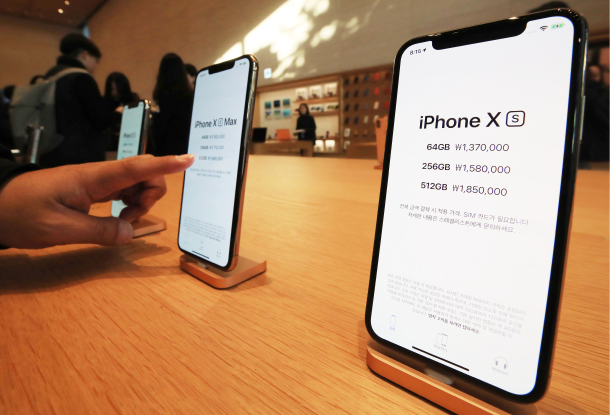
  • Apple will reportedly allow Apple Watch to pair with multiple devices

    Apple will reportedly allow Apple Watch to pair with multiple devices

    When you buy a new Apple Watch, it must be paired with an iPhone. While one iPhone can be paired with multiple Apple timepieces, one Apple Watch cannot be paired with multiple Apple devices. But a Twitter tipster who made a great call last year says that the rumor mill is actively cranking out fresh speculation for mass consumption. This rumor says that Apple is developing software updates allowing an Apple Watch to pair with multiple Apple devices, including an iPhone, an iPad, and a Mac.
    Currently, an Apple Watch cannot pair with an iPad, but with the timepiece paired with an iPhone, a user can use his Apple Watch to help him view Apple Fitness+ workouts on an iPad that uses the same Apple ID. And those with an Apple Watch can unlock their Mac computers, view passwords, authenticate apps, and verify the user’s identity to complete an online Apple Pay transaction.
    “Apple Watch will sync across multiple iOS/iPadOS/Mac devices, and will no longer be tied to one single iPhone.” The tipster says that while he doesn’t know how Apple will implement this, he does know that in a future update, Apple will allow the Apple Watch to sync with more than one Apple device. Also unknown is which Apple Watch models will have this new feature and when it will be introduced.
    For example, the tipster says he is unsure whether Apple will include this new capability with watchOS 10, iOS 17, iPadOS 17, and macOS 14, all due out later this year, or if it will be delayed until then the 2024 updates.  The tipster, @analyst941, made a great call on the Dynamic Island before the feature was announced last year giving him some legitimacy.

    Recently, @analyst941 posted not to give up on seeing solid-state buttons replace the mechanical buttons on the two upcoming premium iPhone 15 models, contradicting more well-known analysts such as Haitong Tech’s Jeff Pu, and TFI International’s Ming-Chi Kuo. Pu and Kuo both say that Apple will stick with the physical buttons on the iPhone 15 Pro and iPhone 15 Ultra. But @analyst941 wrote that the two models “will still have capacitive touch buttons, {and that] contrary to rumors, the development team is working too closely with new hardware to turn back now.”

    The tipster also recently tweeted a list of new features he expects to see on iOS 17. Apple will discuss iOS 17 on June 5th, when the keynote will be held for the WWDC 2023 Developer’s Conference. The new iPhone, Apple Watch, and iPad operating systems will be released in September.


  • Google Meet update adds important audio capabilities

    Google Meet update adds important audio capabilities

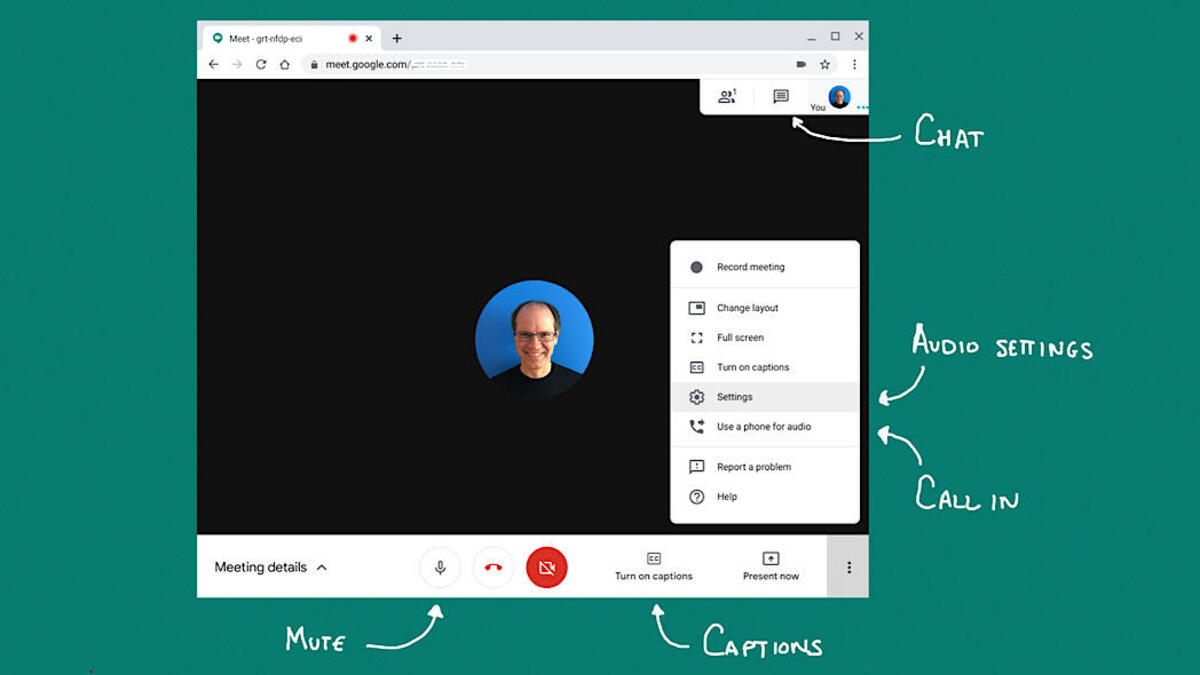
    Google Meet is getting a small yet important update this week, which adds noise cancellation capabilities to the app. The new feature is available to all Google Meet users starting today and there’s no need to make any adjustments to the app’s settings to benefit from noise cancellation.

    Google Meet users can take advantage of noise cancellation if they join a meeting using any Google Meet hardware devices. Also, the feature is available for the meeting organizer’s Google Workspace edition. It’s important to mention that if a user has noise cancellation, the feature will be active in all meetings regardless of whether the meeting organizer has noise cancellation or not.

    Google Workspace accounts that have noise cancellation enabled by default for their organizations in meetings with other people outside, they can also use the feature, but only during that meeting.

    The new feature is enabled by default for Google Workspace Business Standard, Business Plus, Enterprise Essentials, Enterprise Standard, Frontline, Enterprise Plus, and Workspace Individual Subscriber accounts. However, noise cancellation will not be on by default for Education Plus, and Teaching and Learning Upgrade accounts.

  • Netflix brings three new mobile games to its subscribers

    Netflix brings three new mobile games to its subscribers

    Netflix’s games program doesn’t work like traditional games services since it doesn’t require users to pay a monthly subscription. However, you do have to be a Netflix subscriber to have access to several mobile games in its library.

    When it launched early last month, the program offered to Netflix subscribers a pretty short list of mobile games they could play for free: Stranger Things: 1984, Stranger Things 3: The Game, Shooting Hoops, Card Blast, and Teeter Up.

    Less than two weeks ago, Netflix added two new games to the lineup: Gameloft’s Asphalt Xtreme and Bowling Ballers. Today, three new games are added to the roster: Dominoes Café, Knittens, and Wonderputt Forever.

    Although these might not be as appealing as the previous titles, they’re free to play and don’t include ads, additional fees or in-app purchases. If you want to play any of the games offered by Netflix and you’re using an Android device, you can do so via the dedicated games row and games tab.

    On the other hand, members on an iOS device will see a dedicated games row where they can select any game to download.

  • Microsoft is reportedly working on a chip for its Surface devices

    Microsoft is reportedly working on a chip for its Surface devices

    Microsoft could be working on its own chips for future Surface devices, a LinkedIn job listing suggests. It reveals that the company is looking for a Director of SoC Architecture.

    Although the LinkedIn post by no means proves that Microsoft is working on a custom chip, it’s appearance roughly coincides with a rumor about Microsoft and AMD’s collaboration on an Arm processor for laptops. Apparently, it will lead to better graphics performance than Qualcomm silicon manufactured on older architecture. Per that report, the chip will use last year’s Cortex-X1 core and mRDNA 2 GPU, and it will feature an Exynos modem for 5G connectivity.

    Here is what the job listing says:

    Are you passionate about building cool devices and technologies? The Surface team is lighting up Microsoft experiences with the next generation of devices. A fundamental part of our strategy is bringing productivity and mobility together through devices that enable new experiences – helping people and organizations unlock their creativity, passion, and potential.

    Bloomberg said back in December 2020 that Microsoft was working on in-house chip designs for server computers that run its cloud service and was also exploring a chip for powering some of its Surface computers. At that time, the chip design unit was allegedly reporting to the head of the Azure cloud business, and not Surface boss Panos Panay.

    Microsoft has seemingly also poached processor engineers from Intel, AMD, Nvidia, and Qualcomm.

    The Surface Pro X that was announced in October 2019 is fueled by a custom chip known as the Microsoft SQ1 that the company jointly developed with Qualcomm.

    An in-house chip will help Microsoft reduce its reliance on third-party vendors and it will also give it greater control over performance and costs.

    This is something some of its industry peers are already doing. Apple is highly likely to announce its second-generation Arm-based chip tomorrow for the new Macs and possibly next year’s iPad Pros. Google has also made an in-house chip for its 2021 flagship smartphones.

  • Hulu Originals adds HDR support for Apple TV 4K, Roku and other devices

    Hulu Originals adds HDR support for Apple TV 4K, Roku and other devices

    When it comes to adopting new technologies, Hulu is clearly behind the curve. For example, HDR support is one of the many features that users have been requested for a long time. While we’re happy to report that Hulu has finally implemented the feature, HDR is only available for some of its Originals on select devices.

    Spotted by an AVS Forum user, the new addition to the service specifically works for select Hulu Originals such as Nine Perfect Strangers, The Handmaid’s Tale, Little Fires Everywhere, Castle Rock, Four Weddings and a Funeral, The Runaways, and several others.

    Hulu also revealed that HDR support is only available to viewers with select devices, including Roku, Fire TV, Fire TV Stick, Fire TV Cube, Apple TV 4K, Vizio, and Chromecast Ultra. The new feature requires the latest version of Hulu’s app.

    HDR streaming should provide viewers with a higher contrast range for much finer picture details. If you want to make sure that the content you’re watching is streamed in HDR, you should look for a special badge that typically appears on the details page of the TV show or movie.

  • Google unveils a fresh batch of important Android enhancements and features

    Google unveils a fresh batch of important Android enhancements and features

    Android 12 might not be ready for primetime just yet, but while adventurous users try out Google’s next big batch of mobile improvements and cool new features and the vast majority of the world’s smartphone owners continue to wait for a stable Android 11 update, the search giant is today taking the wraps off half a dozen smaller enhancements aimed at making handsets “more secure and convenient for everyone.”

    Small doesn’t equal trivial in this particular case, mind you, and perhaps more importantly, it’s definitely worth highlighting that these six fairly meaningful new features, just like the six unveiled back in December 2020, are not exclusively headed for owners of Android 11-running devices.

    Incredibly enough, you don’t even need Android 10 to enjoy Password Checkup functionality, be able to schedule your texts in the popular Messages app, “get more done hands-free” with Google Assistant, darken your Google Maps routes, spice up your Android Auto drives, or further improve the accessibility of the already extremely convenient TalkBack service.

    Arguably the most exciting new tool integrated into global devices powered by Android 9 and above starting today, at least for users perennially concerned about their online and mobile security, is Password Checkup. This has been a thing on the Chrome browser for more than a year now, expanding to support pretty much any app on your phone requiring login credentials.

    Google’s hugely popular Autofill feature will automatically check to see if said credentials are compromised, immediately alerting you when detecting a potentially stolen password and prompting you to choose a new one. Of course, you’re free to ignore Big G’s security warnings, but in the long run, it’s definitely wise not to do that. You never know when a compromised password publicly available for bad actors to use at their discretion will in fact be used against you in one of many and equally scary ways.

    While significantly less… dramatic, the second big new feature unveiled today may well appeal to an even larger number of users worldwide, aiming to make it easier to communicate with your friends and family from far away.

    Whether you live in a different timezone from someone you deeply care about or fear you might forget to wish your better half a happy birthday before everyone else, you can now “schedule send” messages on phones with Android 7 and up as long as you download or update the aptly titled Google Messages app to its latest version.

    253 million is a pretty lofty number, so it shouldn’t come as a big surprise that Google is paying very close attention to the extensive global community of blind and low-vision Android users, revamping the TalkBack experience with more intuitive gestures, a unified menu, a new reading control menu, and well, more, with some of these important accessibility changes showcased in the short video embedded below.

    Meanwhile, there’s not a lot to say about the imminent worldwide expansion of the Google Maps dark theme other than “finally!” This has been a very long time coming, and as you can imagine, its activation requires little to no effort… if you know where to look. Namely, in the “Theme” submenu of your navigation app’s “Settings” menu, where you can choose to use Google Maps “Always in Dark Theme”, as well as easily switch back to the light side.

    No Android update would be complete without some sort of a Google Assistant upgrade, and indeed, the AI-powered service is improving its convenience by displaying cards that can be read at a glance and perform more tasks than ever before sans requiring you to unlock or touch your Android phone.

    Last but not necessarily least, Android Auto is gaining the ability to keep you entertained during your long drives with a number of fun little voice-activated games, as well as new custom wallpapers to brighten your day and personalize your car display. These features will be available “in the coming days” on phones running Android 6.0 and up when connected to a compatible vehicle.

  • Apple Music update brings some iOS 14 features to Android devices

    Apple Music update brings some iOS 14 features to Android devices

    Apple briefly tested some iOS 14 features for its Music app for Android devices last month, but they were only available for those able to access the beta version of the app. Starting this week, just about all the important changes that were spotted last month are now making it to the stable version of the Apple Music app.

    If you’re using Apple’s music streaming service on an Android phone, here is what you’ll get in the latest update. First off, the update adds Listen Now, a new section that replaces the For You tab, a brand-new search experience, which involves relocating the search icon to the bottom bar, and, finally, an enhanced playback experience.

    Under the “enhanced playback experience” tag, you can include important new features like Autoplay, Crossfade, as well as the possibility to share on Instagram, Facebook, and Snapchat Stories. All of these new features are now available to all Apple Music users on Android devices.

    Besides the most obvious stuff, Apple mentions that the update also improved the app’s performance, which means a lot of under-the-hood changes were made too. To get the most out of your Apple Music app, you can download the latest update right now via the Google Play Store.

  • Apple’s mobile devices can help diagnose a serious health issue

    Apple’s mobile devices can help diagnose a serious health issue

    With Apple working hard to come up with more health-related features for its products, drugmaker Eli Lilly announced last week that certain Apple products can help spot people with dementia. Early results from a test showed that devices including the iPhone, iPad and Apple Watch, in combination with certain apps and the Beddit sleep monitoring device, can reveal whether a person has “mild Alzheimer’s disease dementia” and “mild cognitive impairment” (MCI). The study was conducted by Apple, Lilly and health care company Evidation Health on 113 people age 60 to 75 over a period of 12 weeks.

    Those participating in the study were asked to answer a pair of one-question surveys each day. They also were asked to perform certain tasks on an app such as tapping on a circle as fast as possible and dragging on screen an object with a certain shape to another object. Other tests were performed on the participant’s ability to type and read. The results of the study were presented at the Association for Computing Machinery’s KDD conference in Anchorage and found that those with symptoms of dementia tended to type at a slower rate of speed than others, and sent fewer text messages over a set period time.

    16TB of data were collected from the participants, and the study showed that Apple devices and certain apps can help monitor symptoms of those diagnosed with MCI or mild Alzheimer’s disease dementia; detect cognitive changes that could point to MCI; test the effectiveness of treatment and therapies; and speed up the development of therapies to produce more accurate diagnostic tools.

    Over the past few years, we’ve seen how data and insights derived from wearables and mobile consumer devices have enabled people living with health conditions, along with their clinicians, to better monitor their health. We know that insight from smart devices and digital applications can lead to improved health outcomes, but we don’t yet know how those resources can be used to identify and accelerate diagnoses. The results of the trial set the groundwork for future research that may be able to help identify people with neurodegenerative conditions earlier than ever before.”-Nikki Marinsek, Ph.D., first author and data scientist, Evidation Health

    “Lilly has been leading the fight against Alzheimer’s disease for more than 30 years, and we’re broadening the application of digital health to identify tools that may improve the lives of people with chronic conditions and diseases. While further research is needed, the study findings provide important insight into the potential benefits of wearable devices in identifying chronic health conditions such as MCI, Alzheimer’s disease, and dementia. These findings could inform subsequent research that may eventually lead to early screening or detection tools for neurodegenerative conditions.”-Divakar Ramakrishnan, Ph.D., chief digital officer, Eli Lilly ”

    Apple has already demonstrated that it can integrate life-saving health tools in the Apple Watch; the heart-rate monitor has already saved a number of lives and the breakout feature on the Apple Watch series 4 is the electrocardiogram (ECG) sensor. The latter detects abnormal heartbeats indicative of Atrial fibrillation, which can lead to blood clots, heart failure, strokes, and death. This life-saving feature has become so popular that Samsung is including it on the Galaxy Active Watch 2. However, as it did with Apple’s ECG sensor, the FDA needs to greenlight the one on Sammy’s phone. As a result, the ECG sensor will be disabled on the new Tizen-powered timepiece until sometime during the first half of next year.

    Apple released a very brief statement related to the release of the study. Myoung Cha, Apple’s Head of Health Strategic Partnerships, said, “We are excited to work alongside Lilly and Evidation in supporting the research community, as they seek to discover digital biomarkers of cognitive impairment.”

  • ZTE debuts China’s first 5G smartphone

    ZTE debuts China’s first 5G smartphone

    ZTE has launched the first 5G smartphone in China, the ZTE Axon 10 Pro 5G. The vendor’s flagship 5G smartphone is ready for commercial use on China’s upcoming 5G networks.

    The device has achieved downlink speeds of 2Gbps under China’s 5G experimental network based on EN-DC technology in April, and achieved 100Mbps speeds over 5G at a launch event for the device yesterday.

    ZTE said the ZTE Axon 10 Pro 5G includes a number of innovations designed to overcome the technical challenges involved in supporting 5G networks, including liquid cooling technology and composite phase-change thermal materials to allow the CPU to operate at a high frequency for extended periods.

    In addition, the device includes innovations in electromagnetic compatibility, antenna design and power consumption.

    The device is the first commercial smartphone to use the Qualcomm Snapdragon 855 5G chipset with the chipmaker’s Snapdragon X50 5G modem. It sports up to 8GB of RAM and 256GB of ROM, runs on the Android P operating system and includes a large 6.47”, 2340×1080 AMOLED display.

    “ZTE is always active in promoting and accelerating the 5G end-to-end commercialization process. We have submitted over 3,500 5G patent applications, among which including thousands of terminal-related 5G patents,” ZTE Mobile Devices CEO Xu Feng said.

    “ZTE is keeping open in 5G ecosystem development by cooperation with leading carriers worldwide and industry-chain partners to let 5G happen in the near future.”

  • Docomo, Itochu Logistics test IoT for delivery-fleet management in US

    Docomo, Itochu Logistics test IoT for delivery-fleet management in US

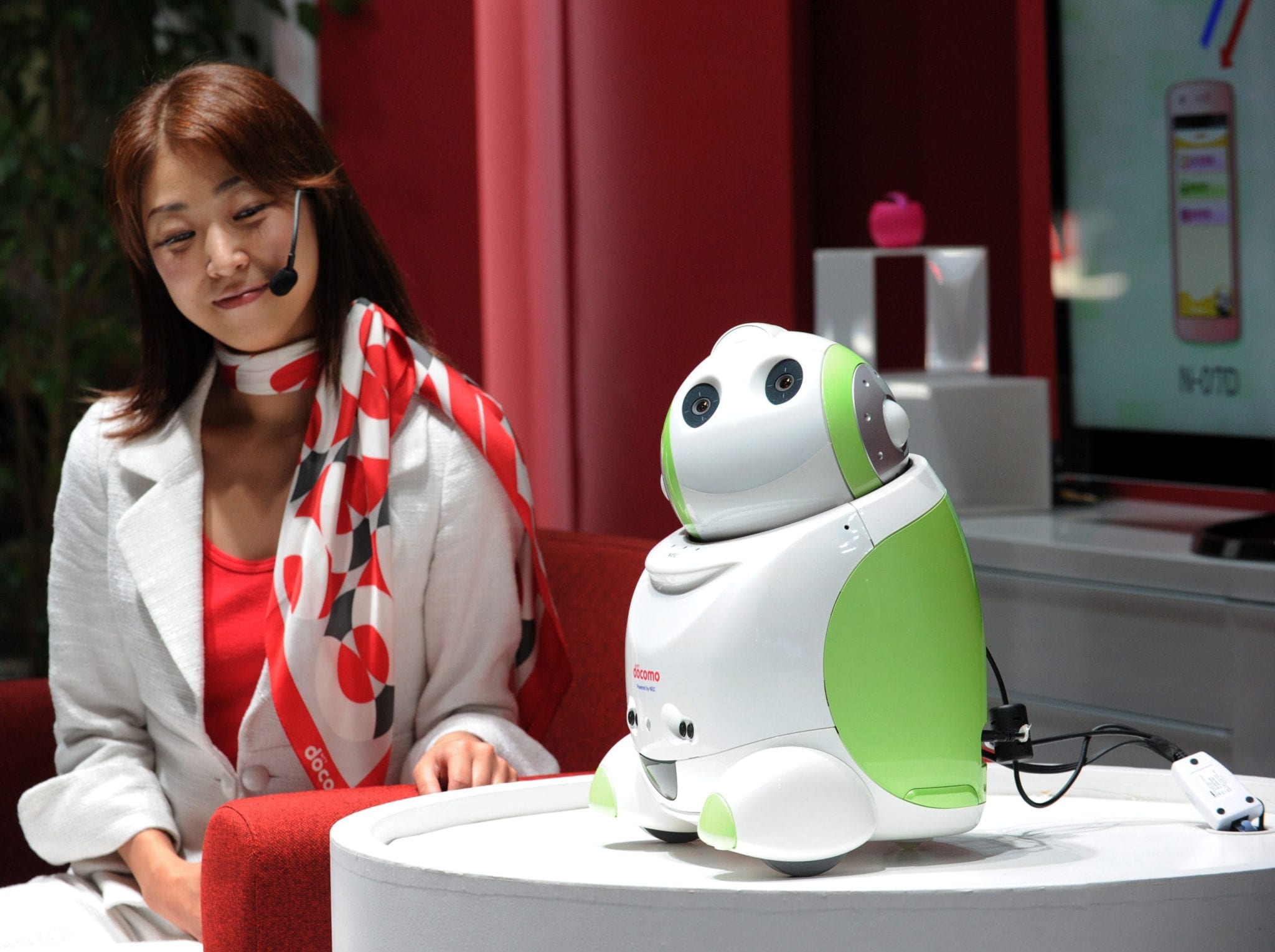
    Japan’s NTT Docomo and Itochu Logistics are planning to trial an IoT solution for delivery fleet management in the US.

    The solution uses devices compatible with low-power, wide-area LTE-M technology to track the status of outsourced trucks in their fleets.

    The trial will begin in the United States on May 1, 2019.

    According to the companies, the solution involves placing hand-held, battery- or solar-powered devices in trucks to collect data, such as truck locations and frequency of sudden braking, which will be sent through an LTE network to a dedicated website.

    The solution can also provide temperature, humidity, brightness, etc. data depending on delivery needs, as well as notify customers via email when the trucks approach their destinations.Itochu Logistics USA expects to save time using the solution compared to the conventional method of manually phoning drivers to confirm their locations and estimated delivery times.

    The solution will be tested for its effectiveness in supporting the management and safety of truck fleets at Itochu Logistics USA’s delivery-trick network and logistics system.

    “While most delivery trucks are equipped with GPS devices, the location data typically is available to the owner but not to logistics/transport companies that retain the trucks on an outsourced basis,” the companies said.

    “The solution’s easily deployed LTE-M devices, however, will give logistics/transport companies dedicated access to location and other useful information about trucks operating temporarily in their fleets.”

    The trial is part of the Globiot global-IoT initiative that Docomo launched on July 2, 2018.

    The Japanese mobile giant said it expects the solution will be marketed widely throughout US, Japan, and Asia.

  • SmarTone, Ericsson trial FDD massive MIMO in Hong Kong

    SmarTone, Ericsson trial FDD massive MIMO in Hong Kong

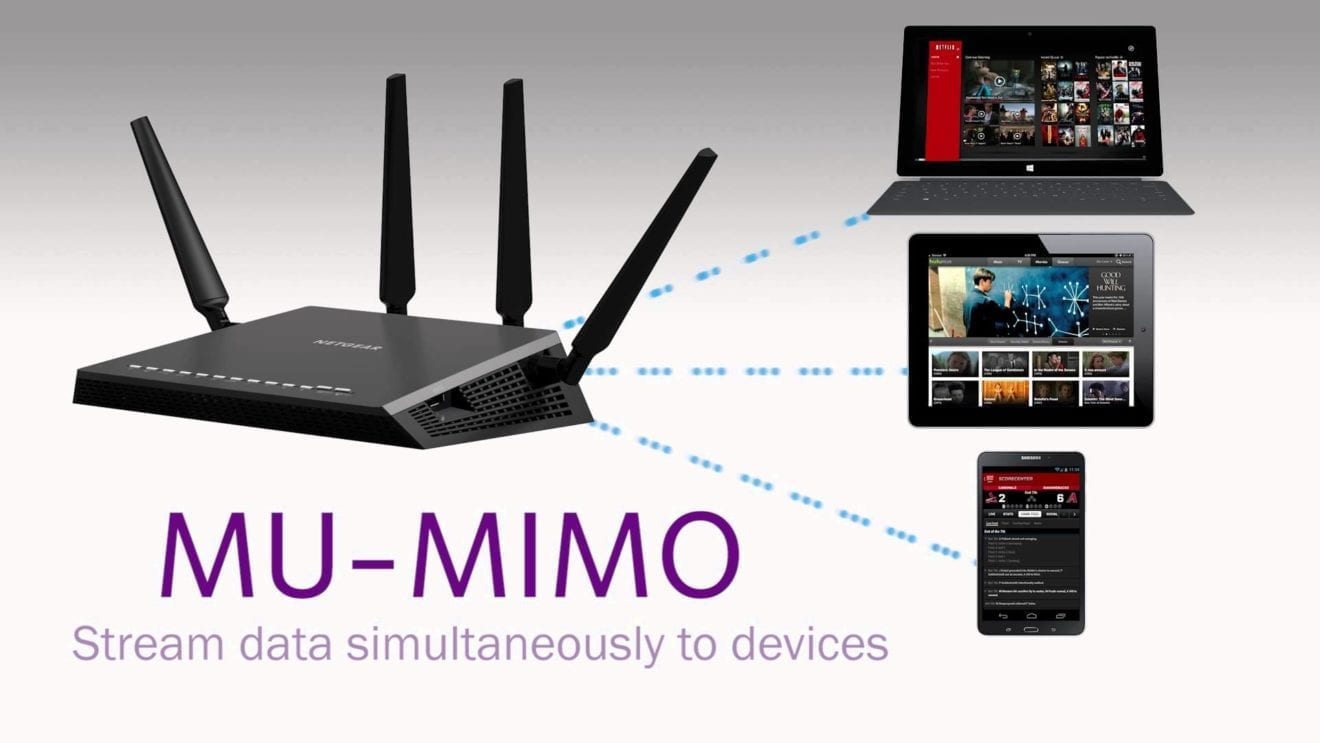
    Ericsson and Hong Kong mobile network operator SmarTone have begun to trial FDD (Frequency Division Duplex) massive MIMO (Multiple Input, Multiple Output) technology as part of the operator’s network evolution plan towards 5G, said the companies in a press event in Hong Kong Monday.

    The trial, involving FDD massive MIMO on 1800 MHz, represents the first of its kind for operators in Hong Kong. The trial comes ahead of 2018’s planned deployment of AIR 3246, Ericsson’s new radio that can support massive MIMO over 4G/LTE with Ericsson’s 5G massive MIMO plug-in, said the companies.

    “Our extension of the strategic partnership with Ericsson in October last year includes a five-year network evolution plan towards 5G,” said Stephen Chau, CTO, SmarTone. “Ericsson’s FDD massive MIMO solution will play an instrumental part in providing our customers in dense urban environments with [the] enhanced user experiences they have come to expect from SmarTone.”

    “We are working closely with SmarTone to develop, trial, and deploy key 5G technologies that will further enhance the user experience,” said Nishant Batra, head of product area network infrastructure, Ericsson. The recent LAA field trial, and now the trial of FDD massive MIMO, enable us to jointly shape the next-generation network technology.”

    Ericsson recently launched its first radio, AIR 3246, supporting FDD massive MIMO for both 4G and 5G. The technology is designed to enable operators—especially in metropolitan areas—to bring 5G to subscribers using today’s mid-band spectrum and boost capacity in their LTE networks.

  • Connected consumers driving growth of smart devices in Asia Pacific

    Connected consumers driving growth of smart devices in Asia Pacific

    Action cameras, flat panel TVs and wearables were the fastest-growing technology products in the past year.

    The consumer technology market in Asia Pacific (APAC) has grown tremendously over the past year, with the introduction of new technologies and advancements of existing technologies.

    One innovative product that is gaining popularity in the market is the action camera. More brands (from 2 brands in 2015 to 13 brands in 2016) that offer 360-degree features have entered the market. In the last 12 months, emerging markets in APAC have been the key growth driver for such action cameras, registering 57% and 33% increase in sales volume and value respectively, while the region’s developed markets experienced a corresponding 9% and 40% growth last year.

    Action cameras with 4K features are also selling well with sales accounting for 47% and 52% growth in volume and value respectively in APAC. Meanwhile, emerging markets in the region contributed up to 46% share of the pie in both volume and value terms.

    “Nowadays, consumers are increasingly sharing videos, contributing to the rising popularity of action cameras,” said Gerard Tan, Senior Director, Technology at GfK Asia. “Besides one of its key draw factors of being able to connect seamlessly to today’s smartphones, action cameras also tend to appeal to active consumers who are seeking new and interesting ways to record their lifestyle activities to view or share in full HD quality.”

    Another product which has jumped onto the 4K bandwagon is TVs. In the past year, 4K TVs, also known as Ultra High Definition (UHD), have been gaining traction as sales growth hit over 103% in units across APAC in the past 12 months, with the market upgrading the display resolutions from Full High Definition (FHD) to UHD. Demand is expected to continue to rise at a rate of 42% in 2017, with emerging economies projected to register higher growth (55%) due to the erosion of UHD prices.

    “There is a rising uptake of 4K TVs as discerning consumers are increasingly choosing UHD TV technology due to its sleek design and better image quality,” observed Tan. “The popularity of UHD will subsequently create more opportunities for content studios to produce better image content, especially when more recording devices are beginning to support 4K recording, enabling more UHD content to be made readily available for consumers.”

    Since the advent of the Smart TV in 2011, there have been ample opportunities for companies to develop TV software for its platforms. In the last 12 months, sales of Smart TVs in APAC continued to increase by 40% to reach over 5 million units.

    One of the latest technologies available in the TV market is OLED TV—a TV display technology based on the characteristics of organic light-emitting diodes. According to GfK findings, OLED TV has been registering significant growth since its launch in APAC in 2014, growing in demand from 7,000 units in 2014 to 98,000 units in 2016. As more brands continue to come into the equation, the OLED TV market is projected to expand further by more than 63% in 2017, with huge growth anticipated from the developed markets in APAC.

    Meanwhile, core wearables, comprising smart watches, and, health and fitness trackers, is yet another thriving category within the consumer electronics. Total sales units in the last year reached 3.3 million across developed APAC markets as consumer spending on the product category grew 9% year on year.
    “Heart Rate Sensor and GPS are generally the key features that appeal to consumers looking to purchase a wearable device, and this is reflected in the significant increase in devices that provide these features. The sales of wearables with heart rate sensors rose by 28% within a year, while devices with inbuilt GPS almost doubled (98%) during the same time period,” said Tan.

    With consumers embracing the digital lifestyle and using smart devices, the overall consumer technology market in APAC is expected to perform positively this year, with TVs, action cameras and wearables likely to experience further growth.