
Tag: dexus

  • Anthropic Leases First Stage of $10.4 Billion Queensland Data Centre

    Anthropic Leases First Stage of $10.4 Billion Queensland Data Centre

    Artificial intelligence laboratory Anthropic has agreed to lease the first stage of a A$14.5 billion ($10.4 billion) data centre campus in Queensland proposed by Singapore-based Zerra DC, marking the US company’s first major commitment in Australia.

    Queensland state premier David Crisafulli announced the agreement on Wednesday in parliament, indicating that San Francisco-based Anthropic will invest in the 1.44-gigawatt Western Downs Digital Park located roughly 250 kilometres northwest of Brisbane.

    Consortium structure and power design

    Development filings detail four 360-megawatt facilities built across a 726-hectare site near Dalby over a four- to six-year delivery timetable. The campus sits within an energy corridor hosting 5.4 gigawatts of installed generation, linking directly to the Braemar transmission substation with on-site battery storage to smooth load swings.

    Ownership runs through a joint venture between Macquarie Capital and Zerra DC, the data centre vehicle of Singapore group AGP Sustainable Real Assets. Australian property giant Dexus holds exposure via its 85 per cent stake in Australian Data Centres, which owns a 25 per cent interest in the development entity.

    Anthropic will direct the Queensland compute capacity toward live inference processing for its Claude platform rather than foundation model training. The operator had previously evaluated up to 5 gigawatts of capacity across New South Wales before committing to the Queensland campus.

    Shifting regional capacity and power competition

    For cloud and enterprise operators across the Asia-Pacific region, the Dalby commitment confirms that mega-scale computing demand is migrating away from congested primary metro hubs. Real estate availability and electrical grid capacity in Sydney and Melbourne face severe constraints, pushing wholesale occupiers into regional utility corridors where transmission lines already exist.

    The scale of the project alters capital allocation for digital infrastructure investors across Australia. Total domestic data centre pipeline capacity stands at 16.2 gigawatts across projects worth A$155 billion, but physical grid connection timelines remain the decisive bottleneck for operators seeking to deliver operational halls before 2028.

    Regulatory friction across state and federal policy

    Resource competition is already forcing metropolitan authorities to slow down approvals. While Goodman Group secured clearance for a 135-megawatt asset in Sydney’s Macquarie Park, local councils halted a planned 90-megawatt build in Lane Cove West over municipal water consumption.

    Federal and state policy approaches are also diverging. Canberra outlined rules taking effect in early 2027 that require commercial operators to underwrite dedicated new clean power generation and pay network reinforcement costs. Queensland state ministers, however, have opted to process regional approvals independently to capture private capital investment without mandating exclusive new renewable builds.

    Prior commitments and next milestones

    The lease follows a preliminary memorandum of understanding signed between Anthropic and the Australian federal government in April covering safety frameworks and local technology adoption. Dexus separately initiated a formal capital raising process for its Australian Data Centres subsidiary to bring outside institutional equity into the delivery vehicle.

    Execution of the project now rests on two formal clearances: a development permit from the Western Downs Regional Council and foreign investment approval from the Foreign Investment Review Board. Long-term master plans allow the consortium to expand the campus to six buildings totaling 2.16 gigawatts, which would raise total private investment to A$31.9 billion.
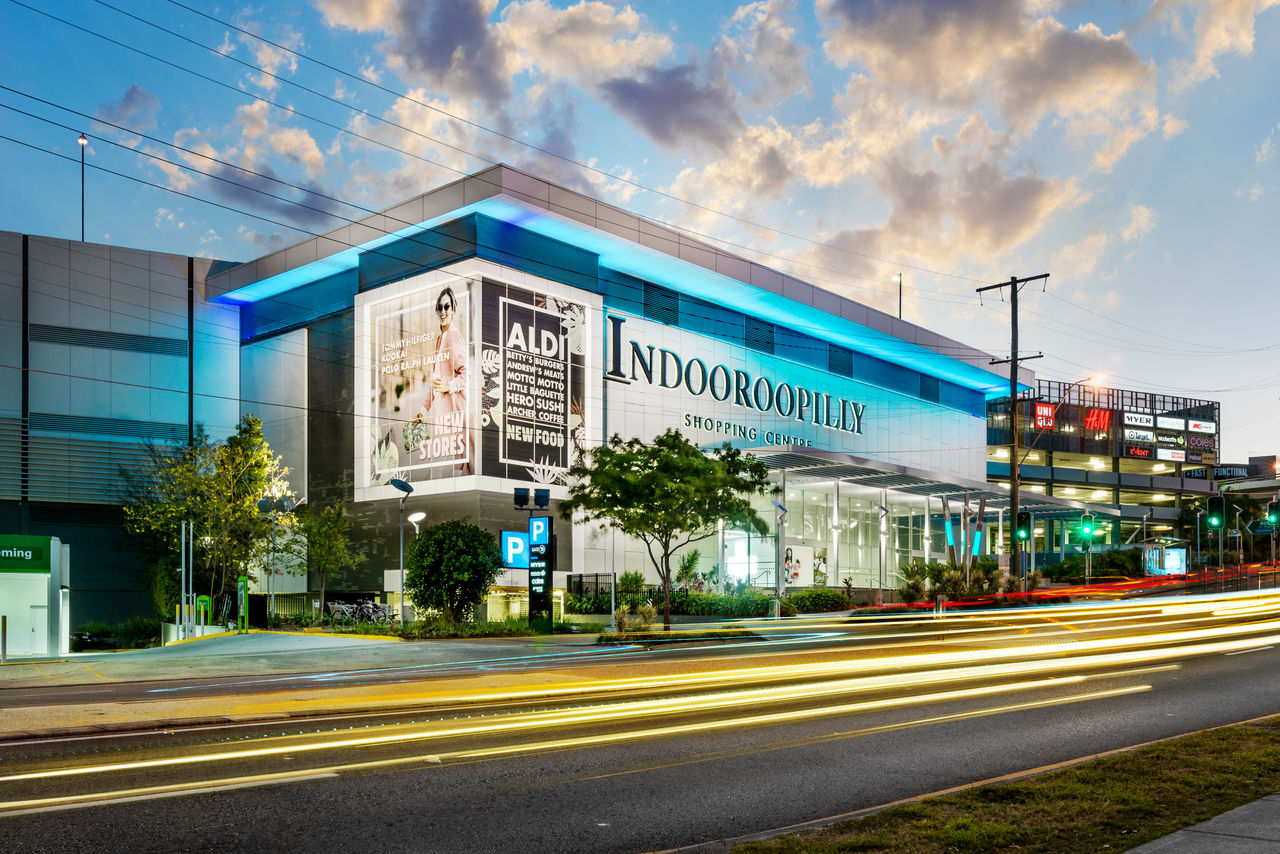
  • Dexus Wholesale Property Fund Returns 9.3 per Cent as Retail Yields Beat Office

    Dexus Wholesale Property Fund Returns 9.3 per Cent as Retail Yields Beat Office

    Dexus Wholesale Property Fund delivered a 9.3 per cent total return in the year to 30 June. It beat its benchmark across an A$13 billion commercial portfolio.

    That performance was the unlisted vehicle’s strongest in four years. Retail rental growth and income yields outpaced the fund’s office and industrial holdings.

    Management resolved a redemption backlog exceeding A$1 billion that had accumulated over the past year. Brad Collier, head of diversified funds at Dexus, told a Sydney industry forum that the fund cleared the queue by selling secondary assets while existing and incoming unitholders bought up liquidity.

    Clearance of Redemptions and Yield Performance

    Capital returned to the fund once asset valuations stabilized after rapid interest rate adjustments across Asia-Pacific property markets. Steady rental increases and high income yields drove performance. Capitalisation rates did not need to compress.

    Sydney premium office space drove much of the return. Assets like Gateway at 1 Macquarie Place held tenant demand as corporate employers paid higher rates for central floorplates to draw staff back into central business districts.

    Retail Outpaces Office on Yields and Sales

    Shopping centres held by the fund delivered income yields above 6 per cent. By comparison, office and logistics assets yielded below 5 per cent. Annual retail tenant turnover grew 5 per cent across the portfolio, giving the landlord pricing power during lease renewals despite subdued consumer sentiment.

    Occupancy across these shopping centres sits above 99 per cent. Collier noted that co-ownership with retail operators like Scentre Group helped maintain tenant retention and rental revenue across major regional destinations.

    Malls as Residential Development Sites

    Large shopping centres with surplus land represent the fund’s primary avenue for value expansion. Dexus is pursuing master-planned rezonings around suburban retail hubs to construct high-density residential towers above and beside existing retail footprints.

    Plans at Westfield Warringah Mall in Sydney’s Northern Beaches call for more than 1,500 apartments across six residential towers on the Scentre co-owned site. The project will double the vehicle’s capital commitment to the property over the long term.

    “They’re seeing returns of 9.3 percent for what is a core portfolio.”

    Institutional landlords across the region are reallocating capital away from standalone department store wings toward housing and health services. This structure generates recurrent residential sales or rental income on owned land. It reduces land acquisition risk while providing built-in foot traffic for ground-floor retailers.

    Divergence Across Sydney, Brisbane and Melbourne

    Performance continues to diverge across Australia’s eastern seaboard capital cities. Brisbane office assets gained institutional investor support after years of restrained construction kept vacancy low. Meanwhile, Melbourne faces high vacancy, landlord leasing incentives, and Victorian state property surcharges.

    The twelve-month campaign of non-core disposals reversed the liquidity freeze that hit unlisted Australian property trusts between 2022 and 2024. That recovery establishes a baseline for institutional capital allocators assessing core real estate entries across Australasia.

    Dexus is advancing planning approvals for the six-tower residential precinct at Warringah Mall while monitoring tenant absorption in Melbourne before lifting its office allocation there.