Tag: Dezeen

  • Cardboard cafe opens in Mumbai

    Cardboard cafe opens in Mumbai

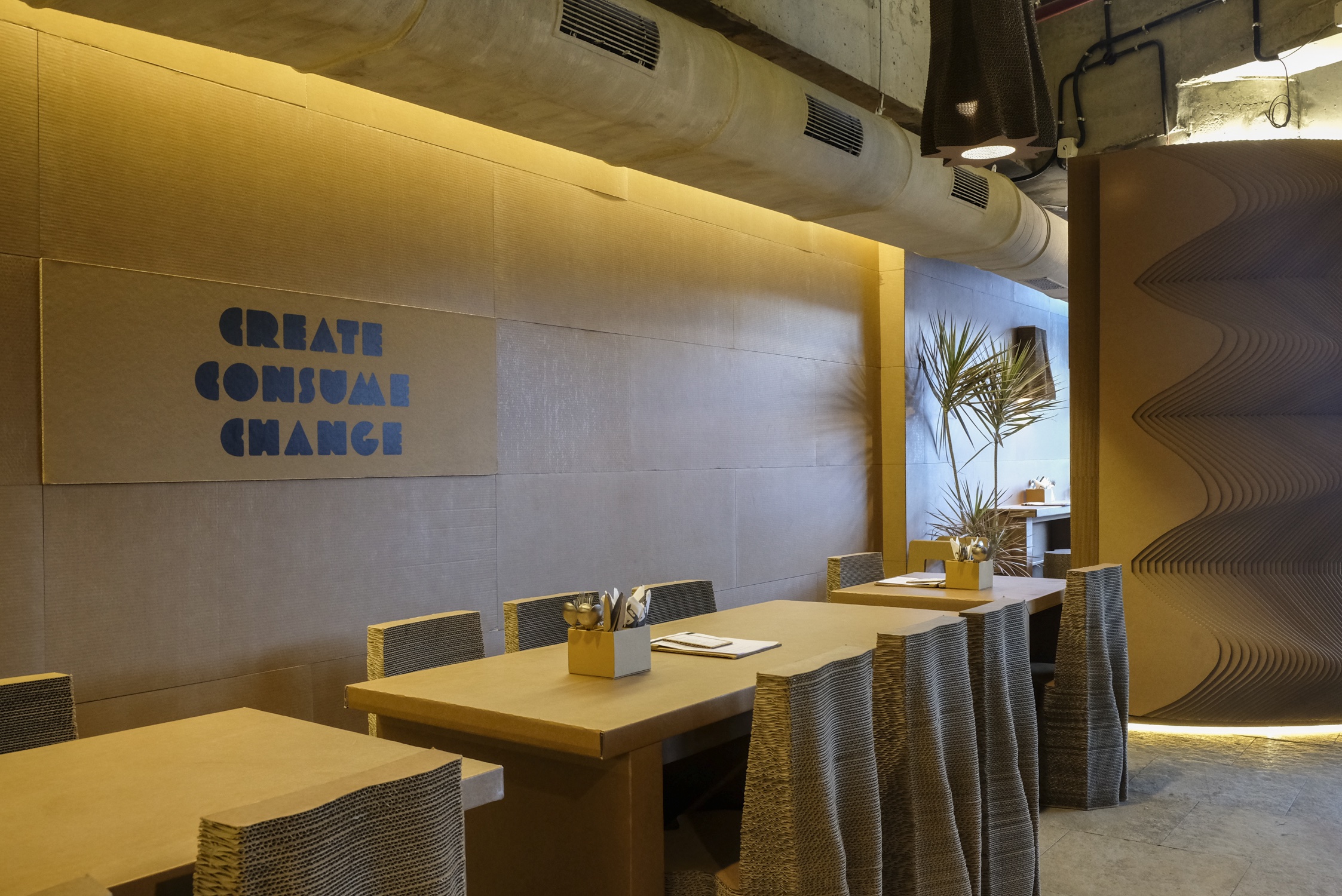
    An entire cafe has been built out of corrugated cardboard in Mumbai, India by local architectural studio Nudes, according to a report in Dezeen.

    In an attempt to demonstrate its versatility, every structure in the cardboard cafe outside the core frame is made from recycled, biodegradable materials, including the furniture. The features were constructed by compiling numerous layers of the cardboard, which was then sculpted into shape. Some furniture in the cardboard cafe, including high chairs for children, are built in segments that can be assembled at will.

    According to Dezeen, the cardboard “is also an insulating material that absorbs sound well in a noisy cafe environment.”

    “Building with cardboard meant constant exploration and inquiry into material performance,” said a Nudes spokesperson. “The table tops are impregnated with wax treatment to prevent water absorption and facilitate ease of maintenance.

    “We are hoping that this space evolves into a vibrant hub for dialogue and conversation on the role of design, material & technology in protecting the earth’s resources towards a sustainable future.”
  • Masquespacio takes inspiration from a laboratory for its colourful store

    Masquespacio takes inspiration from a laboratory for its colourful store

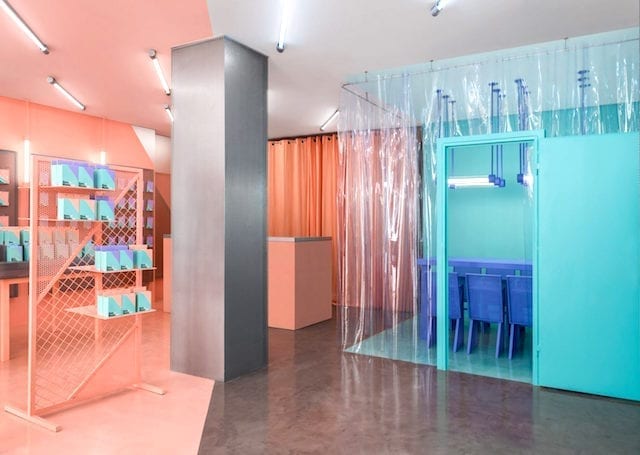
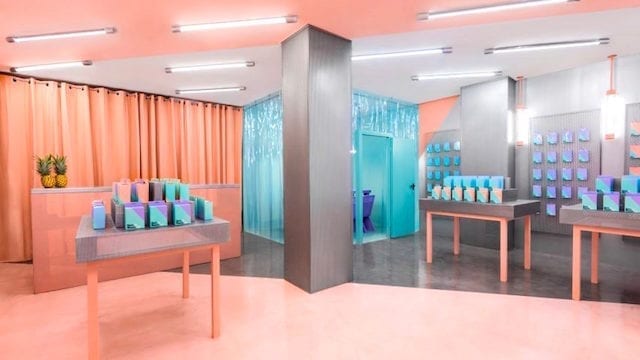
    Clashing colours and sharp angles characterise a unique retail interior created by Spanish design studio Masquespacio, giving little away as to the store’s purpose.

    The space is home to smartphone and gadget repair shop Doctor Manzana, the company’s second store, located in Valencia’s university district.

    Online design magazine Dezeen reports that having already designed Doctor Manzana’s first retail store back in 2013, Masquespacio wanted to use the same bold colours and patterns they had introduced four years ago, but with the addition of some new elements.

    While one half of the space is painted salmon pink, the other has a silver metallic finish, reports Dezeen.  The blocks of colour are applied to the walls, floor, ceiling and fixtures at 54-degree angles, which the designers say is a reference to the angle that a touchscreen device is held at.

    “Besides the four different colours – green and blue as a reference to the doctor, salmon for the fashionistas and purple for the geeks – the metal adds an industrial touch that reminds us of the laboratories,” explained the designers, Ana Milena Hernandez Palacios and Christophe Penasse.

  • China’s XL-Muse reinvents the bookstore

    China’s XL-Muse reinvents the bookstore

    Shanghai studio XL-Muse has come up with creative designs for two new stores for book retailer Zhongshuge.

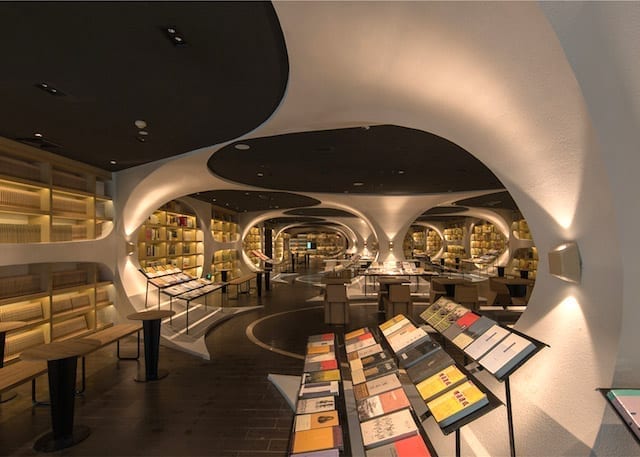
    Shelving reaches to the ceiling in the corridor of the Yangzhou Zhongshuge bookshop and is reflected by the floor below, emulating the effect of water. The designers took inspiration from the store’s waterside location in Zhen Yuan, as well as the area’s arched bridges, reports Dezeen.

    Zhongshuge book store Yangzhou 3

    “In the past, guided by water, many literati and poets visited and gathered here,” says XL-Muse. “The bridges were once the guiding factor of culture and commerce, and they represent the bookstore being the bond between humans and books.”

    The Yangzhou store is the latest interior XL-Muse has created for Zhongshuge. The studio previously created an oval reading room with stepped shelving for a branch that opened in Hangzhou in April. Black mirrored flooring and arched shelves create a tunnel of books. The Zhongshuge-Hangzhou bookshop also has mirrored ceilings and wraparound bookshelves, and a display room with columns shaped like tree trunks.

    Zhongshuge book store Yangzhou 1

    At the Yangzhou store, the concave shelving does not meet at the top, but is separated by a gap shaped like a lightning bolt across the middle of the ceiling. Reflected on the mirrored flooring, this gap is meant to act as a river, leading customers forward into the store.

    Zhongshuge book store Yangzhou 7

    The 1000 sqm space includes a reading room and a village-themed children’s area. The main reading room features curvaceous shapes in the form of sculptural, white pillars that curve inward from the ceiling.

    Zhongshuge book store Yangzhou 2

    Zhongshuge book store Yangzhou

    Shelving is a combination of traditional vertical styles and black metal stands arranged on a gentle slope that complements the curves of the pillars.

    Zhongshuge book store Yangzhou 6

    Meanwhile, the children’s picture book pavilion features shelves shaped like houses, towers, clouds and a hot-air balloon. The wooden shelving is painted in a spectrum of bright colours, and the ceiling lights are arranged to suggest a starry sky.

  • Fast Food Aid Tokyo seeking for long term house

    Fast Food Aid Tokyo seeking for long term house

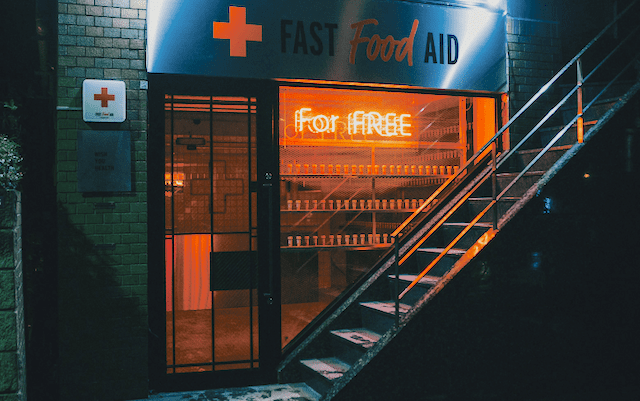
    After a short-term trial, a pioneering pill-store pop-up called Fast Food Aid is seeking a longer-term home in Harajuku, Japan.

    Billed as the “world’s first supplement shop for fast foods”, it offered free tablets to replace nutrients missing from convenience foods like hamburgers, pizza and ramen.

    Fast Food Aid Pop-up Japan 1

    All customers needed to do was trade in the receipt from their latest fast-food purchase. The pills come along with professional advice about the health issues associated with such foods.

    Fast Food Aid Pop-up Japan 8

    With the aim of educating people and discouraging them from choosing non-nutritional meals, the shop was designed by creative director Ikkyu and Junya Sato of design studio Kaibutsu on behalf of Dohtonbori, a restaurant that sells organic, healthy fast food, reports Dezeen.

    Fast Food Aid Pop-up Japan 6

    “This shop doesn’t look like other pharmacies, but the truth is it’s an educational supplement shop,” says Ikkyu. “We opened this shop in Harajuku, where there are a lot of young people who have bad eating habits.

    Fast Food Aid Pop-up Japan 4

    Fast Food Aid Pop-up Japan 3

    “Once they get in, they are surprised with the the supplements they have to intake and understand how bad their eating habit is.”

    The shop’s window featured pill pots lined in rows beneath an illuminated sign reading “For FREE”. Inside, long shelves with more containers are mounted against wire fencing along the side walls.

    Fast Food Aid Pop-up Japan

    The designers aimed to make the space feel as clinical, combining a street fell with a “mad laboratory” atmosphere.