Tag: dfi retail group

  • DFI Directs over Half Its AI Efforts to Merchandising Across 7,600 Stores

    DFI Directs over Half Its AI Efforts to Merchandising Across 7,600 Stores

    DFI Retail Group is directing more than half of its artificial intelligence work towards business transformation, reinvention and innovation, prioritising merchandising across its network of over 7,600 stores in 12 Asian markets. Speaking at the Retail Asia Summit 2026 in Hong Kong, Stijn Casneuf, data & AI automation director, warned that retailers spreading investments across too many simultaneous use cases risk missing measurable returns.

    “Retailers need to focus on initiatives that deliver tangible value rather than adopt AI simply because it is gaining traction,” Casneuf said. Merchandising receives the largest share of attention because improvements directly influence both revenue and profitability, with remaining resources directed to internal productivity gains.

    DFI launched AI supply chain forecasting around one-and-a-half years ago, blending internal enterprise data with weather metrics and holiday calendars to lift prediction accuracy. Having begun restructuring fragmented data systems a year ago to enable effective scaling, the pan-Asian operator is now recording its first wave of operational benefits.

    Building the AI Control Tower

    To coordinate the roll-out, DFI established an internal AI Control Tower comprising representatives from people and culture, technology and cyber security, finance, corporate communications, legal, and AI. The team assesses proposed initiatives against business priorities, shareholder value, customer trust, and team member impact before evaluating technical fit, security, and legal requirements.

    The Control Tower reports directly to the Management Committee, with updates also provided to the board. Casneuf said this structure helps the company concentrate resources on a prioritised set of high-value projects. “We are also taking a hybrid approach to large language models (LLMs), assessing Chinese and Western models according to the requirements of each application,” he added.

    Fixing the Master Data Floor

    DFI’s AI strategy spans four areas, covering merchandising, customers, and storefront store support centres. On the customer side, the group is exploring how the technology can improve product discovery and shopping journeys across digital channels.

    The group is piloting large language models to generate product descriptions by drawing on enterprise resource planning (ERP) data and predefined market best practices. With millions of stock-keeping units across its banners, commercial and master data teams validate the AI-generated descriptions rather than writing them manually, improving searchability and catalogue discovery.

    The Enterprise Automation Race

    Beyond current workflow pilots, Casneuf indicated that DFI is monitoring longer-term shifts in consumer interaction and autonomous ordering technologies. “Agentic shopping remains at an early stage, but DFI has a clear strategy for how customers could eventually use AI agents to shop through its own platforms,” he said.

    The disciplined deployment model reflects a broader shift among regional mass merchants seeking to extract verifiable financial returns from machine learning rather than maintaining speculative laboratory tests. By grounding deployment in core data restructuring and strict executive oversight, DFI is positioning automated forecasting and automated catalogue administration at the center of its regional operations.

    Early Replenishment Results

    DFI began restructuring data processes a year ago and is now starting to see the first wave of benefits. As the company continues to advance, it expects to unlock even greater value and impact across its 12 regional markets.

    RetailNews Asia will track whether DFI’s agentic shopping pilots move from internal tests into live customer applications during upcoming fiscal periods.
  • 7-Eleven Opens 2000Th Store in Guangdong as DFI Expands Network

    7-Eleven Opens 2000Th Store in Guangdong as DFI Expands Network

    Convenience chain 7-Eleven opened its 2,000th store in China’s Guangdong province. The milestone extends the operator’s footprint across 14 cities in the southern economic hub.

    DFI Retail Group manages the franchise network in Guangdong, where it introduced the brand more than three decades ago. The business set up its initial outlet in Shenzhen in 1992.

    Southern expansion

    Building out a network of 2,000 stores in a single Chinese province required navigating shifting municipal planning rules and fierce competition from domestic convenience operators. DFI concentrated on tier-one and tier-two cities, anchoring its business in dense residential clusters, transit hubs, and commercial office towers.

    The current footprint spans 14 municipalities across Guangdong. Shenzhen continues to hold a high concentration of outlets, providing the scale required to support dedicated cold-chain logistics and daily fresh-food replenishment.

    Fresh food and proprietary brands

    Scale in the convenience sector depends on recurring basket margins rather than packaged dry goods alone. DFI targeted daily foot traffic by building out ready-to-eat hot food counters, bakery selections, and proprietary private-label lines that yield higher margins than third-party inventory.

    Store profitability increasingly leans on these prepared meals and exclusive beverage tie-ups. Fast product turnover helps offset elevated commercial real estate leases in major southern commercial hubs, where convenience stores compete directly with local street stalls and regional chains.

    Rival networks and regional pressure

    Guangdong represents one of the most crowded retail arenas in mainland China. Regional domestic operators run thousands of smaller franchised stores across suburban and residential districts, forcing foreign-backed chains to defend prime central locations.

    Landlords in high-traffic transport nodes hold significant use during lease renewals. Operators that fail to extract strong revenue per square metre face rising operational friction, particularly as utility overheads and local store labour expenses increase across southern metropolitan areas.

    Franchise density across the province

    DFI established its first mainland foothold in Shenzhen during the early phase of southern China’s retail liberalisation in 1992. Over the following decades, the group progressively built a supply-chain apparatus capable of sustaining daily inventory cycles across adjacent manufacturing and consumer centres.

    The provincial network expanded before accelerating sub-tier city penetration. That gradual rollout laid the foundation for the current 14-city coverage map.

    Attention now turns to store density in lower-tier municipalities outside Shenzhen, where DFI faces the operational challenge of matching delivery economics against lower average consumer tickets.

  • 7-Eleven Introduces Foodbar Across 16 Singapore Stores

    7-Eleven Introduces Foodbar Across 16 Singapore Stores

    7-Eleven Singapore has launched Foodbar, a fresh in-store counter concept rolling out across 16 stores islandwide as the convenience retailer moves to capture growing demand for quick, convenient dining.

    Introduced in October 2026, the format serves freshly prepared hot meals alongside snack selections, with plans to expand the footprint over time. Layouts adapt to available floor space, customer profiles and footfall, ranging from build-your-own bowl stations to grab-and-go warming cabinets.

    At larger Foodbar branches, customers can customise warm bowls starting from an assortment of bases before choosing proteins and garnishes, while smaller outlets offer hot snack selections. The initiative deepens 7-Eleven Singapore’s operational push into prepared food across its citywide retail network.

    Customisable Bowls and Snack Counters

    DFI Retail Group, which operates the convenience franchise in Singapore, unveiled the concept on Oct 16. Larger locations feature build-your-own bowl counters where shoppers choose a base of rice, penne pasta or noodles, followed by sauces, garnishes and proteins such as roast chicken, hash browns or chicken cutlets. Outlets with tighter footprints carry hot counter selections including pizza slices, croissants, pancakes and waffles for dine-in or takeaway.

    Store formats are tailored to available floor space and local footfall profiles. To accommodate the equipment and dining customers, the operator is refitting selected units to add interior seating and wider aisles. 7-Eleven Singapore managing director Anushree Khosla said the chain is restructuring store layouts to turn outlets into food and shopping destinations.

    Ready Meals Deliver Double-Digit Gains

    Ready-to-eat items already generate a double-digit share of total sales for 7-Eleven in Singapore, while recording double-digit sales growth. An internal survey conducted in August among 1,020 local convenience shoppers who bought prepared food during the preceding month showed shifting consumer schedules and warmer attitudes toward convenience meals over the past three years.

    The chain’s chilled and ambient ready-to-eat inventory now spans 130 items across meals, breakfast, snacks and desserts. Product developments have borrowed directly from formats popularised by convenience networks in Japan, Taiwan and Thailand. Recent launches include halal-certified Korean-style kimbap, onigiri, and pressed toasties inspired by Thai operators.

    Local partnerships have also driven basket sizes. Since 2021, the convenience chain has rolled out co-branded meals with domestic food operators including Andes by Astons, Lau Wang Claypot Delights, Playmade, Chocolate Origin and Nasty Cookie. Sales data showed these branded collaborations outpaced demand for lower-priced budget lines or dedicated health ranges.

    Following the North Asian Operating Model

    For convenience operators across Southeast Asia, moving into hot foodservice is a necessity born of margin compression in packaged consumer goods. Traditional convenience categories such as tobacco, confectionery and bottled drinks face rising wholesale costs and strict regulatory limits. Japanese chains proved decades ago that back-counter food preparation delivers higher retail gross margins, far above packaged groceries.

    The challenge sits squarely in execution. Hot counters require dedicated exhaust, regular oil management, counter staff training and strict hygiene monitoring in compact retail spaces. Singapore’s severe retail labour shortage makes running hot food preparation behind a single cashier till operationally fragile. If lines slow during the midday lunch rush, core grab-and-go shoppers walk out.

    DFI Shifts Capital After Grocery Sale

    The Foodbar rollout follows a broader restructuring of DFI Retail Group’s regional assets. In 2025, the Singapore-listed group sold its Singapore supermarket division, including Cold Storage, CS Fresh, Giant and Jason’s Deli, to Malaysian operator Macrovalue for S$125 million.

    Exiting lower-margin mass grocery freed operating cash to concentrate on high-turnover consumer businesses where the group holds licensed franchise authority. Alongside 7-Eleven’s food transformation, DFI took direct control of Starbucks licensed operations in Southeast Asia and expanded health inventory across its Guardian pharmacy stores.

    The retailer plans to extend the hot-food format beyond the initial 16 locations in phases, tracking average basket spend and kitchen throughput before committing to additional store conversions.

  • DFI to Take over 1,100 Starbucks Stores in $340 Million Deal

    DFI to Take over 1,100 Starbucks Stores in $340 Million Deal

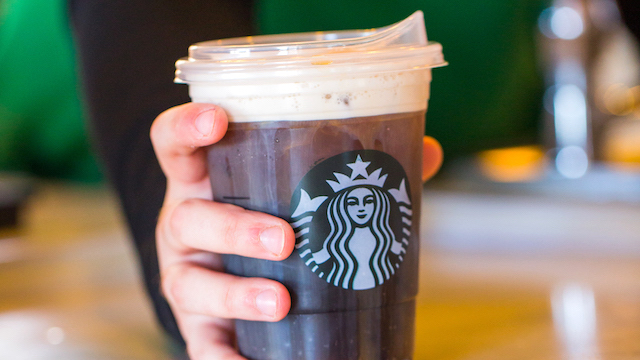
    DFI Retail Group said on Wednesday that its unit will take control of more than 1,100 Starbucks stores across seven Asian markets through a deal with Maxim’s Caterers.

    Maxim’s will pay DFI US$340 million in cash to buy back the 50 per cent stake the pan-Asian retail group currently holds in the Hong Kong catering giant.

    The mechanics of the seven-market swap

    Under the reorganization agreement, a DFI business unit takes over Maxim’s operating interests in licensed Starbucks stores across Hong Kong, Macau, Singapore, Thailand, Vietnam, Cambodia and Laos. The transfer converts DFI from a passive joint-venture shareholder in a broad food-service group into the direct operating licensee for the world’s largest coffee brand across Southeast Asia and Greater China.

    Management expects the absorbed coffee business to generate between US$600 million and US$650 million in subsidiary revenue during the nine months from April to December 2027. Full-year contributions are projected to reach roughly US$900 million by 2028.

    Immediate gains in group revenue and operating margins will follow completion. Additional financial upside will stem from retail procurement and logistics integration across existing store networks.

    Shifting risk from broad dining to branded coffee

    Swapping a diversified dining portfolio for a focused coffee business sharpens DFI’s retail profile during intense regional competition. Running full-service restaurants and traditional bakeries across Hong Kong has exposed operators to shifting consumer habits, rising labor overheads and cross-border spending leakage to mainland Chinese cities. Direct ownership of the Starbucks network gives DFI a single, high-frequency format backed by strong customer loyalty and higher gross margins.

    For retail landlords and supply partners, the consolidation brings Starbucks operations under the corporate umbrella behind major grocery, health and beauty, and convenience store chains. That operational scale provides use over prime mall leases, freight routes and warehousing across Bangkok, Singapore and Ho Chi Minh City. Execution risks center on sustaining store productivity and managing beverage price points across developing markets like Laos and Cambodia as consumer budgets tighten.

    Starbucks overhauls its Asian footprint

    Chief executive Brian Niccol is orchestrating a broader restructuring of Starbucks licensed and equity holdings across the Asia-Pacific region. The Seattle-based coffee chain has cut corporate headcount and closed underperforming North American outlets to protect operating margins while reworking partner equity in Asian territories.

    In mainland China, Starbucks finalized a joint venture structure in April, selling a 60 per cent controlling stake in retail operations to private equity firm Boyu Capital while keeping a 40 per cent interest. Seattle headquarters is also evaluating the divestment of a majority stake in its Japanese retail arm, delegating operational weight to capitalized regional specialists.

    Earnings guidance and payout targets

    Alongside the transaction terms, DFI lifted its 2027 dividend payout ratio target to 80 per cent to return more operational cash flow directly to shareholders. Management reaffirmed its standalone 2028 underlying profit forecast within a range of US$310 million to US$350 million.

    Both companies plan to close the transaction ahead of April 2027, when the initial US$600 million revenue run rate begins registering in group financial statements.

  • DFI Retail Group Tests Experiential 7-Eleven Formats Across Hong Kong

    DFI Retail Group Tests Experiential 7-Eleven Formats Across Hong Kong

    DFI Retail Group rolled out two distinct format concepts across its 7-Eleven network in Hong Kong, targeting airport transit traffic and young mall shoppers.

    The deployment includes a compact food-first site under 100 square metres at Hong Kong International Airport Terminal 2 and an entertainment-focused store at Kai Tak Retail Mall 3. Both formats shift floor space away from traditional packaged goods to generate higher footfall and basket values.

    Hot Food and Collectibles at Kai Tak

    At the airport location, DFI deployed its Hong Kong Taste cafe concept. The layout combines a fresh local hot-food counter, chilled ready-to-eat meals, self-checkout kiosks, and coffee counters within a compact sub-100-square-metre unit designed to compete directly with quick-service restaurants.

    The Kai Tak store focuses entirely on youth merchandise and interactive displays. Shoppers find collectible card vending machines alongside a dedicated K-pop merchandise section requiring staff assistance for access, concert light sticks, Tamagotchi devices, and miniature double-decker bus models. The branch also stocks exclusive collaboration apparel, including Gundam socks and 45th-anniversary branded merchandise, alongside an interactive mechanical keyboard sound wall.

    Yoep Man leads the format trials as chief executive officer of 7-Eleven for South China, Hong Kong, Macau, and Singapore at DFI Retail Group.

    Asian Convenience Chains Pivot to Experience

    Convenience operators across North and Southeast Asia are redesigning store footprints to defend operating margins against rising rents and saturated packaged-goods categories. Regional competitors in Japan, Taiwan, and South Korea have pursued similar split strategies, turning transit units into fast hot-food hubs while transforming suburban mall branches into lifestyle destinations with licensed character goods. DFI’s two concepts test how far a traditional convenience banner can push into quick-service dining and collectible retail within dense commercial districts.

    DFI Retail Group plans to present operational insights and format findings from the Hong Kong pilot during the NACS retail conference taking place from October 6 to October 9.

  • DFI Retail Group Names Kshitij Mulay as Chief Digital and Yuu Rewards Officer

    DFI Retail Group Names Kshitij Mulay as Chief Digital and Yuu Rewards Officer

    DFI Retail Group has named Kshitij Mulay as its new Group Chief Digital and yuu Rewards Officer across its network of 7,659 outlets. The appointment takes effect on 17 September 2026, placing Mulay in charge of the group’s digital commerce, loyalty operations, customer analytics and retail media units.

    Based in Hong Kong, Mulay will sit on the group management committee and report directly to Group Chief Executive Scott Price. He succeeds Wee Lee Loh, who is stepping down after three years with the business to return to Singapore.

    From Sephora to pan-Asian retail networks

    Mulay joins DFI from Sephora Asia, where he served as Chief Information Officer overseeing digital and technology operations across multiple Asian markets. His background covers more than 25 years in retail and consumer technology, including senior roles at Procter & Gamble and Sephora focused on cloud migration, omnichannel commerce and artificial intelligence deployments.

    At DFI, his brief covers a sprawling multi-format retail footprint spanning 12 markets and more than 81,000 employees as of June 2026. The portfolio includes convenience chain 7-Eleven, health and beauty banner Mannings, grocery brands Wellcome and MarketPlace, as well as home furnishings and restaurant operations.

    Scaling digital operations and retail media

    Loh steps down after steering the group’s digital ecosystem through an aggressive build-out since 2023. During his tenure, DFI expanded the yuu loyalty programme to millions of active members and scaled daily online order fulfilment to more than 100,000 transactions across its operating territories.

    Regional retail conglomerates are leaning hard into retail media networks and unified loyalty schemes to generate higher-margin income from grocery and convenience footfall. For operators running thousands of physical checkouts, monetising first-party shopper data through targeted digital advertising has shifted from an experiment into a core balance-sheet priority.

    Mulay begins his role following a handover period with Loh in mid-September, with the group targeting further expansion of its retail media business and automated fulfilment systems heading into the final quarter of the year.