Tag: DHL eCommerce

  • Global-e and DHL Urge Retailers to Address Four Key Cross-Border Buyer Demands

    Global-e and DHL Urge Retailers to Address Four Key Cross-Border Buyer Demands

    Australian retailers targeting overseas markets risk losing sales if they fail to provide upfront pricing and clear customs information, industry executives warned this week. Stewart Smith, MD of Asia Pacific at Global-e, said merchants must show full costs in local currency while customers browse.

    According to Smith, shoppers bring four practical questions to an international purchase: total cost, familiar payment options, delivery timeframes, and ease of returns. Presenting unexpected duties or foreign currency conversions at checkout undermines buyer confidence at the critical moment of purchase.

    Upfront Landed Cost Replaces Checkout Surprises

    Denise McGrouther, MD of DHL eCommerce Australia, noted that operational compliance and accurate dispatch data are equally vital to prevent customs delays and unexpected charges upon delivery.

    Smith noted that true market localisation requires more than surface translation or mechanical currency conversion. Merchants must tailor the entire transaction structure, including local payment methods and clear return protocols, to match the domestic standards of each target territory.

    A surprise charge upon delivery can feel like a broken promise, damaging customer trust and satisfaction

    Customs Compliance Dictates Delivery Success

    The operational friction of cross-border commerce extends directly into customs processing and logistics documentation. Denise McGrouther, managing director of DHL eCommerce Australia, said export data captured at checkout determines whether shipments clear borders or face impoundment.

    Customs agencies rely on electronic shipment manifests to evaluate duties, tax liabilities, and regulatory clearance. Inaccurate product descriptions or incorrect valuation data trigger physical inspections, delivery delays, and costly returns to origin warehouses.

    McGrouther explained that compliance functions serve as an active element of the customer experience rather than a post-sale back-office task. Correct product classification codes and accurate tariff calculations entered during order placement ensure packages move through international sorting hubs without manual holds.

    Tracking Visibility During Transit Delays

    Cross-border carriers require direct data integration with merchant storefronts to maintain parcel visibility across overseas distribution legs. When border authorities hold shipments for routine inspections, automated carrier tracking alerts prevent customer disputes by explaining transit pauses immediately.

    Unclear tracking status drives inbound customer service inquiries and chargebacks for cross-border operators. Providing milestone updates from dispatch through final customs clearance allows merchants to maintain buyer confidence even when international transit encounters unavoidable inspection delays.

    Operational Alignment Across Border Checkpoints

    Retailers scaling export volumes must coordinate checkout software calculations directly with freight carrier documentation pipelines. Discrepancies between the landed cost paid at checkout and the commercial invoice submitted at customs cause tax reassessments at destination ports.

    Aligning upfront catalog pricing with downstream logistics documentation protects brand equity in competitive international markets. Merchants that automate duty calculations and customs data filing eliminate clearance bottlenecks while establishing predictable delivery timeframes for overseas buyers.
  • DHL eCommerce has launched its fulfillment centre in Sydney

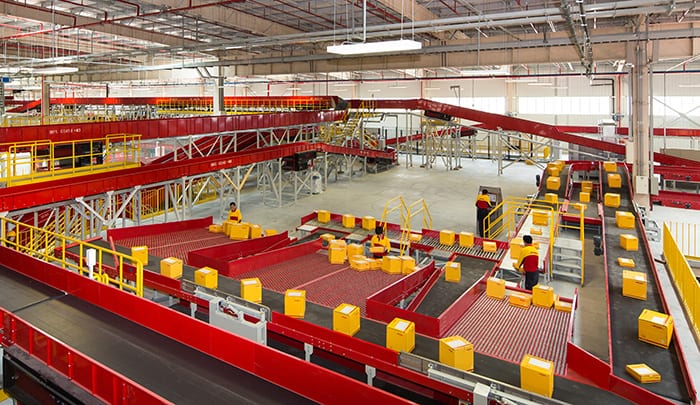
    DHL eCommerce has launched its fulfillment centre in Sydney

    “E-commerce has gone borderless, and order fulfillment needs to do the same,” said Charles Brewer, CEO of DHL eCommerce. “Our Australian facility adds another node to our standardized global network of fulfillment centres located in the US, Mexico, India, Hong Kong and Central Europe, eliminating the need for e-commerce merchants to hunt for new logistics partners as they look to expand their global reach.”

    According to DHL, the new facility integrates inbound freight, inventory and last-mile delivery into a single consolidated service, operating under the same service level agreements, management platforms and customer support as the rest of the DHL eCommerce fulfillment network. All services will be offered on a pay-per-use basis.

    “Australian shoppers are the second-most likely in the world to buy online from overseas merchants, and the significance of their purchasing power will only increase as cross-border e-commerce grows at an average of 29% per year until 2020,” said Damien Sheehan, managing director of Australia at DHL eCommerce. “Online retailers need to overcome the traditional problems associated with overseas expansion — finding new suppliers in each market, delivering shipments within days not weeks, and keeping costs in check — if they want to stay competitive in this borderless future. The launch of our Australian fulfillment centre gives our customers immediate access to one of the world’s most mature and fastest-growing e-commerce markets, with the scalability and quality needed to reach Australia’s highly savvy online shoppers.”

    Malcolm Monteiro, CEO of Asia Pacific at DHL eCommerce, said that cost-effectiveness and scalability are the most critical issues for online retailers in Australia because the value of the country’s e-commerce sales is expected to grow by almost 50% between now and 2020.

    “Whether it’s extending into new channels, offering more delivery options, or simply increasing inventory and warehouse capacity, global brands need fulfillment solutions that can adapt to their needs without requiring hands-on intervention every time a change occurs,” he said. “Global e-tailers can access our latest fulfillment centre for simplified nationwide inventory and last-mile delivery and also as part of a rapid and painless global expansion.”

  • DHL eCommerce offers e-commerce expertise and logistics services to help Thai rice farmers

    DHL eCommerce offers e-commerce expertise and logistics services to help Thai rice farmers

    DHL eCommerce, a division of Deutsche Post DHL Group, has collaborated with the Ministry of Commerce in Thailand to offer e-commerce expertise and logistics services free of charge for a period of four months to help Thai farmers grow their business and reap the benefits from selling on e-commerce platforms. This follows recent challenging market conditions which have seen an oversupply of rice and strong export competition.

    do_download

    Partnering with the Thailand Ministry of Commerce’s Department of International Trade Promotion (DITP), DHL eCommerce works with farmer co-ops across Thailand to help set up and enable an easy and streamlined process to manage their online inventory and ship to consumers domestically. Experts from DHL eCommerce advise and support farmers by integrating their sales processes with e-commerce portals on BentoWeb, a local e-commerce services provider which has been pre-integrated with the DHL eCommerce Customer Web Portal. Once on BentoWeb, farmers will be able to easily arrange for deliveries and shipments quickly at a click of a button, allowing rice goods to be picked and dispatched to end consumers located in Thailand.

    The collaboration combines the global logistics experience of DHL with the in-depth local market knowledge from DHL eCommerce Thailand, the Ministry of Commerce Thailand and BentoWeb, allowing farmers to benefit from solutions that are tailored to their specific needs. The Ministry of Commerce will work on promoting and registering farmers on www.thaitrade.com/rice while BentoWeb will enable the online order process and inventory management for the farmers. DHL eCommerce will pick up the products from the farms and deliver them free of charge to the consumers directly.

    “We are extremely honored to have this opportunity to use our e-commerce expertise and logistics services to make a positive impact on the farmers’ businesses and their livelihoods. As an organization operating in Thailand, providing both domestic as well as international delivery services to the local businesses, we are committed to the Thailand market. Wherever and whenever we can contribute to the local communities, we will do our utmost best to support,” said Kiattichai Pitpreecha, Managing Director, DHL eCommerce Thailand.

    Thailand is one of the world’s leading rice exporters with an expected output of 25 million tonnes of rice expected in the 2016/17 production year. “The Ministry of Commerce has been rolling out a series of programs aimed at helping the local farmers and one such initiative is this collaboration with DHL eCommerce Thailand to help farmers sell their produce online. We have been working together in the past three weeks to onboard these farmers onto the e-commerce platform so that domestic consumers can place orders and have DHL eCommerce deliver to their doorsteps. We are extremely heartened that an organization such as DHL eCommerce is putting their foot forward to help the local communities,” said Mrs Apiradi Tantraporn, Minister of Commerce, the Royal Thai Government.

    For farmer co-ops like Ban Um-sang Rice Community, they have managed to take the matter of the rice supply glut in their stride and tap onto the opportunities of e-commerce thanks to DHL eCommerce. Ban Um-sang Rice Community explained, “The internet has opened up more possibilities for us farmers to do business. We can communicate and connect with customers directly, previously impossible with more traditional methods. We don’t have to worry about organizing our deliveries too, as they are taken care of by experienced logistics specialists. By giving us more options, e-commerce makes us less affected by existing market forces and gives us the freedom to improve our sales in new ways.”

    In addition to DHL eCommerce’s international delivery capabilities, it has since the beginning of this year been offering domestic delivery services in the Thai market. Identifying the country as one of the fast-growing e-commerce markets, DHL eCommerce established end-to-end domestic and international delivery solutions for Thai e-commerce merchants. The company has a 3,000 sqm central distribution center in Bangkok and a network of over 40 depots located throughout the country for nation-wide logistics connectivity. By 2017, DHL eCommerce aims to more than double the number of depots and enhance its fleet with two-wheel vehicles that can surmount Thailand’s complex last-mile delivery challenges.

  • Thailand gains DHL eCommerce

    Thailand gains DHL eCommerce

    Thailand has been identified as a key market in Southeast Asia for the launch of the DHL eCommerce domestic delivery service.

    The end-to-end service for Thai eCommerce merchants offers next-day delivery to key urban centres with an easy-to-use portal for preparing shipments and full tracking visibility for consumers. It has been introduced as Thailand’s eCommerce market gathers strength.

    DHL eCommerce, a division of global logistics company Deutsche Post DHL Group, says it aims to enable a better eCommerce experience for both consumers and merchants through efficient logistics and a seamless online shopping experience.

    Major additions will be made to DHL’s delivery infrastructure in the country, including a 3000 sqm central distribution centre in Bangkok and a network of more than 20 depots throughout the nation to ensure full coverage.

    DHL plans to more than double the number of depots in Thailand by next year, and expand its fleet, primarily using two-wheel vehicles to deal with the traffic in major cities.

    DHL eCommerce’s fleet of vehicles will provide next-day delivery to all urban areas, and a two- to three-day delivery to other locations. All merchants have access to cash on delivery (COD) with daily remittance and access to a multilingual call centre.

    Launching in Thailand is seen by the company as a showcase for Strategy 2020, the corporate strategy of Deutsche Post DHL Group, which has renamed its mail division as “Post – eCommerce – Parcel”. DHL has been in Thailand since 1973 with its other business units – DHL Express, DHL Global Forwarding and DHL Supply Chain.

    “The Thai eCommerce market is expected to more than triple in size to EUR 3.6 billion ($3.94 billion) between now and 2020, and with this investment we are well positioned to support the growth of eCommerce businesses in Thailand,” says DHL eCommerce CEO Thomas Kipp.

    “We see major strategic opportunities for eCommerce growth in Thailand, particularly with the ASEAN Economic Community, which is expected to increase the movement of goods within the region.

    “Despite eCommerce already being a billion-dollar sector with extremely rapid adoption, Thailand’s share of the market is still relatively low compared to other high-growth economies,” says DHL eCommerce Asia Pacific CEO Malcolm Monteiro. “Only 1.7 per cent of total sales in Thailand are from eCommerce, compared to more than 10 per cent in China.

    “Thailand is ranked as one of our top-priority markets in South-east Asia: its expected annual market growth of more than 20 per cent (from 2014 to 2020) is likely to be largely driven by significant numbers of SMEs beginning to extend their business models into online marketplaces.”

    DHL eCommerce Thailand MD Kiattichai Pitpreecha says businesses need logistics services that keep up with extremely rapid changes in consumer expectations.

    “This makes the need for a tailored eCommerce delivery service greater than ever before so merchants, especially SMEs, can focus on their core business and grow faster.”

    Monteiro says the company’s success in India and China have proven that customer service bolstered by robust and scalable end-to-end delivery networks are essential for winning eCommerce market share.