Tag: Diageo

  • United Spirits Popular Liquor Sales Fall 22.7% to Rs 181 Crore

    United Spirits Popular Liquor Sales Fall 22.7% to Rs 181 Crore

    United Spirits posted a 22.7 per cent drop in net sales value for its popular liquor segment to Rs 181 crore during the second quarter of FY2027.

    The Diageo-owned alco-bev giant reported the decline on Wednesday, attributing the drop to increased taxes on non-local brands in Maharashtra and excise duty changes in Karnataka.

    Overall net sales value across the company nonetheless climbed 2.8 per cent to Rs 3,258 crore for the quarter, bolstered by growth in its premium and luxury liquor portfolios.

    State Levies Hit Entry Shelves

    Maharashtra created a regulatory split by establishing a preferential framework for Maharashtra Made Liquor. The state instituted a separate category for locally produced spirits with lower duty rates, while hiking excise duties on standard Indian-made foreign liquor. The tax gap handed domestic distillers an immediate retail edge across neighborhood bottle shops.

    Karnataka simultaneously overhauled its excise slabs. The southern state began shifting its tax collections from product retail value toward alcohol content, compressing the total number of pricing bands. The revision squeezed manufacturer realizations and stalled distribution volumes across lower-priced labels.

    Premium Labels Cover the Margin Gap

    Higher-margin spirits filled the gap created by the mass-market pullback. The Prestige and Above portfolio advanced 6.3 per cent in net sales value in the second quarter, aided by flavoured Smirnoff line extensions, the market relaunch of J&B Scotch, and broader gains in its luxury portfolio.

    The shift insulates Diageo from local excise volatility in low-margin categories. Premium spirits buyers absorb periodic tax increases far better than daily-wage or price-conscious consumers, allowing the company to defend total top-line numbers even when provincial tax boards target cheaper bottles.

    Distillers Diverge on Mass Brands

    State-level alcohol policy in India forces beverage manufacturers to pick a lane. Distillers with heavy mass-market footprints must either accept lower factory-gate realisations when local governments protect domestic producers or abandon low-margin distribution entirely. Several domestic rivals continue to chase mass volume through localized bottling units, but the economics look increasingly precarious under content-based excise systems.

    United Spirits has steadily reallocated capital toward upper-tier bottles, leaving low-margin labels exposed to state tax shifts. Distributors and liquor store operators now face a clear split: thin margins on commoditised local booze or higher ring sizes on imported and premium Indian-made bottles.

    Exports and Local Regulations Cool First-Half Momentum

    Prestige and Above net sales value grew 7.8 per cent over the full first half of financial year 2027. That performance lifted company-wide half-year net sales value by 4.2 per cent to Rs 5,961 crore.

    Management reported that stronger demand for local innovations was partially curbed by regulatory barriers in Maharashtra and logistics friction within export operations. Total volumes would have tracked higher without the supply interruptions overseas.
  • Guinness Launches Zero Alcohol Stout in Singapore Across Retail and on Trade Channels

    Guinness Launches Zero Alcohol Stout in Singapore Across Retail and on Trade Channels

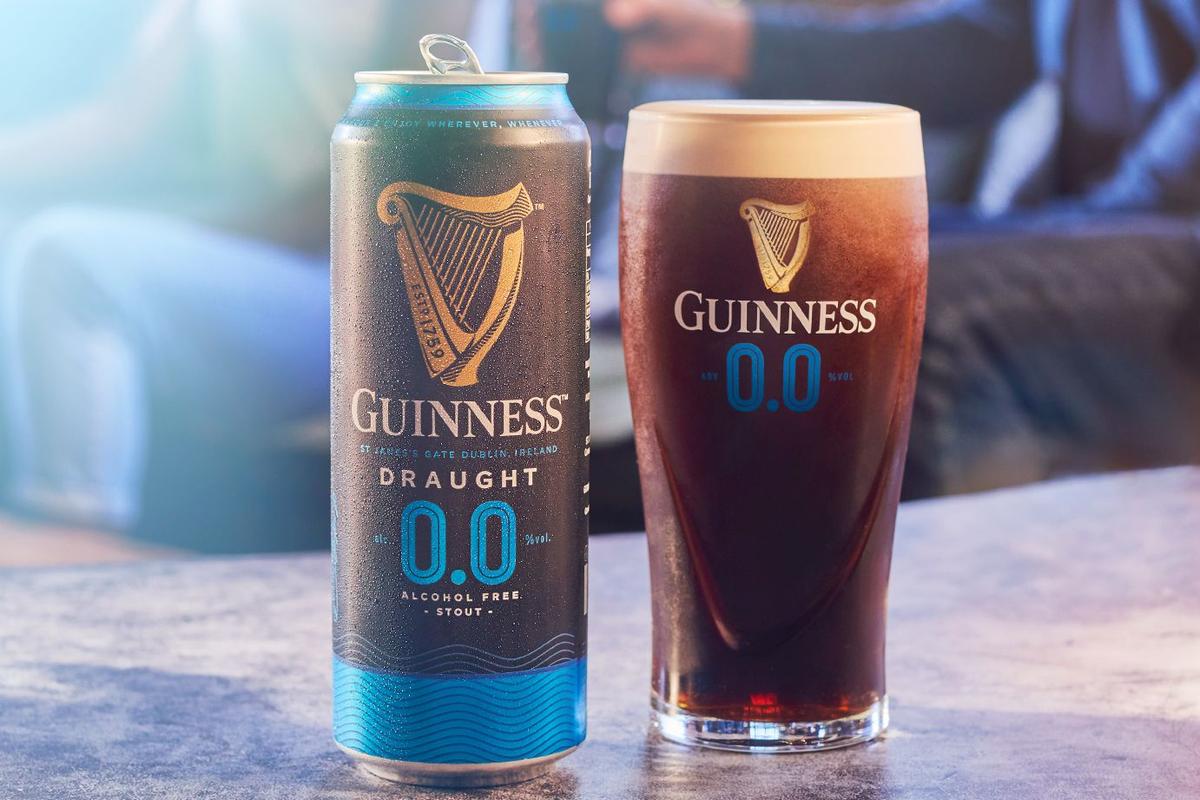
    Diageo will roll out Guinness 0.0 across Singapore on October 26, 2026. The debut introduces the non-alcoholic stout to Southeast Asia for the first time.

    Distribution covers on-trade venues, grocery chains and online merchants across the island. The rollout expands an alcohol-free lineup that previously reached 12 international markets.

    Shelf space and supply lines

    Supermarket distribution covers selected outlets of FairPrice Finest, Cold Storage and Sheng Siong. Online shoppers can order through RedMart, PandaMart and Shopee. Kegs and cans will also pour at participating pubs, bars and restaurants.

    Guinness spent four years developing the zero-alcohol stout at its St James’s Gate brewery in Dublin. Brewers make standard stout first. They then extract the alcohol through cold filtration without heat, preserving the roasted barley profile and creamy head.

    Promotion ties directly into Diageo’s sponsorship as the official beer and non-alcoholic beer of the English Premier League. Guinness also partnered with Singaporean illustrator Tobyato on retail merchandise. Shoppers who spend at least S$55 (US$43) on participating items receive a limited-edition football jersey.

    Shifting beer economics

    On local shelves, Guinness 0.0 joins existing lines including Guinness Draught, Nitrosurge and Foreign Extra Stout. Alcohol-free extensions give grocers and bar operators standard retail margins without alcohol excise duties. That makes shelf space far more profitable.

    Global data from IWSR shows no-alcohol beer volumes across 21 major markets grew 8 percent in 2025. Total beer consumption contracted 1 percent during the same period. Pricing power is shifting upward too, with premium-and-above tiers taking 29 percent of non-alcoholic volumes in 2025, compared to 20 percent in 2019.

    Singapore gives Diageo a dense, high-income test market. If operators sell non-alcoholic draught near standard pint prices, the format generates higher gross margins. It also helps fill slow weekday shifts when alcohol sales dry up.

    Regional track record

    Earlier iterations of non-alcoholic dark beer have tested Southeast Asia before, under different distribution models. Diageo introduced a coffee-formulated Guinness Zero in Indonesia in 2014 to navigate local retail bans on standard beer sales.

    Recent corporate filings show Diageo now sells non-alcoholic brands across 17 countries, as noted in its 2026 annual report. Rival international brewers already run non-alcoholic lager taps across Singapore. Stout remains one of the few open premium categories.

    What to watch next

    Activations and roadshows will run through November to test repeat grocery purchases after the initial merchandise push. Sell-through rates at FairPrice and Cold Storage during late 2026 will determine whether Diageo expands Guinness 0.0 to Malaysia and Thailand in 2027.

  • Diageo to buy Philippine rum brand Don Papa

    Diageo to buy Philippine rum brand Don Papa

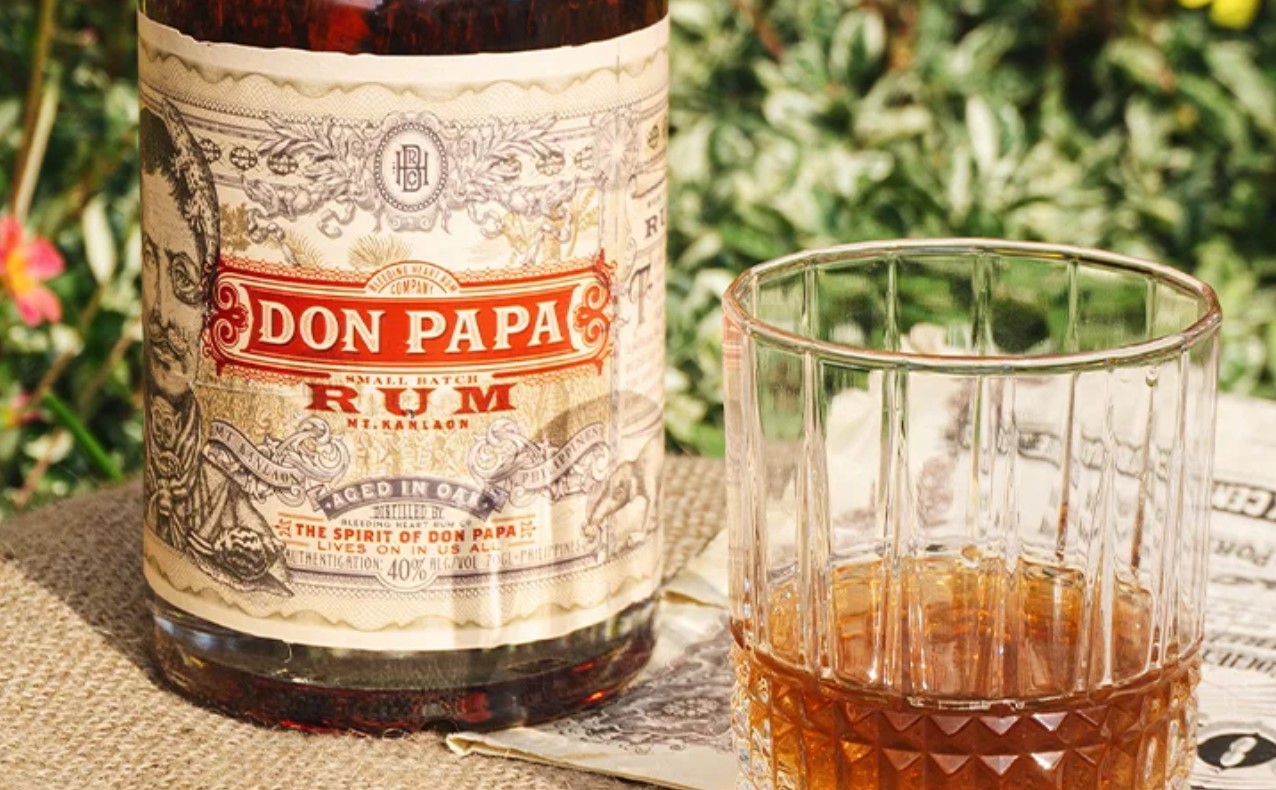
    The news Diageo is to buy Philippines-based dark rum brand Don Papa was met with positive noises by industry insiders this week.

    Diageo’s acquisition of Don Papa will complement the spirits giant’s existing rum portfolio and should allow the group to better take advantage of favourable headwinds in what the company and some industry watchers call the “super-premium-plus” segment. Mainstream rum, especially in the US, has been sluggish for some time and, despite Diageo’s best marketing efforts, its flagship Captain Morgan brand has not been immune from this. In the year to 30 June, the brand’s sales fell by 3% globally and by 6% in North America.

    In a client note discussing the Don Papa deal, analysts at investment bank Jefferies highlighted the poor performance of mainstream rum over the last decade. The analysts contrasted its fortunes with the super-premium plus segment of the category, which they said has grown by a CAGR of 18% in Europe and 27% in the US over the last five years (2016-2021).

    “We believe there are reasons for optimism for the rum category, in particular in the high-end, dark variants,” Jefferies’ Ed Mundy said, pointing to a renewed interest in sipping rums, the drink’s relatively affordable price point and its sweeter taste profile as three reasons the category is set to prosper.

    “Many bartenders are taking rum to a party, which is a leading indicator of category health.”

    Although Diageo does have some exposure to premium rum (Ron Zacapa, Ron Santiago de Cuba, Pampero), the group’s portfolio is skewed towards mainstream and economy – according to Jefferies, the company sold 11m cases of Captain Morgan and 10m cases of local Indian rum McDowell’s last year – with a lower exposure to super premium (the group only owns 50% of Ron Zacapa, accounting for less than 100,000 cases).

    Therefore, striking a deal to acquire a bigger brand such as Don Papa (180,000 cases) – and one that plays in both premium and super-premium; in the UK, the brand’s seven-year-old variant has an SRP of GBP34 (US$42) and the more premium Baroko variant costs GBP85 – helps bolster Diageo in a segment that is outperforming the rum category as a whole.

    “The opportunity for Diageo here is two-fold,” Morningstar analyst Philip Gorham tells Just Drinks. “One, roll the brand out geographically across the Diageo platform and get it into new markets. This will require marketing investment but [is] still a fairly low-cost, incremental revenue for the brand.

    “Two, see if there are opportunities to stretch the price points higher. This is a well-positioned brand at $35-$40 a bottle. It is unencumbered by mass-market pricing (they will never get to four-figure prices on Captain Morgan) but it is nowhere near the price heights of Johnnie Walker.

    “In other words, there is a lot of headroom for premiumising the brand further, as Diageo are already doing in Tequila.”

    The value of the deal – EUR260m ($281m), with the potential to reach EUR437.5m ($474m) by 2028 – makes for an interesting comparison with the $725m reportedly paid by Brown-Forman for Diplomático late last year. On an annual, per-case-sold basis, Diageo’s deal stacks up favourably to that of its competitor ($1.5m per case at the initial price paid, versus $1.85m per case for Diplomatico), although Brown-Forman’s brand retails at a higher SRP of around GBP44 per bottle.

    The Jefferies analysts described the risk-reward profile of the deal as “asymmetric, in our view, given the low initial capital outlay and opportunity to leverage Diageo’s strong distribution network”.

    Don Papa – with its distinctive packaging, unique liquid and authentic story – also fits the bill as far as Diageo’s wider M&A strategy is concerned. In recent years, the company has moved away from transformational deals in favour of bolt-on acquisitions in high-growth segments. The group’s 2021 purchase of Chase Distillery and last year’s move for American single malt maker Balcones Distilling are good examples of this strategy in action.

    Gorham sees sense in this approach, stating his belief that “high price points are where the long-term growth is” in spirits.

    “Whether premiumisation takes a breather as major economies enter recession, we’ll have to wait and see but there is huge long-term opportunity at the crossroads of beverages and luxury,” he adds.

    In this context, the move for Don Papa, a fast-growing, high-margin brand in a category that is predicted to continue to continue to premiumise in the coming years, looks like business as usual for Diageo.

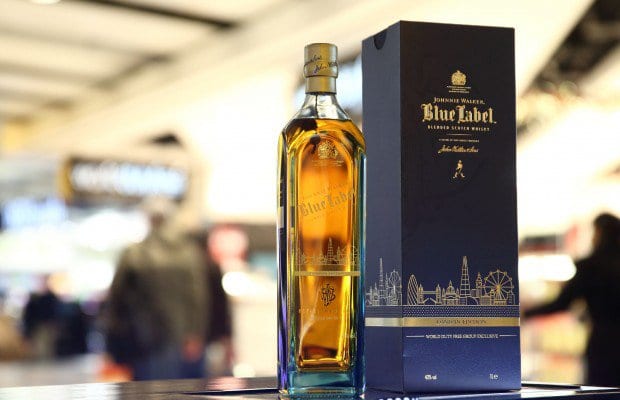
  • Diageo rolls out small Johnnie Walker Black Label

    Diageo rolls out small Johnnie Walker Black Label

    Diageo has launched a 20cl bottle of its Johnnie Walker Black Label as it looks to make whisky more accessible to consumers in South Korea.

    The new pack, which rolled out yesterday, follows a launch for a 20cl Johnnie Walker Red Label last October, the firm said. The 20cl bottle comes with lemon syrup and a recipe for a ‘Johnnie Lemon’ cocktail.

    “Diageo Korea has worked to promote a new drinking culture that makes whisky more accessible to local consumers in various ways,” said Diageo Korea CEO Cho Kilsoo. “Following a small format of Johnnie Walker Red launched last year, the new Johnnie Walker Black Label 20cl is expected to contribute to building a new whisky culture that enables people to enjoy whisky more casually.”

    The new product will be available through convenience stores and hypermarkets, nation-wide. Diageo said the packs will be priced at about KRW16,000 (US$13.99). Red Label packs retail at around KRW8,500.

  • Johnnie Walker House Singapore a first for SE Asia

    Johnnie Walker House Singapore a first for SE Asia

    Johnnie Walker House Singapore joins the international network of by-invitation-only whisky lounges, the first in Southeast Asia.

    It will offer connoisseurs the Diageo-owned brand’s range of rare and collectable Scotch whiskies.

    Johnnie Walker Houses are stand-alone and airport boutiques dedicated to presenting the brand’s whiskies in a curated lifestyle setting. These include rare blended and single-malt Scotch whiskies from Diageo’s 28 operating and 11 closed malt distilleries.

    Experts can provide guests with advice on whisky cellar curation, and offer direct access to blending rooms, distilleries and craftsmen.

    The expansion complements a venture with Moet Hennessy Diageo (MHD) Singapore and Johnnie Walker’s distributor partner Singbev. MHD will continue to sell and distribute only Johnnie Walker core and standard portfolio products to trade channels, while SingBev will continue to sell and distribute only the single-malt portfolio.

    “With whisky appreciation in Asia significant and growing, there is great opportunity for Diageo,” says Apurvi Sheth, the company’s MD for emerging Southeast Asia and joint ventures.

    “In Asia, there is rapid growth of interest in rare whisky, not only as a collectible asset, but also for investing and gifting. As consumers become more discerning, they are also actively seeking out access and rare experiences.”

    There are six Johnnie Walker Houses in Scotland, with others in such cities as Auckland, Beijing, Chengdu, Melbourne, Seoul and Shanghai, as well as retail units in Taoyuan International Airport, Taipei, and Mumbai International Airport.