Retail News CRM

Tag: diamond

  • Vietnam’s Sparkling Affair: $121.5M Diamond Imports in H1 2026, India Emerges as Top Supplier

    Vietnam’s Sparkling Affair: $121.5M Diamond Imports in H1 2026, India Emerges as Top Supplier

    In the first half of 2026, Vietnam saw diamond imports totalling an estimated US$121.5 million. Of this figure, India emerged as the main supplier, accounting for approximately 52% of the total imports, around $63.2 million. This figure is a significant increase compared to the previous year, where diamond imports from India totalled $107.6 million over the year.

    Other Notable Diamond Suppliers

    Belgium, another key player in the diamond market, came in second as a supplier. The country’s diamond exports to Vietnam amounted to $17.9 million, a decrease from the previous year’s total export value of $51.7 million. Israel followed closely as the third largest supplier with $9 million worth of diamond imports. Botswana and Thailand completed the list of top five suppliers, with imports valued at $7.7 million and $5.1 million, respectively.

    Other noteworthy suppliers to Vietnam included the U.S., contributing $3.6 million worth of diamonds, Hong Kong at $2.8 million, Japan at $2.7 million, and finally China at $2.2 million.

    Under current regulations, the Department of Customs stated that rough diamonds can only be imported from markets that participate in the Kimberley Process Certification Scheme (KPCS). The accompanying shipment must have a valid KPCS certificate issued by the appropriate authority of the exporting market, and it must comply with all customs documentation and clearance procedures.

    Customs authorities bear the responsibility of examining documentation, inspecting consignments, issuing certificates for imported rough diamond, and managing imports in line with the law. Customs clearance is executed based on import declarations, KPCS certificates, and other relevant documents submitted by importers.

    Recent Diamond Smuggling Incident

    These import figures have come under public scrutiny following the recent crackdown on a significant cross-border diamond smuggling operation. This operation, dismantled by police in the central province of Thanh Hoa, led to charges against 22 suspects and the seizure of 1,100 diamonds. According to police reports, the network had conducted 141 smuggling operations since 2024, trafficking more than 28,000 diamonds from Hong Kong into Vietnam. The estimated turnover of this operation was VND280 billion (roughly US$10.6 million).

    Questions & Answers

    Who is Vietnam’s largest diamond supplier in the first half of 2026?
    India was Vietnam’s largest diamond supplier in the first half of 2026, accounting for 52% of total imports.

    What is the Kimberley Process Certification Scheme (KPCS)?
    The KPCS is a scheme that regulates the trade of rough diamonds, ensuring the diamonds are legally mined and sold, to prevent the sale of conflict diamonds.

    What were the details of the recent diamond smuggling incident in Vietnam?
    A major cross-border diamond smuggling operation was recently dismantled by police in the central province of Thanh Hoa. The operation had trafficked more than 28,000 diamonds from Hong Kong into Vietnam since 2024, netting an estimated turnover of VND280 billion (roughly US$10.6 million).

  • Rosec Jewels Redefines Luxury: Launches Lab-Grown Diamond Jewelry Collection

    Rosec Jewels Redefines Luxury: Launches Lab-Grown Diamond Jewelry Collection

    Rosec Jewels, a leading name in fine gemstone and diamond jewelry, proudly announces the launch of its Lab-Grown Diamond Jewelry Collection, marking a bold step toward a more sustainable and ethical future for luxury.

    With this new collection, Rosec Jewels blends timeless craftsmanship with modern innovation, introducing lab-created diamonds that match the brilliance, beauty, and durability of mined diamonds—without the environmental and ethical concerns.

    “Our vision has always been to make luxury both accessible and responsible,” said a spokesperson for Rosec Jewels. “The new lab-grown diamond collection reflects that vision by offering the same sparkle and sophistication customers love, while aligning with their values of sustainability and conscious consumption.”

    The collection features an array of engagement rings, wedding bands, earrings, pendants, and bracelets, all handcrafted in 14K and 18K gold. Each piece is designed to celebrate individuality, love, and authenticity—qualities that define both the wearer and the brand.

    Key Highlights of the Collection:

    Ethically Sourced & Sustainable: Lab-grown diamonds with minimal environmental impact.

    Certified Quality: Every piece comes with independent grading and certification for authenticity.

    Affordable Luxury: Premium designs made accessible without compromising craftsmanship.

    Modern Designs: Sleek solitaires, halo styles, and Toi et Moi inspirations that reflect contemporary tastes.

    This launch aligns with Rosec Jewels’ ongoing mission to redefine modern luxury—proving that elegance and ethics can coexist. The brand continues to inspire conscious consumers who seek beauty with purpose.


  • Zen Diamond Expands Footprint In India With Two New Stores In Bengaluru

    Zen Diamond Expands Footprint In India With Two New Stores In Bengaluru

    Zen Diamond, a worldwide jewellery retailer, has broadened its reach in India by inaugurating two additional stores in Bengaluru. This decision follows the brand’s successful introduction in Mumbai in the previous year.

    Expansion into South India

    Zen Diamond’s expanded presence is marked by the establishment of new outlets at the Phoenix Mall of Asia and Phoenix Marketcity. These locations represent the company’s initial expansion in South India, an area of increasing interest for the business.

    Neil Sonawala, Managing Director of Zen Diamond, expressed enthusiasm about this development, saying, “The Indian market has always been highly valued by our brand. The positive response we received from our Mumbai outlets was remarkably encouraging. With the inauguration of our two additional stores in Bengaluru, we’re excited about introducing Zen Diamond’s tradition of superior craftsmanship to the southern region of India.”

    Store Design and Services

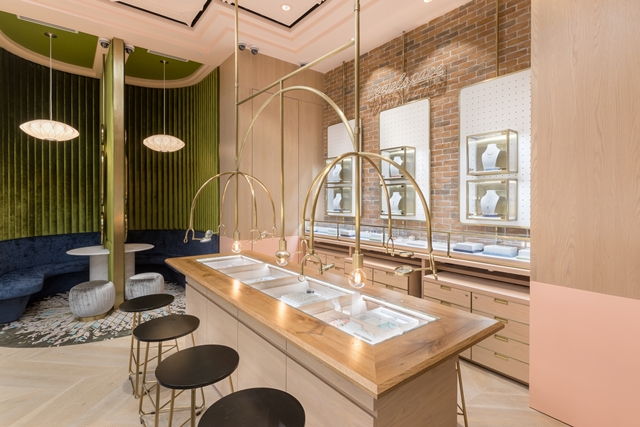
    The brand’s new locations will be distinguished by a sophisticated decor featuring subdued grey color schemes, fluted panels, and stucco textures. These elements have been chosen to accentuate the company’s premium jewellery collection.

    To bolster customer trust and assurance, Zen Diamond will also offer Natural Diamond Certification within India.

    Rituu Mehhta, the Centre Director of Phoenix Mall of Asia, praised the launch of the Zen Diamond stores, stating, “The introduction of a globally recognized brand like Zen Diamond significantly enhances our retail portfolio.”

    Global Presence

    Zen Diamond has a substantial international presence, operating over 450 stores worldwide. Alongside its primary jewellery offerings, the company also sells accessories, including watches, pens, ties, and gold coins.

    Questions & Answers

    What led to Zen Diamond’s expansion into South India?
    The positive feedback and success from the company’s ventures in Mumbai encouraged them to expand to other parts of India.

    What unique features can customers expect in the new Bengaluru stores?
    The Bengaluru stores will be distinguished by their refined grey palettes, fluted panels, and stucco textures, all aimed to enhance the brand’s luxurious jewellery collection.

    What steps is Zen Diamond taking to improve customer trust in India?
    To increase consumer trust and confidence, Zen Diamond will provide Natural Diamond Certification in India.

  • Luxiee secures six-figure funding from Singapore angel

    Luxiee secures six-figure funding from Singapore angel

    Singapore-headquartered online diamond marketplace, Luxiee, has raised a six-figure investment in a private seed-funding round.

    The team secured financier Kewee Kho, also vice-chairman of Roadbull Logistics and independent director of Courts Asia, as the leading investor.

    Luxiee, launched in January, bills itself as the world’s first online diamond marketplace that connects consumers directly to established suppliers in a transparent matching model that removes the middle-man, resulting in better value for customers. The funds raised will be channeled towards marketing, branding, public relations, and media placement, as well as building the business’ staff.

    “It’s about time a traditional industry like diamonds experience a new way of delivering real value to customers. It is a disruption to an old school economy,” said Kho in a statement. “The impressive background of Luxiee’s solid management team, with experts coming together from the creative, digital marketing, and precious gems industries, reinforces my belief in this new and current business model. Transformative growth awaits, and I look forward to an exciting and rewarding journey with the team.”

    Luxiee CEO Nicholas Lim said it was exciting to have an experienced investor like Kewee Kho on board.

    “We look forward to his strategic direction and advice. His confidence in the business is added assurance to the formula of our business model, and we are driven by opportunities to accelerate our growth.”

    Luxiee says the direct connection between supplier and consumer through its platform allows consumers to enjoy up to a 300-per-cent reduction in the diamond price compared with those sold at luxury retail outlets. For example: a 1.0 Carat, F Color, VS2 Clarity, Excellent Cut diamond can sell for as low as SG$7000 (US$5000).

  • The largest jewellery marketplace in the world opens in Hong Kong

    The largest jewellery marketplace in the world opens in Hong Kong

    Two major jewellery shows organised by the Hong Kong Trade Development Council (HKTDC) will open next week. The sixth HKTDC Hong Kong International Diamond, Gem & Pearl Show, which showcases jewellery raw materials, will take place at AsiaWorld-Expo from 26 Feb to 2 March, while the 36th HKTDC Hong Kong International Jewellery Show, which specialises in finished fine jewellery, will be held at the Hong Kong Convention and Exhibition Centre (HKCEC) in Wan Chai from 28 Feb to 4 March.

    This year, the two shows will feature a record of more than 4,600 exhibitors from 48 countries and regions, once again forming the world’s largest jewellery marketplace.

    Jewellery exports grow 13.3% in 2018, but challenging year ahead
    HKTDC Acting Executive Director Benjamin Chau said: “Though the Sino-US trade conflict has been looming large over all sectors and industries, Hong Kong exports of fine jewellery showed healthy growth of 13.3% year on year to reach HK$57 billion in 2018. Exports to the United States, Hong Kong’s largest jewellery export market, were particularly robust, growing by 18.1%.” However, Mr Chau pointed out that the single-month figure for December showed the total value of fine jewellery exports falling 12% year on year, indicating that the impact of the Sino-US trade conflict on exports is beginning to be felt. Compounded by other unfavourable factors such as escalating geopolitical conflicts, Mr Chau reminded businesses to be ready for a potential slowdown in global economic growth in 2019.

    Buying missions organised to help address economic uncertainty

    Mr Chau added that economic uncertainties led to the total value of Hong Kong’s exports of jewellery raw materials, including pearls, gems and semi-gems, declining by 17.6% in 2018, although there was still satisfactory growth in some major markets, including Mainland China (+8%), Belgium (+19.2%) and Israel (+24.4%). “To help the industry grasp more business opportunities, the HKTDC will organise 120 buying missions, comprising more than 8,200 companies from 75 countries and regions, to visit the shows this year,” Mr Chau explained. “These companies will consist of department stores, speciality shops, chain stores and online stores, with 700 coming from the US and 5,700 companies visiting from emerging markets. This will help the industry expand into emerging markets to deal with the unstable global economy.”

    Worldwide support from industry bodies and jewellery associations

    The two shows continue to receive support from industry organisations and jewellery associations from around the world. A total of 38 pavilions, including those from Australia, Mainland China, France, Germany, Italy, Myanmar, India and the US, will set up group pavilions at the shows. Various jewellery organisations will continue to set up their own pavilions, including ACODES from Colombia, the Antwerp World Diamond Centre, International Coloured Gems Association, Israel Diamond Institute, New York Diamond Dealers Club, Tanzanite Foundation and the Gem & Jewellery Trade Association of Thailand, among others.

    The Avenue of Jewellery Creators will be set up at the Jewellery Show by the Asia Pacific Creator Association for the first time, introducing jewellery designs created by Hong Kong and mainland designers. Also new at the Jewellery Show are pavilions from Mexico and Indonesia, while groups from Donghai in Jiangsu province and Dongguan in Guangdong province will debut as exhibitors. The Diamond, Gem & Pearl Show will welcome the participation of the Australian Opal Association and the Beihai Bureau of Commerce from the mainland for the first time, broadening the show’s international outlook.

    Japan as first-time partner country to showcase rare pearls

    With support from the Japan External Trade Organisation and the Consulate-General of Japan in Hong Kong, the HKTDC is collaborating with the Japan Pearl Exporters’ Association and the Japan Pearl Promotion Society to invite Japan as this year’s partner country for the first time. A Japan Pearl Jewellery Pavilion and a Japan Pearl Pavilion will be set up at the Jewellery Show and the Diamond, Gem & Pearl Show respectively, featuring some 130 exhibitors. The two major Japanese pearl organisations will also host a media event on the first day of the Jewellery Show (28 Feb) to introduce exquisite pearl jewellery from Japan.

    Diamond, Gem & Pearl Show runs from 26 February to 2 March

    This is the sixth straight year that the HKTDC has run the two shows in parallel in separate venues. The Diamond, Gem & Pearl Show, which specialises in the raw materials used in the jewellery industry, will be held at AsiaWorld-Expo. The show is organised into different themed zones, including the Hall of Fine Diamonds, which showcases prime quality diamonds of different shapes, cuts, grades and rare colours. The Treasures of Nature zone displays various glittering precious gemstones, semi-precious gems and other natural raw materials, while the Treasures of Ocean zone houses the highest quality pearls from Tahiti, the South Seas and other pearl-producing areas around the world.

    Among the impressively large number of special exhibits on display are:

    Hong Kong company Novel Collection Ltd (Booth No: AWE 2-Q01) will feature a pear-shaped, pink-coloured 5.01-carat diamond with unique cutting valued at HK$46.8 million.

    Swiss exhibitor Theilkas GmbH (Booth No: AWE 1-A05) will present pearls from Caribbean queen conches. Characterised by a unique flame effect, pink conch pearls are one of the world’s most precious pearl types.

    Shaun Gems International (Booth No: AWE 1-A16) from the United States will display a matched pair of natural sapphires of vivid blue colour, weighing a total of 27.76 carats and valued at more than HK$3 million.

    Jewellery Show runs from 28 Feb to 4 March

    The Jewellery Show, which opens on Thursday (28 Feb), will feature a wide array of finished jewellery and exquisite craftsmanship. A total of 38 renowned jewellery brands will converge at the Hall of Fame to showcase their collections. Returning brand names include Lao Feng Xiang from the mainland, Japan’s Kuwayama and Italy’s Giorgio Visconti, while new exhibitors include Hong Kong’s Asia Star, Japan’s Kawamura, Russia’s Kabarovsky and the UK’s JT Jewellery Theatre.

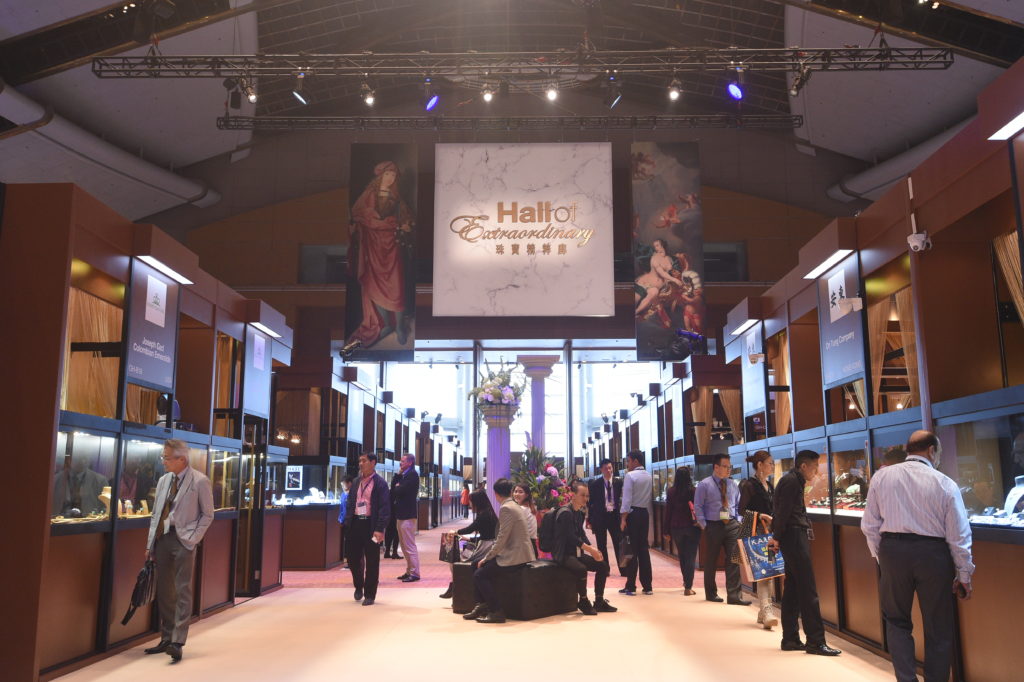
    The Hall of Extraordinary will display skillfully crafted, valuable and unique jewellery pieces from some 100 companies, including:

    Hong Kong’s Jadmily Jewelery (Booth No: CEC GH-B05) will feature a jade necklace valued at HK$64 million. The oval centre stone of the necklace is a jadeite cabochon extracted from a top-tier ancient mine in Myanmar. The warm, smooth touch of elegance is illuminated with dazzling diamonds. The centre stone weighs 51.48g.

    Foo Hang Jewellery of Hong Kong (Booth No: CEC GH-D16) will showcase a diamond jewellery set worth more than HK$13 million. The centrepiece of the set is a marquise shaped diamond of 10.04 carats valued at over HK$8 million. The rare marquise cut is testament to the superb craftsmanship that makes the diamond even more dazzling.

    One of the exhibits of Hong Kong company Belford Jewellery (Booth No: CEC CH-L01) is its “Lava Collection”. One of the jewellery pieces in this collection is an orange-red Mexican fire opal that is uniquely set against a number of coloured diamonds to imitate flowing lava. The piece is valued at HK$345,000.

    Another Hong Kong company, Famous Group Ltd (Booth No: CEC GH-G05), will display a sapphire diamond set valued at over HK$10 million. The sapphire stones, with a total weight of more than 180 carats, are adorned with 128 carats of diamonds to bring out the elegance.

    The IT Solutions for Jewellery zone that debuted last year will return to help buyers boost their competitiveness by tapping into the latest technologies for use in the designing, manufacturing, quality monitoring and selling of jewellery. The new Amber Jewellery zone is introduced to address the growing market demand, while other themed zones include Antique & Vintage Jewellery Galleria, Designer Galleria, Hall of Jade Jewellery, Treasures of Craftsmanship, Hall of Time, Wedding Bijoux and World of Glamour. In the Hall 3E entrance of the Jewellery Show, supported by Chow Tai Fook Jewellery Group, the “ARTRIUM” will showcase the company’s unique collection of precious jewellery.

    Networking activities to facilitate business exchange

    A host of activities and events, including jewellery parades, networking sessions, buyer/exhibitor forums and seminars, will be held during the shows to facilitate business exchange. One key event is the cocktail reception and Jewellery Gala Dinner held on the first day of the Jewellery Show (28 Feb). The theme for the gala dinner will be “Dionysus”, after the Greek god of wine, with a menu personally prepared by Edward Voon, Executive Chef of French restaurant LE PAN. The dinner will be attended by actresses Carat Cheung and Toby Chan. The award presentation ceremony for the biennial International Jewellery Design Excellence Award − often referred to as the “Oscars of the jewellery industry” − will be held during the cocktail reception, with the “Champion of the Champions” being announced.

    During the show period, the HKTDC will stage demonstrations of jewellery craftsmanship and themed seminars to update industry players on the latest market trends, production technologies and product styles. For example, experts from the Gemological Institute of America (GIA) will conduct a seminar on “Fancy-coloured Melee Diamonds and their Identification” (26 Feb). The HKTDC will also hold a jewellery industry forum on 1 March covering topics such as the forecasting of jewellery trends, how jewellery design software will revolutionise the design of jewellery products, and insights into the impact of 4K 3D printing technologies and mobile commerce, with a representative from Tencent explaining how artificial intelligence and big data can be used to increase sales. Other seminar topics include the latest developments in the internationalisation of the Fei Cui standard (2 March), observations on sapphires from Mogok, Myanmar (3 March), and gemology studies and market analysis of Myanmar rubies (3 March). Details can be found on the show websites.

    In addition, to identify design talents for the industry and demonstrate the high calibre of Hong Kong jewellery designers to international buyers, the HKTDC has joined hands with four local jewellery industry bodies to organise the 20th Hong Kong Jewellery Design Competition. The theme of the competition this year is “Be Connected, Be United”, attracting around 200 quality entries. The finalists’ designs will be on display in the Hall 1D lobby of the HKCEC during the show period.

    To make it convenient for buyers to visit both shows, a complimentary shuttle bus service will be provided by the HKTDC between AsiaWorld-Expo and downtown (including the HKCEC in Wan Chai). Please visit the show websites for details.
  • CaratLane: 10 years of transforming jewellery in India

    CaratLane: 10 years of transforming jewellery in India

    When Mithun Sacheti founded CaratLane 10 years ago, e-commerce was at its infancy in India and no one could have imagined that Indian consumers would be ready to buy jewellery online. CaratLane was founded with a mission to democratise jewellery – to make beautiful jewellery accessible and affordable and with designs that are modern and wearable. A refreshing and courageous objective at the time, especially since the avenues for an online business weren’t as wide open then as they are today.

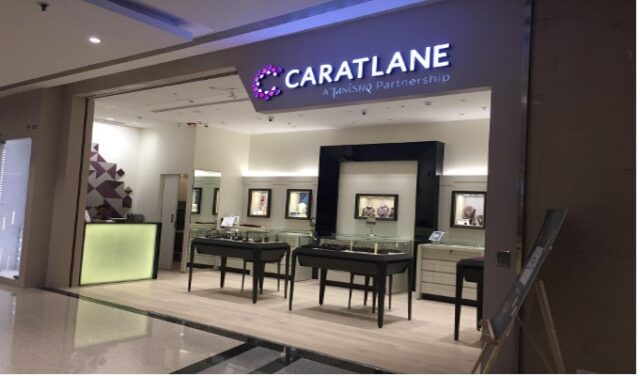
    CaratLane hasn’t looked back since then. It has grown from being one of India’s first online jewellery brands to being one of India’s largest new age jewellery brands now with 50 stores across the country.

    On the special occasion of CaratLane’s 10th birthday, Mithun said “The world has indeed changed in the past ten years. And while e-commerce has now become widely accepted in India, it has taken steady and sustained focus to democratise jewellery-buying online. From a website for easy shopping to allowing women to explore jewellery through apps to discovering interactive mirrors and providing a no-barrier access to precious jewellery in stores, CaratLane has transformed jewellery-buying in India.”

    “Our strong online footprint is now complemented by our growing store presence. With 50 stores across the country, we are now perhaps the world’s first truly omni-channel jewellery brand. It wouldn’t have been possible without our extremely valuable and loyal customers and an extremely dedicated team who would stop at nothing,” he added.

    As a part of the celebrations, CaratLane has added limited edition jewellery to three of its bestselling collections – Butterfly, Aaranya and Gold Lace. It has also launched its biggest sale ever with flat 20 percent off on all diamond jewellery but that’s not all, there are many more exciting offers for CaratLane customers.

    CaratLane, has also launched an upbeat film to create buzz around its 10th birthday celebrations. The campaign rolled out nationally with a combination of TV, digital and CaratLane’s social media channels. The film is targeted towards creating FOMO (fear of missing out) on its celebrations, among its audience.

    Talking about the campaign Atul Sinha, Senior Vice President Marketing, CaratLane said, “We’ve come a long way since our inception and we wanted to celebrate this milestone with the people who made it all possible – Our customers. The ‘10th birthday’ campaign film beautifully captures our excitement as well as the cheerful emotion that we’re trying to build around the occasion through our biggest sale ever.”

  • Diamanti Per Tutti makes debut in Singapore

    Diamanti Per Tutti makes debut in Singapore

    Belgian jewellery brand Diamanti Per Tutti has launched its first standalone store in Singapore at Raffles City Shopping Centre. Positioned as an affordable luxury label, Antwerp-based Diamanti Per Tutti retails 925 Sterling Silver items gilded with 18 carat pink or yellow gold vermeil or white rhodium, set by hand with real, ethically-sourced natural diamonds and gems.

    The brand, which has outlets in Beijing, Shanghai and Hong Kong, plans to open its second Singapore location in March.

  • Ebay expands authentication platform to luxury jewelry

    Ebay expands authentication platform to luxury jewelry

    U.S. e-commerce giant Ebay announced plans to extend its product authentication program to cover luxury jewelry, in a bid to stem the resale of counterfeit jewels across its global marketplace. Dubbed “EbayAuthenticate”, the luxury jewelry category is the newest addition to Ebay’s new verification platform, which first launched in 2017 with the resale of luxury handbags. Following its success, Ebay went on to add luxury watches to the authentication service in early 2018.

    This month, Ebay confirmed it wants to offer “holiday shoppers more than 45,000 high-end diamond and other gemstone jewelry, verified by professional authenticators,” according to press release.

    Ahead of the busy Christmas period, Ebay customers can browse for high-end necklaces, earrings, rings, and bracelets, which are now all marked with an “Authenticity Verified” label.

    That’s in addition to engagement and wedding bands, loose diamonds and gemstones, and fine, vintage and fashion jewelry.

    Much like the verification its luxury handbags and watches already go through, all jewelry items will be approved by third-party authentication experts and sourced from more than two dozen of Ebay’s top-rated sellers.

    “Ebay is home to the largest selection of luxury goods, which includes tens of thousands of jewelry items, fine watches, and rare and designer handbags,” said James Hendy, Senior Director of Ebay Authenticate.

    “Expanding the Ebay Authenticate service provides customers an added layer of trust and confidence as they shop for fine jewelry this holiday and beyond.”

    The popularity of Ebay’s jewellery, and an industry-wide crackdown on fake goods across online marketplaces, means the authentication of goods is fast-becoming a perquisite for customer satisfaction and therefore, sales growth.

    Some 50,000 jewelry items are sold per day on Ebay (approx. 2,000 item sold per hour), with one diamond ring sold every minute, according to figures released by Ebay.

    Ebay said its most popular jewelry stone is diamonds, followed by sapphires, acquamarine, amethysts and onyx rounding out the top five precious stones sold online.

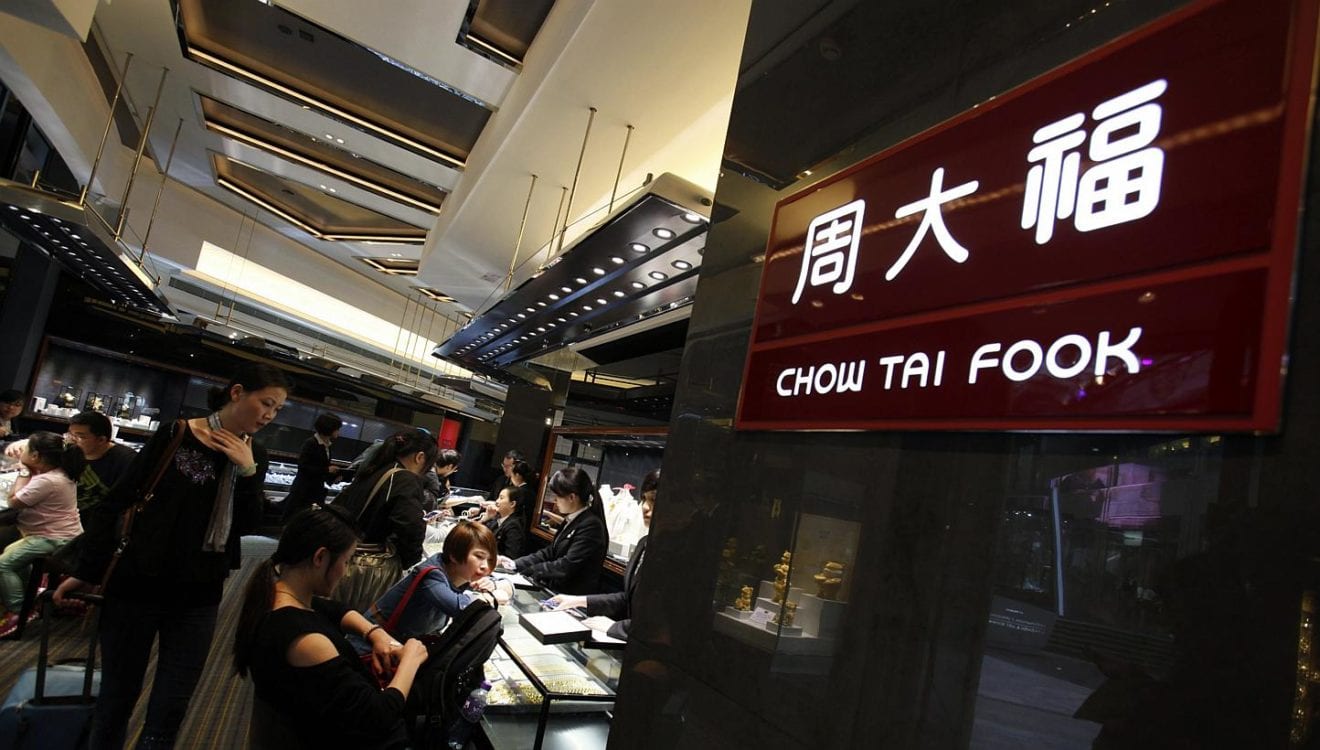
  • Chow Tai Fook reveals massive China expansion plan

    Chow Tai Fook reveals massive China expansion plan

    Chow Tai Fook opened 233 stores in Mainland China in the first half – and is planning another 400 next financial year. The Hong Kong-listed jeweller is targeting shopping malls for its new stores, and second-tier cities. The latest additions took the company’s global network to 2822, with 2682 of those located on the mainland. By the end of the 2020 financial year, the company will have more than 3000 stores on the mainland alone.

    In Hong Kong and Macau, the network remained stable during the first half, the company closing one store in Hong Kong’s tourist district and opening another in a residential neighbourhood targeting locals.

    The jeweller has reported robust growth of 20 per cent year-on-year backed by the buoyant consumer demand. Same-store sales in Hong Kong and Macau soared 24.4 per cent in what the company described as “stellar” growth, driven by gold products, gem-set jewellery and platinum/karat gold products.

    On the mainland, same-store sales were up 4.9 per cent. Core operating profit rose 24.7 per cent to HK$2.989 billion.

    However the company has warned of a slowdown in sales growth in the second half of the year “as the escalating comparison base, rising US-China trade tensions and foreign exchange fluctuations could cloud the performance”.

    Meanwhile, the company says its new jewellery retail brand Monologue, targeting younger customers, is going well and the T Mark diamond brand achieved a 134 per cent increase in sales in Mainland China and 156 per cent increase in Hong Kong and Macau.

  • “Pink Legacy” diamond is sold at 50 million USD

    “Pink Legacy” diamond is sold at 50 million USD

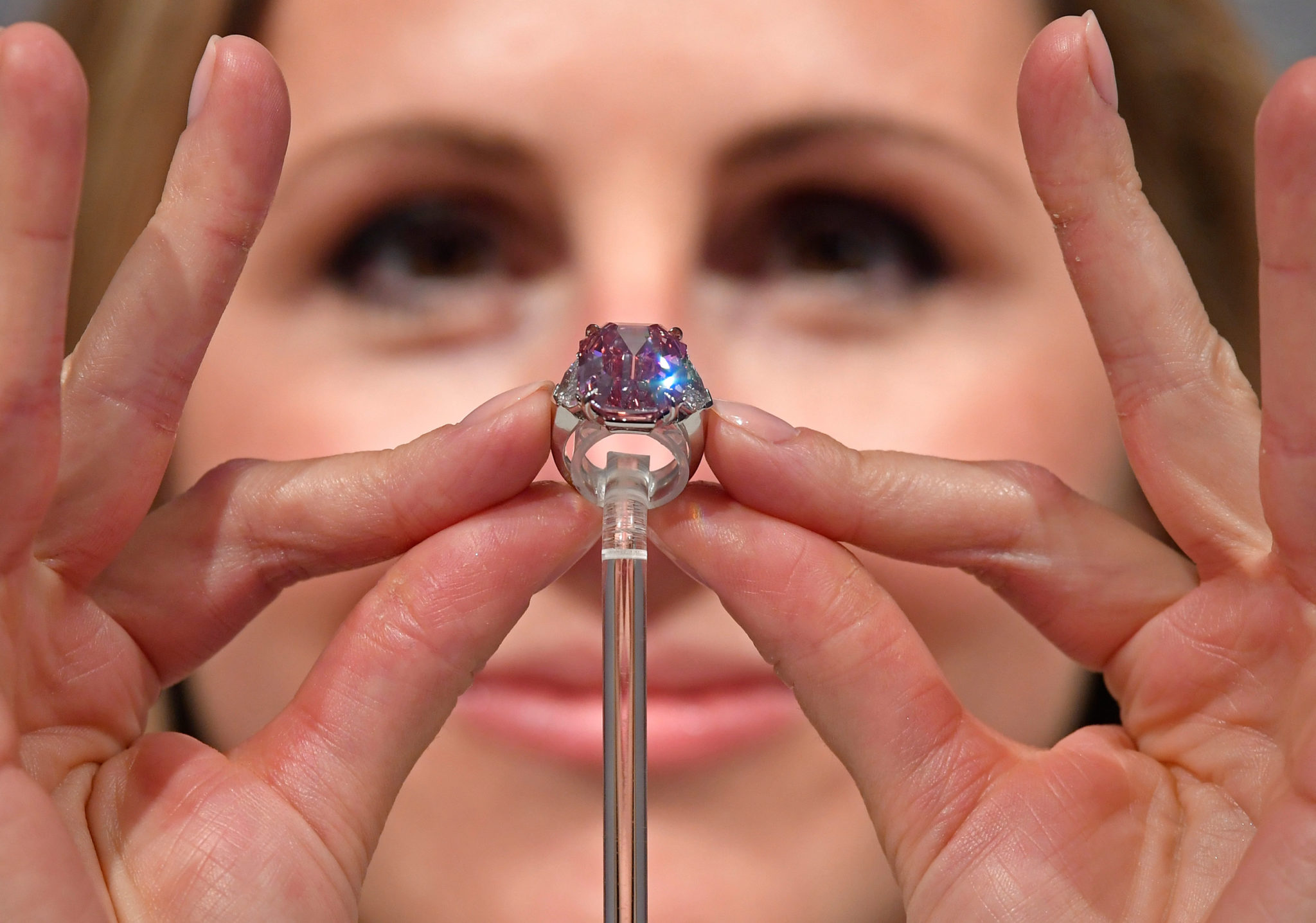
    An unusually large pink diamond sold for a record-breaking $50 million (about 50.3 million Swiss francs) this week at Christie’s auction house in Geneva. After five minutes of bidding, the 18.96-carat Pink Legacy became the world record holder for price paid per carat for a pink diamond at auction.

    Christie’s international head of jewelry, Rahul Kadakia, said it was purchased by American luxury brand Harry Winston, and will be renamed the Winston Pink Legacy.

    “You have to acknowledge first that the Pink Legacy diamond was a very special diamond,” Kadakia said. “It is one of the best and finest examples of pink diamonds at this size and color and it proved it with a new world record price per carat.”

    The diamond went under the hammer as part of the annual Magnificent Jewels auction and attracted a huge amount of interest because of its large size and impressive color grading.

    Pink Legacy is categorized as a “Fancy Vivid” diamond, the highest grade of color intensity. Only 1 in 100,000 diamonds receives the grading.

    The diamond is an even rarer find because of its size, as Fancy Vivid Pink diamonds larger than 10 carats are “virtually unheard of,” according to Christie’s.

    “This record-busting price fetched suggests the diamond trade is in good health and signals the market’s sensitivity to Australia’s Argyle mine’s imminent closure in 2020,” Eddie LeVian, CEO of jewelers Le Vian, said in a statement. “With Argyle producing 90% of the world’s pink diamonds, what do you think the value of this diamond will be in five years from now?”

    Christie’s did not identify the jewel’s latest owners but it once belonged to the Oppenheimer family, who ran the De Beers diamond mining company for three generations until selling their stake in 2011.

    The sale is the latest in a booming market for large pink diamonds.

  • De Beers Sees The Light, Launches Lab-Grown Diamond Line

    De Beers Sees The Light, Launches Lab-Grown Diamond Line

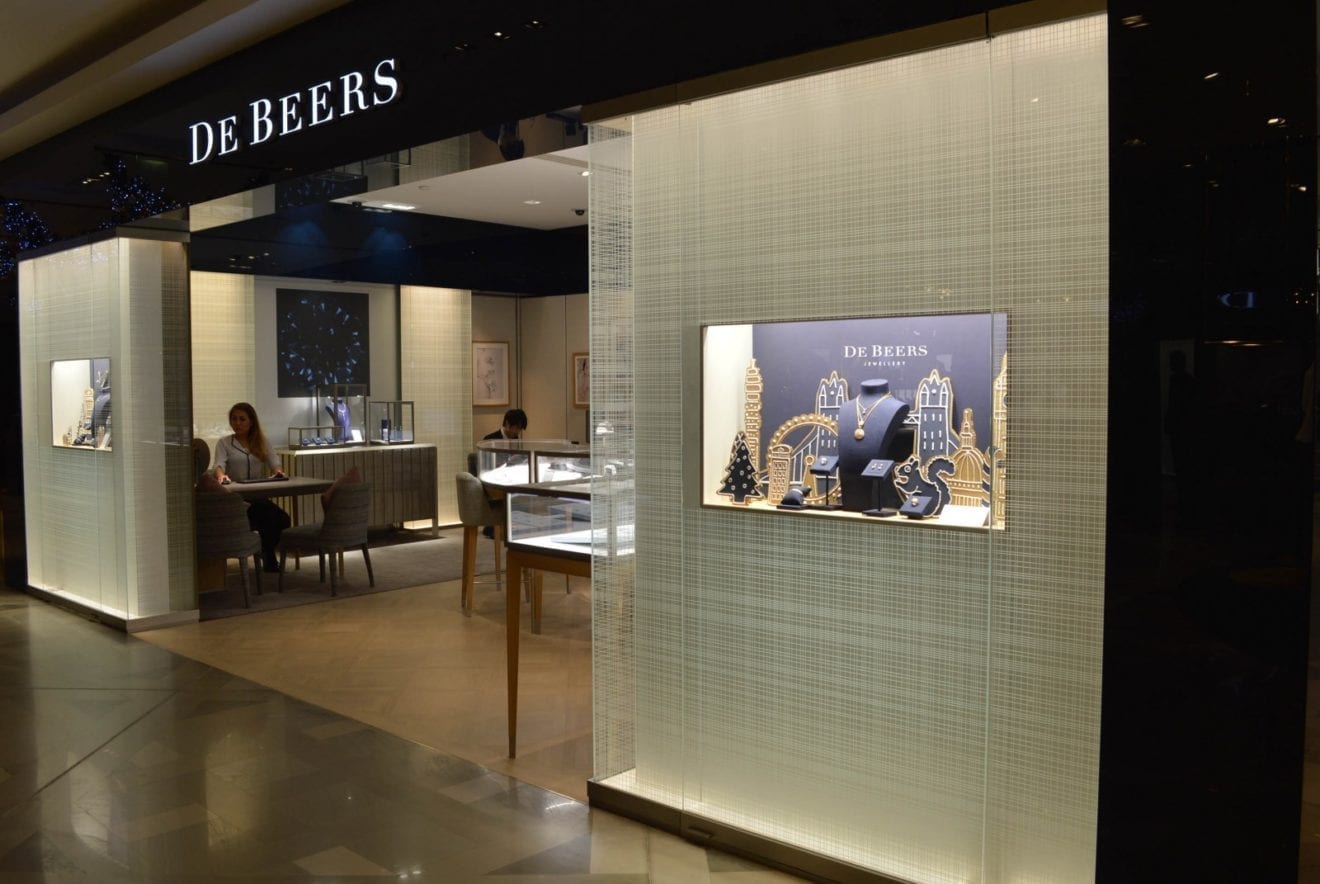
    After years of disavowing the authenticity of man-made diamonds grown in a laboratory, De Beers has suddenly seen the light and responded to consumer demand by offering a lab-grown diamond alternative under the Lightbox Jewelry name.

    That is what the company would have you believe in its announcement yesterday that advancements in technology have now made it possible for De Beers to offer a more affordable alternative to mined diamonds.

    “Lightbox will transform the lab-grown diamond sector by offering consumers a lab-grown product they have told us they want but aren’t getting: affordable fashion jewelry that may not be forever, but is perfect for right now,” Bruce Cleaver, CEO of De Beers Group said in a statement. “Our extensive research tells us this is how consumer regard lab-grown diamonds – as a fun, pretty product that shouldn’t cost that much – so we see an opportunity that’s been missed by lab-grown diamond producers.”

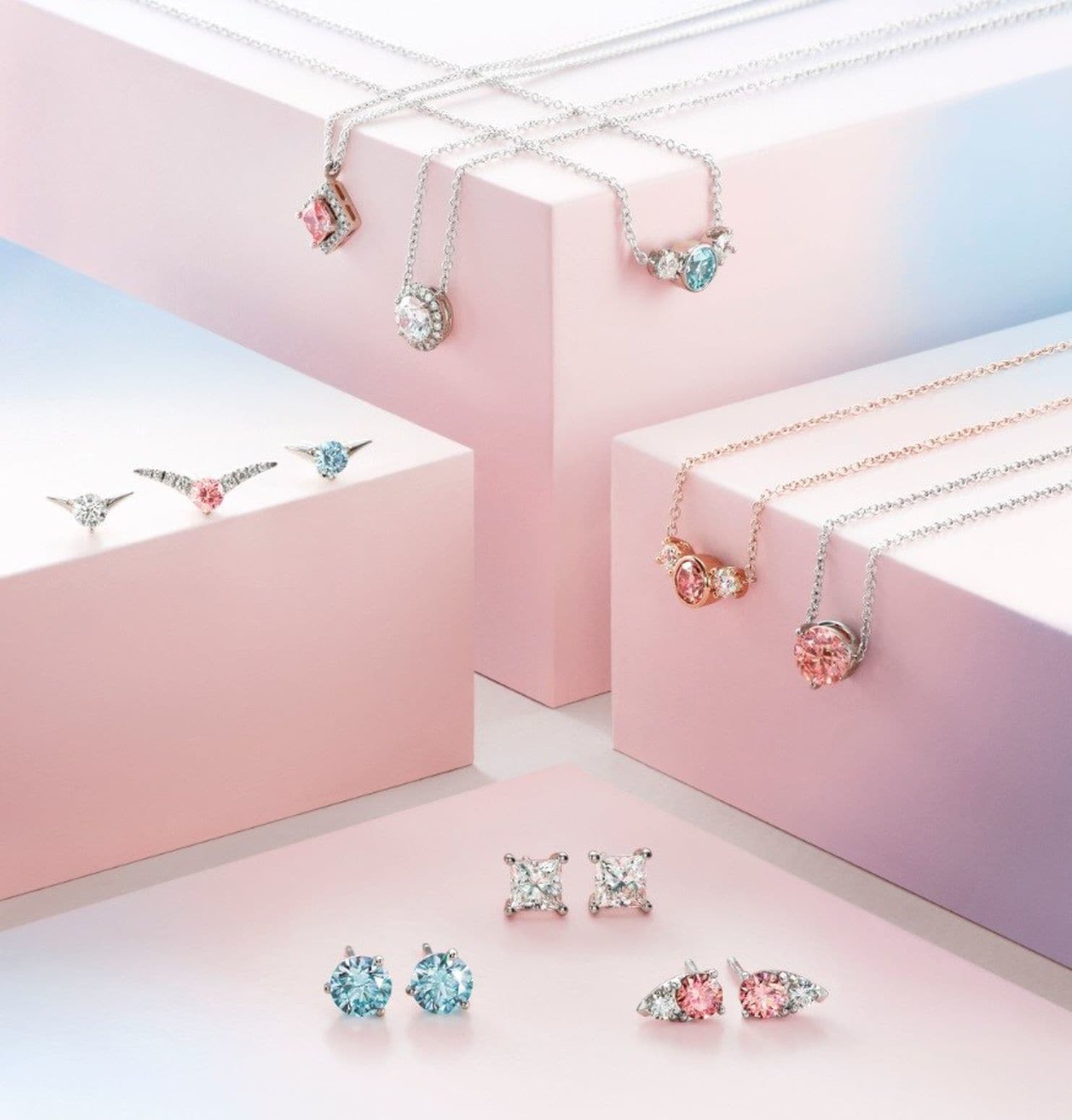
    Adding to the fun element in the Lightbox Jewelry line will be an emphasis on colored pink and blue stones to compliment the traditional clear-white diamonds. Prices will start at $200 for a quarter-carat stone to $800 for one-carat. These prices, however, don’t include the cost of the jewelry setting, which will initially include earrings and necklace designs, not rings.

    Lightbox Jewelry will be available starting in September on the Lightbox website, with retail partnerships “to be announced in due course,” the company said.

    To jump start its entry into the lab-grown market, De Beers will invest $94 million over the next four years in a new Element Six production facility near Portland, Oregon, which will join Element Six’s existing U.K.-based operation. Element Six has been the production of arm of De Beers Group producing lab-grown industrial diamonds for over 50 years.

    Disrupt yourself

    In opening its doors to lab-grown diamonds, De Beers is giving credibility to a product that it has for years claimed is not the real thing. “De Beer’s focus is on natural diamonds,” Simon Lawson, its head of research and development, said to Bloomberg in 2015. “We would not do anything that would cannibalize the industry.”

    This is a classic “disrupt yourself before you are disrupted” move. While the jewelry-quality lab-grown diamond industry is small today, estimated by Morgan Stanley to represent less than 1% of the global market for rough diamonds, with sales between $75 to $200 million, it predicts lab-grown diamonds could account for 15% of the gem-quality melee diamond market by 2020, (defined as less than a half carat in rough form that can be ready for jewelry mounting by using industrial drill bits, saws and sanding equipment), and 7.5% of the larger diamond market.

    In its mined-diamond business, De Beers has a lot to lose as laboratory-diamond sales grow. The Economist reports that De Beers accounts for about one-third of global mined-diamond sales, down from 45% in 2007.

    Among the many factors disrupting De Beers mined-diamond business, which declined from $6.1 billion in 2016 to $5.8 billion in 2017, are millennials’ concern about the environmental and human toll associated with extracting diamonds out of the ground. Laboratory-grown diamonds answer this objection.

    “Millennials are even more concerned with the human factor impacted by mining industry than their environmental concerns, which are great as well,” Marty Hurwitz, CEO of MVI Marketing, told me. His company recently conducted a study that found nearly 70% of millennials would consider a lab-grown stone for an engagement ring.

    Disrupt the disrupters

    By embracing lab-grown diamonds and calling it their own, De Beers is disrupting the industry’s stance against the numerous startup disruptors eating away at their market dominance. These brands include Ada Diamonds, ALTR, Diamond Nexus, Diamond Foundry, New Dawn Diamonds and Pure Grown among others, though no market-share leader has emerged as yet.

    The diamond industry has been arguing for years that laboratory-produced diamonds are not “real.” In a new study from the Diamond Producers Association conducted by Harris Poll, it reports, “A clear majority of American consumers recognize that diamonds created in a factory (also known as ‘synthetic’ or ‘laboratory-grown’) are not ‘real’ diamonds.”

    Pushing back on the lab-grown industry’s narrative that the stones it produces are chemically and structurally the same as a mined diamond, DPA CEO Jean-Marc Lieberherr said, “At a time when everything ‘artificial’ aims to compete with, and replace, ‘natural’ and ‘real’, these results show consumers care about inherent value, authenticity and symbolism that a diamond carries.”

    While the De Beer’s Lightbox Jewelry announcement doesn’t address the “real” versus “fake” controversy, it does distinguish between its mined-diamond offering as “forever,” as in “A Diamond Is Forever,” to its Lightbox alternative as for “right now.”

    It also is notable that it calls Lightbox “fashion jewelry,” positioning it as the lesser, more affordable alternative to “fine jewelry” quality defined by a natural, mined-diamond selection.

    The official industry distinction between fine and fashion jewelry is that fashion doesn’t have precious gemstones or precious metals (other than plating) while fine jewelry is made with precious metals and precious gemstones. In other words, lab-grown diamonds are not “precious” whereas mined diamonds are.

    This suggests the direction that De Beers will take as it moves Lightbox Jewelry into the market: “If you want fashion jewelry, Lightbox is your choice. If you want precious fine jewelry, then Forevermark and De Beers Jewellers is for you.”

    Go big or go home

    Rather than fight the rising tide against laboratory-grown diamonds which has found a consumer market ready, willing and able to embrace it, De Beers is getting in early to take a leadership position in an emerging category with no clear-cut leader.

    Now it will have one, with De Beers’ mighty marketing muscle moving in to define the category and establish its positioning against the lab-grown upstarts, as well as elevating its mined-diamond precious jewelry offering.

    De Beers single-handedly made diamonds what they are today. Next De Beers is going to make laboratory-diamonds what they will be tomorrow: a fun fashion pretender to the real, rare, precious, natural, “forever” diamond.

    And as it did with diamonds throughout its 130-year history, De Beers is going to use its power to establish prices for both the mined and laboratory-diamond markets. Its Lightbox Jewelry prices are way below current levels in the industry today, and given advances in technology and production processes, the costs to produce man-made stones will only fall.

    Likewise, by establishing a low-price alternative to the real thing, De Beers will be able to drive up the prices for its natural stones. It’s a very smart and bold move that would make Cecil Rhodes proud.

  • De Beers Inks Japan Retail Grading Deal

    De Beers Inks Japan Retail Grading Deal

    The International Institute of Diamond Grading & Research (IIDGR) has partnered with Japanese bridal-jewelry retailer I-PRIMO to provide it with polished grading reports.

    The De Beers-owned laboratory will grade diamonds showcased at all 68 I-PRIMO stores in Japan, with the aim of boosting consumer confidence, IIDGR said last week. The reports will use De Beers’ “Ideal Optical Symmetry” technology, which provides a magnified image of a stone’s light performance. The companies plan to extend the program eventually to I-PRIMO’s stores in Taiwan, Hong Kong and Shanghai.

    IIDGR has previously entered partnerships with Singapore’s Soo Keep Group, as well as Hong Kong-based retailer Luk Fook, with which it issues co-branded grading reports.

    “Our ability to tailor bespoke solutions for our customers, backed by our innovative proprietary technologies, has been well-received and is supporting our growth in the region,” said IIDGR president Jonathan Kendall.

  • IIDGR establishes its first retail partnership in Asia

    IIDGR establishes its first retail partnership in Asia

    The International Institute of Diamond Grading & Research (IIDGR), part of The De Beers Group of Companies has established its first retail partnership in Asia for its generic polished diamond grading services. The partnership with Soo Kee Group in Singapore formally launches in February under the retailer’s bridal specialist brand, Love & Co. for its proprietary Lovemarque diamond collection.

    Soo Kee Group will become the first Singaporean retailer to offer bespoke IIDGR grading reports.

    Jonathan Kendall, President of IIDGR, said: “We’ve seen a significant uplift in demand for our grading services in many markets, especially in the Far East – alongside the Soo Kee Group partnership, we have plans to expand the grading service elsewhere in Asia. However, we see this as just the start. Increasing numbers of retailers are expressing their desire to use our diamond grading reports as they understand the importance of integrity in their offer to consumers – and with its use of leading De Beers technology, IIDGR is perfectly placed to provide this.”

    IIDGR initially launched its generic grading services in early 2016, with a focus on reliability, integrity, consistency and repeatability. The grading services employ De Beers’ industry-leading proprietary technology as well as highly skilled and experienced gemmology experts. IIDGR issues Diamond Grading Reports and Diamond Identification Reports for any unset, natural, untreated diamonds weighing a minimum of 0.10ct. The Institute grades every clarity and all colours including fancy colours.

  • Chow Tai Fook’s Profit Dives 46% in Fiscal 2016

    Chow Tai Fook’s Profit Dives 46% in Fiscal 2016

    Chow Tai Fook reported profit tumbled 46 percent in the past fiscal year as fewer tourists visited Hong Kong and a downturn in Greater China reduced consumer spending.

    Profit slumped to $383.6 million (HKD 2.98 billion) in the 12 months that ended March 31, the Hong Kong-based jewelry retailer said. Revenue slid 12 percent to $7.3 billion (HKD 56.59 billion). Jewelry sales in mainland China dropped 11 percent and in Hong Kong and Macau declined 15 percent.

    Tourist arrivals from the mainland retreated 8.6 percent in Hong Kong and 3.7 percent in Macau during the fiscal year, the jeweler pointed out. Mainland China contributed more than 50 percent of group revenue during the year, a figure that has increased over the past three years. The jeweler said it is still “confident” about the long-term growth potential in the region.

    The “persistently weak retail sentiment” and a “decline” in the number of tourists, particularly from the mainland due to a “strengthening” of the U.S. dollar, continued to affect operations, Chow Tai Fook said.

    “The increasingly affluent and sophisticated Chinese consumers continue to look for more personalized products and shopping experience,” the company added.

    The company, however, pointed out its core operating profit – a non-IFRS measure that Chow Tai Fook believes is a useful measure of its operational performance – fell 24.5 percent, a better outcome compared with net income.

  • Billionaire lifestyle of Hong Kong’s coloured diamonds collector

    Billionaire lifestyle of Hong Kong’s coloured diamonds collector

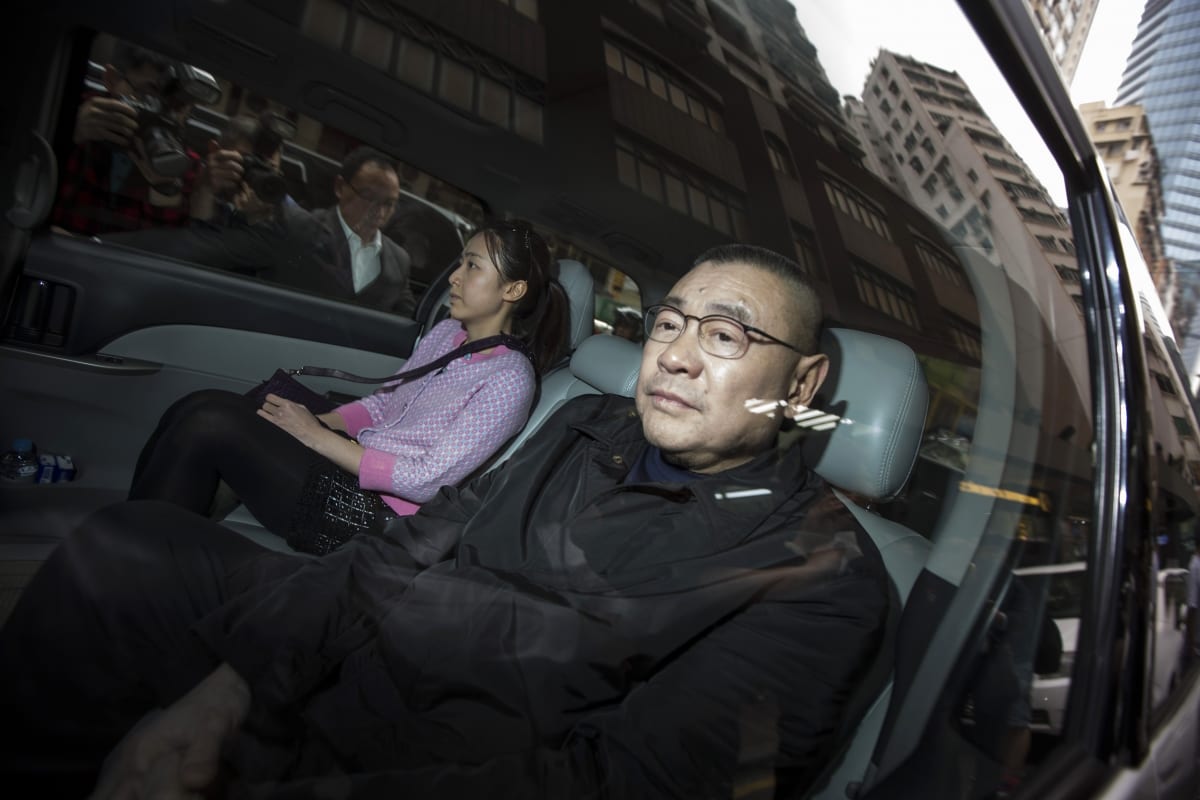
    Hong Kong property tycoon, Joseph Lau, has snapped up two rare diamonds this week for his seven year old daughter, Josephine.

    Joseph Lau is now the proud owner of the record breaking auction jewel, the Blue Moon sold at Sotheby’s Geneva, and the 16.08ct fancy vivid pink diamond auctioned at Christie’s.

    The billionaire made his fortune as the founder of the property firm Chinese Estate Holdings.

    Lau paid £19m for the rare, pink diamond on sale at Christie’s on November 10 and named the stone Sweet Josephine. It seems the pink gem wasn’t enough though and a day later he paid a record breaking £32m for the 12.03ct blue diamond which he has now christened the Blue Moon of Josephine. These stones will join a 7.03ct rectangular blue diamond named the Star of Josephine which was purchased for his daughter in 2009 when she was just a year old.

    Blue diamonds certainly seem to catch Lau’s eye as last November he bought a $33m (£21.6m) 9.75ct blue diamond for another daughter, Zoe, 13. This stone has been named Zoe Diamond and joins a $8.4m (£5.4m) ruby and diamond brooch weighing a total of 10.10cts called Zoe Red.

    For his eldest son, Lau Ming-wai, 34, his jewels come in the form of the family business. After studying at the London School of Economics at King’s College London, Lau Ming Wai took over as non-executive chairman of Chinese Estate after his father was convicted for crimes of money laundering and bribery in 2014. Although sentenced in Macau to five years, he was saved from jail time as Hong Kong does not have an extradition treaty with Macau.

    Lau is known as one of Asia’s richest men. In addition to a large diamond collection Lau is the proud owner of a Boeing 787 Dreamliner, over 10,000 bottle of fine wines, a wide range of fine art (including a £11.4m Andy Warhol portrait of Mao Zedong) and a £70m home in Belgravia, West London, complete with a gold-lined swimming pool. Lau also owns three quarters of Chinese Estates and is one of Hong Kong’s largest real estate investors.

    In Hong Kong Lau constantly makes the headlines, often referred to as Big Lau. He is known in the media for building Hong Kong’s tallest retail complex and charming several actresses and beauty queens following his divorce from his wife in 1992. Lau is the father of six children and is currently with his former assistant, Kimbie Chan.

    According to Forbes, Lau is the 114th richest person in the world with an estimated net worth of $9.8 billion.