Tag: DICT

  • Philippines publishes common tower rules

    Philippines publishes common tower rules

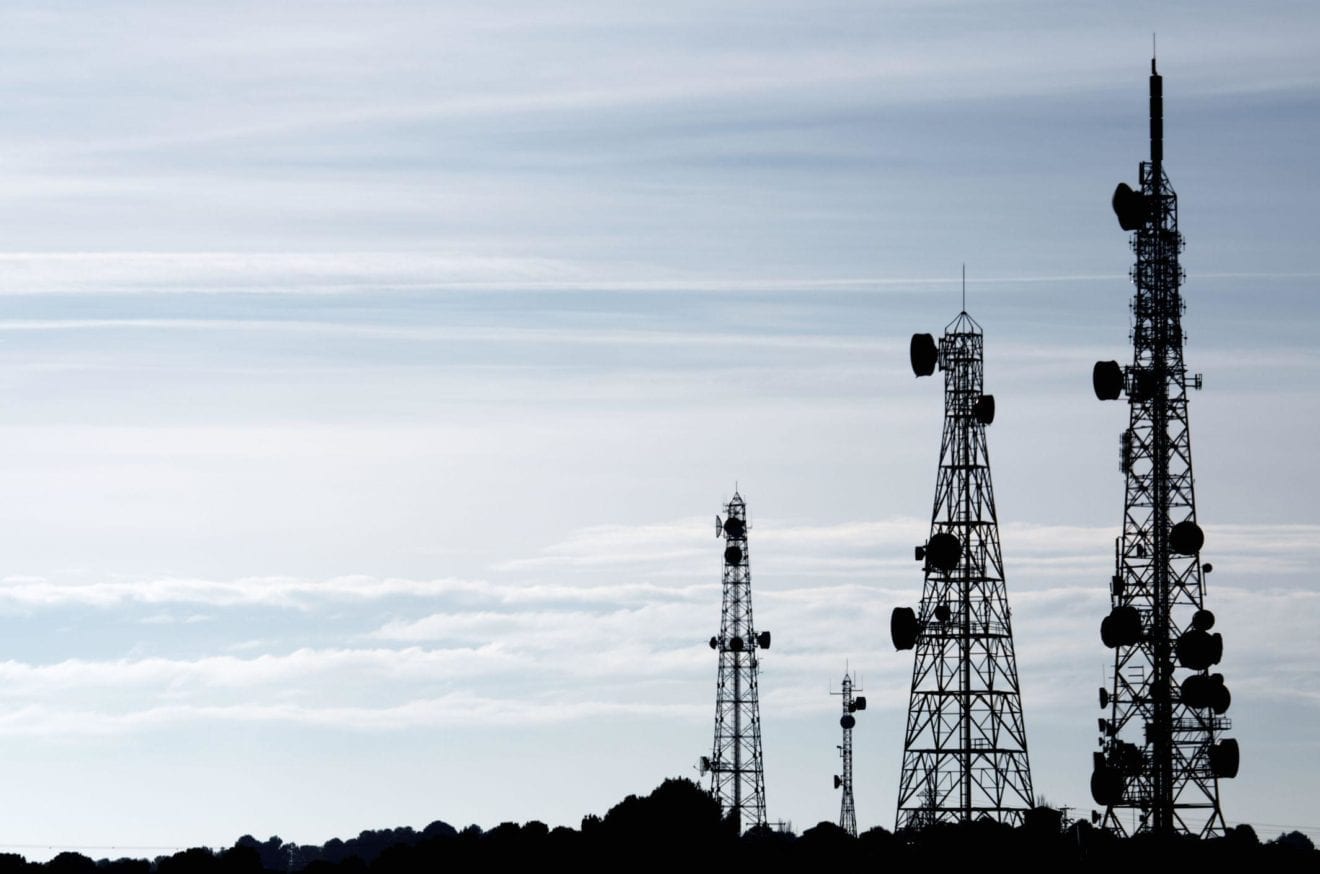
    The Philippines’ Department of ICT has published the rules and regulations for the new common tower provider regime with the goal of building or converting at least 2,500 common towers across the nation.

    The rules will pave the way for deployments in properties owned by the departments, other government agencies, and hard-to-access areas identified by the market’s mobile operators.

    With the rules, the DICT has committed to streamlining the issue of licenses for the deployment of telecommunications equipment in towers not built by the independent tower companies participating in the scheme.

    They also seek to encourage voluntary sharing of towers by incumbent mobile operators by offering incentives in the form of allowing companies to build passive infrastructure in government properties and to enable operators to offer, transfer and convey existing tower resources to tower sharing entities.

    Independent tower companies participating in the scheme will need to be at least 20% owned or in a consortium with companies with at least five years of experience constructing, owning, operating and/or maintaining towers.

    They must also be wholly independent of mobile operators to ensure they offer non-discriminatory access and have reached agreements with the DICT and secured the required permits.

    The DICT said that to date 22 tower companies have signed memoranda of understanding with the department over the common tower initiative.

    “This is the starting point of more comprehensive policy for our initiative on passive infrastructure sharing. This will help tower firms to acquaint themselves in our telco industry,” DICT acting secretary Eliseo M. Rio Jr. said.


  • HyalRoute to invest up to $2b in Philippines fiber project

    HyalRoute to invest up to $2b in Philippines fiber project

    Singapore-based shared fiber network provider HyalRoute has signed an agreement with the Philippines’ Department of ICT to invest up to $2 billion expanding to the market.

    The company’s subsidiary Philippine Fiber Optic Cable Network (PFCON) signed a memorandum of understanding with the department committing to deploy the network in various phases between 2019 and 2028.

    The DICT has in turn agreed to provide assistance in providing the required permits and licenses, and to closely coordinate with PFCON on the implementation of the project.

    HyalRoute was established with the goal of creating the first region-wide, independent shared fiber network platform in emerging Asia. The company currently provides domestic fiber solutions in Myanmar and Cambodia.

    DICT acting secretary Eliseo M. Rio Jr said the planned deployment will support the government’s own telecommunications ambitions.

    “There is a need for more fiber optic cables in this country, thus this partnership will greatly improve our telecommunication services. We can now have cable networks that anybody can use and this jives with our National Broadband Plan,” he said.

    The deployment will also support the DICT’s Free Public Wi-Fi initiative by allowing its expansion to unserved and underserved areas of the country, Rio added.

  • Philippines’ House to hold common tower hearing

    Philippines’ House to hold common tower hearing

    A Philippines’ House of Representatives committee will next week hold a hearing on the government’s common tower policy to address the industry opposition and potential legal hurdles of the proposal.

    The House Committee on ICT will look into the status of the Department of ICT’s common tower policy during a hearing scheduled for Monday, committee chairman Victor Yap told.

    Representatives of Globe Telecom and PLDT, the National Telecommunications Commission, the Department of ICT and the Philippines Competition Commission are all expected to attend.

    Under the proposed policy, tower companies will be allowed to build and operate common telecom towers that can be leased to operators. The DICT has signed agreements with a number of tower companies ahead of the introduction of the policy.

    As well as helping to improve the Philippines’ telecommunications infrastructure, the common tower policy is aimed at allowing the market’s upcoming third operator Mislatel more quickly deploy a mobile network.

    But Globe and PLDT have objected to the draft terms, which had proposed that the number of cell site builders be restricted to two registered tower providers.

    According to the operators, this could lead to an infringement of the rights to own and establish cell sites that is stipulated in their legislative franchises.

  • Philippines taps UNDP to accelerate free Wi-Fi rollout

    Philippines taps UNDP to accelerate free Wi-Fi rollout

    The Philippines’ Department of ICT (DICT) has signed a partnership agreement with the United Nations Development Program (UNDP) aimed at fast-tracking the deployment of free Wi-Fi access in public places.

    Under the agreement, the UNDP will provide support for the government’s Pipol Konek – Free Wi-Fi Internet Access in Public Places Project.

    The UNDP will conduct area-based network analysis of target sites, oversee monitoring of project impact, and continue to provide technical training to stakeholders involved in the rollout.

    The UNDP and the DICT will meanwhile jointly take charge of project oversight. The project participants plan to hold workshops and consultative meetings to address the challenges with the rollout and investigate potential solutions.

    The DICT sought the assistance of the UNDP in September last year to expedite the project and aid in the capacity-building initiatives of the companies involved in the rollout. A formal signing ceremony was held last week during the first project board meeting.

    “Today as we set to seal this meeting of minds, the Department is optimistic that our goals of providing free Internet access and promoting knowledge-building among our citizens will soon be realized,” DICT acting secretary Eliseo M Rio Jr said at the signing ceremony.

  • Philippines prepares for nationwide rollout of 911 hotline

    Philippines prepares for nationwide rollout of 911 hotline

    The Philippines’ Department of Interior and Local Government (DILG), operators, private organizations, media partners and other government agencies have started testing the nation’s new 911 emergency hotline.

    The new emergency hotline will be rolled out nationwide on August 1. The new service was made possible by an agreement signed by the the different government agencies including the DILG, Department of Information and Communications Technology (DICT), and National Telecommunications Commission (NTC).

    The agencies were responding to the instruction of newly elected President Rodrigo Duterte to designate a number people can call in response to a national disaster.

    Other signing agencies were the Foundation for Crime Prevention (FCP), Philippine Information Agency (PIA), and the Kapisanan ng mga Brodkaster ng Pilipinas (KBP).

    The agreement covers the transition to make the existing 117 hotline and the new 911 emergency hotlines accessible to call for the general public through each party’s respective networks.

    The DILG said the existing 117 hotline will be utilized for 911 hotline operation starting next month. The current hotline has 15 seats, 43 agents and database of Philippine National Police (PNP) units, including their mobile, local government Units and its emergency numbers and teleconference capability.

    Retired General Eliseo Rio Jr. of the Department of Information and Communications Technology (DICT) and currently consultant to 117, said that after August 1, the current 15 seats will increase to 30 and the existing 43 call center agents will be increased to 90.

    The country’s two leading telecommunications players – PLDT and Globe Telecom – both expressed support for the government project. In a statement, Globe’s Legal Counsel Froilan Castelo said the company is ready to comply with the government directive to provide access to 911 and 8888 numbers for government emergency hotline and complaint hotline.

    Globe has long used the 8888 number as its own customer hotline. However, the company will give way to the government request and will instead change to a new hotline number for its more than 57 million customers.

    At the start of the testing period last week, DILG Secretary Ismael Sueno reportedly called 911 twice using a landline and a cellular phone in the presence of officials from concerned agencies to see how the operation will flow.

    The test calls – as well as the simulation exercises that will be made between July 21 to July 31 – seek to close possible gaps that will be encountered once 911 goes public.

  • Philippines’ new ICT chief orders spectrum audit

    Philippines’ new ICT chief orders spectrum audit

    The chief of the new Philippines Department of Information and Communications Technology (DICT) has ordered the inventory of used and unused telecoms spectra.

    In his first public speaking engagement and media interview since assumption into office on July 1, DICT Secretary Rodolfo Salalima said frequency is a scarce public resource and the patrimony of the nation.

    “I do not want public telephone entities to be warehousing frequencies, meaning getting assigned frequencies from the government, storing it without using it but using it for speculative purposes,” he said.

    He clarified that this act is contrary to the Philippine Constitution and a public service law which states that frequency must be assigned only to those who can make it effective and efficient use of it.

    “If they (telecommunications companies) have not used these frequencies within a reasonable time as stated in the position of giving or assigning to them the frequency, we better start revoking these frequencies because it ought to be assigned to telcos that can effectively and efficiently utilize them,” he added.

    The DICT Chief, however, gave assurances that due process will be observed if the department will resort to revocation of spectrum licenses or permits if some telcos are found to have not used them within the prescribed period.

    “We will hear them out,” he said, further clarifying that what telcos pay for is only the use of the frequency. “They do not become owners of these frequencies because they can never be owned under the Philippine Constitution.”

    The issue stemmed from the recent co-purchase of the telco business of San Miguel Corporation (SMC) by the country’s two dominant carriers – PLDT and Globe Telecom, which the government’s antitrust body, the Philippine Competition Commission (PCC) now wants investigated.

    Salalima said frequency is crucial to the operations of telecommunications companies in servicing the public.

    “This is the reason why to my mind, PLDT and Globe have to purchase control of the holding company of SMC so that at least they can have part of the frequency (not the entirety) needed for them to further improve the service,” he said.

    He clarified though that he is leaving it to the PCC to decide on the issue of whether the telco buyout deal is in the best interest of the public. His concern is the efficient use of spectrum, especially in light of the need to improve internet connection speed in the country and public services.

    Newly elected President Rodrigo Duterte has given local telecommunications players one year to shape up telco services and internet speed or ship out.

    The DICT, which was given the mandate to make policies and plans in regard to telco services and the country’s ICT infrastructure, is still in the transition period. It is currently awaiting the Implementing Rules and Regulations (IRR) of the law that created the new department only last May.