
Tag: digital money

  • Swiss Advance in Central Bank Digital Money Push

    Swiss Advance in Central Bank Digital Money Push

    A group of commercial and public institutions got together to see how tokenized financial assets based on distributed ledger technology work with today’s banking systems.

    A project involving the Swiss National Bank, the Bank for International Settlements (BIS), the Swiss Securities Exchange SIX and five commercial banks to test the integration of a national digital currency into existing back-office systems and processes, was successful, the central bank said in a statement Thursday.

    The banks included in phase II of the project called «Helvetia» were: Citi, Credit Suisse, Goldman Sachs, Hypothekarbank Lenzburg and UBS.

    The central bank expects more financial assets to be tokenized in the future with financial infrastructures to run on distributed ledger technology (DLT), it said, while adding that international regulatory standards suggest that operators of systemically important infrastructures should settle obligations in central bank money whenever practical and available.

    Tests covered a wide range of transactions in Swiss francs – interbank, monetary policy and cross-border, the statement said.

    None of the existing DLT-based platforms are systemic yet, but they may become so in the future, the central bank said, while highlighting the «exploratory nature» of the project.

    To continue fulfilling their mandates of ensuring monetary and financial stability, central banks need to stay on top of technological change, head of the BIS Innovation Hub, Benoît Cœuré, said.

    Project Helvetia allowed the SNB to deepen its understanding of how the safety of central bank money could be extended to tokenized asset markets, Andréa Maechler, member of the Swiss National Bank’s governing Board said.

    While SIX CEO, Jos Dijsselhof, said that the project demonstrated that the SDX platform could support wholesale central bank digital currency (CBDC) for settling tokenized assets end to end.

    Separately the UK government published a report on Thursday, which concluded that there was no convincing case for establishing a central bank digital currency (CBDC) at present.

    While CBDC may provide some advantages, it could present significant challenges for financial stability and the protection of privacy, the report said. It added that the British government had not yet has not yet decided whether to introduce a CBDC.
  • Bubble or brave new world? Bitcoin breaks USD 10000 barrier

    Bubble or brave new world? Bitcoin breaks USD 10000 barrier

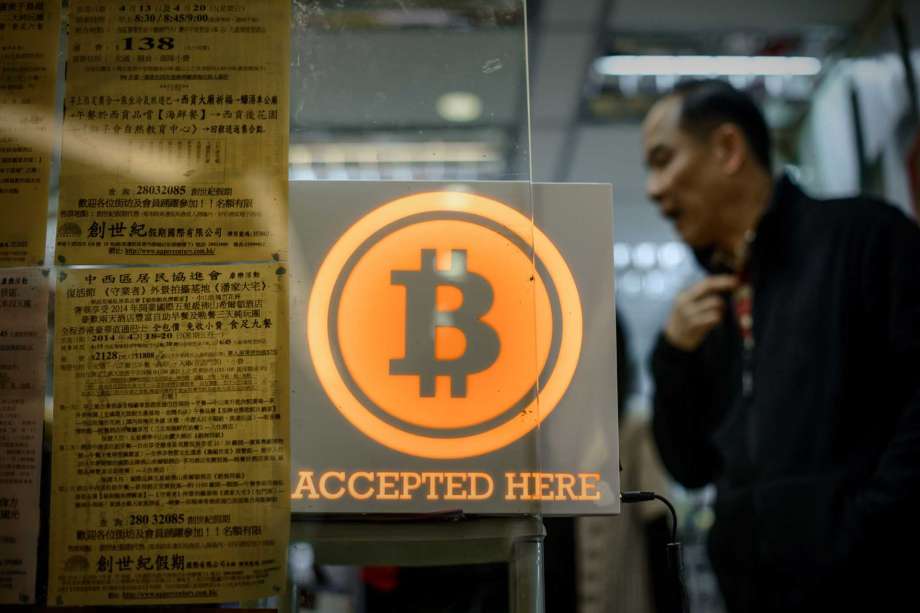
    Bitcoin broke through the USD 10,000 barrier for the first time today as it continues a stratospheric rise that has delighted investors but sparked fears of a bubble.

    The virtual currency hit a high of USD 10,379 in Asia, according to Bloomberg News, more than 10 times higher than its value at the start of the year.

    The breakthrough is the latest in a spectacular run for the online money dubbed “digital gold” by its advocates, which began life in 2009 as a bit of encrypted software supposedly written by an unknown coder with a Japanese-sounding name.

    Bitcoin, which was valued at just a few US cents when it was launched, has no legal exchange rate, no central bank backing it and is traded on specialist platforms.

    But it quickly gained popularity as an alternative to traditional investments, while it has been used to pay for items from a pint in a London pub to a manicure.

    The virtual currency has attracted as much anger as praise, however, with the boss of JP Morgan Chase labelling it a fraud and governments, while China and South Korea have expressed concerns.

    It got a major boost last month when exchange giant CME Group announced it would launch a futures marketplace for Bitcoin, which has not been listed on a major bourse before.

    The announcement sparked a surge in its value — it has risen 45 percent in the past two weeks alone.

    But the spectacular rate of growth, which has seen it increase in value from a 2017 low of USD 752 in mid-January, has also triggered concerns, and critics note the currency has suffered wild swings in the past.

    “This is a bubble and there is a lot of froth. This is going to be the biggest bubble of our lifetimes,” warned hedge fund manager Mike Novogratz at a cryptocurrency conference yesterday in New York, according to Bloomberg News.

    Other commentators were more positive about Bitcoin, saying its surging popularity will attract cash from traditional investors, such as hedge funds and asset managers.

    “I think the momentum is still very much to the upside,” Kay Van-Petersen, macro and crypto strategist with Saxo Bank in Singapore, told AFP.

    He said it could still suffer pullbacks, but predicted it would be worth USD 50,000 to USD 100,000 in the next six to 18 months.

    Transactions happen when heavily encrypted codes are passed across a computer network.

    Bitcoin and other virtual currencies use blockchain, which records transactions that are updated in real time on an online ledger and which are maintained by a network of computers.

    Hundreds of other digital currencies have been created since its launch, but Bitcoin remains by far the most popular.

    Bitcoin has suffered controversies.

    In one of the most high-profile, major Tokyo-based Bitcoin exchange MtGox collapsed in 2014 after admitting that 850,000 coins — worth around USD 480 million at the time — had disappeared from its vaults.

    Bitcoin’s use on the underground Silk Road website, where users could use it to buy drugs and guns, was also presented as proof it was a bad thing.

    While analysts expect the currency to suffer falls, they expect it will prosper in the long term and see the CME launch as the next big test.

    “If it survives the CME, there is no reason why it won’t continue to rise higher,” Greg McKenna, from Australia-based AxiTrader.