Philippine Payments Management Inc. And Ant International have integrated Alipay+ into QR Ph, opening the country’s standardized merchant network to international digital wallet users across 2.5 million businesses.
The integration connects arriving tourists directly to local point-of-sale systems after QR Ph transaction volumes jumped more than thirteenfold in 2025.
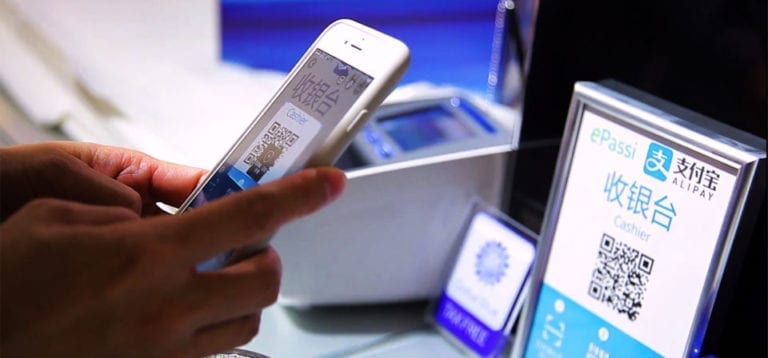
Under the rollout, overseas visitors pay by scanning existing merchant QR Ph counter stands with their home banking applications and digital wallets. Filipino merchants receive payments in Philippine pesos through their standard settlement accounts without installing separate point-of-sale hardware or signing individual foreign merchant contracts. Bangko Sentral ng Pilipinas figures show digital channels handled 64.69 percent of total retail transaction volume nationwide in 2025.
How the Cross-Border Routing Works
Ant International operates Alipay+ as an aggregation switch connecting more than 50 e-wallets, bank apps, and domestic clearing systems covering two billion accounts globally. The Philippine Payments Management Inc., established under the National Payment Systems Act to oversee retail clearing houses PESONet and InstaPay, acts as the local operational counterparty under central bank supervision.
Transactions clear instantly over the domestic interbank infrastructure. By routing foreign user credentials through the standardized QR Ph matrix, independent grocers, transport operators, and shopping mall tenants process foreign spend through their existing merchant acquiring banks.
Through our partnership with Alipay+, we are extending that connectivity beyond our borders, enabling Filipino merchants, particularly SMEs, to serve international customers.
Carmelita Araneta, general manager of Philippine Payments Management Inc., confirmed the system enables local micro, small, and medium businesses to capture inbound tourist spending directly without upgrading terminal hardware.
Regional QR Linkages Across Southeast Asia
Central banks across the Association of Southeast Asian Nations spent five years connecting national QR systems through bilateral central bank arrangements, including links between Singapore, Thailand, Malaysia, and Indonesia. Ant International has taken a parallel commercial route by plugging its private wallet switch directly into ten national QR schemes across Asia, the Middle East, and Latin America.
Retailers benefit immediately from broader payment acceptance, yet the shift consolidates settlement traffic onto private gateway protocols rather than public central-bank settlement rails. For merchant acquirers and payment processors in Manila, merchant acquisition margins face pressure as payment routing shifts toward high-volume, low-margin standard QR processing.
Central Bank Mandates and the Next Phase
The Bangko Sentral ng Pilipinas designated PPMI as the country’s official payment system management body under Circular 980 in 2018, mandating standardized QR codes to eliminate proprietary closed-loop merchant terminals. That policy push cleared the ground for interoperability between competing domestic mobile wallets before enabling cross-border integrations.
Ant International is now rolling out artificial intelligence analytics and fraud screening modules across its regional merchant network to manage currency conversion risks and transaction disputes. The Philippine clearing body will monitor cross-border settlement volumes through InstaPay as inbound tourist arrivals ramp up across provincial retail corridors.