
Tag: disaster

  • HPE Partners with Chunghwa Telecom: Boosting Cyber Resilience with Innovative Disaster Recovery Center in Taiwan

    HPE Partners with Chunghwa Telecom: Boosting Cyber Resilience with Innovative Disaster Recovery Center in Taiwan

    Hewlett Packard Enterprise (HPE) and Chunghwa Telecom’s Enterprise Business Group have recently revealed their plans to establish an international disaster recovery (DR) center in Taiwan. The alliance aims to reinforce cyber resilience and data protection for local companies.

    A Cyber Resilience Vault for Taiwan

    The upcoming DR center will leverage HPE’s Cyber Resilience Vault, incorporating sophisticated ransomware protection and a blend of cyber and disaster recovery technologies. The proposed solution aims to support Taiwanese businesses in setting up a global off-site backup system with second-level Recovery Point Objectives (RPO) and minute-level Recovery Time Objectives (RTO). Furthermore, it promises Continuous Data Protection (CDP) for faster recovery and enhanced defense against ransomware attacks.

    This move comes amidst growing apprehensions about ransomware and data disruption. Recent studies show that organizations globally face an average of 4.2 data disruption incidents annually, including at least one ransomware attack. Surprisingly, despite having backups, 48% of organizations opt to pay ransoms to expedite recovery or limit data loss. Yet, only 20% manage to fully recover their data.

    Addressing Ransomware Attacks and Data Loss

    Jon Wang, HPE’s Managing Director of Taiwan and Hong Kong, commented on the initiative. He highlighted that the HPE Cyber Resilience Vault, integrated with Chunghwa Telecom’s Internet Data Center services, would enable businesses to recover swiftly, decrease downtime, and restore lost data within seconds, thus ensuring full protection and backup of confidential information.

    Pen-Yuang Chang, General Manager of Chunghwa Telecom Enterprise Business Group, emphasized the importance of preventing significant business damage from ransomware attacks. He stated that their collaboration with HPE will allow local businesses to implement extensive disaster recovery mechanisms, thereby boosting their cyber resilience and international competitiveness.

    Through this partnership, Chunghwa Telecom plans to offer this new disaster recovery capability via its Internet Data Center (IDC) Value-Added Services – Equipment Subscription Service. Customers will have the opportunity to deploy protected virtual machines with enterprise-grade reliability, back up mission-critical workloads to Chunghwa Telecom’s robust IDC facilities, and conduct regular disaster recovery drills to validate readiness. The operator also intends to introduce a Disaster Recovery as a Service (DRaaS) model, priced according to the number of protected virtual machines, offering customers greater flexibility and scalability.

    A Proven Disaster Recovery Solution

    A prominent Taiwanese petrochemical manufacturer has already adopted this collaborative solution to secure sensitive operational data. By duplicating critical plant information to Chunghwa Telecom’s data center and utilizing HPE’s continuous data protection, the company has reduced cybersecurity risk, decreased maintenance overhead, and improved confidence in meeting recovery objectives.

    On a technical note, HPE Cyber Resilience Vault integrates various HPE technologies including HPE Alletra Storage MP B10000, HPE ProLiant Compute servers, HPE Zerto disaster recovery software, and HPE Networking wired and wireless solutions. The platform creates an air-gapped, isolated data vault with immutable, FIPS-compliant storage. Its journal-based CDP tracks recovery checkpoints every five to ten seconds, enabling near-synchronous replication, second-level RPO, and minute-level RTO.

    The solution, deployed within Chunghwa Telecom’s IDC satellite data centers, is expected to significantly decrease recovery times and reduce data loss from hours to seconds. It will also speed up service restoration from days to minutes, whilst providing Taiwanese enterprises with a more robust foundation for cyber resilience amid an escalating threat landscape.

    Questions & Answers

    What is the primary goal of the HPE and Chunghwa Telecom partnership?

    The collaboration aims to establish an international disaster recovery center in Taiwan to strengthen cyber resilience and data protection for local enterprises.

    How does the HPE Cyber Resilience Vault benefit businesses?

    The HPE Cyber Resilience Vault enables businesses to swiftly recover from data loss, minimize downtime, and restore lost data within seconds, ensuring comprehensive protection and backup of confidential information.

    What specific services will Chunghwa Telecom offer through this collaboration?

    Chunghwa Telecom will offer the new disaster recovery capability via its Internet Data Center (IDC) Value-Added Services – Equipment Subscription Service. This will allow customers to deploy virtual machines with enterprise-grade reliability, back up mission-critical workloads, and conduct regular disaster recovery drills. They also plan to introduce a Disaster Recovery as a Service (DRaaS) model.

  • Bangkok declares end of disaster situation

    Bangkok declares end of disaster situation

    The Bangkok Metropolitan Administration’s Disaster Prevention and Mitigation Command Center has issued an official announcement, stating that the disaster situation in the metropolitan area caused by an earthquake has now ended.

    All areas in the city are no longer disaster zonas, except for the area around the construction site of the new State Audit Office (SAO) building on Kamphaeng Phet 2 Road, Chatuchak district, the statement said on April 3.

    The center stated that although the overall disaster situation in Bangkok has returned to normal, search and rescue operations are still ongoing at the collapsed building. Officials from various agencies, including rescue workers, structural engineers, and medical teams, are continuing rescue efforts using modern equipment and technology to minimize risks to the personnel involved.

    The center explained that the operation area has been divided into zones, with task forces mobilized to search for those who may still be trapped inside. Drones are being used to survey from above, and special equipment is being employed to detect life signs.

    Additionally, a team of experts specializing in rescue operations in collapsed areas has been deployed to assist in the mission.

    The BMA urged the public to refrain from approaching the construction site to ensure safety and avoid hindering the work of the rescue teams. The public is also advised to closely follow updates from the relevant authorities and adhere to official guidance.

    Individuals affected or with relevant information can contact the appropriate agencies for assistance, the BMA added.

  • DHL, UN hold airport disaster preparedness workshops in Indonesia

    DHL, UN hold airport disaster preparedness workshops in Indonesia

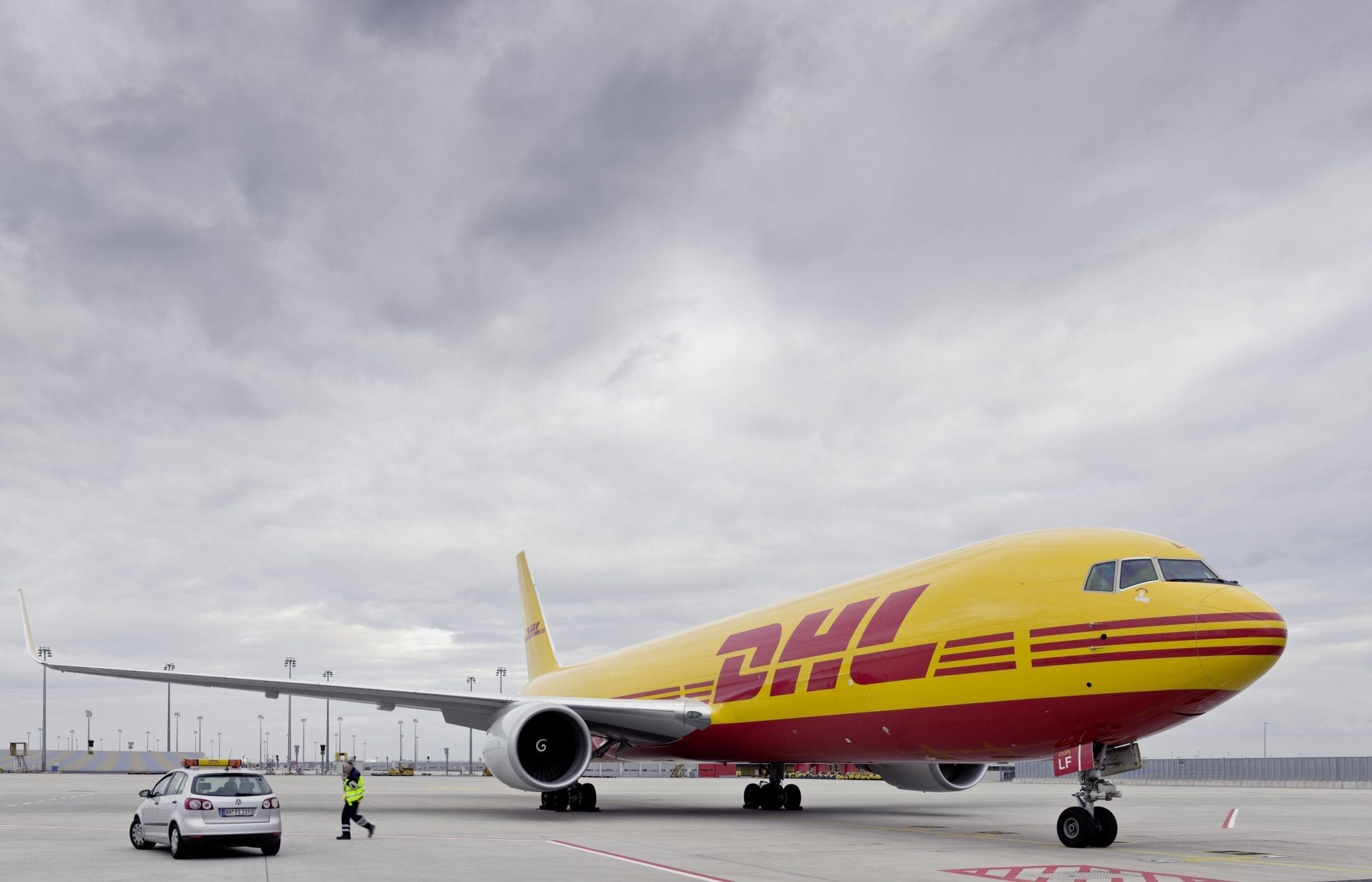
    Germany’s Deutsche Post DHL Group and the United Nations Development Programme (UNDP) are once again conducting their joint preventative training, known as Get Airports Ready for Disaster (GARD), at Bali’s Ngurah Rai International Airport, Lombok International Airport and Selaparang Airport in Lombok.  Indonesia was the pilot country when the program was implemented globally in 2009 — in Makassar and Palu.

    Deutsche Post DHL Group and United Nations Development Programme Hold Airport Disaster Preparedness Workshops in Bali and Lombok. L-R: Teguh Pratomo (MoT); Medi Herlianto (BNPB); Christian Usfinit (UNDP); Welani Widjaja, Managing Director, DHL Global Forwarding Indonesia; Chris Weeks, Director of Humanitarian Affairs, Deutsche Post DHL Group.

    Indonesia is located on the Pacific Ring of Fire where several continental plates collide. As a result, the chain of islands is at frequent risk of earthquakes, tsunamis and active volcanoes. Additionally, Bali and Lombok are categorized as high risk areas in the Indonesian Disaster Risk Index (2013). Airports in both provinces experienced operations shutdown due to volcanic eruptions from nearby Mount Rinjani.

    The multi-day workshop involves over 50 participants — including representatives from the airport operating company, aviation safety experts, national and regional Disaster Management Planning Agencies, Indonesian Red Cross, immigration authorities, the military and the police force — who will be trained to handle the high volume of incoming relief goods and increasing number of passengers during the aftermath of natural disasters.

    “Following natural disasters, airports become vital hubs for the processing of incoming relief supplies,” says Christof Ehrhart, Head of Corporate Communications and Responsibility at Deutsche Post DHL Group. “With sound processes in place at the airport and with the relevant agencies, relief goods and aid can be channeled through airports to reach the affected communities quickly and efficiently. This program continues to help improve disaster management in this geologically high-risk region.”

    “Often airports are unprepared to manage large disasters or humanitarian crisis and as a result, assistance gets slower in getting to those most affected. GARD is working specifically with all partners on the ground to solve any potential bottlenecks that could impede fast response to save lives. I praise the Indonesian government for its commitment to preparedness and the airport authorities for their risk informed management,” says United Nations Resident Coordinator in Indonesia, Douglas Broderick.

    The training includes evaluation of the airports’ capacities for processing high volumes of passengers and cargo and warehousing relief supplies. Location-specific disaster plans are drawn up as well.

    Since 2009, GARD trainings have been held in eight airports in Indonesia, namely Sultan Hassanuddin Airport in Makassar (2009), Mutiara Airport in Palu (2009), Ngurah Rai Airport (old airport) in Denpasar (2011), El Tari Airport in Kupang (2011), Polonia Airport in Medan (2012), Sultan Iskandarsyah Airport inBanda Aceh (2012), Fatmawati Airport in Bengkulu (2012) and Minangkabau Airport in Padang (2013).

  • DHL and UN Development Programme Hold Airport Disaster Workshops

    DHL and UN Development Programme Hold Airport Disaster Workshops

    Germany’s Deutsche Post DHL Group and the United Nations Development Programme (UNDP) are once again conducting their joint preventative training, known as Get Airports Ready for Disaster (GARD), from September 5 to 9 at Bali’s Ngurah Rai International Airport, Lombok International Airport and Selaparang Airport in Lombok. Indonesia was the pilot country when the program was implemented globally in 2009 – in Makassar and Palu.

    Indonesia is located on the Pacific Ring of Fire where several continental plates collide. As a result, the chain of islands is at frequent risk of earthquakes, tsunamis and active volcanoes. Additionally, Bali and Lombok are categorized as high risk areas in the Indonesian Disaster Risk Index (2013). Airports in both provinces experienced operations shutdown due to volcanic eruptions from nearby Mount Rinjani.

    The multi-day workshop involves over 50 participants – including representatives from the airport operating company, aviation safety experts, national and regional Disaster Management Planning Agencies, Indonesian Red Cross, immigration authorities, the military and the police force – who will be trained to handle the high volume of incoming relief goods and increasing number of passengers during the aftermath of natural disasters.

    “Following natural disasters, airports become vital hubs for the processing of incoming relief supplies,” says Christof Ehrhart, Head of Corporate Communications and Responsibility at Deutsche Post DHL Group. “With sound processes in place at the airport and with the relevant agencies, relief goods and aid can be channeled through airports to reach the affected communities quickly and efficiently. This program continues to help improve disaster management in this geologically high-risk region.”

    “Often airports are unprepared to manage large disasters or humanitarian crisis and as a result, assistance gets slower in getting to those most affected. GARD is working specifically with all partners on the ground to solve any potential bottlenecks that could impede fast response to save lives. I praise the Indonesian government for its commitment to preparedness and the airport authorities for their risk informed management.” says United Nations Resident Coordinator in Indonesia, Douglas Broderick.

    The training includes evaluation of the airports’ capacities for processing high volumes of passengers and cargo and warehousing relief supplies. Location-specific disaster plans are drawn up as well.

    Since 2009, GARD trainings have been held in eight airports in Indonesia, namely Sultan Hassanuddin Airport in Makassar (2009), Mutiara Airport in Palu (2009), Ngurah Rai Airport (old airport) in Denpasar (2011), El Tari Airport in Kupang (2011), Polonia Airport in Medan (2012), Sultan Iskandarsyah Airport in Banda Aceh (2012), Fatmawati Airport in Bengkulu (2012) and Minangkabau Airport in Padang (2013).