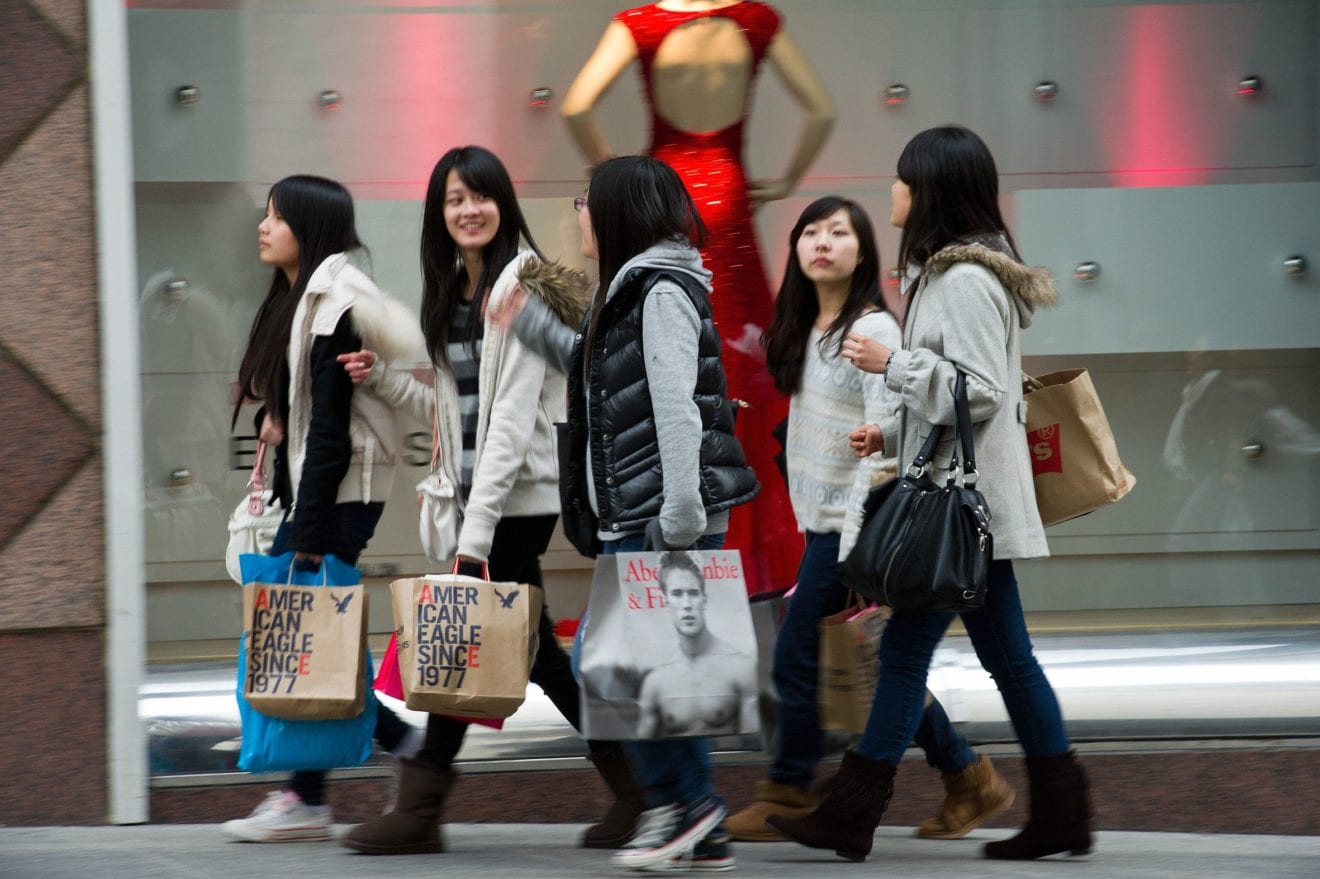
On top of seasonal sales and occasional promotions, major South Korean retailers have been holding a series of big discount events since summer to create an intense, promotion-heavy atmosphere through the Christmas season and beyond.
The discount binge has indeed given a fillip to consumer spending here, but market watchers question its long-term effect as a slowdown in Asia’s fourth-largest economy has led to lower incomes for many people, prompting them to tighten their purse strings.
Most recently, “K-Sale Day” kicked off last week to run for 26 days nationwide, led by major department stores and outlets that hope to grab shoppers’ attention ahead of the original Black Friday.’
It came just a month after “Korea’s Black Friday”, a nationwide shopping campaign initiated by the government during the first two weeks of October to jack up the stagnant domestic consumption.
The government-led event even overlapped with “Korea Grand Sale”, during which retailers knocked down prices from early September to mid-October to woo back both domestic consumers and Chinese travelers during the long-haul national holiday.
One of the main reasons for the deluge of sales is the summer slump following the outbreak of Middle East Respiratory Syndrome (Mers) in late May, which poured cold water on domestic spending and dented tourist numbers.
More fundamentally, however, the seemingly never-ending sale is seen as an early sign that South Korea is heading into a recession.
“Although the domestic economy has long grappled with sluggish consumption, the government is ever more concerned about weak spending after exports showed signs of slowing,” says Ko Ga-young, a researcher at LG Economic Research Institute.
“Exporters in the manufacturing sector had propelled the growth until the 2008 global financial crisis, but their prospects remain bleak due to slowdown in the Chinese economy and tougher global competition in the low-end manufacturing sector.”
Although policy makers had expected that low oil prices and record-low interest rates would boost the economy this year, the fallout from the Mers outbreak prompted the government to lower its 2015 growth forecast from 3.8 per cent to 3.1 per cent in June.
The retail discount events, held both online and offline, did not create much buzz like Chinese e-commerce giant Alibaba’s “Singles Day”, which recorded a blockbuster US$14.3 billion in sales on November 11, but the steep discounts did serve as the spending trigger for pent-up demand in a short period of time.
According to the data compiled by the industry ministry, the 22 retailers that joined the Black Friday Korea campaign saw their sales rise 20.7 per cent on-year to 719.4 billion won (US$634.9 million) during the two-week period.
While the government touted its “successful effort” in reviving the consumer sentiment, the market remained skeptical over the growth from last year’s low base during the extended holiday season.
“Large department stores and discount chains face an unfavorable business environment because massive sales events and permanent discount policy produced a limited effect despite last year’s low base,” said Nam Sung-hyun, a researcher at Kiwoom Securities.
Unlike a one-off factor like the viral disease, market watchers worry that the tight labor market and rising household debt could continue to discourage people from spending on concerns over their unstable future.
The youth jobless rate reached the highest level in 15 years at 10.1 per cent in June with more college graduates landing at temporary positions, while the average consumption propensity dipped to a record low 71.5 per cent in the third quarter, according to Statistics Korea.
“The consumption propensity is expected to further decline because households are managing their spending schedule in line with the bleak long-term growth prospect and extended life span,” Ko said.
Bricks-and-mortar shops face an even dimmer outlook as more consumers are hunting for bargains from online marketplaces abroad.
Traditional retailers not only have to compete with each other but also counter challenges from international online marketplaces stealing their customers with easier delivery and transaction procedures.
“As more consumers learn they can easily buy products at a much cheaper price via online vendors, offline shops are more frequently conducting discount events to retain their customers,” said Jun Mi-young, a professor at Seoul National University and co-author of Trend Korea 2016.
“The experience of buying foreign brands at discounted prices has created a healthy dose of cynicism about department stores’ pricing policy.”
According to US No 1 retailer Walmart’s Black Friday advertisement, South Korean tech giant Samsung Electronics’ 55-inch HDTV was discounted to $498, less than half prices for similar models sold at Korean department stores.
Some deals even raise questions over whether retailers set a higher price from the beginning to look like they are giving discounts.
Lotte Department Store’s K-Sale Day promotional leaflet shows that the price of German kitchenware maker Henkel’s five-star knife block set was reduced from 550,000 won to 229,000 won.
Sounds like a good deal. But you can buy the same product below 200,000 won at several online shopping malls on any given day.
The desperate efforts to grab customers with lower prices, however, come at a price.
As sales start earlier and last longer, they become less important and easier for consumers to ignore. When every day is special, none is.
“I used to wait for the discount season to buy off-season clothes or other things at cheaper prices,” Lee Su-jin, a 35-year-old office worker in Seoul, said. “These days, I use mobile applications to buy refurbished products or find good deals at overseas websites.”
While the discount pricing strategy is useful in driving traffic and sales for a short term, marketing professionals worry repeated sales could negatively affect the retail industry in the long run.
To survive in the borderless digital commerce world, they advise bricks-and-mortar shops to come up with differentiated services to increase customer loyalty.
”As the rise of digital shopping has become an inevitable trend in the retail industry, offline sales channels should seek ways to provide better in-store experiences and quality service,” Jun said. “Squeezing margins is not a sustainable business model.”
Experts emphasise the government’s role in setting a long-term policy to manage the record-high household debt and steer the economy clear of such economic uncertainties as China’s slowdown and market jitters over a US rate hike.
“The government should control the pace of the household debt growth so it does not rise faster than the income growth, which could further contract spending,” Ko said.
“Structural reforms are also needed to foster new value-added service sector for healthier growth.”