Tag: Disneyland

  • Disneyland for all things pasta

    Disneyland for all things pasta

    Five or six years ago, Australian retail pundits who’d visited the 50,000sqf Eataly Italian “food emporium” in New York (which opened in 2010), were breathlessly rhapsodising about it in presentations back home.

    My visit to its Munich outpost two years ago was pleasant but not earth-shattering. Still, the enterprise continues to march across the globe, currently with 40 locations across its core countries of Italy and the US, as well as Japan, Korea, Germany, Sweden, Russia, Brazil, Turkey and the Middle East, with further sites planned for Belgium, Hong Kong, South Africa, France, Canada, the UK and Australia in the “near future”.

    Eataly executive chairman Andrea Guerra told the Financial Times at the end of 2017 that the company was planning major expansion over the next decade and wanted to “have a store in every world capital”. Or maybe he was just talking the company up in advance of a theoretical IPO, which a potential overreach into theme parks may have derailed. Let’s take a look.

    Authentic or dumbed-down?

    For those not familiar with it – or somehow immune to past hype – Eataly is a large format/footprint Italian marketplace or food hall comprising a variety of upscale restaurants, food and beverage counters and delicatessens, bakery and other specialty food counters, a supermarket, other retail such as homewares and kitchen utensils, and a cooking school.

    Guerra defined its concept as “a complete emotional food experience where customers shop, eat and learn all about Italian food, all in a cross-selling approach”. Its strapline, Alti Cibi, translates literally as “high food” – which perhaps may go some way to explaining its perceived high prices, a continual source of aggravation on its Tripadvisor reviews.

    Eataly originally showcased a number of small and artisan companies operating in the food and wine sector, such as durum wheat pasta from Gragnano, mineral water from the Maritime Alps, Veneto and Piedmont wines, Ponente Riviera Ligure oil, Piedmont fassone meat, and traditional Italian cheese and cold cuts. In theory, Eataly offers “the best artisan products at reasonable prices” and says it creates a “direct relation between producers and distributors, focusing on sustainability, responsibility and sharing”.

    Despite its pun-in-English name, Eataly is not a US franchise. It’s actually Italian, and therefore in theory “authentic” although some Italians think it’s dumbed-down. It was founded in 2004 in Italy’s northern Piedmont region by Oscar Farinetti, an entrepreneur formerly involved in the consumer electronics business. In 2007 he converted a closed vermouth factory in Turin into the first location of Eataly.

    Fast forward to 2018 and Eataly has 40+ locations in the northern hemisphere and a 2017 revenue of €465 million ($737 million), a 20 per cent revenue increase on the previous year (7 per cent up in Italy, 48 per cent up in the US but primarily through lateral growth via new store openings) although its profits are negligible and variable. Like-for-like store growth statistics are hard to come by.

    Eataly was theoretically due to list on the Italian stock exchange in mid-2018 with a 33 per cent floating capital and a huge valuation (more than €2 billion). However it does not yet appear to have done so, and has been suspiciously “quiet” in new store openings in any market since early 2018.

    An educational dinner at the farm

    It appears ambition may have strangled the golden goose. In advance of a theoretical mid-2018 IPO, in November 2017 Farinetti and Guerra launched Fico Eataly World in the northern Italian city of Bologna, with at best mixed results and feedback.

    Dubbed the Disneyland of Pasta, Fico Eataly World was inaugurated by prime minister Paolo Gentiloni and claimed to be the world’s largest agri-food park. Its 20 acres contains three dozen restaurants, a gigantic market, farms and factories enabling visitors to see how products are made and processed, and a variety of “multimedia experiences”. It is intended to “unify Italy’s diverse food culture under one roof”. There is a multitude of pop-up-style stores selling Italian produce and kitchenware; six experiential educational pavilions; several classrooms, sports and play areas as well as a cinema and a 1000-capacity congress space. It is surrounded by several hectares of farm animals and vegetable plots. The project took four years to complete, at a cost of €120 million. It works with over 150 Italian companies, from relatively small to very large, and has created more than 3000 jobs.

    But inevitably it has its detractors, who denounce it as an American concept in search of an Italian home, and has had patchy performance.

    Forecast to bring in three million visitors a year, in 2018 in its first five months of operation it had brought in just 1.5 million. And only 1.8 per cent of them were foreigners versus a projection of 30 per cent. Reports suggested that on those initial numbers, it won’t meet the required breakeven of four million visitors a year.

    The site has been plagued by claims of isolation – the “culinary cathedral in the desert” is not readily accessible by public transport. It is now, apparently, investigating hotel and resort development to cater to the conference market. According to reports, it has laid off substantial numbers of staff.

    Where are the tourists?

    Either way, the question remains whether an American-style retail idea can work in Italy unless it’s substantially marketed to foreign visitors as a tourism (not retail) destination, and made readily accessible.

    It appears the substantial capital required for Fico Eataly World and its mixed performance have stalled its IPO.

    And regarding its Australian visions, it’s not as if the nation is bereft of Italian restaurants. Due to its sizeable Italian-heritage population, there are Italian eateries everywhere, both alti and not-so-alti. If and when Eataly’s food emporium returns to its retail roots and comes to Australia, it will be interesting to see how it caters to this market.
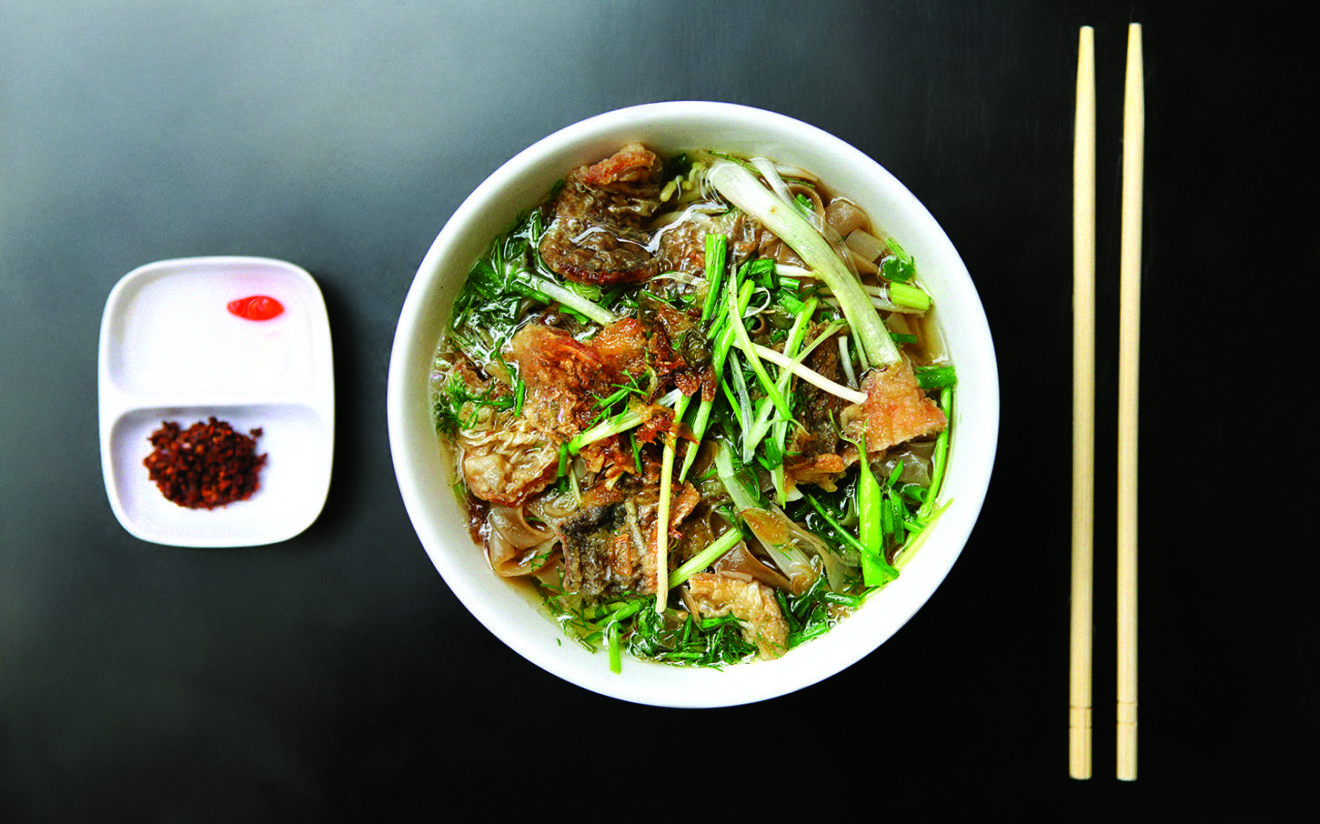
  • New food truck dishes out noodles at Hong Kong Disneyland’s doorstep

    New food truck dishes out noodles at Hong Kong Disneyland’s doorstep

    Hong Kong’s latest food truck may have found its sweet spot on Disneyland’s doorstep after its first location was deemed too remote.

    Mein by Maureen, which offers lo mein (noodles in seafood sauce), has made its new home on Park Promenade, the only thoroughfare between the public transport drop-off points and the theme park’s entrance.

    Although existing rules prohibit visitors from bringing in outside food, the new food truck effectively competes with more expensive restaurants inside the park. It is a stone’s throw away from the MTR station and next to the luggage valet counter.

    Some food truck operators had complained that the original site, near the parking lot for coaches, was too remote, prompting the park to designate a new location last month.

    Mein by Maureen started taking orders from hungry customers at 10.40am on Tuesday, after a 40-minute delay.

    Operator Maureen Loh Mo-lin explained that her staff were still experimenting with the operation.

    Traffic heading into Sunny Bay on Lantau Island was also an unexpected hiccup.

    “Last week it was smooth and perfect … but this morning there was a big traffic jam crossing the harbour,” she said, referring to her commute from Wan Chai at about 7.30am.

    “Maybe people were heading back for work.”

    One of Loh’s first customers was Mika Shimizu, a Japanese expatriate and Disney fan who visits the park once a week.

    She and her friend forked out HK$48 each for a serving of lo mein. They both felt the price was reasonable.

    “It was tasty, and the portion was right. I think I would visit again,” she said.

  • World’s largest Lego store opens in Shanghai

    World’s largest Lego store opens in Shanghai

    On Wednesday, LEGO has opened its largest retail store in the world inside Shanghai Disneyland as the trial period of the amusement park is ongoing before its official opening on June 16.

    The store features a myriad of LEGO bricks from its walls and even in the floors with two giant LEGO dragons welcoming guests of all ages and sizes.

    According to LEGO China’s general manager Jacob Kragh, getting in the Chinese market is crucial for the company and stressed: “Because in China, we have many children that are still out there without having a good quality play experience, and this is the reason why we feel that in order to be successful in the long run, we have to make sure we reach more Chinese children.”

    LEGO has already been setting up its first Chinese factory in Jiaxing and it is expected to start operations in 2017. It had also started trials for the LEGO Discovery Center in April.

    Currently, LEGO has 250 designers on its slate and launched 350 different products throughout 2015.

  • Outlet near Disneyland sets to open in May

    Outlet near Disneyland sets to open in May

    A designer outlet village adjacent to Shanghai Disney Resort will open on May 19 in Pudong New Area, aiming to tap the demand of luxury shopping amid potential tourists toward city’s upcoming iconic attraction.

    Named as Shanghai Village, the project is a joint venture between London-based mall developer Value Retail and state-backed operator of Shanghai International Tourism and Reports Zone, Shanghai Shendi Group.

    The project represented the largest investment of the company worldwide, said Mark Israel, chief executive officer of Value Retail China, with about 150 boutiques set to open either upon launch or thereafter in a 55,000-square-meter space.

    The UK developer had opened its first China outlet center of such kind in Suzhou back in May 2014. The phase two construction of the Suzhou Village will begin sometime in fall, according to Value Retail, and then move on to other projects in China including Hong Kong.

  • Hong Kong’s Disneyland struggling to work its magic

    Hong Kong’s Disneyland struggling to work its magic

    As Walt Disney readies to open its first Disneyland resort in mainland China and its sixth in the world by June, its decade-old theme park in Hong Kong has tumbled back into a loss, portending challenges ahead amid the country’s slowing economic growth.

    Hong Kong Disneyland recorded a loss of HK$148 million (S$27 million) in the year ended October last year, its first loss in four years, after fewer Chinese tourists visited the city. The resort had suffered seven years of losses from its opening in 2005, before turning in its first profit in 2012.

    The former British colony has already seen retail sales slump as fewer mainland Chinese tourists visit, hurt by a combination of China’s slowdown and a weak yuan, relative to the Hong Kong dollar, that has dulled the city’s attractiveness.

    WHY HONG KONG

    It’s very easy for us to visit Shanghai. We will definitely go later… There are more things to do in Hong Kong, as well as other famous attractions like Victoria Peak.

    MS LU MEI-YIN, 45, a graphic designer from the northern coastal city of Qingdao in China, who visited Hong Kong Disneyland earlier this year.

    WHY NOT HONG KONG

    Who will go to Hong Kong Disneyland when we have one at our door? Even if we want to visit a foreign Disney park, I will go to Tokyo, which many of my friends have recommended.

    MS HUANG SHILIN, a 33-year-old mother of two children from Hangzhou, in Zhejiang province.

    • MIXED FORTUNES FOR ASIA’S DISNEYLANDS

    • Hong Kong Disneyland

      Opened: Sept 12, 2005

      Visitor numbers: 6.8 million last year, down 9.3 per cent from the year before

      Ticket prices: General adult entry fee is HK$539 (S$98); the park is planning to give discounts

      Size: 126ha

    • Shanghai Disneyland

      Opening: June 16, 2016

      Visitor numbers: 15 million people expected in the first year; projected yearly visitor numbers of 25 million to 30 million

      Ticket prices: Peak period adult ticket costs HK$590 per day; HK$438 at other times

      Size: 400ha

    • Tokyo Disneyland

      Opened: April 15, 1983

      Visitor numbers: Traffic for the entire fiscal year expected to fall 3 per cent to 30.4 million for the fiscal year through next month. Attendance in 2013 and 2014 was up sharply, due to factors such as the park’s 30th anniversary and the launch of large attractions

      Ticket prices: Starting from April 1 this year, adults will pay 7,400 yen (S$91) for a single-day ticket, a 500-yen increase

      Size: 200ha

    Revenue at the Hong Kong resort fell 6.4 per cent to HK$5.1 billion, while annual attendance slipped 9.3 per cent to 6.8 million, it said.

    With Disney’s Shanghai park set to open on June 16, more Chinese could be lured away. Mainland Chinese customers helped boost Hong Kong Disneyland to a record profit of HK$322 million in fiscal year 2014.

    Last year, they formed the biggest group of visitors to Hong Kong Disneyland, accounting for 41 per cent, followed by Hong Kong residents at 39 per cent, and international visitors at 20 per cent, the resort said in a statement on Monday.

    It will be contending with a sister resort in Shanghai that is three times larger in size, and with similar ticket prices.

    Adult tickets at Shanghai Disneyland will be more expensive than at its counterpart in Hong Kong during peak times, such as at weekends and on holidays, but cheaper during other periods.

    Recruitment and staff training are now under way at the Shanghai theme park, the South China Morning Post (SCMP) reported.

    “The next two years will be very challenging,” Hong Kong Disneyland managing director Andrew Kam told reporters on Monday.

    In anticipation of the stiff competition, Hong Kong Disneyland will offer discounted entrance fees and hotel room rates, he said.

    A one-day ticket, for example, would cost about 400 yuan (S$86) and include lunch, while hotel room rates would be discounted by up to 30 per cent, SCMP reported.

    A 750-room hotel is due to open next year.

    Mr Kam said new attractions this year include a revamp of the Space Mountain roller coaster, with elements from the Star Wars movies, and a themed area based on Marvel’s Iron Man franchise.

    “Our asset is really differentiation,” he was quoted as saying by Nikkei Asian Review. “We will focus on serving customers around the region.”

    Falling numbers from China have encouraged the theme park to look harder at South-east Asian markets, including countries like Indonesia, the Philippines and Thailand.

    Hong Kong Commerce and Economic Development Secretary Greg So said the Shanghai park highlights more Chinese characteristics, while Hong Kong is an “international playground”.

    Hong Kong’s other big tourist attraction, Ocean Park, is also feeling the heat, with profits down 53 per cent at HK$45.2 million for the fiscal year that ended last June. It has announced plans to seek new markets in Asia and boost its retail and food sectors, SCMP reported.

    In an editorial published on Wednesday, the Hong Kong English-language newspaper said mainland tourists are increasingly spoilt for choice amid a proliferation of theme parks in the region. It called on Hong Kongers to change their attitude towards mainland Chinese visitors.

    “There is another cloud in Disneyland’s outlook that only Hong Kong people themselves can disperse – anti-mainlander sentiment, which has a negative impact on Hong Kong’s image as a safe, welcoming city.

    “Sadly, it is compounded by violent incidents such as the Mongkok riot,” SCMP said.