Retail News CRM

Tag: dive

  • US Dollar Takes a Dive Against Vietnamese Dong in Black Market Amid Global Weakness

    US Dollar Takes a Dive Against Vietnamese Dong in Black Market Amid Global Weakness

    Over the weekend, the U.S. dollar experienced a dip against the Vietnamese dong on the informal currency exchange market. The dollar was traded 0.34% lower at VND26,560 at unofficial exchange points, while Vietcombank maintained its rate at VND26,463.

    Global Dollar Weakness

    On the global stage, the U.S. dollar was on track for its most significant weekly loss in 12 weeks. This downturn resulted from a lukewarm U.S. employment report, which led to diminished market predictions for an imminent Federal Reserve interest rate increase. This development brought some relief to the Japanese yen.

    The overall weakening of the dollar also boosted the euro, which reached $1.1440, following a nearly two-week high the previous day. The euro ended the week up by 0.5%. Simultaneously, the British pound solidified its position to $1.3352, marking a 1.1% weekly gain, its highest in almost three months.

    Impact on other Currencies

    The increased strength of the dollar also brought relief to the Japanese yen. The yen increased to less than 161 per dollar, a welcome shift after the sudden increase on Thursday, which took the currency from a 40-year low of 162.84 to 161.25. Despite this, market uncertainty surrounding potential intervention risks persisted.

    The dollar’s decline came in response to slowed U.S. job growth in June. Further, the reduced payroll gains for the preceding two months triggered traders to scale back on predictions of a near-term Federal Reserve rate increase.

    Questions & Answers

    What triggered the U.S. dollar’s dip against the Vietnamese dong?
    The dip was triggered by the overall weakening of the U.S. dollar on the global stage, which was a result of a lukewarm U.S. employment report diminishing market predictions for an immediate Federal Reserve interest rate increase.

    How did the global dollar weakness impact the euro and the British pound?
    The weakness of the U.S. dollar led to the strengthening of the euro, reaching $1.1440, and the solidifying of the British pound’s position at $1.3352.

    What caused the shift in the strength of the Japanese yen?
    The shift in the Japanese yen was due to the overall increase in the strength of the U.S. dollar, which took the yen from a 40-year low of 162.84 to less than 161 per dollar.

  • Vietnams Gold Market Faces Steep Dive amid Global Bullion Rate Decline

    Vietnams Gold Market Faces Steep Dive amid Global Bullion Rate Decline

    Wednesday saw a dip in gold prices in Vietnam, tracking a global decline in bullion rates. Saigon Jewelry Company, a notable player in the market, reported a 0.92% decrease in gold bar prices, which dropped to VND162 million (US$6,144.5) per tael.

    Fluctuations Across Markets

    Simultaneously, the price of gold rings also experienced a dip, declining by 1.1% to VND161.5 million per tael. To put things into perspective, a tael is equivalent to 37.5 grams or around 1.2 ounces.

    On the global stage, gold prices edged lower on Wednesday. This downturn was propelled by factors such as rising Treasury yields and a strengthening dollar, which outweighed the optimism stirred by the prospect of a peace agreement between the U.S. and Iran.

    Spot gold saw a 0.3% decrease to $4,467.59 per ounce, hitting its lowest level since March 30 in the previous trading session. Concurrently, U.S. gold futures for June delivery registered a loss of 0.9%, dropping to $4,471.10.

    Contributing Factors

    Certain economic factors also influenced these price fluctuations. The ongoing conflict with Iran has escalated price pressures, triggering a sell-off in global bond markets. This has pushed the 30-year U.S. Treasury yields to levels unseen since the precursor period to the 2007 global financial crisis.

    In tandem with these events, the dollar maintained its position at a six-week high. This, in turn, made bullion priced in the greenback more costly for those holding other currencies.

    According to Tim Waterer, Chief Market Analyst at KCM Trade, the current backdrop of rising yields and a rejuvenated dollar, driven by a hawkish shift in rates outlook, is potentially reducing the appeal of gold as an investment.

    Questions & Answers

    What is the significance of the price of a tael in relation to gold prices?
    The price of a tael, equivalent to 37.5 grams or 1.2 ounces, is an important measure for gold prices, particularly in markets like Vietnam.

    How did the global economic climate affect gold prices?
    Rising Treasury yields and a strong dollar, coupled with the potential peace agreement between the U.S. and Iran, have led to a decrease in global gold prices.

    What factors are currently affecting the appeal of gold as an investment?
    Increasing yields and a revitalized dollar, prompted by a hawkish shift in rates outlook, are reducing the attractiveness of gold as an investment.

  • Asia’s Telecom Titans Rise to Meet Cybersecurity Challenges: A Dive into 5G Security and Fraud Prevention

    Asia’s Telecom Titans Rise to Meet Cybersecurity Challenges: A Dive into 5G Security and Fraud Prevention

    As the telecommunications sector in Asia rapidly moves towards 5G technology, cloud-native architectures, and digital services, operators throughout the region contend with intensifying cyber threats. These threats, which range from data breaches to scams and fraud within mobile networks, impact not only businesses, but also a considerable number of consumers. Consequently, governments and mobile operators are implementing stricter regulations and enhancing enforcement strategies. In addition, they are investing in more sophisticated security systems to safeguard national networks.

    Increasing Cybersecurity Risks and Consumer Fraud in the Region

    The Asia Pacific region has experienced some of the highest levels of mobile fraud, digital scams, and identity-based attacks globally. A 2025 report commissioned by GSMA revealed that the percentage of consumers who fell victim to scams increased from 31% to 43% over the past year. Additionally, 81% of those surveyed said they are willing to switch financial providers to achieve better security. Consumers prefer solutions that prioritize verification, offer a confirmation-of-payee feature, provide safer payment tools, and allow for simple “official call-back only” habits for enhanced protection.

    Cybersecurity trust in Southeast Asia is dwindling as the number of cyber scams continue to rise. A significant number of mobile users have reported encounters with fraudulent calls, SMS, and online impersonation attempts. According to the GSMA’s Intelligence 2024 Report on Telco Security Landscape and Strategies – Asia Pacific, there is an urgent need for innovative telecom security solutions.

    Telecom Operators Enhancing Defenses and Security Practices

    Asian governments have started to enact laws and establish regulatory frameworks aimed at protecting critical infrastructure and personal data. These measures obligate telecom operators to bolster their networks’ security.

    In China, the Cybersecurity Law, the Data Security Law, and the Personal Information Protection Law (PIPL) regulate telecom operators. These laws demand strict protection of critical information infrastructure, data handling, security reviews, and compliance obligations. As a result, operators are compelled to integrate security measures from the inception of their projects.

    In South Korea, the Personal Information Protection Act (PIPA) regulates telecom operators. The legislation mandates the implementation of measures to securely handle data, maintain accountability, and safeguard user privacy. Though primarily regulating data protection rather than network infrastructure security, PIPA forms a crucial regulatory framework for safeguarding personal data as 5G networks and virtualization continue to grow across the country.

    In Japan, the Cybersecurity Basic Act and related national cybersecurity strategies guide the broad infrastructure protection framework. Telecom operators, including those exploring advanced network innovations such as virtualized RAN or 6G-ready systems, are expected to comply with government-endorsed security standards, threat-sharing mechanisms, and incident-response protocols.

    In the Philippines, national cyber defenses are progressively strengthening. The Cybercrime Prevention Act of 2012 (RA 10175) and the National Cybersecurity Plan 2023-2028 establish a legal framework and outline strategies for enhancing resilience across critical infrastructure.

    Several major telecommunications firms are investing in AI-based network analytics to bolster security and operational efficiency. For instance, Globe Telecom deploys AI and machine learning for anomaly detection across its infrastructure. Similarly, PLDT is mitigating phishing, DDoS attacks, and other cyber threats through its cybersecurity operations center and collaboration with government agencies.

    India, driven by its enormous telecom market, has introduced some of the region’s most comprehensive cybersecurity rules. CERT-In mandates prompt incident reporting, strict log retention for 180 days, and real-time collaboration with national cyber emergency response teams. The Department of Telecommunications now requires 5G network elements to be procured from trusted vendors under the Trusted Telecom Portal policy.

    Singapore has set up a robust cybersecurity framework for its telecom sector. Under the Cybersecurity Act, telecom and infocomm systems can be designated as Critical Information Infrastructure (CII), which mandates operators to implement a cybersecurity code of practice, conduct audits, and quickly report incidents.

    Building Collective Defense: Collaboration, Standards, and Shared Cyber Intelligence

    Given the scale and interconnectedness of modern telecom networks, many operators acknowledge the limitations of tackling cyber threats individually. As a result, collaborative initiatives, public-private partnerships, and industry-wide frameworks are emerging as fundamental strategies for defense.

    The theme of the 19th edition of the Telecom Review Leaders’ Summit was ‘Tech Intelligence Beyond Mobility.’ The event held in Dubai, UAE, facilitated discussions among leading experts on the evolving challenges of protecting information in an increasingly connected world. The summit served as a collaborative platform for telecom-based cybersecurity collaboration, standardization, and knowledge sharing.

    The Need for Collective Defense, Transparency, and Regulatory Backing in Asia

    The security challenge faced by Asia’s telecom sector is not limited to individual operators or markets. Scams, fraud, cross-border intrusion threats, and the growing complexity of virtualized networks have necessitated a regional and systemic response.

    The continual rise in consumer fraud, data protection failures, and regulatory scrutiny necessitates treating cybersecurity in the same vein as infrastructure policy, consumer protection, and national security. To cope with these risks, operators need to prioritize transparency, share threat intelligence, and adopt common security standards. Regulators should support these efforts with clear rules, consistent enforcement, and incentives that reward genuine compliance.

    By embracing an approach that combines strong governance, robust technical controls, and cross-border collaboration, Asia’s telecom sector can build networks that not only offer connectivity but also provide meaningful protection for users in an increasingly hostile digital environment.

    Questions & Answers

    What is the current state of cybersecurity in Asia’s telecom industry?
    The telecom industry in Asia is grappling with increasing cybersecurity risks, including data breaches, scams, and fraud within mobile networks. Governments and mobile operators are responding by implementing stricter regulations, enhancing enforcement strategies, and investing in advanced security systems.

    What measures are being taken to improve cybersecurity in Asia’s telecom industry?
    Governments across Asia are enacting laws and regulatory frameworks to protect critical infrastructure and personal data. Telecom operators are obligated to bolster their network security and are investing in AI-based network analytics to enhance security and operational efficiency.

    What strategies are recommended for managing cybersecurity risks in the telecom industry?
    Telecom operators need to prioritize transparency, share threat intelligence, and adopt common security standards. Regulators should support these efforts with clear rules, consistent enforcement, and incentives that reward genuine compliance. Collaborative initiatives, public-private partnerships, and industry-wide frameworks are also recommended.


  • Sometimes all you need is a fresh breeze

    Sometimes all you need is a fresh breeze

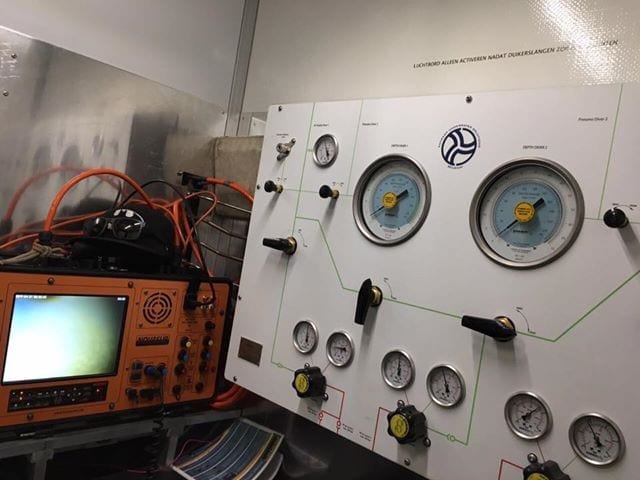
    Antwerp Underwater Solutions was founded in 2005. Shortly afterwards AUS became a part of a holding including several ship repair companies. The current structure and order books urged the need for a new manager to maintain and improve the level of service.

    We strongly believe we found the right  man for the job in Hans Cuylits, his career speaks for itself….

    He started his career as diver in a diving company where the main focus was on shipping. After 2 years he made a leap to the offshore industry. Here his drive and accuracy did not go unnoticed and pretty soon he was project superintendent for one of the major players in the offshore industry.

    In 2012 Hans and his wife had the courage to follow their dream and start a three year  journey around the world with their two kids.

    They returned in June 2016 and shortly afterwards  we welcomed Hans  with open arms in our team. We consider him to be a great asset not only for Antwerp Underwater Solutions but also for our customers.

    There might have been some changes in our management structure – our core business and commitment  hasn’t change. Antwerp Underwater Solutions is your ideal  underwater contractor for all  inspections, repairs and maintenance.

    Approved by all major classification bureaus DNV Gl, Lloyds Register, Bureau Veritas, ABS, Rina,… to perform all underwater inspections; pre-sale inspections, inspection after grounding, pre-docking inspection, in lieu of dry-dock inspection…

    For the underwater repairs we can draw on a number of  certificated and very experienced underwater  welders.  Antwerp Underwater Solutions has different types and sizes of cofferdams. In addition we have all the skills and equipment  to provide a customized cofferdam within the available time frame.

    You might be surprised to learn the maintenance that can be performed underwater; installation of anodes, cleaning of sea chest, blanking of overboard valves in order to allow valves to be changed from the inside, re-tightening bolts to reduce bearings wear down,  cleaning of sea chests,   replacement of echo sounder or speed log, replacement of rope guards, clearing propellers or rope guards, rudder maintenance   A great return on investment can be achieved by our propeller maintenance program,  which enable us to keep ships propellers smooth at all time, all blades are  polished in a multi stage to grade ‘A’ on the Rupert scale. This has an immediate effect on the fuel consumption.

    Antwerp Underwater Solutions is at your service 24/7, we have a fast response time and operate in all major European ports; Antwerp, Rotterdam, Flushing, Zeebrugge , Ghent, Le havre, Dunkirke,…

    Please allow yourself the experience to work with Antwerp Underwater Solutions as your underwater contractor and contact us

  • Scuba Diving Equipment Market in South Korea to Grow

    Scuba Diving Equipment Market in South Korea to Grow

    The scuba diving equipment market in South Korea to grow at a CAGR of 5.97% during the period 2016-2020.

    The report covers the present scenario and the growth prospects of the scuba diving equipment market in South Korea for 2016-2020. To calculate the market size, the report has taken into consideration the revenue generated from the retail sales of scuba diving equipment to individual consumers, as well as rental and sports clubs in South Korea. However, the break-up of these end-users has not been provided in the report.

    A trend which is helping to boost market growth is product improvements in diving equipment and apparel. The growing number of value-added and innovative scuba diving equipment launches is an important trend, which is expected to have a positive impact on the market’s growth during the forecast period. Vendors are focusing on the introduction of innovative product offerings in terms of design, color, shape, and weight, to cater to the varying needs of consumers. The transition from beginners to seasoned recreational divers necessitates the use of diving equipment that is required for diving deeper, staying underwater for longer durations, and also requires carrying more equipment.

    According to the report, a key growth driver is the rising interest in shark diving. Shark diving is garnering huge popularity among both local divers as well as tourists in South Korea in recent times, which is one of the major factors driving the growth of the scuba diving equipment market in the country. Shark diving in South Korea is now being promoted as an eco-tourism initiative by the government, and is expected to increase the interest for scuba diving among diving enthusiasts, particularly among tourists.