Retail News CRM

Tag: Dolce & Gabbana

  • Dolce & Gabbana Reports 4% Revenue Growth Despite Retail Challenges; Sets High Ambition For Beauty Division

    Dolce & Gabbana Reports 4% Revenue Growth Despite Retail Challenges; Sets High Ambition For Beauty Division

    Dolce & Gabbana, the revered Italian luxury fashion brand, has unveiled financial figures for the fiscal year that came to a close on March 31. The company saw its revenue climb by 4 per cent, translating to a total of US$2.2 billion.

    Revenue Drivers and Losses

    The primary catalyst behind this revenue growth was an 11 per cent surge in wholesale sales, accounting for 46 per cent of the brand’s total revenue. Unfortunately, the company also witnessed a 3 per cent decline in retail sales, indicative of challenges in crucial markets such as Europe and Asia.

    Despite the increase in revenue, Dolce & Gabbana’s net loss expanded to $136 million from the previous fiscal year’s figure of $15 million.

    Department Specific Performance

    Notably, the fashion and home division of the company experienced an 8 per cent revenue drop to $1.4 billion. This downturn is attributable to weakened demand in Europe and China, with the effect partially mitigated by gains in the Middle East, South America, and South Africa.

    On the other hand, the beauty segment posted strong figures, with sales escalating by 30 per cent year-over-year to approximately $699 million.

    Expansion and Future Endeavors

    From 2022 onwards, Dolce & Gabbana has broadened its makeup offerings to encompass more than 100 products. The brand plans to further expand this range to a complete line of 350 SKUs and has recently launched a skincare line, the Fresh Skin Collection.

    In terms of future goals, the company has set its sight on achieving $1.1 billion in annual beauty sales by the end of fiscal 2027. This objective emerges as part of their strategic shift from licensing to direct management of the beauty division.

    Additionally, Dolce & Gabbana has obtained $116 million in medium-term financing and has extended the maturity of a $345 million term loan to 2030.

    Questions & Answers

    What was the primary driver behind Dolce & Gabbana’s revenue growth?
    The primary driver was an 11 per cent increase in wholesale sales, which now account for 46 per cent of the brand’s total revenue.

    How did Dolce & Gabbana’s beauty segment perform in the past fiscal year?
    The beauty segment performed exceptionally well, with sales seeing a 30 per cent year-over-year increase to approximately $699 million.

    What are Dolce & Gabbana’s future plans for their beauty division?
    The company plans to achieve $1.1 billion in annual beauty sales by the end of fiscal 2027, following its strategic shift from licensing to direct management of the beauty division.

  • Dolce & Gabbana opens first DG Beauty boutique in Southeast Asia

    Dolce & Gabbana opens first DG Beauty boutique in Southeast Asia

    Italian luxury brand Dolce & Gabbana has opened its first DG Beauty boutique in Southeast Asia at Ion Orchard, in Singapore.

    The 92sqm store will host a selection of fragrances, and for the first time will exclusively sell its makeup line in-store.

    Each corner of the boutique is adorned with details reflecting the brand’s “La Casa” DNA,  allowing customers to immerse themselves in Dolce & Gabbana’s aesthetic.

    According to the brand, its makeup collection will be luxurious, high-impact, and sensorial, inspired by its Italian heritage. Fragrances such as Light Blue, The One, and K by Dolce & Gabbana, will also appear alongside the brand’s latest novelties like the Fruit Collection, Dolce Rose, and Deva Cassel as the face of the fragrance collection.

    The DG Beauty boutique in Singapore will also offer the exclusive Velvet fragrance line, a collection of perfumes inspired by its designers’ vision of Sicily and the Mediterranean.

  • D&G opens boutique in Osaka Japan

    D&G opens boutique in Osaka Japan

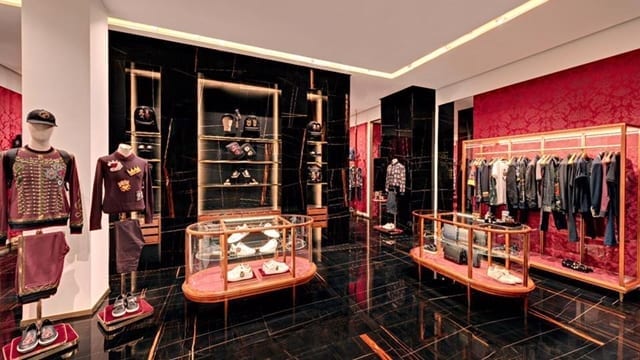
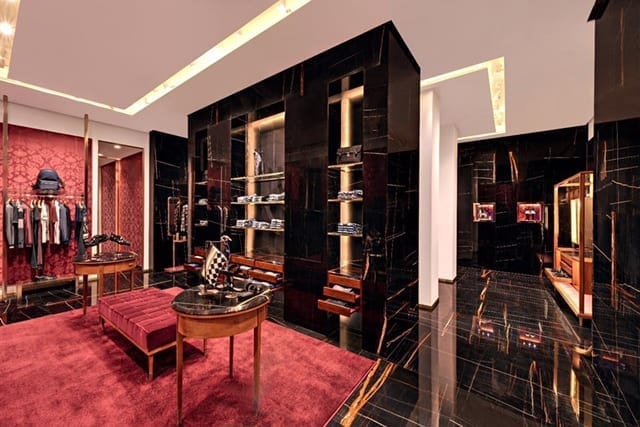
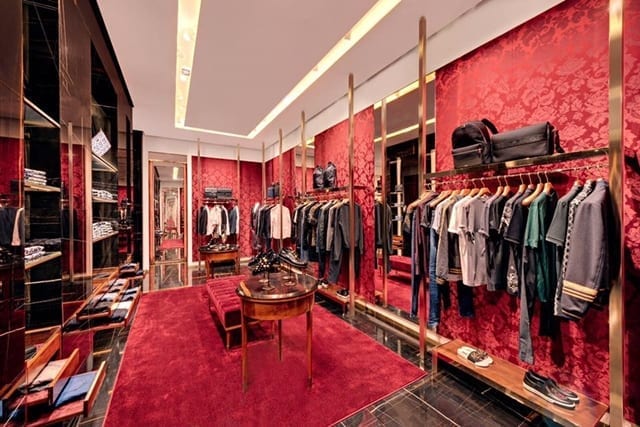
    Luxury brand Dolce & Gabbana has opened a new D&G Osaka store. The two-level, 905sqm #DGLovesOsaka boutique at Midosuji is designed to reflect the unique local features of Osaka while still representing the brand’s heritage, with red marble and pink onyx finishings touched off by pink rugs and wallpaper. A large baroque-styled mirror is a centrepiece of the decor.

    The #DGLovesOsaka boutique stocks ready-to-wear collections and accessories for men, women, and children.

  • From Gucci to Dolce & Gabbana: racism in fashion continues?

    From Gucci to Dolce & Gabbana: racism in fashion continues?

    Luxury fashion is all about breaking codes, creating a new, irresistible message that captivates consumers. But some of the globe’s top brands have raised eyebrows with designs that have seemingly racist undertones. The latest instance of that was Italian fashion designer Gucci, which produced a black wool balaclava jumper with an oversized collar that pulls over the chin and nose. It includes a slit where the mouth is, ringed with what look like giant red lips.

    Its similarity to blackface prompted an instant backlash from the public and forced the company to apologise publicly on Wednesday.

    Gucci also withdrew the offending garment from sale on websites and stores. It said the incident would be “a powerful learning moment for the Gucci team and beyond”.

    But the question persists: how can fashion houses that thrive on detail miss such critical social cues?

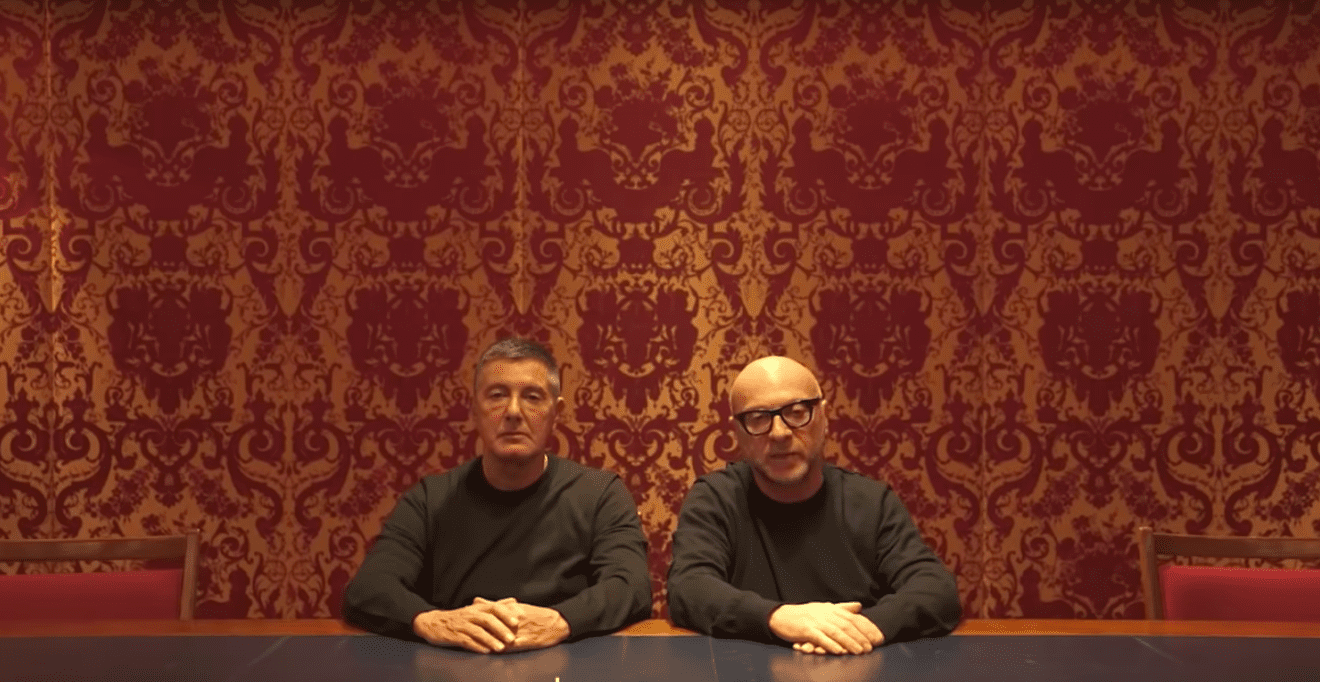
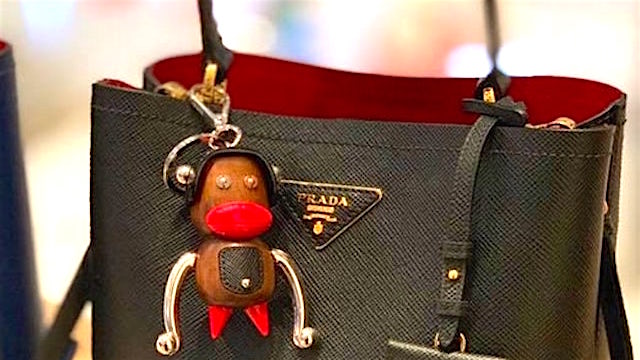
    Prada similarly withdrew a monkey bag charm that recalled blackface in December, saying it “abhors racist imagery.” And Dolce & Gabbana issued a video apology after one of the designers made insulting remarks about Chinese people in a private chat discussing the questionable depiction of a Chinese model in a campaign.

    “Luxury brands used to be able to get away with provocative and eccentric ads that push the boundaries of our society and culture in the name of being creative and cutting edge,” says Qing Wang, a professor of marketing at Warwick Business School in the United Kingdom.

    “However, a long list of recent incidents have caused public outrage, suggesting that era is now gone, or that luxury brands have lost touch with public sentiment. What used to be considered ‘creativity’ has now turned into ‘bad taste’ or even ‘racist’.

    He cited other fashion fails that evoked stereotypes, including Dolce & Gabbana’s “slave sandal” in its spring-summer 2016 collection and a recent Burberry campaign for the Chinese New Year that was compared to Asian horror films.

    While many of these incidents have caused immediate social media backlashes, the longer-term impact will take time to measure, and will depend on the brands’ reaction and future sensitivity.

    Dolce & Gabbana was forced to cancel its Shanghai runway show after the insulting remarks were publicised, top Asian influencers backed out of campaigns and Chinese websites dropped their line – a warning sign from a region that holds great sway in global luxury sales.

    The blackface images have particular resonance in the United States, where the governor of Virginia and his attorney general have been caught up in a scandal over blackface incidents from their college days in the 1980s. The offensive depictions are reminiscent of travelling entertainers from the 19th century, who would paint their faces black to portray African characters in a ridiculous and mocking fashion, spreading racial stereotypes along the way.

    Italian sociologist Michele Sorice at Rome’s Luiss university says that the evocation of blackface by Italian fashion houses signals “a mixture of good faith, and ignorance”. He notes that Italian society still isn’t fully aware of the racial charge in some words and images.

    “I imagine that they don’t truly think they are racist,” Sorice says. “I think they didn’t have the instruments to understand that these images are archetypes that were used to contrast the concept of blackness and make them ridiculous. I think that many simply don’t know. It is a cultural issue.”

    Paolo Cillo, a marketing professor at Milan’s Bocconi University, says the designer’s intent may have been taken out of context and amplified, and she credits Gucci with acting swiftly to quell the controversy.

    “I wouldn’t stigmatise fashion,” Cillo says, comparing the fashion designer process to artistic pursuits like filmmaking, painting or music. “There are artists in the world of culture that did more outrageous things and no one ever said a thing. There is a perception that fashion is ephemeral, or commercial. But from my point of view, it is not. It reflects the times, like all other artistic forms.”

    While the fashion world has been at the forefront of addressing sexual norms – Gucci has been redefining genderless dress codes under Alessandro Michele – it has lagged behind other industries in taking on social issues such as racial tolerance, climate change or women’s empowerment, according to Larry Chiagouris, a marketing professor at Pace University, US.

    “It is not clear why this is,” Chiagouris says, “but the evidence clearly points to the fashion industry’s need … to catch up with the rest of the world.”

  • Dolce & Gabbana chaos continues

    Dolce & Gabbana chaos continues

    Dolce & Gabbana has cancelled a high-profile catwalk show in Shanghai following an outcry over what many in China perceived to be a racist marketing campaign. The Italian brand products have now been dropped by e-commerce giants Alibaba, JD and Yoox Net-A-Porter. Leading Chinese e-commerce platforms Alibaba and JD.com were joined by Suning, VIPshop, Secoo and Netease in dropping the Italian fashion house’s products from sale.

    Hong Kong-based luxury department store operator Lane Crawford has also joined Chinese retailers in dropping Dolce & Gabbana products after it offended Chinese partners and internet users this week.

    Andrew Keith, president of Lane Crawford, told the Post: “With respect to our customers, we have taken the decision to remove Dolce & Gabbana from all stores in China, online and in Hong Kong.”

    The decision would take effect at 1pm on Friday, Lane Crawford said.

    Amazon China and Yoox Net-A-Porter have also removed products, with the latter dropping the brand from its Net-A-Porter, Mr Porter and Yoox.com platforms.

    Meanwhile, high-profile Chinese celebrities and KOLs including actors Li Bingbing, Chen Kun, Diliraba, Zhang Ziyi and actor-singer Huang Xiaoming were among a host of stars distancing themselves from the brand and vowing not to buy D&G products.

    A video posted on Weibo Monday of a Chinese model attempting to eat Italian food with chopsticks was taken down after less than 24 hours, but widely shared on both Chinese social media platforms and Instagram.

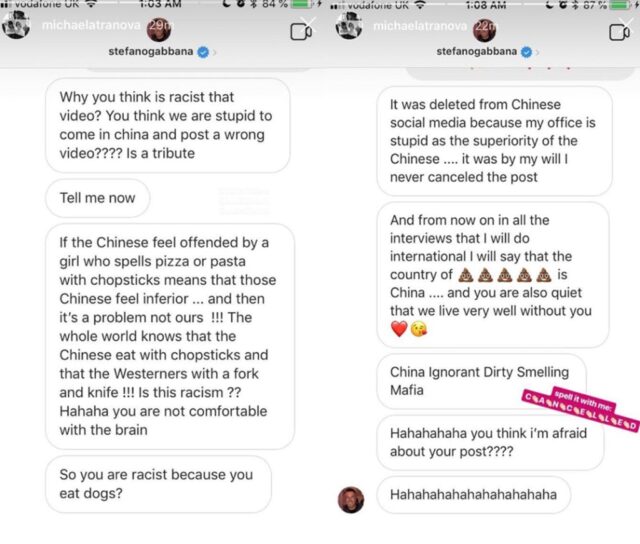
    The social media storm was made worse by comments attributed to Stefano Gabbana and Dolce & Gabbana’s official Instagram accounts on Wednesday, the day the brand’s #DGTheGreatShow catwalk presentation was scheduled to take place in Shanghai.

    In what Dolce & Gabbana claims was the result of a hack, the brand’s social media accounts featured derogatory comments about China and Chinese internet users.

    Though quickly removed, screenshots of the comments were widely shared on Chinese social media, along with the trending hashtag #BoycottDolce. The Weibo hashtag #DGTheGreatShowCancelled has been read 540 million times, and mentioned in 74,000 discussions.
    Show invitees have been informed that the 500-look runway event will no longer go ahead.

    China Bentley Modelling agency released an official statement saying 24 of their models who were booked to walk in D&G’s first Shanghai fashion show were boycotting the event.

    The Chinese government also stepped in with the Cultural and Tourism Department ordering Dolce & Gabbana to cancel the event just a few hours before it was scheduled to take place.

    Chinese consumers have flooded social media platforms Weibo and WeChat criticising the brand and posting videos and images of D&G products being destroyed, burned and used to clean floors and line animal litter trays. Security guards and police officers have been stationed outside Dolce & Gabbana stores in Beijing and Shanghai.

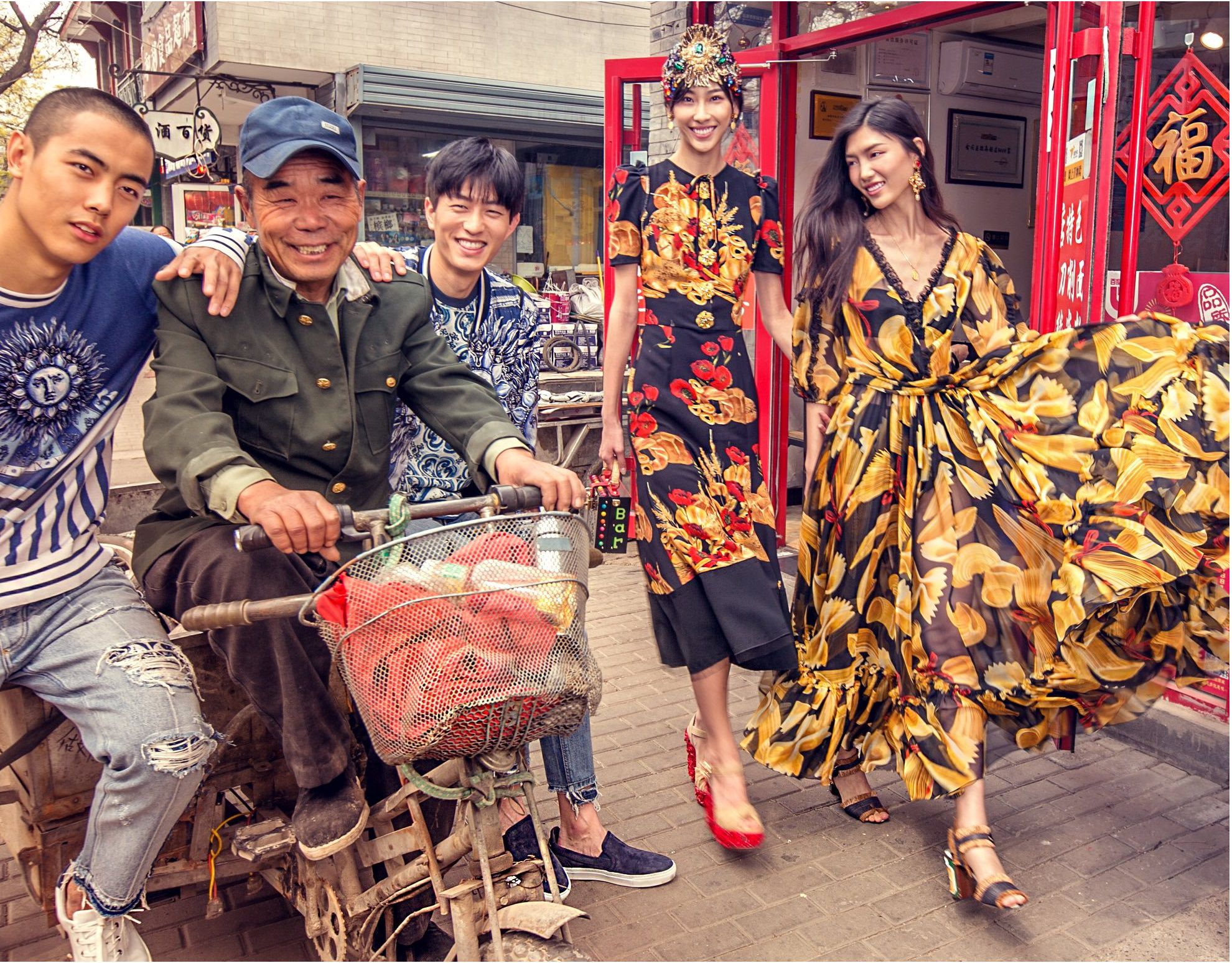
    This marks the second high-profile outcry over racist messaging from Dolce & Gabbana in only 18 months. A previous #DGLovesChina campaign depicted Beijing in a way that Chinese internet users felt looked backwards and underdeveloped.

    Both Gabbana and co-founder Domenico Dolce have been accused of making politically insensitive statements, from referring to babies conceived by in vitro fertilisation as “synthetic”, to refusing to support the right of gay parents to adopt.

    The duo has also described gladiator sandals as “slave sandals” and were quick to endorse First Lady Melania Trump.

    Gabbana in particular has a history of posting insensitive comments on social media, and came under fire for calling Selena Gomez “ugly” on Instagram in June, and the Kardashian family “the most cheap people in the world” in July.

    Though the designer duo have been known for using social media to voice their controversial opinions, upsetting Chinese consumers could have far-reaching commercial consequences.

    According to Bain & Company’s latest report on the luxury market, Chinese consumers account for an estimated 33 percent of global luxury goods spend, a share that is likely to hit 46 percent by 2025.

    Seeing as Chinese support can make or break a brand’s performance, how the label manages the controversy will be critical for its future success in the market.

    Dolce & Gabbana could not yet be reached in China or Milan for comment.

    According to a post published on Dolce & Gabbana’s Weibo account on November 21, the event has been rescheduled, and the brand has apologised for the inconvenience caused.

    Dolce & Gabbana reposted Gabbana’s ‘Not Me’ screenshot on its Weibo account, accompanied by the following statement, which mirrors the brand’s post on Instagram: “Our Instagram account has been hacked. So has the account of Stefano Gabbana. Our legal office is urgently investigating. We are very sorry for any distress caused by these unauthorised posts, comments and direct messages. We have nothing but respect for China and the people of China.”
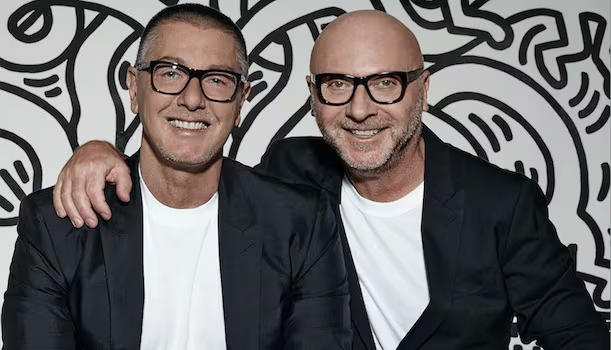
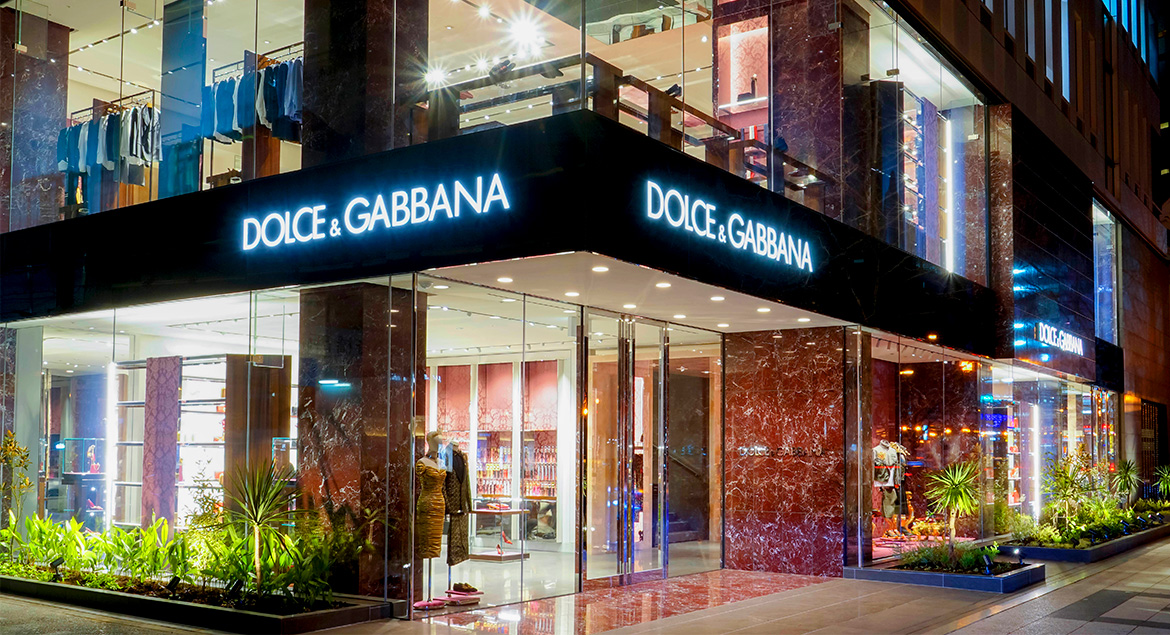
    Last Friday, Dolce & Gabbana released a video of apologies, but the situation is not getting any better. The video was received as a way for the brand to preserve their own economic interests.

    Now, increasing attention has been given to similar episodes related to other brands, and media are populated with advertising campaigns, which show how while targeting overseas markets, lack of knowledge of local culture could be fatal to a business.

    Among the cases mentioned over the weekend, Chanel and its luxury boomerang, and Dior and Jennifer Lawrence featuring Mexican heritage without Mexican women (cultural appropriation), Zara and Nazi symbolism, and many more. However, Dolce & Gabbana case has been the first one with such global economic consequences.

  • Dolce & Gabbana dropped by Lane Crawford, Alibaba, JD.com and Yoox after racism scandal

    Dolce & Gabbana has cancelled a high-profile catwalk show in Shanghai following an outcry over what many in China perceived to be a racist marketing campaign.

    The Italian brand products have now been dropped by e-commerce giants Alibaba, JD and Yoox Net-A-Porter.

    Leading Chinese e-commerce platforms Alibaba and JD.com were joined by Suning, VIPshop, Secoo and Netease in dropping the Italian fashion house’s products from sale.

    Hong Kong-based luxury department store operator Lane Crawford has also joined Chinese retailers in dropping Dolce & Gabbana products after it offended Chinese partners and internet users this week.

    Andrew Keith, president of Lane Crawford, told the Post: “With respect to our customers, we have taken the decision to remove Dolce & Gabbana from all stores in China, online and in Hong Kong.”

    The decision would take effect at 1pm on Friday, Lane Crawford said.

    Amazon China and Yoox Net-A-Porter have also removed products, with the latter dropping the brand from its Net-A-Porter, Mr Porter and Yoox.com platforms.

    Meanwhile, high-profile Chinese celebrities and KOLs including actors Li Bingbing, Chen Kun, Diliraba, Zhang Ziyi and actor-singer Huang Xiaoming were among a host of stars distancing themselves from the brand and vowing not to buy D&G products.

    A video posted on Weibo Monday of a Chinese model attempting to eat Italian food with chopsticks was taken down after less than 24 hours, but widely shared on both Chinese social media platforms and Instagram.

    The social media storm was made worse by comments attributed to Stefano Gabbana and Dolce & Gabbana’s official Instagram accounts on Wednesday, the day the brand’s #DGTheGreatShow catwalk presentation was scheduled to take place in Shanghai.

    In what Dolce & Gabbana claims was the result of a hack, the brand’s social media accounts featured derogatory comments about China and Chinese internet users.

    Though quickly removed, screenshots of the comments were widely shared on Chinese social media, along with the trending hashtag #BoycottDolce. The Weibo hashtag #DGTheGreatShowCancelled has been read 540 million times, and mentioned in 74,000 discussions.

    Show invitees have been informed that the 500-look runway event will no longer go ahead.

    China Bentley Modelling agency released an official statement saying 24 of their models who were booked to walk in D&G’s first Shanghai fashion show were boycotting the event.

    The Chinese government also stepped in with the Cultural and Tourism Department ordering Dolce & Gabbana to cancel the event just a few hours before it was scheduled to take place.

    Chinese consumers have flooded social media platforms Weibo and WeChat criticising the brand and posting videos and images of D&G products being destroyed, burned and used to clean floors and line animal litter trays. Security guards and police officers have been stationed outside Dolce & Gabbana stores in Beijing and Shanghai.

    This marks the second high-profile outcry over racist messaging from Dolce & Gabbana in only 18 months. A previous #DGLovesChina campaign depicted Beijing in a way that Chinese internet users felt looked backwards and underdeveloped.

    Both Gabbana and co-founder Domenico Dolce have been accused of making politically insensitive statements, from referring to babies conceived by in vitro fertilisation as “synthetic”, to refusing to support the right of gay parents to adopt.

    The duo has also described gladiator sandals as “slave sandals” and were quick to endorse First Lady Melania Trump.

    Gabbana in particular has a history of posting insensitive comments on social media, and came under fire for calling Selena Gomez “ugly” on Instagram in June, and the Kardashian family “the most cheap people in the world” in July.

    Though the designer duo have been known for using social media to voice their controversial opinions, upsetting Chinese consumers could have far-reaching commercial consequences.

    According to Bain & Company’s latest report on the luxury market, Chinese consumers account for an estimated 33 percent of global luxury goods spend, a share that is likely to hit 46 percent by 2025.

    SEE ALSO : How is China revolutionizing retail?

    Seeing as Chinese support can make or break a brand’s performance, how the label manages the controversy will be critical for its future success in the market.

    Dolce & Gabbana could not yet be reached in China or Milan for comment.

    According to a post published on Dolce & Gabbana’s Weibo account on November 21, the event has been rescheduled, and the brand has apologised for the inconvenience caused.

    Dolce & Gabbana reposted Gabbana’s ‘Not Me’ screenshot on its Weibo account, accompanied by the following statement, which mirrors the brand’s post on Instagram: “Our Instagram account has been hacked. So has the account of Stefano Gabbana. Our legal office is urgently investigating. We are very sorry for any distress caused by these unauthorised posts, comments and direct messages. We have nothing but respect for China and the people of China.”
  • Dolce & Gabbana Sparks Racism Backlash With Chinese Ad

    Dolce & Gabbana Sparks Racism Backlash With Chinese Ad

    Italian luxury retailer Dolce & Gabbana is facing a growing backlash in China after an ad campaign that was meant to promote the brand in arguably its most valuable market has been decried as racist.

    Amidst growing calls to boycott the brand on Chinese social media, popular e-commerce sites, including Alibaba’s Tmall and JD.com, have seemingly removed listings for Dolce & Gabbana products. Searches for the brand on those sites at the time of this writing returned no results. NetEase’s Kaola said that it had taken down the brand’s listings.

    The growing backlash forced the brand to postpone a fashion show in Shanghai just hours before it was set to take place on Wednesday, after models and celebrities reportedly said they would not attend the event. Dolce & Gabbana’s ambassadors in the region, Karry Wang and Dilraba Dilmurat, who is of Uigher ethnicity, have ended their contracts with the company.

    The uproar follows the publication of a series of ads on Chinese social media platform Weibo earlier this week, featuring a young Chinese woman attempting and failing to eat traditional Italian food, such as pasta, pizza and a cannoli, with chopsticks. The ads were released as part of the brand’s #DGLovesChina campaign ahead of the scheduled fashion show in Shanghai, but critics decried the videos as playing on racist stereotypes. The ads are still visible on Dolce & Gabbana’s Instagram page.

    The controversy was made worse after screenshots of direct messages purportedly from founder Stefano Gabbana’s Instagram account were leaked, showing offensive comments about China and Chinese people. Both Gabbana and the brand have denied that the messages were sent by the Italian designer, saying the accounts were hacked, but many have expressed scepticism, given Gabbana’s track record of getting into verbal spats on social media.

    “I love China and the Chinese culture. I’m so sorry for what happened,” Gabbana wrote in an Instagram post that asserted his account was hacked.

    The boycott is especially troubling, since China is such a crucial market for luxury retailers. A 2017 McKinsey report found that Chinese consumers account for nearly a third of the global luxury market, spending RMB 500 billion (approximately $99 billion) annually. The consulting firm expects Chinese consumers to account for the majority of the growth in the global luxury goods market in the coming years, and by 2025, the country is forecast to make up 44 per cent of the total global market.

    At the same time, McKinsey said that Chinese luxury consumers increasingly rely on word of mouth from friends and family to make purchase decisions, even more than the in-store experience. This creates treacherous terrain for global luxury brands, and Dolce & Gabbana is not the only one to have made a culturally insensitive or simply out-of-touch decision, causing offense in its most valuable market.

    Ikea, among many other brands, has faced criticism for listing Taiwan as a separate country on its packaging or website, while Mercedes-Benz ran into problems for quoting the Dalai Lama in an ad campaign. China considers the spiritual leader to be a dangerous voice for separatism in Tibet.

  • Dolce & Gabbana’s Christmas pop-up at Galaxy Macau

    Dolce & Gabbana’s Christmas pop-up at Galaxy Macau

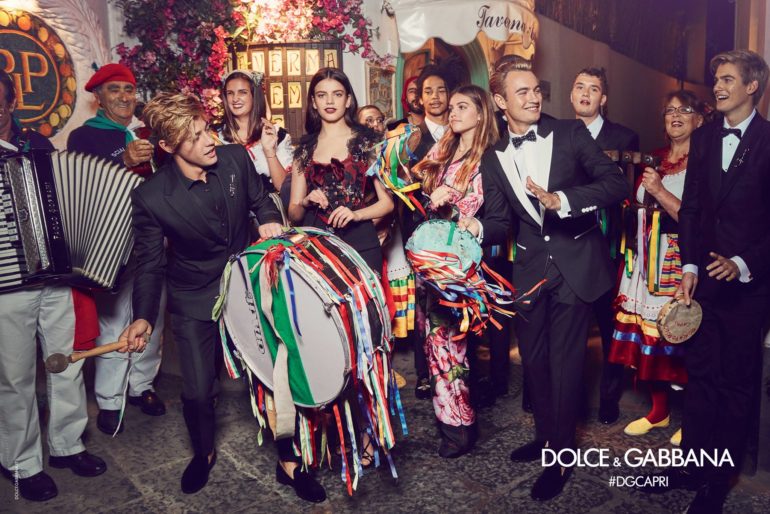
    Dolce & Gabbana is launching a new Pop Up at The Promenade Shops, Galaxy Macau, featuring its iconic colorful Christmas characters and festive decorations. Inspired by traditional Sicilian parades, the exclusive-to-Asia pop-up store features the brand’s latest collections and inventive installations.

    Shoppers will be the first to experience the pop-up at the Pearl Lobby of The Promenade Shops from 16 November 2018 through 6 January 2019.

    The italian brand will light up the Pearl Lobby with luminaria (festive lights) and ornate, hand-painted Sicilian carreto (carts).

    The craft of making carreto has been handed down from generation to generation and is often a focal point of Dolce & Gabbana’s aesthetics.

    At The Promenade Shops, they will carry the latest men’s, women’s and children’s prêt-à-porter and accessories collections, as well as an exclusive, Chinese-inspired collection featuring the beloved and playful panda.

    Shoppers purchasing at the pop-up will be entitled to various customization activities for personalized Dolce & Gabbana gifts.

    Hazel Wong, Senior Vice President of Retail for Galaxy Macau, said, “We are excited to host an unmissable, Sicilian-style Christmas celebration with delightful Chinese accents courtesy of legendary Italian fashion brand Dolce&Gabbana.”

  • DFS stores launches Meitu Magic Mirrors

    DFS stores launches Meitu Magic Mirrors

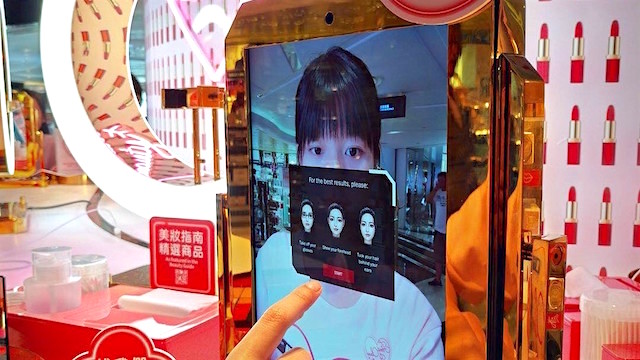
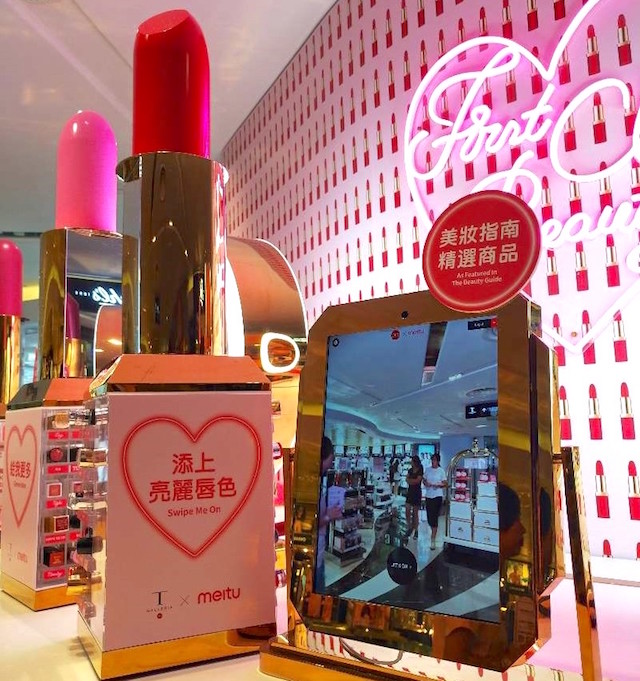
    DFS stores in 16 international cities – including Hong Kong and Macau – will be featuring Meitu Magic Mirrors for the next year.

    The connected device allows customers to see their desired makeup style applied directly to their face, just as if they were standing in front of a mirror. An AI algorithm is used to make personalised recommendations based on customers’ facial features. Photos taken by the device can be shared on social media.

    The Meitu Magic Mirrors will be installed in 22 stores, in cities including Macau, Singapore, Indonesia, Japan, Australia, the UAE and the US.

    According to reports, the effect is true-to-life and product colours and textures are accurately displayed. It is designed to drastically lower the time shoppers spend trying out products, while preventing sanitary concerns that can arise when sampling items in a public venue.

    Previously, the Meitu Magic Mirror has been used to promote Lancome, Nars Cosmetics, Make Up Forever, Sephora, and Dolce & Gabbana.

    Meitu is a Chinese AI-driven photo/video editing and sharing company that also produces smartphones.

  • Dolce & Gabbana Vietnam flagship store opens

    Dolce & Gabbana Vietnam flagship store opens

    Dolce & Gabbana Vietnam has officially opened its flagship store after testing the market with a pop-up in January.

    In Rex Arcade inside Ho Chi Minh City’s Rex Hotel, the Italian luxury fashion brand’s store offers women’s and men’s ready-to-wear, shoes and accessories.

    Dolce & Gabbana was brought to Vietnam by ACFC, a subsidiary of distribution company Imex Pan Pacific (IPP) Group, which also handles such brands as Burberry, Chanel, CK and Salvatore Ferragamo.

    To celebrate the flagship’s opening, Dolce & Gabbana Vietnam hosted a party attended by D&G CEO Alfonso Dolce and senior VP for Asia Pacific Grace Zhao, plus IPP executives and celebrities.

    Along with the opening, D&G introduced its international campaign #DGclone to Vietnam. The campaign is built around a world tour by the brand’s two mascots – lifesize characters representing D&G founders Domenico Dolce and Stefano Gabbana.

  • Dolce & Gabbana sneakers pop-up store arrives in Vietnam

    Dolce & Gabbana sneakers pop-up store arrives in Vietnam

    The Dolce & Gabbana Sneakers pop-up store is to land in Vietnam for four weeks, at Trang Tien Plaza in Hanoi.

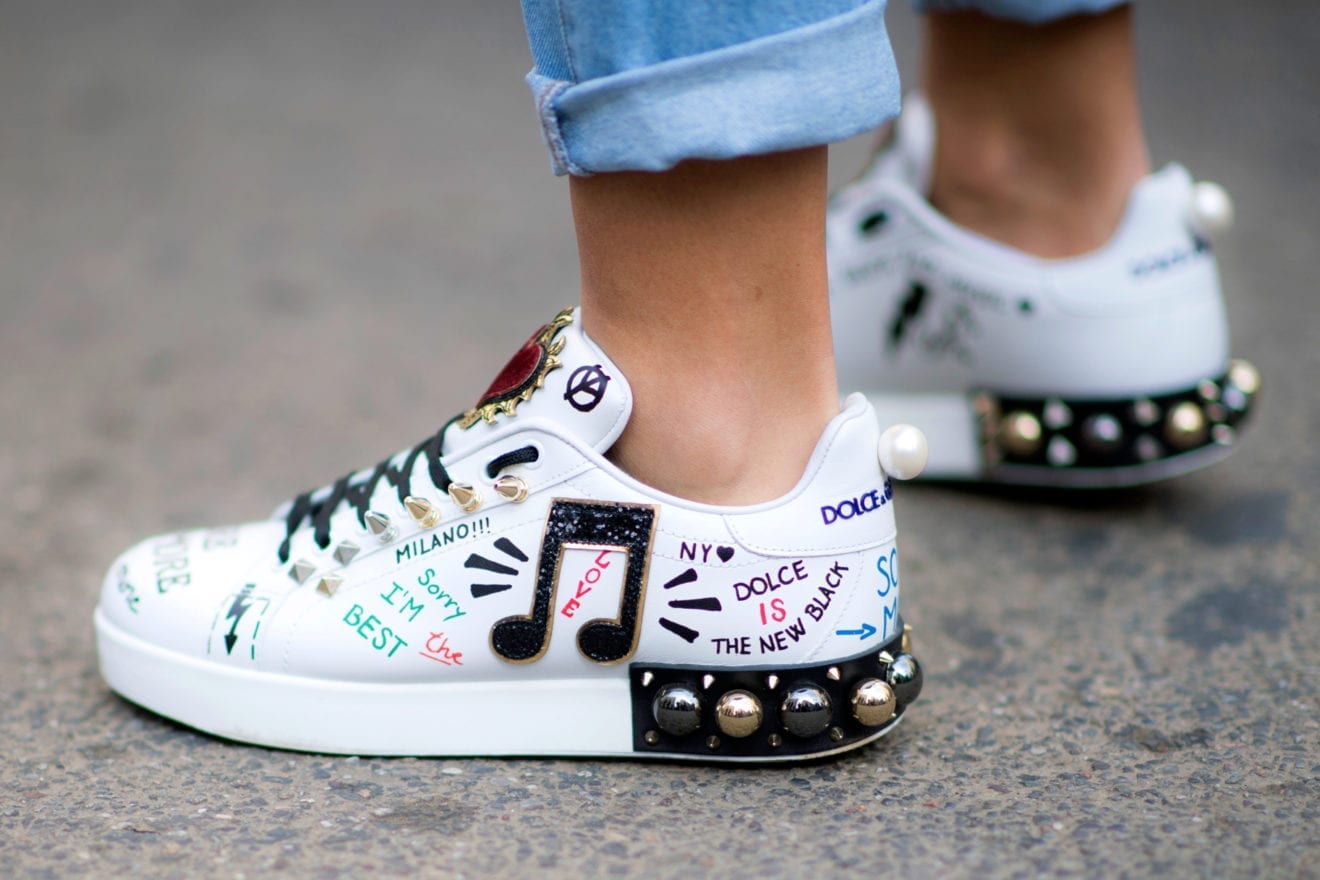
    After choosing their white sneakers, customers – both men and women – can head to the design lab where artists are waiting to help them customise their purchase.

    Options for the sneakers include color patches, stitches or written inscriptions.

    Besides sneakers, customers can also have white t-shirts customised.

    The Dolce & Gabbana sneakers pop-up store opens from November 5 to  December 3.

  • Dolce & Gabbana net profit soars, revenues up 9%

    Dolce & Gabbana net profit soars, revenues up 9%

    Dolce & Gabbana closed the financial year 2016/17 on March 31, 2017 with a turnover of 1.296 billion euros, a 9% increase on the previous year, according to the balance sheet consulted. D&G Srl, which controls the group, obtained a 57.6 million euro dividend from Dolce & Gabbana Holding.

    The latter oversees Dolce & Gabbana Trademarks, owner of the group’s brands, and Dolce & Gabbana Srl, in charge of the label’s operations in Italy and abroad.

    D&G’s consolidated balance sheet showed a net profit of 80 million euros, around four times higher than the 17.93 million achieved by the company in 2015/16, and an EBITDA of 168 million euros.

    This result is due largely to an increase in sales, particularly in Italy, which represents 24% of total turnover, with the rest of Europe making up 27%, the Americas 13%, and Japan 6%.

    Dolce & Gabbana’s strong presence in its domestic market has led the firm to further its initiatives abroad.

    On 4 October , the brand organised a runway show in the Isetan Department Store, Tokyo, for which the creative duo Domenico Dolce and Stefano Gabbana designed a special collection.

    In the same month, the label also opened its first outlet store in Mexico, in the Premium Outlets Punta Norte mall, in the northwest of the country.

    For the holiday season, the brand has plans for a large-scale operation with London-based luxury department store Harrods. These will include the launch of exclusive products, as well as a number of in-store interventions organised by Dolce & Gabbana from 2 November to 28 December, such as in stores-in-stores, a Christmas tree, window displays and a traditional Italian market.

    Breaking down the brand’s results by distribution channel, Dolce & Gabbana’s wholesale increased 8.7% in 2016/17, retail grew 7.1% to 769 million euros, while licensing revenue fell 9.2% to 61.2 million euros.

  • Dolce & Gabbana profits quadruple over 12 months

    Dolce & Gabbana profits quadruple over 12 months

    Dolce & Gabbana profits have virtually quadrupled from a year ago. A year ago the Italian luxury fashion house’s profit was €17.93 million (US$21.5 million), while this year the two owners of the group cashed in dividends of €80 million, reports CPP-Luxury.com.

    Its consolidated group turnover for last year hit €1.3 billion, compared to €1.18 the previous year, a rise of 9.6 per cent.

    The group includes Dolce & Gabbana Holding, Dolce & Gabbana Trademarks, which controls the group’s licences, and Dolce & Gabbana.

    Retail business has risen 7.1 per cent to €769 million, while the wholesale business jumped 8.7 per cent. Only licences dropped, by 9.2 per cent to €61.2 million.

    At home in Italy, Dolce & Gabbana has only a 24 per cent market share, compared to 27 per cent in the rest of Europe, 13 per cent in the Americas and 6 per cent in Japan.

  • Sunglass Hut Opens New Store In Hangzhou

    Sunglass Hut Opens New Store In Hangzhou

    International sunglasses retailer Sunglass Hut opened a new store in Hangzhou’s Intime Wulin store, which is the brand’s third store in the city following the ones in Hangzhou Kerry Centre and Hangzhou Bailian Outlets.

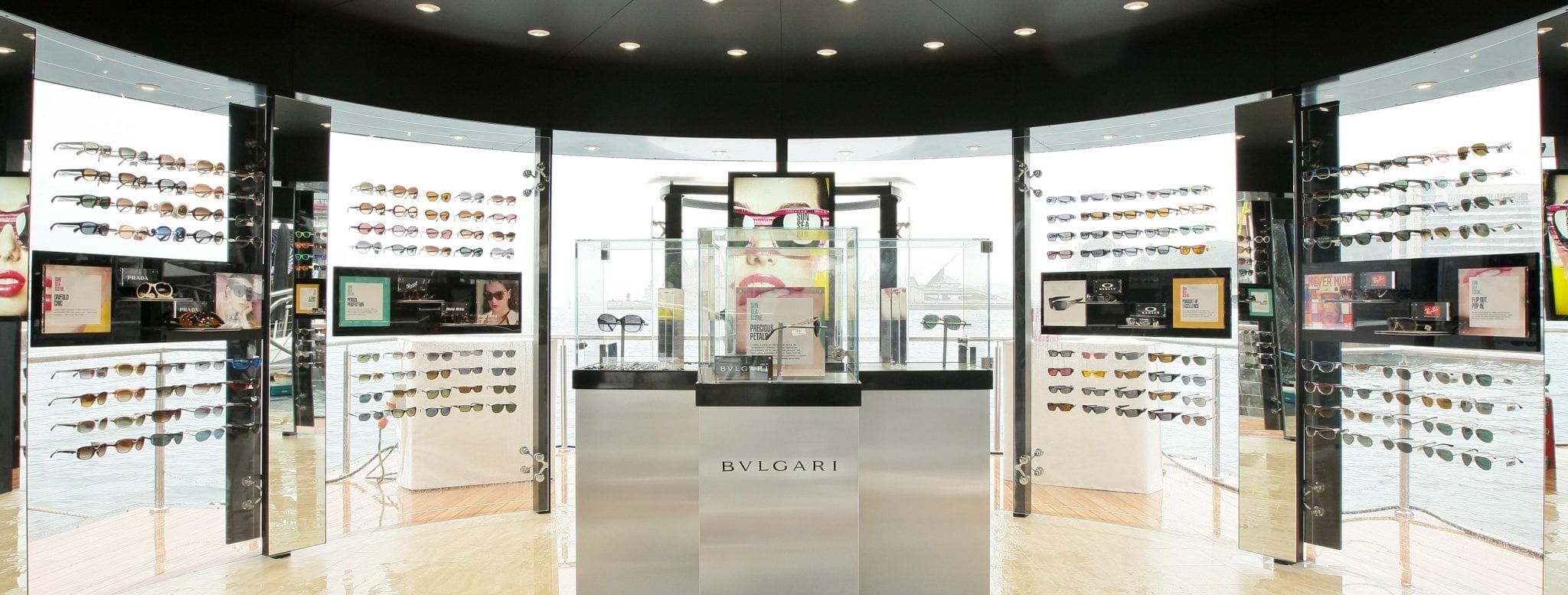
    Sunglass Hut has reached cooperation with many first-tier brands, including Ray-Ban, Prada, Dolce & Gabbana, Burberry, Tiffany & Co., and Coach.

    It started as a small independent store in Miami in 1971 and it developed 100 chain stores in Miami by 1986, reaching annual sales of USD24 million. By 1991, Sunglass Hut’s annual sales exceeded USD100 million and by 1996, the company seized 30% share of the American sunglasses market.

    By the end of 2016, Sunglass Hut already opened 3,269 retail stores in 28 countries and regions around the world, including 3,104 retail stores in North America, Asia Pacific, Europe, South Africa, and Latin America; and 165 authorized retail stores in Middle East and India.

    For the Greater China region, Sunglass Hut had nearly 40 retail stores, including 13 in Hong Kong, seven in Shanghai, and three in Beijing.

  • Dolce & Gabbana names Fabrizio Cardinali COO

    Dolce & Gabbana names Fabrizio Cardinali COO

    Italian fashion house Dolce & Gabbana has appointed Fabrizio Cardinali as chief operating officer and board member.

    Prior to joining the luxury brand founded by the Sicilian design duo, Cardinali was the chief executive of Alfred Dunhill. As the chief of the British men’s brand, Cardinali was replaced by Andrew Maag back in January 2017.

    During his four-year tenure at Dunhill, Cardinali lead the expansion of Dunhill’s specialist product range and focused on growing the British brand’s retail presence, which included the opening of its flagship store in Mayfair, London.

    Prior to Dunhill, Cardinali served as Dolce & Gabbana’s sales and marketing director, before taking up the role of chief executive at Richemont-owned Lancel.