Retail News CRM

Tag: dollar

  • Vietnamese importers fret over dollar rate

    Vietnamese importers fret over dollar rate

    The dollar gained against the Vietnamese dong on Tuesday as the U.S. Federal Reserve raised interest rates last week.

    As of 3 p.m. Tuesday, dollar selling prices reached 22,810 at some currency exchange points in Ho Chi Minh City. At Vietcombank, BIDV and Eximbank, the dollar was being sold for VND22,880, 22,885, and 22,890, respectively.

    Buying prices also rose to VND22,800-22,815 per dollar at local banks by 3 p.m. Tuesday.

    The USD/VND exchange rate has increased by VND40-45 from June 13 when the Fed upped dollar interest rates for the second time this year to between 1.75 and 2.00 percent, ending the pledge to keep rates low enough to bolster the economy for “some time.” It signalled it would tolerate above-target inflation at least through 2020.

    High dollar prices will create difficulties for Vietnamese import businesses, economist Nguyen Tri Hieu said.

    Viet Steel is a company which imports 1.5 million tons of raw materials every year for steel production. “As 80 percent of our material is imported, the company will be affected by the dollar hike,” said chairman Do Thuy Thai.

    The company leaders are discussing increasing the prices of steel products to retain profit, Thai said.

    As a small import business, the Como Textile Company is also worried about the high rate of the U.S. dollar. “We often import 60 percent of our material, thus this will be a big challenge for the company in the future,” chairman Nguyen Huu Phuc said.

    However, the higher dollar rate is not a completely adverse development for Vietnam. Export businesses will enjoy the high rate as they often change U.S. dollars to Vietnamese dong, economist Nguyen Tri Hieu said. He added that they should push further in manufacturing and take foreign currency loans as interest rates are currently low.

    Hike continues

    As the U.S. economy “appears to be in a pretty good place” to U.S. Federal Reserve officials, they plan to increase the interest rate two more times this year.

    Vietnamese experts are not too worried. They are confident that these hikes won’t affect the country’s economy in any major way.

    Despite the hike in dollar prices, there is no sign of tension in the supply and demand of foreign currency, financial expert Ngo Xuan Hai said.

    Vietnam currently enjoys record-high foreign exchange reserves at $63 billion. It recorded a $3.39 billion export surplus in the first five months this year and there is abundant foreign currency supply, so “there is no need to worry,” Hai said.

    Echoing Hai, HSBC country head of global markets Ngo Dang Khoa said Vietnam currently has favorable conditions to keep the USD/VND rate from fluctuating too strongly, particularly with foreign direct investment disbursement reaching 13 to 14 billion USD each year and has been increasing.

    “As foreign investors usually look at the long term, temporary fluctuations in exchange rate won’t affect their investment decisions” Khoa said.

    The State Bank of Vietnam (SBV) can take monetary measures to stablize the economy, economist Hieu said. “With abundant foreign exchange reserves it may intervene into the market to maintain the rates,” he said, estimating that the exchange rate will increase by 1-3 percent this year.

    “SBV is closely monitoring the exchange rate to take timely decisions,” SBV deputy director Nguyen Hoang Minh said.
  • Australian dollar slips another week

    Australian dollar slips another week

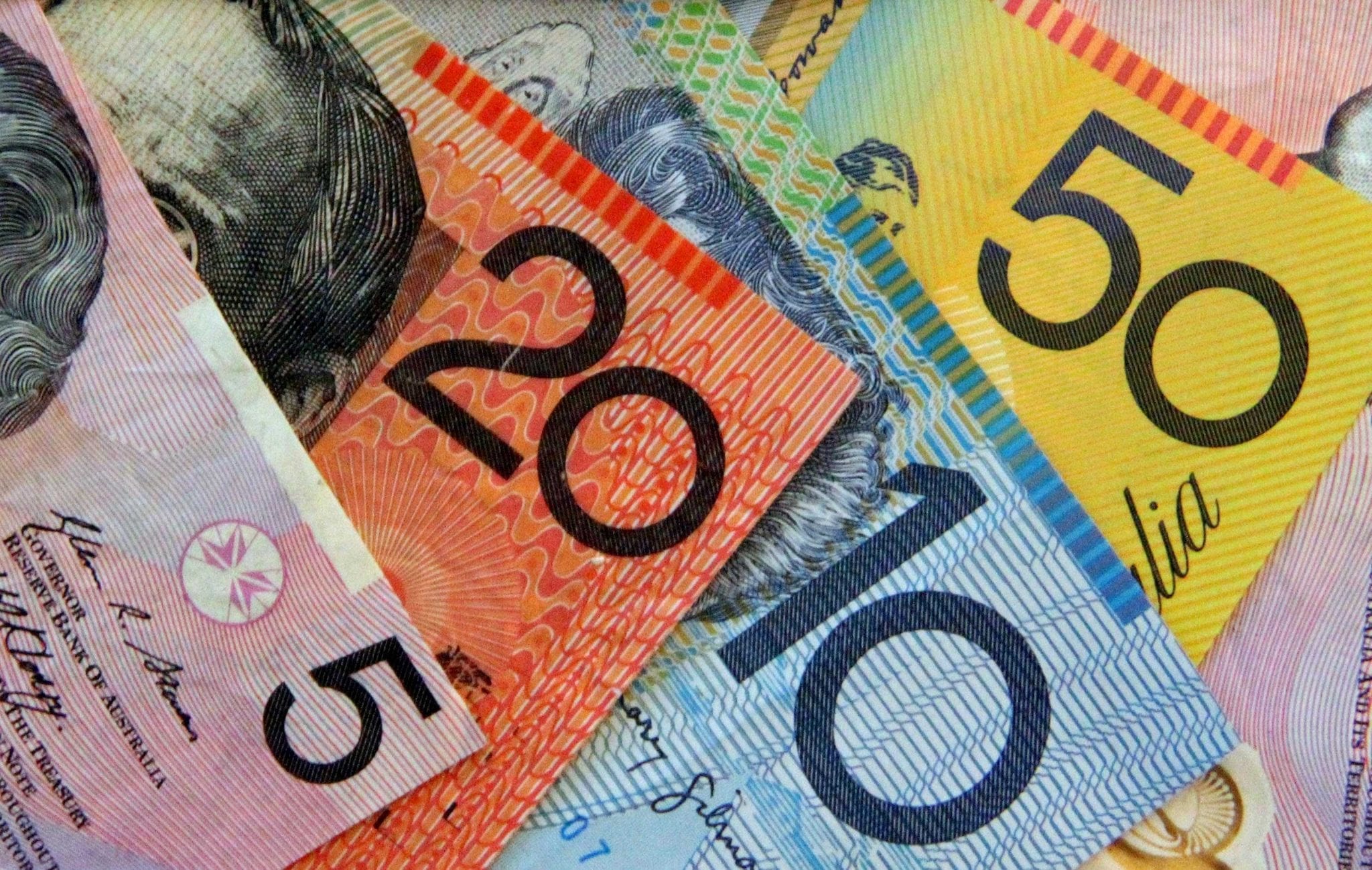
    The Australian dollar has slipped a little further against its US counterpart as the spat between the US and China over trade hurts commodities and commodity currencies, including the Aussie.

    At 0635 AEST on Monday, the Australian dollar was worth 74.46 US cents, down from 74.57 US cents on Friday.

    Westpac analysts say the tension over trade looks to have hit commodity currencies.

    “The trade spat between US and China appeared to hurt commodities and commodity currencies, with China threatening retaliatory tariffs on Friday,” they said in a morning note.

    “The US dollar index closed down 0.1 per cent on the day. …. (The) AUD extended a week-old decline to 0.7440 – the lowest since 9 May.”

    There are no obviously local event risks for the Australian dollar, leaving the currency vulnerable to trade-based tensions, along with continuing reactions to the US and European central banks’ recent decision on interest rates.

    “The combination of hawkish Federal Reserve and dovish European Central Bank surprises last week, plus US-China trade spat, could take AUD/USD lower towards 0.7410 (the May low) during the week ahead,” the Westpac analysts said.

  • Australian dollar falls

    Australian dollar falls

    The Australian dollar is slightly lower as the US dollar flattens out after suffering three consecutive days of falls.

    At 0635 AEST on Wednesday, the local currency was worth 76.84 US cents, down from 77.04 US cents on Tuesday.

    The major US stock indexes were up over one per cent, after falling down to levels where buying automatically kicks in, and copper prices hit a one-week high shrugging off worries about a trade dispute between China and the US.

    However the Australian dollar has come under some pressure from the US dollar, which is steadying after falling for three straight days.

  • Australian dollar soars

    Australian dollar soars

    The Australian dollar has surged against its US counterpart which has fallen ahead of key Congressional testimony by Federal Reserve chair Janet Yellen, after a Donald Trump Jnr e-mail came to light.

    At 0635 AEST on Wednesday, the Australian dollar was worth 76.34 US cents, up from 76.18 US cents on Tuesday.

    BK Asset Management FX managing director Kathy Lien said the US dollar had reversed it gains, and had fallen particularly against the yen and the euro, though not sterling.

    The dollar fell to a more than one-week low against a basket of major currencies on Tuesday, after US president Donald Trump’s eldest son released an email chain citing Russian support for his father before last year’s US election.

    The greenback’s movements, and therefore its stance against the Aussie dollar, over the next few likely will depend on the tone of Federal Reserve chair Janet Yellen’s congressional testimony.

    “The (US) dollar will rise if she emphasises the need for continued gradual removal of policy accommodation and will crash hard if she is noncommittal about additional tightening,” Lien said in a Wednesday morning note.

    FX Techs’ Niall O’Connor says it is likely the local currency will reverse its course.

    “AUD/USD is impulsively reversing from the important .7725/50 area, as the momentum setup suggests a shift is due,” he said in a morning note.

  • Rupiah falls against dollar to 13,414 on Friday

    Rupiah falls against dollar to 13,414 on Friday

    The rupiah fell 54 points to close at Rp13,414 per dollar in the Jakarta inter-bank spot market on Friday evening, compared to the previous close of Rp13,360 per dollar.

    The dollar appreciated at the weekend, sending a signal that the Fed has indicated the possibility of raising its interest rate this year end, Ariston Tjendra, chief researcher of Monex Investindo, said here on Friday.

    “The signal about a hike in the US interest rate is in line with the US optimistic economic data,” he added.

    The release of data about US jobless claims at low level and the increase in home sales are among the reasons for the Fed to tighten its monetary policy, he noted.

    “The majority of global currencies also tend to weaken against the US dollar,” he commented.

    Lukman Leong, an analyst of PT Platon Niaga Berjangka, reminded that Bank Indonesia which remains in the foreign currency and bond market to control the fluctuation of local currency has prevented the rupiah from further weakening against the dollar.

    On the other hand, the tax amnesty program has added to the rupiah enjoying a positive sentiment, he observed.

    According to the BI mid-rate, the rupiah weakened to Rp13,408 per dollar, compared to Rp13,385 per dollar the day before.

  • Stronger HK dollar a turn-off for tourists

    Stronger HK dollar a turn-off for tourists

    The sharp decline in the yuan and volatile stock markets have exacerbated retail and tourism woes in Hong Kong as a weak currency means it is no longer attractive for mainland visitors to shop and dine in the city.

    Experts fear the falling yuan will further discourage mainland tourists. A total of 38.6 million visited the city in the first 11 months of 2015, accounting for about 77 per cent of all arrivals to Hong Kong.

    “Mainland tourists will turn to places with weaker local currencies,” says Charlie Chen, head of Asian consumer research at French bank and financial services company BNP Paribas.

    Although the yuan is falling against the US dollar, Chen says it is not necessarily depreciated when converted to other major currencies, like the South Korean won and Japanese yen. But the Hong Kong dollar is pegged to the US dollar, which means higher prices when converted to yuan.

    “The luxury sectors will be hit the most if the yuan continues to depreciate,” Chen notes. He says people tend to buy expensive goods in places with weaker currencies than their own, as they can save more money in absolute terms.

    Jewellery, watches, clocks and valuable gifts are already ranked the worst performer among all retail outlets in Hong Kong, with sales down 20.6 per cent in November on a yearly basis.

    However, one of the city’s biggest jewellers, Chow Sang Sang, says it has not felt much of the heat from the fluctuation of the yuan since August, though it has constantly adjusted the exchange rate of the two currencies if customers want to pay in yuan instead of Hong Kong dollar in a bit to protect its profit margins.

    “Mainland consumers still have a reason to buy gold in Hong Kong,” says Lau Hak-bun, the company’s director of Greater China, adding that the same item still costs at least 20 per cent more on mainland China despite the recent devaluation. But if the yuan falls a further 10 per cent from last year’s level, he “needs to look at the strategy again”.

    Ricky Tse, chairman of the Hong Kong Inbound Tour Operators’ Association, also seems to be at ease. He says the impact of the yuan’s devaluation has already been “hedged” by the falling hotel rates and retail prices in the city in the past year.

    Tse says that he has observed a drop of “at least 20 per cent” in hotel rates compared with a year ago.

    “Cheaper hotel rates and more discounts to retail prices will attract more tourists to the city,” he says.

    Despite the recent contraction of tourists from mainland China in – with arrivals of tour groups dipping by about 20 per cent last year – Tse notes that more hotel rooms have been booked by overseas tourists.

    “Foreigners are very practical,” he says, adding that the number of tourists from Southeast Asia has remained stable despite the local currencies falling against the Hong Kong dollar.

  • Rising HK dollar expected to give locals the travel itch

    Rising HK dollar expected to give locals the travel itch

    Cash registers in Hong Kong won’t be ringing merrily next year after the US rate hike, with locals likely to scratch their travel itch with the appreciating Hong Kong dollar.

    The greenback reached a two-week high against a basket of major rivals yesterday after the US Federal Reserve raised interest rates for the first time in nearly a decade.

    The Hong Kong dollar, pegged to the US unit, also rose.

    Hong Kong Retail Management Association chairman Thomson Cheng Wai- hung said the interest hike’s immediate effect on the industry is limited, but further hikes next year would destabilize the market and make tourists further lose their appetite for the SAR.

    “No matter if it is accommodation in hotels or shopping, it would appear more expensive for tourists. Many of them are going to Japan, South Korea and Europe. The trend would worsen,” Cheng said.

    He expects retailers selling high-end products such as jewelry to take a hit.

    According to a survey last month of its members, a single- digit decline in sales this Christmas is expected year-on- year. Most members feel next year’s performance will be worse. Cheng predicted that retail sales this year would drop 3 percent from last year.

    As for local shoppers, some could be attracted to travel overseas due to the strong Hong Kong dollar. “It is not an advantage for local retailers,” Cheng said. The strong US dollar and hence HK dollar would encourage mainland tourists to explore other destinations, CLSA senior investment analyst Mariana Kou said.

    “We believe Japan, Korea and Europe would continue to be beneficiaries,” Kuo said.

    Safety concerns after recent terrorist attacks, however, may affect travel into Europe.

    Miramar Travel saw Christmas bookings jump by 20 percent from last year. But they reminded Hongkongers that despite cheaper shopping, other travel expenses do not necessarily go down.

    The rising popularity of Japan has led to a shortage of hotels and higher costs.

    Travel Industry Council chairman Jason Wong Chun-tat said the hike had been expected and would have limited impact on exchange rates.

    He remained optimistic for inbound tourism, saying hotel occupancy rates are expected to reach 80 to 90 percent during this holiday season.

  • Lower Australian dollar means clothing price rise “inevitable”, suppliers say

    Lower Australian dollar means clothing price rise “inevitable”, suppliers say

    Clothing prices are expected to rise across the board for the first time in five years as suppliers and retailers raise prices after a 17 percent slump in the Australian dollar.

    Suppliers have warned retailers that prices for fashion clothing, underwear and basic apparel will rise significantly in the second half of calendar 2015, as currency hedges roll off and new-season stock comes into stores.

    The Australian dollar has fallen 17 percent against the US dollar since June and 10 percent over the past 12 months, pushing up the cost of clothing sourced from China, Bangladesh, Sri Lanka, Thailand and Vietnam.