Tag: Domino

  • Domino’s seeks to grow its slice of QSR following bumper year

    Domino’s seeks to grow its slice of QSR following bumper year

    For many, March and April 2020 came with plummeting sales and a scramble to pivot operations. Domino’s was not a part of that crowd—not by a long shot. From April 20 to May 17 last year, same-store sales lifted 20.9 percent at U.S. franchises and 22 percent at company-owned stores. In the same period, domestic retail sales increased 25 percent.

    It was a stellar run for Domino’s amid all the challenges. But now the calendar has flipped forward a year, and the environment is completely different. Capacity restrictions are lifting, vaccines are increasing, and COVID rates are declining, for the most part. There’s a lot more options for consumers out there, which means Domino’s market share comes into question.

    CEO Ritch Allison is wary about the upcoming laps, but not worried, and that’s an important distinction, he said. Allison feels Domino’s is in as good of a position as it’s ever been. U.S. same-store sales increased 13.4 percent in Q1, the market’s 40th consecutive quarter of growth. With a two-year stack of 15 percent, Domino’s saw a slight sequential improvement on a two-year basis compared to Q4 2020. The lift in comps was driven by a healthy mix of average check and order growth.

    The brand opened a net of 36 U.S. stores, including just one company-owned closure. Most importantly, franchisees are coming off another year of record-setting profitability, with average store-level EBITDA coming in at just over $177,000.

    “We’ve got some pretty strong laps ahead of us from the second and the third quarters of last year, but what we’re really focused on are continuing to make the investments to drive long-term growth in the business,” Allison said during the chain’s Q1 earnings call. “And as I look out across the rest of the year, we are really in an enviable position.”

    Domino’s is in an enviable position because it has plenty of “arrows in the quiver” to fuel business, Allison said. For example, there is much room to gain in the carryout business, which saw growth in sales throughout 2020, but a weakening order volume. There’s reasons for this trend, too. Domino’s began 2020 running TV advertisements for Pie Pass, a big screen that displays customers’ names as they pick up their pizza. That had to be turned off immediately when COVID hit.

    Through the remainder of the year, Domino’s developed carside delivery as a safer service model, but it still wasn’t pushing carryout as hard as it had been in the past few years. Domino’s turned off its more aggressive promotional weeks that are usually spread across the annual calendar. Even in Q1 the pizza chain elected not to run any “boost week” promotions because of the positive sales impact from stimulus checks. Domino’s also doesn’t discount the affect of other restaurants dedicating more resources to the carryout channel throughout the pandemic.

    One key remedy is continuing the fortressing strategy, which helps Domino’s capture incremental carryout business, as well as lower relative costs, better service, and higher economics for drivers.

    “As I look this year and ongoing, fortressing is going to continue to be a big part of that strategy to gain share,” Allison said. “As we’ve talked about in the past, we are still relatively underpenetrated in terms of share in the carryout business specifically. And fortressing gives us an opportunity to go out and grab that largely incremental carry out business.”

    The foundation is already there. Domino’s has 27 million active members in its loyalty program, and the figure continues to grow. The company sees strong and steady frequency among these guests, as well. Going forward, Allison said there will be opportunities to “turn the volume back up” on new customers.

    Domino’s arsenal includes an advertising war chest to drive customer awareness and acquisition. It allows Domino’s to gather sales trends and “put a little bit more muscle against things” when and where it needs to. A good example of this came earlier this week. Domino’s announced a national TV campaign highlighting its relationship with Nuro, a robotic delivery company. As part of the advertisements, Domino’s brought back “The Noid,” a character the chain first used in the 1980s. Allison said the campaign is already “generating incredible buzz around the Domino’s brand.”

    “It’s stuff that we think about all the time because the vast majority of the dollars in that advertising fund are franchisees dollars,” Allison said. “So we spend it with great care. We talk a lot about how we use analytics to make decisions at Domino’s. It’s an area where we’ve got terrific analytics in terms of understanding the return on spending those dollars across a range of different channels or opportunities that we have to invest them on the part of our system. And so, we are constantly looking at that and managing the dials to use that investment for the greatest return for our system.”

    The marketing and advertising efforts will include carside carry out, which is a “critical weapon” in cranking up awareness toward the carryout business, Allison noted.

    “We brought that forward to address the safety concerns that customers had around picking up their food in a COVID environment,” Allison said. “But over the long-term, that’s really a great tool for us as we compete for carryout business against the drive-thru lanes of other [quick-service restaurant] concepts.”

    As Domino’s ignites its carryout business, it will be doing so in a pressure-filled labor market. Just this week, the pizza chain announced that franchise-owned stores in Florida are looking to hire roughly 4,000 workers across more than 400 stores.

    When it comes to labor pressures affecting the supply chain, CFO Stu Levy said Domino’s keeps franchisees from carrying that burden. The company is absorbing a piece of that labor increase versus passing it through, and it does the same with food inflation. At the store level, Levy noted that restaurants are challenged in many areas, but Domino’s will never use it as an excuse to slack on service.

    Similar to the carryout business, fortressing will be the “arrow” used to mitigate future labor issues. So will technological investments that drive throughput and reduce the need for manpower.

    “A good bit of the work that we’re trying to do around tech and around the store operating model is basically to keep drivers moving 100 percent of the time, with the long-term goal that they never get out of their cars or delivering pizzas constantly as opposed to other tasks and other activities that they had to perform in the old operating environment,” Allison said.

    Allison said one factor that separates Domino’s from the crowd in terms of incentive is that being a driver or a pizza maker is a legitimate stepping stone toward becoming an entrepreneur. Domino’s has the stats to prove it—more than 90 percent of franchisees started as employees.

    Will the job market prevent franchisees from opening stores? Allison doesn’t think so. In 2020, Domino’s opened a net of 624 stores. And when you look back at the trailing four quarters, its 730 net new openings. So the pace is accelerating. The unit economics are more than solid, and the demand for franchisee investment hasn’t faltered in the least, according to the CEO.

    “Staffing’s always a challenge, but one that we and our franchisees feel comfortable that we can manage overtime,” Allison said. “Part of the beauty, particularly as it relates to the opening of these new stores, is that the majority of these are opening as part of our fortressing program and giving us an opportunity to do two things. One is to shrink the territory, so we get more deliveries per hour of delivery driver labor, but also you get that incremental carry out business, which is a much less labor-intensive business for our stores, which is one of the reasons we want to continue to grow and build that business.”

    Domino’s ended Q1 with 17,819 restaurants—6,027 domestic franchise, 11,428 international, and 364 domestic company-owned.

    International comps increased 11.8 percent in Q1, marking the 109th consecutive quarter of international same-store sales growth. International markets also opened a net of 109 stores in the quarter.

    Total revenues increased from $873.1 million to $983.7 million year-over-year. The growth was primarily due to U.S. and international same-store sales growth and increases in global store counts during the trailing four quarters.
  • Domino’s buys up Taiwan operations

    Domino’s buys up Taiwan operations

    Fast food company Domino’s Pizza Enterprises is to acquire Domino’s Taiwan as part of its global expansion plan.

    The company has entered a binding agreement with Formosa International Hotels under which Domino’s will buy the Taiwan operation for $79 million on a cash and debt-free basis.

    “This is a market with tremendous opportunities for our business and this acquisition provides similar opportunities for the local team,” said Don Meij, CEO and MD at Domino’s Pizza.

    “Our expansion focus has been on identifying opportunities with large total addressable markets and a stable economy.”

    The deal is expected to close in the first half of FY2022.

    Domino’s is Taiwan’s second-largest pizza chain with 157 corporate and franchised stores across the territory. As part of the acquisition, Domino’s Pizza aims to increase the store network to more than 400 stores.

    The company also plans to expand the brand’s footprint in Asia from 1500 stores to 1900 stores by 2032.

    “We intend to expand the store footprint through opening more corporate stores, introducing new, internal, franchisees to the network, helping existing franchises profitably expand their businesses, and investing in the network and our people to drive long-term growth,” Meij added.

  • Domino’s And Nuro To Start Robot Pizza Delivery In Houston, Texas

    Domino’s And Nuro To Start Robot Pizza Delivery In Houston, Texas

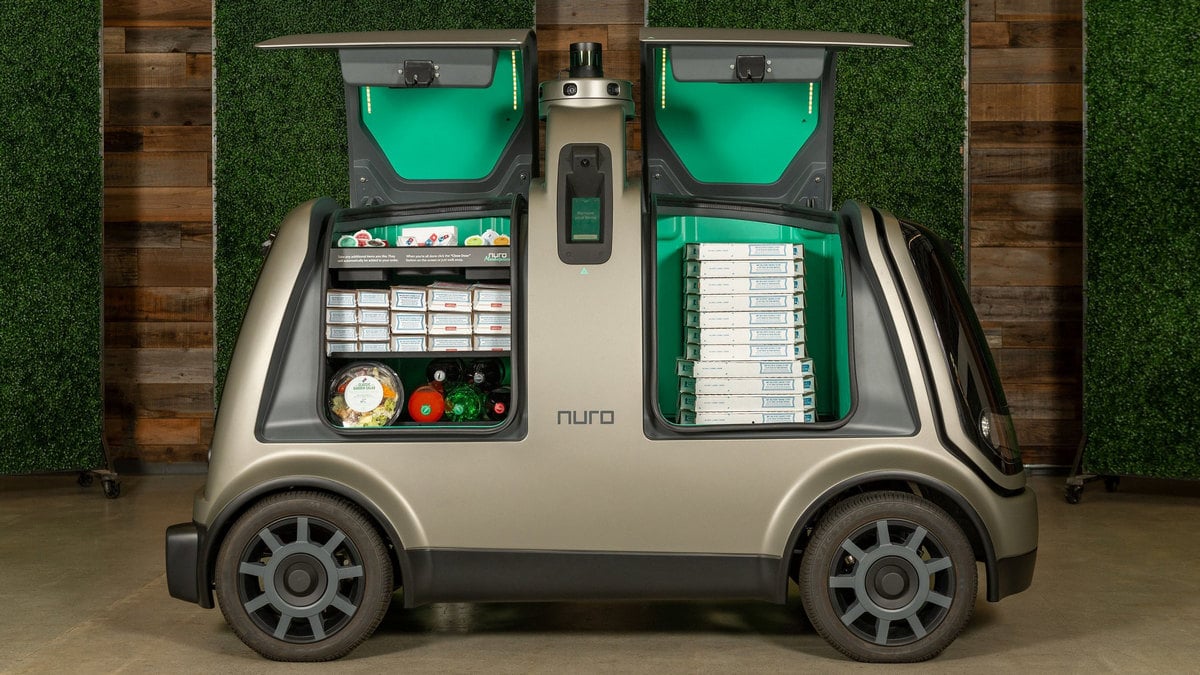
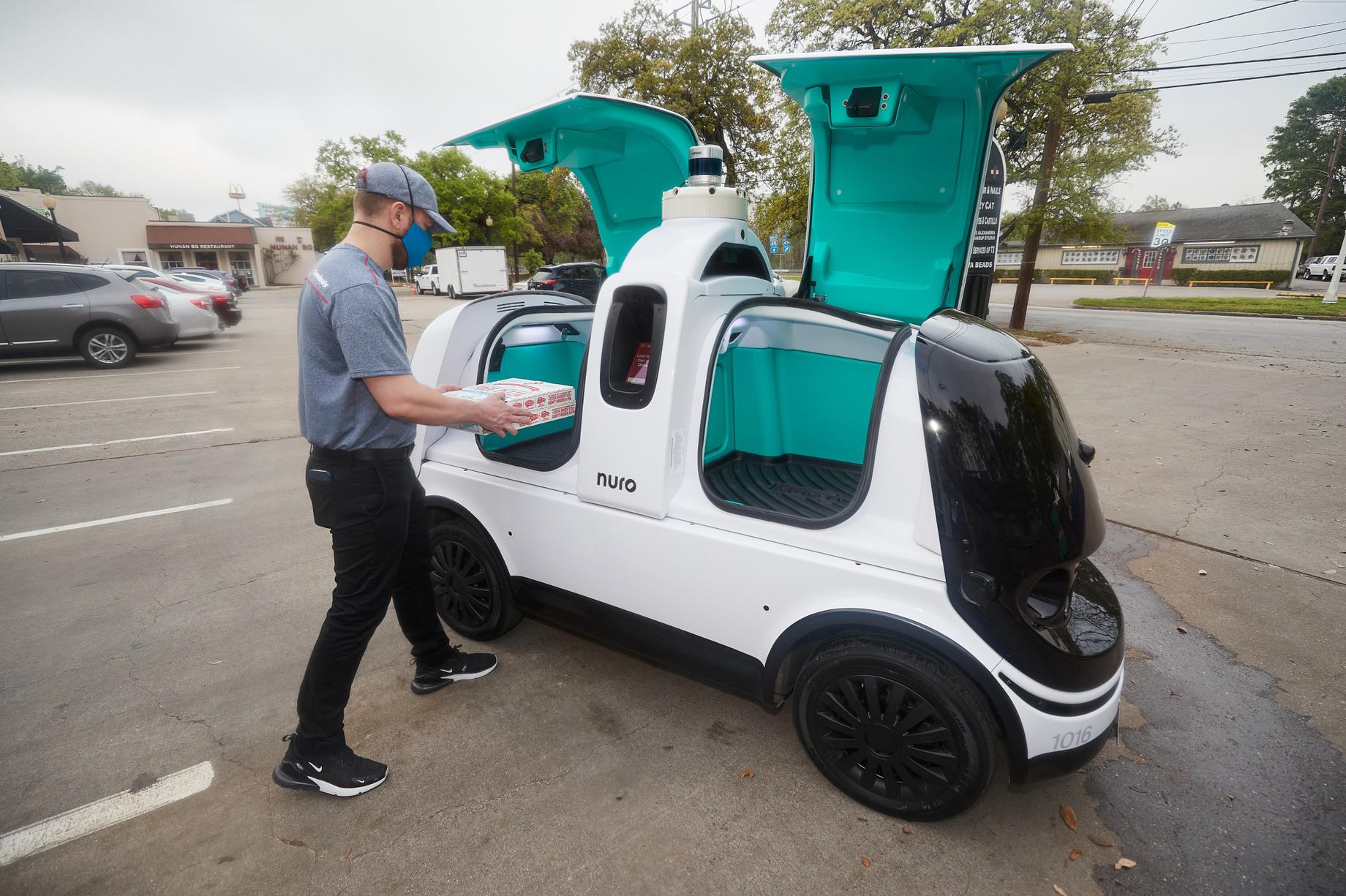
    Domino’s Pizza Inc and Nuro Inc, a Silicon Valley startup, said on Monday they will launch a robotic pizza delivery service in Houston this week as they seek to satisfy increasing online orders during the pandemic. With small, low-speed vehicles to carry packages instead of people, Nuro has been pulling ahead of other autonomous vehicle startups in gaining regulatory approvals. It won U.S. clearance last year to start unmanned delivery services. Nuro recently secured a $500 million including an equity investment from Woven Capital, the mobility investment arm of a Toyota Motor Corp subsidiary, which made its total valuation more than $5 billion, a person familiar with the matter said.

    The delivery service will begin at a Domino’s outlet in Houston before expanding to serve customers in many other locations as part of a long-term partnership, said Cosimo Leipold, Nuro’s head of partner relations. “It’s generally difficult for large companies to hire enough drivers to fill their delivery demand,” Leipold said in an emailed statement to Reuters. Leipold said Nuro, which has already partnered with retailers Kroger Co, Walmart Inc and CVS Health Corp to deliver groceries and prescriptions, said its weekly deliveries had nearly tripled in the first three months of the pandemic. Houston, the fourth-largest U.S. city, has one of the country’s highest road fatality rates. “Houston’s roadways create challenging scenarios for our technology to work with,” Leipold added.

    Nuro and Domino’s had said in 2019 they expected to launch robot pizza delivery late that year. “Nuro and Domino’s have taken a measured approach to prioritize a smooth and safe deployment,” Leipold said. Nuro, founded by two former Google engineers in 2016, previously raised $940 million from the SoftBank Vision Fund.

  • Domino’s expands solar program nation-wide

    Domino’s expands solar program nation-wide

    Pizza retailer Domino’s has announced a renewable energy strategy that will see it roll-out solar power systems and energy controllers across all Domino’s stores across Australia.

    The strategy is aiming to reduce Domino’s operational impact on the environment, while reducing energy costs, in partnership with Construction, Supply & Service.

    Domino’s Australia and New Zealand chief executive Nick Knight said the business initially started the strategy with only one store – Domino’s Aspley, Queensland, in 2017 – which has seen a 34 percent reduction in energy usage, and a 48 percent saving in electricity costs.

    “We are really excited that Domino’s Aspley is now sourcing power from renewable energy and are thrilled with the results,” Knight said.

    “We are looking to implement this strategy in more stores across our network, with Domino’s Ballina, Noarlunga, and Kelso already operating with solar power systems and energy demand controllers.”

    According to Knight, Domino’s already has 70 stores with energy demand controllers installed, which de-energizes non-essential equipment during peak power usage, and has an additional seven stores currently in the works.

    Domino’s is not alone in turning to solar energy in order to cut down on energy costs, with Coles recently announcing it is constructing three solar plants in regional New South Wales which will provide 10 percent of Coles’ national energy electricity needs.

    Likewise, Woolworths is implementing solar into the redevelopment of its Adelaide regional distribution center – with 3500 solar panels to provide around one-fifth of the center’s needs.

    Vicinity Centres has also announced it is investing $75 million into a large scale solar program, which will see 22 of its centers fitted with rooftop solar panels, and will cut the group’s consumption from the national energy grid by up to 40 percent.

  • Domino’s Pizza profit falls on soft Australian performance

    Domino’s Pizza profit falls on soft Australian performance

    While quick-service retailer Domino’s saw revenue and online sales improve over the year to June 30, net profit fell 4.6 percent to $115.9 million, with growth in Australia and New Zealand softer than anticipated.

    However, the business’ efforts in Japan and Europe saw international EBITDA improve to $154.5 million – overshadowing the local result of $127.9 million.

    “Our international operations today account for more than half of our earnings, and they will be the largest driver of our future growth,” Domino’s group chief executive and managing director Don Meij said.

    Global sales grew by 11.9 percent to $2.9 billion, while global online sales grew 18.2 percent over the year to $1.9 billion, processing more than 66 million orders – or more than 2 orders per second.

    According to Domino’s Australia and New Zealand chief executive Nick Knight, in addition to the softer domestic performance the team made some decisions which created short-term headwinds for the business – but which they are confident will result in medium and long-term benefits.

    “We are confident in the progress of our strategic initiatives, including our investment in technology and new marketing campaigns,” Knight said.

    “Our world-first DOM Pizza Checker is already helping to deliver meaningful improvements to the quality of our pizzas, which customers recognize.”

    Australian and New Zealand sales grew 4.6 percent to $1.17 billion, or 2.4 percent on a same-store-sales basis.

    Operations 360, the business’ initiative to deliver performance data to franchisees, allowing the opportunity to learn from mistakes, as well as provide advice and training, has also led to the exit of 22 under-performing franchisees.

    Knight noted that, in some cases, this was due to franchisees having been found to have deliberately underpaid staff.

    Meij said domestic margins were compressed due to an increased number of corporate stores to make up for these exiting franchisees.

    Domino’s is facing a class-action lawsuit from in-store and delivery staff who claim to have been underpaid over a five-year period.

    According to the claim, Domino’s told franchisees to pay delivery drivers and in-store workers under a series of incorrect employment agreements. Domino’s rejects the claim and confirmed in June that it would defend the proceeding.

    While many believe the recent string of retail underpayments are the result of unintentional mistakes, almost 60 percent of the over 200 respondents believe them to be an intentional decision to cut costs.

    Do you think underpayment in the retail and hospitality sector is mostly…

    Domino’s expects same-store-sales growth to grow at a rate of between three and six percent annually over the next three to five years.

    The QSR chain additionally will grow store count by between seven and nine percent annually over the same period,  intending to invest further into the growth of its network.

  • Domino’s To Use Self-Driving Vehicle To Deliver Pizza

    Domino’s To Use Self-Driving Vehicle To Deliver Pizza

    Domino’s Pizza and Nuro, a robotics company have partnered to bring out an autonomous pizza delivery unmanned vehicle known as the R2. Dominos will use Nuro’s unmanned fleet to serve select Houston Domino’s customers who place orders online. This partnership will expand Nuro’s autonomous delivery operations, which have been running in the Houston metro area since March 2019.

    Select customers who order online from one of Domino’s participating stores will have the opportunity to use Nuro’s autonomous delivery. Once they have opted in, customers can track the vehicle via the Domino’s app and will be provided with a unique pin code to unlock the compartment to get their pizza.

    Kevin Vasconi, Domino’s executive vice president and chief information officer, said, “We are always looking for new ways to innovate and evolve the delivery experience for our customers. Nuro’s vehicles are specially designed to optimize the food delivery experience, which makes them a valuable partner in our autonomous vehicle journey. The opportunity to bring our customers the choice of unmanned delivery experience, and our operators an additional delivery solution during a busy store rush, is an important part of our autonomous vehicle testing.”

  • Domino’s Pizza  invests in technology to improve quality

    Domino’s Pizza invests in technology to improve quality

    Domino’s Pizza is taking on one of its customers most common complaints, that the ordered pizza “doesn’t look like it should”, with a nationwide roll-out of its Pizza Checker technology.

    The technology takes the form of a camera system that grades individual pizzas on certain qualities, such as the topping volume and spread, as well as the amount of cheese used, and it’s already showing results according to Domino’s Australia and New Zealand chief executive Nick Knight.

    “So far, it’s analysed more than one million pizzas, and there is a lot of learning that we’ve captured,” Knight told analysts during a briefing call last week.

    “It’s early days, but I’m really pleased with what we’re seeing. Team members are using this technology to put a much needed extra focus on product quality.”

    According to Knight, while customers so far can’t see or tell that the pizza they receive has been ‘checked’, customer metrics show that they are reacting positively to the results.

    “In my experience, when we’ve tackled one of the biggest customer tensions, like we did with GPS drivers, those things have flowed through to sales,” Knight told analysts.

    The technology uses artificial intelligence to grade pizzas, and will eventually allow customers to view a real-time image of their pizza on the cut bench, and will notify them if their pizza failed the process – resulting in a remake, though it’s possible this situation could lead to longer delivery times.

    The technology is now active across all Australian and New Zealand Domino’s stores.

    During the call last week, Knight also discussed Domino’s effort to improve the overall health of its franchise business through its Operations 360 initiative, which launched 18 months ago.

    The initiative provides franchisees with data on sales drivers at the store level, and gives the company’s operations team members an opportunity to provide advice and training in those areas where certain franchisees may be struggling.

    While this has helped some franchisees to improve, it has also led some franchisees to exit the business, Knight said.

    “Unfortunately, some franchisees don’t have the passion or capability to take their business to that level, and they aren’t able to run with us,” Knight told analysts.

    To help these franchisees in their exit, Domino’s has purchased some franchised stores back from franchisees and will, in the short term, run them as corporate stores.

    Knight said some franchisees who left may have been unhappy, and cautioned that they might lodge proceedings in an attempt to bargain with the business, or out of a genuine issue.

  • Domino’s Pizza Bangladesh opens first Restaurant

    Domino’s Pizza Bangladesh opens first Restaurant

    Domino’s Pizza Bangladesh has opened its first store, in the capital city, Dhaka.

    The store features a new ‘pizza theatre’ design with in-house seating offering a front-row view of pizza-making.

    More stores  are planned later this year.

    Domino’s Bangladesh is operated by master franchisee Jubilant FoodWorks and its local operator Golden Harvest.

    “We are excited to launch the first Domino’s restaurant in Dhaka and look forward to offering a menu that keeps the needs and preferences of local customers in mind, while also offering the best of the brand’s international menu,” said Pratik Pota, Jubilant FoodWorks CEO and director.

    Pota said the brand will also launch an ordering app that will help “redefine the pizza-ordering experience” for consumers in Bangladesh.

    “We are confident that Domino’s is going to be one of the most-loved pizza brands in Bangladesh,” said Rajeeb Samdani, MD at Golden Harvest Group.

    “The open-kitchen design will be innovative in this market and will show our commitment to food safety and quality standards.”

    Founded in 1960, Domino’s now operates in more than 85 markets worldwide, with more than half of its global retail sales coming from international stores.

  • Domino’s long time CIO left the Company

    Domino’s long time CIO left the Company

    Domino’s Pizza’s CIO Wayne McMahon has left the business after more than seven years, moving on to become chief digital and technology officer at Hungry Jacks owner Competitive Foods Australia.

    Don Meij, Domino’s CEO, said McMahon had been instrumental in laying the foundations for some of the company’s biggest platforms.

    “Under Wayne’s leadership, Domino’s has grown from strength to strength delivering some of the world’s best information technology solutions,” said Meij.

    “We have been a true disruptor in this space and the focus on technology over the past seven years, under Wayne’s leadership, has been critical in achieving this.”

    McMahon will be replaced by Terry Powell, who previously led the technology division for Suncorp’s insurance business.

    “In the role of Domino’s Group CIO, [Powell] will work with the Company’s Group Chief Digital and Technology Officer, Michael Gillespie as well as the the global teams to ensure appropriate technologies are employed across the Company’s global network to bring efficiencies and new ways to engage the company’s customers,” reads a statement by Dominos.

    In this role at Suncorp, Powell had a strong track record of delivering complex IT programs including simplifying core systems and insurance applications, successful transition to cloud computing, significantly reducing critical incidents, and as Executive General Manager Security improving the company’s security resilience.

  • Domino’s Franchising model’s uncertain

    Domino’s Franchising model’s uncertain

    The franchising model has been around a long time in Australia, but a raft of inquiries and negativity surrounding the sector is fuelling uncertainty over its viability moving into the future. The franchising sector has been on the receiving end of a lot of negative political and media attention over the past two years.

    The industry response has largely been to pop in earplugs and cover its eyes with blindfolds and just wait till all the problems go away.

    The Franchising Council of Australia continues to roll out media releases of self-congratulations for the industry, announcing award winners for franchising excellence and forums to showcase investment opportunities.

    The Council has protested the timing, intent and conclusions of inquiries into the sector claiming it is in robust health, despite the falls from grace of some of the most celebrated franchise systems.

    A little bit like the alcoholic who can’t rehabilitate without first acknowledging they have a problem, the franchise sector is certain to be plagued with serious problems well into the future, unless it recognises the limitations of the franchising business model.

    Franchising has been around for a long time and does undoubtedly have its success stories but it is uncertain that retail franchising systems can survive in their current form.

    At the very least, retail franchising systems are likely to become much less lucrative for franchisors who are unlikely in future to be able to obtain the level of franchise levies, marketing fees and even product supply charges that they have received in the past.

    Franchisors are also facing the prospect of higher operating costs associated with a tightening of regulations and legislative provisions to ensure the appropriate governance and accountability of their systems and enhance operational support for their franchisees.

    The franchise business model arguably works for service businesses, which in many cases have low ingoing costs and often provide a customer referral facility, which provides a clear and direct value for the fees.

    Retail franchises are an entirely different matter as they involve high entry costs for the franchise rights, store fit out costs, rent and occupancy charges for tenancies, inventory carrying costs and hefty wages bills resulting from extended hours trading in most locations.

    Franchisees have much longer hours to spend managing a retail business than investors in other types of franchises and, at the end of the day, many are effectively working for nothing after coughing up their various dues to franchisors.

    Pressure across all sectors

    The scandals and increased level of disputation involving retail franchise systems should not be surprising, given that the entire retail industry is under pressure with major local chains closing stores and others failing financially and international retailers such as The Gap and Esprit abandoning the Australian market.

    The seasonality and vagaries of fashion has meant there have been few apparel franchise systems.

    General merchandise chains like Beacon Lighting and The Good Guys bought back their franchises while the struggling Godfreys cleaning appliance chain has waxed and waned on its franchising program.

    Yum Restaurants Australia, which built its business around a pure franchise model has also been buying back KFC franchises, a move that led to a dispute with another franchise company, Jack Cowin’s Competitive foods, which triggered a parliamentary inquiry that led to the adoption of ‘good faith’ clauses in franchising legislation.

    Faced with a debilitating level of disputes with franchisees and the reputational brand damage of breaches of employment laws and underpayment of wages, Caltex, the fuel giant has also decided to exit franchising and to buyout its current franchisees.

    Among other casualties, the Angus & Robertson chain was one of many retail franchise chains to collapse, along with other systems such as the Allied Brands portfolio, Eagle Boys Pizza, Pie Face, Kleins and Kleenmaid.

    Most of the successful retail franchises in Australia have been food chains but food franchise systems are starting to struggle as evidenced by the problems at Domino’s Pizza, Pizza Hut, Retail Food Group and Craveable Brands.

    The wages scandals at 7-Eleven and Domino’s Pizza have forced both companies to change their profit sharing ratios to ensure their franchises are viable, after franchisees pleaded that their shortcuts on employee wages and entitlements had been their only hope of economic survival.

    Most food franchise systems in Australia are declining in numbers of outlets and have been for several years.

    The brands that are still growing are generally those that are expanding into overseas markets, usually under master license agreements, and advantaged by lower operating costs, especially in labour costs.

    While both the Queensland-based franchise systems, Domino’s Pizza and Retail Food Group, are facing challenges in the domestic market, including franchisee disputes, both are continuing to enjoy relative success with their overseas businesses.

    Interestingly, Domino’s Pizza and Retail Food Group are both listed on the Australian Stock Exchange with the pizza chain regarded as one of the best performers in terms of growth and shareholder investment returns.

    Craveable Brands, the owner of the Red Rooster, Oporto and Chicken Treat brands attempted to float on the Australian Stock Exchange last year in a transaction that would have valued the business at up to $400 million.

    Institutional investors had little appetite for the deal pitched by Archer Capital for the Sydney-based fast food company that was formerly known as Quick Service Restaurants.

    The float idea was abandoned in July 2017 and there has been no trade buyer interest in an acquisition of Craveable Brands because of doubts about the franchise systems and scepticism about bullish prospectus forecasts.

    Archer Capital had planned to expand overseas in New Zealand, China, the United States and the United Kingdom but the global push has not reached expectations and the store numbers for both the Red Rooster and Chicken Treat chains have fallen in the past six years.

    Those doubts that have been given further credence by a submission from a group of Craveable Brands franchisees to the current Senate Inquiry into the Franchising Code of Conduct.

    ‘Crisis point’

    Michael Sherlock, the former Brumby’s Bakeries CEO, argues the franchising sector is at a crisis point because of a lack of leadership by the Franchising Council of Australia which he claims has been “taken over” by lawyers and consultants.

    Sherlock believes the Franchise Council of Australia has failed to properly address issues in the industry and that its board should be overhauled with only current franchisors and franchisees as directors.

    The board currently does not include any franchisees.

    Sherlock argues directors on the board should have a minimum of five years trading experience with a proven ethical performance and a minimum of 30 franchise outlets.

    Under Sherlock’s proposal, current chairman and former Federal Minister for Small Business, Bruce Billson would be forced to step down along with former chairman and legal advisor, Stephen Giles.

    Sherlock sold Brumby’s to Retail Food Group in 2007 when the chain had 321 outlets.

    The chain currently has around 240 stores and its decline and the relationship between the franchisor and franchisees was one of the reasons the Australian Senate established an inquiry into the effectiveness of the Franchising Code of Conduct.

    Sherlock has been surprised at the Franchising Council of Australia’s denial of any problems in the franchising sector despite the scandals and disputes of the past two years.

    He argues franchisors should be more transparent with fees and charges, including supplier rebates and the application of marketing levies.

    Sherlock also believes franchise deeds should be registered in a similar manner to commercial leases.

    Submissions to the Joint Committee on Corporations and Financial Services inquiry into the Franchising Code of Conduct closed last week and a report to the Federal Parliament is expected in June.

  • Fair Work terminates Domino’s Pizza worker agreements

    Fair Work terminates Domino’s Pizza worker agreements

    Shares in Domino’s Pizza have dropped sharply after the Fair Work Commission terminated deals with workers under which they were paid less than minimum award rates.

    The ruling by the Fair Work Commission to terminate 27 expired, existing enterprise agreements by January 24 could add significantly to Domino’s labour costs.

    Domino’s shares dropped $1.36, or 2.9 per cent, to $45.23.

    The company in August forecast a 20 per cent rise in annual profit in 2017/18, its weakest pace in four years, due to the impact of higher wages and slowing sales growth.

    The Shop, Distributive and Allied Employees Association (SDA) said it had long held concerns about the pay and conditions of Domino’s workers, especially Sunday penalty rates.

    Domino’s said it had not opposed the termination of the enterprise agreements, and had requested and been granted time to transition to a new agreement that is currently being negotiated.

    “Negotiations with the relevant parties for a new EBA are well advanced, and the intention is for it to take effect before the termination of the existing EBAs,” Domino’s said in a statement yesterday.

    Over the past 18 months, Domino’s has already increased our team members’ take-home pay in good faith in anticipation of the new EBA.

    “Domino’s will communicate the Commission’s decision to its franchisee network today, so that employees continue to receive their correct entitlements in this transitional period and beyond.”

    The new enterprise agreement will apply to more than 20,000 employees in 660 Domino’s stores across Australia, and the company intends for it to take effect before the termination of the existing agreements.

    “Over the past 18 months, Domino’s has already increased our team members’ take-home pay in good faith in anticipation of the new EBA,” Domino’s said in a statement.

    The company has been auditing its franchise stores for three years and recovered $5.4 million worth of unpaid wages and superannuation since 2014.

    The Retail and Fast Food Workers Union said the Fair Work decision will return tens of millions of dollars to Domino’s workers every year.

    According to the union’s analysis, an average casual delivery driver working 10 hours per week was being underpaid by more than $2,000 per year under the old agreements.

  • Domino’s pays $42m to buy out Japan stake

    Domino’s pays $42m to buy out Japan stake

    Domino’s Pizza is taking full ownership of its Japanese joint venture by buying out partner Bain Capital’s minority stake for $42 million.

    Domino’s, which in May announced Bain’s intention to exit, on Monday said it would pay less than the $46.4 million it set aside for the deal in its full-year accounts.

    The purchase will be funded by a combination of cash and existing debt facilities, and is expected to be completed by Friday.

    Domino’s said the transaction will be earnings per share accretive in the current financial year, which started on July 3.

    The deal is the second in less than a week for Domino’s.

    Last week, the company continued its European expansion with the 32 million euro (A$48.1 million) acquisition of German chain Hallo Pizza.

    The cost of integrating the 170 stores into Domino’s Pizza Deutschland, which is majority owned by Domino’s Pizza, will bring the ASX-listed company’s net spend on the deal to between $A52.6 million and $A63.1 million.

    That transaction will only have a small positive contribution to Domino’s FY18 underlying earnings because it won’t complete until early in the 2018 calendar year.

    Earlier this month, the pizza chain said it had returned $5.4 million in underpaid wages and superannuation to its employees over the past four years under a national audit of its stores that is due to wrap up in December.

  • Pizza chain’s customers complain of data breach

    Pizza chain’s customers complain of data breach

    Customers of pizza chain Domino’s Australia are complaining their personal data has been leaked, prompting eerie personalised emails from scammers.

    Many took to social media to complain about phishing emails addressing them by their first names and mentioning where they live.

    But Domino’s insists there’s been no “unauthorised access” to its systems, although it is investigating a potential issue with a former supplier.

    “It was a bit eery (sic) getting all these spam emails that somehow knew my name and suburb and initially were making it past the spam filter,” Mitchell Dale posted on Domino’s Facebook page.

    “The decision to try to keep me in the dark and not announce what had happened is why I will not be ordering Dominos again.”

    “Nothing better than waking up finding out your data has been breached,” Dylan James posted on Facebook.

    “Why haven’t you informed anyone yet?”

    In an undated statement on its website, Domino’s Australia said there was no evidence to suggest there had been unauthorised access to its systems.

    “We are investigating a potential issue with a former supplier’s systems that may have led to a number of customer email addresses, names and store suburbs (related to pizza orders) being accessed,” it said.

    “Domino’s acted quickly to contain the information when it became aware of the issue and has commenced a detailed review process.”

    The company did not say when it first became aware of the issue and insists no financial information has been accessed.

  • Domino’s pays back employees, launches new tech initiatives

    Domino’s pays back employees, launches new tech initiatives

    Domino’s Pizza says it has returned $5.4 million in underpaid wages and superannuation to its employees over the past four years under a national audit of its stores that is due to wrap up in December.

    Chief executive Don Meij, speaking after a Domino’s investor day update, said only one of the pizza chain’s stores had been referred for further examination after evidence of wage underpayments discovered during a Deloitte-led audit.

    “The fact that we found only one person out of the last 322 stores audited is very encouraging to us, its certainly looking very good at the moment compared to where we were in the first three years,” Meij said.

    Domino’s has been auditing its stores for three years and in March extended the probe across its national network after the Fair Work Ombudsman joined investigations following media reports of underpayments to staff.

    Meij said that since 2014, a total of $5.4 million worth of unpaid wages and superannuation had been recovered and paid to Domino’s franchisee staff,.

    Domino’s had originally planned to complete the audit by June but Meij said he expects to finalise the program across Australia’s 666 stores by the end of December.

    “The media was talking as if this was all Domino’s – that’s very unfair – the fact that only a single store has been referred for further audit illustrates that its not the majority, it’s the minority of the franchisees,” Meij said.

    As part of Monday’s investor update, Meij highlighted improvements to the company’s “360 degree” performance measurement software used for Domino’s franchisees, along with a suite of new technology initiatives including an expansion of its New Zealand drone delivery trials.

    Meij said a new iteration of Domino’s Operations 360 monitors, improves and benchmarks individual franchisee performance – offering head office and a franchise owner a rounded view of the business.

    “This is not an auditing program, its a self-assessment tool which allows franchisees to view their business as part of their peer group and on top of that we also get to look at the business and encourage people to chase better performances,” Meij said.

    Domino’s will also roll out its GPS-based Anywhere delivery service, which enables deliveries to locations such as parks and beaches without specific addresses.

    Heated lockers that keep food hot at a store until picked up by a customer, who can unlock the device using their smartphone, were also unveiled to be in use in Australia by Christmas.

    Domino’s faced some of its own heated customer blowback last week when social media fumed over Domino’s six-and-a-half year exclusive distribution deal with Schweppes – ensuring Coca-Cola remains out of the Domino’s picture until 2024.

    Meij said sales of Schweppes drinks were now higher than sales of Coca-Cola brands had been.

    Domino’s shares closed 11 cents lower at $45.50 on Monday.

    Meij said the enhancements across the business would use new and existing technologies to enhance customer service, improve productivity and enhance franchisee standards.

    “At Domino’s we use technology to solve problems and to make things easier for our customers, our franchisees and for our business,” he said.

    “Technology and data is of value only if you use it to improve, and that is something we have done from our first use of online ordering, through to using GPS Driver Tracker to reduce our delivery times – this is no different,” he added.

  • Domino’s Pizza misses profit guidance

    Domino’s Pizza misses profit guidance

    Fast food retailer, Domino’s Pizza, has missed full-year profit expectations due to weak sales in Japan and France. The pizza giant, however, posted a lift in full year net profit by 24.8 per cent to $102.9 million, helped by double-digit sales growth in Australia, New Zealand and Europe.

    CEO, Don Meij, said the forecast miss was mostly caused by underperformance in France.

    “I acknowledge our results, while strong, did not reach the guidance we set. This was largely due to the delay in rectifying some issues with our online platform in France, and the initial response in H2 to our value range offering in France,” Meij said.

    “Both have now been addressed.”

    Domino’s, which lifted its full-year earnings forecast in February after a strong first-half performance, had anticipated net profit and underlying earnings would rise 32.5 per cent.

    The company said underlying net profit for the 12 months to July 2 grew 28.8 per cent to $118.5 million, while earnings before interest, tax, depreciation and amortisation rose 28.3 per cent on the prior year to $230.9 million.

    Revenue for the year to July 2 has risen 15.4 per cent to $1.07 billion.

    Domino’s said FY18 had started well, but indicated that same stores sales in the Australian and New Zealand market would likely be lower in the first half.

    The group plans to open between 180 and 200 new stores and expects net profit to increase by around 20 per cent in FY18.

    It also has announced a share buyback of up to $300 million, which will be funded through new and existing debt facilities.

    The company will pay a partially-franked final dividend of 44.9 cents per share, taking the full-year payout to 93.3 cents per share, up from the 73.5 cents for the 2016 financial year.