Tag: dongfeng motor

  • Dongfeng Motor to Begin Trial Humanoid Robot Production at Year-End

    Dongfeng Motor to Begin Trial Humanoid Robot Production at Year-End

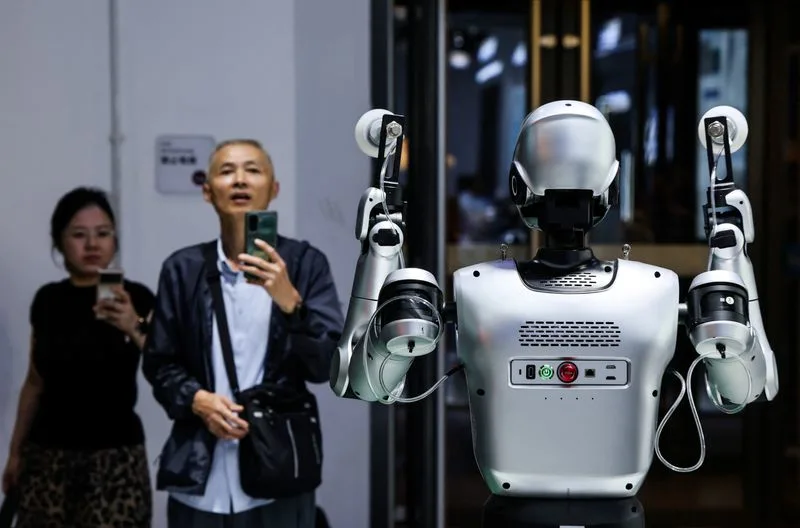
    Dongfeng Motor plans to begin small-batch trial production of its humanoid robot at the end of this year, aiming to bring its working capabilities on par with human workers by the end of next year.

    The humanoid robot will enter manufacturing factories in October to handle sorting and quality inspection tasks, according to Zhang Zhenlin, chief engineer of intelligent technology at Dongfeng.

    Factory Sorting and Showroom Patrols

    Development covers two distinct platforms: a bipedal humanoid named Xiaodong and a quadruped model called Yuanzai. Both debuted at the 2026 World Robot Conference in August this year.

    Xiaodong handles material sorting inside automotive manufacturing plants. Over time, the system will move from single repetitive tasks to autonomous factory floor operations.

    Commercial rollout begins earlier for Yuanzai. The quadruped will handle customer guidance in auto dealerships, campus patrols, and facility monitoring through onboard multimodal perception and autonomous navigation.

    Cross-Sector Technology Sharing

    Chinese automakers are applying EV software architectures and artificial intelligence models directly to robotics hardware. Dongfeng chief engineer of intelligent technology Zhang Zhenlin said developing embodied intelligence lets teams reuse automotive large-model technology and speed up commercialization.

    Automakers’ development of embodied intelligence products allows technology to be reused across multiple areas such as automotive large models, thereby speeding up commercialization and mass production.

    Overlapping supply chains give carmakers immediate access to batteries, vision sensors, and assembly infrastructure. Factory operators expect the humanoid units to reduce assembly costs while running round-the-clock inspections on vehicle lines.

    The Competitive Field in China

    Dongfeng is not alone in the push. Several domestic EV makers have built dedicated robotics divisions to automate shop floors and sell commercial hardware.

    Xpeng opened a humanoid robot production line on September 8, 2026. It plans mass production of its Iron robot by late 2026, with customer deliveries starting in 2027. Chery-backed Aimoga Robotics has shipped more than 3,000 units globally and is preparing an IPO. Li Auto, Seres, and Leapmotor have also put capital into embodied AI development this year.

    Capital Allocation and Global Goals

    Robot deployment fits into a wider overseas expansion budget. Dongfeng plans to invest 50 billion yuan ($7.41 billion) internationally to launch more than 50 vehicle models.

    Under a roadmap presented by deputy general manager Zhou Feng, the company will build 10 assembly plants and five research hubs outside China. Dongfeng targets 1.5 million overseas vehicle sales annually by 2030, using Xiaodong’s 15-month trial run as the baseline test for broader automation.
  • Voyah Opens Dream 9 MPV Pre-Sales in China from 429,900 Yuan

    Voyah Opens Dream 9 MPV Pre-Sales in China from 429,900 Yuan

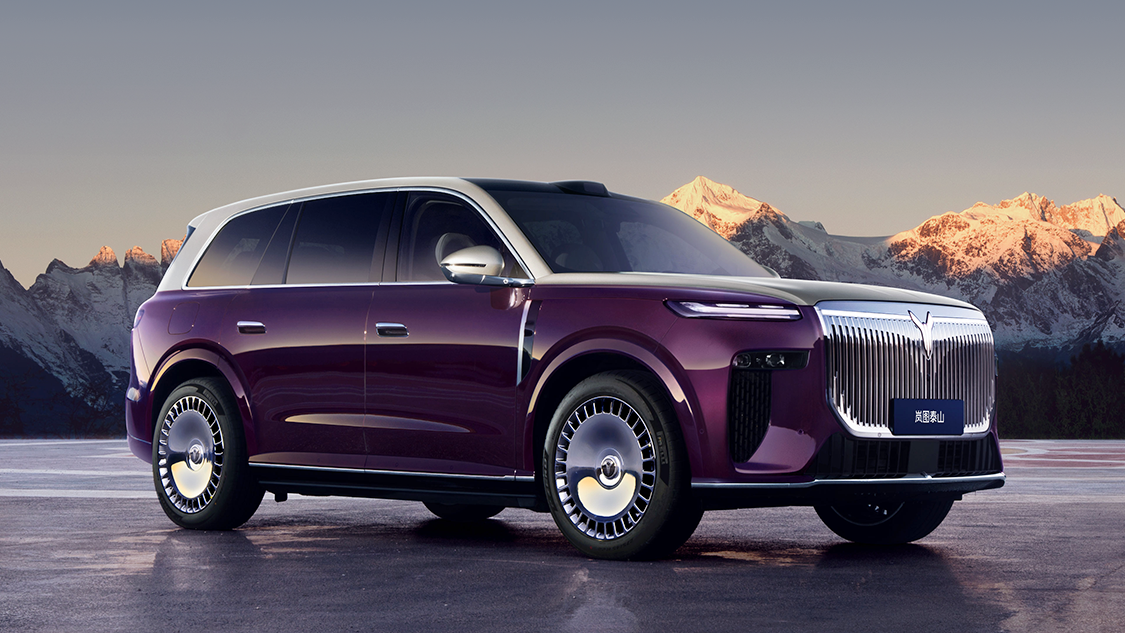
    Dongfeng Motor subsidiary Voyah opened pre-sales for its Dream 9 luxury multi-purpose vehicle in China on Saturday. The flagship model starts at 429,900 yuan ($63,420).

    Buyers can choose across three trim levels spanning five variants, topping out at 529,900 yuan. Introductory sweeteners total up to 50,000 yuan. Dealership display units have arrived across mainland cities for test drives ahead of initial customer handovers.

    Hardware and Huawei Cockpit Software

    Powertrain options divide into three plug-in hybrid (PHEV) variants and two battery electric (BEV) editions. All models sit on an 800-volt electrical architecture. They run Huawei’s Qiankun ADS 5 driver-assistance suite alongside HarmonySpace 6 smart-cabin software.

    Sensor hardware includes 37 units covering urban streets and expressways. Voyah fitted an 896-channel dual-optical-path main LiDAR on the roof and three solid-state LiDAR units around the body. The cabin operating system uses a multimodal large language model with hundreds of billions of parameters to handle voice and in-car controls.

    Electric models carry a 120-kWh battery pack, the largest capacity fitted to any production MPV in China. That battery pairs with a 175-kW front motor and a 300-kW rear unit. The PHEV combines a 1.5-litre turbocharged petrol engine with twin electric motors for 555 kW of total output. It draws power from a 65-kWh pack that charges from 20 per cent to 80 per cent in 12 minutes.

    Chassis Tuning and Interior Layout

    Chassis hardware relies on triple-chamber air suspension, dual-valve electronic dampers and rear-wheel steering that turns up to 10 degrees. A coordinated domain controller manages torque distribution, braking force and suspension damping in real time.

    The body measures 5,325 mm in length and 1,998 mm in width on a 3,200 mm wheelbase. Inside the three-row cabin, second-row captain chairs feature rotation, sideways sliding, zero-gravity reclining and mechanical massage functions. Outside, smart projection headlights beam navigation arrows directly onto the road surface.

    Margin Pressure Behind the Premium Push

    Chinese automakers are crowding into executive vans. Private buyers and corporate fleets still pay cash premiums that mass-market sedans no longer command. Voyah skipped a conventional theatrical launch, putting metal straight into showrooms to secure non-refundable deposits.

    That pricing puts the Dream 9 in direct competition with established luxury nameplates from Denza and Zeekr. Voyah needs higher transaction prices to stop cash erosion after a brutal price war across China compressed earnings throughout the year.

    Deliveries expanded in the first half of 2026. The brand handed over 76,264 vehicles for a 35.9 per cent gain, lifting revenue 42.4 per cent to 18.16 billion yuan. Profitability swung the other way. Gross margin contracted to 17.7 per cent, pushing Voyah to a net loss of 389 million yuan compared with a 460 million yuan profit a year earlier.

    Official delivery dates and the final retail schedule for the Dream 9 lineup have not been published.

  • Dongfeng and Huawei Brand Epicland Weighs Battery Swapping for Second EV

    Dongfeng and Huawei Brand Epicland Weighs Battery Swapping for Second EV

    Epicland, the premium electric vehicle marque jointly developed by Dongfeng Motor and Huawei, has begun preliminary research into adding battery-swap capability to its upcoming second production model.

    The study marks the first time a brand inside Huawei’s automotive ecosystem has explored swappable battery architecture to lower retail costs and accelerate vehicle charging times.

    No final decision has been taken on whether Epicland will build its own proprietary stations or plug into a third-party public network. The brand opened pre-sales for its debut vehicle, the six-seat X9 extended-range SUV, on August 18 with prices starting from 299,800 yuan ($44,210) to 379,800 yuan. Deliveries for that model begin in the third quarter of 2026, with three additional vehicle lines scheduled to follow in 2027.

    Shared Platforms and Battery Networks

    Separating the battery pack from the vehicle purchase price allows carmakers to cut retail sticker prices while matching the refuelling speed of petrol cars. For new brands entering an aggressive price war across China, joining shared networks avoids the heavy capital expenditure of building proprietary charging points across hundreds of cities.

    Dongfeng already maintains joint battery-swap operations with CATL in central Chinese cities including Wuhan and Xiangyang. CATL operated 2,000 Choco battery-swap stations across 180 cities as of June 30, with plans to surpass 3,000 locations by the end of 2026 through partnerships with Changan Automobile, Chery, GAC Group, and Seres.

    Differentiation Beyond Huawei Software

    Hardware differentiation has become urgent for automakers partnering with Huawei. As the tech giant rolls out its Qiankun autonomous driving system and HarmonySpace cockpits across rival brands including Luxeed, Stelato, and Aito, software alone no longer guarantees a distinct competitive edge on showroom floors.

    Other emerging players are making similar calculations. Saidou Technology, backed by Seres, is in discussions to connect its upcoming Aiva brand to CATL’s network ahead of pre-orders for its ME7 model in early 2027. Epicland faces a clear trade-off: adapting its chassis to third-party standard packs requires engineering compromises, while constructing dedicated stations demands massive sales volumes to achieve operational break-even.

    Epicland will confirm the powertrain specifications and commercial launch schedule for its second model ahead of its wider three-vehicle rollout in 2027.