Tag: Dongfeng

  • Momenta Secures Stellantis Deal to Supply Peugeot and Jeep from 2027

    Momenta Secures Stellantis Deal to Supply Peugeot and Jeep from 2027

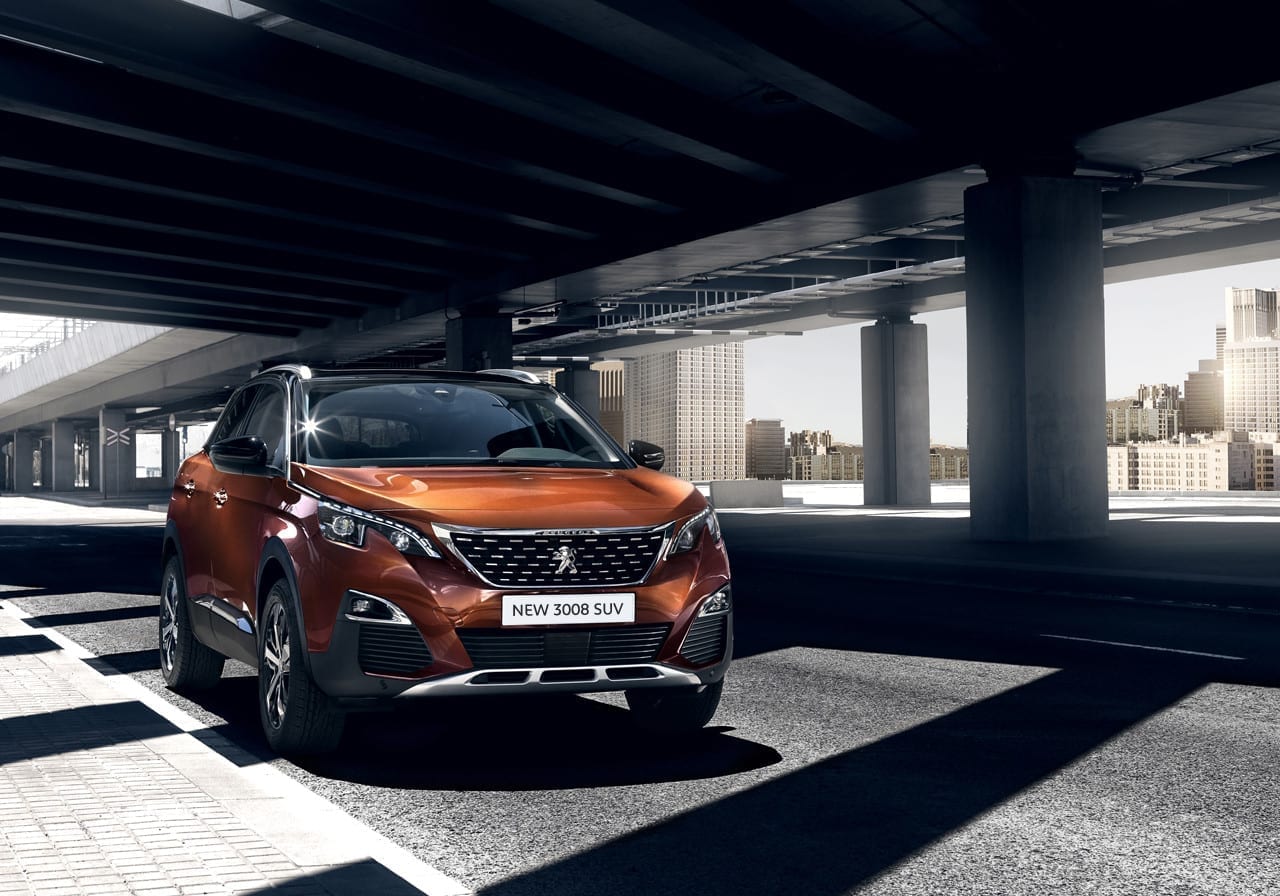
    Momenta signed a global partnership with Dongfeng Stellantis Automotive Technology in Shanghai to supply intelligent driving systems for Peugeot and Jeep vehicles rolling out from 2027.

    The agreement covers battery-electric and plug-in hybrid models sold across China, Europe and other international markets, taking the Chinese software developer into mass-market export vehicles.

    Under the deal signed on September 24, Momenta will integrate its R7 World Model software into new production models engineered by Dongfeng Stellantis Automotive Technology (Wuhan), known as DSAT. The joint venture will combine chassis tuning, steering calibration, braking response and powertrain controls with Momenta’s software platform. Peugeot variants will focus on handling and road dynamics, while Jeep models will adapt the system for off-road use. The technical scope also includes joint development of Level 3 automated driving functions.

    Expanding From German Luxury to Volume Fleets

    The contract shifts Momenta’s commercial footprint away from a reliance on German premium brands toward high-volume vehicle manufacturing. The software developer already provides driver assistance for Mercedes-Benz on the electric CLA in China, alongside joint projects with BMW and Audi. Those existing German deployments remain confined to the Chinese domestic market. Partnering with DSAT gives Momenta immediate factory access to European showrooms through Stellantis distribution channels.

    Supplying mainstream brands across multiple continents presents structural software challenges that domestic Chinese rollouts avoid. Road infrastructure, road user habits and regulatory testing requirements in Europe differ substantially from urban traffic conditions in eastern China. If Momenta succeeds in validating Level 3 features under European safety rules, it will establish a blueprint for Chinese software firms to bypass regional trade barriers by exporting code inside legacy Western nameplates.

    Competitive Shift for Western Automakers

    Western automakers operating in Asia have abandoned attempts to develop proprietary driving stacks in isolation. Stellantis established DSAT with Dongfeng in August to address rapid market share losses in China, where domestic electric vehicle brands hold a decisive software advantage. Sourcing production-ready algorithms from an established local supplier reduces development spending and accelerates time to market for refreshed model ranges.

    Competitors face rising pressure from this supplier integration model. Japanese and South Korean manufacturers that rely on legacy Tier 1 component vendors risk lagging in software response times and over-the-air update cycles. By outsourcing autonomous architecture to Momenta while maintaining control over vehicle dynamics and suspension tuning, DSAT keeps its brand identities distinct while closing the digital feature gap.

    Scale Across Production Platforms

    Momenta expanded its commercial deployment rapidly in early 2026 before completing the Stellantis agreement. The company installed its driver-assist software in roughly 321,000 additional vehicles during the first half of 2026, an 83.7 percent increase compared with the same period a year earlier. Total installations have surpassed 1.2 million vehicles across 105 production models, backed by supplier relationships with 26 automakers.

    Chinese AI is taking a growing role in the development of intelligent vehicles worldwide.

    DSAT general manager Lv Haitao signed the agreement alongside Momenta chief executive Cao Xudong, who confirmed the software developer is positioning its architecture ahead of a broader global market shift toward automated driving platforms.

    Target Dates for Global Production

    Automotive supply chains now turn to hardware validation ahead of the scheduled 2027 market introduction. DSAT has not disclosed initial production volumes, factory allocation or the specific vehicle nameplates that will debut the R7 system. Momenta will prepare software localized for European roadway certifications ahead of 2028, the target year its management expects global adoption of advanced driver assistance to accelerate sharply.
  • Sunwoda Unveils 15C Flash Battery to Challenge BYD in Fast Charging

    Sunwoda Unveils 15C Flash Battery to Challenge BYD in Fast Charging

    Sunwoda Electric Vehicle Battery unveiled a 15C flash charging system in Zaozhuang on September 17 that charges an electric vehicle from 10 to 97 per cent in nine minutes.

    The system matches the benchmark room-temperature charging speed established by market leader BYD. It also comes with a company commitment to deploy 10,000 megawatt charging stations by the end of 2027.

    Charging Performance and Cold Weather Specs

    At room temperature, the battery charges from 10 to 70 per cent in five minutes. That adds 100 kilometres of driving range in 60 seconds. Total driving range exceeds 700 kilometres on a full charge.

    Cold weather tests show the pack charges from 10 to 97 per cent in 15 minutes at minus 20 degrees Celsius. Sunwoda attached a warranty covering 10 years or 300,000 kilometres to non-commercial vehicles with unlimited ultrafast charging cycles, targeting buyer anxiety over high-current cell degradation.

    Hardware Architecture and Grid Storage

    Hardware diagnostics rely on proprietary cell sensors, an energy domain controller and a cloud monitoring engine. Sunwoda stated the platform identifies more than 20 separate failure modes between two and 10 days before a breakdown. Its detection rate reaches 99.77 per cent.

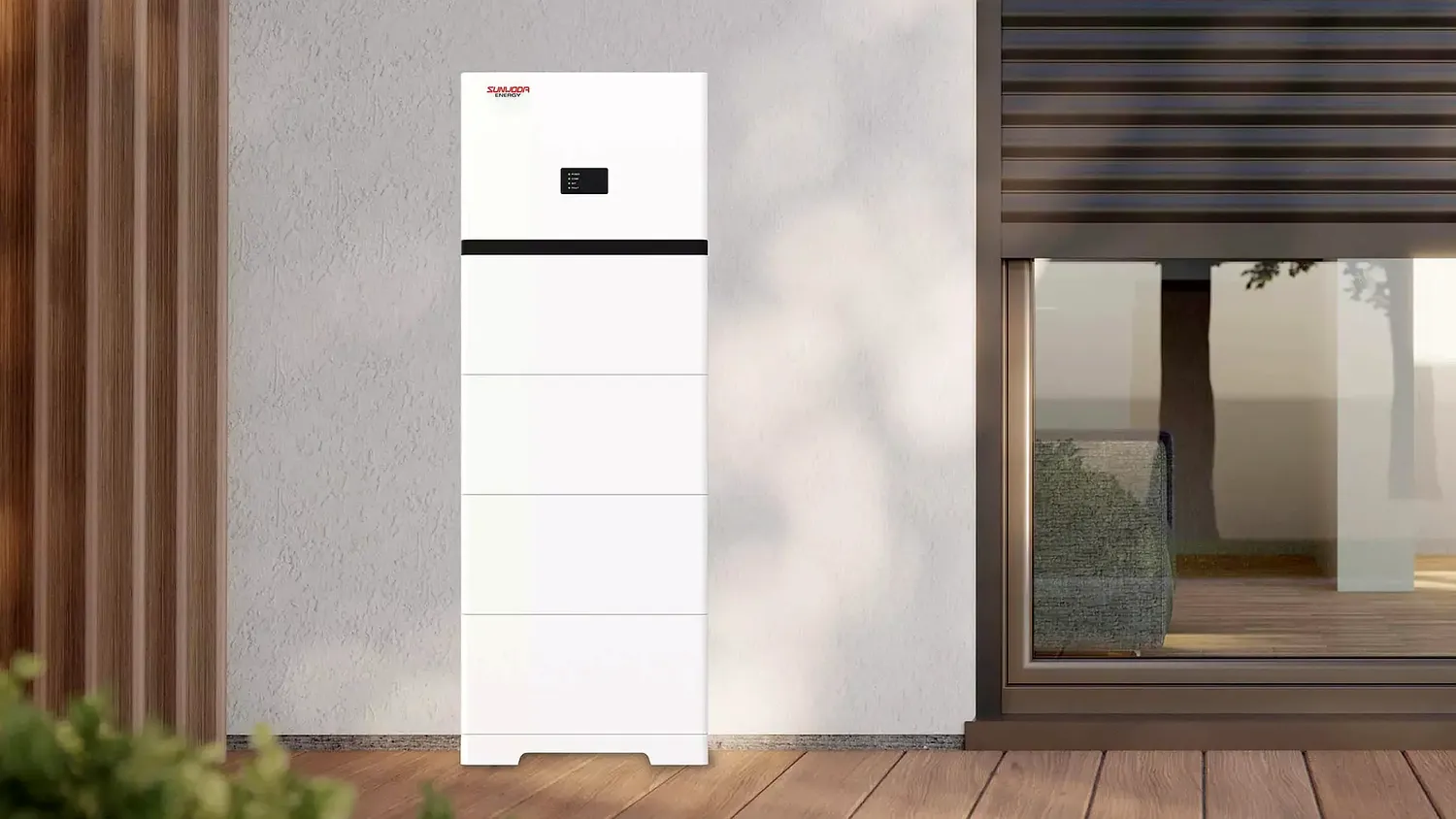
    On the grid side, the company introduced an integrated platform that bundles solar generation, stationary battery storage, liquid-cooled charging posts and megawatt-scale dispensers. The multi-brand terminal design allows third-party automakers to access the high-voltage stalls under commercial sharing agreements.

    The Race for Megawatt Infrastructure

    China’s EV power race has shifted from laboratory power ratings to physical network footprint. BYD crossed its 10,000th flash charging station milestone on August 28. It maintains a target of 20,000 operational stations by the end of 2026.

    Other domestic manufacturers are pushing similar power thresholds. Dongfeng introduced a prototype 1,500-kilowatt charger on July 29, matching BYD’s peak terminal rate. FAW Hongqi posted July laboratory results showing a 10-to-70 per cent charge in three minutes and 41 seconds with battery partner CNET. In Hong Kong, Xpeng energised its first one-megawatt X-Energy stall with 400 kilowatt-hours of local storage on September 15.

    Commercial Rollout and Factory Timelines

    Sunwoda EVB faces a crowded manufacturing landscape. CATL and BYD command more than 60 per cent of China’s domestic vehicle battery volume. Total battery installations across the country grew 26.3 per cent year-on-year in August, but second-tier cell makers must prove station economics to justify high capital spending on utility-scale grid connections.

    Initial announcements omitted capital expenditure figures, manufacturing site allocations, commercial vehicle partnerships and the first production passenger car chosen for the 15C pack. Filings with the Ministry of Industry and Information Technology will soon show which automaker integrates the hardware first ahead of the 2027 station rollout target.

  • Renault-Nissan to set up new China JV with Dongfeng Motor for electric cars

    Renault-Nissan to set up new China JV with Dongfeng Motor for electric cars

    Nissan Motor and its alliance partner Renault are setting up a new joint venture in China with Dongfeng Motor Group to design and build electric cars, joining a list of global automakers aiming to make such vehicles in China.

    The automakers are attempting to tap into a boom for such cleaner “new energy” vehicles in the world’s biggest auto market and gearing up to meet its anticipated stringent plug-in car quotas.

    Ford Motor Co announced earlier this month it was exploring setting up a joint venture with car maker Anhui Zotye Automobile Co to build electric vehicles in China under a new brand.

    Tesla, Daimler AG and General Motors have already announced plans for making electric vehicles in China, which wants electric and plug-in hybrid cars to make up at least a fifth of the country’s auto sales by 2025.

    The new joint venture, called eGT New Energy Automotive Co, will be owned 25 percent each by Nissan and Renault with Dongfeng owning 50 percent, Nissan and Renault said in a statement on Tuesday.

    They said eGT will design a new electric vehicle on a subcompact crossover SUV platform of the Renault-Nissan alliance.

    “The establishment of the new joint venture with Dongfeng confirms our common commitment to develop competitive electric vehicles for the Chinese market,” Carlos Ghosn, chairman and chief executive officer of the Renault-Nissan alliance, said in the statement.

    The statement did not give details of financial commitments of the joint venture partners or say by when the vehicles will be launched. Dongfeng already partners Nissan in China.

    Both Nissan and Renault already market electric cars. Nissan’s Leaf compact hatchback has become the world’s top-selling electric car since its launch in 2010, while Renault began selling its Zoe model in 2012.

    The game changer for global automakers, many of whom until recently have resisted an industry shift to heavily electrified vehicles, is China – an auto market with strong potential for growth where stringent policies favoring cleaner energy cars are being aggressively pursued.

    Under China’s latest proposals, electric vehicle sales quotas, which are expected to take effect as early as 2018, are due to require 8 percent of automakers’ sales to be battery electric or plug-in hybrid vehicles by next year, rising to 10 percent in 2019 and 12 percent in 2020.

  • China’s Dongfeng signs JV with Nexteer for power steering systems

    China’s Dongfeng signs JV with Nexteer for power steering systems

    China’s Dongfeng Motor Group Co Ltd will form a joint venture with auto parts maker Nexteer Automotive Group Ltd to design and make electric power steering systems for Dongfeng passenger vehicles, Nexteer said on Monday.

    The venture – to be equally owned by Nexteer and a unit of Dongfeng – will set up a facility near Dongfeng’s headquarters in Wuhan, China, Nexteer said.

    Nexteer, whose customers include Fiat Chrysler, General Motors, Toyota and Volkswagen , currently provides electric power steering systems for many Dongfeng-affiliated vehicles, including the Peugeot 2008 crossover.