Tag: double 11

  • How to generate brand love on Singles Day

    How to generate brand love on Singles Day

    Singles Day is no longer just about Alibaba. It’s more like Black Monday or Christmas, a nation-wide shopping event, covering everybody looking for great deals, not just the singletons, as it was originally conceived.

    Alibaba founder Jack Ma said last year that his dream was to extend this shopping extravaganza beyond China, and establish a carnival for the world stage. Alibaba’s data shows 235 countries participated this year, while 224 used Alipay – a 60 per cent rise year-on-year, and significant step towards this dream.

    Similarly, international brands played better this year, taking better advantage of the spending power on offer. Tmall data shows us that international brand sales grew by 47 per cent (vs 2015).  The likes of Nike, Uniqlo, Adidas, New Balance and Gap headed to Tmall’s Top 20 Sales Store this year, compared to just three brands last year – testimony to the importance placed on brands and the tangible rewards being reaped for our international players.

    There is no doubt that Singles Day has become one of the most important consumption periods for a variety of categories in China, and beyond. No one wants to miss it.

    So, what was new this year?

    Technology and entertainment played crucial roles in this year’s Singles Day, with brands eager to gain public attention via the very latest technology.  A great example of this is Tmall’s partnership with the likes of KFC and Starbucks to execute the ‘Catch Crazy Cat’ VR game.

    Reaching 17 billion plays, the Pokemon-Go inspired VR game allowed consumers to catch the Tmall mascot cat via their mobiles in KFC, Starbucks and even Shanghai Disneyland.

    The number of cats caught translated into ‘Hong Bao’ (luck pocket money) to be used for discounts in a variety of stores. Overall, the game connected people online to offline, while engaging those physical stores that are usually less involved in the shopping festival.

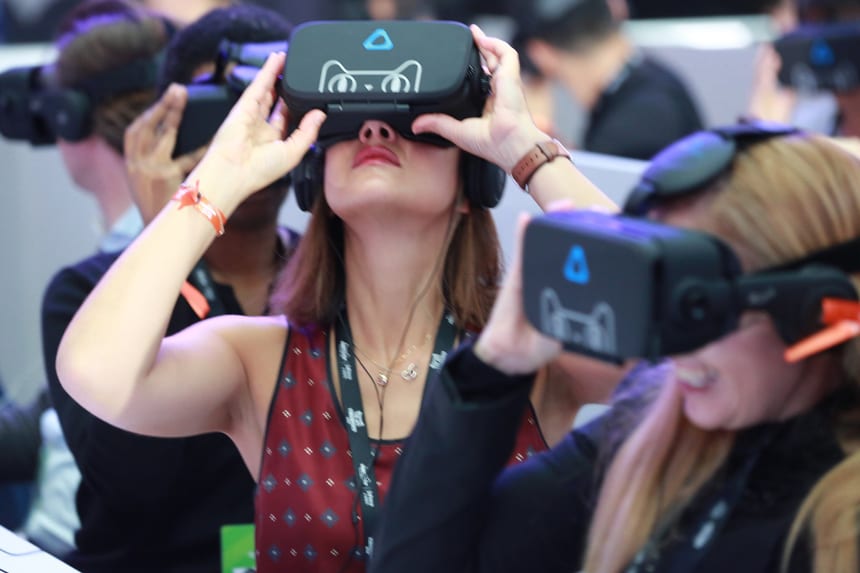
    Tmall also launched its VR virtual shopping product Buy+ on November 1, aiming to add a fancy dress element to the shopping mania and further appeal to the Chinese consumer.

    While many critics cited this experience to be less immersive, data shows 8 million engagements, among which 76 per cent were post-millennial.

    A significant trend throughout 2016, it’s no surprise to see so many brands, celebrities and shops execute live-streaming tactics to further promote product. It’s estimated that close to 60,000 different live streams took place on Singles Day. The biggest live streaming event, the Tmall Party, saw attendees span a collection of top A-list celebrities, both international and local; including the likes of David and Victoria Beckham, and Scarlett Johansson. The move to secure former Super Bowl Director, David Hill, only helped to further propel this year’s Singles Day onto the global stage.

    China has coined this year’s model as ‘Double E’ – Entertainment meets eCommerce, unleashing consumer purchase potential via the simple act of entertainment. Brand advertising potential is now enormous, and will only continue to grow year-on-year.

    How can brands leverage Singles Day?

    Singles Day is not everything. While everyone is impressed by this year’s 120.7 billion RMB sales figure, many ignore the fact that this is less than 5 per cent of Alibaba’s annual sales.

    For brands to sell, it’s important to remember that the remaining 364 days of the year count. Ogilvy believes that annual content that can be weaved naturally into omni-channel planning will ultimately connect brand with consumer and drive sales.

    As Jack Ma said in 2013, Singles Day has reached a certain momentum – it’s not only about the sales numbers anymore. This year is testament to this thinking. Increasingly, big brands have started to dominate the top sales ranking. Given the attention and hype of the day, this is a great opportunity for brand building if done well.

    Marketers should ruminate on how their brand can cut through and develop content that drives attention, and also builds the brand for engagement longevity. Singles Day is not only a selling extravagance but also a unique platform for creative brand building.

    There are also proven successes of launching a less well-known brand or promoting a less-penetrated category during this period. We also helped clients successfully orchestrate limited edition launches. For example, this year’s partnership between Budweiser and celebrity Chen Weiting saw an exclusively designed Tmall pack, live-streaming, and an invite for the highest purchasing group to attend Chen’s upcoming concert – placing Budweiser as the best selling beer brand on the day.

    Similarly, Tmall was able to demonstrate how international players can reach more remote areas of China – where spending power is rising and physical product distribution proves difficult. Brands entering China tend to believe that consumers in larger cities have the biggest spending, however, Tmall data shows us that provinces such as Qinghai and Shanxi are not to be ignored. Here, low-price is not a factor that determines spending; it’s brand value and quality that counts.

    These were all put into the wider context of making a brand matter to consumers, so as to generate long-term and loyal customers. This year’s overall sales ranking of many categories shows us that when the promotion level went down, the stronger brands play better. So, what ensured top ranking sales for Suning, Xiaomi, Haier, Uniqlo and Nike is not only a result of promotional discounting, but the current sentiment and value of the brand to consumers.

    What main e-Commerce trends do we see in China?

    China is not only the biggest eCommerce country in the world, it’s also arguably the fastest moving one. Tmall remains one of the major eCommerce channels for many brands.

    However, it only provides limited customer data to brands. We see more and more brands start to develop their own eCommerce websites in order to provide an immersive brand experience. And, more importantly, to attain better customer data that allows them to drive loyalty via CRM.

    Personalised eCommerce shopping experiences are another mega-trend. Tmall first called this out as ‘Thousand People, Thousand Faces’, and many other platforms followed suit.

    Tmall’s enormous big data capability enables brands to profile a customer and design unique shopping experiences based on their preferences. Some brands have also started to pilot this. For example, last year saw us help Nestlé tailor a unique shopping experience on its Tmall shop based on customer profiles. The results were phenomenal – engagement rates and sales close to doubled.

    It’s no secret that mobile has become the main device for consumers to purchase products.

    This year, 82 per cent of the 120.7 billion came from mobile, a big leap vs 2015’s 68.7 per cent. The trend sees brand content link seamlessly to eCommerce on mobile, enabling consumers to purchase items while absorbing brand content. A great example of this is the Tommy Hilfiger Shanghai show on October 24. Tommy Hilfiger broadcast the event live stream in high-definition and, most importantly, drove the audience to instantly purchase items on stage via a simple click.

    It’s clear that the slow-down of economics in China has not discouraged an enthusiasm to buy. Yet Chinese consumers are now more brand conscious, more design conscious, and more quality conscious. Brands clearly play a crucial role in eCommerce, now more than ever, therefore making brands matter is essential.
  • #Double11 2016 Singles Day Record Proves China’s E-Commerce Might

    #Double11 2016 Singles Day Record Proves China’s E-Commerce Might

    Chinese e-commerce giant Alibaba Group has tallied more than US$1 billion in the first five minutes and US$5 billion in transactions in the first hour of its annual Singles Day sales blitz. That means China’s 2016 Singles Day shopping fest—aka Shuangshiyi or Double Eleven, since it takes place each November 11—retains its title as the world’s biggest online shopping event.

    The final sales tally for the 24 hour global shopping spree: US$17.8 billion in GMV (gross merchandise volume) sales, or in China’s yuan or renminbi currency, RMB 120.7 billion. The vast majority (82%) of that shopping frenzy took place on mobile phones and devices, with $14.6 billion (RMB 98.97 billion) on mobile.

    Last year, Alibaba’s digital shopping platforms racked up a total US$14.3 billion in sales, bypassing the $9.3 billion in #Double11 Singles Day sales in 2014 — meaning the 24-hour shopping spree has almost doubled in two years.

    It’s also a proof point for Ant Financial Services Group, Alibaba’s fintech arm that operates its Alipay mobile payments platform. “The excitement around online shopping continues to build year after year, and it’s emblematic of the way that e-commerce is changing, giving consumers incredible access to products around the world,” said Ant Financial SVP Douglas Feagin to the South China Morning Post.

    Ant Financial this year says it processed 1.05 billion transactions, an increase of 48 per cent from last year. At the peak of the madcap shopping within the first hour, as many as 120,000 transactions per second were processed, Feagin said. Ant brought innovation and speed to the online sales crush. Just as importantly, it helped finance merchants and consumers alike.

    As SCMP reports, “Before the start of the so-called Singles’ Day shopping gala on November 11, Ant Financial’s MYbank unit granted over 50 billion yuan of loans to 1.33 million merchants to help them put their products online.Ant Financial’s Ant Credit Pay was also on hand to grant more than 100 million customers credit to finance their online shopping, Feagin said.”

    At the half-way mark, it was clear that 2016’s event would surpass last year’s record, according to Alizila’s coverage:

    At the 12 hour, 29 minute mark of the sale, total GMV had exceeded RMB 82.4 billion ($12 billion), with mobile accounting for 83.55 percent of the total.  Alibaba Group President Michael Evans had this to say: “With roughly 11 hours to go, we’re in a good place.” More than 14,000 international brands are participating in the sale, he said, and sales from international brands have so far accounted for about 30 percent of total GMV.

    Alibaba #Double11 Singles Day sale

    Virtual reality also played a role this year, with Tmall’s Buy+ billed as the world’s first virtual reality shopping experience. For the price of a 15 cent cardboard VR headset, shoppers could slip their smartphone into the headset and browse products from handbags to shoes to lingerie, and even have virtual models showcase the apparel and accessories on a catwalk.

    Shoppers could browse eight digital stores using VR to assess the goods before buying them. Participating retailers include Macy’s, Target, Costco, P&G, Chemist Warehouse, Freedom Foods, Tokyo Otaku Mode and Matsumoto, part of the over 11,000 international brands that join in the fair.

    The global online shopping event also introduced interactive games and partnerships with over one million brick-and-mortar shops, including a Pokemon Go-like mobile application to catch the Tmall cat mascot in offline locations of Tmall merchants in shopping malls to spur foot traffic to the merchants. In return, consumers can earn special prizes such as free subscriptions to Alibaba’s Youku TV.

    It also teased this year’s 11.11 with teasers including an eight-hour live-streamed “see now buy now” fashion show from Shanghai, where consumers can order anything they see on the catwalk in real time from brands including Victoria’s Secret.

    The goal of this technology is to “improve [the] consumer retail experience, I would say you’re looking at the future of retail. The future of retail is in China, not anywhere else,” Alibaba Group’s co-founder and vice chairman Joseph Tsai told a media briefing on Thursday in Shenzhen, China.

    Leading the 11.11 international sales brigade this year were merchants from the US, Japan, South Korea, Australia and Germany. Most countries have already exceeded the volume of sales recorded for the entire sale last year.

    It’s another astonishing Singles Day,  an annual promotion inviting consumers who are not in relationships to cheer up with some retail therapy — an anti-Valentine’s Day “treat yourself” event invented by Alibaba’s Tmall head, Daniel Zhang, in 2009 to rival America’s Black Friday and Cyber Monday shopping events, and now surpasses both of them combined.

    While 11.11 started with discounts, it has morphed into an event featuring global brands such as Apple and luxury brands such as Burberry and Maserati, which both operate branded Tmall stores.

    As Teng Bingsheng, Associate Professor of Strategy at the Cheung Kong Graduate School of Business (CKGSB) in Beijing, stated in a pre-event press release, “To some extent, people remember that Alibaba initiated the 11.11 shopping festival. However, other brands are quickly gaining their fair share as well. But as long as the whole pie – and Alibaba’s own business – both get bigger, it’s still good news.”

    CKGSB Associate Professor of Accounting Zhang Weining added, “Double Eleven used to last for 24 hours, but this year it will stretch for 24 days. I think Alibaba foresaw that the sales growth rate would slow down this year, in part because more and more e-commerce platforms are running these campaigns and consumers are increasingly attracted to promotions offered prior to the day itself. This new strategy will also ease the pressure on delivery logistics, since sales will be more spread out.”

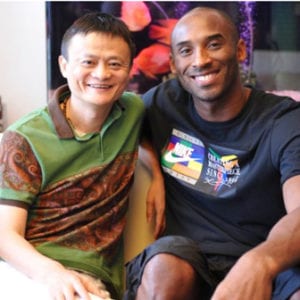
    Jack Ma Kobe Bryant Alibaba Singles Day 11.11Chairman Jack Ma—who welcomed David and Victoria Beckham and Kobe Bryant (while Katy Perry dropped out for a family emergency) as ambassadors for this year’s event at its countdown gala—said Alibaba’s cloud computing system is “[by] far the most advanced that human beings can realize.”

    Last year, the company processed 140,000 transactions per second via its cloud arm Aliyun during the shopping peak, while payment arm Alipay processed an additional 86,000 transactions per second at peak sale time.


    The company reportedly plans to list in 2017 in either Shanghai or Hong Kong, making it China’s largest IPO since 2010 when the state-owned Agriculture Bank of China offered $22.1 billion worth of shares.

    Brand partners were also vocal about what propelled Single’s Day sales this year: mobile (as Gap attested), personalization (such as Oreo) and virtual reality:

    For its part, Walmart kicked off its Black Friday sales event today, along with Target, in a bid to attract shoppers in the mood for deals. Both retailers’ official in-store Black Friday sales begin at 6 p.m. on Thanksgiving, reprising last year’s schedule despite murmurings that consumer interest in deal blitzing on Turkey-day may be waning.

    While Office Depot and Mall of America announced they’ll be closed on Thanksgiving, Macy’s, Kohl’s and Toys R Us are joining Walmart and Target. Walmart will be “dramatically increasing” inventory to offer nearly 50 percent more Black Friday merchandise this year online than last year.

    Walmart US CMO Steve Bratspies said that “We really pride ourselves on not being the retailer who advertises a great price but then only has a few available for the customers.”

    Walmart deals include a Samsung 50-inch 4K television for $398 and movies that cost $1.99. Target is touting deals like an iPad Air 2 for $274 and 30 percent off apparel and the giant teddy bear for $10 that hijacked social media last year is back with 20 percent more bears!

    Both big-boxers will start with offers over the next two weeks seeding the way for customer engagement as holiday spirit.

    Target returns to its “10 days of deals” program, touting a single big promotion daily starting the weekend before Thanksgiving, while Walmart is offering limited-time Black Friday discounts and holding further price cuts for into December.

    Still, some rang a cautionary note about Alibaba’s sales reporting, as the BBC reported: “Some have questioned the accuracy of the numbers, amid claims of inflated sales data at online retailers across China. Merchants passing off counterfeit goods as genuine is also an industry problem. Alibaba reported 85% of purchases had been made on mobile phones during Singles Day.”