
Tag: downturn

  • Hanoi Property Flippers Struggle Amid Market Downturn and High Mortgage Rates

    Hanoi Property Flippers Struggle Amid Market Downturn and High Mortgage Rates

    Property buyers who invested in under-construction apartments in Hanoi are facing difficulties in selling their properties due to falling prices and high mortgage rates. These speculators had capitalized on the previously increasing prices, expecting to make a profit upon re-sale. However, the prices have ceased to rise and have even plunged in some localities, putting these speculators under pressure to sell off their properties.

    Investors who bought early were offered a grace period for their interest rates. This period is now coming to an end, subjecting them to high fluctuating rates. For instance, Thuy Vy, a 35-year-old investor, purchased a one-bedroom apartment in Gia Lam Commune in 2024 for VND3 billion (US$114,300). She planned to sell it for a profit once the construction was completed, but despite reducing the asking price by VND150 million, she is struggling to find a buyer. The situation is similar for other investors who bought apartments during 2024-2025.

    Market Updates

    According to a recent market report by the Vietnam Association of Realtors, many projects are now in the handover phase, and buyers are required to pay the remaining 45% of their investment. Online property platform Batdongsan’s historical data shows that prices in several Hanoi localities have dropped from their peaks by about 8% to 13%.

    Real estate brokers reveal that many speculators are moving away from short-term flipping strategies, focusing on selling their properties as quickly as possible, even if it means incurring losses. Duc Trung, a broker specializing in east Hanoi apartments, noted a 20-30% rise in the number of property owners looking to sell their apartments compared to the start of the year.

    Concerns and Predictions

    Pham Duc Toan, CEO of real estate agency EZ Property, suggested that it’s now challenging to sell apartments, especially those launched during the 2024 market boom. Borrowing costs remain high, making secondary buyers cautious. Vo Huynh Tuan Kiet, Director of the Residential Market at CBRE Vietnam, agreed that as property prices continue to rise, the market could reach a saturation point where sellers are unwilling to lower prices and buyers are wary of risks.

    Several research firms predict that selling pressure from highly leveraged investors will heighten as a large supply of properties is set to enter the market. The situation is exacerbated by high bank lending rates, with mortgage rates now standing at 12-14%, and even 15-16% in many cases. Consequently, market liquidity has taken a hit, with the property absorption rate dropping to 20-30% in the first half of the year, down from 50-60% in the latter half of 2025.

    Questions & Answers

    What is the current state of the Hanoi property market?
    The Hanoi property market has fallen into a slump, with falling prices and high mortgage rates dampening sales.

    How are speculators responding to the current conditions?
    Many speculators who had earlier invested in under-construction properties are now struggling to sell their units. Some are even willing to sell at a loss to offload their properties quickly.

    What is the outlook for the Hanoi property market?
    The outlook remains uncertain. Market liquidity has been hit, borrowing costs are high, and a large supply of properties is set to enter the market, which could further intensify selling pressures.

  • Coopers Brewery Defies Downturn: Annual Beer Sales Soar Despite National Decline

    Coopers Brewery Defies Downturn: Annual Beer Sales Soar Despite National Decline

    Coopers Brewery, a family-owned independent brewing company, has experienced a slight rise in its annual beer sales, outperforming the overall market that has seen a downturn.

    Annual Sales Report

    In the 2024-25 fiscal year, Coopers Brewery reported total beer sales of 80.6 million litres, marking a growth of 2.4% compared to the preceding year. This contrasts the 0.9% contraction witnessed within the national beer market during the same period.

    Growth in Keg and Packaged Beer Sales

    Sales of kegs, which account for approximately 12.4% of Coopers’ total beer sales, saw a substantial increase of 5.9%. Additionally, the sales of packaged beers also saw a modest uptick of 1.8%.

    Product-Specific Sales Performance

    Sales of malted barley and wheat saw an increase of 3.4%. However, there was a 17% drop in DIY brewing product volumes, a result of reduced consumer demand and restricted space on supermarket shelves.

    Statement from the Managing Director

    Michael Shearer, the Managing Director of the brewery, noted that the figures indicate a resilient performance throughout their beer portfolio. He highlighted considerable consumer demand for Dry 3.5 and Australian Lager, both relative newcomers to their range. Traditional ale products also continued their growth trajectory at 1.2%, while Stout saw a resurgence with a 3.3% rise compared to the previous year.

    Shearer admitted that cost-of-living pressures have made consumers more selective in their purchasing decisions. However, he was optimistic about achieving another year of solid sales growth in a challenging market, expressing it as a testament to the team and their craft.

    Regional Growth and Profit

    Over the course of the year, the company saw sales growth across all states and territories. SA emerged as the largest market in terms of sales volume, while Queensland experienced the most substantial growth at 4.8%.

    International beer exports, excluding New Zealand, which make up around 1% of total sales, fell by 22.3%. Conversely, sales to New Zealand grew by 2.6%.

    In terms of profitability, Coopers Brewery witnessed a decrease in pre-tax profits, which fell from $32.8 million in the previous year to $22.5 million. This shift reflects the investment in a new $70 million visitor center and its associated costs.

    The Visitor Center

    The company described the visitor centre as a generational investment and an integral part of its long-term strategy. In addition to housing a restaurant, the facility also includes a microbrewery and a whisky distillery. Since its inauguration in August of the previous year, the centre has welcomed approximately 60,000 visitors.

    Questions & Answers

    What contributed to the decrease in Coopers Brewery’s pre-tax profits?
    The pre-tax profit decrease reflected the brewery’s investment in a new $70 million visitor centre and its associated costs.

    What sales growth was seen across different product ranges at Coopers Brewery?
    Keg sales rose by 5.9% and packaged beer sales increased by 1.8%. Malted barley and wheat sales grew by 3.4%, but DIY brewing product volumes fell by 17%.

    Which areas experienced the most growth in terms of beer sales for Coopers Brewery?
    In terms of sales volume, SA was the largest market. However, Queensland recorded the highest growth rate at 4.8%.

  • Cafe De Coral Profits Plummet Amid Economic Fragility; Embraces Strategic Adaptations For Resilience

    Cafe De Coral Profits Plummet Amid Economic Fragility; Embraces Strategic Adaptations For Resilience

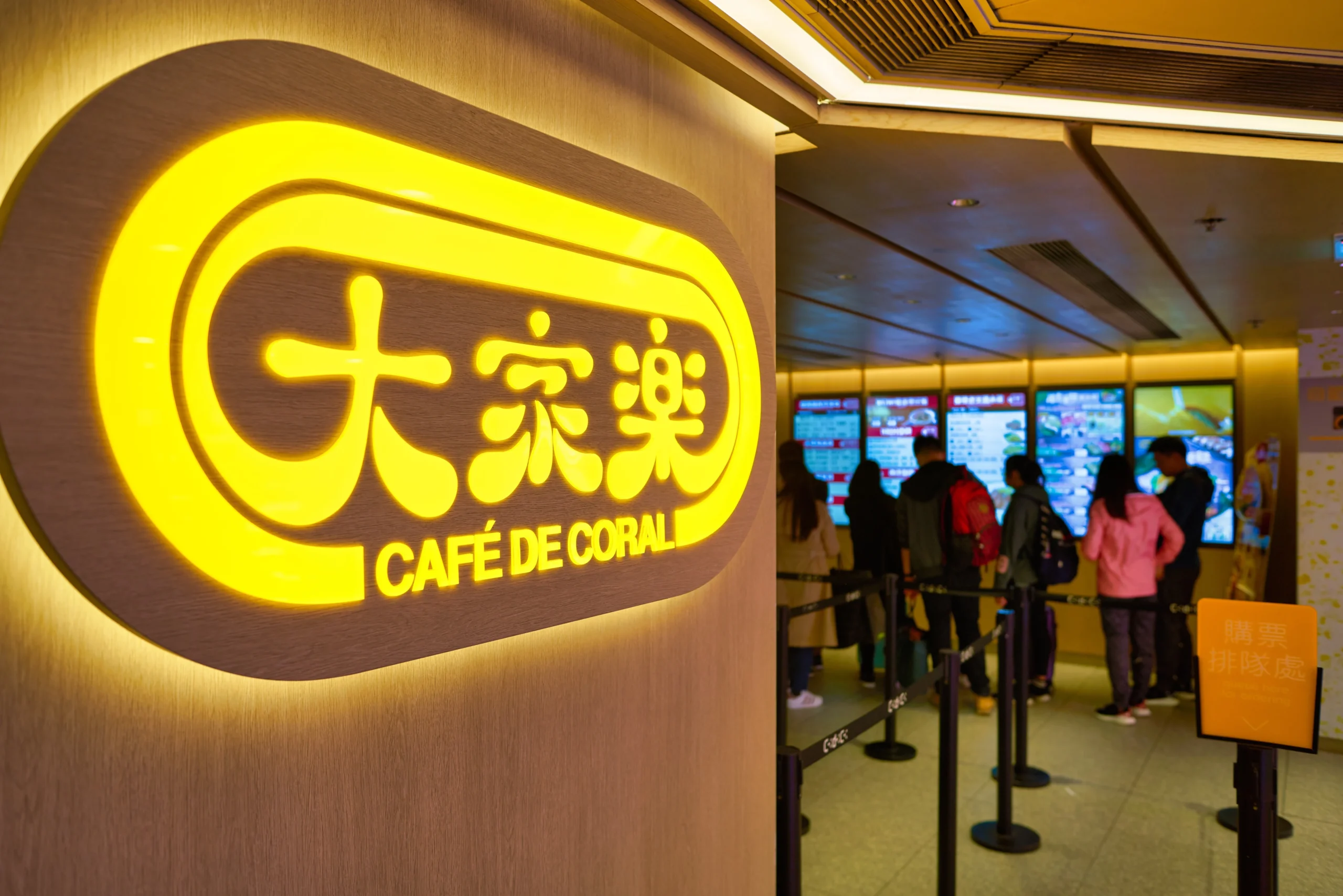
    Cafe de Coral, a prominent foodservice operator, has disclosed a slump in earnings, attributing the setback to a frail economy and lukewarm consumer sentiment. The fiscal report for the year ending March 31 revealed a 1.4% slide in revenue, resulting in HK$8.568 billion (US$1 billion). Concurrently, the profit attributable faced a steep 29.6% fall, amounting to HK$232.7 million.

    Challenging Industry Landscape

    The management acknowledged a severe downturn in the restaurant sector both in Hong Kong and Mainland China. The slump was aggravated by heightened economic fragility and a tepid consumer sentiment. Additional factors contributing to the downturn included the outbound spending habits of Hong Kong’s residents and stiff price competition in Mainland China’s marketplace.

    In Hong Kong, the revenue loss was marked at 1.4% with casual dining and quick service restaurants experiencing a decline of 6.4% and 0.3% respectively. Revenue from Mainland China recorded a 1.3% decrease.

    Strategic Adaptation

    Sunny Lo, the Chairman of Cafe de Coral, contended that the uncertainty over the course of the previous year was indicative of a long-term transformation in global markets. As per him, this transformation was triggered by geopolitical forces adapting to a new dynamic.

    Lo stated, “Our management team has accepted and embraced the current economic challenges and is adapting the business to thrive in the new environment.” He further emphasized the company’s commitment to the future by refining its restaurant portfolio, hiring new talent, and integrating innovative technological solutions to transform the business operations.

    Cafe de Coral currently oversees a network of over 500 stores spanning Hong Kong, Macau, and nine principal cities in Mainland China.

    Questions & Answers

    What is the main reason for Cafe de Coral’s decreased profits and sales in the last fiscal year?
    The primary reasons for the decrease in profit and sales were attributed to a weak economy and lukewarm consumer sentiment, particularly in Hong Kong and Mainland China.

    How did the downturn affect different restaurant types?
    The downturn affected casual dining and quick service restaurants differently. Casual dining saw a decrease of 6.4%, while quick service restaurants experienced a smaller decrease of 0.3%.

    What steps is Cafe de Coral taking to adapt to the current economic challenges?
    The company is adapting by refining its restaurant portfolio, recruiting fresh talent, and incorporating new technology into its operations.

  • VN-Index Opens Week on a Downturn Amid Market Uncertainties

    VN-Index Opens Week on a Downturn Amid Market Uncertainties

    Vietnam’s stock market kicked off the week on a down note, as the benchmark VN-Index dipped by 0.39%, closing at 1,296.29 points. This drop translates to a loss of 5.1 points, following a previous session where the index slipped 11.81 points.

    Trading Activity Picks Up

    Despite the decline in the index, trading on the Ho Chi Minh Stock Exchange surged by 8.16%, reaching a robust VND 22.39 trillion (approximately US$863.2 million). The VN-30 basket, which includes the 30 largest shares by market cap, presented a mixed bag—22 stocks experienced declines.

    Notably, shares of Fortune Vietnam Bank (LPB) fell by 3.8%, while FPT Corporation saw its stock price slip by 2.3%. Budget airline Vietjet (VJC) wasn’t spared either, closing down by 2.2%. On a brighter note, seven blue-chip stocks made gains, with Vingroup’s VIC reaching its ceiling price with a remarkable 7% increase. Other gainers included Vinhomes (VHM), which rose by 1.38%, and Vincom Retail (VRE), which inched up by 1.02%.

    Foreign Investor Trends

    In the realm of foreign investments, a net selling trend emerged, with foreign investors offloading shares worth VND 562 billion, primarily targeting VHM and Gelex Group’s GEX.

    Meanwhile, the Hanoi Stock Exchange’s HNX-Index, which covers mid and small-cap stocks, fell by 0.84%. In contrast, the UPCoM-Index, catering to Unlisted Public Companies, managed a slight uptick of 0.22%.

    As the market oscillates like a seesaw, it’s clear that volatility remains the name of the game!

    Questions & Answers

    What caused the VN-Index to decline on Monday?

    The VN-Index fell primarily due to losses in most of the large-cap stocks in the VN-30 basket, with significant declines from Fortune Vietnam Bank and FPT Corporation.

    How did trading volume change from the previous session?
    Trading activity ramped up by 8.16%, reaching VND 22.39 trillion, despite the overall decline in the VN-Index.

    What has been the trend among foreign investors?
    Foreign investors were net sellers, offloading VND 562 billion, mainly targeting the shares of VHM and GEX.

  • The Lipstick Effect drives South Korea cosmetics sales

    The Lipstick Effect drives South Korea cosmetics sales

    The Lipstick Effect has seen a rise in cosmetics sales despite South Korea’s economic downturn of 2018. The term The Lipstick Effect describes the phenomenon whereby colour cosmetics sales surge during a recession as consumers turn to small-ticket luxuries to lighten their mood.

    Major South Korean health and beauty retailer Olive Young saw a 35 per cent jump in colour cosmetics sales last year – the first time this product range has topped its best-selling category list – as the country struggled with sluggish job markets, conservative corporate investment and overall low consumer spending. Health functional food and hair products grew 32 per cent and 22 per cent respectively over the period.

    The outlook for cosmetics sales looks similarly bright this year as the rest of the South Korean economy is expected to wallow at 2018 levels.