Tag: draught

  • Cascade Brewery Debuts First Mid-Strength Beer, Expanding Portfolio with Cascade Draught 3.5

    Cascade Brewery Debuts First Mid-Strength Beer, Expanding Portfolio with Cascade Draught 3.5

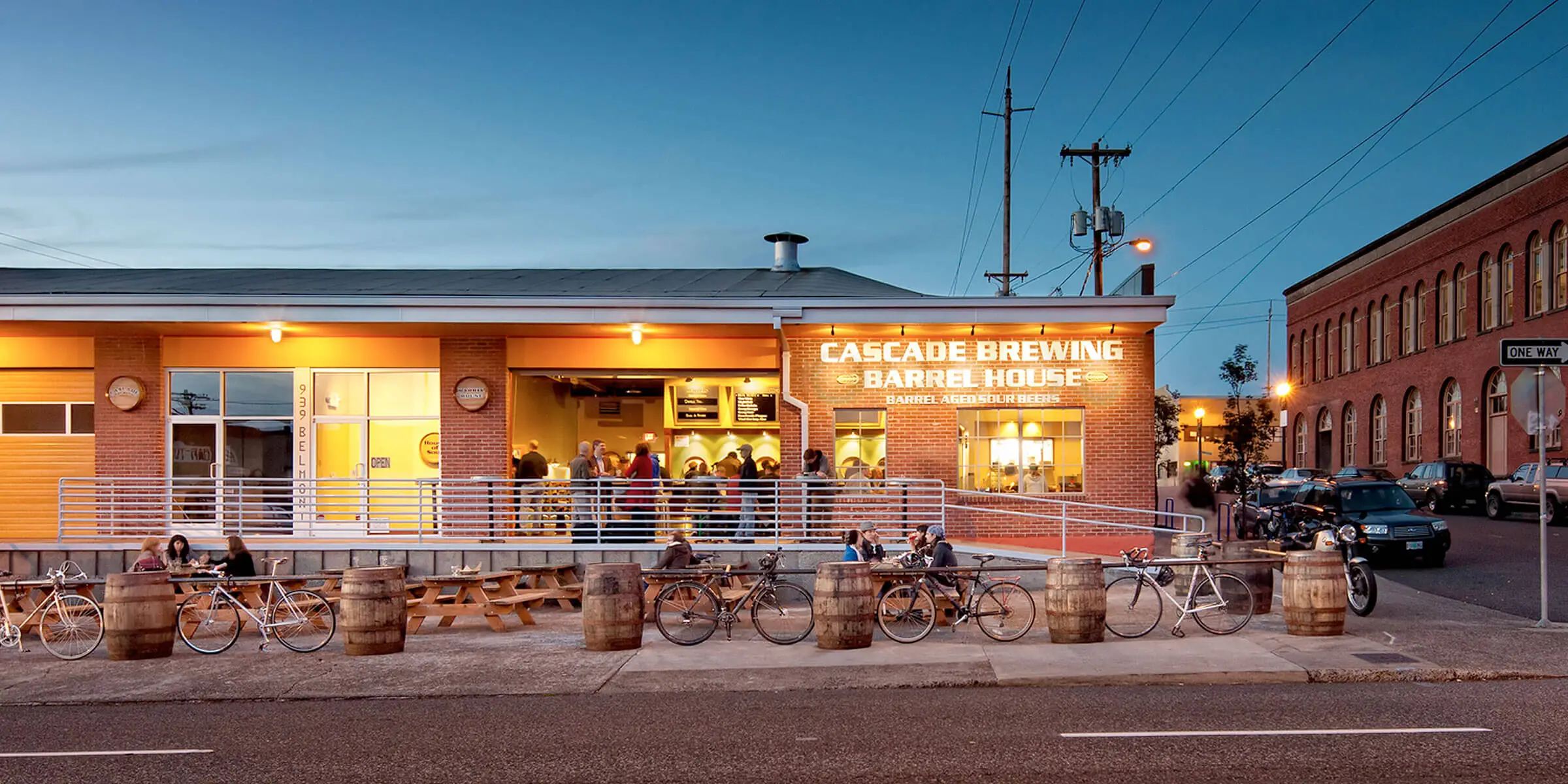
    Cascade Brewery, a long-standing Tasmanian beer maker, has diversified its product range by launching a new mid-strength beer — Cascade Draught 3.5 per cent. This venture marks the first time the company has introduced a mid-strength variation of its traditional beer.

    New Beer Targets Changing Consumer Preferences

    The new brew is a conscious effort to provide a lower-alcohol alternative that still retains the distinctive taste, malt attributes, and bitterness found in its full-strength counterpart. The mid-strength Cascade Draught promises to deliver the flavor of a standard beer but contains just one standard unit of alcohol per 375ml can.

    Brendan Flanagan, the head of manufacturing at Cascade Brewery, emphasized the importance of this launch. He stated that Cascade has been an integral part of Tasmania for over 60 years, and launching a mid-strength beer was a challenge they undertook seriously. Flanagan adds, “This is a perfect illustration of our commitment to ensuring that Cascade continues brewing quality beer in Tasmania, for Tasmanians, for many more years.”

    Investing in Future Growth

    The introduction of Cascade Draught 3.5 per cent comes on the heels of the company’s recent efforts to rejuvenate the infrastructure of their historic production facility. This move signifies Cascade Brewery’s intention to continue investing in its future growth and maintain its presence in the Tasmanian market.

    The new product is sold in packages of thirty 375ml cans and is only distributed within Tasmania. Local independent retailers, hospitality venues, and Cascade Brewery’s central brewery outlet will exclusively sell the new mid-strength brew.

    Questions & Answers

    What is the alcohol content in the new Cascade Draught?
    The new Cascade Draught has an alcohol content of 3.5%, making it a mid-strength beer.

    What sets the mid-strength Cascade Draught apart from the full-strength version?
    While the mid-strength Cascade Draught contains less alcohol, it is designed to match the taste, malt characteristics, and bitterness of its full-strength counterpart.

    Where can consumers purchase the new Cascade Draught?
    The new beer is available exclusively in Tasmania through regional independent retailers, hospitality venues, and Cascade Brewery’s central outlet.

  • Vietnam coffee exports grew in 2016 despite drought

    Vietnam coffee exports grew in 2016 despite drought

    Vietnam’s coffee exports have rebounded, notching up double-digit growth this year after being hit by the most-severe drought in almost a century.

    Coffee exports grew, on-year, by 33.6 percent in terms of volume, reaching nearly 1.8 million tons.

    The Ministry of Agriculture and Rural Development said Vietnam’s coffee industry regained its momentum after seeing exports decline by more than 20 percent on-year in 2015.

    Germany and the U.S. remained the two largest buyers of Vietnamese beans and, this year, sales to the two markets grew by 42.4 percent and 49 percent, respectively.

    Exports of coffee also saw impressive increases in emerging markets like the Philippines (83 percent), Algeria (68 percent) and China (50 percent).

    Analysts fear ongoing El Nino conditions could result in a 20 percent decline in coffee production during the coming year.

    Roughly a fifth of Vietnam’s total plantations had been damaged by water shortages, according to the Association of Coffee and Cacao (VICOFA).

    Flooding struck the Central Highlands’ coffee belt in November, making harvesting and drying rather difficult.

    VICOFA chairman Luong Van Tu, however, says Vietnamese enterprises should shift their focus to processing coffee rather than increasingly the amount of raw materials shipped abroad.

    He said new free trade agreements will slash tariffs on coffee sales to the E.U. and South Korea from 15 percent to under five in the coming year.

  • Drought holds back Thailand’s retail store expansion

    Drought holds back Thailand’s retail store expansion

    Sales have fallen at all but one of Thailand’s major supermarket retailers as the worst drought in a decade strikes at the heart of the farming sector – the backbone of the rural economy – and frustrates plans to open more stores in the provinces.

    Big C Supercenter, Thailand’s second-biggest hyper mart chain after Tesco PLC, suffered a 5.2 percent slide in third-quarter same-store sales growth (SSSG) from a year earlier, the most among its peers. About half of Big C’s sales come from the country’s interior where consumers are concerned about drought, low crop prices and a weak economic outlook, analysts say. Tesco’s Thai unit does not report quarterly SSSG numbers.

    Big C, majority-owned by Casino Group in France, has reduced its pace of expansion like many other cautious retailers. That’s in sharp contrast to the sector’s aggressive expansion plans just a few years ago.

    CP All, controlled by billionaire Dhanin Chearavanont, is taking a different tack. The operator of Thailand’s 7-Eleven stores is forging ahead with its expansion, partly to help offset slower sales at existing stores. That strategy seems to be working – same-store sales rose 1.6 percent in the third quarter. CP All was also the only retailer with any growth in sales. The company plans to open at least 600 stores a year to increase the total number of stores to 10,000 by 2018.

    Analysts say retailers’ earnings have bottomed in the third quarter, with government measures in place to stimulate consumption in the fourth quarter. That sentiment is reflected in a pickup in consumer confidence in October, the first rise in 10 months. But the road to recovery may be long, as overall consumption could be dragged down by falling farm incomes next year. Weather forecasters say parched conditions could persist through 2017. The agricultural sector is the country’s largest employer, accounting for 32 percent of Thailand’s labor force.

    “The impact of the drought will last for a long time, and that will drag down upcountry incomes and the sector’s SSSG,” said Worrapong Tuntiwutthipong, analyst at Krungsri Securities in Bangkok. “CP All will outperform others in terms of SSSG and earnings growth. Overall, consumption should remain weak, and SSSG will be at low single digits of 1-3 percent in 2016 from 0-1 percent this year.”

  • Asia Pacific Breweries Singapore to axe exclusivity practice after probe

    Asia Pacific Breweries Singapore to axe exclusivity practice after probe

    Asia Pacific Breweries Singapore has agreed to stop supplying draught beer to retail outlets on an exclusive basis after it was investigated by the Competition Commission of Singapore (CCS).

    The CCS said in a statement on Wednesday that it had acted on complaints, adding: “The outlet-exclusivity practice had prevented retail outlets from selling draught beers from competing suppliers and restricted the choices of draught beers available to retailers and consumers.”

    Under competition laws here, a dominant firm is prohibited from preventing or impeding its competitors from competing effectively through exclusive business practices.

    In its investigation, the CCS obtained information on the beer market in Singapore from retailers and beer suppliers.

    Asia Pacific Breweries Singapore(APBS) has since provided the CCS with a voluntary commitment to cease its outlet exclusivity practice.

    The change in the company’s business practices will be applicable to all draught beer contracts entered into with retailers on and after Dec 28 2015, including new and renewal contracts. APBS will also be required to provide CCS with documents to show that these changes have taken effect.

    The CCS will continue to monitor market practices

    CCS chief executive Toh Han Li said: “The removal of these exclusive business practices will allow retailers to stock a greater variety of draught beers, leading to a more vibrant market with more choices for consumers, as well as opportunities for existing suppliers and new entrants including microbreweries and craft beer suppliers.”

    He added that in general, exclusive agreements made by a dominant firm that harm competition may be illegal under the Competition Act.